

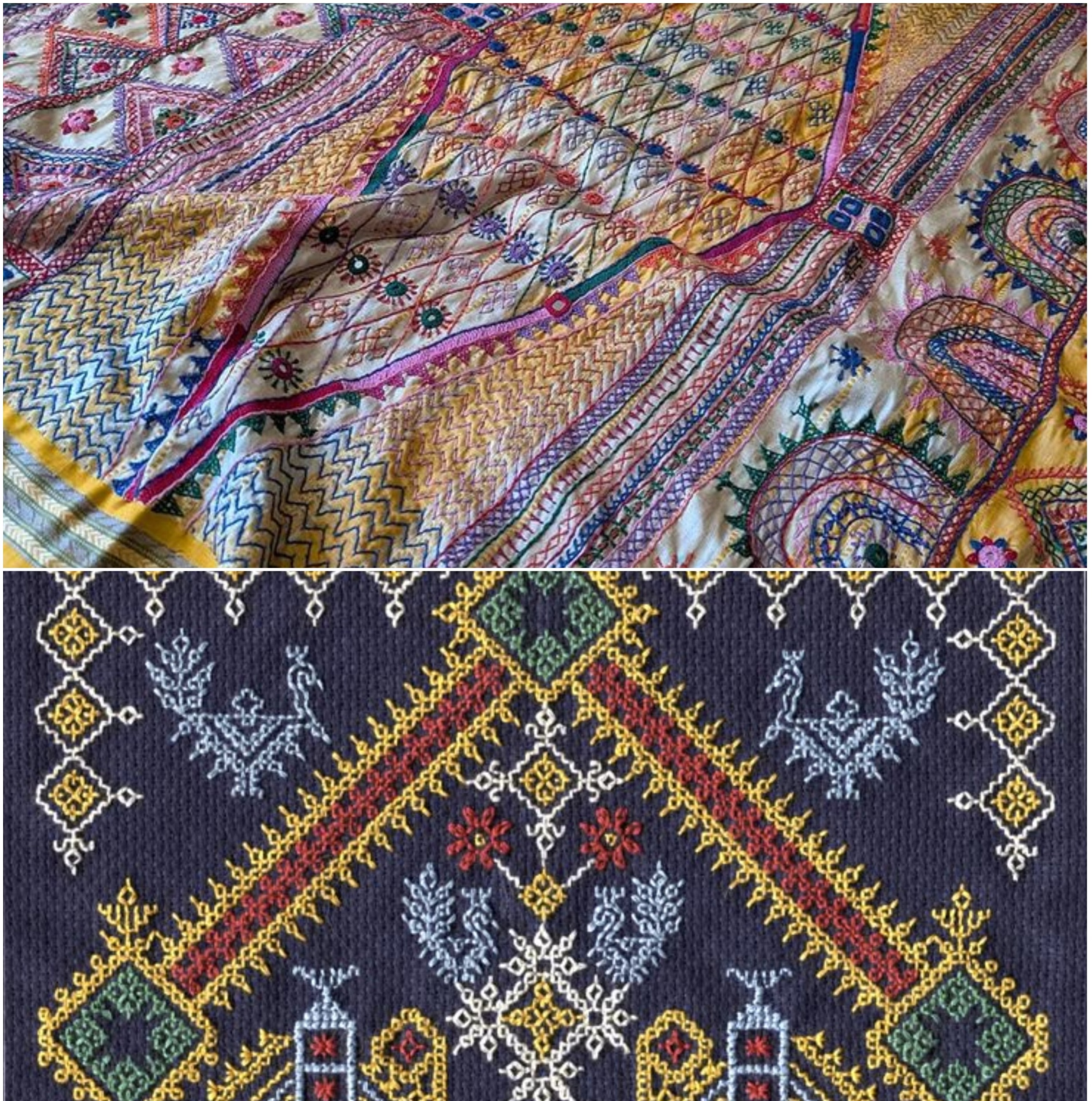
Welcome, dear readers! Today, we’re stepping into a world where colors speak, threads tell stories, and every stitch holds centuries of tradition. When we talk about Karnataka’s textile beauty, Kasuti Embroidery vs Lambani Embroidery instantly becomes a fascinating comparison. Both art forms come from the same state, yet they look, feel, and express themselves so differently.
Kasuti embroidery is all about delicate, disciplined patterns inspired by temples, nature, and geometry—almost like poetry stitched in silence. On the other hand, Lambani embroidery bursts with mirrors, bold colors, and vibrant textures, reflecting the joyful spirit of the Banjara community.
Historical Background
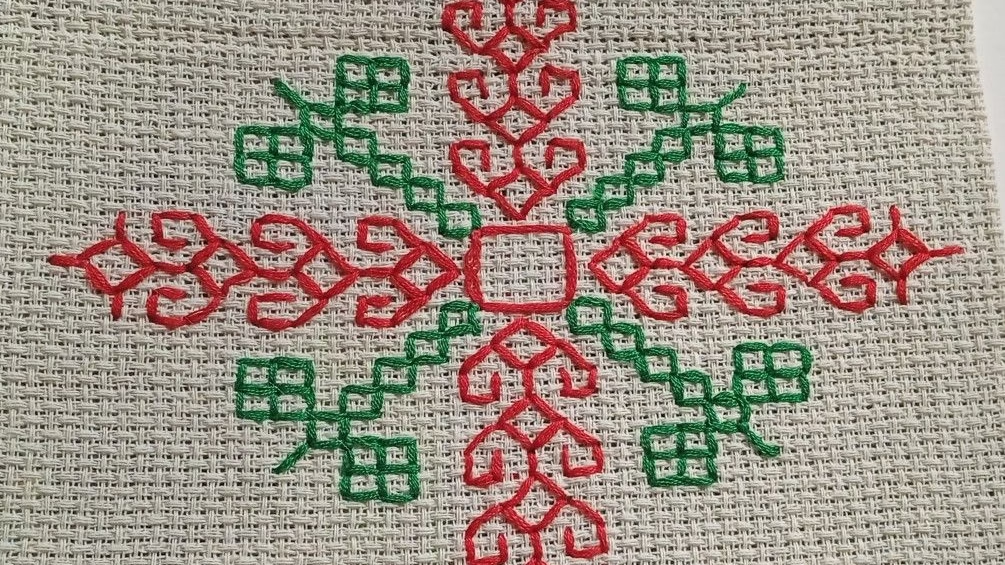
The history of Kasuti Embroidery vs Lambani Embroidery reflects the diverse cultural fabric of Karnataka, where two art forms grew in the same region but through very different journeys.
Kasuti embroidery is believed to have originated in the royal courts of the Chalukya and Vijayanagara dynasties. Women in the households of Karnataka traditionally created these designs on bridal sarees and festive garments. The patterns were inspired by temple architecture, chariots, lamps, and rangoli motifs. What made Kasuti unique was its disciplined, mathematical style—each stitch had to be counted carefully, almost like weaving with a needle. For centuries, this embroidery was practiced quietly within homes, passed down from mothers to daughters as a symbol of heritage and skill.
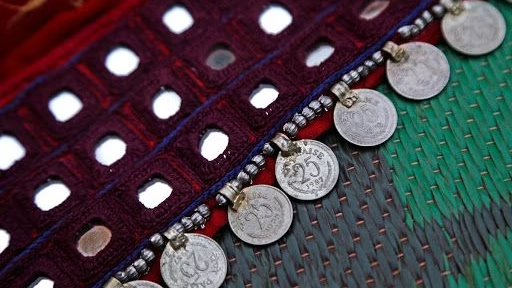
On the other hand, Lambani embroidery evolved through the nomadic Lambani or Banjara tribes, known for their vibrant lifestyle and colorful attire. Their embroidery developed as a visual expression of freedom, movement, and community identity. Using mirrors, shells, coins, and bold threads, Lambani women decorated skirts, veils, and accessories to reflect their cultural stories and traveling traditions.
Materials Used in Kasuti Embroidery
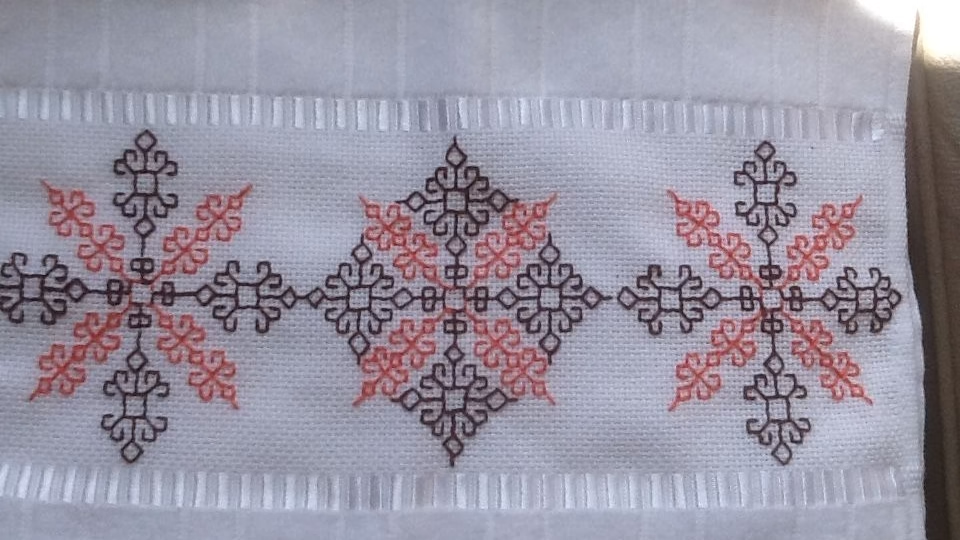
Kasuti is all about precision, geometry, and subtle elegance. Naturally, its materials reflect softness, simplicity, and traditional grace.
1. Base Fabrics
Kasuti embroidery requires fabrics that can hold fine, counted-thread stitches.
- Handwoven Cotton:
- Traditionally used for Ilkal and Irkal sarees.
- Strong enough to support tiny, even stitches.
- Traditionally used for Ilkal and Irkal sarees.
- Silk Fabric:
- Used for festive sarees and blouses.
- Smooth texture enhances the neatness of Kasuti motifs.
- Used for festive sarees and blouses.
- Khadi Cotton:
- Adds an organic, rustic charm.
- Ideal for contemporary Kasuti garments and home décor.
- Adds an organic, rustic charm.
2. Threads Used
Kasuti’s identity lies in its threadwork—always clean, linear, and neat.
- Mercerized Cotton Threads:
- Most traditional option.
- Gives a matte, elegant finish.
- Most traditional option.
- Silk Threads:
- Used today for modern adaptations.
- Add brightness without losing subtlety.
- Used today for modern adaptations.
- Single-Color Threads:
- Kasuti usually avoids multicolor combinations.
- Common colors include red, orange, yellow, white, and blue.
- Kasuti usually avoids multicolor combinations.
3. Needles and Tools
- Fine Sharp Needles:
- Essential for accurate stitch counting.
- Support Kasuti’s four main stitches: Gavanthi, Murgi, Neygi, and Menthi.
- Essential for accurate stitch counting.
- No Frames Traditionally:
- Kasuti is done without hoops.
- This allows the artisan to count threads and maintain symmetry.
- Kasuti is done without hoops.
4. Additional Supporting Material
- Tracing Sheets (modern use):
- Help in transferring complex motifs.
- Help in transferring complex motifs.
- Measuring Scale:
- Ensures perfect geometric balance.
- Ensures perfect geometric balance.
Kasuti materials emphasize discipline, precision, and minimalism—reflecting the calm, structured lifestyle of Karnataka’s early women artisans.
Materials Used in Lambani Embroidery
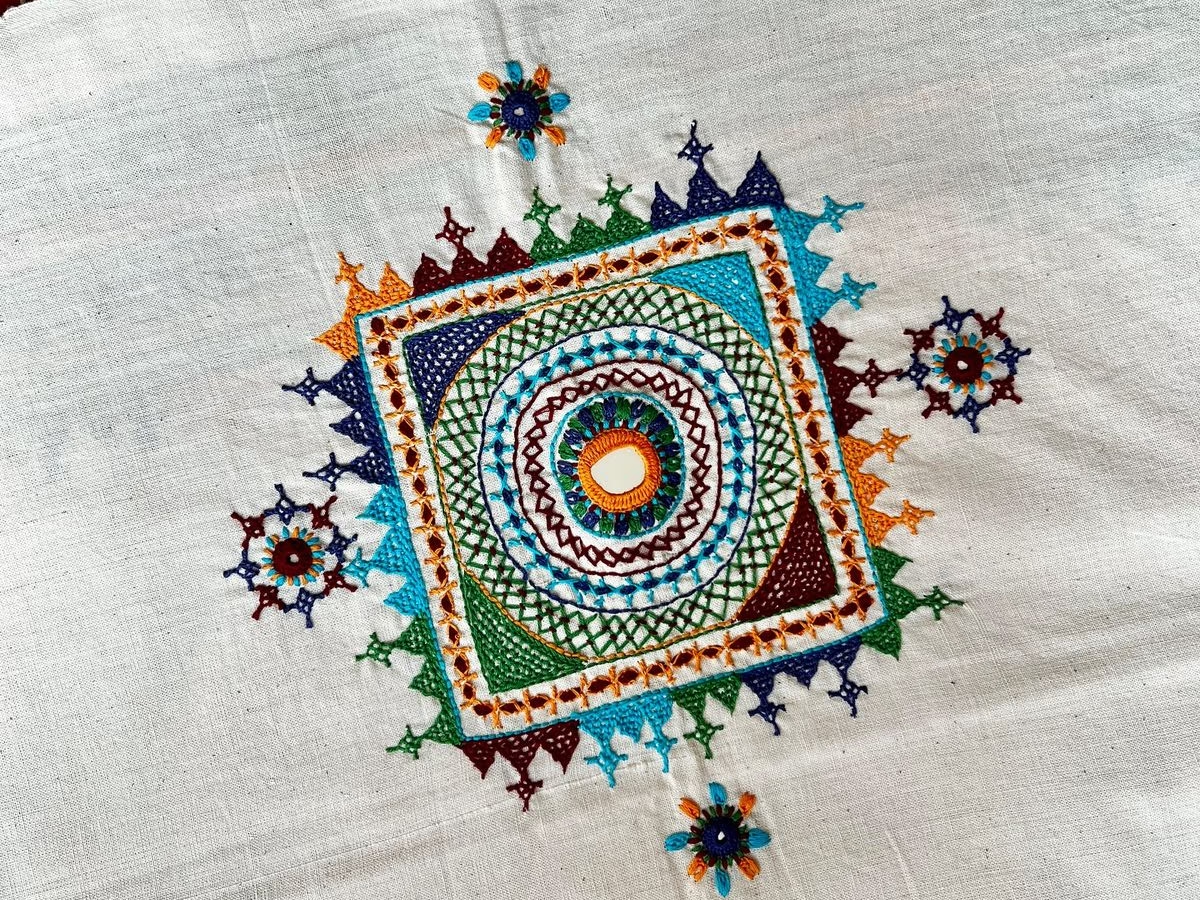
Now let’s move to the other side of the Kasuti Embroidery vs Lambani Embroidery comparison—a craft bursting with color, texture, and bold personality.
1. Base Fabrics
Lambani embroidery thrives on durability and bold contrast.
- Thick Cotton Fabric:
- Most commonly used.
- Withstands heavy stitching, mirror work, and embellishments.
- Most commonly used.
- Khadi and Coarse Weaving Fabric:
- Goes well with the earthy aesthetic of Lambani tribes.
- Goes well with the earthy aesthetic of Lambani tribes.
- Bright-Colored Fabrics:
- Red, blue, yellow, pink—strong backgrounds highlight the dramatic stitches.
- Red, blue, yellow, pink—strong backgrounds highlight the dramatic stitches.
2. Threads Used
Threads in Lambani embroidery make the craft instantly recognizable.
- Vibrant Cotton Threads:
- Primary material, always bright and bold.
- Colors include neon pinks, bright greens, bold reds, yellows, and blues.
- Primary material, always bright and bold.
- Wool Threads (in some regions):
- Add texture and thickness.
- Add texture and thickness.
- Contrasting Color Threads:
- Lambani embroidery is never subtle—contrast is key.
- Lambani embroidery is never subtle—contrast is key.
3. Embellishments
A signature difference in Kasuti Embroidery vs Lambani Embroidery lies in embellishments. Kasuti avoids them; Lambani embraces them joyfully.
- Mirrors (Shisha work):
- Small round mirrors add shine and movement.
- Small round mirrors add shine and movement.
- Cowrie Shells:
- Symbol of protection and prosperity.
- Widely used in tribal clothing.
- Symbol of protection and prosperity.
- Beads and Metal Sequins:
- Add weight, sound, and visual drama.
- Add weight, sound, and visual drama.
- Coins and Old Metal Pieces:
- Traditional Lambani ornaments.
- Give clothing a rhythmic jingle when moving.
- Traditional Lambani ornaments.
4. Tools and Accessories
- Thick Needles:
- Required for dense stitches and attaching embellishments.
- Required for dense stitches and attaching embellishments.
- Frames or Hoops:
- Used more frequently than in Kasuti.
- Helps handle the weight of materials.
- Used more frequently than in Kasuti.
- Strong Thread Wax:
- Keeps threads from tangling while stitching heavily.
Step-by-Step Process of Making Kasuti Embroidery vs Lambani Embroidery
Understanding the detailed creation process of both craft forms helps us see how different, yet equally beautiful, they are. Here is the step-by-step comparison of Kasuti Embroidery vs Lambani Embroidery, showing how artisans bring each style to life.
1. Preparing the Fabric
Kasuti Embroidery
- Select fine cotton or silk fabric, usually in solid colors like black, navy, or red.
- Stretch cloth on a frame or wooden hoop to maintain even tension.
- The fabric must have a countable weave, because Kasuti designs depend on precise thread counting.
Lambani Embroidery
- Artisans start with thick, sturdy cotton fabric—often old sarees or handloom cloth.
- The fabric is washed, dried, and cut according to the size of the garment being decorated.
- No frame is used; Lambani women hold the fabric freely while working.
2. Creating the Design
Kasuti Embroidery
- The artisan lightly marks small guide points on the fabric to maintain symmetry.
- Traditional motifs like gopura, lotus, chariot, or temple towers are planned beforehand.
- Design must align to the grid-like threads of the cloth for accuracy.
Lambani Embroidery
- No pre-marking is needed.
- The design is guided by intuition and experience, often growing organically.
- Mirrors, triangles, squares, borders, and coin-like patterns form the base layout.
3. Preparing the Thread and Tools
Kasuti Embroidery
- Fine cotton threads matching or contrasting the base fabric are selected.
- Four main stitches — Gavanti, Murgi, Negi, and Menthi — are prepared.
- A single needle is used throughout the process.
Lambani Embroidery
- Brightly colored silk or cotton threads are chosen for bold contrast.
- Decorative elements like beads, shells, coins, and small mirrors are gathered.
- Multiple needles of different sizes are kept ready for constant switching.
4. Stitching the Motifs
Kasuti Embroidery
- Stitching begins in a straight, counted manner, following the fabric’s warp and weft.
- The artisan uses a double-run style, ensuring the design looks identical on both sides.
- Every motif is completed using tiny, uniform, geometric stitches.
- Work requires patience and precision, as no knots are allowed on the backside.
Lambani Embroidery
- Women create free-flowing stitches such as chain stitch, herringbone, running stitch, and couching.
- Mirrors are attached first using buttonhole or cross-stitch borders.
- Coins, metal discs, shells, or beads are added as the design grows.
- The embroidery is bold, rhythmic, and layered, giving a three-dimensional look.
5. Building Borders and Patterns
Kasuti Embroidery
- Borders are crafted using repeated geometric units.
- Each border must align perfectly with the counted thread pattern.
- The embroidery grows inward or outward, depending on the motif.
Lambani Embroidery
- Borders are chunky and vibrant, usually filled with triangles, squares, or colorful stripes.
- Patterns evolve spontaneously, influenced by the artisan’s creativity.
- Symmetry is not strict; freedom and flair define the style.
6. Finishing the Artwork
Kasuti Embroidery
- Fabric is carefully turned inside out and trimmed.
- Since there are no knots, finishing is smooth and clean.
- The piece is lightly pressed to enhance the neat geometric look.
Lambani Embroidery
- Extra mirrors or beads are added to enhance shine.
- Edges are hemmed with bold colored thread.
- The final piece feels textured, heavy, and vibrant.
Symbols and Motifs in Kasuti Embroidery vs Lambani Embroidery
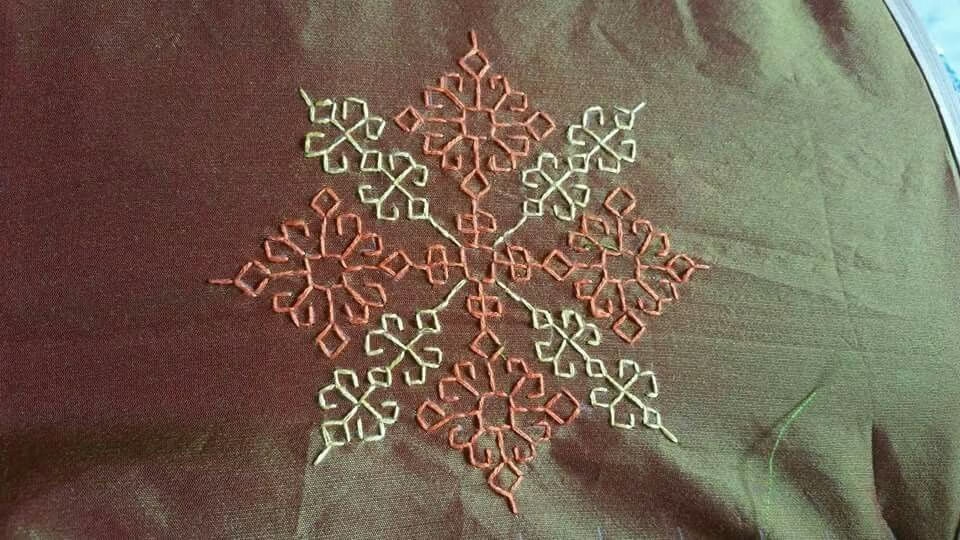
Kasuti is known for its fine, mathematical, and symmetrical motifs inspired by South Indian temples and traditional household objects.
Sacred and Temple-Inspired Symbols
- Gopuram (Temple Towers):
Represents devotion, structure, and Karnataka’s architectural heritage. - Chariots and Lamps:
Symbolize festivals, rituals, and the divine energy of light. - Nandi (Sacred Bull):
Embroidered to convey protection, strength, and spiritual purity.
Nature and Daily Life Motifs
- Lotus, Tulsi Plant, and Floral Vines:
Express beauty, fertility, and purity. - Birds (Parrots, Peacocks):
Indicate joy, grace, and freedom. - Elephants and Horses:
Reflect royal processions and traditional celebrations.
Geometric and Grid-Based Patterns
- Intricate Squares and Step Motifs:
Made using precise counting of threads, showing the discipline of Kasuti artisans. - Mandala-Like Compositions:
Consist of repeated symmetrical motifs showcasing balance and calm.
Kasuti motifs are delicate, minimal, and highly structured—often appearing like hand-drawn patterns stitched with thread.
Symbols and Motifs in Lambani Embroidery
Lambani embroidery is vibrant, bold, and expressive—reflecting the nomadic lifestyle of the Lambani (Banjara) community.
Nomadic Cultural Symbols
- Mirror Work (Shisha):
Represents protection from evil and adds sparkling movement. - Metal and Shell Embellishments:
Coins, cowrie shells, and conical buttons reflect the community’s traveling history and trade routes. - X-Shaped and Triangle Patterns:
Symbolize pathways, journeys, and the movement of their ancestors.
Nature and Tribal Life Motifs
- Sun, Moon, and Stars:
Signify connection to nature, time, and nomadic navigation. - Geometric Flowers and Spirals:
Show their joyful, celebratory approach to life. - Animal Motifs (Camels, Birds):
Represent travel, livelihood, and environments they passed through.
Bright Color Combinations
- Contrasting Reds, Yellows, Blues, and Greens:
Reflect the lively, expressive spirit of Lambani culture. - Bold Borders with Zigzags and Diamonds:
Add strength, protection, and decorative richness.
Lambani motifs feel lively, textured, and festive—full of mirrors, bold lines, and vibrant colours that celebrate movement and life.
Cultural Relevance and Recent Statistics
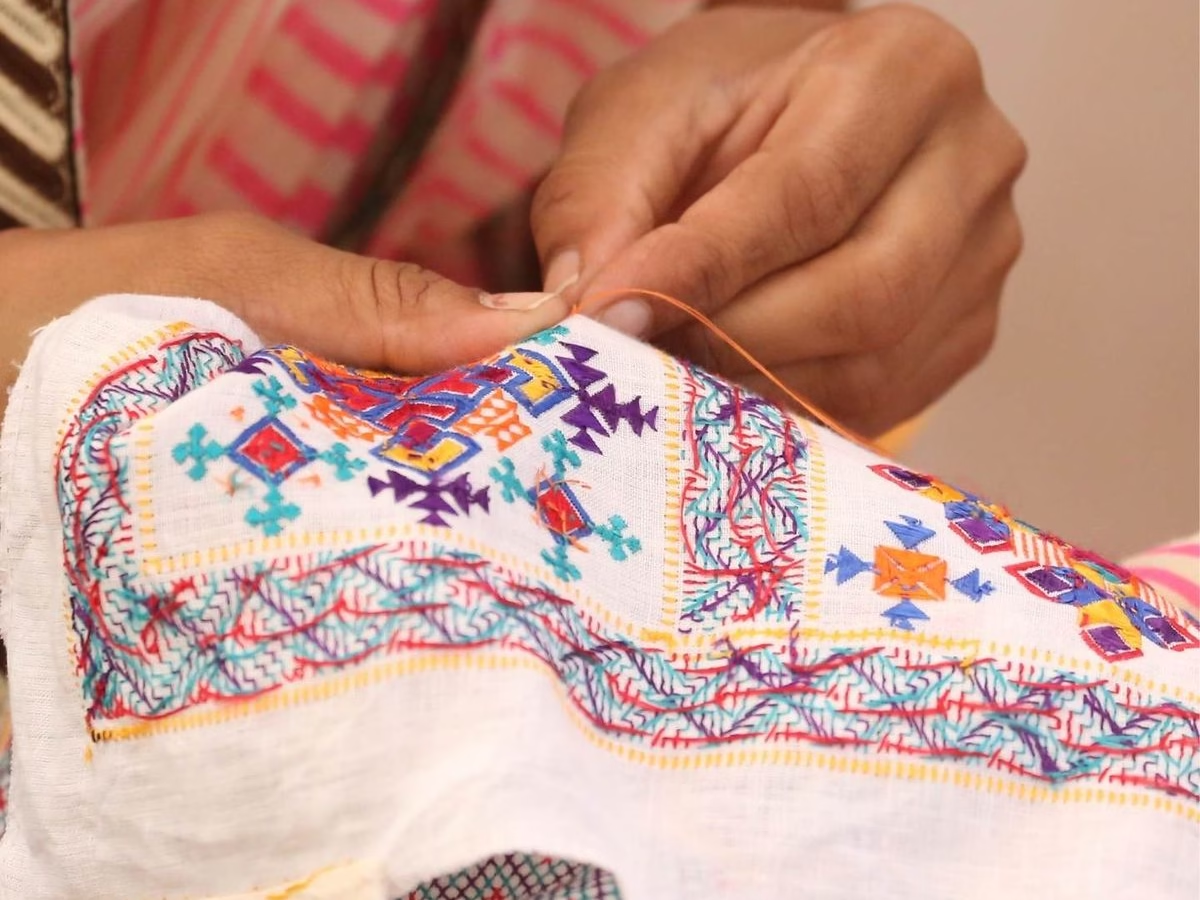
Kasuti Embroidery vs Lambani Embroidery is not just a stylistic comparison; it’s a comparison of two social worlds—Kasuti’s temple-rooted geometric finesse and Lambani’s colourful, community-based needlecraft.
Cultural Significance: Why these crafts matter
- Kasuti: Community identity and ritual use
- Kasuti embroidery has been an integral part of Karnataka’s social and ritual life for centuries—used in bridal trousseaus and temple-related garments; its geometric motifs echo local temple architecture and folk art.
- Kasuti embroidery has been an integral part of Karnataka’s social and ritual life for centuries—used in bridal trousseaus and temple-related garments; its geometric motifs echo local temple architecture and folk art.
- Lambani: Expression of nomadic heritage and women’s craft
- Lambani (Banjara) embroidery is a vivid expression of a nomadic community’s history—bright mirrors, beads and stitches signify social identity, status and celebration within Lambani tandas (groups).
- Lambani (Banjara) embroidery is a vivid expression of a nomadic community’s history—bright mirrors, beads and stitches signify social identity, status and celebration within Lambani tandas (groups).
- Living heritage
- Both crafts act as living culture: they transmit skills, social stories, and community pride across generations and are used in festivals, weddings, and everyday wear.
- Both crafts act as living culture: they transmit skills, social stories, and community pride across generations and are used in festivals, weddings, and everyday wear.
Recognition & Legal Protection
- GI protection for Kasuti
- Kasuti embroidery holds a Geographical Indication (GI) registration, which helps protect its name and link it legally to Karnataka’s craft clusters.
- Kasuti embroidery holds a Geographical Indication (GI) registration, which helps protect its name and link it legally to Karnataka’s craft clusters.
- Institutional support for Lambani
- Recent cultural initiatives (including government/NGO programs) have spotlighted Lambani embroidery—supporting women artisans, exhibitions, and market access. One government cultural programme highlighted participation by over 450 Lambani women artisans.
- Recent cultural initiatives (including government/NGO programs) have spotlighted Lambani embroidery—supporting women artisans, exhibitions, and market access. One government cultural programme highlighted participation by over 450 Lambani women artisans.
Artisan Numbers & Community Impact (Recent snapshots)
- Kasuti artisan presence
- Kasuti remains concentrated in towns across northern and central Karnataka (Belgaum, Hubli, Dharwad and surrounding areas) and is sustained by dedicated village centres and training units. The GI and state-level interventions aim to stabilise livelihoods
- Kasuti remains concentrated in towns across northern and central Karnataka (Belgaum, Hubli, Dharwad and surrounding areas) and is sustained by dedicated village centres and training units. The GI and state-level interventions aim to stabilise livelihoods
- Lambani artisan reach
- Estimates and project reports indicate several hundred Lambani women artisans are organised through tandas and self-help groups—some initiatives report working with ~600 artisans while national cultural events documented contributions by 450+ Lambani artisans. These numbers reflect growing organised activity and better visibility.
- Estimates and project reports indicate several hundred Lambani women artisans are organised through tandas and self-help groups—some initiatives report working with ~600 artisans while national cultural events documented contributions by 450+ Lambani artisans. These numbers reflect growing organised activity and better visibility.
Economic & Development Trends
- Market linkage and income potential
- Both traditions are increasingly included in fair-trade collections, government exhibitions and tourism-linked sales. This helps supplement incomes but income levels remain modest and variable—efforts continue to professionalise design, pricing and market access.
- Both traditions are increasingly included in fair-trade collections, government exhibitions and tourism-linked sales. This helps supplement incomes but income levels remain modest and variable—efforts continue to professionalise design, pricing and market access.
- Challenges affecting growth
- Common problems include low wages, middle-men capture of margins, limited design diversification, and disruptions (e.g., pandemic impacts). Research into Lambani crafts highlights these structural issues while recommending upskilling and market integration.
Conclusion
In the end, Kasuti Embroidery vs Lambani Embroidery is not just a comparison of two textile styles—it is a celebration of Karnataka’s diverse artistic soul. Kasuti stands out for its precision, symmetry, and gentle elegance drawn from temple architecture, while Lambani shines through bold mirror work, vibrant colors, and the free-spirited expressions of the Banjara community.
Though different in technique and appearance, both forms carry generations of cultural identity and craftsmanship. Together, they remind us that art thrives in variety, and Karnataka’s embroidery traditions continue to inspire new designers, artisans, and textile lovers every day.
Also read: Toda Embroidery from Tamil Nadu

Leave a Reply