

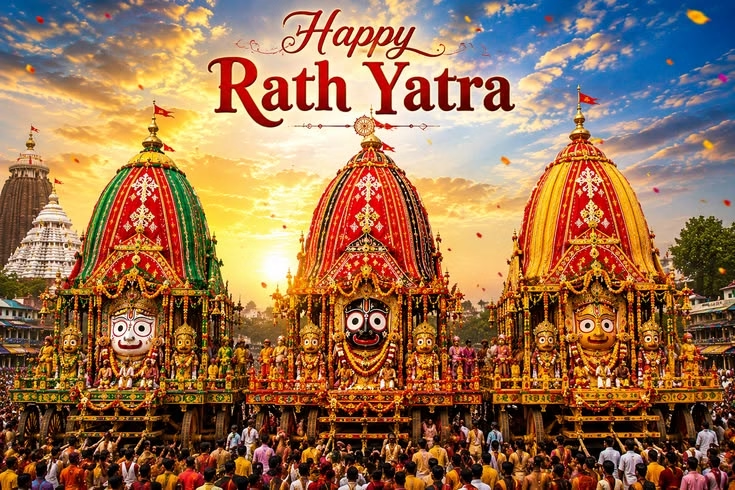
Hello folks! Jagannath Rath Yatra 2026 is almost here. Imagine three towering wooden chariots rolling through a sea of devotees. The air vibrates with chants and drumbeats. The colors are absolutely blinding.
But look closer. These chariots aren’t just timber and wheels. They are draped in stunning fabric art—elephants, peacocks, and lotuses, all hand-stitched. This is the work of Pipli’s appliqué artisans. For over 900 years, they have dressed the deities’ raths for this sacred journey.
Their craft is not mere decoration. It is pure devotion. It is living heritage, passed down through generations of skilled hands.
Behind every Rath Yatra lies a beautiful story of art, faith, and human spirit. This is more than a festival; it is a spectacle of life. Let’s uncover this incredible tradition together.
The Grand Spectacle: Understanding the Jagannath Puri Rath Yatra
The Jagannath Puri Rath Yatra, also known as the Festival of Chariots, is one of India’s biggest and oldest religious festivals. It’s the only festival in the world where Hindu deities are taken out of their temples to travel to their devotees.
What Makes the Rath Yatra Unique?
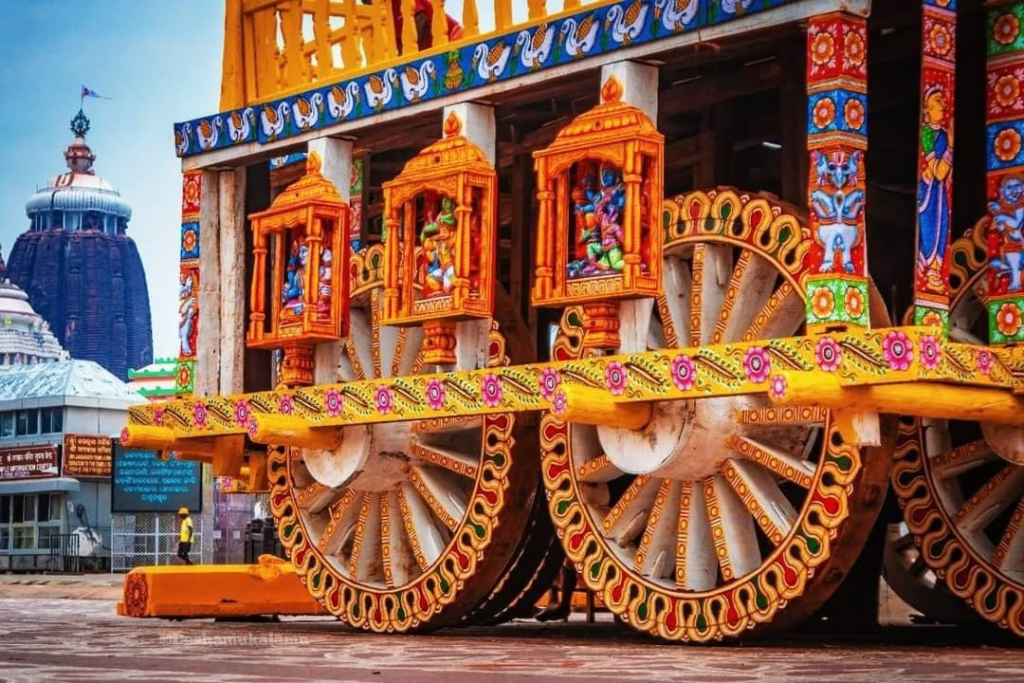
The Procession: During the festival, three massive chariots carry the sibling deities – Lord Jagannath, his elder brother Lord Balabhadra, and his younger sister Devi Subhadra – from their home temple in Puri to the Gundicha Temple, which is believed to be their aunt’s home.
The Journey:
The deities board three huge decorated chariots following the ceremonial Pahandi ritual before marching for around 3 km to the Gundicha Temple. Millions of devotees pull the chariots on the Bada Danda (Grand Road) of Puri town.
The Festival Dates:
The Rath Yatra takes place on the second day of the Odia month of Ashadha Shukla Tithi (bright fortnight) every year. In 2025, the Rath Yatra began on June 27, with the return journey (Bahuda Yatra) taking place on July 5.
The Divine Purpose:
According to Hindu mythology, the Lord and his siblings embark on a nine-day annual sojourn to their birthplace. The idols are taken to the Gundicha Temple, where they stay till the “Bahuda Yatra” (returning car festival). As non-Hindus are not allowed to enter the Jagannath temple, the festival presents a unique opportunity for foreign devotees to have darshan of the Lord.
The Scale:
Over 30 lakh Indians and thousands of foreigners are expected to attend the event. Puri turns into a fortress with massive police bandobast considering the huge influx of devotees. This year, nearly 180 platoons (over 5,700 personnel) were deployed in Puri for the smooth conduct of the annual event.
The Unique Deities:
Unlike the ornate, carefully crafted metal idols everywhere else, the three deities are fashioned from wood, cloth, and resin. They are malformed with large heads and no arms, reminding us of the legend of an impatient King who disturbed Vishwakarma while he was crafting the idols.
When the deities disintegrate, they are remade in the same half-done image with new wood every 12 years. They were last remade in 2015.
The Chariots of the Rath Yatra: Engineering Without Nails
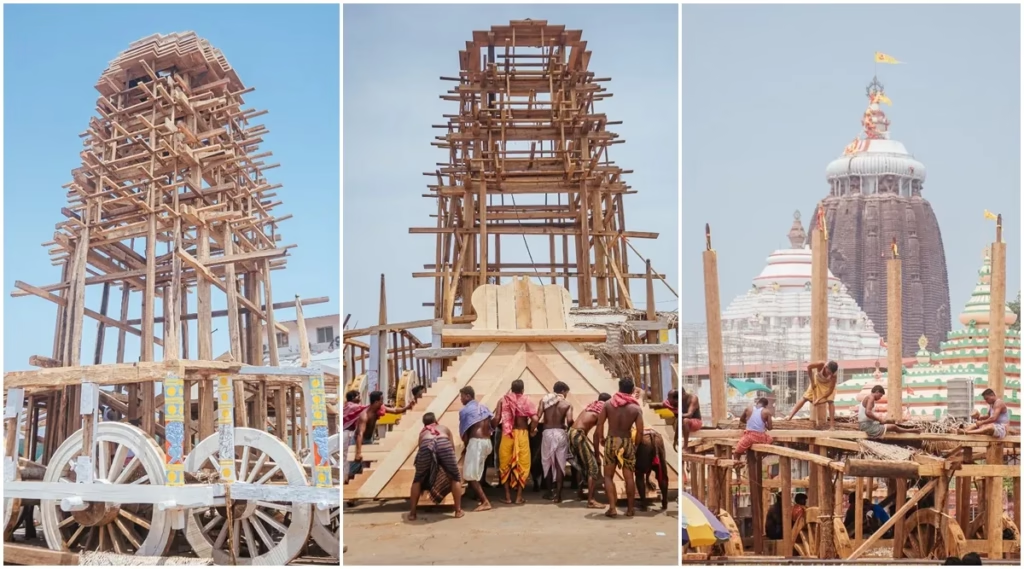
One thing mesmerises devotees beyond the divine procession—the unbelievable fact that these giant chariots are built entirely without nails or any modern techniques. This age-old practice is not just ritual; it is a living example of India’s intangible heritage.
Construction Process: Rath Anukala
The construction begins every year on Akshay Tritiya. This ritual, known as Rath Anukala, marks the spiritual start of Jagannath Yatra preparations. Special puja is performed at the ‘Rath Khala’ (chariot-making yard) on the Grand Road outside the temple.
The Wood Selection
- Wood is specially sourced from the forests of Mayurbhanj, Ganjam, and Keonjhar districts.
- Priests identify trees based on auspicious symbols—conch, chakra, and mace—naturally marked on their bark.
- These trees are ritually worshipped and cut using what is believed to be a golden axe.
- Types of wood used: Phasi, Dhaura, Simili, Sahaj, and Mahuwā.
- Dhaura, the strongest, is used for the axle, while Simili is used for the upper portions.
The Construction Team
- The Maharanas who build the chariots are not hired craftsmen.
- They belong to specific temple servant lineages—families who inherit the right to construct.
- Their knowledge is passed down orally, generation to generation, as part of Jagannath Mahaprabhu’s living tradition.
- Around 50 tonnes of iron and 300 kilograms of brass are also used in the process.
The Timeline
- Every year, new chariots—about 45 feet tall and weighing over 200 tonnes—are built from scratch.
- Over 200 skilled artisans complete this enormous task in just 58 days.
- They use five types of sacred wood.
- Construction begins on Akshaya Tritiya and is completed two days before the Gundicha Yatra.
The Three Chariots: A Divine Engineering Marvel
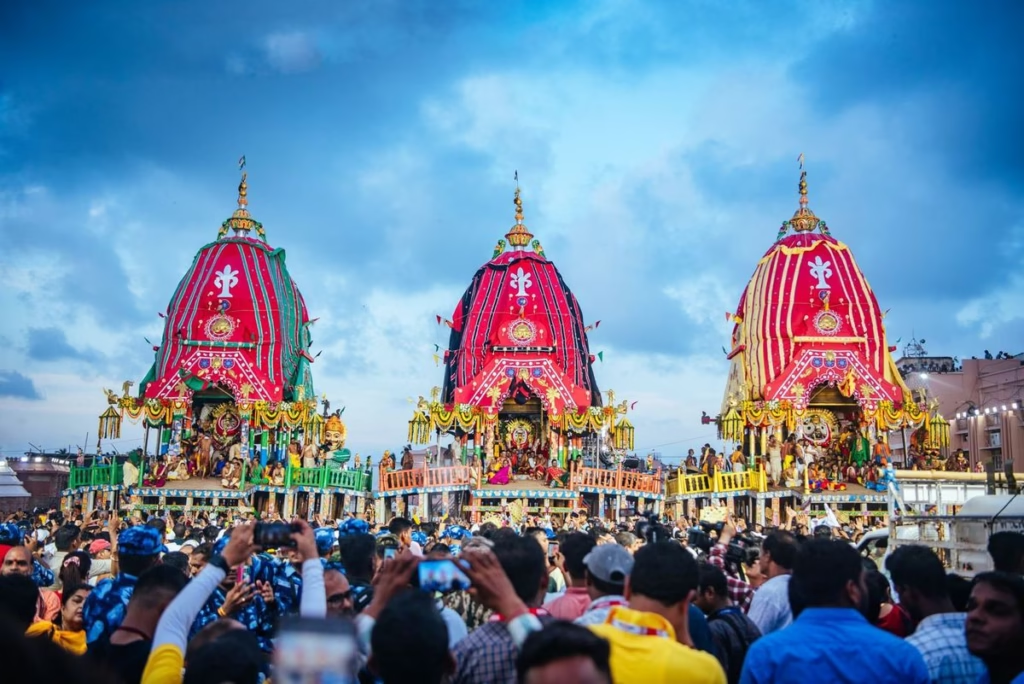
Each chariot has its own name, specific dimensions, colors, number of wheels, and guardian deities. The chariots resemble mobile temples, adhering to specific construction traditions described in the Skanda Purana.
| Chariot | Deity | Height | Number of Wheels | Wood Pieces Used | Colors | Charioteer |
| Nandighosh | Lord Jagannath | 33 cubits (approx. 45 feet) | 16 | 832 pieces | Red and Yellow | Matali |
| Taladhwaja | Lord Balabhadra | 32 cubits, 10 fingers (approx. 44 feet) | 14 | 763 pieces | Green and Red | Daruka |
| Darpadalana | Devi Subhadra | 31 cubits (approx. 43 feet) | 12 | 593 pieces | Black and Red | Arjuna |
The Art of Joinery:
What sets these chariots apart is the use of ancient joinery techniques. Wooden pegs, coir ropes, and natural adhesives are used to bind massive logs of wood together instead of iron nails. This is believed to maintain the sanctity and organic purity of the deities’ vehicles.
No blueprints are drawn, and artisans use their inherited memory and intuition. It’s believed that Lord Vishwakarma, the celestial architect, spiritually guides the artisans during construction.
The Decoration:
Each chariot is adorned with 1,120 meters of fabric. The chariot roofs feature specific color combinations:
- Lord Jagannath’s chariot: Red and yellow cloth
- Taladhwaja ratha: Red and green
- Darpadalana chariot: Red and black
What Happens After the Yatra?
At the end of the festival, the chariots are dismantled. The wood is considered sacred. Many devotees take pieces of it home, while some portions are donated to the temple. A part of the remaining wood is also auctioned.
Part of the dismantled wood is also used as fuel in the temple kitchens – believed to be the largest in the world that cook 56 things every day and feed anywhere between 2,000 and nearly 200,000 people.
Pipli Appliqué: The Craft That Dresses the Chariots
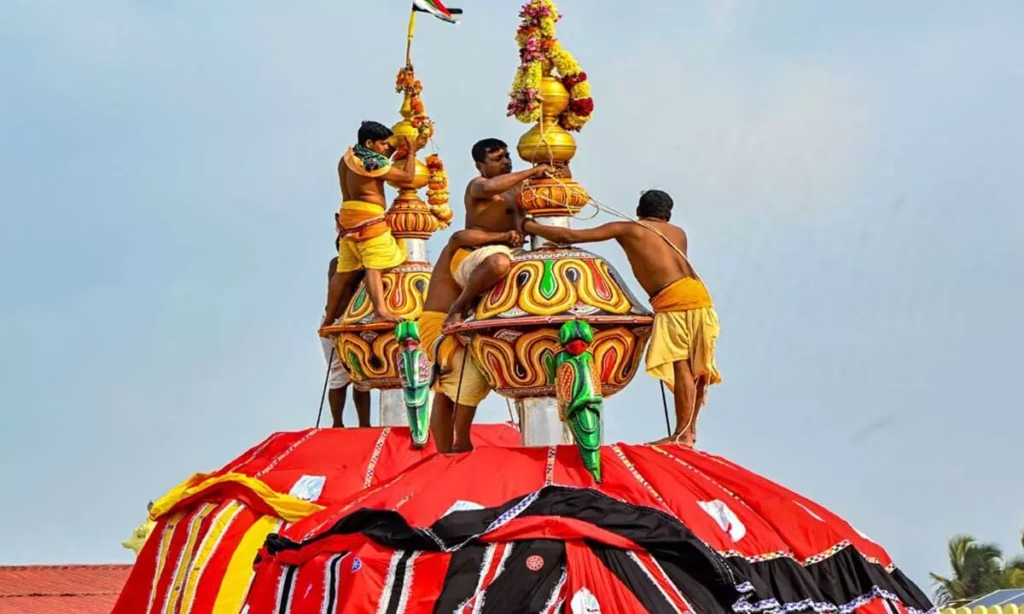
Now, let’s talk about the heart of this visual spectacle – the appliqué work from Pipli, a village located about 40 kilometers from Bhubaneswar.
What Is Pipli Appliqué?
Pipli appliqué, locally called Chandua, is the art of stitching colored fabric pieces onto a base fabric to create intricate designs. It’s like creating a mosaic with fabric.
The word “appliqué” comes from the French verb appliquer, meaning “to put on” or “to apply”.
Key techniques used in Pipli appliqué:
- Bakhia: Stem stitch
- Guntha/Ganthi: Running stitch
- Taropa: Hem stitch
- Chikana, Button Hole, and Ruching: Additional decorative stitches
The Sacred Connection: How the Craft Began
The history of Pipli appliqué is deeply intertwined with the Jagannath Puri Rath Yatra. The craft originated during the 12th century and owes its existence to the Jagannath Temple culture.
The Royal Patronage:
The King of Puri gifted land to the artisans in Pipli and settled them there to create ceremonial textiles for Lord Jagannath and his siblings.
The king also engaged many of these craftsmen in the famous Jagannath temple for exquisite appliqué work, encouraged by the nobles of the state. This royal support transformed a simple mending technique into a highly respected sacred art form.
The Pillow Legend:
One beautiful legend tells the story of a Darji (tailor) who created two exquisite pillows for a Badshah in Delhi. So pleased was he with the work that he thought the pillows should belong to Lord Jagannath alone.
The next morning, one pillow had mysteriously disappeared. When the Badshah imprisoned the Darji for theft, Lord Jagannath appeared in a dream, revealing that he himself had taken the pillow to Puri.
The Darji was released, came to Pipli, and taught the craft to his community, spreading the art.
The Artisans: Keepers of a 900-Year-Old Tradition
The craft is traditionally practiced by a community of professional tailors known as Darjis (an Urdu word meaning tailor), whose surnames are mostly Mahapatra and Maharana.
Interestingly, the craft is now practiced by both Hindus and Muslims, with a notable group of Muslims in the village.
The Numbers:
- The village of Pipli is home to around 150 craftsmen
- Over 500 girls are involved in needlework
- Plus numerous shopkeepers and salesmen who procure the products
The Process: From Fabric to Masterpiece
Step 1: Selection and Design
- The artisan decides on the product and selects the base fabric
- A theme and corresponding color scheme are worked out
- Fabrics to be appliquéd are chosen as per the required colors
Step 2: Cutting and Preparation
- Fabric pieces are cut into different patterns
- Designs are hand-drawn or created using stencils
Step 3: Stitching
- The cut pieces are stitched onto the base fabric using specialized techniques
- .Decorative elements like mirrors, sequins, braids, and ribbons are added
The Time Investment:
A smaller item may take a day to finish, but larger, more complicated pieces can take up to 6 months to complete.
The Chariot Connection: Dressing the Divine
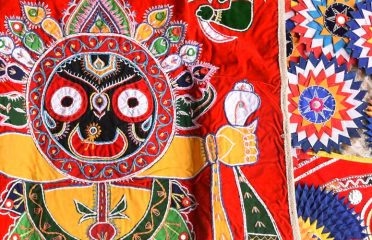
The appliqué artisans of Pipli have a direct role in the Jagannath Rath Yatra. They create the colorful fabric covers, canopies, and decorations that adorn the three chariots. This is not just commercial work – it’s considered a sacred duty and an offering to the deities.
What the Artisans Create for the Rath Yatra:
- Chhati: Umbrellas used in processions
- Tarasa: Heart-shaped wooden pieces covered with appliqué cloth, supported by a long pole
- Chandua: Umbrella-shaped canopies signifying respect to the deity
- Jhalar: Frilled borders used as decorative pieces
- Seats and pillows for temple priests
- Ceremonial dresses for the deities
The Craft’s Journey: From Temple to Global Markets
While the religious themes have been maintained, today the craft has evolved beautifully to create contemporary products:
- Bags of all kinds
- Cushion covers and bedcovers
- Wall hangings and home decor
- Garden and beach umbrellas
- Lampshades and lanterns
- Sarees and garments
Preserving Tradition in a Changing World
The GI Tag: Official Recognition
Pipli Appliqué Work has been recognized with a Geographical Indication (GI) tag (GI No. 86), officially acknowledging its origin and cultural significance. This helps protect the craft from imitation and ensures that authentic Pipli products are recognized globally.
Challenges and the Way Forward
Challenges:
- Maintaining quality and authenticity
- Competing with cheap machine-made imitations
- Passing down skills to the next generation
- Ensuring fair wages for artisans
Solutions:
- Government support through the Handicrafts and Cottage Industries Department
- Co-operative societies like the Pipili Applique Works Industrial Co-operative Society Ltd. (established 1957)
- Marketing support from organizations like the Orissa State Co-operative Handicraft Corporation Ltd. (Utkalika)
- Design workshops helping artisans create modern products while retaining traditional techniques
The Modern Twist
Today, Pipli appliqué is not just for chariots. The artisans have given it a modern twist, and you can now find it on:
- Blouses and fusion wear
- Modern accessories
- Contemporary home decor
FAQs – Frequently Asked Questions
Q1. What is the connection between Pipli appliqué and the Jagannath Rath Yatra?
Pipli artisans create the colorful cloth covers and canopies for the three chariots of the Jagannath Puri Rath Yatra.
The craft was established in Pipli by the King of Puri specifically to provide ceremonial textiles for the temple and the Rath Yatra.
Q2. Why are the three chariots in the Jagannath Rath Yatra different colors?
Each chariot represents a different deity. Lord Jagannath’s chariot has red and yellow, Lord Balabhadra’s has green and red, and Devi Subhadra’s has black and red. These colors help devotees identify which chariot belongs to which deity.
Q3. What is Chandua in Pipli appliqué?
Chandua is the local name for Pipli appliqué work in Odisha. It refers to the craft of stitching colored fabric pieces onto a base fabric to create decorative products. It also describes the umbrella-shaped canopies used as a sign of respect to Lord Jagannath.
Q4. Where is Pipli village and how can I visit it?
Pipli is located about 40 kilometers from Bhubaneswar, between Bhubaneswar and Puri. As you approach the village, a kaleidoscope of colors welcomes visitors. A visit during the Rath Yatra period is especially magical.
Q5. Is Pipli appliqué only used for religious purposes?
Not anymore. While the craft has deep religious roots, today Pipli appliqué is used for cushion covers, bags, wall hangings, lampshades, umbrellas, bedcovers, and garments. It blends traditional techniques with modern design sensibilities.
Q6. What makes Pipli appliqué unique?
Pipli appliqué stands out for its bright, vibrant colors, intricate stitching techniques (including six different types), and direct association with temple rituals. Unlike other appliqué traditions, artisans use fresh fabric, as the purpose of the product is considered sacred.
Q7. How long does it take to make a Pipli appliqué product?
A smaller item like a pouch may take a day, while larger, more complicated pieces like chariot canopies or large wall hangings can take up to 6 months to complete.
Q8. How can I support Pipli artisans and the craft?
Buy authentic Pipli appliqué products directly from government emporiums like Utkalika, artisan cooperatives, or reputable online stores. Avoid machine-made imitations. Visiting Pipli village and purchasing directly from artisans ensures fair wages.
Also Read:
Pattachitra Painting of Odisha: Tales Etched on Timeless Cloth

Leave a Reply