

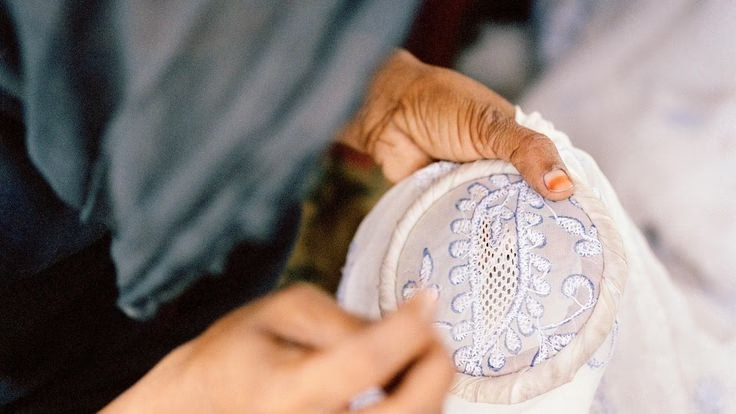
Hello, folks, Did you know it takes over 30 days to embroider a single high-end Chikankari kurti?
That is patience. That is art. For over 400 years, Lucknow’s legendary embroidery has hypnotized fashion lovers. From Bollywood celebrities to your everyday wardrobe, the timeless “shadow work” is everywhere.
But why does this 17th-century craft still feel so modern? It is simple. Those intricate chikankari embroidery designs turn plain fabric into liquid poetry. Whether it is a heavy bridal kurta or a light summer top, the magic lies in the 40+ distinct stitches used. It is delicate. It is elegant. And it is selling 60% faster online than ever before.
Ready to fall in love with the white-on-white magic of Chikankari?
Let’s thread the needle and learn why chikankari still matters in 2026!
What Exactly is Chikankari Embroidery? A 400-Year-Old Story
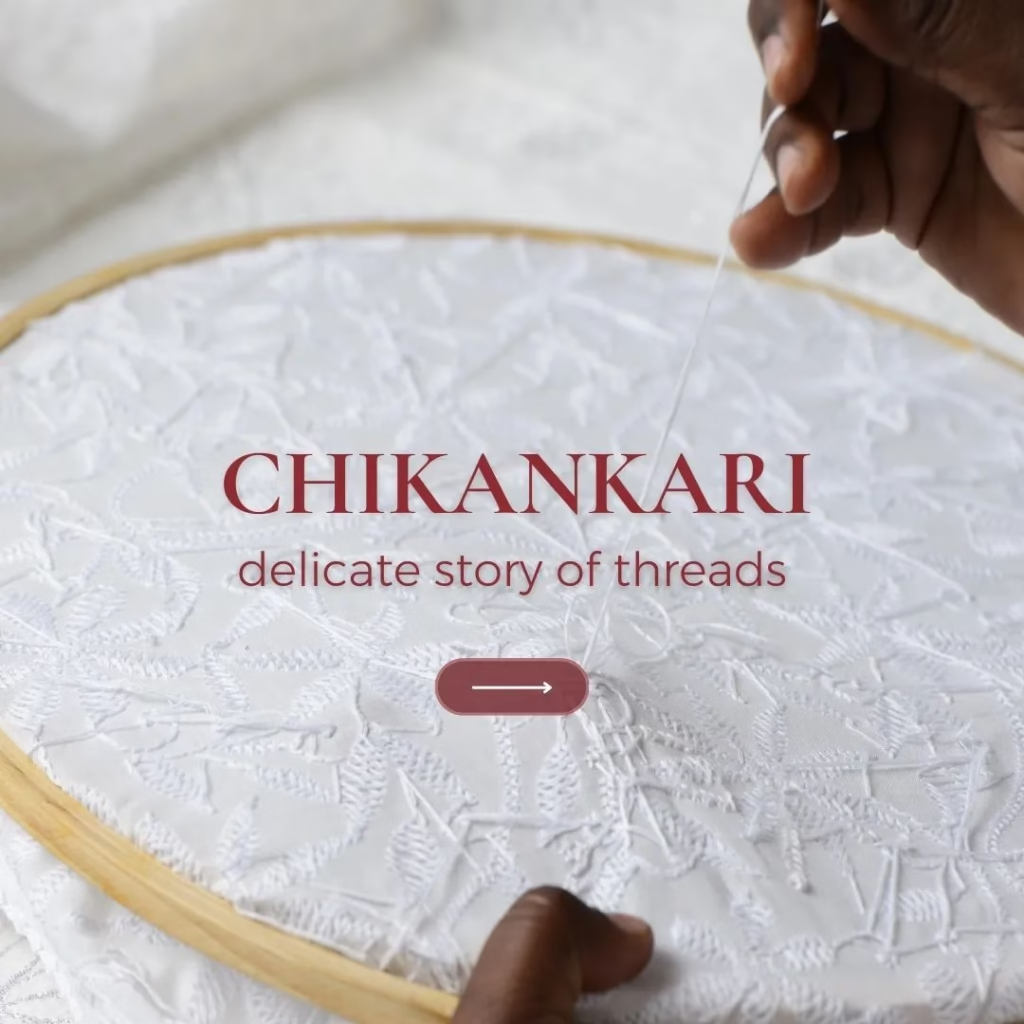
So, what is Chikankari? In simple words, it is the art of staining fabric with thread. It is a traditional embroidery style from Lucknow that is over 400 years old.
Think of it as delicate, white-on-white magic. But don’t let the simplicity fool you. It is one of the most complex embroideries in the world.
The Origin Story:
Historians believe it was introduced by Nur Jahan, the Mughal empress, in the 17th century. She was obsessed with fine craftsmanship. She brought skilled Persian embroiderers to India. They mixed their techniques with local Indian styles. The result? The Chikankari we love today.
The Numbers Speak:
- 40+ Stitches: There are more than 40 different types of stitches used.
- 6 Months: A single, high-end garment can take up to 6 months to finish.
- $50 Million: The industry is worth millions today, supporting over 2.5 lakh artisans in Lucknow alone.
How it Works:
It isn’t just one type of stitch. It is a whole family of techniques.
- Shadow Work: The thread is woven from the back to create a shadow on the front.
- Jali: Holes are cut and stitched to create a net-like pattern.
- Tepchi: A simple running stitch used to outline designs.
It starts with block printing the design onto the fabric. Then, the artisans embroider for hours, days, and months. Finally, the fabric is washed to remove the print, leaving only the thread art behind.
That is Chikankari. It is not just embroidery. It is patience stitched into fabric.
5 Popular Chikankari Embroidery Designs You Need to Know
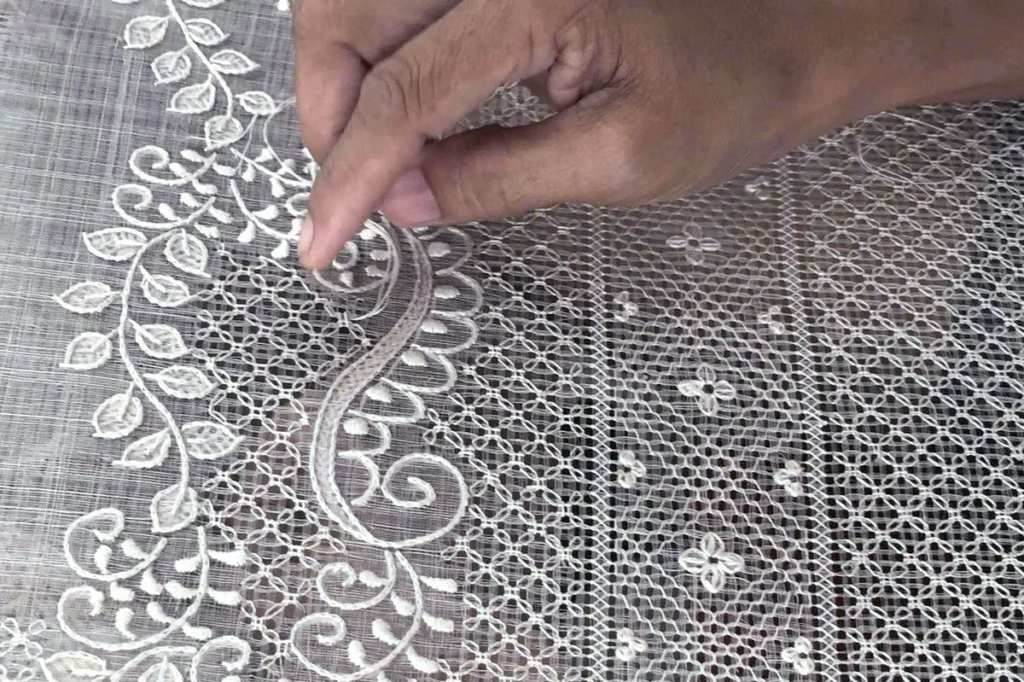
Not all Chikankari is the same. The magic lies in the stitches. In fact, there are over 40 different types! But don’t worry. You don’t need to memorize them all.
You just need to know these five. These are the royalty. These are the stitches that make a simple kurti look like a work of art.
1. Bakhia (The Shadow Work)
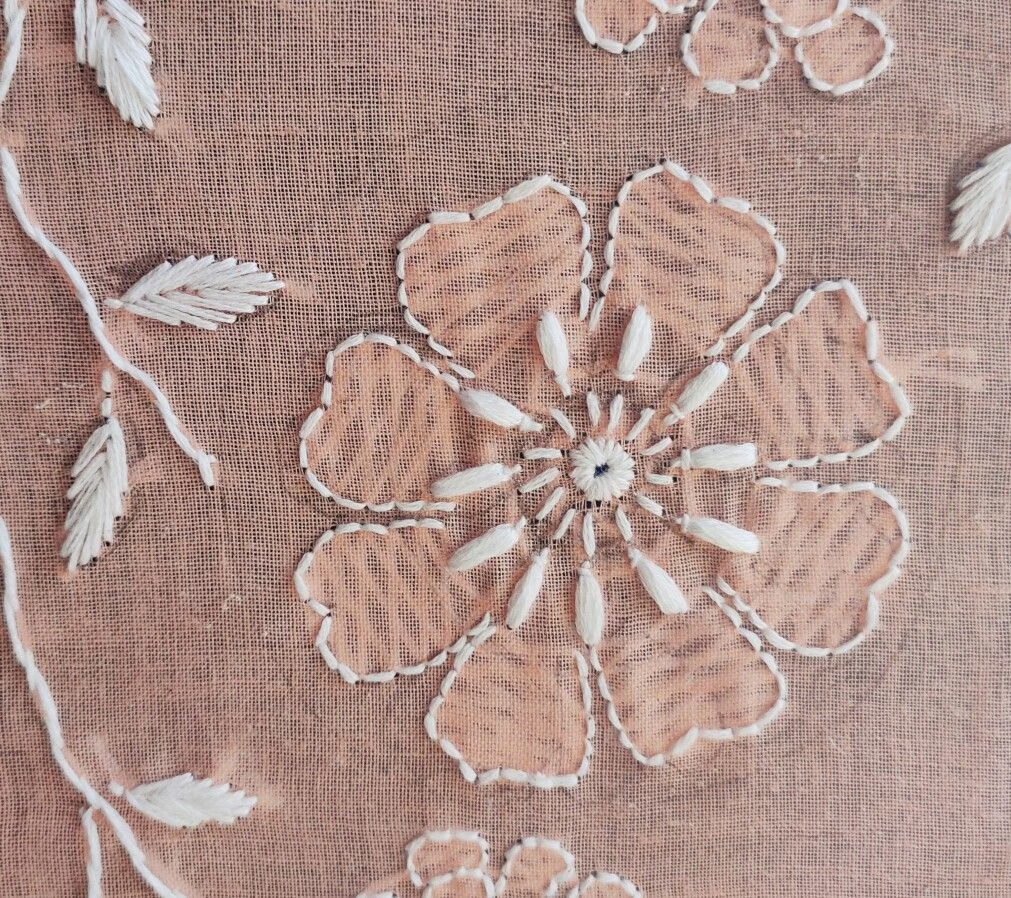
This is the king of Chikankari. It is what most people imagine when they think of the craft.
- What’s the Effect? It creates a shadow on the reverse side of the fabric. The design looks faint and delicate from the front. It is subtle magic.
- The Making Process: The embroidery is done on the wrong side of the cloth. Thick threads are used to fill the motif. When you turn it over, you see a perfect outline.
- Fun Fact: Bakhia makes up nearly 60% of all Chikankari work done today. It is the fastest stitch to execute, which makes beautiful kurtis more affordable.
2. Jali (The Net Effect)
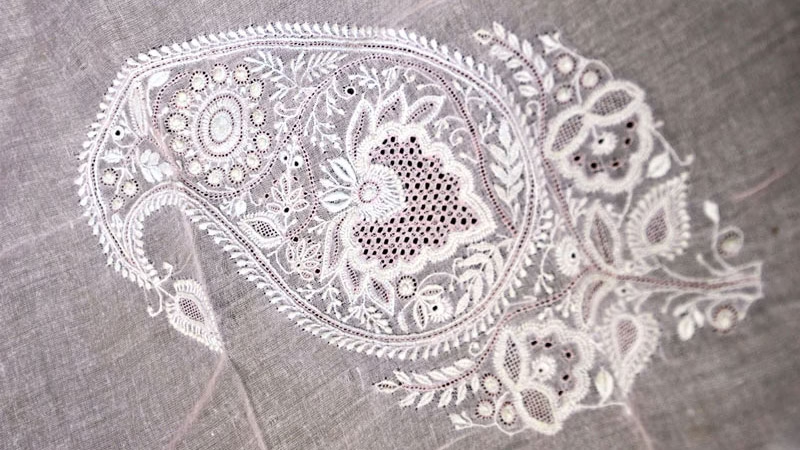
If you see a kurti with intricate, lattice-like holes, you are looking at Jali work. It is a sign of high craftsmanship.
- What’s the Effect? It looks like a delicate net or sieve has been woven into the fabric. It is airy, breathable, and perfect for summer.
- The Making Process: The artisan carefully cuts and pulls the threads of the fabric apart. Then, they stitch around the hole to hold it in place, creating a patterned opening.
- Fun Fact: A single high-end Jali kurti can take up to 20 days to complete. The holes are so precise that they often form floral or geometric patterns.
3. Murri (The Rice Grain)
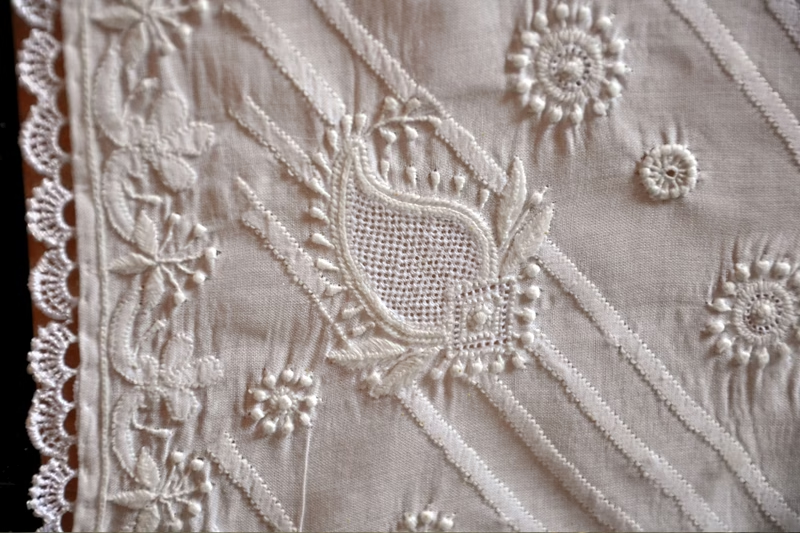
This design is named after rice. Why? Because it looks exactly like a grain of basmati rice!
- What’s the Effect? It adds a slightly raised, textured bump to the fabric. It gives the motif a rich, three-dimensional look.
- The Making Process: It uses a satin stitch to create small, rice-shaped knots. They are usually packed tightly together to form larger patterns like flowers.
- Fun Fact: Murri is one of the oldest stitches in Chikankari. In ancient times, only the wealthy could afford it because it consumes a lot of thread and time.
4. Phanda (The Knot)
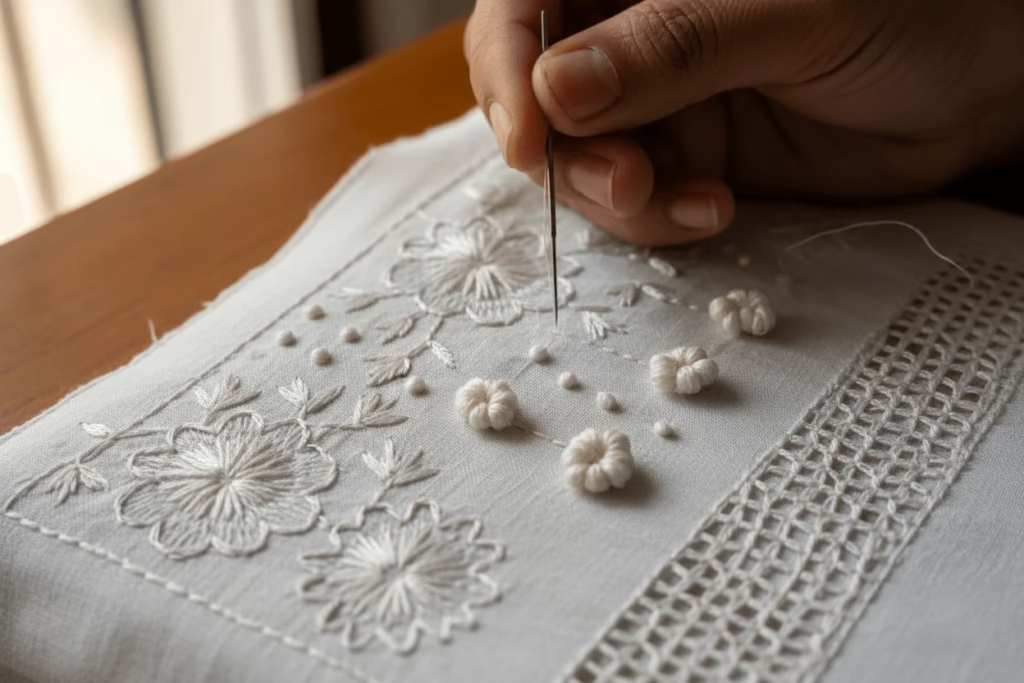
Do you like polka dots? Then you will love Phanda. It is the smaller, more playful cousin of Murri.
- What’s the Effect? It creates tiny, decorative knots all over the fabric. It adds a festive and rich texture without being too heavy.
- The Making Process: It is a type of knot stitch. The artisan wraps the thread around the needle a few times before pulling it through the fabric.
- Fun Fact: Often, Phanda and Murri are used together in the same design. Artisans use Phanda for the center of a flower and Murri for the petals. This contrast creates depth.
5. Tepchi (The Running Stitch)
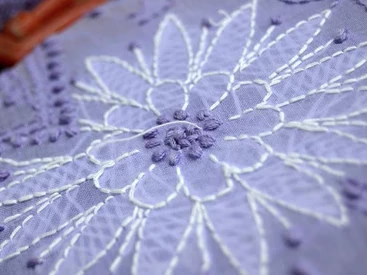
This is the foundation. Think of Tepchi as the outline of a coloring book. It holds everything together.
- What’s the Effect? It creates long, straight lines or simple outlines. It is very flat and subtle, often used to define the shape of a leaf or petal.
- The Making Process: It is simply a long running stitch done with a needle and thread on the right side of the fabric. It is the easiest stitch to learn.
- Fun Fact: Even though it is simple, Tepchi is crucial. It acts as a guide for the other 40 complex stitches. Without it, the design would lose its shape.
So, next time you pick up a kurti, look closely. Is it the shadow of Bakhia? Or the tiny knots of Phanda? Recognizing the stitch makes wearing it even more special.
How to Style a Chikankari Embroidery Kurti for Any Occasion
So, you own a beautiful Chikankari kurti. Now what? The magic of this craft is its versatility. With over 40 different stitches, one kurta can look totally different based on how you style it.
In fact, 65% of women say they wear their Chikankari kurtis more than any other ethnic wear because it suits everything. Let us show you how.
For a Casual Day Out (Work or Coffee)
Keep it simple and breezy.
- The Look: Pair your white or pastel Chikankari Embroidery Kurti with solid cotton trousers or faded denim.
- Footwear: Comfortable Kolhapuri chappals or white sneakers.
- Pro Tip: Since Chikankari is already detailed, skip heavy jewelry. Just wear small silver jhumkas. Let the embroidery be the hero.
For the Festive Vibe (Diwali or Weddings)
This is where your kurti gets a glamorous upgrade.
- The Look: Choose a heavy chikankari kurti in deeper tones like dusty pink or indigo. Pair it with a silk dupatta and a churidar.
- Accessorize: Add a statement neckpiece and potli bag.
- The “Haute” Factor: Style it with a structured blazer. Yes, really! A Lucknowi kurta under a solid blazer is a huge trend right now, blending traditional craft with modern cuts.
The Summer Essential (Beat the Heat)
Did you know Chikankari was invented to beat Lucknow’s humid summers?
- The Look: Opt for a short, sleeveless Anarkali or a straight-cut Chikankari Embroidery Kurti in cotton or georgette.
- Styling: Wear it with palazzos or linen pants. The lightweight fabric and open weave keep you cool while looking polished.
- Stat: Online searches for “summer chikankari kurti” spike by 40% every April.
Stitch Dictionary (Know What You’re Wearing)
To style better, understand the embroidery:
- Jali: Net-like patterns. Perfect for evening wear as it catches the light.
- Murri: Tiny rice-shaped stitches. Great for formal events due to the texture.
- Phanda: Small knot stitches. Adds a festive, rich look to the fabric.
Final Tip: Always check the care label. Authentic Chikankari often requires gentle washing to keep those 400-year-old stitches intact
Real vs. Machine-Made: How to Spot Authentic Chikankari Embroidery
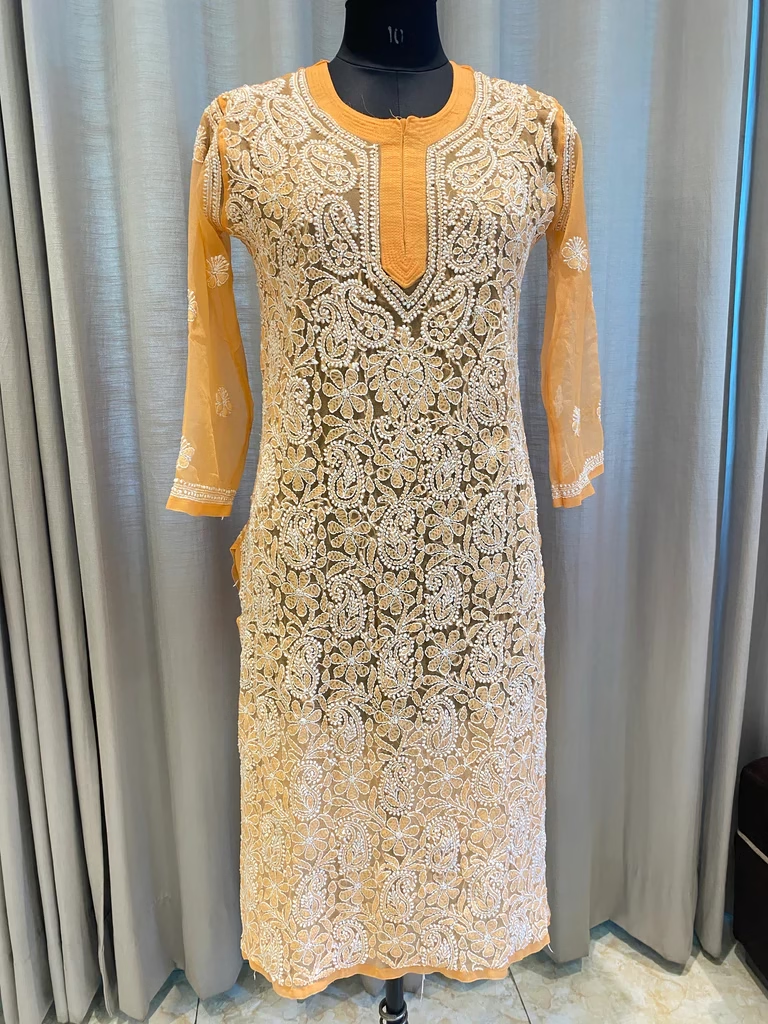
So, you found a beautiful Chikankari kurti online for just ₹800. Deal of the century? Not so fast. The market is flooded with machine-made replicas.
In fact, industry insiders estimate that over 60% of “Chikankari” sold online is actually machine-made. But don’t worry. You can learn to spot the real deal.
Let’s break down the differences so you never get fooled again.
What is Machine-Made Chikankari?
Machine-made Chikankari is exactly what it sounds like. It is mass-produced using power looms or computerized embroidery machines.
These machines mimic the look of hand embroidery. One machine can produce 50+ identical kurtis in a single day. This speed is why they are so cheap.
5 Ways to Spot the Difference
Use this simple checklist when you are shopping.
1. Look at the Backside (The Golden Rule)
- Authentic: The back of the fabric will have small, irregular knots and loose thread ends. The design on the back will be a messy mirror image of the front.
- Machine-Made: The back will be extremely neat, tight, and clean. It might look almost as good as the front. If it is too perfect, be suspicious.
2. Check the “Jali” (Net/Lattice Work)
- Authentic: Real Jali work is created by carefully untwisting and weaving the fabric threads by hand. It looks delicate and slightly uneven. It feels soft.
- Machine-Made: Fake Jali is simply punched out of the fabric with a hot tool or embroidered over a hole. It feels rough and looks perfectly uniform.
3. Feel the Thread Density
- Authentic: Hand embroidery lies flat on the fabric. The threads are tight but have a natural flow.
- Machine-Made: Machine embroidery often uses a very high density of thread to make the design look “full.” This makes the fabric feel stiff and heavy. If the embroidery feels like plastic, walk away.
4. Examine the “Murri” and “Phanda” (Knot Stitches)
- Authentic: These tiny pearl-like knots will be slightly irregular in size. They are soft to the touch because they are tied by hand.
- Machine-Made: These knots will be perfectly round and identical, like little robots lined up in a row.
5. The Price Test
- Authentic: A genuine, heavily hand-embroidered Chikankari kurti rarely costs less than ₹2,500 to ₹3,000. If the price seems too good to be true, it probably is.
- Machine-Made: Usually priced between ₹500 and ₹1,500.
Why Does Authenticity Matter?
Buying authentic Chikankari embroidery isn’t just about owning a beautiful piece of clothing. It supports the lakhs of artisans in Lucknow who rely on this craft to feed their families.
Frequently Asked Questions About Chikankari Embroidery
1. How old is Chikankari embroidery?
Chikankari is over 400 years old. It was introduced during the Mughal era in the 17th century. Empress Noor Jahan is famously credited with patronizing this delicate art form in Lucknow.
2. How many stitches are used in Chikankari?
There are more than 40 distinct stitches. The most famous ones include tepchi, bakhiya (shadow work), phanda, and jaali. Each stitch creates a unique texture on the fabric.
3. What fabric is best for Chikankari?
Soft, breathable fabrics work best. Cotton, chiffon, georgette, and silk are traditional favorites. They allow the intricate embroidery to shine and feel comfortable against the skin.
4. How long does it take to make a Chikankari kurti?
A simple machine-made piece takes a few hours. However, a high-quality, hand-embroidered kurti can take 20 to 45 days depending on the design complexity and stitch density.
5. Why is Lucknow famous for Chikankari?
Lucknow is the historic heart of this craft. The city’s skilled artisans have preserved the technique for generations. The unique “Lucknowi” style features fine, detailed work on mulmul and cotton.
6. How can I identify real Chikankari?
Check the reverse side. Authentic hand embroidery will have slight irregularities and thread knots. Machine-made Chikankari looks perfectly uniform on the front and back. Real shadow work is also uneven.
7. Can Chikankari be washed in a machine?
It is risky. Always check the label. Pure hand embroidery on delicate fabrics should be hand-washed or dry-cleaned. Machine washing can loosen the threads and damage the fine jaali work.
8. Is Chikankari only done in white thread?
No, that is a common myth. While traditional “white-on-white” work is famous, modern Chikankari uses colorful threads. You can now find kurtis with vibrant multicolored embroidery on various fabrics.
9. What is the price range for a good Chikankari kurti?
Prices vary widely. A basic machine-made kurti starts around ₹800. A pure hand-embroidered piece with intricate stitches can range from ₹3,000 to over ₹15,000 depending on the fabric and labor.
10. Why is Chikankari so popular in summer?
The embroidery is light and airy. It is typically done on breathable fabrics like cotton and muslin. This combination keeps you cool while looking elegant, making it perfect for hot Indian summers.
Also Read:
Traditional Dresses of Gujarat

Leave a Reply