
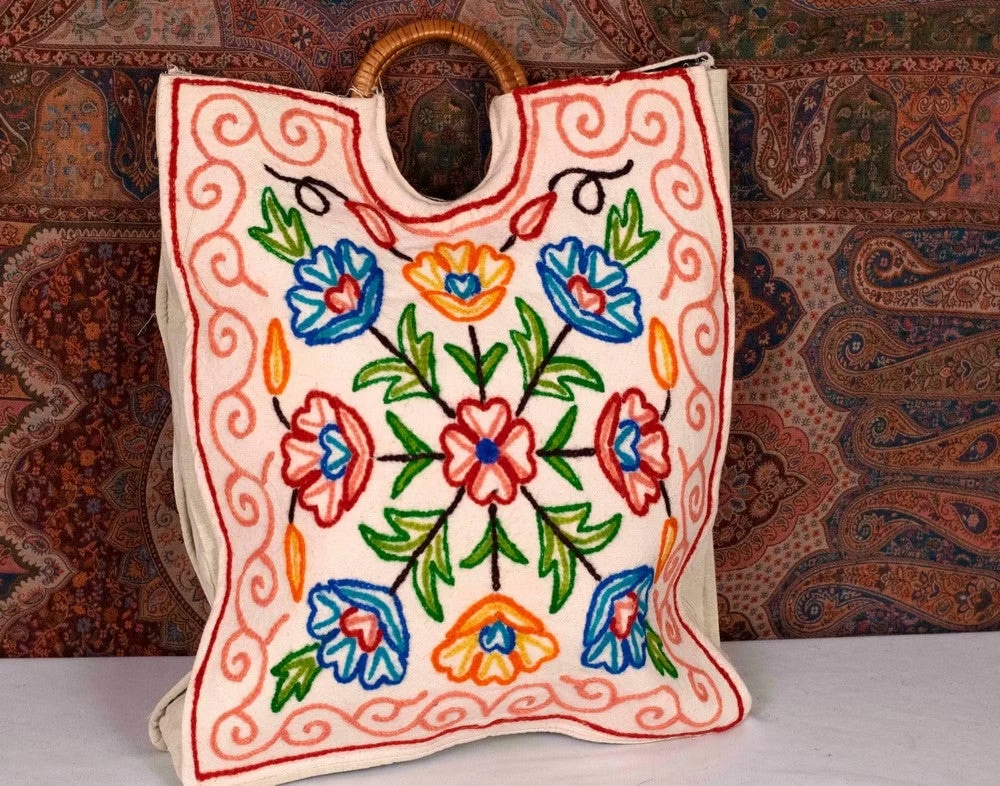
Hello, lovely readers! When we talk about the artistic heartbeat of Jammu & Kashmir, two names instantly rise to the surface- Aari Work and Sozni Embroidery. Both belong to the rich family of Kashmiri hand embroidery styles, yet each carries its own personality, technique, and charm. This blog on Aari Work vs Sozni Embroidery invites you to explore how these two crafts, born in the same land, grew into completely different expressions of beauty.
Aari Work shines through its bold patterns, quick needle movements, and textured finishes, while Sozni impresses you with its delicate, almost painting-like stitches. As we walk through their origins, motifs, materials, and cultural depth, you’ll see why these Kashmiri hand embroidery styles continue to fascinate craft lovers across the world.
So let’s begin our journey into the world of Aari Work vs Sozni Embroidery, where tradition meets artistry in every stitch.
Timeline: History of Aari Work vs Sozni Embroidery
12th–13th Century – Arrival of Aari Work in India
- Aari Work travels from Persia into India through early craftsmen and trade routes.
- The hook needle technique began appearing in Northern textile workshops.
16th Century – Mughal Patronage Boosts Aari
- Mughal emperors promoted richly decorated garments.
- Court artisans introduce faster Aari stitching, nearly 2 to 3 times quicker than traditional needlework.
- Kashmiri craftsmen adapt the technique and add local floral and paisley motifs.
17th Century – Aari Becomes Popular Across North India
- Traders and royal tailors spread Aari designs widely.
- It becomes a go-to style for shawls, kurtas, and décor items because of its decorative, bold look.
15th Century – Early Roots of Sozni in Kashmir
- Sozni develops naturally within Kashmiri weaving communities.
- Local rulers support artisans who create extremely fine needlework.
16th Century – Sozni Gains Recognition Under Kashmiri Kings
- Pashmina shawls with Sozni detailing are made for nobility and royal gifting.
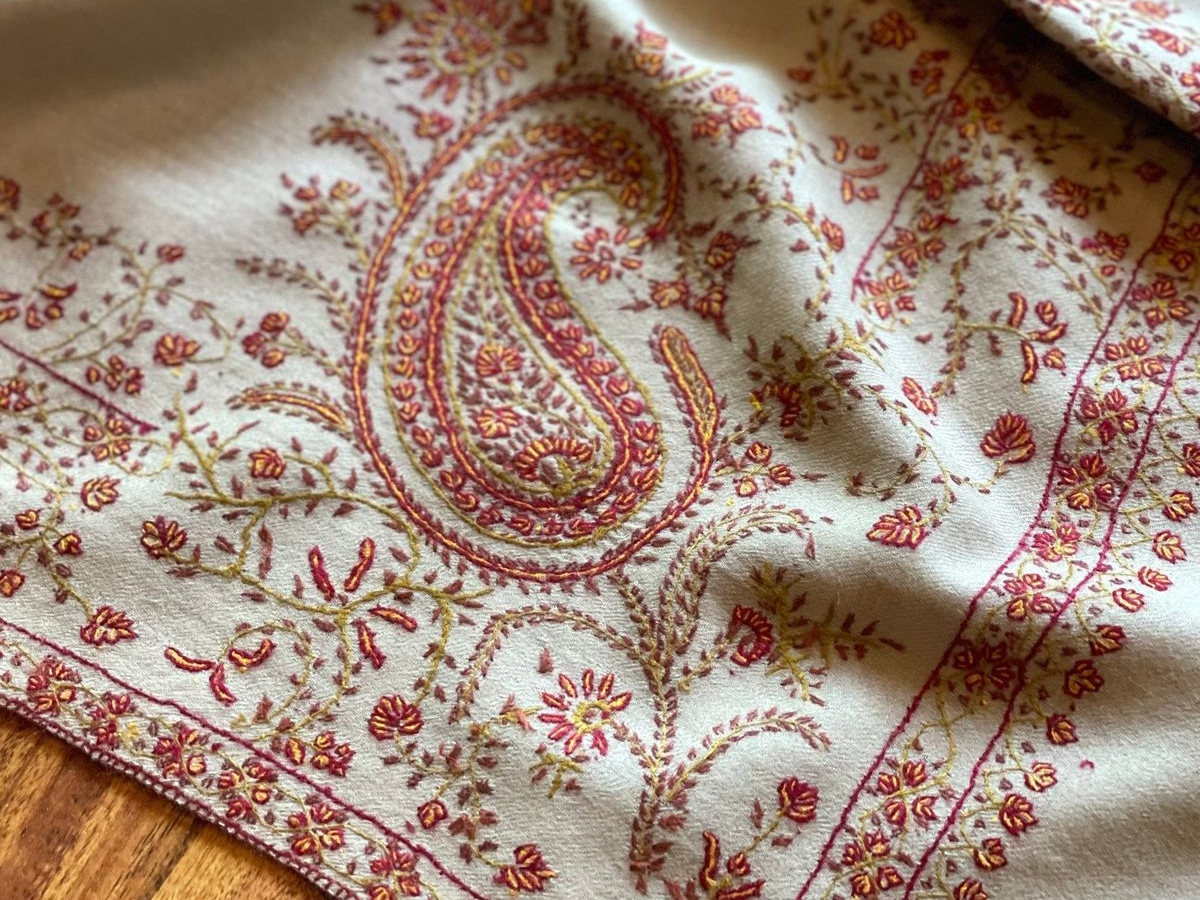
- The craft becomes known for precision, tiny stitches, and reversible patterns.
17th–18th Century – Sozni Travels Beyond Kashmir
- Sozni shawls move through Central Asian and European trade routes.
- Their slow-made craftsmanship, often taking months to years, gives Sozni its luxury status.
Materials Used in Aari Work v/s Sozni Embroidery
| Material Factor | Aari Work | Sozni Embroidery |
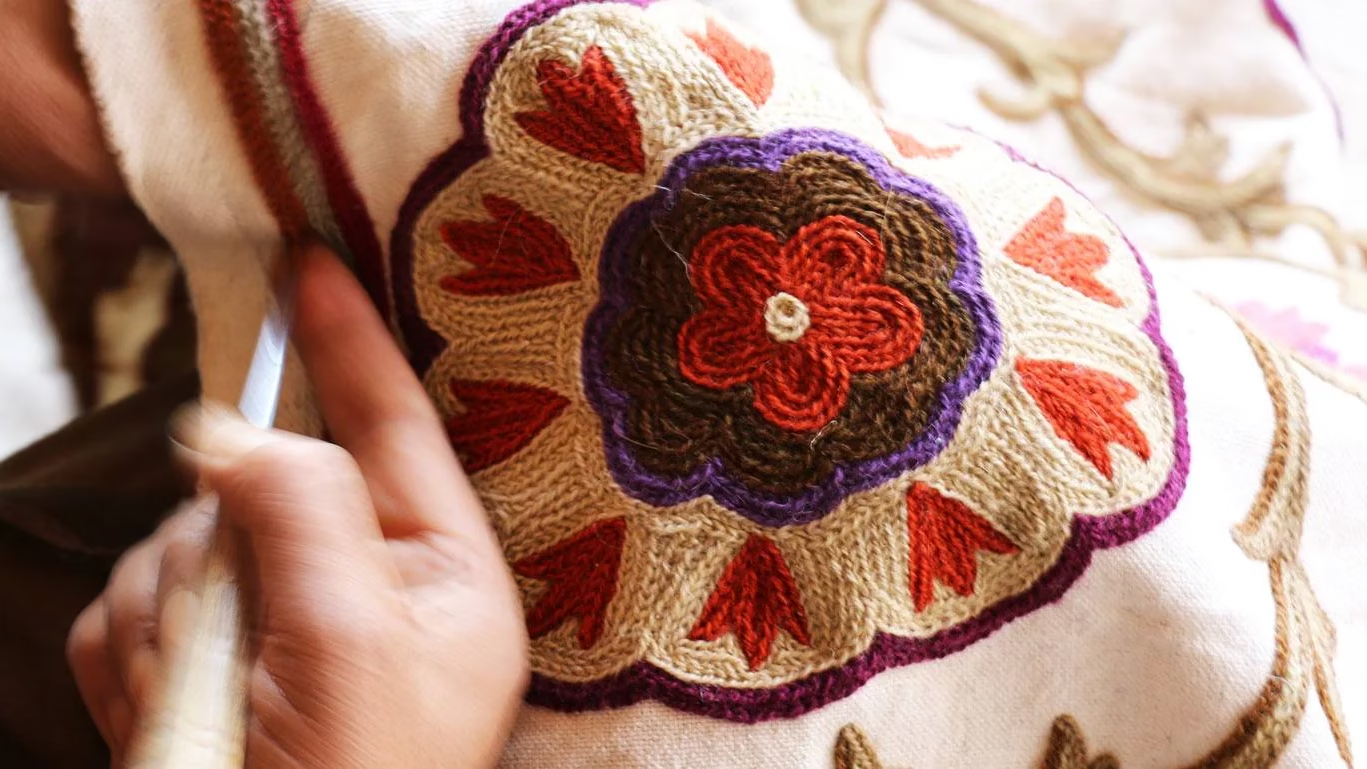
| Threads Used | ✔ Zari, silk, cotton & metallic threads used for bold, decorative stitches | ✔ Ultrafine silk & pashmina-friendly threads used for delicate, reversible motifs |
| Needle Type | ✔ Aari hook needle (tambour needle) enabling chain stitches | ✔ Fine, pointed needle supporting slow, intricate handwork |
| Base Fabrics | ✔ Velvet, silk, georgette, cotton, organza — durable for heavy embellishments | ✔ Pashmina, cashmere, fine wool, raffal, mulberry silk — soft and luxurious |
| Add-on Materials | ✔ Beads, sequins, pearls, stones, mirrors, kundan for richness | — Minimal to zero add-ons; thread-only aesthetic |
| Frames/Tools | ✔ Wooden adda frame used to tightly stretch fabric | ✔ Simple wooden frame or handheld method for precision stitching |
| Design Preparation | ✔ Tracing sheets, chalk, carbon outlines, block printing | ✔ Hand-drawn motifs with charcoal or erasable ink |
Steps of Making Aari Work v/s Sozni Embroidery
| Process Step | Aari Work – Step-by-Step Process | Sozni Embroidery – Step-by-Step Process |
| Step 1: Design Selection | Aari work begins with bold patterns like florals, paisleys, and geometric forms that suit chain-stitch work. Designs are transferred using tracing sheets or block prints for accuracy. | Sozni focuses on fine, detailed motifs like chinar leaves and small florals. Artisans hand-draw designs with faint charcoal or erasable ink for precise needlework. |
| Step 2: Fabric Preparation | Fabrics such as velvet, silk, cotton, or organza are stretched tightly on a wooden frame. High tension ensures smooth, even stitching throughout the design. | Soft fabrics like Pashmina, cashmere, or mulberry silk are lightly stretched. Gentle tension allows delicate stitches to settle naturally without flattening the fabric. |
| Step 3: Thread & Needle Setup | Thick silk, cotton, or zari threads are used with a hook needle. Loop tension is checked to maintain consistent, smooth stitching across motifs. | Ultra-fine silk or wool threads are chosen with a thin, sharp needle. Artisans test line control for the extremely small, precise stitches Sozni requires. |
| Step 4: Initial Outlining | Motifs are outlined with chain stitches using the hook needle. This sets the boundaries for filling and embellishment later. | Outlines are created with tiny, controlled stitches. Care is taken so both front and back of the fabric look clean, a hallmark of Sozni among Kashmiri hand embroidery styles. |
| Step 5: Filling Technique | Large areas are filled with repeated chain-stitch loops. Layers of threads, sequins, beads, or metallic elements add texture and richness. | Motifs are filled with tightly packed, fine stitches. Subtle thread color changes create smooth shading, without adding heavy embellishments. |
| Step 6: Detailing & Finishing | Edges are refined with contrasting threads or metallic touches. Raised elements are secured, and motifs are checked for symmetry. | Finishing involves smoothing stitch density, refining outlines, and hiding knots. The back of the fabric mirrors the front, ensuring a seamless, reversible design. |
| Step 7: Final Touch & Quality Check | Loose threads are trimmed, embellishments inspected, and the piece lightly steamed or pressed from the reverse. The embroidery is now ready for garments or décor. | Stitch uniformity, motif clarity, and softness are checked. Light steaming may be applied to settle threads. The finished work exemplifies fine craftsmanship central to Aari Work vs Sozni Embroidery. |
Key Differences in Design Styles and Motifs: Aari Work v/s Sozni Embroidery
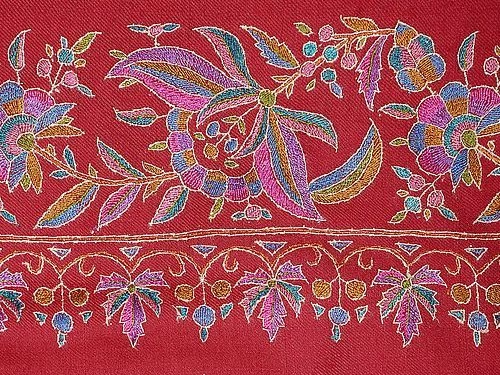
When you put Aari Work and Sozni Embroidery side by side, the design difference is super clear. Both come from Jammu and Kashmir, yet they follow two completely different artistic philosophies. Here’s a simple, research-based breakdown with helpful numerical comparisons.
1. Style Personality
- Aari Work
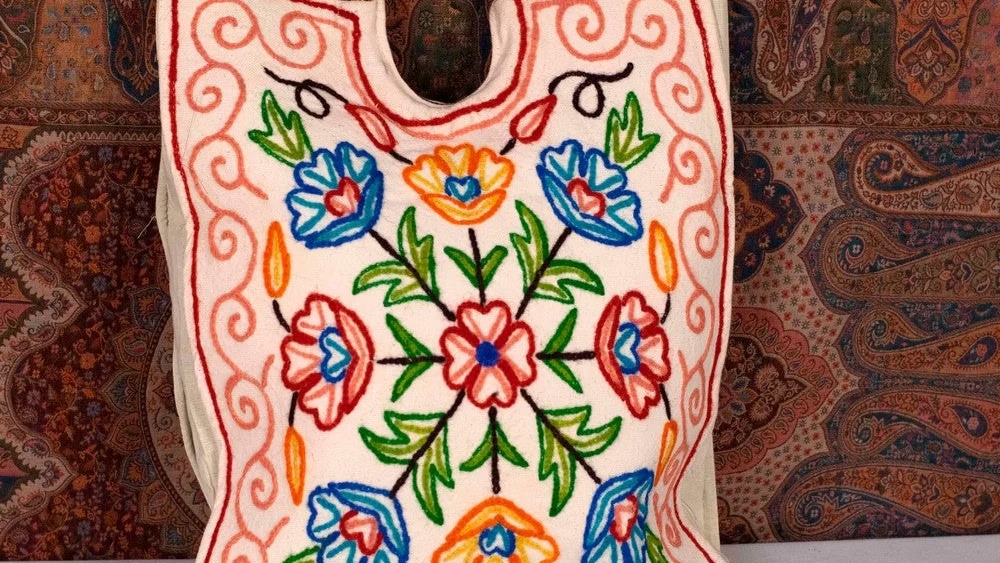
- Designs are usually 2 to 3 times bolder than Sozni patterns.
- Often covers 40 to 60 percent of the fabric surface in dense motifs.
- Ideal for festive and bridal looks where high visual impact matters.
- Sozni Embroidery
- Much more refined and minimal, covering only 10 to 20 percent of the fabric.
- Precision-based patterns with extremely fine stitchwork.
- Perfect for luxury shawls and elegant wear.
2. Motif Types
- Aari Work Motifs
- Florals, vines, jaal, and geometric repeats appear in larger scales, often 3 to 5 cm per motif unit.
- Paisleys are big and ornamental, sometimes stretching across 15 to 20 cm.
- Sozni Embroidery Motifs
- Tiny florals and paisleys usually stay within 1 to 3 cm, reflecting its delicate nature.
- Chinar leaves and miniature patterns maintain strict symmetry and smaller proportions.
3. Detailing Approach
- Aari Work
- Features sequins, beads, stones, and metallic threads that add 30 to 40 percent more height and texture to the surface.
- Outlines are visibly thicker, roughly 2 to 3 mm wide.
- Sozni Embroidery
- Uses only thread; no external embellishments.
- Stitch density can be 3 to 4 times higher than Aari, making the surface look flat yet incredibly detailed.
- Outlines are razor-thin, often under 1 mm.
4. Overall Visual Impact
- Aari Work
- Creates a raised, textured effect with a clear dimensional look.
- Ideal when a garment needs a high-impact statement.
- Sozni Embroidery
- Appears almost woven into the fabric because of its ultra-fine, dense stitchwork.
- Best for muted luxury, especially on Pashmina.
Pricing and Availability in the Market: Aari Work v/s Sozni Embroidery
The pricing and availability of Aari Work and Sozni Embroidery differ mainly because of the time, skill, and material quality involved. Here’s a simple, side-by-side comparison you can directly use in your blog.
1. Price Range in the Market
- Aari Work
- Generally, it is more affordable because it is faster to produce.
- A standard embroidered piece can cost 30 to 50 percent less than a Sozni product of similar size.
- Prices vary widely based on embellishments, but most mid-range apparel stays in the budget to moderate category.
- Custom bridal Aari can get expensive, but still remains cheaper than premium Sozni.
- Sozni Embroidery
- Considered one of the most premium crafts from Kashmir because of extremely fine handwork.
- Many Sozni pieces, especially on Pashmina, fall into the high to luxury category.
- A single Sozni shawl can take 3 to 12 months, increasing the cost significantly.
- Overall, Sozni is often 2 to 4 times higher in price compared to Aari Work due to precision and time investment.
2. Availability in the Market
- Aari Work
- Easily available across India in both retail and online stores.
- Mass-produced and artisan-made versions exist, making it accessible in multiple price brackets.
- Found on garments, home décor, fashion accessories, and festive wear throughout the year.
- New collections appear seasonally because Aari can be completed relatively quickly.
- Sozni Embroidery
- Much less available because each piece is handcrafted by highly skilled artisans.
- Authentic Sozni, especially on pure Pashmina, is limited and often made in small batches.
- Many sellers only take pre-orders, given the long production time.
- Premium Sozni is mainly found in Kashmir, select designer houses, and niche craft boutiques.
3. Buying Experience
- Aari Work
- Buyers get more variety, faster delivery, and a wide price spread.
- Suitable for everyday wear, festive outfits, gifting, and décor purchases.
- Sozni Embroidery
- Buyers must look for authenticity, artisan certifications, and fiber quality.
- Usually purchased as an investment piece, luxury shawl, heirloom item, or limited-edition textile.
Wrapping-Up:
In the end, Aari Work and Sozni Embroidery may come from the same region, but they speak completely different design languages. Aari brings boldness, texture, and decorative richness, making it perfect for festive wear, statement garments, and pieces where you want immediate visual impact. Sozni, on the other hand, shines through quiet luxury. Its ultra-fine detailing, reversible stitches, and delicate motifs make it the choice for premium shawls, heirloom textiles, and subtle elegance.
If you prefer affordability, quick availability, and vibrant patterns, Aari Work comfortably wins. But if you value craftsmanship, slow-made artistry, and timeless refinement, Sozni sits at the top. Both styles carry the soul of Kashmiri hand embroidery, just expressed in their own unique way. And together, they show why the textile heritage of Jammu and Kashmir continues to remain unmatched in beauty and depth.
Also Read:
Kasuti Embroidery vs Lambani Embroidery of Karnataka

Leave a Reply