

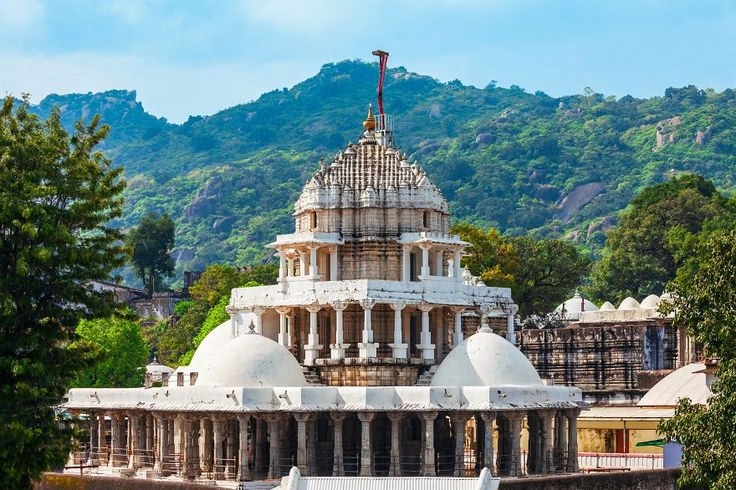
Hello folks! If you think marble is just stone, the Dilwara Temples of Mount Abu are about to change your mind. Tucked away in the cool hills of Rajasthan, these Jain temples are pure poetry carved in white marble.
Built between the 11th and 13th centuries, the Dilwara Temples are famous for their unmatched craftsmanship, where ceilings bloom like flowers and pillars tell silent stories. Every inch feels delicate, detailed, and deeply spiritual.
There’s no gold, no grandeur—just quiet brilliance. As you walk through these halls, you don’t just see art; you feel devotion shaped by patience and skill. Welcome to a place where marble breathes, and beauty whispers.
History of the Dilwara Temples: Legacy of Jain Devotion
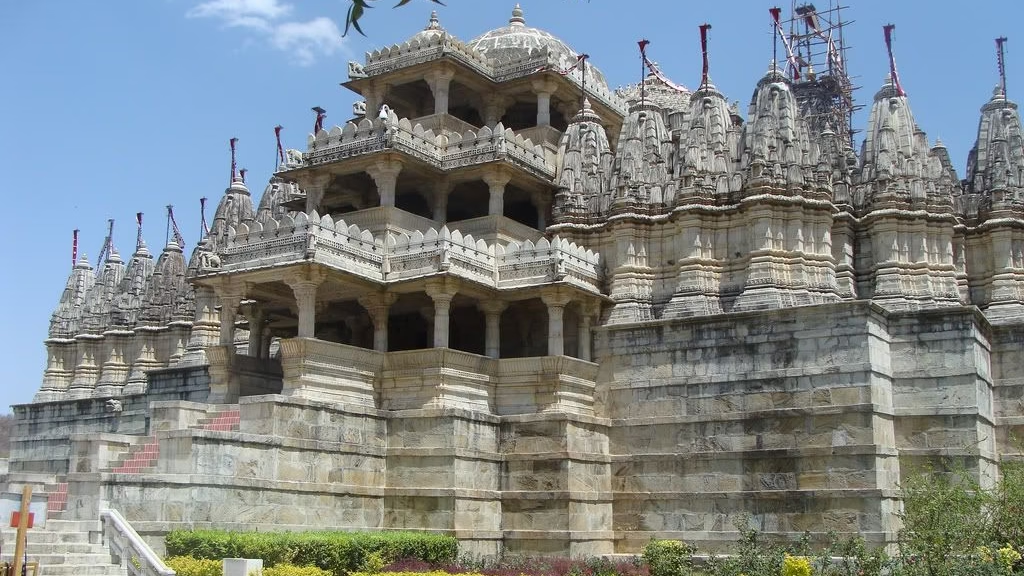
The history of the Dilwara Temples is a beautiful mix of faith, patience, and unmatched craftsmanship. Built over centuries, these Jain temples stand as timeless symbols of devotion rather than royal power. Let’s walk through their journey, step by step.
11th Century: The Beginning of a Sacred Vision
- In 1031 CE, the first and oldest temple, Vimal Vasahi, was built.
- Commissioned by Vimal Shah, a minister of the Solanki ruler Bhima I.
- Dedicated to Adinatha, the first Jain Tirthankara.
- White marble was chosen to reflect purity and spiritual calm.
12th–13th Century: Expansion of Devotional Architecture
- Luna Vasahi was constructed in 1230 CE.
- Built by brothers Vastupal and Tejpal, wealthy Jain merchants.
- Dedicated to Neminatha, the 22nd Tirthankara.
- The temples focused on inner devotion, not outward grandeur.
15th Century: Continued Faith and Craft
- Pittalhar Temple emerged during this period.
- Known for its brass image of Rishabhanatha.
- Shows how devotion continued despite political changes.
16th Century: Completion of the Complex
- Parshvanatha Temple and Mahavira Swami Temple were added.
- Intricate carvings reached new levels of detail.
- Jain values of non-violence and discipline guided every design.
Present Day: A Living Heritage
- The Dilwara Temples remain active places of worship.
- They attract pilgrims, historians, and art lovers alike.
- More than monuments, they are lessons in faith carved in marble.
These temples quietly remind us—true devotion doesn’t shout; it endures.
Who Built the Dilwara Temples? Patrons and Craftsmen
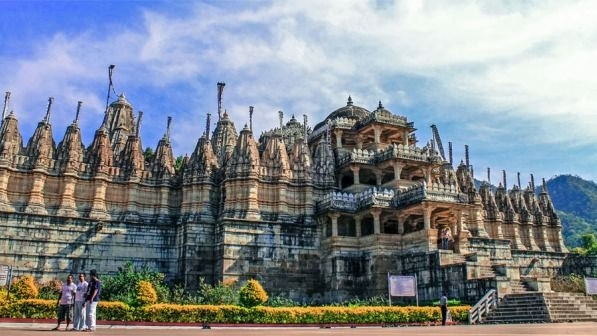
The beauty of the Dilwara Temples is not accidental. Every marble pillar and carved ceiling reflects vision, devotion, and extraordinary skill. Let’s meet the people behind these timeless Jain masterpieces in Mount Abu.
Royal Patrons with Deep Faith
- The Dilwara Temples were built between the 11th and 13th centuries.
- They were commissioned by ministers and generals of the Solanki (Chaulukya) dynasty.
- Vimal Shah, a trusted minister of King Bhimdev I, built the Vimal Vasahi Temple in 1031 CE.
- Vastupal and Tejpal, influential Jain brothers, sponsored the Luna Vasahi Temple in 1230 CE.
- Their goal was devotion, not display of power.
Master Craftsmen in Marble
- Skilled artisans from across western India were invited.
- They worked without signatures, driven by spiritual humility.
- White marble was carved with extreme precision.
- Ceilings, pillars, and panels show unmatched detailing.
Devotion Turned into Stone
- No rulers’ statues appear inside the temples.
- The focus remains purely on Jain philosophy and art.
- Every carving celebrates faith, patience, and perfection.
Artistic Details and Architectural Brilliance of Dilwara Temples
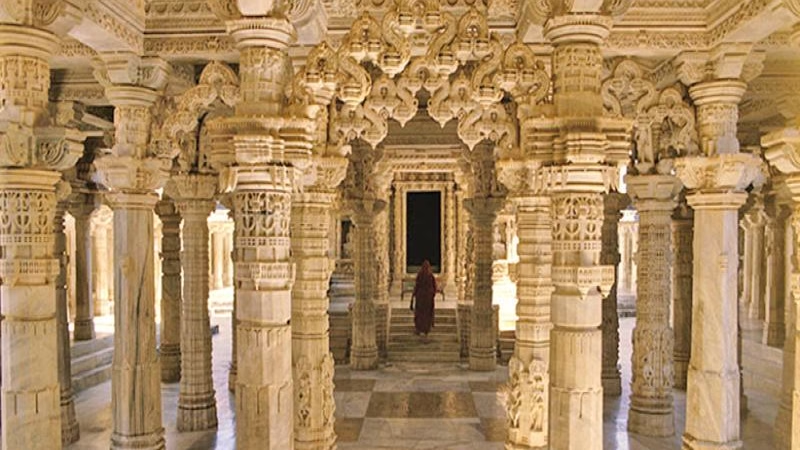
The Dilwara Temples in Mount Abu are not just places of worship—they feel like poetry carved in marble. Every corner invites you to pause, look closer, and admire human patience turned into stone.
Marble That Feels Like Lace
- Built entirely from white marble.
- Marble was transported from distant quarries with great effort.
- Carvings are so fine they resemble soft fabric, not stone.
- Even after centuries, the marble retains its glow.
Ceilings That Steal the Show
- Each temple ceiling has a unique design.
- Circular mandalas, lotus patterns, and concentric rings dominate.
- No two ceilings look exactly the same.
- The detailing grows more intricate as you look upward.
Pillars with Personality
- Pillars are delicately carved and perfectly polished.
- Each pillar tells a different story through motifs.
- Floral patterns, dancers, and divine figures appear repeatedly.
- Despite the heavy stone, the pillars feel graceful and light.
Domes and Mandapas
- Domes are layered with deep, detailed carvings.
- Central mandapas act as visual anchors.
- The play of light and shadow adds drama to the space.
- Silence here feels intentional, almost sacred.
Precision Beyond Imagination
- No use of mortar; stones fit flawlessly.
- Symmetry is maintained with mathematical perfection.
- Every carving reflects Jain values of restraint and purity.
- The craftsmanship shows devotion, not just skill.
Symbols and Motifs in Dilwara Temple Carvings
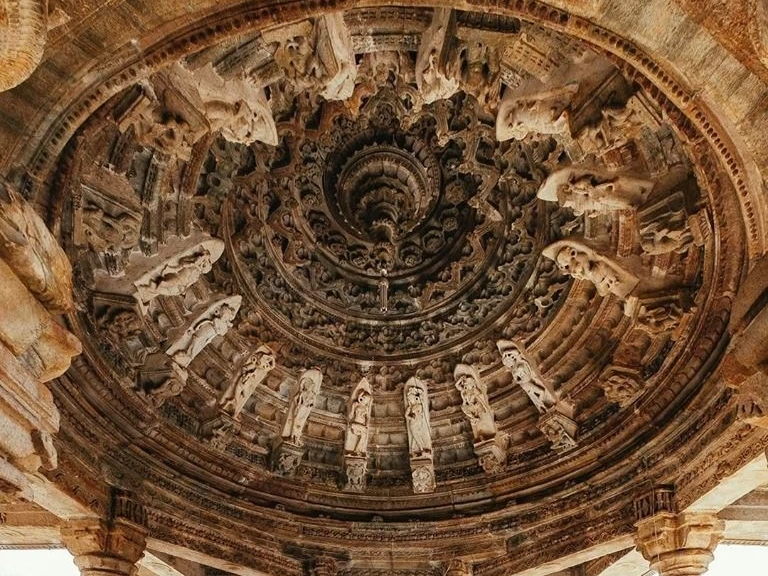
The Dilwara Temples are not just about white marble beauty. Every carving here speaks softly, carrying deep meaning. Let’s walk through the symbols and motifs that make these temples truly special.
Lotus Motif: Purity and Spiritual Awakening
- The lotus appears frequently on ceilings and pillars.
- It symbolizes purity rising above worldly attachments.
- Even in stone, the petals look soft and alive.
- It reflects the Jain path of inner awakening.
Kalpavriksha: The Divine Wish-Fulfilling Tree
- The Kalpavriksha motif represents abundance and generosity.
- It reminds devotees to give selflessly.
- Carved with fine branches and leaves, it shows balance in life.
Tirthankara Symbols: The Path of Liberation
- Each Jain Tirthankara is shown with unique emblems.
- These symbols help devotees identify teachings and values.
- Calm expressions highlight renunciation and peace.
Geometric Patterns: Order of the Universe
- Repeating geometric designs cover floors and ceilings.
- They symbolize cosmic order and discipline.
- Precision in symmetry reflects spiritual balance.
Dancing Figures and Celestial Beings
- Graceful dancers and heavenly figures appear in panels.
- They celebrate joy, devotion, and divine presence.
- Movement in still marble feels almost magical.
Elephants and Lions: Strength with Control
- Elephants symbolize wisdom and patience.
- Lions represent strength guided by restraint.
- Together, they reflect disciplined power.
Every motif in the Dilwara Temples invites you to pause and look closer. These carvings don’t shout—they whisper timeless spiritual truths through marble perfection.
Facts, Myths, and Lesser-Known Legends of the Dilwara Temples
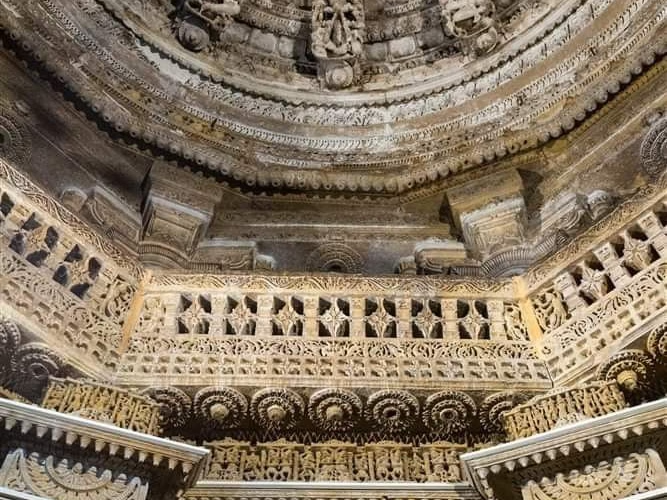
The Dilwara Temples of Mount Abu are not just admired for their marble beauty; they are wrapped in fascinating facts, whispered myths, and stories that make visitors pause and wonder. Let’s explore them together.
Interesting Facts That Amaze Visitors
- The Dilwara Temples are entirely carved from white marble.
- No cement or mortar was used in construction.
- The marble was transported from distant quarries using elephants.
- Each ceiling panel has a different design—no repetition at all.
- The carvings are so fine they resemble lace rather than stone.
- Despite their richness, the temples promote simplicity and humility.
Popular Myths Surrounding the Temples
- It is believed the marble feels cool even in peak summer due to divine blessing.
- Locals say the silence inside the temples has healing energy.
- Some believe celestial artists guided human craftsmen at night.
- A myth suggests the temples glow faintly under moonlight during special Jain festivals.
Lesser-Known Legends and Stories
- Artisans were paid in gold equal to the weight of marble dust they produced.
- Craftsmen were not allowed to sign their work, honoring devotion over fame.
- Legend says the carvings were inspected in candlelight to avoid mistakes.
- Some believe unfinished carvings were intentionally left to symbolize humility.
Spiritual Beliefs Linked to the Temples
- Walking barefoot is believed to increase spiritual awareness.
- Devotees say the temples help calm restless minds instantly.
- The detailed ceilings are meant to draw the soul upward, not the eyes downward.
The Dilwara Temples remind us that true beauty lies not just in what we see, but in what we feel. Facts impress, myths intrigue, and legends keep the magic alive—quietly, gracefully, forever.
Hidden Details You Might Miss at First Glance
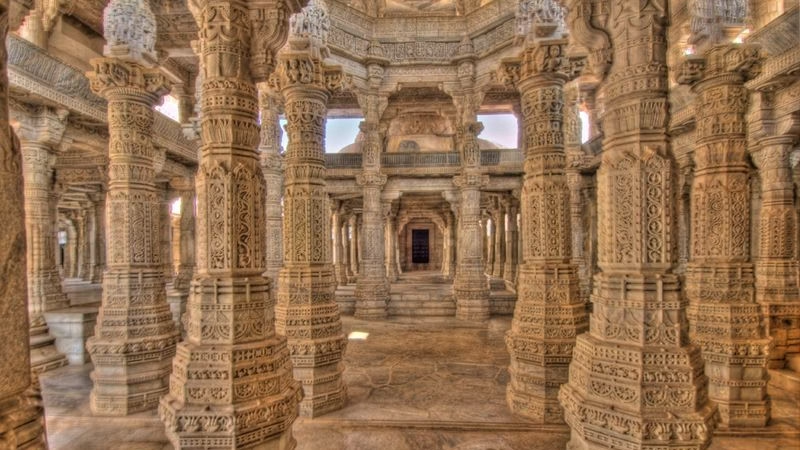
The Dilwara Temples may look calm and simple from outside, but once you step in, they slowly begin to surprise you. These marble wonders reward those who look closely. Let’s uncover some hidden details you might easily walk past.
Paper-Thin Marble Carvings
- The marble panels are carved so delicately they feel almost weightless.
- Some slabs are as thin as a sheet of paper.
- Light passing through creates soft shadows and depth.
Ceilings That Tell Silent Stories
- Each ceiling is uniquely designed.
- Circular lotus patterns represent purity and spiritual awakening.
- Tiny figures are arranged in perfect symmetry, showing Jain philosophy.
Invisible Joints and Seamless Craft
- Marble blocks fit together without visible joints.
- No mortar was used in many sections.
- This precision reflects advanced craftsmanship of the time.
Carved Sound and Silence
- The domes are acoustically balanced.
- Even a soft chant echoes gently.
- This was designed for meditation, not grandeur.
Tiny Figures with Big Meaning
- Miniature dancers, elephants, and celestial beings hide in corners.
- Each figure symbolizes balance, restraint, and harmony.
- Many visitors miss these unless guided.
Contrast Between Outside and Inside
- The exterior appears plain and humble.
- Inside, marble blooms into intricate art.
- This reflects Jain values of inner richness over outer show.
The Dilwara Temples are not meant to impress instantly. They ask for patience. Look slowly. Observe deeply. That’s when their true beauty quietly unfolds.
Itinerary for Visiting Dilwara Temples: A Complete Guide
Planning a visit to the Dilwara Temples? Here’s a simple, relaxed itinerary to help you enjoy these marble wonders without feeling rushed.
Morning: Arrival and Preparation
- Reach Mount Abu early in the morning.
- Have a light breakfast near Nakki Lake.
- Wear modest, comfortable clothing.
- Leave phones, cameras, and leather items outside the temple complex.
- Walk calmly towards the Dilwara Temples to soak in the peaceful vibe.
Mid-Morning: Temple Exploration
- Start with the Vimal Vasahi Temple, the oldest and most famous.
- Spend time observing marble carvings closely.
- Move to Luna Vasahi Temple, known for its ceiling designs.
- Visit Pittalhar, Parshvanatha, and Mahavir Swami Temples.
- Take short pauses to rest and reflect between temples.
Afternoon: Local Experiences
- Head back to town for lunch.
- Try simple Rajasthani or Jain-friendly meals.
- Visit Nakki Lake for a short walk or boat ride.
Evening: Wind Down
- Enjoy sunset views from Sunset Point.
- Shop for local handicrafts.
- End the day feeling calm, inspired, and amazed by timeless craftsmanship.
Bottom Lines
As we come to the end of this journey, the Dilwara Temples of Mount Abu leave behind a quiet sense of wonder. Carved entirely in white marble, these temples are not just architectural masterpieces but expressions of faith, patience, and devotion.
Every pillar, ceiling, and corridor reflects the extraordinary skill of artisans who transformed stone into lace-like beauty. Beyond their visual splendor, the Dilwara Temples invite reflection—on simplicity, spirituality, and the timeless values of Jain philosophy.
Long after you step out of their serene courtyards, the calm, precision, and grace of these temples stay with you, reminding us that true grandeur often lies in delicate details and silent devotion.
“Where marble whispers devotion and timeless craftsmanship lives.”
Also read: Chitera Wall Paintings – Haryana

Leave a Reply