

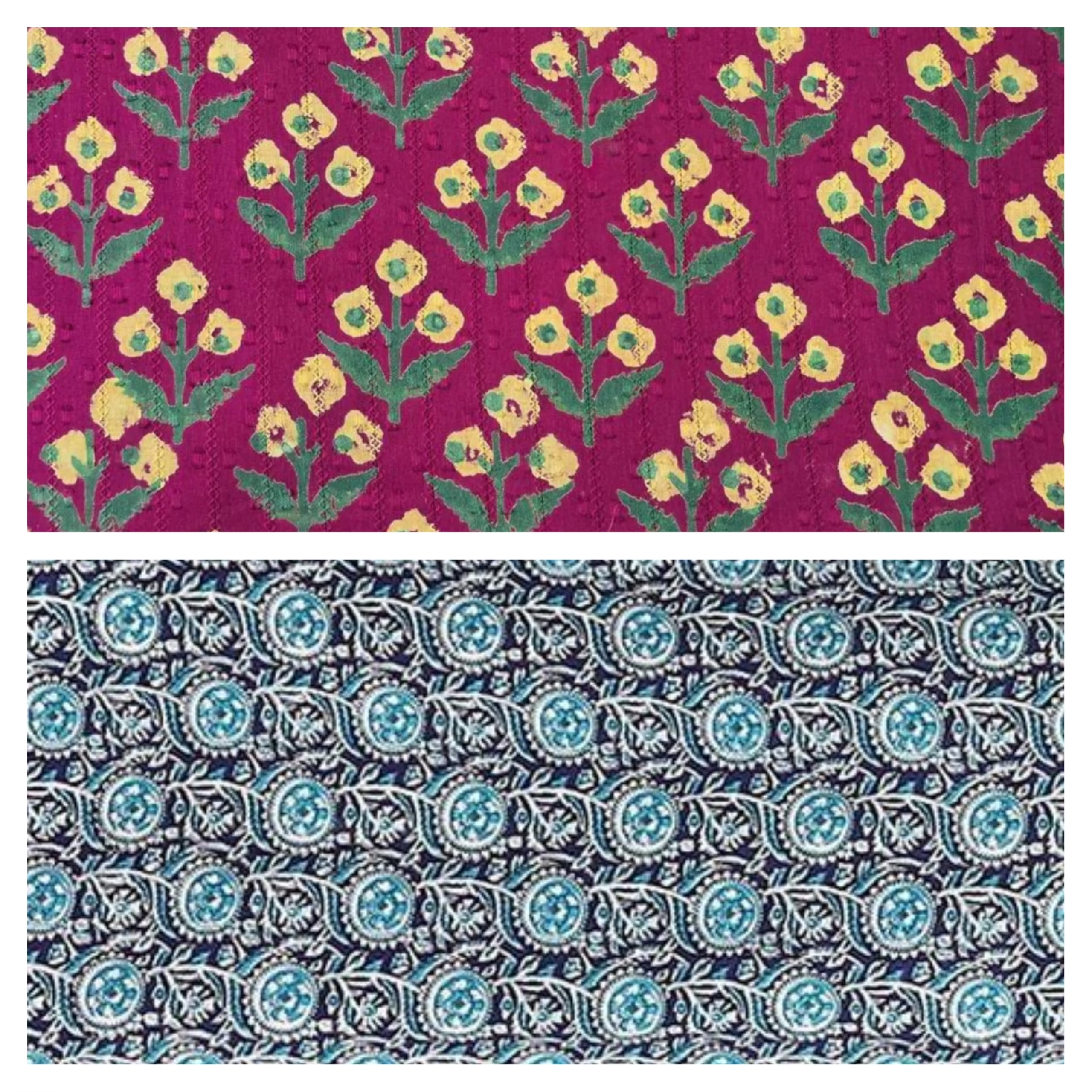
Rajasthan is a land where colours, crafts, and stories flow through every village, and two of its most loved textile traditions—Sanganeri Print vs Dabu Print—shine the brightest. While Sanganeri charms you with its delicate floral patterns and soft pastel shades, Dabu pulls you in with its earthy, rustic look created through a unique mud-resist technique.
Both prints come from skilled artisans who have carried these techniques for generations. Together, they show how one region can produce two completely different yet equally beautiful art forms. Let’s explore what makes each of them truly special!
History and Origins: How Each Print Began
The story of Sanganeri Print vs Dabu Print begins in two culturally rich regions of Rajasthan, each shaped by its own history and environment.Sanganeri print originated over 500 years ago in the town of Sanganer near Jaipur. Its growth was strongly influenced by the patronage of the Jaipur royal family.
Skilled artisans who migrated during wars brought with them delicate floral designs, fine lines, and vibrant natural dyes. Over time, Sanganeri printing became famous for its elegance and detailed craftsmanship.
Dabu print, on the other hand, emerged in the village clusters of Bagru and surrounding areas. This technique is ancient, with references dating back to the 8th century. Dabu uses a unique mud-resist process, creating rustic, earthy patterns that reflect rural life and nature. Despite challenges, Dabu printing survived through generations, keeping its organic charm alive.
Geographic & Cultural Context
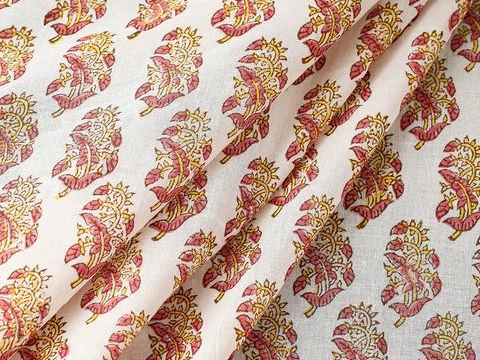
When exploring Sanganeri Print vs Dabu Print, it’s impossible to ignore how deeply both art forms are shaped by the places they come from. Rajasthan, known for its vibrant colours and desert landscapes, has given each printing style a unique identity based on its geography, environment, and cultural habits.
Sanganer lies just a few kilometres from Jaipur, along the banks of the Dravyavati River. The availability of clean, soft water historically made it perfect for washing and dyeing fabrics. This played a major role in developing Sanganeri printing into a delicate, detailed style famous for its fine floral patterns, soft pastels, and precision block work. The bustling craft clusters here reflect centuries of Jain and Hindu artistic influences.
Dabu printing, on the other hand, flourished in Bagru, a village about 30 km from Jaipur. The region’s clay-rich soil, thick mud, and natural surroundings helped shape the mud-resist technique that defines Dabu art. Bagru’s prints carry a rustic charm, with bold motifs, deep indigos, and organic textures that mirror village life and tribal traditions.
Together, these regions reveal why Sanganeri Print vs Dabu Print is not just a comparison of techniques, but a story of landscapes, communities, and cultural roots.
1. Materials Used in Sanganeri Print vs Dabu Print
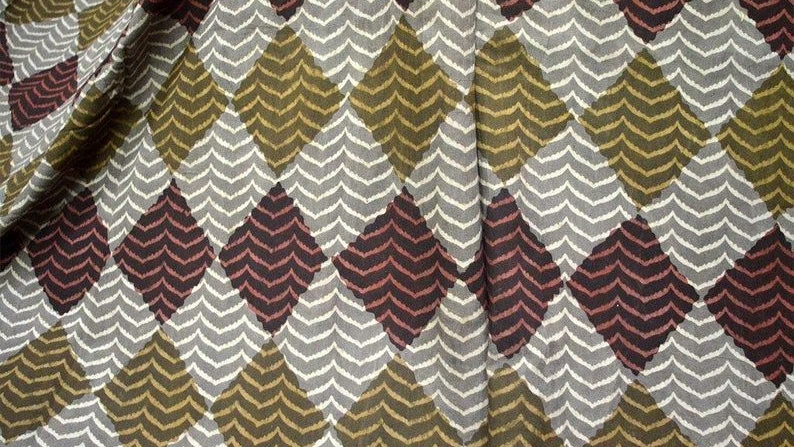
A. Materials Used in Sanganeri Print
1. Fabrics
- Soft cotton (most common)
- Mulmul
- Chanderi
- Silk blends
- Fabrics are chosen for their lightness because Sanganeri prints are delicate and floral.
2. Wooden Blocks
- Hand-carved sheesham wood blocks
- Blocks contain fine motifs, often as thin as 1 mm.
3. Natural & Synthetic Dyes
- Traditionally: Indigo, Harad, Madder, Turmeric, Pomegranate rind
- Modern: AZO-free dyes, pigment dyes for brighter impressions.
4. Printing Tools
- Flat wooden table
- Sponge pads
- Dye trays
- Starch solution (for fabric stiffening)
5. Washing & Finishing Materials
- Mild soap
- Water tanks
- Sun-drying platforms
B. Materials Used in Dabu Print
1. Fabrics
- Raw cotton
- Kota cotton
- Mashru silk
- Cotton-silk blends
- The fabric needs to be strong enough to withstand repeated mud-resistant treatments.
2. Dabu (Mud Resist Paste) Ingredients
This is the heart of Dabu printing:
- Black soil (clay)
- Chuna (lime)
- Gum (from babool tree)
- Wheat chaff (to strengthen the paste)
3. Natural Dyes & Indigo Vats
- Indigo dye
- Rust-red dyes
- Brown dyes from kashish (iron + jaggery)
- Vegetable dyes
4. Wooden Blocks
- Heavier blocks with bold motifs
- Patterns include dots, waves, zig-zags, and bold florals.
5. Sawdust
- Sprinkled on freshly printed mud paste to keep it from smudging and to help it resist dye.
2. Steps of Making: Sanganeri Print vs Dabu Print
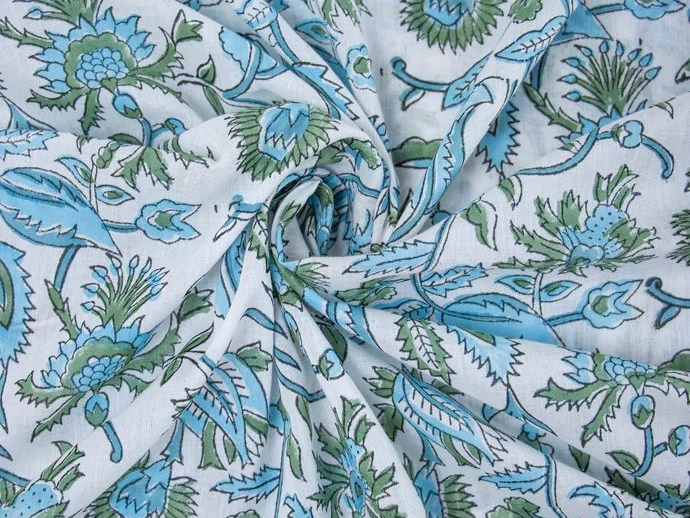
A. Steps of Making Sanganeri Print
Sanganeri is known for its bright, fine, floral style. Here’s how artisans create it:
1. Fabric Preparation
- Fabric is washed in soap and water to remove starch, dust, or oil.
- It is sun-dried completely so the dye can attach evenly.
2. Block Designing and Carving
- Artisans carve floral motifs like bootas, butis, peacocks, and vines.
- Each motif has multiple blocks for different colors—outline block, filler block, and detailing block.
3. Dye Preparation
- Natural or pigment dyes are prepared in trays.
- A sponge pad is placed under the dye tray so the block absorbs color evenly.
4. Printing on the Table
- Fabric is spread tightly on a long table.
- The artisan dips the block into the dye and presses it firmly on the cloth.
- Prints are placed carefully so motifs align perfectly.
- This step requires immense precision because Sanganeri features very delicate lines.
5. Layering of Colors
- Lighter colors are printed first.
- Darker outlines and highlights are printed at the end to bring sharpness to designs.
6. Drying and Washing
- Printed fabric is sun-dried.
- Then washed to remove excess color.
- This washing makes the print brighter.
7. Final Finishing
- Fabric is ironed or steamed.
- It becomes soft, airy, and ready for sarees, suits, home décor, or scarves.
B. Steps of Making Dabu Print
Dabu printing is an ancient mud-resist technique. Its rustic charm comes from the dramatic contrast between dyed and undyed areas.
1. Fabric Preparation
- Fabric is washed to remove impurities.
- Artisans often soak cloth in a harad (myrobalan) solution to help dyes bind better.
2. Making the Dabu Paste
- Mud, chuna, gum, and wheat chaff are mixed to form a thick paste.
- The paste must be perfectly smooth; lumps can ruin the print.
3. Block Printing with Mud
- Wooden blocks are dipped into the Dabu paste.
- The artisan presses them onto the fabric, creating thick mud patterns.
4. Sprinkling Sawdust
- Freshly applied mud is covered with sawdust.
- This protects it from smudging while lifting the texture.
5. Dyeing the Fabric
- The entire cloth (with mud still on it) is dipped into a dye bath—usually indigo blue or kashish brown.
- Mud-covered parts resist the dye, so the pattern remains white or light.
6. Drying and Cracking Effect
- As the fabric dries, tiny cracks form in the mud layer, creating a unique “crackle effect” a signature of Dabu printing.
7. Washing Off the Mud
- Fabric is washed thoroughly so all mud resist washes away.
- What remains is a gorgeous contrast of deep-dyed areas and untouched patterns.
8. Repeating for Multiple Layers
- For multi-colored Dabu prints, the process is repeated several times.
- Each layer adds new depth and charm.
9. Final Sun Drying
- Rajasthan’s dry heat naturally gives Dabu prints their crisp, earthy finish.
Symbols and Motifs in This Art Form: Meanings Behind the Designs
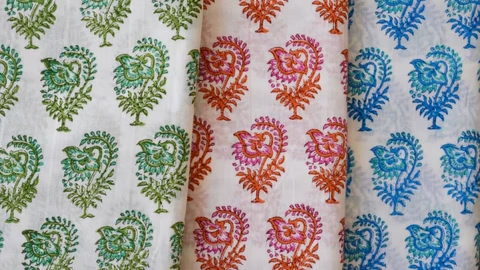
Understanding the motifs of these two art forms opens a window into Rajasthan’s culture, beliefs, and natural inspirations. Though both belong to the same region, their artistic languages are beautifully different.
1. Nature-Inspired Motifs in Sanganeri Print
Sanganeri designs are delicate, fine, and visually soothing. Their motifs often feel like a garden blooming on fabric.
Floral Motifs (Phool-Buti Style)
- Roses, marigolds, lotuses, and jasmine are the most common motifs.
- They symbolize beauty, purity, and celebration, deeply connected with Rajasthani festivities.
- The small “buti” pattern represents simplicity and elegance, perfect for daily-wear fabrics.
Leafy Vines (Bel Patterns)
- Thin, curvy vines known as “bel” run gracefully across the fabric.
- These represent growth, continuity, and harmony with nature.
- Often seen on saree borders, scarves, and home linens.
Bird and Animal Motifs
- Peacocks, sparrows, and small deer motifs appear in finer Sanganeri work.
- Symbolizes joy, royalty, and the natural beauty of Rajasthan.
Geometric Floral Repetitions
- Floral circles, star-flowers, and dotted patterns reflect balance and structure.
- Inspired by Mughal design aesthetics, showing a blend of craft and royal art.
2. Earthy, Bold Motifs in Dabu Print
Dabu motifs are more rustic, bold, and rooted in the soil of rural Rajasthan. They carry deeper cultural and symbolic meanings.
Mud-Resist Geometric Patterns
- Triangles, diamonds, waves, and zig-zags dominate Dabu designs.
- These represent daily life elements, like farms, the sun, water flow, and ancestral symbols.
- The repetitive geometry gives Dabu its earthy, rhythmic feel.
Dot and Circle Patterns (Datte and Gola)
- Dots symbolize rain, fertility, and the cycle of life.
- Circles represent the sun, a vital symbol in Rajasthan’s desert culture.
- These simple shapes carry deep spiritual meaning in rural communities.
Traditional Bagru-Inspired Motifs
Although Dabu is found across Rajasthan, many motifs are influenced by Bagru printing traditions, such as:
- Keri (mango) – symbol of prosperity and sweetness
- Champa and chinar leaves – symbolizing calm and healing
- Sunrays patterns – representing energy and protection
Animal and Folk Motifs
- Elephants, camels, and horses appear in classic Dabu prints.
- These are symbols of strength, travel, tradition, and desert life.
- Often used for dupattas, bedsheets, and bags to reflect Rajasthani heritage.
3. Comparative Symbolism: What Sets Them Apart?
A simple breakdown to understand how their motifs differ in meaning and mood.
Sanganeri Print Motifs – Soft, Detailed, Romantic
- Inspired mainly by gardens, Mughal art, and fine nature imagery.
- Motifs reflect beauty, elegance, lightness, and sophistication.
- Often chosen for clothing that looks fresh, graceful, and ornamental.
Dabu Print Motifs – Rustic, Earthy, Cultural
- Inspired by soil, rural life, tribal symbols, and natural forces.
- Motifs reflect strength, tradition, and simplicity.
- Perfect for styles that feel organic, bold, and connected to the land.
4. How Motifs Influence the Identity of Each Print Style
Sanganeri Motifs Create:
- A refined, airy, almost poetic feel
- A sense of delicacy and lightness
- More white background, making colors pop softly
Dabu Motifs Create:
- A grounded, earthy, rustic charm
- A connection with handcrafted village traditions
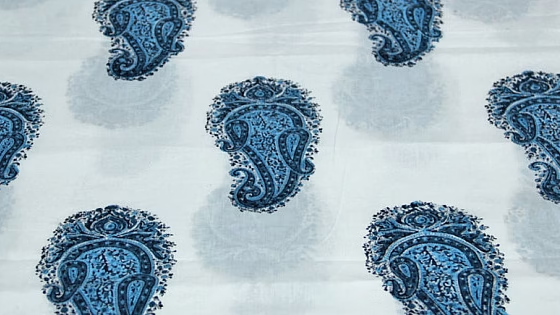
- Deep indigo-blue shades, creating strong visual contrast
Statistics & Market Trends
Below is a focused, data-oriented look at how Sanganeri Print vs Dabu Print perform on production, export and popularity metrics – presented with clear subheadings and bullets for easy reading.
Quick framing
- Sanganeri (Sanganer, near Jaipur) and Dabu (regions like Bagru, Akola, Pipar) are two prominent Rajasthani hand-printing traditions — both rooted in block/ resist-print techniques but positioned differently in local clusters and markets.
Production: cluster size & output
- Sanganeri cluster scale
- Established printing cluster with hundreds of small units; historical surveys estimate ~235 block-printing units in the Sanganer/Jaipur cluster.
- Estimated production cited in cluster studies: ~32 lakh metres of printed cloth per year from the cluster (typical figure used in planning documents).
- Established printing cluster with hundreds of small units; historical surveys estimate ~235 block-printing units in the Sanganer/Jaipur cluster.
- Dabu cluster scale
- Practised across several pockets (Bagru, Akola, Pipar City); production is more dispersed and often family-based, focused on layered mud-resist work and smaller-batch artisanal pieces.
- Dabu tends to be lower-volume but higher-process (multi-stage resist and dyeing) per metre than many commercial block prints.
- Practised across several pockets (Bagru, Akola, Pipar City); production is more dispersed and often family-based, focused on layered mud-resist work and smaller-batch artisanal pieces.
Exports & Market Reach
- Rajasthan’s handicraft export context
- Rajasthan is a major contributor to India’s handicraft exports; state-level reports note handicraft exports in the thousands of crores and project significant growth (policy studies project Rajasthan handicraft exports rising toward ₹18,000 crore by FY2030 from ~₹7,987 crore in FY2024). This expansion covers textiles, including block prints.
- Rajasthan is a major contributor to India’s handicraft exports; state-level reports note handicraft exports in the thousands of crores and project significant growth (policy studies project Rajasthan handicraft exports rising toward ₹18,000 crore by FY2030 from ~₹7,987 crore in FY2024). This expansion covers textiles, including block prints.
- Sanganeri export orientation
- Dabu export orientation
Popularity & Consumer Trends
- Domestic demand
- Sanganeri: steady mainstream demand for home textiles, apparel, and furnishing due to bright palettes and repeatable motifs.
- Dabu: rising popularity among consumers seeking natural-dye, artisanal and rustic aesthetics.
- Sanganeri: steady mainstream demand for home textiles, apparel, and furnishing due to bright palettes and repeatable motifs.
- Global trends
Conclusion:
In the end, Sanganeri Print vs Dabu Print is not just a comparison of two textile styles but a celebration of Rajasthan’s artistic soul. While Sanganeri charms with its delicate florals and fine detailing, Dabu captivates with its earthy textures and handcrafted mud-resist beauty.
Together, they show how tradition, skill and culture can shape fabrics into stories. Whether you prefer the softness of Sanganeri or the rustic depth of Dabu, both prints remind us that handmade crafts carry a warmth no machine can match. And that is what makes these art forms truly timeless.
Read also: Bagh Print from Madhya Pradesh

Leave a Reply