

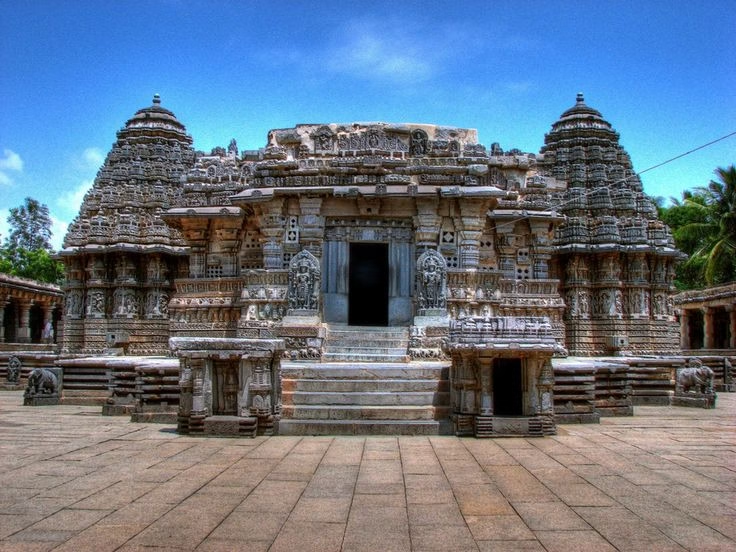
Hello readers, ever wondered what Karnataka’s golden age really looked like? Step into the world of the Hoysala Temples, where stone turns into storytelling. The Hoysala dynasty rose to power in the 11th century, and instead of only building armies, they built beauty. Kings became patrons of art, faith, and fine craftsmanship, giving birth to the iconic Hoysala Temples we admire today.
Belur became the spiritual heartbeat, while Halebidu grew into a grand cultural capital. Sculptors, architects, and artists gathered here, carving gods, dancers, and epic tales into soft soapstone.
These weren’t just temples—they were statements of pride, devotion, and creativity. Even today, the Hoysala Temples feel alive, quietly inviting you to pause, look closer, and travel back in time.
History of the Hoysala Temples: A Timeline Through the Ages
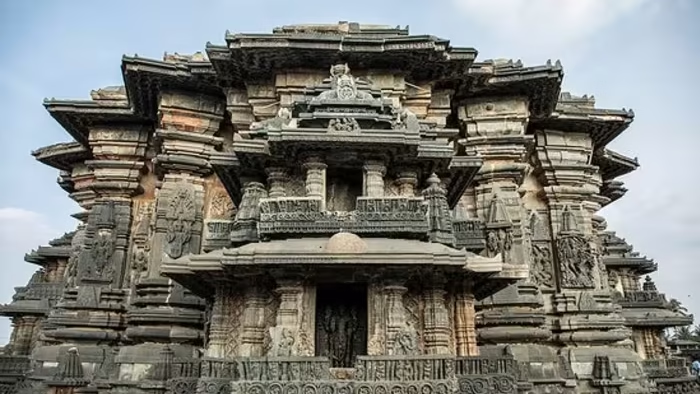
10th Century – Early Origins
The story of the Hoysala Dynasty begins in the Western Ghats region of Karnataka. Initially serving as feudatories under the Chalukyas, the Hoysalas slowly gained strength and independence. This early phase laid the foundation for what would later become the glorious era of the Hoysala Temple tradition.
11th Century – Rise to Power
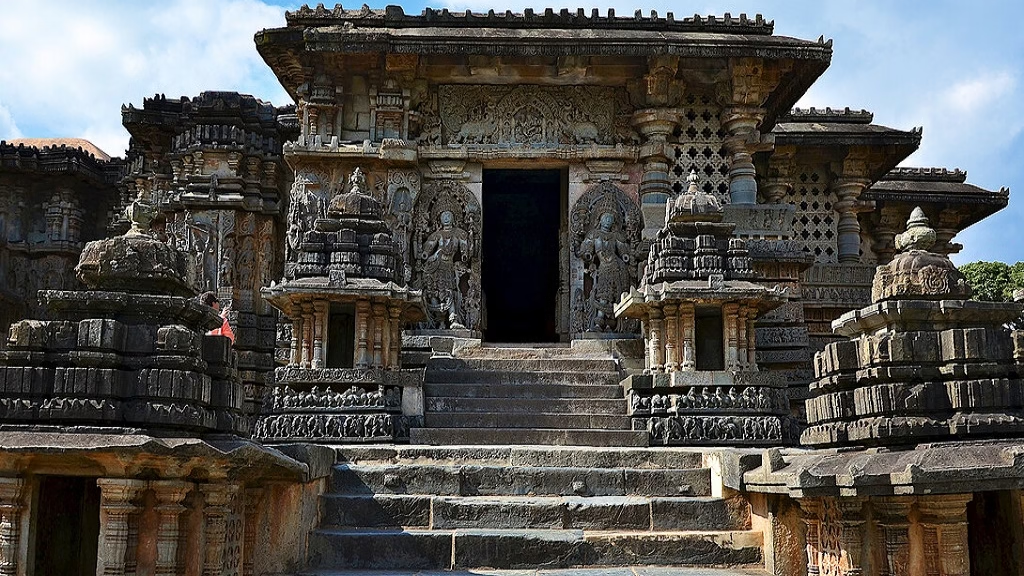
Under King Vishnuvardhana (c. 1108 CE), the Hoysala Dynasty emerged as a dominant force. After his conversion to Vaishnavism, temple construction gained royal support. The famous Chennakesava Hoysala Temple at Belur was commissioned during this period, marking the beginning of a distinct architectural style.
12th Century – Golden Age of Temple Building
This was the peak era of the Hoysala Temple tradition. Belur and Halebidu flourished as political and cultural capitals. Grand temples like the Hoysaleswara Temple at Halebidu were built, showcasing star-shaped plans, soapstone carvings, and detailed sculptures from Hindu epics.
13th Century – Artistic Maturity
The Hoysala Dynasty continued temple patronage with refined detailing, complex ceilings, and narrative sculptures. Jain and Shaiva temples also emerged, reflecting religious harmony.
14th Century – Decline and Legacy
With invasions and the fall of the Hoysala Dynasty, temple construction slowed. However, the Hoysala Temple legacy survived, influencing South Indian architecture for centuries.
Artistic Details of Hoysala Temples: Stone Turned into Poetry
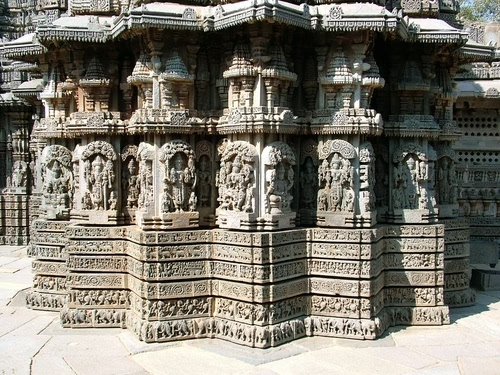
The Hoysala Temples are celebrated not just for architecture, but for their extraordinary artistic depth. Every surface speaks. Every carving tells a story. Let’s explore what makes their art so special.
Artistic Style and Visual Excellence
- Hoysala art is known for extreme detail and precision.
- Sculptures are carved on soft soapstone, allowing fine finishing.
- Figures look almost lifelike, with expressive faces and fluid movement.
- Walls are covered completely—no empty space is left.
- This dense decoration creates a sense of richness and rhythm.
Symbols and Motifs Used
- Floral motifs symbolize growth, beauty, and nature.
- Geometric patterns reflect balance and cosmic order.
- Gods and goddesses appear in dynamic poses.
- Scenes from the Ramayana and Mahabharata are carved panel by panel.
- Dancers, musicians, and daily life scenes show cultural vibrancy.
- Animals like lions and elephants represent strength and protection.
Method of Making the Sculptures
- Artisans used soapstone quarried locally.
- Stone was carved when soft and hardened over time.
- Sculpting was done using simple hand tools.
- Work progressed from base to top in horizontal bands.
- Teams of artisans worked under master sculptors.
- No two panels are exactly the same.
Architectural Art Forms
- Star-shaped platforms added visual movement.
- Lathe-turned pillars were polished to a mirror-like finish.
- Ceilings featured lotus designs and concentric patterns.
- Jewelry, anklets, and crowns were carved in minute detail.
Significance of Artistic Roots
- Hoysala art reflects royal patronage and devotion.
- It shows harmony between religion and craftsmanship.
- The temples served as visual scriptures for the public.
- This style influenced later South Indian temple art.
- Today, the Hoysala Temples stand as UNESCO-recognized masterpieces.
Facts and Myths of the Hoysala Temples
The Hoysala Temple tradition is wrapped in history, legends, and fascinating beliefs. Alongside solid historical facts, many myths add charm to the legacy of the Hoysala Dynasty. Let’s explore both sides of this story.
Historical Facts About the Hoysala Temples
- The Hoysala Dynasty ruled Karnataka between the 11th and 14th centuries.
- More than 100 Hoysala Temple structures were built across the region.
- Most temples were carved from soft soapstone, allowing extreme detail.
- Star-shaped platforms were a signature feature of the Hoysala Temple style.
- Sculptures depict scenes from the Ramayana, Mahabharata, and Bhagavata Purana.
- Belur and Halebidu were major cultural and political centers.
- Many temples were built to celebrate military victories and royal devotion.
- The temples follow precise architectural rules from ancient Shilpa Shastras.
Popular Myths and Legends of the Hoysala Dynasty
- The name “Hoysala” is linked to the legend of a boy killing a tiger.
- “Hoy, Sala!” supposedly means “Strike, Sala!” shouted by a saint.
- Locals believe sculptors competed to outdo each other in perfection.
- It is said some carvings were made without using measuring tools.
- Many believe the temples were carved day and night without rest.
- Legends claim secret symbols are hidden in temple walls.
- Some say the carvings change expressions in different light.
Itinerary for Visiting Hoysala Temples: A Journey into Stone and Story
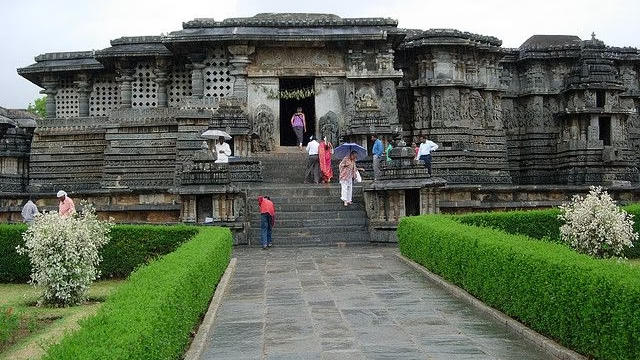
Planning a trip to explore the masterpieces of the Hoysala temple tradition? This simple itinerary helps you experience the art, history, and soul of the Hoysala dynasty without rushing. Short walks, quiet moments, and detailed observation make this journey truly special.
Day 1: Arrival in Belur – The Beginning of the Hoysala Story
- Reach Belur from Bengaluru or Hassan by road.
- Check into a nearby heritage hotel or guesthouse.
- Visit the Chennakesava Hoysala temple in the morning.
- Observe the star-shaped platform and detailed sculptures.
- Spend time noticing dancers, gods, and epic scenes.
- Visit the temple museum for deeper insights.
- Evening walk around Belur town.
- Rest early to absorb the experience.
Day 2: Halebidu – Grandeur of the Hoysala Dynasty
- Travel from Belur to Halebidu (about 16 km).
- Visit the Hoysaleswara Hoysala temple complex.
- Walk slowly along the outer walls.
- Notice Ramayana and Mahabharata panels.
- Explore the Jain Basadi nearby.
- Learn how Halebidu served as a capital of the Hoysala dynasty.
- Enjoy local Karnataka cuisine for lunch.
- Spend quiet time photographing carvings.
Day 3: Beyond the Main Temples
- Visit lesser-known Hoysala temples like Kedareshwara (Halebidu).
- Optional trip to Hassan or Shravanabelagola.
- Reflect on the artistic legacy of the Hoysala dynasty.
- Return with a deeper appreciation of stone craftsmanship.
Hidden Details in Hoysala Temples
| Hidden Detail | What to Look For & Why It Matters |
| Signature of Sculptors | Many Hoysala Temples carry the names or symbols of master sculptors carved discreetly at the base of panels. Artists like Ruvari Mallitamma and Dasoja left their marks with pride, a rare practice in ancient Indian architecture. These signatures reveal that temple building during the Hoysala period celebrated individual artistic identity, not just royal patronage. |
| Miniature Friezes at the Base | Look closely at the lowest bands running along the temple walls. You’ll find elephants, horses, lions, and floral patterns carved in perfect sequence. These friezes are symbolic—elephants represent strength, lions symbolize courage, and horses stand for speed and energy. Together, they narrate the philosophical foundation of the Hoysala dynasty. |
| Jewelry Details on Stone Figures | The sculptures in Hoysala Temples wear carved necklaces, anklets, armlets, and waistbands so detailed they look real. Each ornament reflects the fashion of the 12th–13th centuries. Some even show different jewelry styles for royalty, dancers, and common people, offering valuable insight into social life under the Hoysala dynasty. |
| Expressions and Body Movement | Faces in Hoysala sculptures are never blank. Look carefully and you’ll notice smiles, raised eyebrows, and soft glances. The sculptors mastered the art of conveying emotion through stone. Slight bends in the hips, hands, and necks bring a sense of movement, making the figures appear almost alive. |
| Ceiling Carvings Above Pillars | Most visitors focus on walls, but the ceilings of Hoysala Temples are equally stunning. Each ceiling panel is uniquely carved with lotus medallions, geometric patterns, and mythological scenes. No two ceilings are the same, reflecting the creative freedom given to artisans. |
| Narrative Direction of Sculptures | The sculptural panels follow a specific order. Stories from the Ramayana and Mahabharata unfold as you walk clockwise around the temple. This turns the temple into a visual book, encouraging devotees to “read” the stories through movement and observation. |
| Lathe-Turned Pillar Finish | Some pillars appear smooth and mirror-like, almost as if polished by machines. These lathe-turned pillars show advanced stone-working techniques. Their glossy surface reflects light beautifully, adding depth and elegance to the interior spaces of Hoysala Temples. |
These hidden details remind us that Hoysala Temples were never meant to be rushed through. They invite patience, curiosity, and wonder—rewarding every careful glance with a new discovery.
Wrapping-Up:
And here we are, at the end of our journey, but honestly, the Hoysala Temples never really end. The more you look, the more they reveal.
So next time you visit Belur or Halebidu, don’t just walk—pause. Look closer. Let the walls speak because the true magic of the Hoysala Temples isn’t only in what you see at first glance, but in what stays with you long after you leave.
Some stories aren’t read—they’re discovered!
Also read: Kani Weave From Jammu & Kashmir

Leave a Reply