

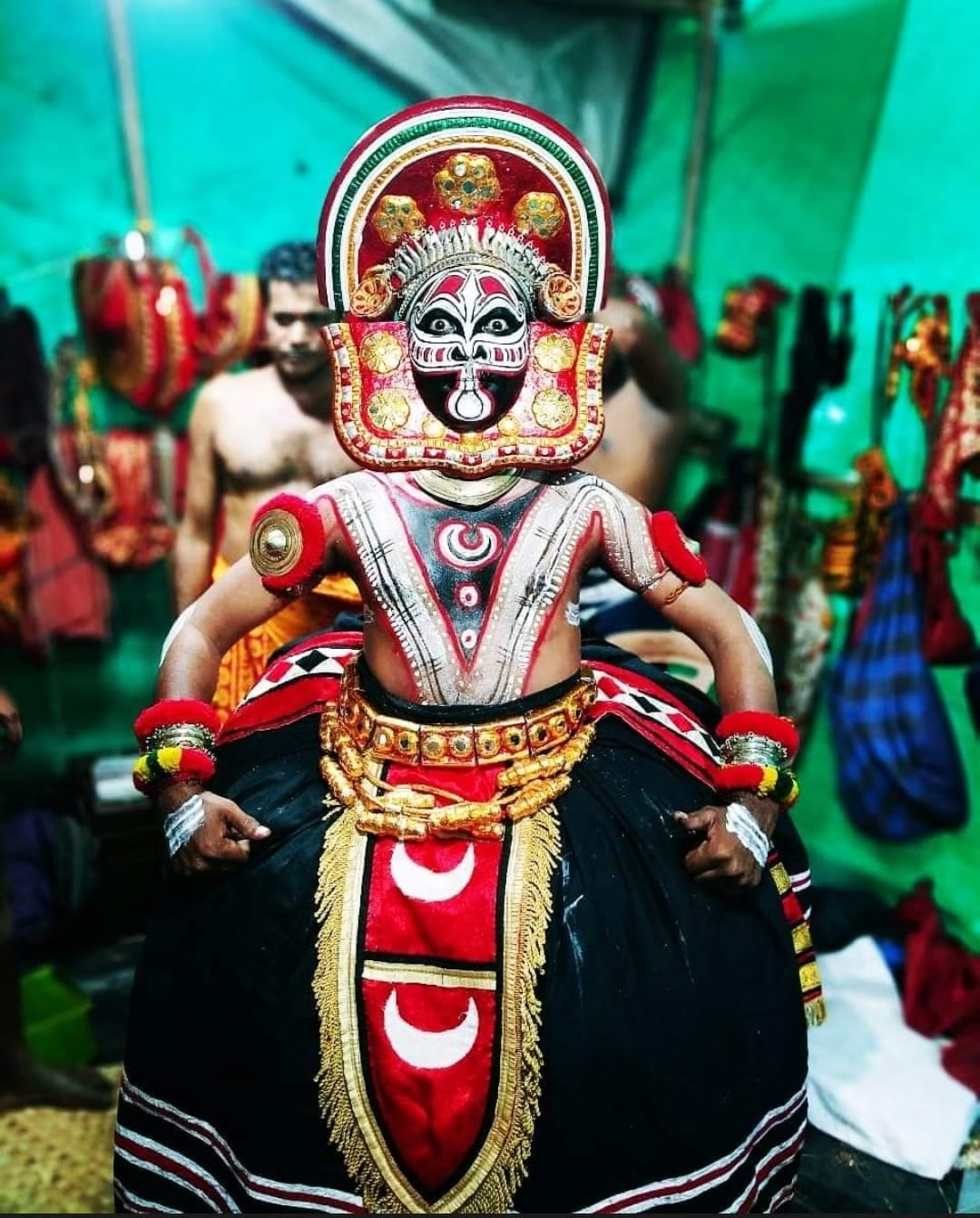
Hello folks. Have you ever seen a god dance? In Kerala, it happens every year. Meet Poothan and Thira—two of India’s most visually stunning folk art forms.
Imagine towering headgear painted in bold colors. Intricate face paint that takes hours to complete. Powerful movements that tell ancient stories. This isn’t just performance. It’s pure devotion in motion.
For centuries, these ritual art forms honored village deities during festivals. Today, they’ve stepped beyond temple grounds onto global stages. The transformation is fascinating. How did sacred ritual become spectacle?
We’re diving into this vibrant world. You’ll discover the meaning behind the masks, the rhythm of the dance, and how this tradition survives in modern times. Ready to witness something unforgettable?
What are Poothan and Thira Folk Art?
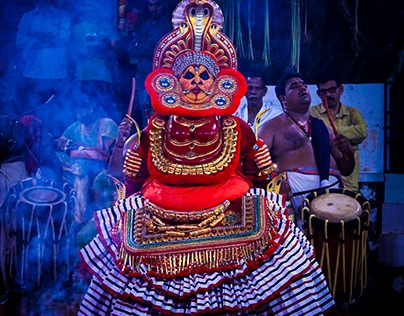
Imagine a towering figure, covered in vibrant colors. His eyes are wide. His movements are fierce. This is Poothan. Standing next to him is Thira, his divine companion. Together, they are not just dancers. They are gods visiting their devotees.
Poothan and Thira folk art is a 500-year-old folk ritual from North Kerala. It happens primarily in temples dedicated to Goddess Kali. The moment the performer dons the elaborate costume, locals believe he transforms into the deity himself. He is no longer human.
The numbers are staggering. A single costume can weigh up to 40 kilograms. That is like carrying a heavy suitcase on your head for hours. The frame is made from bamboo and areca palm. It is then covered in hundreds of colorful paper flowers and intricate wooden carvings.
Artists train for years. Why? Because the dance demands intense stamina. Performers often dance for 6 to 8 hours nonstop under the hot sun. They enter a trance-like state, blessing families and warding off evil spirits.
It is raw. It is powerful. And it is still very much alive.
Decoding the Look: The Iconic Costumes and Makeup
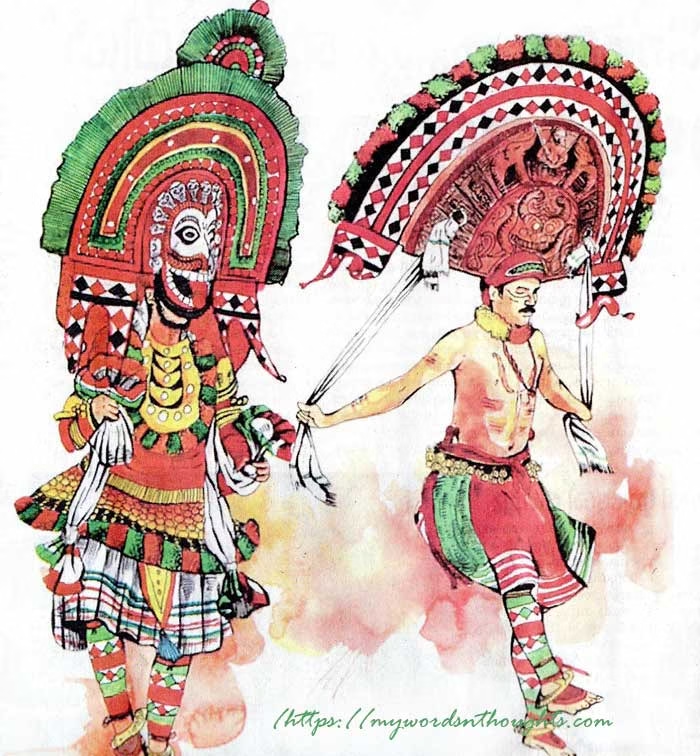
Let’s be honest. You cannot look away from a Poothan and Thira performer. The visual impact is that powerful. It is loud, raw, and deeply symbolic.
Every single element, from head to toe, tells a story. It takes hours to achieve this transformation. Let us break down the spectacle.
The Face: More Than Makeup
The face is painted in two bold colors. Black represents the fierce, destructive power of the deity. White symbolizes purity and the divine spirit. Artists use natural pigments mixed with coconut oil. The application is meticulous.
- The Eyes: They are outlined dramatically. This creates a trance-like, hypnotic stare.
- The Teeth: Performers often extend their lower lip with a red cloth. It mimics sharp fangs. Terrifying, right? That is the point. It is meant to ward off evil spirits.
The Headgear (Mudi): A Towering Presence
The crown is unmissable. It is called the Mudi. Made from lightweight wood and cloth, it can stand 3 to 5 feet tall. Imagine wearing that and dancing for hours! It is decorated with colorful paper, fresh flowers, and intricate carvings. The taller the Mudi, the more prominent the deity.
The Body: Chest Plates and Anklets
The upper body is adorned with elaborate chest plates. These are made of polished metal or wood. They shimmer under the sun and the oil lamps.
- The Anklets: Performers wear heavy bronze anklets (chilanka). They contain small bells. A single performer may wear 100 to 150 bells on each leg. The sound is not just music. It announces the god’s arrival.
- The Garments: They wear long, elaborate skirts. These flare out dramatically with every powerful spin and stomp.
It is not just a costume. It is a vessel for the divine.
Poothan vs. Thira: What is the Difference?
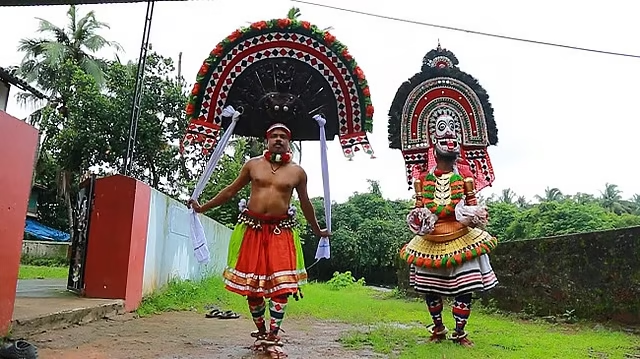
If you have seen photos of this Kerala folk art, you might think it is one single performance. That is a common mistake. Poothan and Thira are actually two distinct spirits. They are brothers. They always appear together. But they look different. They behave differently. And their roles are unique.
Let us break it down simply.
Who Are They?
Poothan: The Fierce Messenger
- He is considered the chief of the spirits.
- His role is to announce the arrival of the deity.
- He is aggressive. He runs fast. He chants loudly.
- He prepares the spiritual path for Thira.
Thira: The Calm Deity
- He represents the goddess or the divine presence.
- His movements are slower. More majestic.
- He blesses the devotees.
- He is the main event. The reason for the ritual.
The Visual Difference
You can tell them apart instantly by looking at them.
- The Headgear:
- Poothan wears a tall, conical headgear made of areca nut sheaths. It is simple and pointed.
- Thira wears an elaborate, multi-tiered crown. It is heavier. It is decorated with carved wooden figures and flowers.
- The Face Paint:
- Poothan has fierce black face paint with white dots and lines. It looks wild and scary.
- Thira has a more detailed and colorful face. It uses red, yellow, and green. It looks divine and powerful.
- The Chest Plate:
- Both wear intricate chest plates. But Thira’s is larger and more ornate. It often includes images of snakes or other deities.
The Performance Style
The difference in movement is night and day.
- Poothan’s energy is raw. He runs around the temple courtyard. He jumps. He interacts with the crowd playfully. He is unpredictable.
- Thira’s energy is controlled. He walks slowly. He spins gracefully. His movements are choreographed. It is a visual spectacle of power and grace.
Did You Know? (A Quick Statistic)
- A single Poothan and Thira performance can last over 8 to 10 hours. It usually starts late at night and ends at dawn.
- The Thira crown alone can weigh up to 20 to 25 kilograms. The artist must carry this weight while dancing for hours.
- There are over 15 different rhythmic patterns played on the Chenda (drum) specifically for these performances.
In short? Poothan is the storm. Thira is the calm after it. Together, they create a perfect balance of fear and devotion. That is the magic of this art form.
How a 500-Year-Old Ritual Found a Global Audience
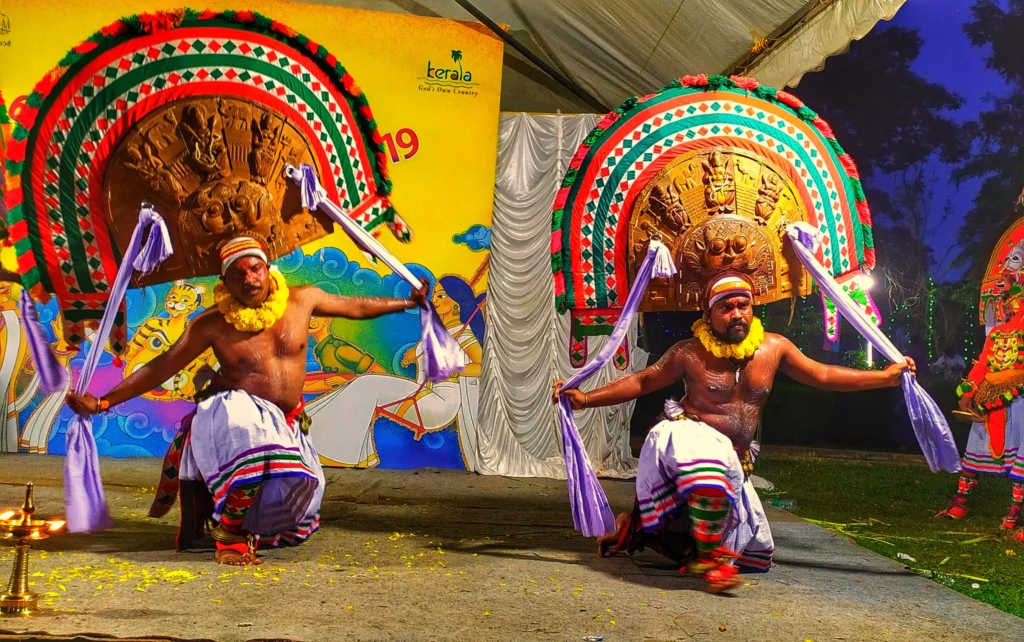
For centuries, Poothan and Thira lived quietly. It stayed inside village temples. Outsiders never saw it. But today? The world is watching.
The Shift Begins (1980s-1990s)
Researchers and folklorists arrived first. They recorded the songs. They documented the steps. Universities started studying Poothan and Thira folk art as anthropology, not just entertainment.
The Festival Era (2000s)
Things changed fast. Kerala Tourism began promoting it. Cultural festivals in Kochi and Thiruvananthapuram added it to their lineups. Urban audiences saw it for the first time. They were spellbound.
The Digital Explosion (2010s)
Then came social media. A single photo of the towering black-and-white costume went viral. Instagram reels now get millions of views. Foreigners travel to Kerala just to witness it live.
Why It Works Today
- Visual Power: The makeup is fierce. The headgear is massive. It was made for cameras.
- Raw Energy: You feel the drum beats in your chest. It is immersive.
- Authenticity: In a digital world, people crave real roots.
Young artists are stepping up. They respect tradition. But they also experiment. Some perform at weddings. Others teach workshops.
The soul remains sacred. But the stage? It is now global. And the world cannot look away.
Frequently Asked Questions About Poothan and Thira Folk Art
1. What are Poothan and Thira folk arts?
It is a fierce and colorful ritual art from North Kerala. Performers dress as deities to honor gods and drive away evil spirits. Think of it as a living, moving prayer with loud drums and stunning costumes.
2. Where do Poothan and Thira originate from?
It comes from the northern districts of Kerala, especially Kannur and Kasaragod. For centuries, villages here have performed this ritual in local temples and sacred groves known as kaavu.
3. What is the difference between Poothan and Thira?
They are two different characters. Poothan is the messenger. Thira is the main deity. Together they appear, but their costumes and movements are distinct. Thira is often taller and more elaborate.
4. Why do performers wear such huge costumes?
The towering headgear and heavy makeup are meant to inspire awe. They transform the dancer into a divine being. It is believed the deity actually enters the performer during the ritual.
5. When is Poothan and Thira performed?
Traditionally, it happens during temple festivals from December to May. The season follows the harvest. Specific dates are decided by local communities based on ancient customs and astrological signs.
6. What materials are used in the costumes?
The massive headgear is made from bamboo, cloth, and paper. Natural colors are used for makeup. Black comes from charcoal. Red from local stones. Yellow from turmeric. It is entirely eco-friendly.
7. How long does a performance last?
A full ritual can go on for hours. It starts in the evening and often continues until dawn. The energy builds slowly. The dancer enters a trance-like state as the drums get faster and faster.
8. What drums are used in this art form?
The main instrument is the chenda. It is a loud cylindrical drum played with sticks. The thakil and kuzhal (a wind instrument) also join in. The rhythm is powerful and hypnotic.
9. Are Poothan and Thira only a ritual now?
Not anymore. While still sacred in temples, it is now performed at cultural festivals too. It has traveled from village courtyards to city stages, both in India and internationally.
10. Can women perform Poothan and Thira?
Traditionally, only men performed. They played both male and female roles. But times are changing. Today, women are slowly entering this space and learning the art form in some progressive groups.
Also Read: Cheriyal Scroll Paintings: The Alluring Storytellers of Telangana

Leave a Reply