
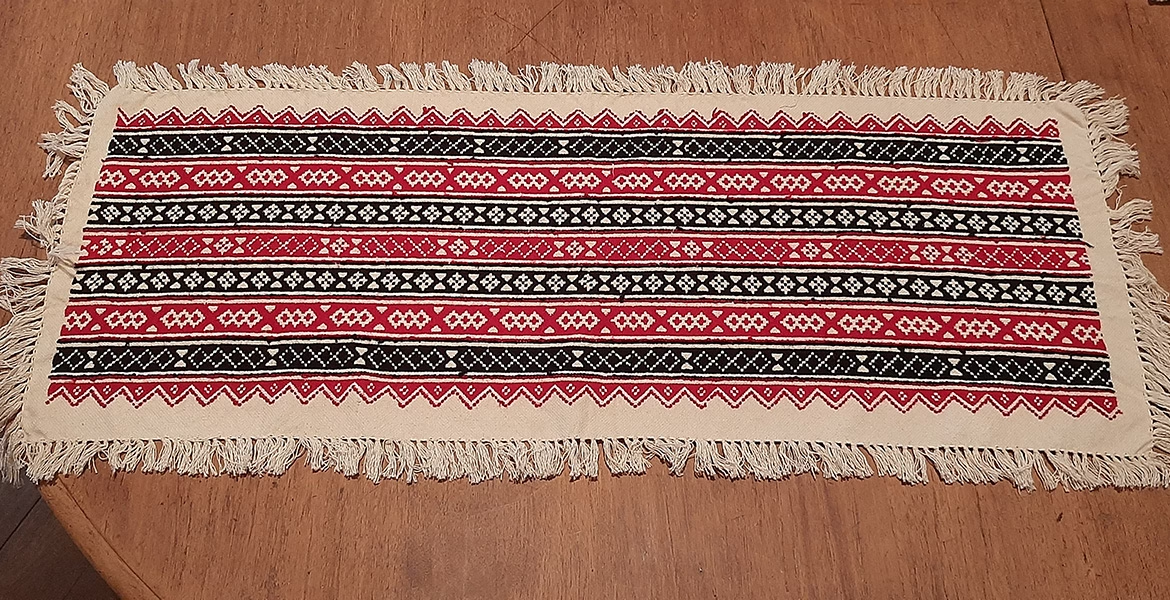
Hello lovely readers! Today, let’s take a little trip to the peaceful hills of the Nilgiris in Tamil Nadu, where a beautiful art form has been quietly blooming for centuries. This is the world of Toda Embroidery—a craft that instantly catches your eye with its bold red, black, and white patterns.
Created by the indigenous Toda community, this embroidery isn’t just decoration; it’s a living part of their culture, beliefs, and identity. Every thread carries a story, every motif holds a meaning, and every pattern shows the patience and skill passed down through generations.
What makes it even more fascinating is that the designs are stitched entirely by hand, using techniques that haven’t changed for ages. Whether it appears on shawls, cloaks, or modern accessories, Toda Embroidery stands out as a proud symbol of Tamil Nadu’s artistic heritage.
History and Cultural Significance of the Toda Community
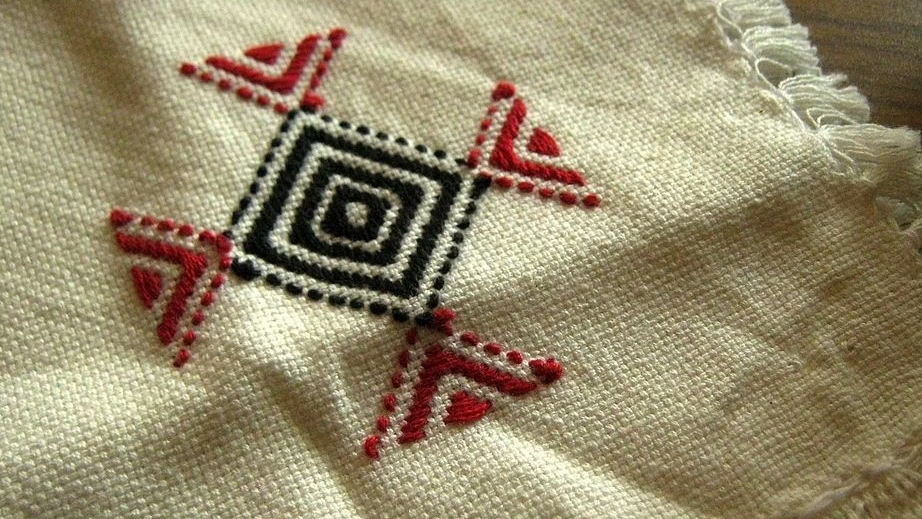
The Toda community, living in the beautiful Nilgiri Hills of Tamil Nadu, is one of India’s oldest pastoral tribes. Their history stretches back many centuries, with their lives deeply connected to nature, cattle herding, and traditional craftsmanship. Among their most cherished art forms is Toda embroidery, locally known as “Pukhoor”, which reflects their cultural values, beliefs, and lifestyle.
Toda embroidery began as a part of their everyday life. The women of the community stitched these patterns by hand on thick white shawls called “Poothkuli”, worn during ceremonies, festivals, weddings, and important rituals. Every stitch carried meaning—these weren’t just decorative pieces but symbols of identity and pride. The Toda people believed that the patterns protected them from harm and represented harmony between humans, nature, and divine forces.
The cultural significance of this embroidery goes beyond its beauty. It expresses the tribe’s connection to the land, their buffalo-centric lifestyle, and their ancient customs. Many motifs reflect mountains, rivers, sacred huts, and even animals they revere. For the Todas, wearing embroidered shawls is a way to celebrate their heritage and pass on traditions to the next generation. Today, this art form stands not just as a craft, but as a living reminder of the Toda community’s rich cultural legacy.
Materials Used in Toda Embroidery
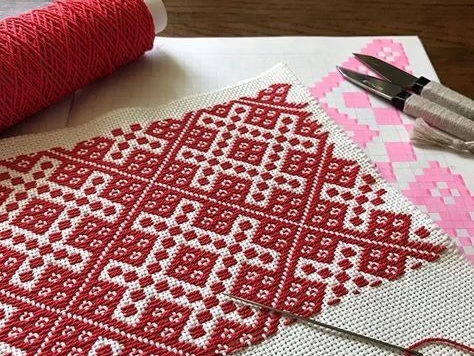
1. Base Fabric: The Foundation of Every Design
- Unbleached White Cotton Cloth
- Traditionally called “pukhoor”, this handwoven cotton fabric is the base for all Toda embroidery.
- Its natural white colour highlights the red and black thread work beautifully.
- The fabric is thick enough to support heavy needlework yet soft enough to drape comfortably.
- Traditionally called “pukhoor”, this handwoven cotton fabric is the base for all Toda embroidery.
- Woollen Fabric (Earlier Times)
- In the past, Toda women embroidered on woollen shawls used in the chilly Nilgiri climate.
- These shawls were primarily worn during rituals and festivals.
- In the past, Toda women embroidered on woollen shawls used in the chilly Nilgiri climate.
2. Embroidery Threads: The Soul of Toda Patterns
- Red Wool or Cotton Thread
- Red is the most important colour in Toda art, symbolising prosperity, power, and sacred rituals.
- Traditionally made from locally spun wool, but today cotton and silk threads are also used.
- Red is the most important colour in Toda art, symbolising prosperity, power, and sacred rituals.
- Black Wool or Cotton Thread
- Black represents protection and strength and balances the boldness of red.
- It helps outline the main motifs, making the patterns sharper and more geometric.
- Black represents protection and strength and balances the boldness of red.
- Occasional Blue Threads (Modern Adaptations)
- In some contemporary products, a hint of blue is added for aesthetic appeal, though it’s not part of the traditional palette.
- In some contemporary products, a hint of blue is added for aesthetic appeal, though it’s not part of the traditional palette.
3. Needles: Tools of Precision
- Long, Sturdy Hand Needles
- Used to make reverse-stitch patterns that give Toda embroidery its signature raised effect.
- Needles must be strong enough to push through thick cloth without bending.
- Used to make reverse-stitch patterns that give Toda embroidery its signature raised effect.
- Fine Needles for Detailing
- Used for finishing edges and adding delicate touches to motifs.
- Used for finishing edges and adding delicate touches to motifs.
4. Supporting Tools and Accessories
- Scissors
- For trimming threads neatly, ensuring clean and sharp edges in every motif.
- For trimming threads neatly, ensuring clean and sharp edges in every motif.
- Fabric Markers or Chalk (Modern Use)
- Used to mark outlines or symmetrical grids, especially useful when producing items for the market.
- Used to mark outlines or symmetrical grids, especially useful when producing items for the market.
- Measuring Tape
- Helps maintain uniform pattern sizes on larger products like shawls and dupattas.
- Helps maintain uniform pattern sizes on larger products like shawls and dupattas.
5. Modern Material Variations
- Machine-Made Cotton Cloth
- Widely used today to meet rising commercial demand.
- Provides a smoother surface, making embroidery faster.
- Widely used today to meet rising commercial demand.
- Silk-Blend Fabrics
- Used for luxury products like stoles, cushion covers, and wall hangings.
- Used for luxury products like stoles, cushion covers, and wall hangings.
- Thread Variants
- Rayon, silk, and polyester threads are now used for added sheen and durability.
Step-by-Step Process of Making Toda Embroidery
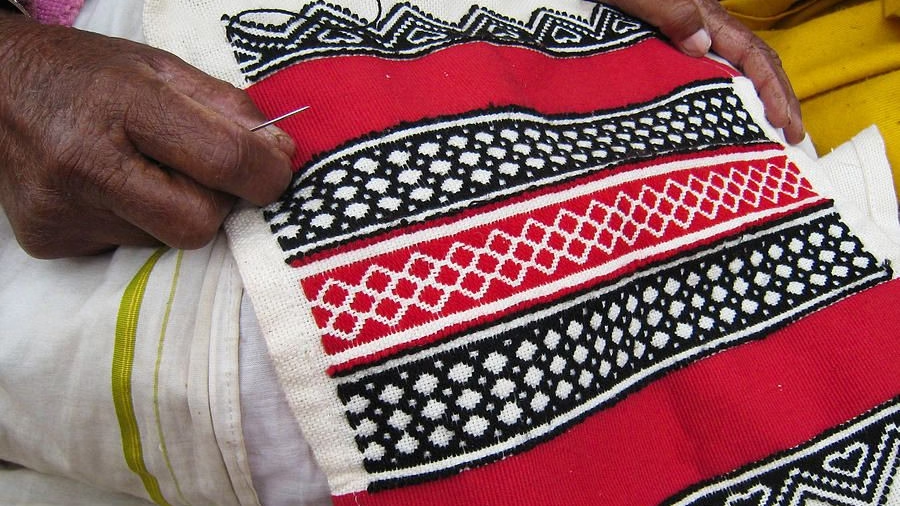
1. Preparing the Base Fabric
- Choosing the cloth:
The process of Toda Embroidery begins with selecting a thick, handwoven cotton cloth, traditionally white in color. - Washing and drying:
The cloth is cleaned thoroughly to remove dust and ensure smooth stitching. - Stretching the fabric:
The cloth is gently stretched to make the surface firm, giving artisans a stable base to work on.
2. Marking the Guiding Lines
- Simple guidelines:
Light pencil or charcoal marks are made to guide the artisan. - Following symmetry:
The Toda women ensure the layout follows their traditional patterns, which rely heavily on symmetry and balance. - Creating spacing:
Proper distance is maintained between lines to allow clean, even stitches.
3. Preparing the Thread
- Choosing colors:
Only three colors are used—red, black, and sometimes white. These colors are culturally symbolic for the Toda tribe. - Spinning and twisting:
Earlier, women spun their own wool threads. Today, cotton embroidery thread is commonly used. - Threading the needle:
A long, thick needle is chosen because Toda Embroidery uses strong darning-style stitches.
4. Beginning the Darning Stitch Technique
- Working from the back:
The magic of Toda Embroidery lies in the fact that most of the stitching is done from the reverse side of the cloth. - Horizontal weaving motion:
The thread is passed in a horizontal manner, moving in and out without piercing the full depth of the fabric. - Creating raised texture:
This special method produces a raised, embossed look on the front side, giving Toda designs their signature three-dimensional effect.
5. Building the Pattern Gradually
- Stitching row by row:
Each motif is created one row at a time, maintaining equal thread tension to avoid loose or tight patches. - Repeating geometric shapes:
Diamonds, lines, squares, and temple-like patterns slowly emerge as the stitches build up. - Maintaining accuracy:
The artisan constantly checks the front side to ensure the motif is forming correctly and evenly.
6. Adding Contrast Borders
- Thicker borders:
Borders are stitched in bold red or black to frame the central design. - Symbolic placement:
Borders carry cultural meaning, representing protection and balance in Toda Embroidery. - Neat finishing:
The edges of the cloth are carefully secured to prevent fraying.
7. Final Finishing Touches
- Trimming loose threads:
All loose ends are neatly cut to give a sharp, clean look. - Smoothing the fabric:
The embroidery is lightly pressed to settle the raised patterns. - Quality check:
The artisan reviews the piece for uniformity, symmetry, and the traditional Toda aesthetic.
8. Ready for Use
- Used in shawls, stoles, bags, and clothing:
Once complete, the beautifully embroidered piece becomes part of everyday wear or ceremonial use. - Cultural pride:
Every finished work carries the spirit of the Toda women, preserving the heritage of Toda Embroidery stitch by stitch.
Symbols and Motifs: Stories Stitched in Red and Black
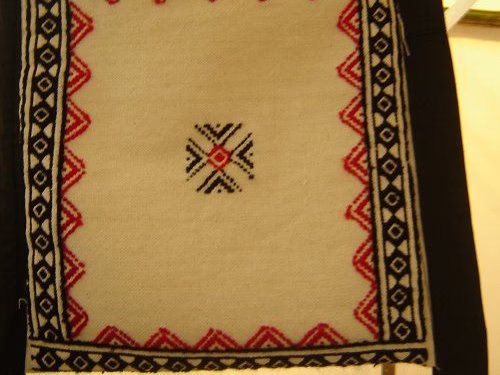
The Language of Patterns in Toda Embroidery
- Toda Embroidery is not just threadwork; it is a visual language created by the Toda women of the Nilgiris.
- Every motif, from the simplest line to the most complex pattern, carries cultural identity, tribal beliefs, and a deep connection to nature.
- Traditionally, only red and black woolen threads are used on a white cloth, symbolizing purity, strength, and ancestral power.
Nature-Inspired Motifs: A Tribute to the Landscape
- ❖ Buffalo Horn Motif (Pohor)
- Considered the most sacred symbol for the Toda tribe.
- Represents their divine buffalo deity and the central role of buffalos in Toda life.
- Often stitched boldly to decorate shawls used in rituals.
- Considered the most sacred symbol for the Toda tribe.
- ❖ Mountain and Hill Patterns
- These patterns reflect the rolling hills of the Nilgiri mountains.
- Symbolize protection, resilience, and the geographic roots of the tribe.
- These patterns reflect the rolling hills of the Nilgiri mountains.
- ❖ Sun and Star Motifs
- Circular patterns that mimic the rising sun or shining stars.
- Symbolize guidance, positive energy, and divine presence.
- Circular patterns that mimic the rising sun or shining stars.
Geometric Motifs: Symmetry That Tells Stories
- ❖ Diamond Motif (Kothu)
- A signature design in Toda Embroidery.
- Represents fertility, prosperity, and continuity of life.
- Also symbolizes the close-knit structure of Toda families.
- A signature design in Toda Embroidery.
- ❖ Triangular Motifs
- Used as repetitive borders around shawls and garments.
- Reflect the harmony between humans, nature, and divine spirits.
- Some triangles are said to ward off negative energy.
- Used as repetitive borders around shawls and garments.
- ❖ Zig-Zag and Step Patterns
- Indicate movement—of rivers, animals, and life itself.
- The Toda community believes these patterns thread together past, present, and future.
- Indicate movement—of rivers, animals, and life itself.
Sacred Motifs: Carrying Tradition Through Thread
- ❖ Temple and Sacred Structure Motifs
- Inspired by Toda temples known as “munds.”
- Represent spiritual protection and connection with ancestors.
- Often used during special ceremonies or festive clothing.
- Inspired by Toda temples known as “munds.”
- ❖ Ritual Symbols
- Some motifs are reserved only for ritual shawls called Puthukuli.
- These designs are considered a blessing, stitched with intention and patience.
- Some motifs are reserved only for ritual shawls called Puthukuli.
Emotional and Cultural Motifs
- ❖ Patterns for Marriage Shawls
- Intricate diamonds and step motifs are stitched on shawls gifted to brides.
- Symbolize blessings for a strong, harmonious married life.
- Intricate diamonds and step motifs are stitched on shawls gifted to brides.
- ❖ Motherhood and Family Motifs
- Smaller, delicate designs passed down in families as heirloom patterns.
- Celebrate continuity of tradition across generations.
- Smaller, delicate designs passed down in families as heirloom patterns.
Economic and Cultural Statistics
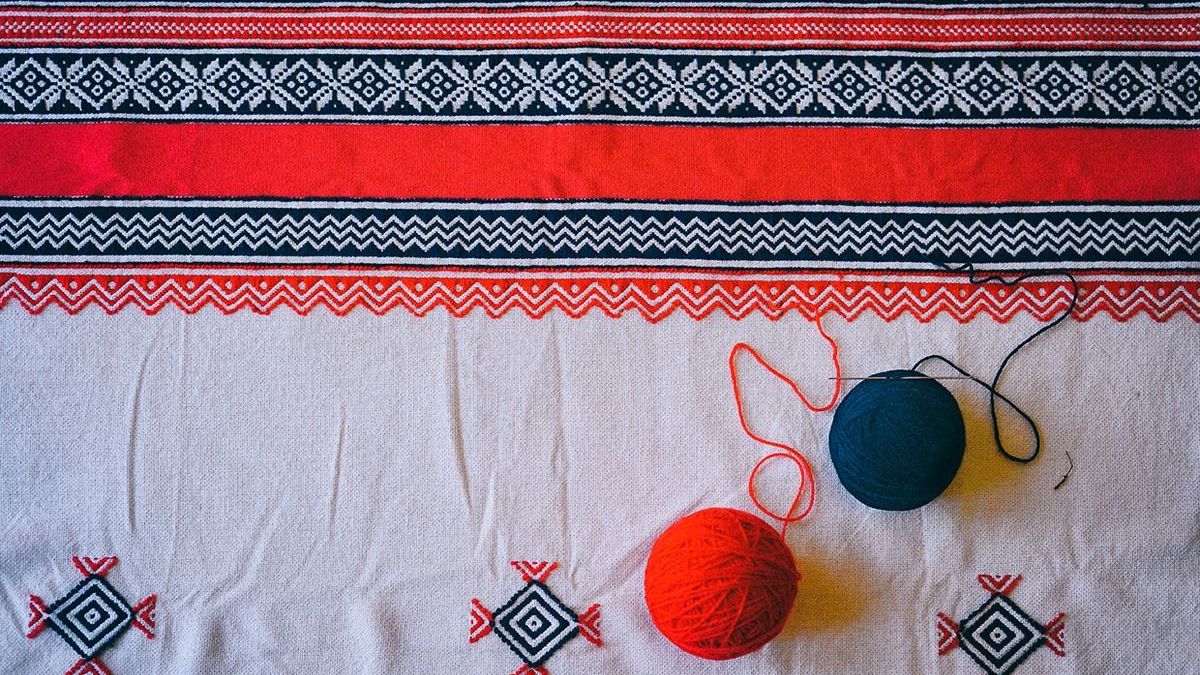
Growing Economic Importance
- Rising Artisan Participation
- Today, nearly 350–400 Toda women are actively involved in creating Toda Embroidery.
- About 70% of the embroidery production comes from women above 35 years, who carry forward the tradition.
- Today, nearly 350–400 Toda women are actively involved in creating Toda Embroidery.
- Increasing Market Value
- Products featuring Toda Embroidery (like shawls, stoles, bags, table runners) have seen nearly 30–40% rise in demand over the last decade.
- A single hand-embroidered shawl can take 15–30 days and is sold anywhere between ₹2,000 to ₹15,000, depending on design complexity.
- Products featuring Toda Embroidery (like shawls, stoles, bags, table runners) have seen nearly 30–40% rise in demand over the last decade.
- Contribution to Local Income
- In some Toda settlements, Toda Embroidery makes up 40–50% of a family’s annual income, supporting daily needs, education, and healthcare.
- Government and NGO-supported training programs have helped increase artisan earnings by 20–25% in the last few years.
- In some Toda settlements, Toda Embroidery makes up 40–50% of a family’s annual income, supporting daily needs, education, and healthcare.
- GI Tag Impact
- After receiving the Geographical Indication (GI) tag in 2013, the value of authentic products grew by nearly 50%, helping artisans secure better prices and recognition.
- After receiving the Geographical Indication (GI) tag in 2013, the value of authentic products grew by nearly 50%, helping artisans secure better prices and recognition.
Cultural Continuity and Social Impact
- Heritage Preservation Rates
- Around 85% of Toda women in the Nilgiris still learn the basics of embroidery before adulthood, keeping the tradition alive.
- About 60% of the younger generation participate at least occasionally, helping maintain cultural continuity.
- Around 85% of Toda women in the Nilgiris still learn the basics of embroidery before adulthood, keeping the tradition alive.
- Community Recognition
- Toda artisans are now invited to national craft expos, cultural festivals, and design workshops, raising the cultural profile of Toda Embroidery across India.
- Their participation in exhibitions has increased by 40% over the last 10 years.
- Toda artisans are now invited to national craft expos, cultural festivals, and design workshops, raising the cultural profile of Toda Embroidery across India.
- Cultural Symbolism in Numbers
- More than 90% of the motifs used in authentic Toda Embroidery represent nature—buffalo horns, mountains, flowers, and sacred symbols.
- The signature red, black, and white palette remains unchanged for centuries, making it one of the oldest living textile styles in India.
- More than 90% of the motifs used in authentic Toda Embroidery represent nature—buffalo horns, mountains, flowers, and sacred symbols.
Expansion into Modern Markets
- Tourism-Driven Sales
- The Nilgiris attract over 20 lakh tourists every year, and nearly 30–35% of visitors buy at least one Toda Embroidery item.
- This contributes significantly to the local handicraft economy.
- The Nilgiris attract over 20 lakh tourists every year, and nearly 30–35% of visitors buy at least one Toda Embroidery item.
- Global Reach
- Authentic Toda Embroidery products are now exported to countries like the UK, Japan, USA, and Australia, making up 10–12% of annual artisan revenue.
- Online craft marketplaces have increased global visibility by 60%.
- Authentic Toda Embroidery products are now exported to countries like the UK, Japan, USA, and Australia, making up 10–12% of annual artisan revenue.
- Eco-Friendly Branding
- With rising demand for sustainable crafts, Toda Embroidery—made with cotton cloth and hand-stitching—has gained a 25% increase in eco-conscious buyers.
Conclusion
Toda Embroidery stands as a beautiful reminder of how tradition, identity, and craftsmanship can come together to create something timeless. Each stitch reflects the pride of the Toda community and their deep connection to nature and their ancestral lands.
As modern designers and conscious consumers rediscover this heritage art, the value of Toda Embroidery continues to grow beyond the Nilgiri hills. Preserving this craft is not just about protecting an art form—it is about honoring a culture that has kept its stories alive through needle and thread. The future of this unique embroidery truly deserves appreciation and support.
Also read: Rogan Art from Gujrat

Leave a Reply