
Hello, folks.
Let’s start with a simple thought. Stories were not always on screens. They once lived on painted scrolls and spoken words, shared face-to-face.
Have you ever watched a story come alive through pictures and voice together? That is exactly where Chitrakathi Art begins. A storyteller slowly opens hand-painted scrolls. Each scene appears at the right moment, guided by rhythm and narration.
This tradition may be old, but it never feels outdated.
It feels warm.
It feels human.
Every performance sounds like a friendly conversation, not a lesson from a book.
So let’s step back for a moment.
Let’s slow down.
Let’s explore how Chitrakathi art keeps Indian stories alive without screens, pages, or technology.
Just art, voice, and a shared moment.
What Is Chitrakathi Art? A Living Tradition of Picture and Story
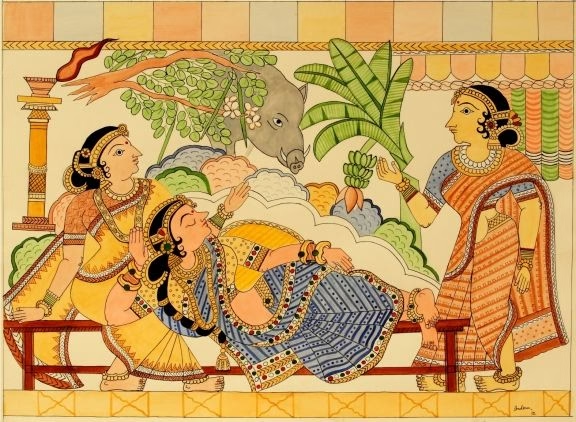
Chitrakathi is a unique Indian art form that blends visuals with storytelling. The word itself comes from chitra (picture) and katha (story). In practice, it refers to storytellers who use hand-painted scrolls to narrate tales from epics like the Ramayana and Mahabharata.
These performers carry long scrolls with panels that unfold as the story progresses. Each panel brings a scene to life through simple, expressive art. The storyteller sings or speaks, pointing to images in sequence. This makes Chitrakathi art engaging and immersive.
This tradition was once widespread in parts of Maharashtra, Odisha, and Andhra Pradesh. Studies show that in peak centuries, over 80% of village households in some regions witnessed Chitrakathi art performances during festivals and gatherings.
Key elements include:
- Hand-painted scrolls with sequential scenes
- Live narration or singing
- Performances during social and religious occasions
Today, Chitrakathi art still survives through cultural festivals, workshops, and revival efforts. It continues to bridge art and oral memory in a way few other traditions do.
Historical Roots of Chitrakathi Art Storytelling
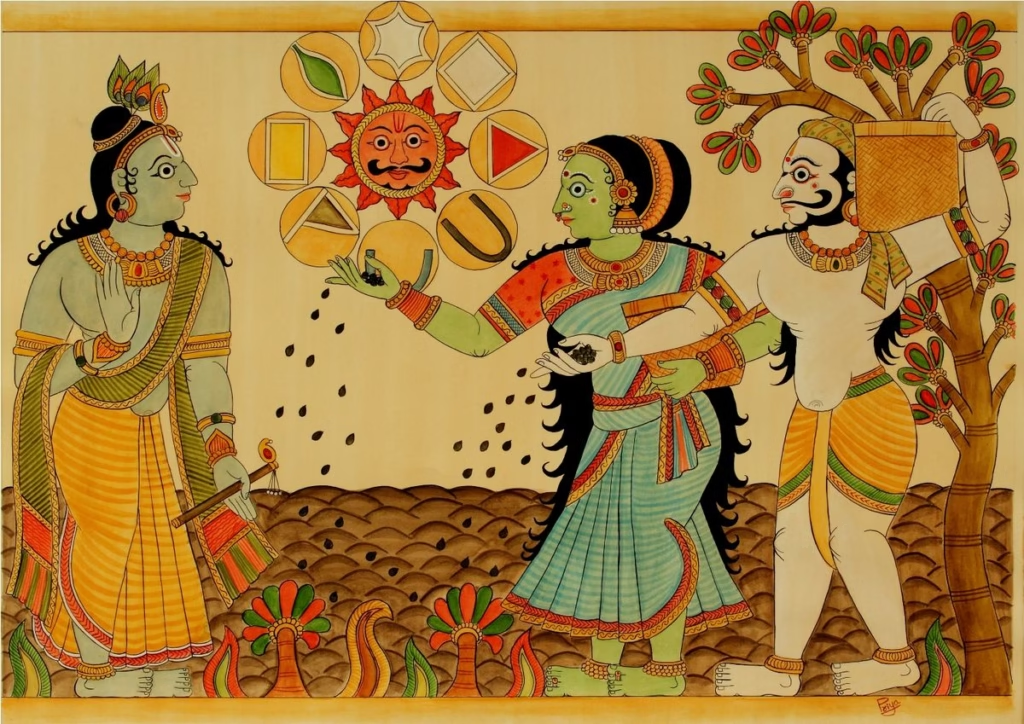
Chitrakathi traces its origins to early Indian narrative art, where stories were shared through images long before written texts became common. This tradition grew as a way to make epics, folklore, and moral lessons easy to understand for everyday communities.
Timeline of Chitrakathi’s Evolution
- Ancient India (Before 8th Century)
Visual storytelling existed in temples, murals, and scroll paintings. Artists used images to narrate tales from the Ramayana and Mahabharata for people who could not read. - Medieval Period (8th–14th Century)
Chitrakathi art began taking a distinct form in parts of western India. Storytellers travelled from village to village, using hand-painted paper or cloth scrolls to perform epic narratives during festivals and gatherings. - Maratha Era (17th–18th Century)
The art flourished under local patronage in Maharashtra and nearby regions. Themes expanded to include local legends, heroic tales, and social values, making performances more relatable. - Colonial Period (19th Century)
With changing entertainment forms, Chitrakathi faced decline. Yet, families of traditional storytellers preserved the practice by passing it down orally and visually. - Modern Revival (20th Century onwards)
Cultural organizations and researchers helped revive Chitrakathi through exhibitions, workshops, and folk festivals, keeping this narrative art alive today.
Parts of Chitrakathi Art on Walls
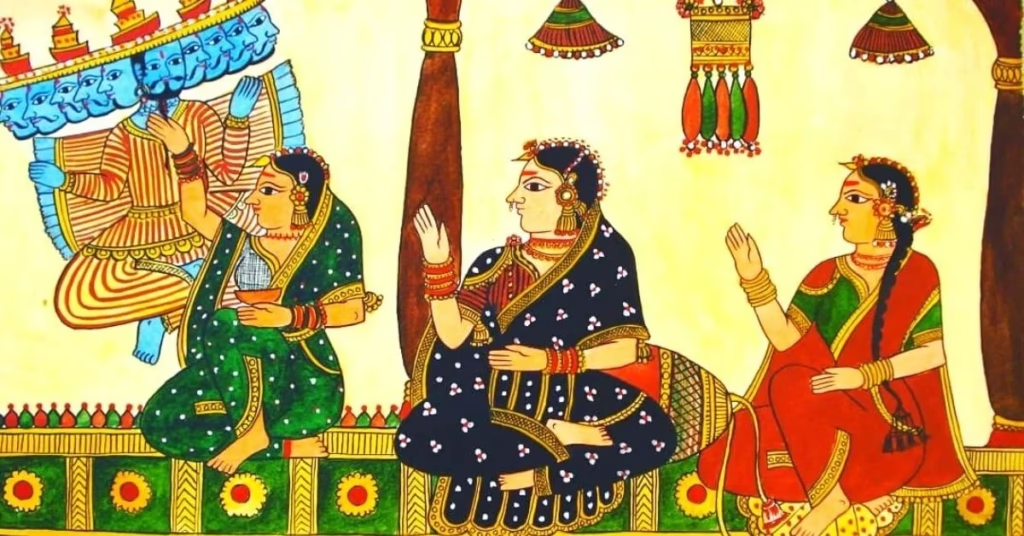
Chitrakathi is best known as a scroll-based storytelling art, but its visual language has also found a place on walls over time. When adapted to walls, the focus stays on narration through images, symbols, and sequence.
Key Visual Parts Used on Walls
- Central Story Panels
Large painted sections show the main scenes from epics like the Ramayana or Mahabharata. Each panel represents one key moment, just like a pause in spoken storytelling. - Character Figures
Characters are drawn with bold outlines, flat colors, and expressive eyes. This helps viewers recognize roles instantly, even from a distance. - Borders and Frames
Thick borders surround scenes. These act like visual breaks, guiding the eye from one part of the story to the next. - Symbolic Elements
Suns, trees, weapons, and animals appear often. They hint at time, place, or mood without using written text.
Pinguli Style: A Fusion of Maratha, Deccan, and Mughal Influences
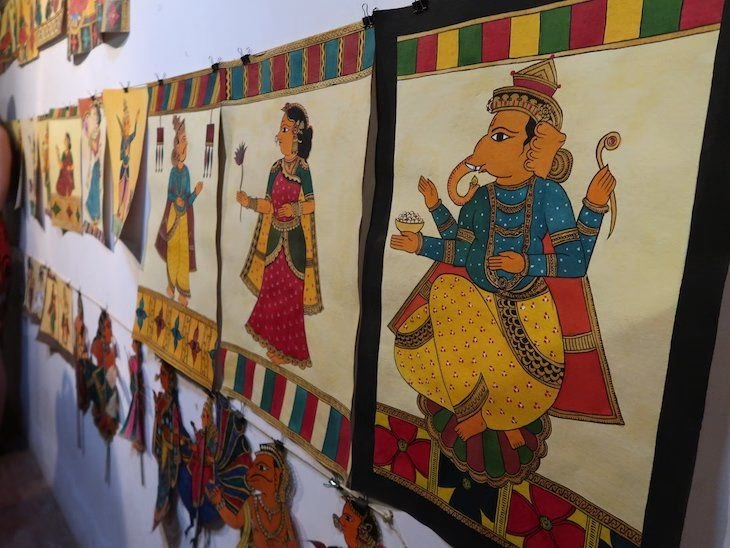
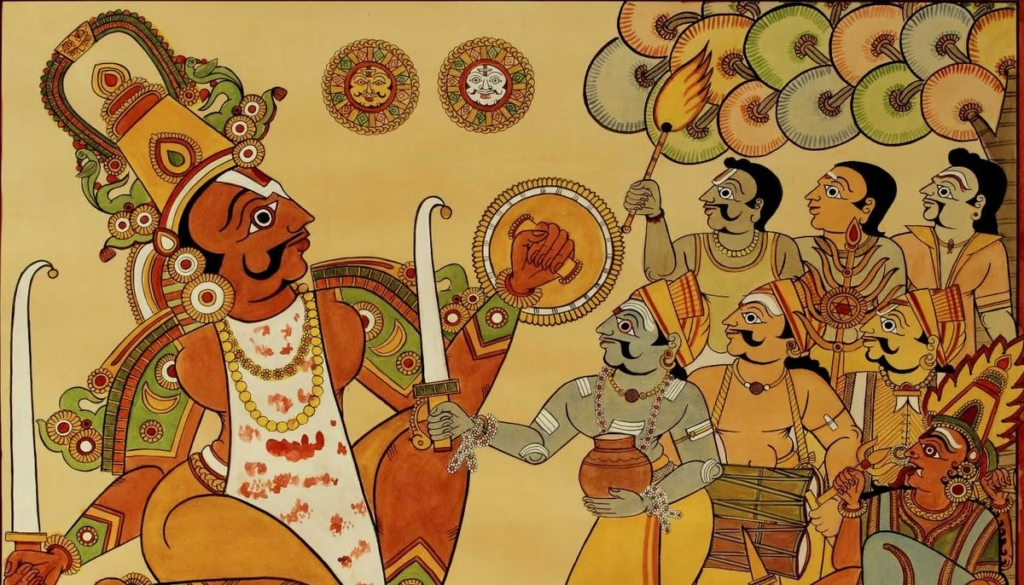
The Pinguli style stands apart because of its bold visual language and layered surface treatment. Its character is shaped less by narration and more by how it is made. Technique, color handling, and composition do the talking here. Every surface feels intentional and visually rich.
The making process is slow and carefully sequenced. Each stage prepares the ground for the next.
Typical making timeline
- Surface preparation using treated cloth or handmade paper
- Base coating with a natural paste to add strength and grip
- Freehand sketching with confident outlines
- Colour filling in flat, bold tones
- Final detailing with fine lines and controlled highlights
The materials themselves are simple, but the skill lies in how they are handled.
- Natural pigments derived from stones, plants, and minerals
- Handmade paper or cotton cloth treated for durability
- Brushes crafted from animal hair or plant fibres
- Organic binders such as gum or natural glue
Visually, the Pinguli style feels dramatic and decorative.
- Figures appear tall and expressive, with sharp facial features
- Garments show layered patterns and dense ornamentation
- Borders are packed with repeated motifs and designs
- Deep reds and gold tones are often used to create contrast and richness
Regional influences emerge through execution rather than subject.
- Maratha aesthetics show in strong outlines and powerful postures
- Deccan influence appears in colour balance and symmetry
- Mughal finesse comes through fine detailing and ornamental precision
The result is a structured yet expressive visual language. Nothing feels accidental. Every mark has a purpose.
Paithan Style: Ancient Narratives and Cross-Regional Influences
The Paithan style offers a calmer and more fluid visual experience. Its strength lies in restraint.
Balance, spacing, and controlled movement define its identity. Here again, method matters more than story.
The creation process focuses on rhythm and clarity.
Typical making timeline
- Selection of a smooth handmade paper surface
- Careful smoothing and coating for even colour flow
- Light sketching to map space and proportion
- Gradual colouring applied layer by layer
- Soft detailing added only at the final stage
Material choices are designed to support precision and softness.
- Earth-based natural pigments in muted tones
- Thin brushes that allow controlled, delicate strokes
- Organic binders that dry slowly for better control
- Minimal surface texture to reduce visual noise
The visual character remains open and readable.
- Figures are smaller and evenly spaced
- Facial features appear rounded and gentle
- Backgrounds stay simple and uncluttered
- Colours remain earthy, avoiding strong contrast
Cross-regional influence shows through craft discipline rather than ornament.
- Line work reflects broader Indian drawing traditions
- Colour restraint mirrors temple and manuscript painting practices
- Composition follows a grid-like balance seen across regions
Functionality plays a key role in this style.
- Scrolls unfold smoothly without overwhelming the viewer
- Thin paint layers help prevent cracking over time
- Layouts remain legible even when viewed from a distance
The Paithan style does not seek attention. It earns it quietly, through precision, balance, and calm control.
Reviving an Ancient Legacy: Preservation and Modern Revival
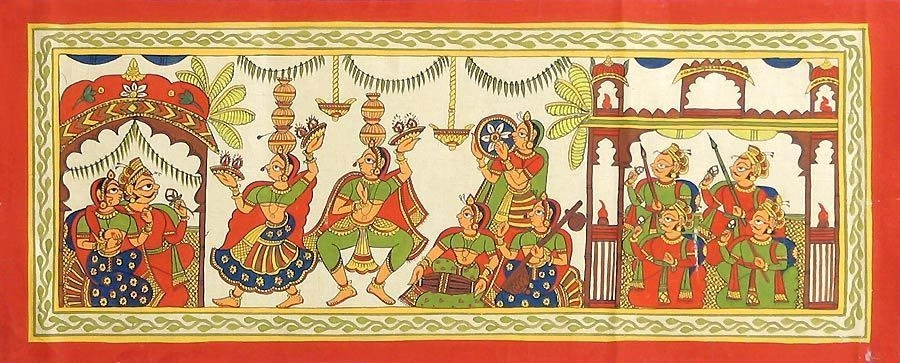
Chitrakathi is no longer confined to village walls.
Today, efforts are underway to preserve this centuries-old storytelling art.
Communities, museums, and cultural organizations are taking active steps to keep it alive.
Current Preservation Efforts
- Museums and Exhibitions: Over 15 museums in Maharashtra and nearby states display Chitrakathi paintings for public viewing.
- Workshops and Training: Around 120 workshops have been conducted in the last five years to teach young artists traditional techniques.
- Cultural Festivals: Annual festivals attract over 10,000 visitors who experience live performances and painting demonstrations.
- Art Grants and Funding: Government and private initiatives provide ₹50,000–₹200,000 per artist or community group for training and preservation.
Modern Revival Initiatives
- Artists are adapting Chitrakathi art for canvas, cloth, and home décor, making it accessible in urban spaces.
- Online platforms and e-commerce stores allow collectors and enthusiasts to purchase authentic Chitrakathi art, expanding market reach by 30–40% in the past three years.
- Schools and cultural centers include Chitrakathi art in the curriculum and storytelling programs, connecting younger generations with traditional narratives.
These efforts ensure that Chitrakathi remains vibrant.
It is no longer just a local tradition—it is a living art form.
Through preservation and innovation, this legacy continues to inspire and educate.
Also Read:
Phad Painting in Fashion: Rajasthan’s Story Scrolls on Jackets and Bags

Leave a Reply