
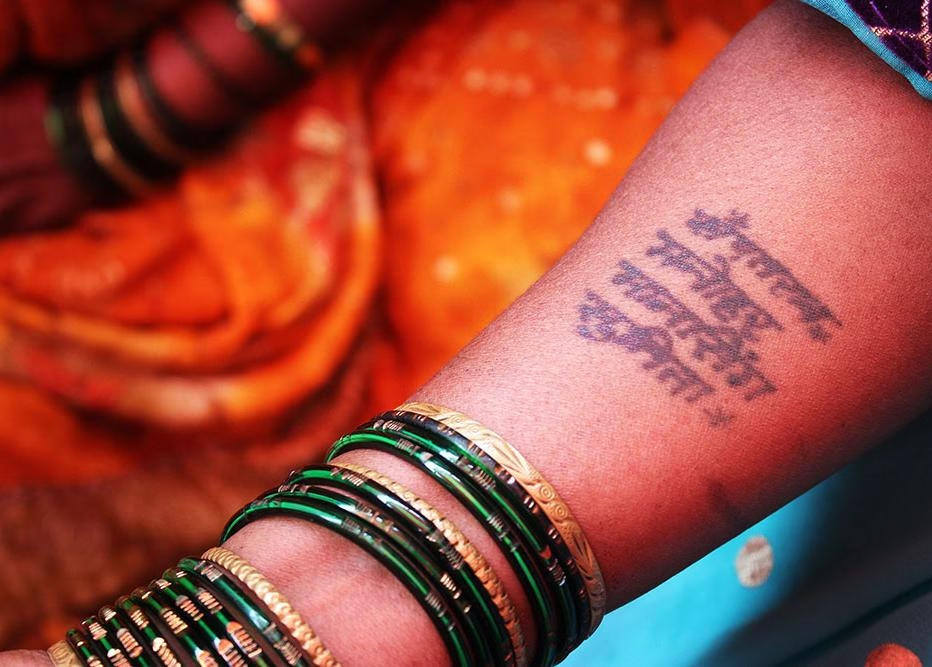
Hello folks! Let’s talk about tattoos. Not the ones from a modern parlor, but the ones etched by hand for millennia. The Godna tradition is one of India’s oldest living art forms, with roots stretching back over 3,000 years. It’s the permanent storytelling of Tribal India.
Forget ink guns. Here, artisans use natural pigments and thorns. This isn’t decoration. It’s identity. Each line on the skin is a code. It tells a person’s tribe, their social standing, and even their life’s journey.
In communities like the Baigas and Rabaris, Godna marks key moments: adolescence, marriage, and motherhood. It is heritage you wear. These symbols connect the wearer to the earth, ancestors, and their place in the world.
Today, fewer than 20% of younger generations in these tribes bear the full traditional patterns. We’re diving into this fading atlas of skin to read the stories written not on paper, but on people.
Let’s begin!
What is Godna Tradition? The Ancient Skin Stories of Tribal India
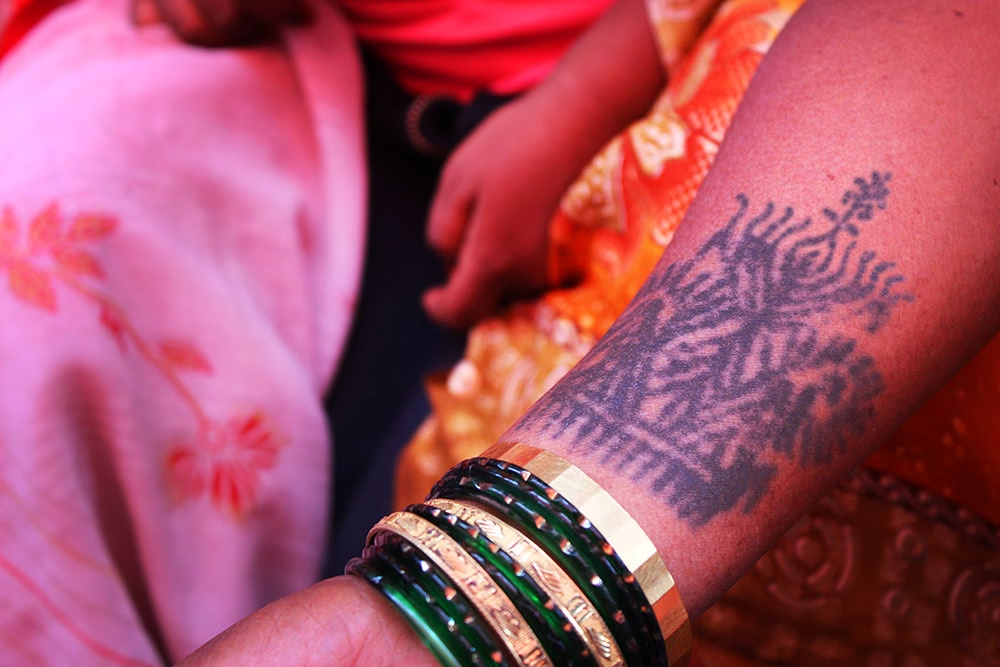
Forget modern tattoo parlors. Godna is something far deeper. It is one of India’s oldest forms of body art, a permanent language inked onto the skin for over 3,000 years. This isn’t decoration. It’s identity, heritage, and a living document of tribal life.
In Tribal India, skin is recorded history. The Godna tradition uses the body as a map. Every dot and line is a code. It states your tribe. It marks your first blood, your marriage, and your motherhood. It asks the spirits for protection.
This is not a choice from a book. It is a cultural mandate. The patterns are fixed by tradition. They tell the world who you are, where you come from, and what you have survived. The story is not drawn on you. It is etched into you. It is a permanent identity that tells:
- Belonging: Which tribe and geographic region the wearer is from.
- Life Stage: Key milestones like puberty, marriage, or motherhood.
- Spiritual Belief: Symbols to ward off evil or invite blessings.
- Achievement: Marks of skill, knowledge, or status within the community.
Godna turns skin into a walking heritage site. It connects you directly to ancestors. It ties you to the land. This link is personal. It is also communal.
This is not a tattoo. It is living history. The story is written in skin. It survived for 3,000 years. It fights against modern tides every day.
A 3000-Year Legacy: The Historical Timeline of Godna Tradition
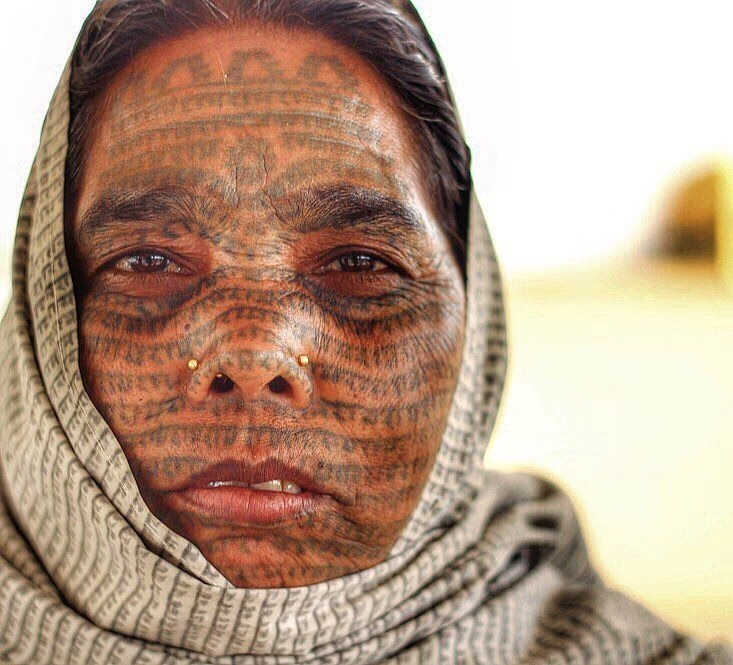
Godna’s story is written in skin across millennia. Here is its historical timeline.
Circa 1000 BCE (c. 3000 years ago): The earliest evidence surfaces. Anthropologists link the practice’s origins to the ancient nomadic tribes of central India. It began as a form of primal identification and spiritual protection.
5th Century BCE – 5th Century CE: The tradition solidifies. Historical records from travelers describe marked bodies. Godna becomes deeply encoded with social meaning, denoting tribe, marital status, and achievements.
Medieval Period to Colonial Era: The practice faces its first major shift. While thriving in isolated tribal heartlands, it clashed with external social norms and colonial perspectives that often dismissed it as “primitive.”
Late 20th Century (1970s-1990s): A period of steep decline. Modernization, migration for work, and social stigma cause a sharp drop. Fewer young women choose the full, traditional patterns.
21st Century – Present: The modern revival begins. The Godna tradition is reframed as intangible cultural heritage. Artists and researchers work to document patterns. Its motifs inspire contemporary fashion and tattoo art globally, finding new relevance.
This timeline shows the Godna tradition’s journey from an ancient identifier to a modern symbol of cultural pride.
Thorns & Earth: The Godna Traditional Tools and Natural Pigments
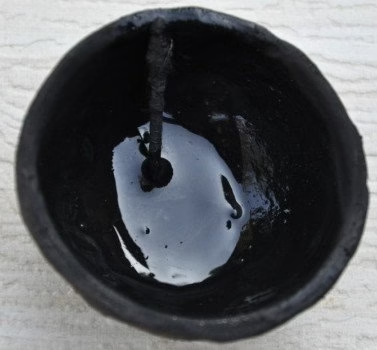
The Godna tradition uses tools from nature. The process is ancient and raw. It connects the art directly to the earth.
The Toolkit: Forget modern machines. The primary tool is a sharp thorn, often from lemon or babool trees. Artists bind several thorns to a stick. This creates a handmade tattoo needle. They use a small mallet to tap the tool. The technique is called hand-tapping. It drives the pigment deep into the skin.
The Natural Ink: The pigment is not store-bought ink. Artists create it from organic materials.
- Base Pigment: Lamp soot (kajal) or charcoal provides the deep black color. They sometimes use burnt cow dung.
- Binding Agent: Mustard oil, ghee (clarified butter), or even breast milk is mixed in. This binds the pigment and helps it flow.
- Healing & Antiseptic: Turmeric paste or neem leaves are often applied after the tattooing. This helps the wound heal and prevents infection.
This method is slow and painful. It creates a permanent, blue-black mark under the skin. The materials are simple. They are sourced locally from the forest and home. This makes every Godna tattoo a literal piece of its environment.
The process has not changed for thousands of years. It is a direct link to a pre-industrial world. The natural tattoo pigments and handmade Godna tools are the core of this living heritage.
The Step-by-Step Godna Traditional Making Process
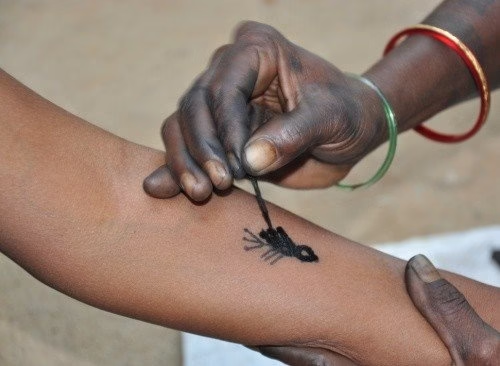
The Godna tradition is a ritual. It is slow, deliberate, and intimate. It connects the receiver to a lineage of artisans. This is not a quick machine job. It is a manual art form passed through generations.
Here is how a traditional Godna tattoo is created, step by step.
Step 1: Design and Marking:
The artist, often an elder woman, discusses the symbolism with the receiver. Using a thin stick or needle, she first scratches the chosen pattern directly onto the skin. This creates the guide.
Step 2: Preparing the Ink:
No modern inks are used. The pigment is made from natural soot. This is often collected by holding a clay pot over a lamp flame. The soot is mixed with organic mediums like milk, water, or sometimes oil to create a thick paste.
Step 3: The Pricking:
This is the core act. The artist dips a sharpened thorn, bamboo needle, or metal pin into the paste. Holding the skin taut, she hand-pricks the design into the epidermis. She follows the scratched guide dot by dot.
Step 4: Rubbing and Setting:
Once the pattern is fully pricked, more pigment is rubbed over the wounded area. This ensures the soot penetrates deeply into the skin.
Step 5: Healing and Revelation:
The area is often covered with a paste of turmeric or neem for its antiseptic properties. Over days, the skin heals. The superficial pigment washes away, leaving the soot trapped permanently in a deep blue-black pattern beneath. The masterpiece is revealed.
The result is not just a tattoo. It is a testament to endurance and a permanent bond with tradition.
Symbols of Life: Types and Meanings of Godna Patterns
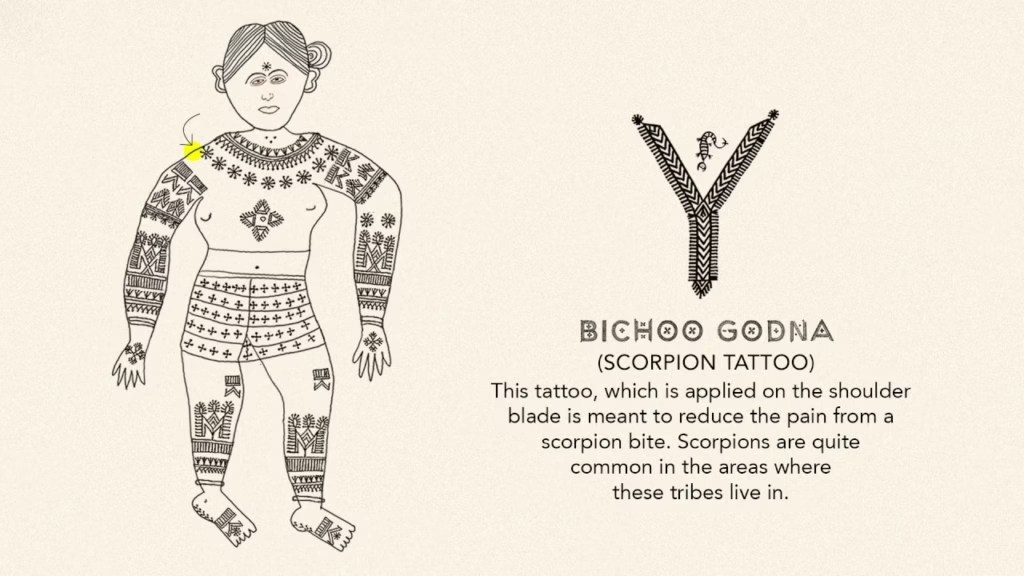
Godna patterns are not random decorations. Each mark is a deliberate symbol from a shared visual language. These tattoos map a person’s place in the world—their tribe, their role, and their journey through life.
They connect the wearer to nature, the divine, and community history. The designs vary profoundly between tribes and regions, creating a living atlas of identity on skin. Here are key types and their deep-seated meanings:
- Geometric & Floral Motifs: Common across many tribes, these are foundational.
- Dots, Lines, and Triangles: Represent people, paths, and mountains. A series of dots can signify a lineage or community.
- Flowers (Like the Lotus): Symbols of purity, fertility, and life itself. Often tattooed on women to bless them with health and children.
- Suns, Moons, and Stars: Connect the wearer to the cosmos, offering protection and symbolizing eternal cycles.
- Tribe-Specific Totems: These are unique identifiers.
- The ‘Kavach‘ (Armor) of the Baiga Tribe: Intricate, dense patterns covering the torso and limbs, believed to be a spiritual shield against evil.
- Animal Symbols (Horses, Peacocks) for the Rabaris: Denote the community’s historical ties to animal husbandry. A horse symbolizes mobility and strength.
- Body-Placement Codes: Location is as meaningful as the design.
- Forehead & Face Marks: Often denote marital status or specific clan identity.
- Arms, Chest, and Legs: Tell stories of strength, protection for the core, and a grounded connection to the earth.
- Hands and Fingers: Ensure ritual purity and dexterity in daily work and spiritual practices.
Ultimately, Godna turns the body into a sacred text. To read these patterns is to understand a personal and cultural biography written in symbols of resilience, faith, and belonging.
The Cost of Heritage: Understanding Godna Pricing and Value
Talking about a price tag for Godna tradition misses the point. This isn’t a commercial tattoo. For tribal communities, its value is cultural, not monetary. It is payment for a rite of passage, not a service.
However, understanding “cost” helps frame its status. A traditional Godna artist within a tribe does not charge a standard fee. Payment is symbolic.
- Traditional Context: The “price” is often a handful of grain, a bottle of local liquor (mahua), or a yard of cloth. This maintains the ritual exchange, not a business transaction.
- Urban Adaptation: When contemporary tattoo artists revive Godna patterns in a studio, pricing shifts. It ranges from ₹3,000 to ₹15,000+, based on size, detail, and artist prestige.
- Preservation Value: NGOs and government schemes fund master artists to train apprentices. Grants can be ₹25,000 – ₹50,000 for a training program, valuing the knowledge transfer.
The real cost is in its fading practice. Fewer than 20% of younger tribal women now get full Godna. The priceless element is the disappearing story on skin.
Godna Today: Preservation, Challenges, and Modern Revival
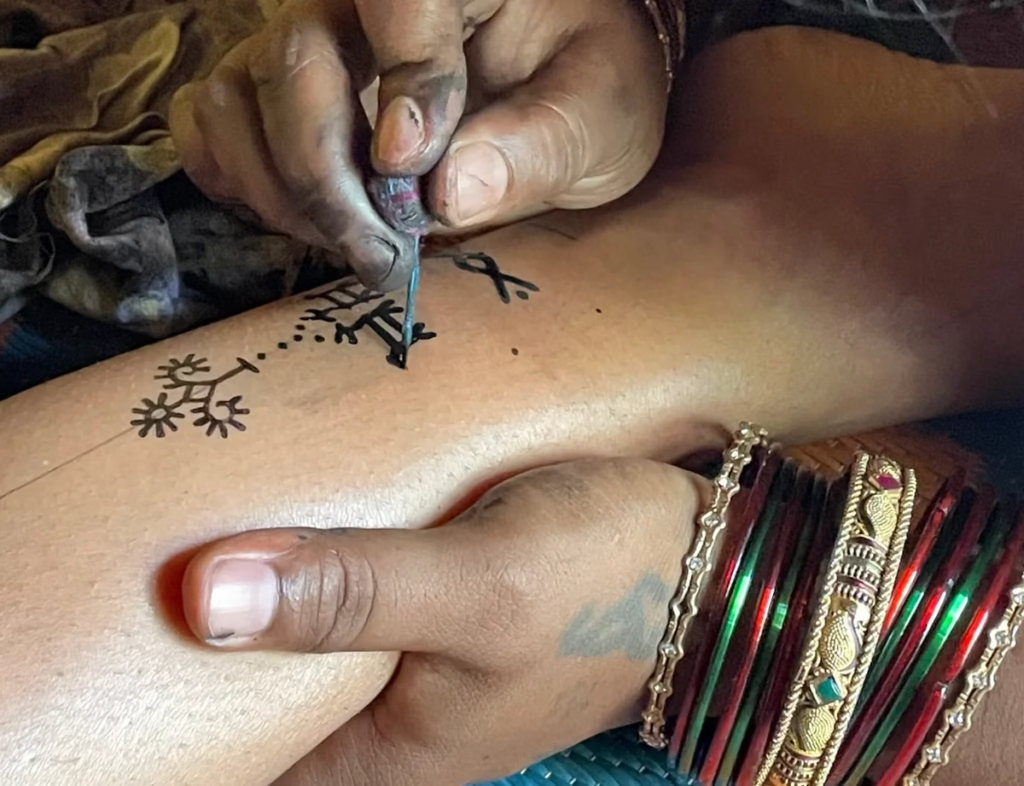
Godna stands at a crossroads. It is simultaneously fading in its birthplace and finding new life in unexpected spaces. The push to preserve it is a race against time.
The challenges are direct. Urban migration, stigma as “old-fashioned,” and a lack of young apprentices threaten its survival. In some tribes, only women over 60 hold the complete symbolic lexicon.
Yet, a modern revival is building. This is not about copying but recontextualizing.
- Studio Art: Tattoo artists in cities now offer Godna-inspired designs. Searches for “Godna tattoo” have risen by over 200% online in 5 years, creating new interest.
- Fashion & Design: Designers like Rajesh Pratap Singh have featured Godna motifs in collections. A single embroidered piece can sell for ₹20,000, bringing economic value to the patterns.
- Documentary Efforts: Projects like the “Tattoo Hunter” series have documented artists like Dr. Lalit Vati, one of the last practicing Baiga chharwas (tattooists).
The goal is not to freeze the tradition but to ensure its stories inform the future. The ink is evolving, but its ancient soul is fighting to be read.
The Bottom Lines
The Godna tradition is more than ink. It is a language. For over 3,000 years, its lines have mapped identities, rites of passage, and a deep connection to the earth on the skin of Tribal India.
Today, this language faces a silent crisis. In its traditional heartlands, it is whispered by fewer voices each year. Yet, its echo is growing louder in the modern world—in urban tattoo studios, on fashion runways, and in the work of documentarians fighting to preserve it.
The true conclusion of the Godna tradition is still being written. The legacy is permanent; our task is to ensure it is not forgotten.
Also Read:
Is Varanasi Architecture Fueling the City’s Overcrowding or Its Timeless Charm?
Cheriyal Scroll Paintings: The Alluring Storytellers of Telangana

Leave a Reply