
Hello, folks, Did you know India has over 50 distinct folk art forms? That’s right. From the Warli tribals of Maharashtra to Madhubani’s intricate lines in Bihar, these aren’t just ancient paintings.
They are living, breathing stories. In fact, some traditions date back over 5,000 years. Yet, they aren’t stuck in a museum. You see them on modern handbags, in chic home decor, and even on your Instagram feed.
So, why does this 5,000-year-old art still matter in 2026? It is simple. It connects us to our roots while helping rural artists earn a livelihood.
Ready to explore the vibrant world of Indian folk art? Let’s dive in
What Exactly Is Traditional Indian Folk Art? A Quick Overview
Let’s start with the basics. What are we really talking about? Traditional Indian folk art is not the same as the paintings you see in fancy art galleries. It is different.
Simply put, it is the art of the people. It is a visual language passed down by mothers to daughters and from village to village for thousands of years. Unlike classical art, which was often made for courts or temples, folk art was made for the home.
The Key Characteristics
Here is what makes it stand out:
- Ritualistic Roots: Most art was created for festivals, harvests, or weddings. It was never just for “decoration.”
- Natural Materials: Artists used crushed stones, rice paste, charcoal, and vegetable dyes. No plastic paint tubes here!
- Geometric Precision: You will notice a lot of patterns. In Warli art, for example, a circle and triangle represent the sun and trees.
How old are we talking?
This is where the numbers get interesting.
- Some art forms, like Pithora paintings done by the Rathwa and Bhil tribes, are estimated to be as old as 5,000 to 10,000 years.
- The famous Madhubani art, which originated in the Mithila region of Bihar, historically dates back to the era of the Ramayana. That is roughly 2,500 years of continuous practice.
More Than 50 Distinct Styles
India is vast. So, the art is vast too. Officially, there are over 50 major folk and tribal art forms recognized across the country.
Here are a few heavy hitters you should know:
- Madhubani (Bihar): Known for its vibrant colors and line drawings filled with floral patterns.
- Warli (Maharashtra): Recognizable by its white stick-figure paintings on red mud walls.
- Gond (Madhya Pradesh): Highly detailed paintings where dots and lines are used to create the illusion of movement.
- Phad (Rajasthan): A scroll painting that acts as a portable temple, depicting local deities and their stories.
So, when we say “traditional Indian folk art,” we are talking about a living, breathing history book. It is a record of how ordinary people celebrated life, nature, and mythology long before cameras or the internet existed.
5 Famous Types of Indian Folk Art Painting You Must Know
India is a canvas of colors. But some have traveled from village walls to international galleries. They are famous for a reason.
These five styles are the superstars of traditional Indian folk art. They each have a unique visual language. Let’s explore them.
1. Madhubani: The Art of Mythological Lines
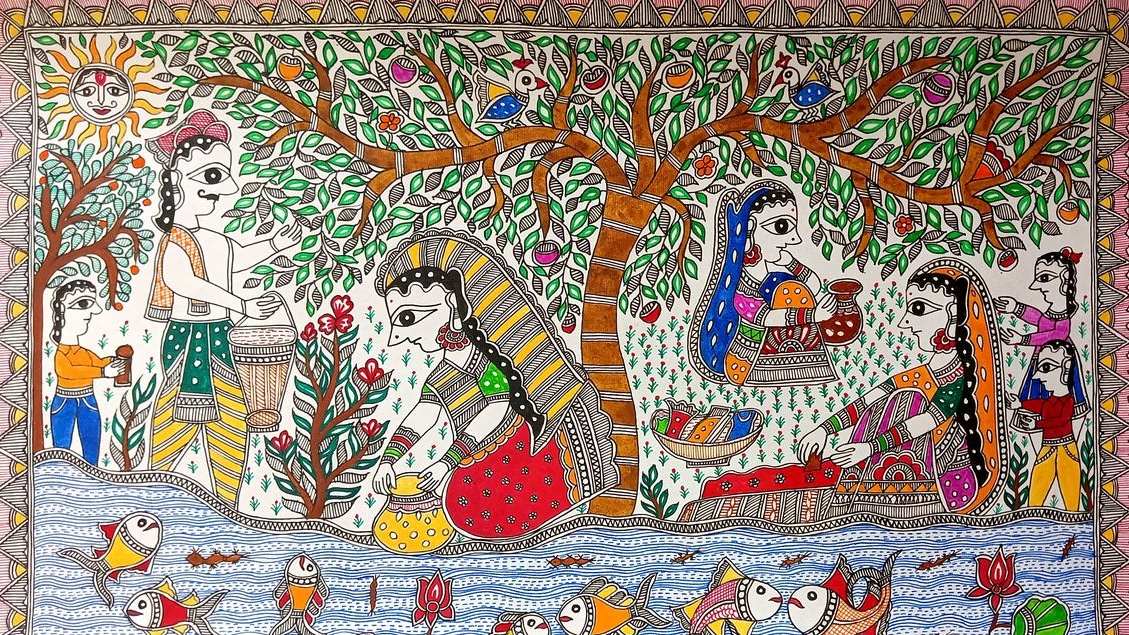
Originating from Bihar, Madhubani is also called Mithila painting. Historically, women drew these paintings on freshly plastered mud walls.
- The Look: It is defined by bold lines and bright colors. The figures have large, exaggerated eyes. There is never an empty space left on the canvas.
- The Stats: This art is ancient. Some believe it dates back to the time of the Ramayana, roughly 2,500 years ago. Today, it contributes significantly to the economy, with thousands of women artists in over 50 villages relying on it for income.
- Fun Fact: Artists once used fingers, twigs, and even matchsticks. No brushes!
2. Warli: The Simplicity of White on Red
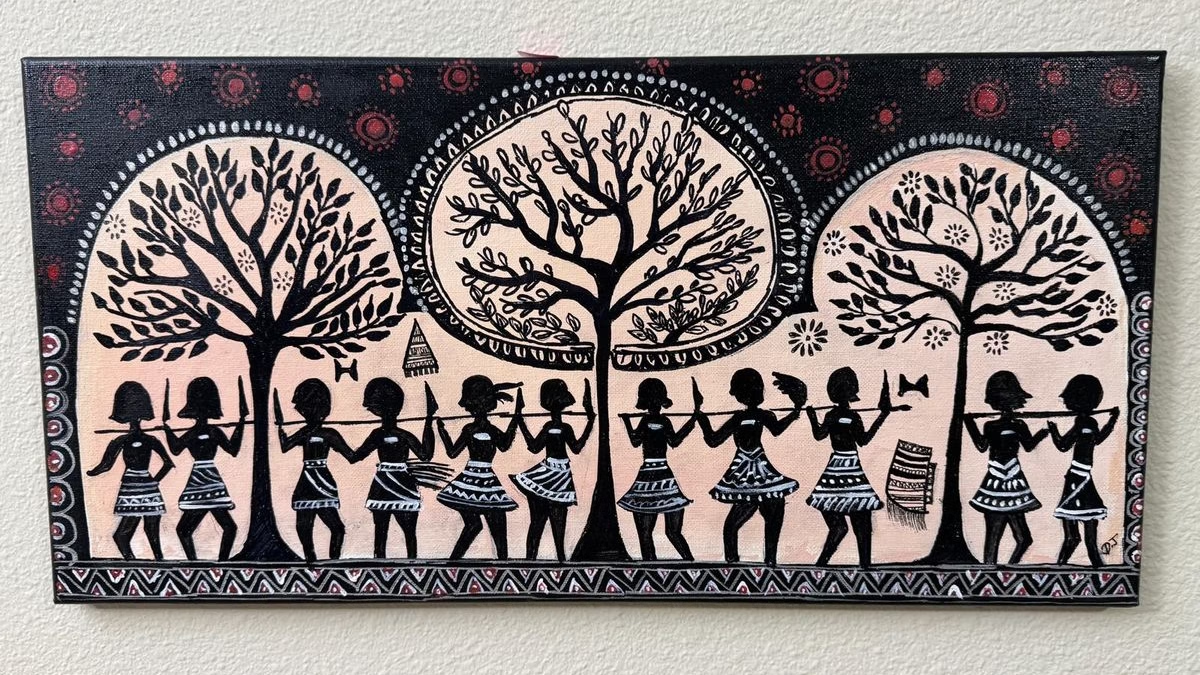
If you love minimalism, you will love Warli. This art comes from the Sahyadri hills in Maharashtra. It is practiced by the Warli tribe, one of the largest in India.
- The Look: Forget bright colors. Warli uses only white pigment on a red or brown background. The paintings are made of basic geometric shapes: circles, triangles, and squares.
- The Symbol: The central motif is a circle dance called the “Tarpa.” It represents the cycle of life.
- The Stats: Warli art is over 2,500 years old. Interestingly, it was almost unknown to the outside world until the 1970s. Now, it is a favorite in modern home décor.
3. Pattachitra: The Detailed Scrolls of Odisha
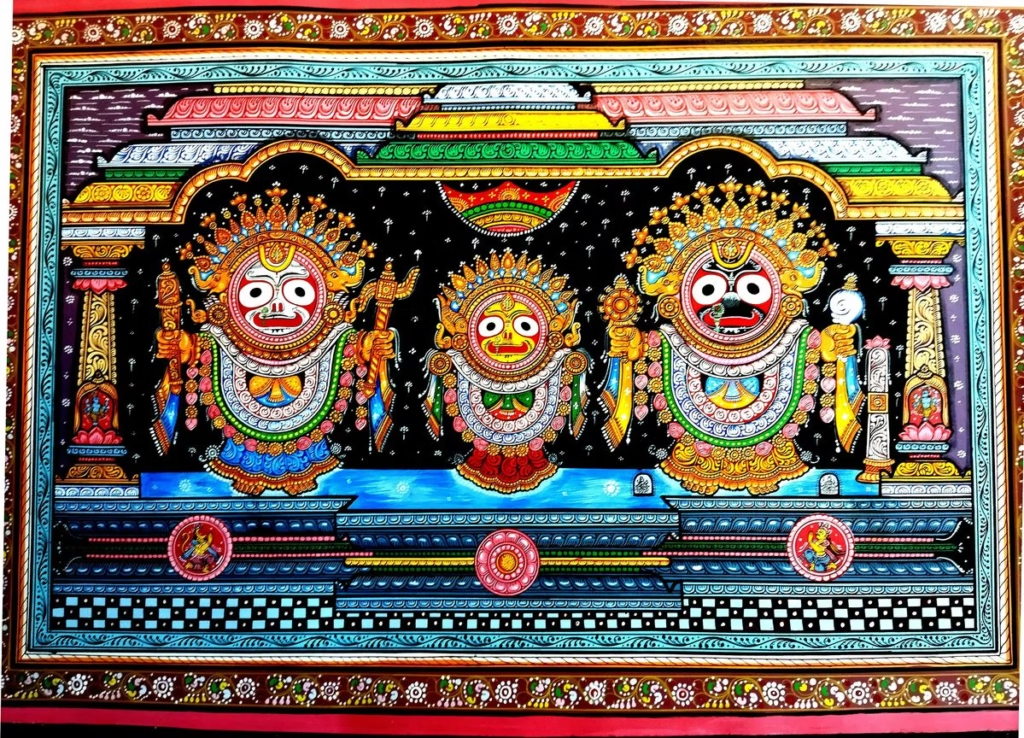
The name Pattachitra comes from Sanskrit. “Patta” means cloth, and “Chitra” means painting. So, it is painting on cloth.
- The Process: This is one of the most intricate forms. Preparing the canvas takes days. Artists coat the cloth with a paste of tamarind seed and chalk. Then, they polish it with stones until it shines like leather.
- The Look: The borders are always elaborate. The colors are bold and earthy—mostly black, white, yellow, ochre, and red. Natural materials are used. For example, white comes from conch shells.
- The Stat: A single, highly detailed Pattachitra painting can take a master artist up to 4 to 6 months to complete.
4. Gond Art: The Dotted Dreams of Madhya Pradesh
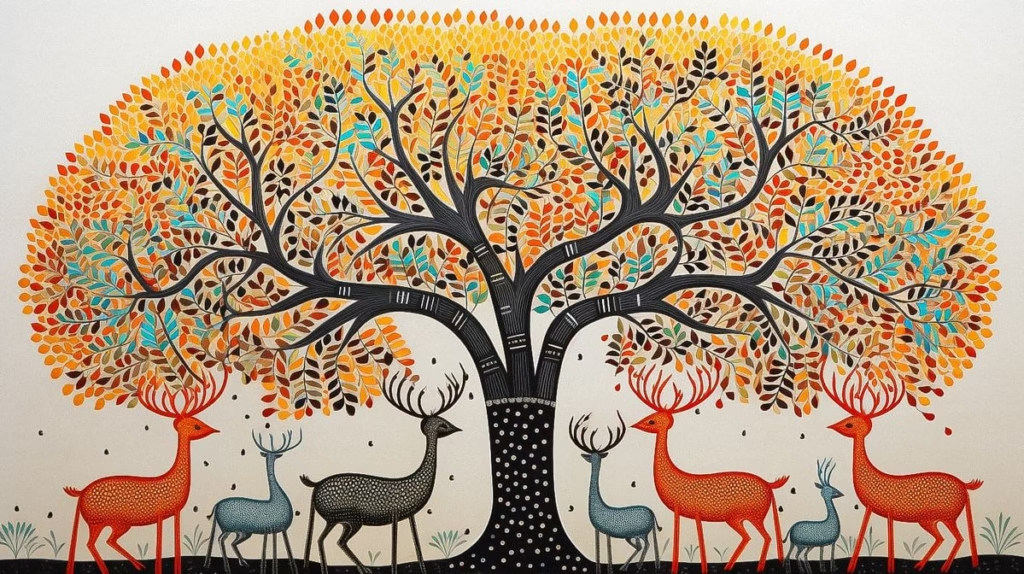
Gond art comes from the Gond tribe, one of India’s largest indigenous communities. They believe that “everything is connected.”
- The Philosophy: Gonds have a belief that viewing a good image brings good luck. So, their art is very detailed and optimistic.
- The Look: The unique feature is the use of dots and dashes. Artists use these to create texture and a sense of movement. They believe the dots make the subject look alive.
- The Stat: A single painting can contain thousands of tiny dots. It is a meditative process requiring immense patience.
5. Phad: The 700-Year-Old Scroll Paintings
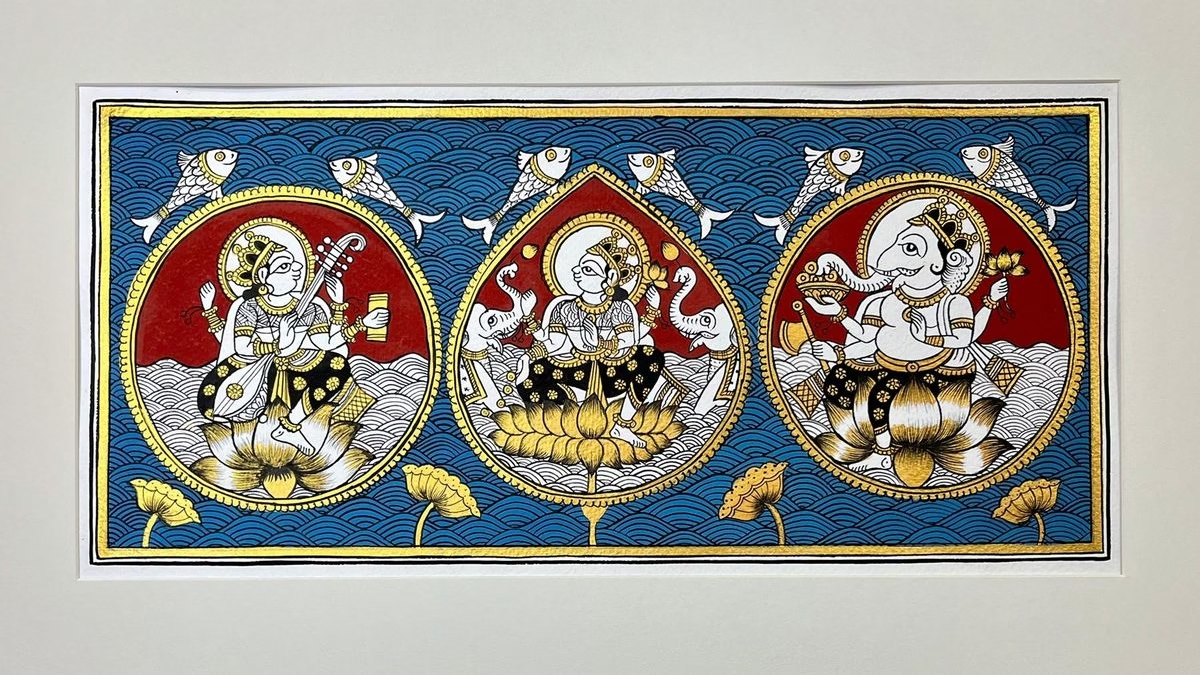
Phad is a religious scroll painting from Rajasthan. It is essentially a moving temple.
- The Performance: These are not just for looking at. They are meant to be performed. A community of priest-singers called the Bhopas carry these huge scrolls. They unroll them and sing stories of local heroes and gods, using the painting as a visual aid.
- The Look: The colors are vibrant. A distinct feature is the “hierarchical proportion.” The main god or king is drawn much larger than the other figures.
- The Stat: A traditional Phad painting can be massive. Some scrolls measure 20 to 30 feet long!
These five styles are just the beginning. Each one tells a story of community, faith, and creativity. They prove that traditional Indian folk art is not just a relic—it is a living, evolving language.
Indian Folk Art Painting vs. Drawing: What’s the Difference?
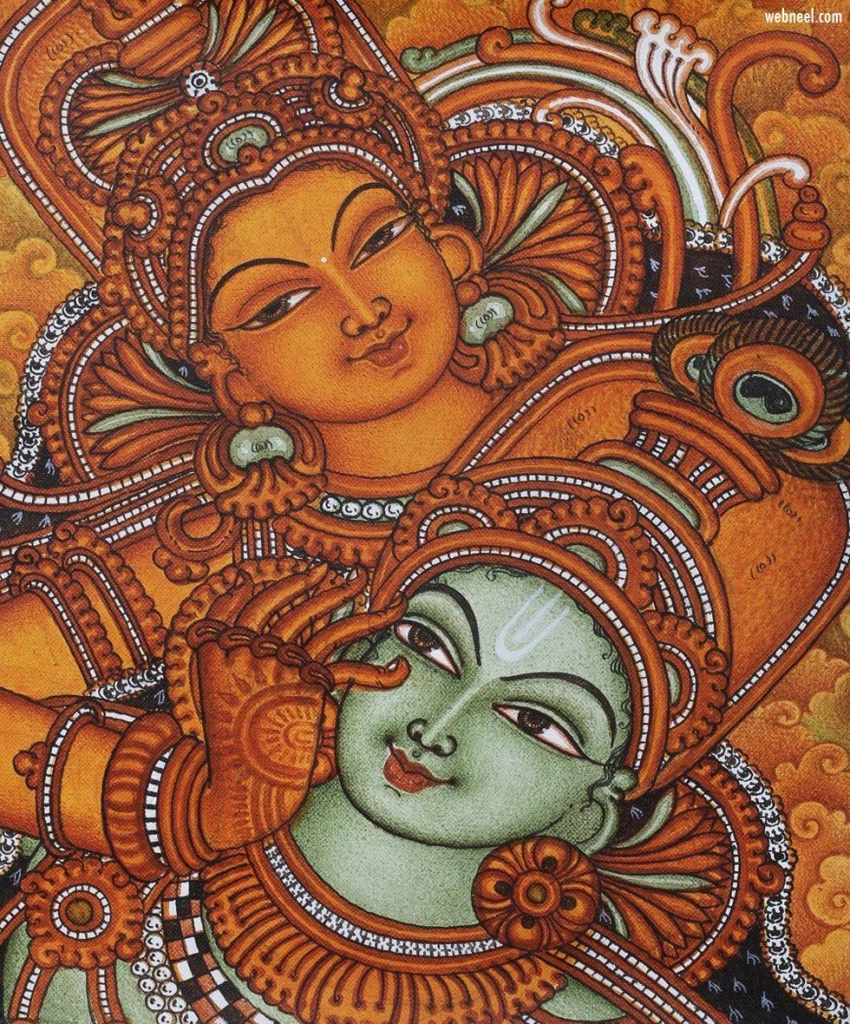
So, is there a real difference? Or are we just splitting hairs? Actually, the distinction between Indian folk art painting and Indian folk art drawing is clear. It mostly comes down to the tools and the base.
Let’s break it down simply.
What is Indian Folk Art Painting?
In simple terms, a painting uses a “wet” medium.
- The Definition: It is an art form where pigments are mixed with a medium (like water, gum, or oil) and applied to a surface.
- The Tools: Artists traditionally use brushes made from animal hair, bamboo sticks, or even cloth swabs.
- The Base: Usually done on walls, cloth (canvas), or treated paper.
Did you know? In Pattachitra painting, artists have been using the same natural brush technique for over 1,000 years. They even use ground mouse teeth to create fine details!
What is Indian Folk Art Drawing?
A drawing is generally “dry” and focuses on lines.
- The Definition: It involves creating marks on a surface using a dry medium. It is often the “blueprint” of the art.
- The Tools: Think earthy chalks, charcoal sticks, or metal pens (kalam).
- The Base: Often done on paper, palm leaves, or untreated fabric.
Quick Comparison: Painting vs. Drawing
To make it easier to understand, here is how they stack up:
- Primary Tool:
- Painting: Wet Brush
- Drawing: Dry Pen/Charcoal
- Focus:
- Painting: Color and texture
- Drawing: Lines and contours
- Prep Work:
- Painting: Requires surface preparation (like coating with cow dung or rice paste).
- Drawing: Can be done quickly on raw surfaces.
The “In-Between” Art
Here is where it gets tricky. Some traditional Indian folk art blurs the line.
- Madhubani: Artists use twigs and fingers (painting) but outline everything boldly with rice paste (drawing).
- Gond Art: Famous for its incredible dots and lines. The outline is a drawing, but the filling is a painting.
If the artist is dipping a tool in liquid, it’s Indian folk art painting. If they are scratching or rubbing a dry tool on a surface, it’s an Indian folk art drawing. Both, however, require the same soulful connection to nature.
Where to Buy Traditional Indian Folk Art Online and Support Artists
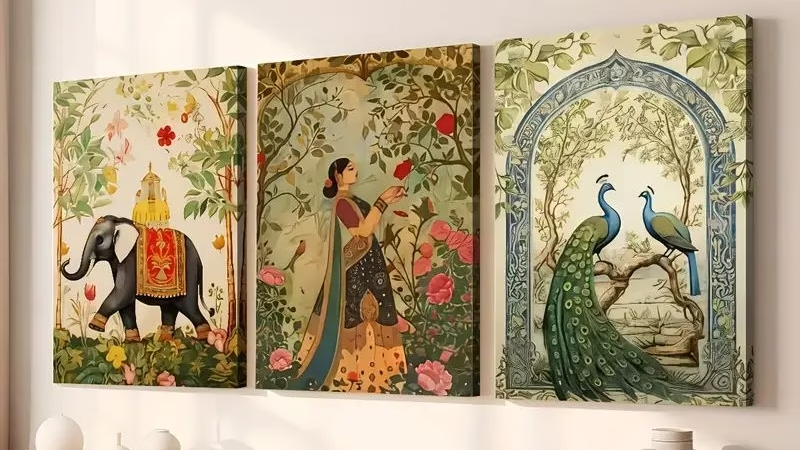
Ready to bring home a piece of India’s soul? Buying traditional Indian folk art online is easier than ever. But here’s the catch: you want the real deal, not a machine-made copy.
You also want your money to reach the artist, not just a big corporation. Good news? Over 70% of folk artists now sell through digital platforms. Let’s find them.
Where to Find Authentic Art Online
First, know your platforms. Not all are created equal.
- Direct-to-Consumer Portals: Websites like Gaatha and Craftsvilla specialize in handcrafted goods. They often share the artist’s story and location.
- Government-Run Sites: Look at Geographical Indications (GI) tagged products. The Development Commissioner (Handicrafts) website lists official stores. This ensures the art is genuine and from the right region.
- Social Media: Believe it or not, Instagram is a hotspot. Search hashtags like #WarliArt or #MadhubaniPainting. You will find artists selling directly. This cuts out the middleman.
How to Ensure You’re Supporting the Artist
It’s not just about buying. It’s about buying right.
- Check for Fair Trade Practices: Does the platform mention fair wages? If they hide pricing, be careful.
- Look for Artist Profiles: Real platforms showcase the artist. You should see a name and a face.
- Ask Questions: Message the seller. Ask about materials used. Ask how long it took. A genuine artist will love to talk about their process.
Quick Stat: Buying directly can increase the artist’s profit by up to 50% compared to selling through a physical middleman. Your click matters.
So, go ahead. Explore. That one painting you buy? It might just fund an artist’s child’s education for a month.
Frequently Asked Questions:
1. What is the oldest Indian folk art still practiced today?
Believe it or not, the Warli art form dates back to 2500 BCE. That makes it over 4,500 years old! You can still find tribal communities in Maharashtra creating these simple white stick figures on mud walls today. It is one of the oldest living art traditions on the planet.
2. How many folk art styles exist in India?
There isn’t one single number, but the government has officially recognized over 50 distinct regional folk and tribal art forms. This includes famous ones like Madhubani and Pattachitra, plus lesser-known gems like Sohrai and Khovar from Jharkhand. Every state has its own visual language.
3. Can Indian folk art actually be a full-time career?
Yes! The market for folk art is growing by nearly 15% annually. Thanks to government platforms like GeM (Government e-Marketplace) and private online stores, many artists now earn ₹20,000 to ₹50,000 per month. It is no longer just a hobby; it’s a viable small business.
4. What materials are used in traditional Indian folk art painting?
It depends on the region. Traditionally, artists used natural stuff. For example, Madhubani artists use rice paste for white color and neem twigs as brushes. In Maharashtra, Warli artists use cow dung and red mud to prepare the base. It’s completely organic and sustainable.
5. How much does an authentic Indian folk art painting cost?
Prices vary wildly. A small 9×12 inch Madhubani drawing on paper might cost you around ₹1,500. However, a large, intricate traditional painting on cloth can go for ₹50,000 or more. The price depends on the artist’s fame, the detail, and the size.
6. Why do Indian folk art drawings look so different from modern art?
Folk art isn’t about perfect realism. It is about storytelling and symbolism. For instance, in Gond art, every dot and line is believed to ward off evil spirits. The focus is on patterns and nature, making it a deeply spiritual practice, not just decoration.
7. Is it okay for foreigners to buy and display Indian folk art?
Absolutely. In fact, around 30% of high-end folk art sales are to international buyers. Displaying it helps preserve the culture. Just make sure you buy from a certified source or directly from an artist co-operative to ensure the community gets paid fairly.
8. What is the difference between “folk art” and “tribal art” in India?
Great question! “Folk art” usually refers to village art (like Madhubani) influenced by mythology. “Tribal art” (like Saura or Gond) comes from indigenous communities with distinct animistic beliefs. While different, both share a raw, earthy aesthetic that feels deeply connected to nature.
9. How is technology helping traditional Indian folk art survive?
Technology is a game-changer. The rise of social media has helped some artists increase their income by 40% just by selling directly online. Plus, AR (Augmented Reality) filters now allow you to “try” Warli art on your walls before you buy!
Also Read:
Andhra Pradesh’s Etikoppaka Toys: How Natural Lacquer Art Is Gaining Eco-Friendly Appeal

Leave a Reply