
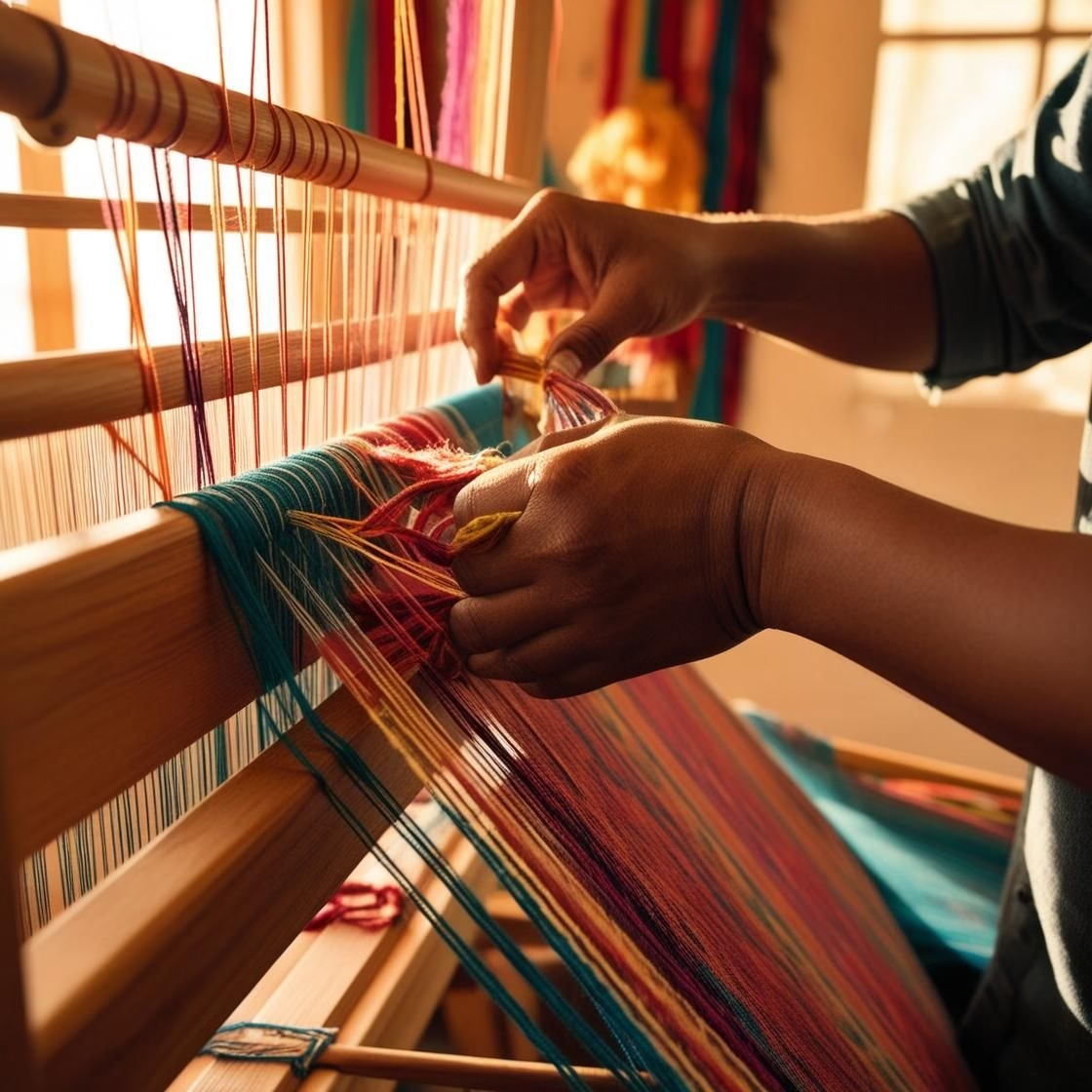
Hello, folks. Let’s talk about the real fabric of India. Not the one from mills; we are talking about the natural fibers of India that tribal communities have woven for centuries. This is a craft with a soul. Think bark cloth from forests that have stood for 500 years. Think cotton spun by hand on village charkhas.
This isn’t just textile history. It’s a living, breathing art that less than 5% of our artisans still practice today. We’re losing it. Fast. With every cheap, synthetic shirt we buy, a piece of this sustainable tribal craft fades. This knowledge isn’t in books. It’s in the hands of elders.
Let’s go on a journey, from tree to textile. We’ll meet the plants, the animals, and the people who see fiber as an extension of the land itself. This is the story of indigenous cotton traditions and sacred threads. It’s raw. It’s real. And it’s asking to be remembered before it’s gone.
What are the natural fibers of India?
Forget polyester. Forget the spinning mill. Think older. Think of a thread pulled straight from the earth. This is the world of Indian tribal natural fibers.
These aren’t just materials. They are a direct conversation with nature. For over 5000 years, India’s tribal communities have turned trees, plants, and animals into art. They didn’t have factories. They had knowledge.
This traditional craft is a living archive. Today, less than 10% of these ancient fiber processing techniques are actively practiced.
Here’s the raw truth about these materials:
- They are local. Every fiber comes from within a 50 km radius of the community. The forest is the warehouse.
- They are seasonal. Harvesting follows nature’s calendar, not market demand. It teaches patience.
- They are hand-powered. From stripping bark to spinning yarn, it’s all human energy. One artisan can spend 80 hours preparing fiber for a single shawl.
The real number that hurts? An estimated 3 unique tribal fiber traditions are lost every decade. When an elder passes, a library of ecological knowledge burns.
This is more than sustainable tribal craft. It’s a philosophy. The fiber is never just taken. It is negotiated. A tree gives its inner bark but continues to live. A sheep is shorn but cared for.
The relationship is circular, not linear. In a world of fast fashion, these fibers are a slow, deep breath. They remind us that cloth can have a conscience and that the most durable thread is the one spun with respect.
3 Main Types of Natural Fibers of India: Plants, Cotton & Animal
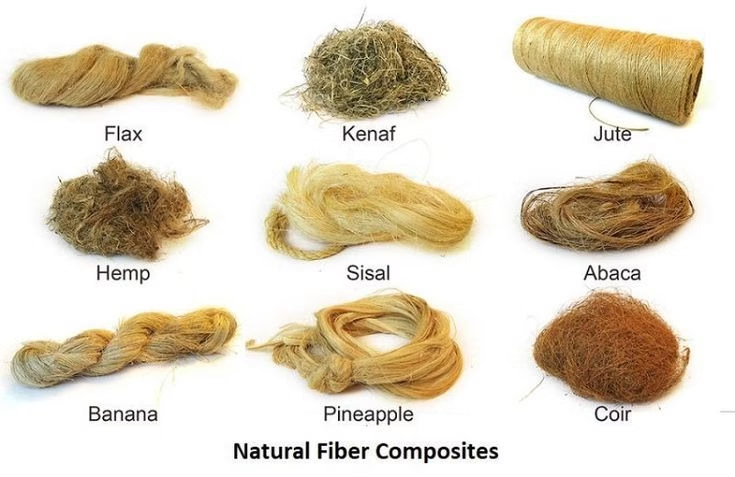
Let’s get real about the natural fibers of India that tribal communities use. This isn’t a catalog. It’s a map of relationships. For generations, people didn’t order materials online. They walked into their backyard—the forest, the field, and the grazing land—and worked with what the earth provided.
This created three profound partnerships: with plants, with a special cotton, and with animals. Each fiber tells a story of place, survival, and a deep, slow wisdom we’ve nearly forgotten.
1. Plant Fibers: The Forest as the First Factory
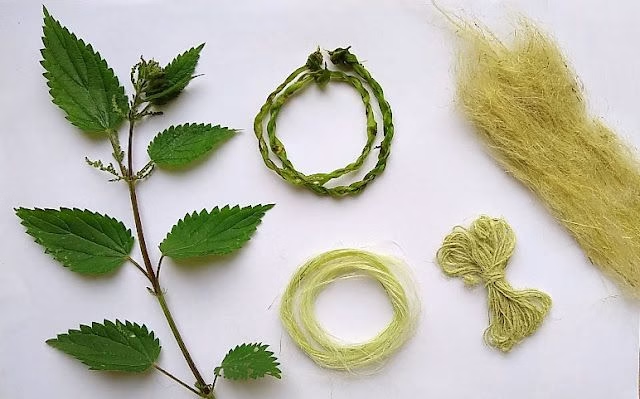
Before fabric came from factories, it came from forests. For communities like the Gond and Muria in central India’s Bastar region (Chhattisgarh and Madhya Pradesh), the jungle itself was a living loom.
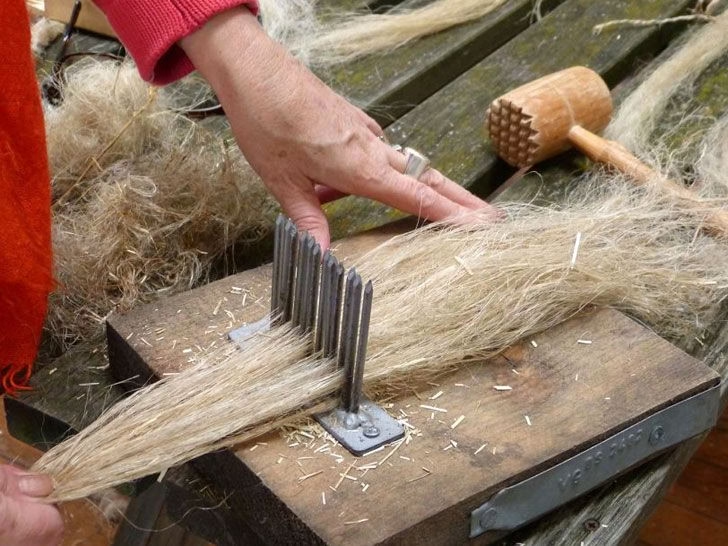
They didn’t cut down trees for timber. They learned to gently harvest bark from specific trees. They’d strip the inner bark, soak it, beat it, and hand-twist it into a strong, breathable thread.
- Fabrics & Items Made: This wasn’t for fancy shawls. This was for everyday life. They created durable bark cloth garments, sleeping mats, sturdy carry bags, and even ceremonial attire from these forest gifts.
- The Emotional Truth: Imagine wearing the forest. The texture is rough, honest. It smells of earth and rain. It wears out, but it also belongs. When it’s done, it goes back to the soil. This is a sustainable tribal craft in its purest form—a cycle that leaves almost no scar. It’s estimated that over 150 distinct plant species were historically used this way across India. Today, maybe a dozen are still in active use. That loss isn’t just about material; it’s a library of ecological knowledge burning down.
2. Indigenous Cotton: The Slow Thread of Identity
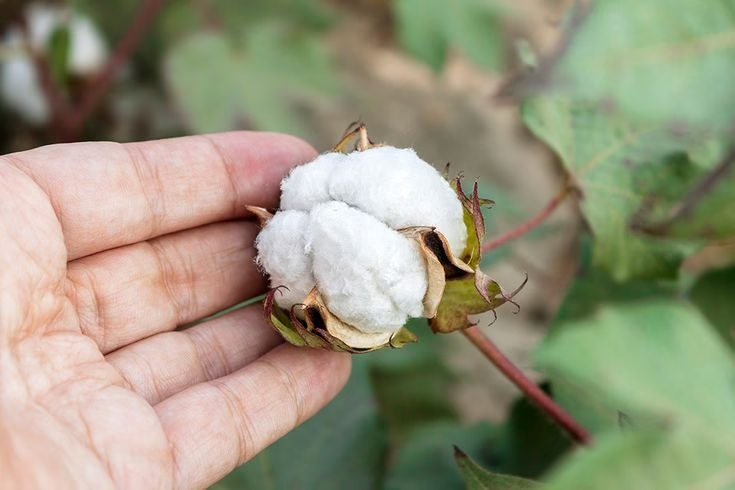
When we hear “cotton,” we think of fluffy white fields and machines. Tribal cotton is different. Communities like the Banjaras (nomadic across the Deccan Plateau) and tribes in Gujarat and Rajasthan grew desi cotton.
This is a native, short-staple cotton. It’s not perfect and fluffy. It’s stubborn and real. They hand-ginned it, hand-spun it on drop spindles, and wove it on simple looms.
- Fabrics & Items Made: This cotton became everything. Daily wear for men and women, vibrant skirts, turbans, and blankets. The irregularity of the hand-spun thread wasn’t a flaw. It was a signature. It absorbed natural dyes from turmeric, indigo, and pomegranate like a dream, creating colors that felt alive.
- The Emotional Truth: This cotton was slow. A single garment could represent weeks of labor. It was never just “clothing.” It was a record of a season’s work, a carrier of tribal ritual symbolism in its patterns. While industrial India now produces over 30 million bales of hybrid cotton annually, these unique desi varieties are on the brink, grown on less than 2% of the country’s cotton land.
3. Animal Fibers: The Gift of Warmth and Mobility
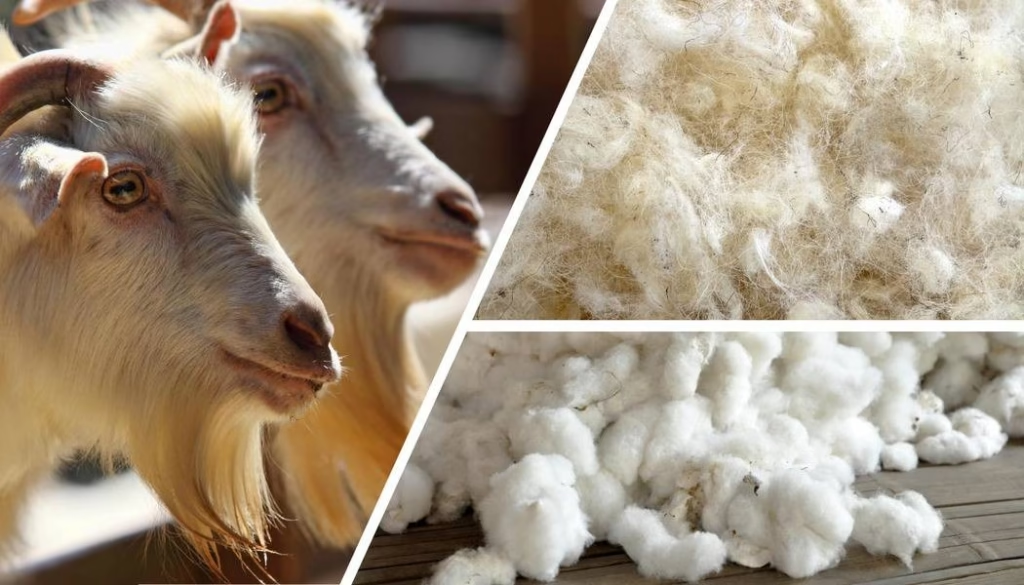
In the harsh, beautiful landscapes where forests thin out—the arid deserts of Kutch (Gujarat) and the cold highlands—tribal life revolves around pastoralism. For communities like the Rabari and Maldharis, their sheep, goats, and camels are family.
The fiber is a seasonal gift, sheared with care. Sheep wool provides warmth. Coarse goat hair adds durability. Luxurious camel hair, prized by the Rabari, offers insulation against both desert cold and heat.
- Fabrics & Items Made: This is where functionality meets profound skill. They crafted thick, warm shoddy wool blankets, intricate Kutch shawls, and durable coats. The famous ‘Pattu’ weaving of Himachal Pradesh uses local wool. These items weren’t cozy; they were essential for survival in temperatures that swing from 5°C to 45°C.
- The Emotional Truth: This is a fiber of reciprocity. The animal’s health directly meant the family’s warmth. There was no “wool industry.” There was a relationship. A Rabari herder might know each of his 50 sheep by name. The wool carried that bond. In a world of factory-farmed wool, this ethic is a stark, beautiful reminder: tribal textiles are born from care, not extraction.
This is the real map. It’s not just about materials. It’s about the Gond in Bastar talking to a tree. It’s the Banjara woman spinning a thread that holds her day’s songs. It’s the Rabari shepherd whose blanket still carries the scent of his flock.
These natural fibers of India offer stories on the verge of being unread. To understand them is to understand a different way of being alive on this planet—one stitch, one strand, at a time.
The Traditional Method: How Natural Fibers of India Are Processed
Forget machines. The real magic of natural fibers of India lies in the hands. This isn’t a factory process. It’s a slow, intimate dialogue with the material.
The journey from raw plant to wearable thread takes over 15 meticulous steps. Each one demands a skill passed down through 50 or more generations. The knowledge isn’t written. It’s felt.
Here’s how it’s truly done:
- Harvesting with Restraint: Bark is stripped only in specific seasons to keep the tree alive. It’s a practice of taking less than 30% to ensure survival.
- The Long Retting: Fibers are soaked in river water for up to 3 weeks. This natural fermentation, not chemicals, loosens the material.
- Hand-Pounding & Spinning: The fibers are beaten with smooth stones, then spun using a simple wooden takli (spindle). An expert can spin just 50-100 meters of thread per hour.
This is the heart of tribal textile techniques. The “flaws”—the slight thick-and-thin of the yarn—are its signature. They tell a story of patience. In a world chasing perfect, uniform fabric, these irregularities are a badge of honor. They prove it was made by a person, not a printer.
When you hold such a textile, you’re not holding a product. You’re holding over 200 hours of human attention. You’re holding a piece of ecology and a lineage of care that modern industry erased long ago. This is the true cost and the priceless value of handcrafted Indian textiles.
Understanding the Price: Why a ₹5,000 Shawl Isn’t ‘Expensive’
Let’s talk money. It’s the first question we ask. Why does a handwoven shawl from a natural fiber of India cost ₹5,000 when a similar-looking one at a mall is ₹500?
The math is brutal and beautiful. That mall shawl took minutes in a factory. The tribal textile represents a sustainable tribal craft timeline. It starts with caring for sheep or cotton plants for months.
Then comes hand-spinning—up to 40 hours for enough yarn for one shawl. The weaving? Another 80 to 120 hours on a loom. Natural dyeing adds weeks. One piece can take a single artisan over a month.
Here is what that price difference truly represents:
| Aspect | Mass-Produced Textile (₹500) | Handmade Tribal Textile (₹5,000) |
| Time to Create | Minutes to hours | 150 to 200+ hours (over a month) |
| Material Source | Synthetic, chemical dyes | Natural fibers of India: Wool, organic cotton, plant dyes |
| Skill & Labor | Machine operation | Mastery of hand-spinning, weaving, dyeing (5,000+ hrs to learn) |
| Environmental Impact | High (chemicals, waste, carbon) | Low, biodegradable, zero-waste processes |
| Cultural Value | None; generic design | Carries ritual motifs, stories, and identity of a community |
| Economic Impact | Profit to large corporation | Direct livelihood for an artisan family, supports entire village ecosystems |
The higher price isn’t a luxury tax. It’s fair trade. It ensures the keeper of an indigenous cotton tradition can feed their family. It says this ancient skill has value in our modern world.
When you hold that shawl, you are holding two hundred hours of human life. You’re holding a piece of a forest, a pasture, or a river. You’re not just wearing fabric. You’re wearing a story that was almost forgotten. That’s the real value.
Conclusion: Weaving Our Future from Ancient Threads
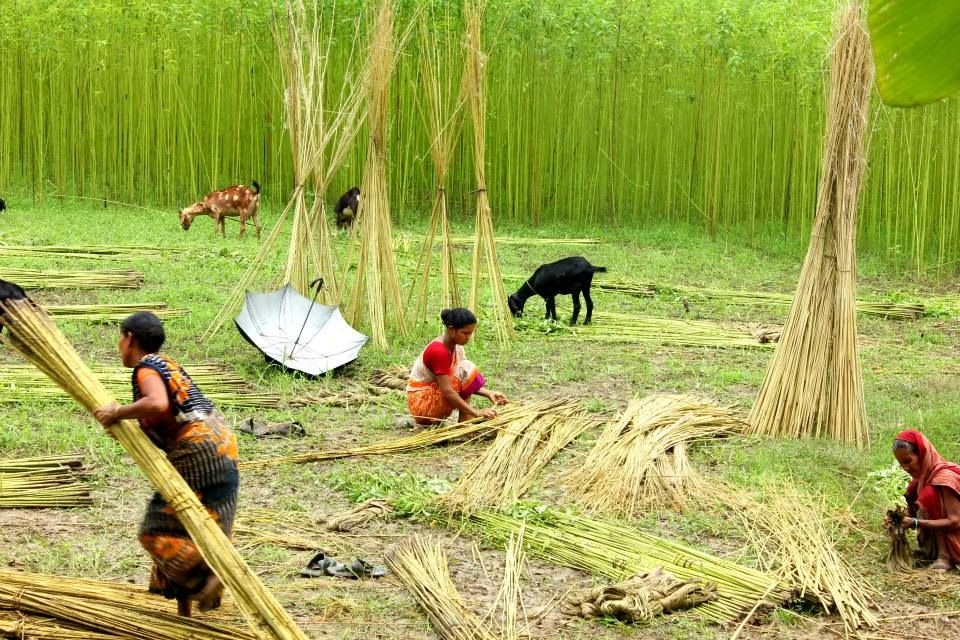
Well, folks, this journey from tree to textile is more than history. It’s a living choice. Every time we value a handmade piece from natural fibers of India, we do more than buy a beautiful object.
We vote for a slower, more connected world. We help a sustainable tribal craft survive another season. We keep an indigenous cotton tradition alive.
These natural fibers teach us a radical idea: that the best things aren’t made quickly or cheaply. They are grown with care, woven with stories, and designed to return to the earth. The future isn’t just about new materials. It’s about remembering old wisdom.
Also Read:

Leave a Reply