
Hello, folks. Let’s talk about the true fabric of Gujarat. Forget costumes. The traditional dresses of Gujarat are a living language. They don’t just cover the body; they tell stories of desert sands, vibrant festivals, and community identity.
This attire is a map. You can trace a person’s region, their work, and their faith through the drape of a saree or the mirror-work on a chaniya choli. In an age of fast fashion, these clothes are a powerful sustainable choice—crafted by hand, worn for decades.
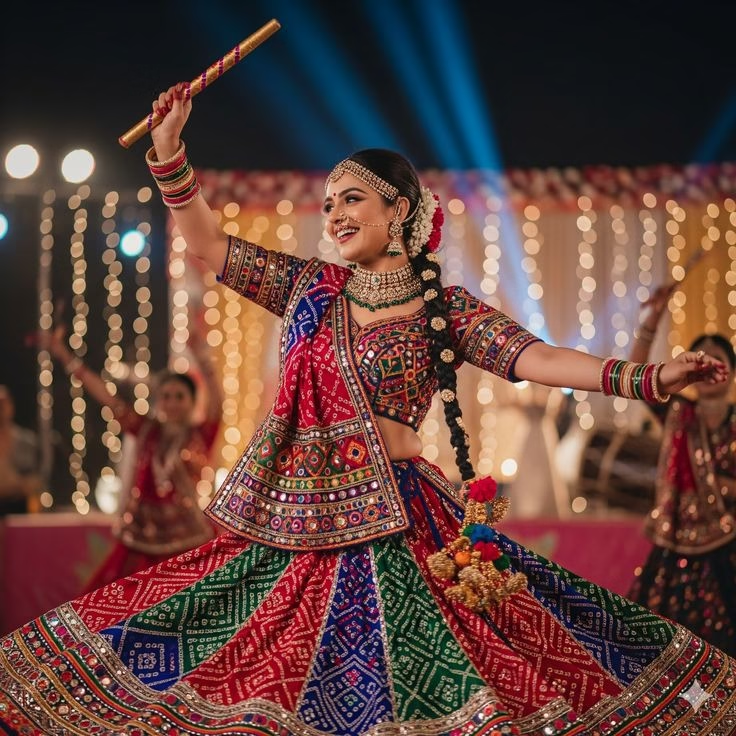
From the fierce elegance of a Kutchi Rabari woman to the swirling colors of a Navratri dancer, each dress is a masterpiece in motion. Let’s decode this visual heritage and understand why it’s more relevant today than ever before.
Introduction: The Living Language of Gujarati Attire
Traditional dresses of Gujarat are far more than fabric. They are a living, breathing dialect spoken through color, drape, and stitch. Every fold in a traditional Gujarati dress tells a story of identity, community, and celebration.
Why Attire is a Language Here
In Gujarat, what you wear communicates clear, unspoken truths before a single word is spoken.
- It reveals your region—whether from the arid Kutch or central plains.
- It signals your community and its unique artistic heritage.
- It marks the occasion, from daily work to the whirl of Navratri.
This is a wearable map of culture. Let’s learn to read it.
What are the Traditional Dresses of Gujarat? A Regional Map
The Traditional Dresses of Gujarat are not a uniform costume. They form a vibrant, living atlas. Each drape, stitch, and color codes a specific geography, community, and way of life.
This Gujarati traditional dress evolved over centuries as a perfect response to the local climate, occupation, and social values, creating a stunning diversity across the state’s regions.
A Brief Historical Timeline
- Ancient & Medieval Eras (Pre-1500s): The foundational forms of the draped saree and draped dhoti were established, with early mentions in texts and temple sculptures. Simple hand-block printing and embroidery began defining community identity.
- 16th – 18th Centuries: The arrival and refinement of the Bandhani (tie-dye) technique, especially in Kutch and Saurashtra. The Kediyu (men’s jacket) and Chaniya (skirt) gained their distinctive flared shapes.
- 19th Century – Early 20th Century: Styles crystallized along caste and occupational lines. The intricate Moti Bharat (pearl embroidery) of the Rabaris, the Ahir community’s shepherding coats, and the wealthy Patola silk sarees of Patan reached their iconic forms.
- Mid-20th Century to Present: Traditional attire became strongly linked to cultural festivals like Navratri and Uttarayan. While daily wear has modernized, these dresses are powerfully preserved as ceremonial and festive wear, with contemporary designers now reinterpreting the classic motifs.
The Regional Map at a Glance
- Kutch & North Gujarat: Known for intense embroidery, mirror work, and heavy Bandhani. Attire is robust, designed for arid climates.
- Saurashtra (Kathiawar): The heartland of the vibrant Ghagra Choli (Chaniya Choli) and the men’s Kediyu, especially for festivals.
- Central & South Gujarat: Famous for the precious Patola silk sarees and finer, more intricate weaves and zari work.
This regional map shows that to understand Gujarat, you must first learn to read its cloth.
The Women’s Wardrobe: Sarees, Chaniya Cholis & More
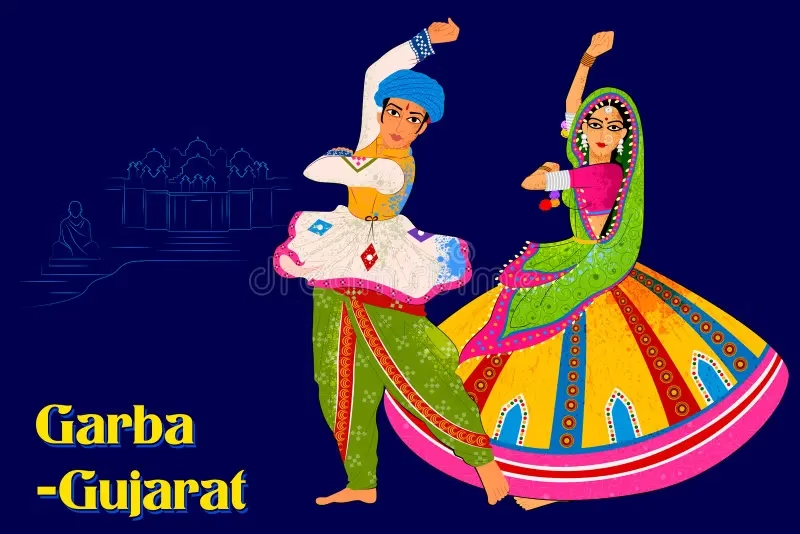
The Traditional Dresses of Gujarat for women are a stunning display of artistry and identity. Far from being a single uniform, the wardrobe changes with region, community, and occasion. Let’s break down the key pieces.
The Elegant Saree: Daily Grace & Ritual Wear
The saree is the cornerstone. But not just any saree—in Gujarat, it’s all about the famous fabrics.
- Bandhani Saree: The iconic tie-dye wonder. You’ll see it everywhere—from daily wear in vibrant colors to auspicious mothara (dot) patterns for weddings.
- Patola Saree: The queen of silks. Woven with impossible precision in Patan, this double-ikat masterpiece is a family heirloom, worn for the most sacred ceremonies.
- Gharchola: A specific type of silk or cotton saree, often red, with woven gold-checkered patterns and motifs. It’s the essential wedding saree for many Gujarati brides.
The Festive Favorite: The Chaniya Choli
This vibrant three-piece outfit is synonymous with joy and celebration, especially during Navratri.
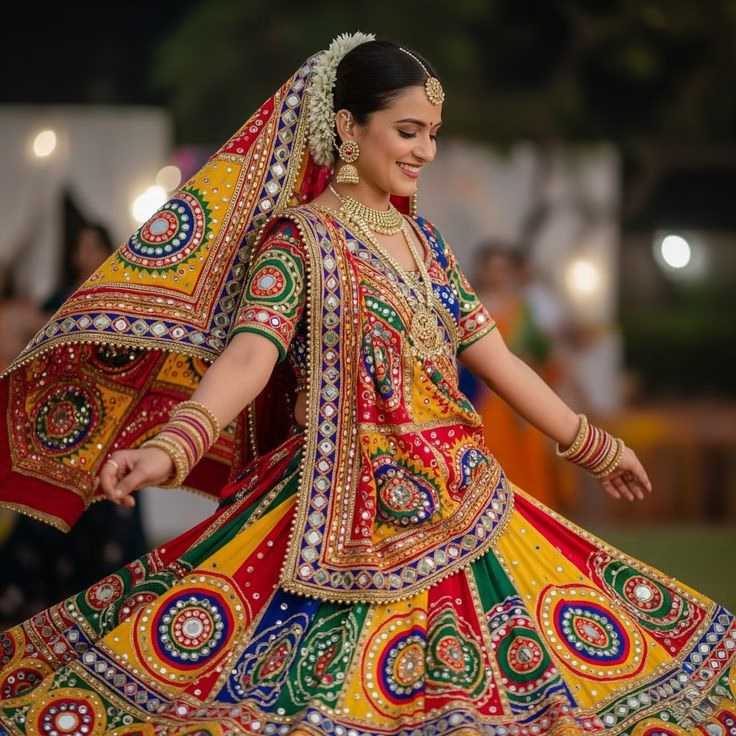
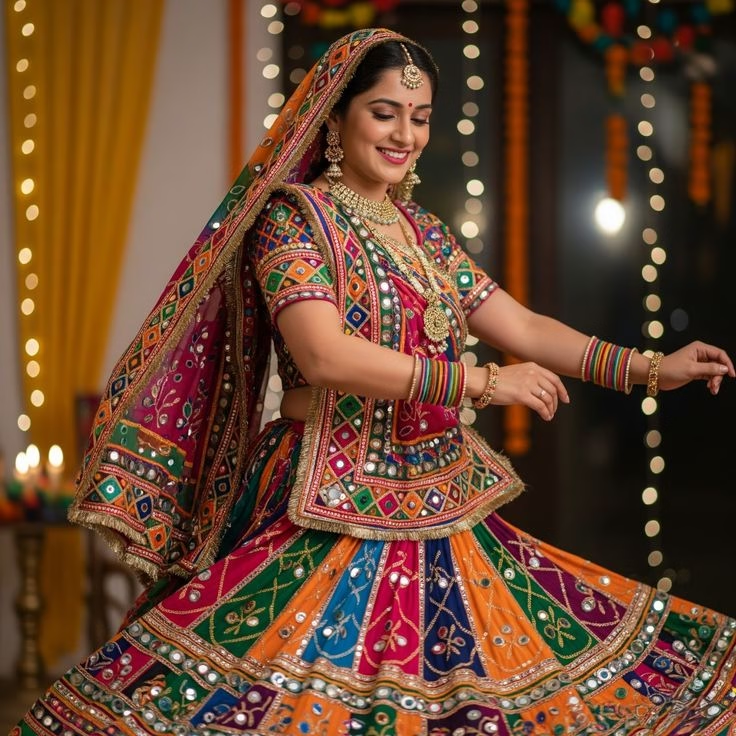
- It consists of a flared skirt (chaniya), a fitted blouse (choli), and a draped veil (odhni).
- The odhni is where the magic happens, often featuring intricate mirror work (abla) and embroidery that catches the light with every dance move.
- While Navratri is its big moment, you’ll also see it worn during other festivals like Diwali and Janmashtami.
Whether it’s the dignified drape of a Patola for a wedding or the spinning colors of a Chaniya Choli at a festival, each piece of a woman’s Gujarati traditional dress tells a story of culture, celebration, and timeless craftsmanship.
The Men’s Wardrobe: Kediyu, Dhoti & Traditional Turbans
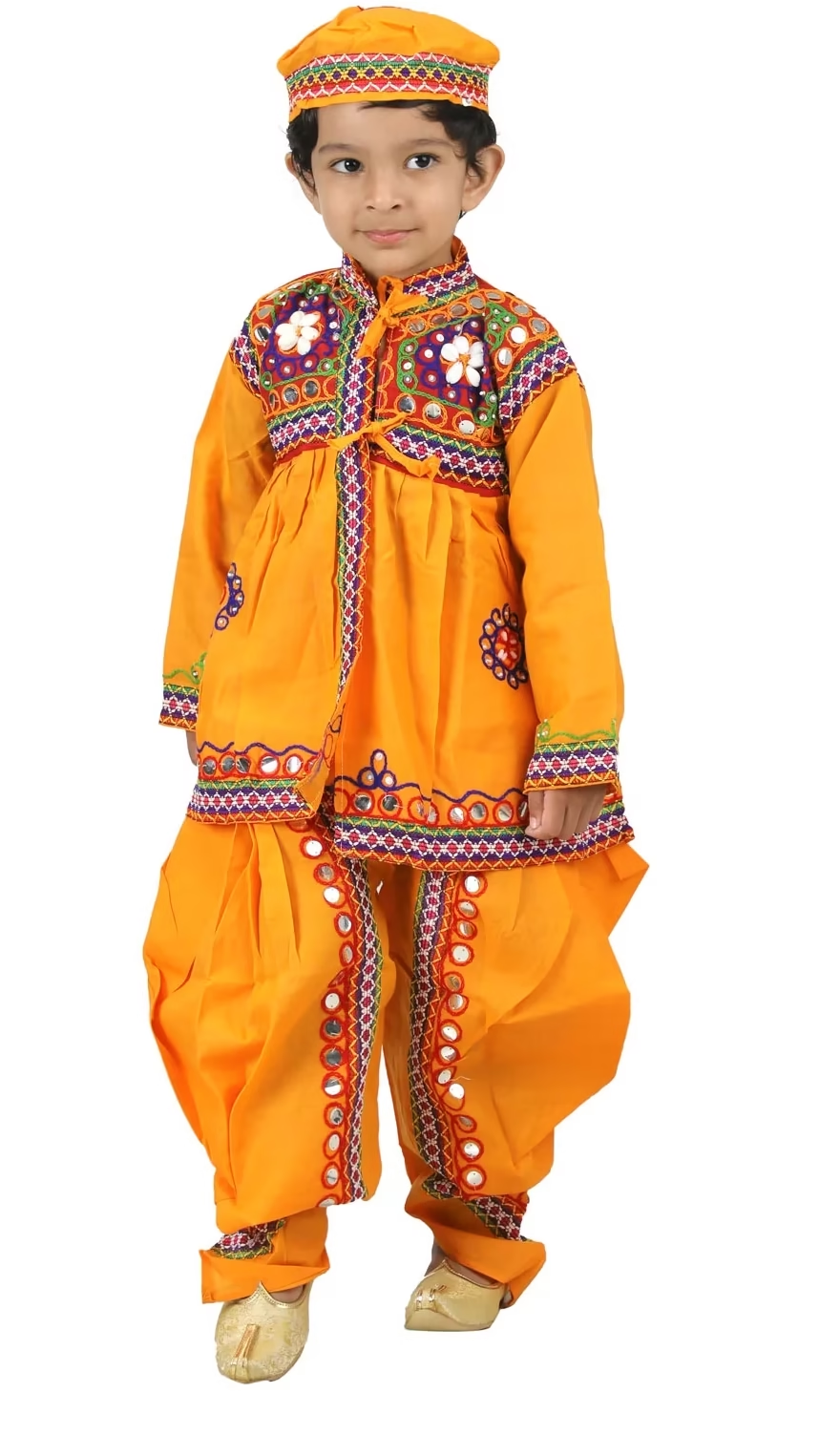
When we talk about Traditional Dresses of Gujarat, the vibrant women’s attire often steals the spotlight. But the men’s wardrobe holds its own with timeless elegance and clear symbolism. The classic combination of the Kediyu, Dhoti, and a turban is more than just clothing; it’s a statement of cultural pride.
The Core Elements of Gujarati Traditional Dress for Men
At the heart of the attire are three key pieces, each with its own purpose and style.
- The Kediyu: This is a short, gathered kurta, often with frilled sleeves. It’s typically bright white or vibrant and made from cotton or silk.
- The Dhoti: A long, unstitched cloth draped elegantly around the waist and legs. It’s the foundation of the outfit, usually in a solid color that complements the Kediyu.
- The Turban (Phento): Not just an accessory, the turban is a sign of respect and honor. Its style, color, and fabric can indicate the wearer’s region and the formality of the occasion.
When and How It’s Worn
This ensemble isn’t for every day. It’s reserved for moments that matter, connecting wearers to their heritage.
- Key Occasions: You’ll predominantly see this Gujarati traditional dress during major festivals like Uttarayan (Kite Festival) and Navratri, at traditional weddings, and during cultural performances like Garba.
- Variations: For farmers or in rural settings, a simpler, more practical version is worn. For grand weddings, the Kediyu might be heavily embroidered, and the turban tied in an elaborate style using a fine Patolu cloth.
So, while the silhouette may seem simple, the details—the crispness of the drape, the tie of the turban—speak volumes about occasion and identity in Gujarat’s rich cultural tapestry.
Fabric & Craft: The Art of Bandhani, Patola & Embroidery
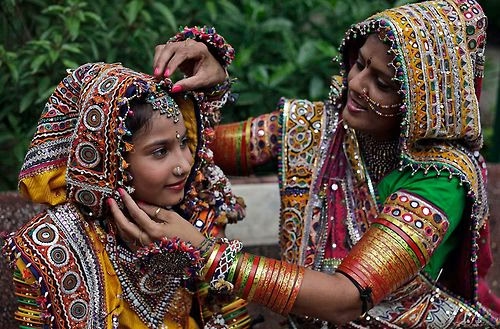
You can’t talk about the Traditional Dresses of Gujarat without talking about the magic in the material. The cloth itself is the first canvas. It’s not just what they wear; it’s how it’s made that tells the deeper story.
Forget factory prints. Here, every dot, every thread, and every stitch is placed by a human hand with a story in mind. This is where a Gujarati traditional dress transforms from clothing into a wearable heirloom.
Bandhani: The Poetry of Dots
This isn’t just tie-dye. Bandhani is a meticulous art of binding. Thousands of tiny points on fabric are plucked and tied with thread before dyeing, creating vibrant patterns of dots, waves, and squares.
- The Art & Motifs: The most skilled artisans can create intricate motifs like peacocks (mor), flowers (phul), and elephants (kunjar) entirely from these tiny dots. A single odhni (veil) can have over 50,000 hand-tied knots!
- The Meaning: The designs are joyful and made for weddings and festivals. The most common pattern is the ‘Laheriya,’ or waves, symbolizing the joy and flow of life.
Patola: The Pinnacle of Precision
If Bandhani is poetry, Patola is mathematics. It’s one of the world’s most complex double ikat weaves, where both the warp and weft threads are tie-dyed to a precise pattern before they are even placed on the loom.
- The Art & Motifs: Weaving is an act of faith. A single Patola silk saree can take 4 to 6 months to complete. Traditional motifs include geometric ‘parrots (popat),’ ‘elephants,’ and floral designs, each carrying blessings of fertility and prosperity.
- The Meaning: Historically worn by royalty, a Patola saree is a symbol of immense status, artistry, and patience. It’s considered a treasure passed down through generations.
The Language of Embroidery: Mirror Work & Beyond
The craft doesn’t stop at the woven cloth. Communities like the Rabaris and Ahirs turn dresses into dazzling narratives with needle and thread.
- The Art & Symbols: Tiny mirrors (shisha) are sewn onto the fabric and bordered with exquisite embroidery. Motifs are drawn from desert life: scorpions (akdo), peacocks, mangoes (keri), and the tree of life.
- The Meaning: Beyond beauty, this embroidery had a practical charm. The mirrors were believed to ward off the evil eye, and the dense stitching made garments more durable for a pastoral life.
So, when you see the swirl of a Bandhani chaniya or the gleam of a mirror-work blouse, remember—you’re not just looking at a pattern. You’re reading a centuries-old visual language of celebration, protection, and identity, stitched and dyed into the very soul of Gujarat.
Pricing, Stats & Market of Traditional Dresses of Gujarat
Let’s talk numbers, because understanding the value behind a Gujarati traditional dress is fascinating. This isn’t just clothing; it’s a thriving market rooted in craftsmanship.
A Market Worth Billions
The market for Traditional Dresses of Gujarat is massive and growing.
- The ethnic wear market in India is valued at over $20 billion, with Gujarat being a key contributor.
- Online searches for specific items like “Bandhani saree” have grown by over 40% in the last two years.
- Major festivals like Navratri and Uttarayan can drive over 60% of annual sales for many local artisans and boutiques.
What You Pay For: A Price Breakdown
The cost isn’t random. It directly reflects the art. Here’s what influences the price tag:
- Craft & Material: A ready-made machine-printed Chaniya Choli starts at ₹1,500. A hand-tied Bandhani version begins around ₹4,000. A genuine Patola silk saree, taking 6 months to 1 year to make, can cost ₹1 lakh to over ₹5 lakh.
- Embellishment: Adding intricate hand embroidery or mirror work (abhla) can increase the price by 50% to 200%.
- Where You Buy: Buying directly from weavers in Rajkot or Jamnagar is often 20-30% cheaper than from a big-city designer store. Online platforms have made these direct purchases easier.
You’re investing in a piece of living heritage. The price honors the time—sometimes hundreds of hours—and the generational skill behind every thread.
The Bottom Lines
And that’s the vibrant story of Gujarat, told through its clothes. It’s amazing, right? How a simple piece of fabric can hold so much history, skill, and community spirit.
Whether it’s the swirl of a Chaniya Choli at Navratri or the crisp drape of a Kediyu, these outfits are more than just festive wear—they’re a living, breathing identity.
The next time you see a Bandhani print or hear the jingle of a Ghagra, you’ll know the story behind the style. It’s a beautiful legacy, worn with pride and passed on with love.
Thanks for reading along!
Also Read;
Kosa Silk Sarees in Minimalist Western Dresses

Leave a Reply