

Hello folks,
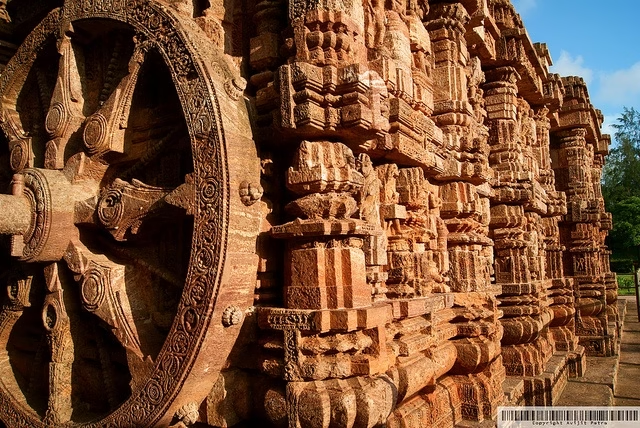
Ever come across a temple that resembles a gigantic stone chariot racing against time? Well, this is the Konark Sun Temple, a marvel of 13th-century architecture in Odisha, India! This UNESCO World Heritage is not only a temple but a masterpiece of art, astronomy, and devotion. Designed as a grand celestial chariot for Lord Surya, the Sun God, and the royal Eastern Ganga Dynasty’s Narasimhadeva, I built this construction.
Legends abound, and even mysteries, in its history, alongside the architectural brilliance of the Konark Sun Temple. Walls upon walls decorated with sculptures illustrating mythological stories, daily life, and astronomical movements adorn the temple.
Designed as a marvel of engineering, the Konark Sun Temple is a masterpiece of twelve massive stone wheels and seven beautifully carved horses that provide a symbol for the chariot of the Sun God. In parts destroyed today, its glory still manages to enchant visitors.
Join us as we delve into the stories, science, and artistry behind this awe-inspiring temple!
Konark Sun Temple History: A Glimpse into the Past
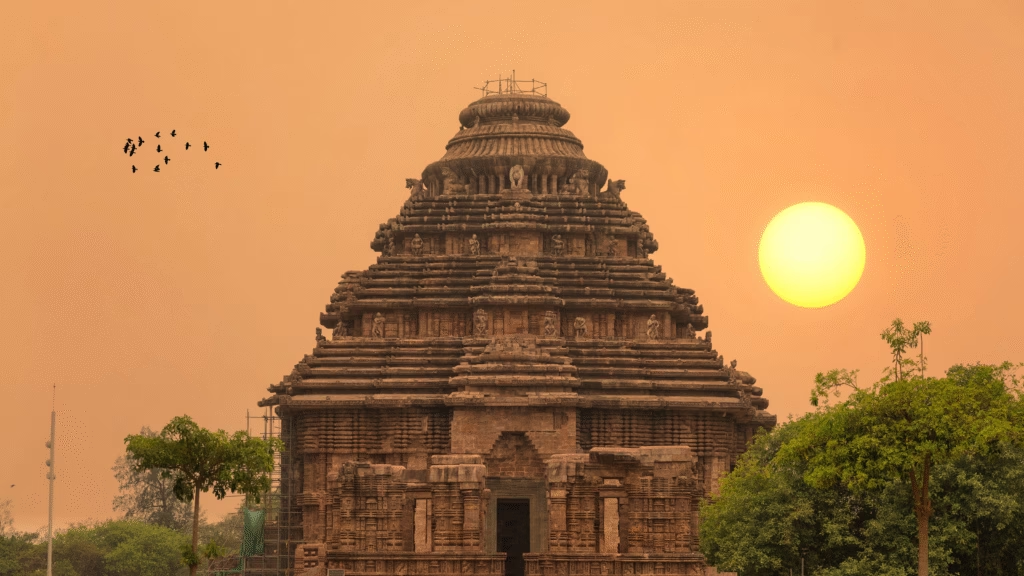
The Konark Sun Temple, often called the Black Pagoda, stands as a magnificent tribute to the Sun God, Surya. Built-in the 13th century, this architectural gem in Odisha reflects a perfect blend of devotion, science, and artistry. Let’s dive into its fascinating history!
Who Built the Konark Sun Temple?
- King Narasimhadeva I of the Eastern Ganga Dynasty commissioned the temple in 1250 CE.
- It was designed as a gigantic stone chariot pulled by seven horses, symbolizing the Sun God’s journey across the sky.
Why Was Konark Sun Temple Built?
- The temple was constructed to celebrate Narasimhadeva I’s victory over Muslim invaders.
- It was a center of sun worship and an astronomical marvel, aligned to capture the first rays of sunrise.
Decline and Partial Ruin
- Invasions & Natural Disasters: The temple faced destruction from invaders and harsh climatic conditions.
- Magnetic Dome Mystery: Some believe the temple had a massive lodestone at the top, which caused shipwrecks, leading to its removal.
- Earthquake & Time’s Toll: The sanctum collapsed over time, leaving only the stunning Jagamohana (audience hall) intact.
UNESCO Heritage & Restoration
- Announced a UNESCO World Heritage Site in 1984, efforts have been made to preserve its grandeur.
- Today, it remains one of India’s most iconic historical landmarks, attracting visitors worldwide.
Why Was Konark Sun Temple Built? The Vision Behind the Wonder
The Konark Sun Temple is not just an architectural marvel—it’s a symbol of devotion, victory, and cosmic alignment. This temple stands as a stone chariot dedicated to Surya, the Sun God. But why was it built? Let’s uncover the fascinating reasons behind its creation!
1. A Tribute to Surya – The Sun God
- In ancient times, Surya was worshipped as the source of life and energy.
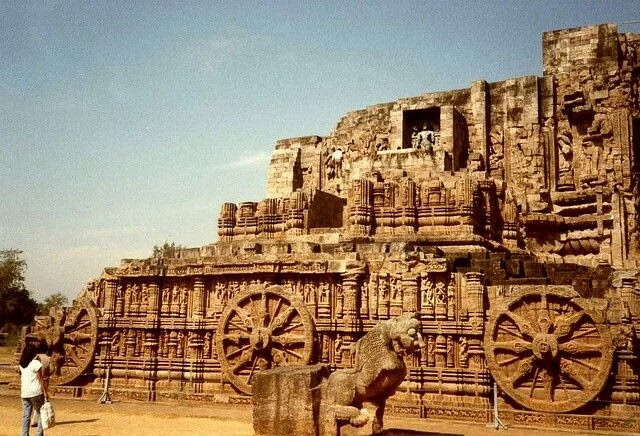
- The temple was designed as a grand chariot of Surya, with twelve giant wheels and seven stone horses, representing the movement of the sun across the sky.
- Many believed that offering prayers at this temple could cure diseases and bring prosperity.
2. Celebrating Victory Over Invaders
- The 13th century was a time of intense battles. King Narasimhadeva I defeated the Muslim invaders of Bengal and wanted to commemorate his triumph.
- The temple was meant to showcase the power and cultural supremacy of the Ganga Dynasty.
- It stood as a symbol of resilience, proving that the king could protect his kingdom and uphold Hindu traditions.
3. An Astronomical & Scientific Wonder
- The temple was constructed with precise astronomical calculations.
- It was strategically placed so that the first rays of the morning sun would pass through the main doorway and illuminate the idol of Surya inside.
- The twelve wheels of the chariot represent the 12 months of the year, and their shadows were used as a sundial to tell time.
4. A Royal Showcase of Architecture & Art
- The Eastern Ganga rulers were known for their patronage of art and architecture.
- Konark was designed to outshine all other temples with its sheer size, intricate sculptures, and innovative construction techniques.
- The temple’s walls were adorned with mythological stories, celestial beings, and detailed carvings of animals, dancers, and musicians.
5. A Sacred Pilgrimage Site
- Konark was built as a major religious site, attracting devotees from far and wide.
- It completed the triad of Sun Temples in India—along with Modhera in Gujarat and Martand in Kashmir.
- Pilgrims believed that visiting the temple and praying to Surya would purify their souls and bless them with health and success.
Facts About Konark Sun Temple: Myths and Legends
The Konark Sun Temple in Odisha, India, is not only an architectural marvel but also a treasure trove of intriguing myths and legends. These stories add a coating of mystique to the temple’s rich history. Let’s explore some of the most captivating tales associated with this magnificent structure.
The Curse of Samba
One of the most famous legends is about Samba, the son of Lord Krishna.
- The Curse: Samba was known for his beauty and pride. To teach him a lesson, sage Narada tricked him into entering a pond where his stepmothers were bathing. When Lord Krishna learned of this, he cursed Samba to suffer from leprosy.
- Seeking Redemption: To find a cure, Samba performed penance for twelve years to please the Sun God, Surya. Impressed by his devotion, Surya cured him. In gratitude, Samba decided to build a temple dedicated to the Sun God at the place of his healing, which is believed to be the site of the Konark Sun Temple.
The Legend of Dharmapada
Another poignant tale is that of Dharmapada, a young boy whose story is intertwined with the temple’s construction.
- The Incomplete Temple: King Narasimhadeva I commissioned the temple, and 1,200 artisans worked tirelessly under the guidance of the chief architect, Bishu Maharana. As the deadline approached, the craftsmen struggled to place the crowning stone atop the temple.
- Dharmapada’s Sacrifice: Dharmapada, the 12-year-old son of Bishu Maharana, visited the site and noticed the issue. With his exceptional skill, he successfully placed the final stone. However, fearing the king’s wrath upon discovering that a young boy had completed the task, Dharmapada sacrificed himself by jumping into the sea to protect the artisans.
The Magnetic Marvel
The temple’s architecture is said to have included a massive magnet, leading to intriguing tales.
- The Lodestone: It’s believed that the temple had a giant lodestone at its peak. This magnet was so powerful that it disrupted the compasses of passing ships, causing navigational issues.
- Removal by Sailors: To safeguard their voyages, Portuguese sailors are said to have removed the lodestone, leading to the temple’s structural instability and eventual decline.
The Floating Idol
Another captivating legend speaks of the temple’s main deity.
- Suspended in Air: It’s said that the idol of the Sun God was made of an alloy of eight metals and was suspended mid-air, balanced by the magnetic forces of the lodestone above and a magnet beneath the idol.
- A Marvel of Engineering: This phenomenon showcased the temple’s builders’ advanced understanding of magnetism and engineering.
The Disappearing River Chandrabhaga
The temple’s location near the Chandrabhaga River adds another layer to its mystique.
- A Sacred River: The Chandrabhaga River once flowed close to the temple and was considered sacred.
- Mysterious Drying: Over time, the river dried up and disappeared, leading to various speculations and legends about its vanishing.
The Erotic Sculptures
The temple is adorned with intricate carvings, some of which depict erotic scenes.
- Symbolism: These sculptures are believed to represent the celebration of life and the concept of Maya (illusion), emphasizing the transient nature of human existence.
- Protective Purpose: Some legends suggest that these carvings were meant to ward off negative spirits or serve as educational depictions of human life.
The Unfinished Temple
Despite its grandeur, some believe the temple was never fully completed.
- Interrupted Construction: Legends say that due to the death of the king or other unforeseen circumstances, the temple’s construction was halted, leaving it incomplete.
- Eternal Beauty: Even in its unfinished state, the temple stands as a testament to the artisans’ unparalleled craftsmanship.
The Temple’s Decline
The reasons behind the temple’s partial ruin are shrouded in mystery.
- Natural Calamities: Some believe that natural disasters like earthquakes lead to their destruction.
- Divine Intervention: Others think that divine forces played a role in the temple’s decline, adding to its enigmatic allure.
These legends and myths surrounding the Konark Sun Temple enrich its historical narrative, making it a site of endless fascination and wonder. Whether rooted in fact or folklore, they contribute to the temple’s enduring legacy as a symbol of architectural brilliance and mystical allure.
Konark Sun Temple Sculptures: A Testament to Artistic Brilliance
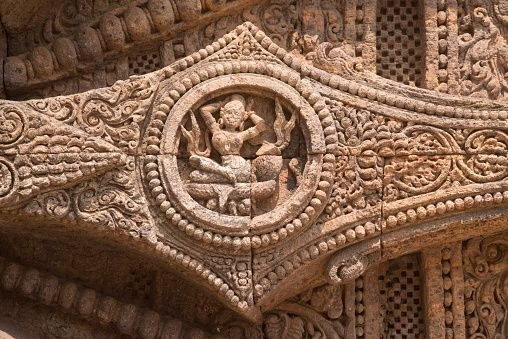
The Konark Sun Temple is not just a place of worshiping but a stunning gallery of stone carvings. Every inch of this temple tells a story through its intricate sculptures. From celestial beings to war scenes, from animals to divine figures, the sculptures of Konark Sun Temple showcase the finest craftsmanship of ancient India.
Let’s explore the breathtaking artistry of this UNESCO World Heritage Site and discover why its sculptures continue to amaze visitors from around the world.
1. The Giant Stone Chariot: A Masterpiece in Motion
- The entire temple is designed like a chariot carrying the Sun God, Surya.
- It stands on 12 giant stone wheels, each about 10 feet high, with intricate carvings of cycles of time, seasons, and the Sun’s movement.
- Seven majestic horses pull the chariot, representing the seven days of the week and the seven colors of sunlight.
2. Divine Figures: Gods and Goddesses in Stone
- The temple walls feature breathtaking idols of Hindu gods and goddesses.
- The Sun God, Surya, appears in three stunning forms—morning, noon, and evening.
- Carvings of Lord Vishnu, Lord Shiva, and Goddess Durga reflect the strong religious devotion of the time.
3. Celestial Dancers and Musicians: A Celebration of Life
- The temple boasts mesmerizing sculptures of apsaras (celestial dancers) in graceful dance poses.
- Beautifully detailed musicians play instruments like flutes, drums, and veenas, capturing the joy of music and art in ancient times.
- These figures show the importance of dance and music in temple rituals and royal courts.
4. Erotic Sculptures: The Influence of Kamasutra
- Similar to Khajuraho Temples, Konark Sun Temple has bold and artistic erotic sculptures.
- These carvings depict sensuality, human emotions, and love, representing a liberal and open-minded society.
- Some historians believe these sculptures symbolize spiritual enlightenment through human desires.
5. Battle Scenes and Warriors: Stories of Strength
- The temple’s walls also showcase powerful battle scenes from history.
- Warriors ride elephants and horses, carrying bows, swords, and shields, portraying the valor of the Eastern Ganga dynasty.
- These carvings reflect the glorious military strength and heroic tales of kings and soldiers.
6. Animals and Mythical Creatures: Guardians in Stone
- Stone lions and elephants stand at the temple’s entrance, symbolizing strength and protection.
- The sculptures of lions crushing elephants represent the victory of wisdom over brute power.
- The carvings also include mythical creatures like makaras (sea monsters) and vyalas (fierce beasts), guarding the temple from evil forces.
7. Daily Life Scenes: A Glimpse into the Past
- Apart from gods and warriors, the temple walls tell stories of daily life.
- Sculptures show farmers working in fields, women applying makeup, traders selling goods, and kings in court discussions.
- These carvings bring the past to life and reveal the social structure of ancient India.
8. The Sun God’s Statues: The Heart of Konark
- The most iconic sculptures in the temple are the three giant stone images of Surya, the Sun God.
- These statues, placed at different sides of the temple, show Surya riding a chariot and holding lotus flowers.
- The positioning allows sunlight to fall on these statues at sunrise, noon, and sunset, making them glow with divine radiance.
Symbolism & Cultural Significance in Folk Traditions in Konark Sun Temple
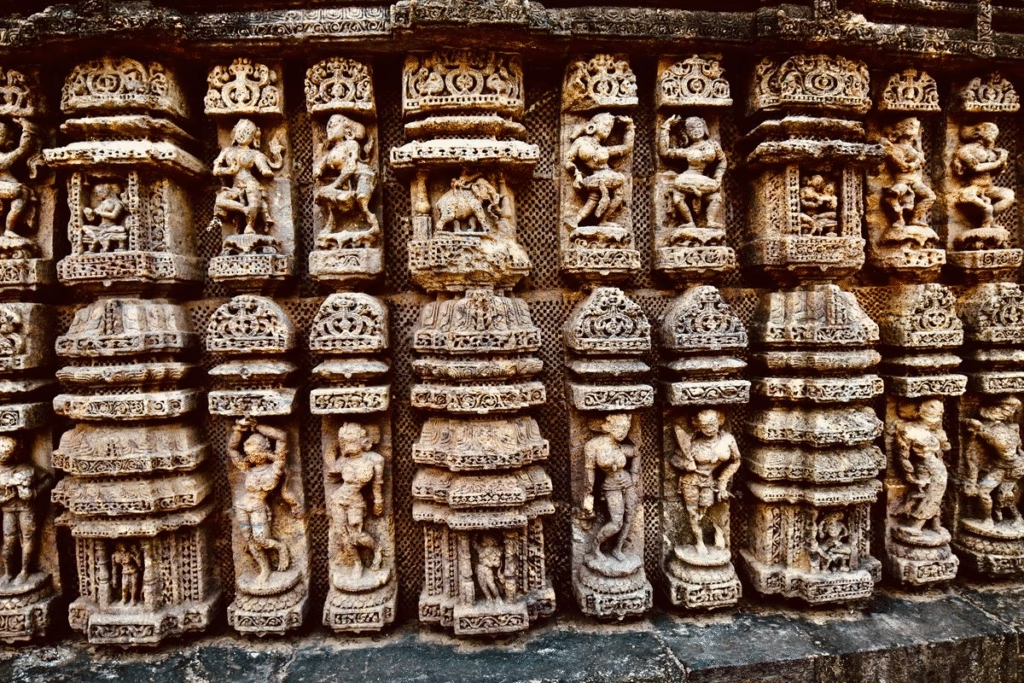
The Konark Sun Temple, the Black Pagoda, is one of the most iconic symbols in the entire beautiful land of India’s rich cultural heritage. It is actually a treasure trove of symbolism and the essence of folk traditions as much as it is an architectural marvel.
Symbolism in Konark Sun Temple
The Konark Sun Temple is devoted to the Sun God, Surya. The entire structure is designed to represent the Sun God’s chariot, with twelve pairs of elaborately carved stone wheels and seven horses. This symbolism is significant in many ways:
- Sun God: The Sun God symbolizes power, energy, and life. In Hindu mythology, the Sun God is often depicted riding a chariot drawn by 7 horses, representing the seven days of the week.
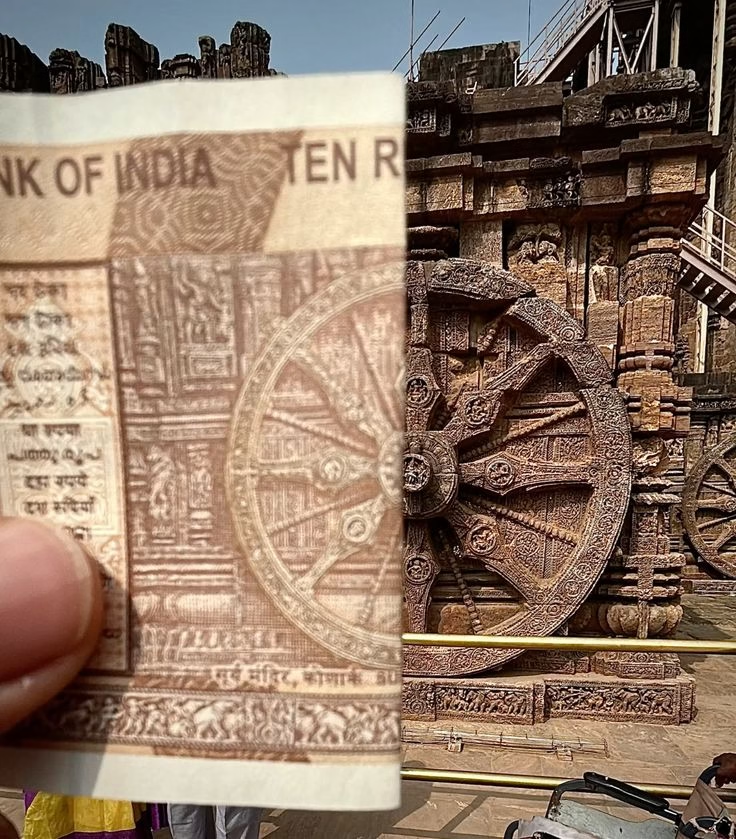
- Chariot Wheels: There are twelve pairs of wheels, beautifully carved with motifs that represent the cycles of creation, preservation, and destruction. The twelve months of the Hindu calendar also symbolize the wheels, signifying how time goes hand in hand with the cosmological order of the temple.
- Seven Horses: The seven horses represent the seven days of the week and the seven rays of the sun, symbolizing the spread of light and enlightenment.
Cultural Significance in Folk Traditions
The Konark Sun Temple has great cultural significance in folk traditions. It is not only a place of worship but also a center for various cultural activities and festivals:
- Chandrabagha Mela: Thousands of devotees gather during this annual festival in February to offer their prayers to the Sun God. It is a religious ritual mixed with cultural performances in the form of traditional dance and music.
- Folklores and myths: Lots of folklores and myths revolve around the temple, which has been passed down through generations. They describe this temple in many scenes, often highlighting its mystical and spiritual significance in the life of the people.
Symbols and Motifs
The Konark Sun Temple is decorated with a variety of symbols and motifs that add to its cultural richness:
- Erotic Sculptures: Erotic sculptures are very common at many ancient Indian temples, and the temple’s outer walls feature them. These sculptures represent the union of male and female energy, which represents the circle of life and creation.
- Mythical Creations: Lions, elephants, and other celestial creatures can be seen carved throughout the temple. The motifs are believed to protect the temple from evil forces and bring prosperity.
- Floral Motifs: Intricate floral motifs and geometric motifs cover the walls and pillars of the temple. The beauty of nature, a perfect blend with the harmony within, was seen by ancient Indians to be closely connected to the living being of nature.
- Scenes of Daily Life: Temple carvings also reveal scenes of life in everyday time. The depiction of musicians, dancers, artisans, etc, gives insight into the culture and social life that prevailed during that time.
Best Time to Visit Konark Sun Temple: When to Experience Its Glory
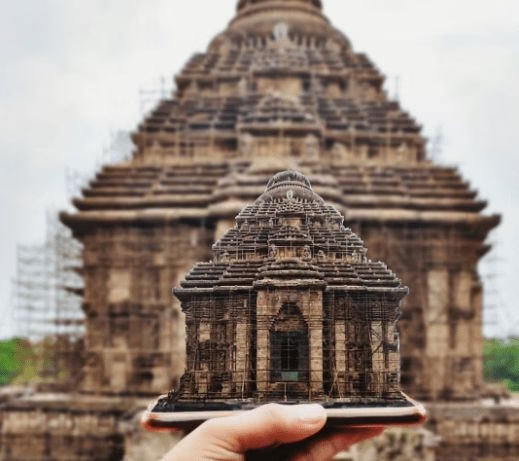
The Konark Sun Temple is a majestic marvel of ancient Indian architecture. To truly appreciate its grandeur, timing your visit is essential. Here is a friendly guide to the best time to visit this iconic monument and how to plan your itinerary.
Ideal Time to Visit
- October to March: The winter months are the finest time to visit the Konark Sun Temple. The weather is pleasant and cool, making it relaxing to explore the temple and its surroundings.
- Konark Dance Festival: Held in December, this festival is a cultural extravaganza. You can witness classical dance performances against the backdrop of the Sun Temple. It’s a mesmerizing experience that adds to the charm of your visit.
Why Winter is the Best Time
- Pleasant Weather: The temperature ranges between 15°C to 25°C. You can roam around the temple without worrying about the scorching sun.
- Clear Skies: The winter skies are usually clear, providing perfect conditions for photography. Capture the temple’s intricate carvings and majestic structure in all its glory.
- Festivals and Fairs: Apart from the Konark Dance Festival, the Chandrabhaga Mela in February is another significant event. This fair attracts thousands of pilgrims and is a vibrant mix of spirituality and culture.
Itinerary for Visiting Konark Sun Temple
Day 1: Arrival in Konark
- Morning: Arrive in Konark. You can reach Konark by road from Bhubaneswar (65 km) or Puri (35 km). Check into your hotel or guest house.
- Afternoon: Start your visit with the Konark Sun Temple. Spend your time exploring the temple complex. Marvel at the twelve pairs of giant stone wheels, the seven horses, and the intricate carvings.
- Evening: Attend the Light and Sound Show at the temple. The show narrates the history and significance of the temple through stunning visual and audio effects.
Day 2: Explore the Surroundings
- Morning: Visit the Archaeological Museum, which is located near the temple. The museum houses artifacts and sculptures found during the excavations.
- Afternoon: Head to Chandrabhaga Beach, just 3 km from the temple. Relax by the sea, enjoy the beautiful sunset, and take a stroll along the sandy shores.
- Evening: Explore the local markets. Shop for souvenirs, traditional handicrafts, and local delicacies.
Day 3: Cultural Immersion
- Morning: Drive to Puri (35 km). Visit the famous Jagannath Temple and Puri Beach.
- Afternoon: Return to Konark. Attend the Konark Dance Festival if you are visiting in December. Enjoy performances by renowned classical dancers.
- Evening: Return to your hotel and relax.
The Bottom Lines
The Konark Sun Temple, an excellent fusion of stone and art, epitomizes India’s rich cultural heritage. The temple is built in the form of a chariot of the Sun God and speaks volumes of the craftsmanship of the ancient Indian artisans.
It offers an all-round experience ranging from intricate carvings and symbolic motifs to vibrant folk traditions and festivals.
It takes you to the past with its enormous complex. The glory of Indian architecture and spirituality are relived. It is a celebration of art, history, and culture, as well as the Konark Sun Temple.
Also Read:
The Legacy of Bagru Block Prints on Denim Jackets
Ganjifa Cards – India’s Lost Art of Hand-Painted Playing Cards

Leave a Reply