
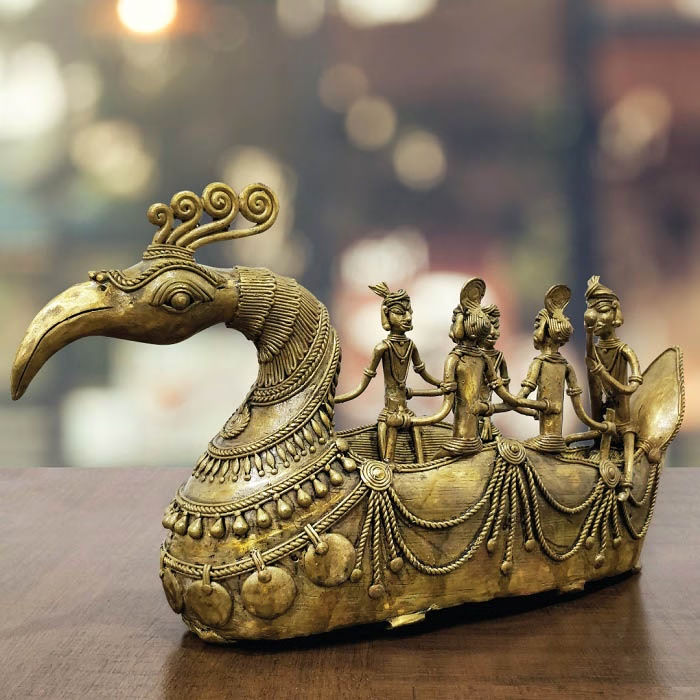
Hello, folks! Let me introduce you to a craft that’s older than the Iron Age. Dhokra Metal Craft. 4,000 years. Maybe more. The same lost-wax technique your ancestors used is still alive in a few Indian villages. Bastar. Bankura. Jharkhand.
Here’s the thing. One artisan takes 15 days to make a single Dhokra figurine. A dancing woman. A horse. An elephant. He coats wax with clay. Heats it. Wax melts away. Metal pours in. Magic happens. Then he sells it for maybe ₹500; that’s ₹33 a day.
Now here’s the number that keeps me awake. Only 200–300 master artisans remain. Fifty years ago? Thousands. Young people don’t want to learn. Can you blame them?
I held a dokra bell once. From a tiny village in Chhattisgarh. It rang clear. Pure. The old artisan said, “This metal remembers everything.”
Let’s begin.
What Is Dhokra Metal Craft? – The Lost-Wax Miracle
Dhokra Metal Craft is one of India’s oldest surviving art forms. It is not carved. It is not hammered. It is cast. And the method? Pure genius. Artisans call it the lost-wax technique. Archaeologists call it cire perdue.
But here is the simple truth: you make a wax model, cover it in clay, heat it, the wax melts away, and molten metal rushes into the empty space. What remains is a one-of-a-kind metal object. No two pieces are ever identical.
What makes Dhokra Metal Craft special?
- No repetition: Every piece is original. The wax model is destroyed during casting.
- Folk themes: Animals, deities, tribal dancers, village scenes, and signature bells.
- Raw aesthetic: Not shiny or polished. Dhokra has a rustic, earthy charm.
- Functional art: Many pieces are used as lamps, containers, or musical bells.
The name “Dhokra” comes from the Dhokra Damar tribes of central and eastern India. These communities have practiced this craft for over 4,000 years. The oldest known lost-wax artifact? The famous Dancing Girl of Mohenjo-Daro (2500 BCE). Same technique. Same magic.
Today, Dhokra metal craft survives in small pockets—Chhattisgarh’s Bastar region, West Bengal’s Bankura and Bikna villages, Odisha, and Jharkhand. Each region has its own style. Bastar makes tall, elongated figures. Bankura prefers compact, rounded animal forms. But the soul is the same: wax, clay, fire, and patience.
In short: Dhokra metal craft is not manufactured. It is born from fire. And every piece carries the fingerprint of the artisan who made it.
A Timeline of Fire & Metal – History of Dhokra (4000 Years)
The history of Dhokra Metal Craft is older than most religions. Below is a timeline of its journey.
2500 BCE – The Beginning
- The famous Dancing Girl bronze statue from Mohenjo-Daro.
- Made using the exact lost-wax technique Dhokra uses today.
- Proof that this craft is at least 4,500 years old.
500 BCE – 500 CE (Golden Age)
- Lost-wax casting spread across the subcontinent.
- Buddhist monasteries commissioned Dhokra bells and ritual objects.
- Tribal communities in central India adopted the technique for daily use.
1200–1700 CE (Regional Diversification)
- Bastar’s tribal kings patronized Dhokra artisans.
- Bankura in Bengal developed its own distinct style (shorter, rounder figures).
- Dhokra became a village craft, not just a royal one.
1800–1947 (British Era Decline)
- Machine-made metal goods flooded Indian markets.
- Cheaper. Faster. Dhokra could not compete.
- Many artisan families abandoned the craft for farming.
1950–1990 (Government Revival Attempts)
- Post-independence, India set up craft development corporations.
- Dhokra was showcased in international exhibitions.
- New markets opened. But wages remained low.
2000–Present (Fragile Survival)
- GI tags awarded to Bastar Dhokra (2008) and Bankura Dhokra (2018).
- Online platforms now sell Dhokra globally.
- But the number of master artisans has crashed to 200–300.
What the timeline hides: Every dip in this graph represents a family that stopped teaching their children. Every rise represents a government exhibition that forgot to pay fairly.
Types of Dhokra Artifacts – Bells, Animals, Gods & Everyday Life
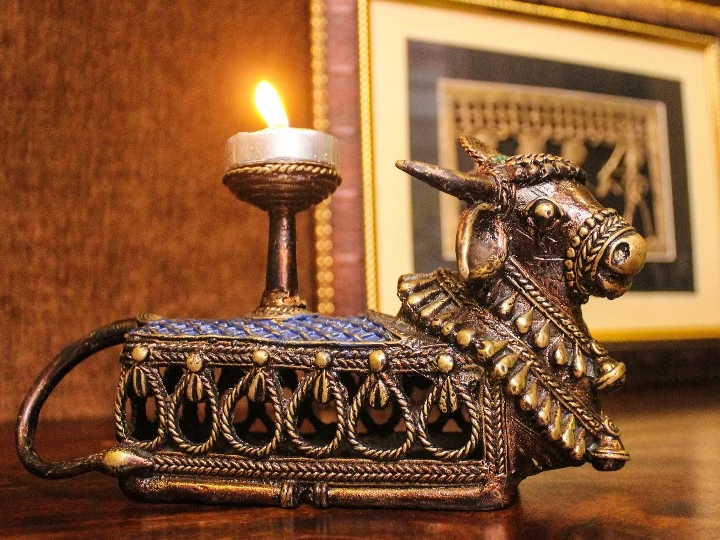
When people hear Dhokra Metal Craft, they imagine a small elephant. That is just the beginning. Below are the real categories.
1. Ritual Bells (Most Sacred)
- Used in tribal prayers and Hindu ceremonies.
- Each bell has a unique sound because each is cast individually.
- Size: 2 inches to 12 inches tall.
- Often decorated with tribal faces or animal heads.
2. Animal Figures (Most Common)
- Elephant, horse, bull, deer, turtle, and cock.
- Bastar style: Long legs, elongated necks, exaggerated horns.
- Bankura style: Compact, sturdy, almost cartoonish.
- The “Bankura horse” is the most iconic Dhokra symbol worldwide.
3. Human & Tribal Figures (Most Expressive)
- Dancers, drummers, women carrying water pots.
- Often shown in a circle (representing tribal festivals).
- Facial features are minimal. Posture tells the story.
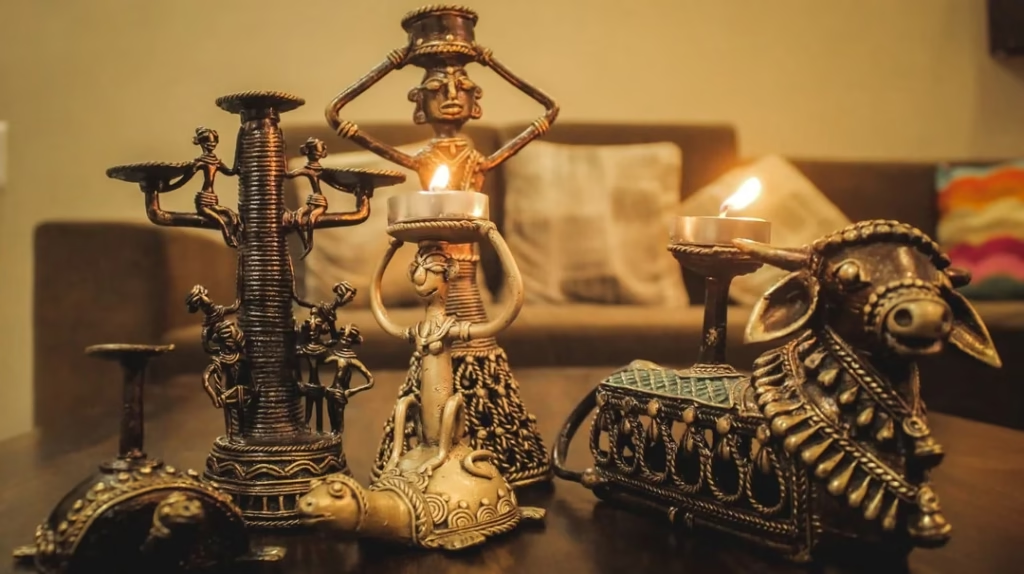
4. Lamp Stands & Diyas (Functional Art)
- Traditional oil lamps with 2, 5, or 7 wicks.
- Sometimes shaped like peacocks or lotus flowers.
- Still used in rural homes and temples.
5. Jewelry (Modern Adaptation)
- Earrings, pendants, and bangles.
- Rough, textured finish (not polished like gold or silver).
- Popular with urban buyers who want “tribal chic.”
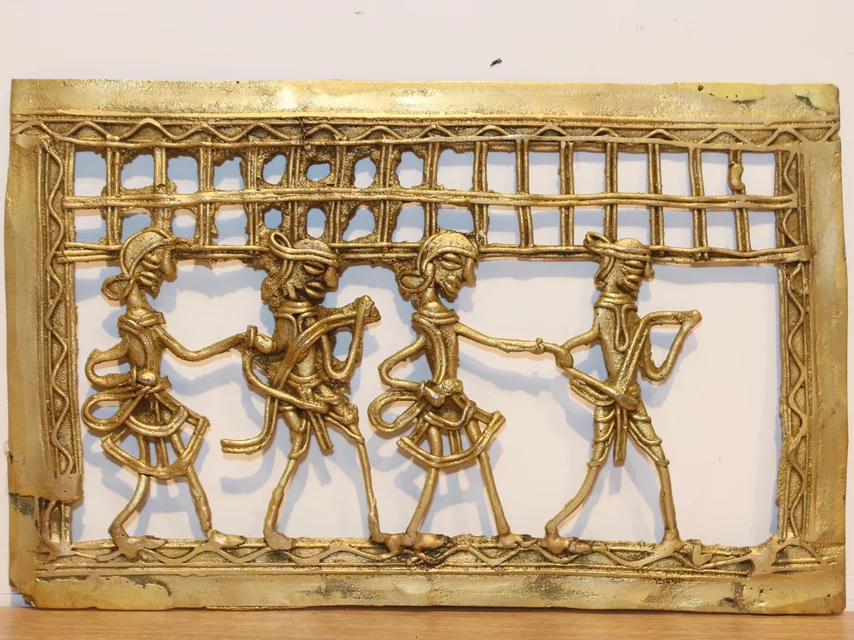
6. Narrative Panels (Rare & Expensive)
- Large flat panels showing wedding processions or harvest scenes.
- Take 1–2 months to complete.
- Price: ₹15,000 to ₹50,000.
The unwritten rule: A true Dhokra metal craft piece is never polished shiny. If it gleams like brass, it is fake or machine-finished. Real Dhokra has a dull, rustic brown or greenish patina.
Raw Materials Used—Wax, Clay, Metal & Forest Finds
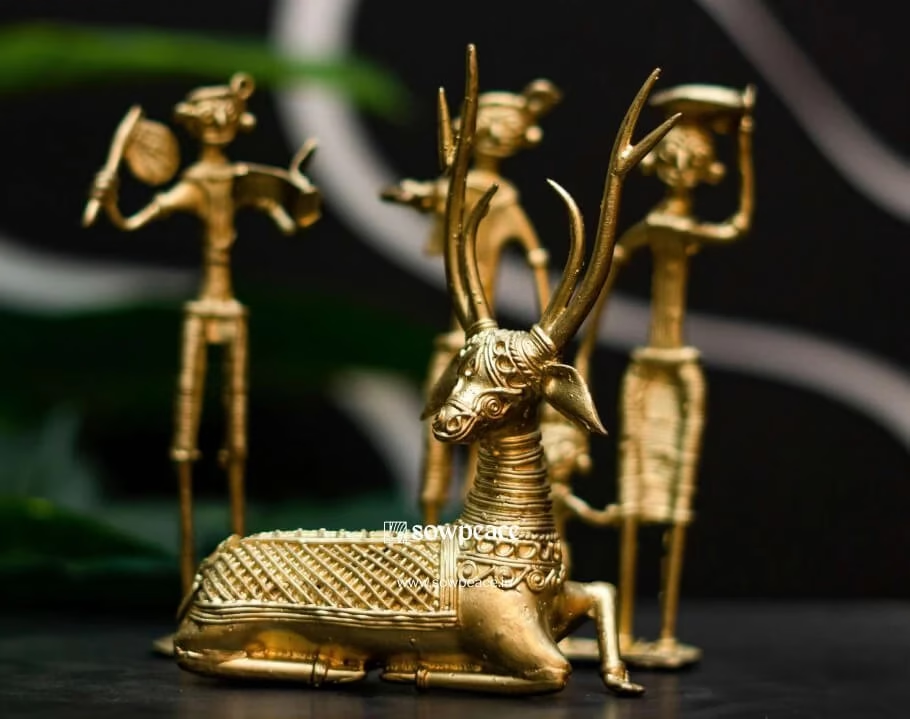
Nothing Comes from a Factory
Every authentic Dhokra Metal Craft piece begins with materials collected from forests and riverbeds. Below is the complete list.
1. Wax (The Heart of Dhokra)
- Beeswax – The primary material. Collected from wild hives in forests.
- Resin from sal trees – Makes wax less brittle.
- Oil from mahua seeds – Adds smoothness.
- Mixing ratio: 70% beeswax + 20% resin + 10% oil.
2. Clay (The Mold)
- Two types of clay are used.
- Riverbed clay – Fine, smooth. For the inner core.
- Paddy field clay – Thicker, gritty. For the outer layer.
- Rice husks added to outer clay to create tiny air holes.
3. Metal (The Final Form)
- Base metal: Bronze (copper + tin) or brass (copper + zinc).
- Scrap source: Old utensils, broken metal objects, factory waste.
- Mixing ratio for Bastar: 75% copper + 25% zinc.
- Mixing ratio for Bankura: 80% copper + 20% tin.
4. Tools (Minimal & Simple)
- Wooden paddle – For kneading clay.
- Bamboo sticks – For carving wax details.
- Cow dung cake – Fuel for the furnace.
- Clay pot (crucible) – Holds metal pieces during melting.
- Iron tongs – To lift the hot crucible.
5. Finishing Materials (Traditional)
- Tamarind water – To clean the cast metal.
- Sand – For light buffing (never shiny polish).
- Linseed oil – Final coating to prevent rust.
One artisan’s confession: “Fifty years ago, beeswax was free from the forest. Now? I buy it for ₹400 per kilo, the same with sal resin. The forest is giving us less. We are paying more. This craft is becoming expensive to even attempt.”
Step-by-Step Making – The Lost-Wax Process Explained
Making a single Dhokra Metal Craft piece takes 10 to 20 days. Below is the traditional process.
Step 1: Wax Preparation (Day 1)
- Melt beeswax, shellac resin, and mahua oil together.
- Strain through cloth to remove dirt.
- Cool into small cakes.
Step 2: Shaping the Wax Model (Day 2–4)
- This is the artist’s signature step.
- Wax is rolled, pressed, and carved while warm.
- No molds. No machines. Pure handwork.
- Details like animal eyes, jewelry, and patterns are carved with bamboo sticks.
Step 3: Clay Core Application (Day 4)
- Fine riverbed clay mixed with water.
- Applied inside hollow wax parts (for large pieces).
- Acts as the “soul” of the metal.
Step 4: Clay Coating (Day 5–6)
- First layer: Fine clay paste. Covers the entire wax model.
- Second layer: Thicker clay mixed with rice husks.
- Third layer: Rough clay. Creates strength.
- A small hole left at the bottom for wax to escape.
Step 5: Drying (Day 6–8)
- Clay mold dried in the shade for 2–3 days.
- Never direct sunlight (causes cracks).
Step 6: Heating (Day 9 – The Magic Moment)
- Clay mold placed upside down over a cow dung furnace.
- Heated for 2–3 hours.
- Wax melts and flows out through the bottom hole.
- This is the “lost wax” moment. The wax is destroyed forever.
Step 7: Metal Pouring (Day 9 – Same Day)
- Scrap metal pieces placed in a clay crucible.
- Crucible heated in the same furnace until metal turns liquid.
- Molten metal poured into the empty clay mold through the hole.
- Left to cool for 6–8 hours.
Step 8: Demolding (Day 10)
- Cooled clay shell is broken open with a stick.
- The metal piece inside is rough and covered with clay residue.
- This is the first time the artisan sees the final shape.
Step 9: Cleaning & Finishing (Day 10–11)
- Clay residue scrubbed off with sand and tamarind water.
- Metal filed to remove sharp edges.
- Linseed oil applied with a cloth.
- No polishing. The rustic finish is the signature.
Total time for a 6-inch elephant: 10 days.
Total time for a 2-foot lamp stand: 18–20 days.
Dhokra Hubs of India – Bastar, Bankura & Beyond
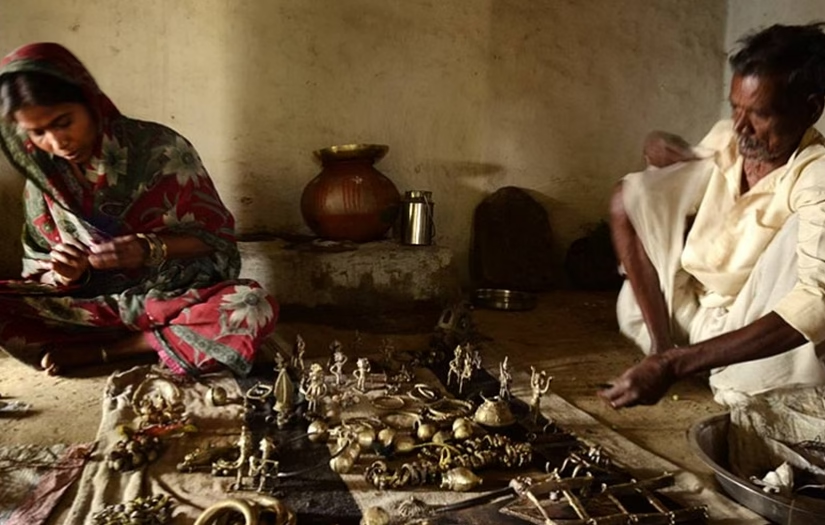
Dhokra Metal Craft is not everywhere. It survives in specific clusters. Below are the major hubs.
1. Bastar, Chhattisgarh (The Largest Hub)
- Villages: Kondagaon, Nagarnar, Baderajpur.
- Style: Tall, elongated figures. Long necks, exaggerated limbs.
- Specialty: Ritual bells and animal figures.
- Number of active artisans: 150–200.
- GI tag granted: 2008.
2. Bankura, West Bengal (The Most Famous)
- Villages: Bikna, Panchmura, Dariapur.
- Style: Compact, rounded, almost chubby animals.
- Specialty: The Bankura horse (state symbol of West Bengal).
- Number of active artisans: 80–100.
- GI tag granted: 2018.
3. Bikna Village (Bankura’s Heart)
- Just 3 km from Bankura town.
- Nearly every family here was a Dhokra artisan once.
- Today? Only 15–20 families still practice.
- The Bikna Dhokra Museum is worth visiting.
4. Sargiguda, Odisha (Small but Pure)
- Located in Koraput district.
- Style: Mix of Bastar and Bankura influences.
- Speciality: Narrative panels showing tribal life.
- Number of active artisans: 30–40.
5. Jharkhand (The Original Homeland)
- Villages near Ranchi and Hazaribagh.
- Style: Rustic, minimal, very raw.
- Specialty: Dhokra jewelry and small figurines.
- Number of active artisans: Fewer than 50.
What these hubs share: Every single one is struggling. The government has given GI tags. Craft meals happen. Tourists buy small pieces. But ask any artisan, “Does your son or daughter make Dhokra?” The answer is almost always no.
Why Is Dhokra Dying? – ₹33 a Day & No Successors
Dhokra Metal Craft is not dying of old age. It is being killed by economics. Below are the raw numbers.
The Math That Doesn’t Work
| Item | Cost to Artisan |
| Beeswax (500g) | ₹200–₹250 |
| Sal resin | ₹100 |
| Scrap copper & brass | ₹300–₹400 |
| Clay, fuel, tools | ₹100 |
| Total material cost for 1 small elephant | ₹700–₹850 |
| Selling price to middleman | ₹900–₹1,200 |
| Artisan’s profit (before labor) | ₹200–₹350 |
| Time spent | 8–10 days |
| Daily wage | ₹20–₹35 |
That is ₹35 per day. For a 4,000-year-old craft.
Why Young People Are Leaving
- A construction worker earns ₹500 per day. A Dhokra artisan earns ₹35.
- No pension. No health insurance. No respect.
- The forest no longer gives free beeswax. Raw materials cost real money.
- Young people see their parents’ bent backs and cracked hands. They want nothing to do with it.
The Numbers You Need to Know
- 1980s: Approximately 5,000 active Dhokra artisans in India.
- 2024: Fewer than 500. Possibly as low as 300.
- Average artisan age: 55+ years.
- Artisans under 30 years old: Less than 50 across all hubs.
- Female artisans: Almost none (traditionally men’s work).
What Happens When the Last Artisan Dies?
The GI tag will remain. The museum pieces will stay lit. The Wikipedia page will not disappear. But the knowledge—how much clay to mix, how hot the furnace should be, how to carve a deer’s ear in wax so it looks alive—that will vanish. Because that knowledge never lived in books. It lived in hands. And hands get buried.
How to Identify Real Dhokra – Fake vs. Authentic
The market is flooded with fake Dhokra metal craft. Below is how to tell the difference.
Real Dhokra Metal Craft (Authentic)
| Feature | What to Look For |
| Surface finish | Dull, rustic, slightly rough. Greenish-brown patina. |
| Weight | Light to medium. Hollow inside (except small solid pieces). |
| Joints | No visible seams or screws. The piece is one continuous cast. |
| Texture | Tiny bumps and pits from the clay mold. |
| Sound | When tapped, real Dhokra rings like a bell (hollow inside). |
| Price (small elephant) | ₹800 – ₹1,500 minimum. Below that? Suspicious. |
Fake Dhokra Metal Craft (Machine-Made or Imitation)
| Feature | What to Look For |
| Surface finish | Shiny, polished, smooth like factory brass. |
| Weight | Heavy. Likely solid metal, not hollow. |
| Joints | Visible seams where two mold halves were joined. |
| Texture | Perfectly smooth. No pits or bumps. |
| Sound | Dull thud when tapped (solid metal). |
| Price | ₹200 – ₹500 for a small elephant. Too good to be true. |
The “Lost Wax” Test
Ask the seller: “Is every piece different?” Authentic Dhokra uses lost wax, so no two pieces are identical. If the seller has 50 identical elephants, they are machine-made, not lost-wax cast.
Where to Buy Real Dhokra
- Direct from artisans in Bastar or Bankura (best option).
- Government emporiums (e.g., Central Cottage Industries, state handloom emporiums).
- Reputable fair-trade websites (e.g., Dastkar, Gaatha, Okhai).
- Craft meals where artisans sell directly (no middlemen).
Where to Avoid
- Tourist souvenir shops (mostly fake or low-quality reproductions).
- Amazon/Flipkart under ₹500 (almost certainly machine-made).
- Street vendors in cities (shiny “Dhokra style” brass).
FAQs
Q1. Is Dhokra the oldest metal craft in India?
Yes. Along with the lost-wax bronze statues of the Indus Valley (2500 BCE). No other metal craft has a continuous 4,000-year history.
Q2. Why is it called “Dhokra”?
The name comes from the Dhokra Damar tribe of central and eastern India, who have practiced this craft for generations.
Q3. Is every Dhokra piece unique?
Yes. Because the wax model is destroyed during casting, no two pieces are identical. Even the same artisan cannot make an exact copy.
Q4. What metal is used in Dhokra?
Traditionally bronze (copper + tin) or brass (copper + zinc). Artisans use scrap metal from old utensils.
Q5. Why is Dhokra not shiny?
Real Dhokra is never polished to a shine. The rustic, dull finish is a signature. Shiny pieces are machine-made or factory-finished.
Q6. How can I care for my Dhokra piece?
Wipe with a dry cloth. Do not use metal polish. Keep away from moisture. Apply a thin layer of linseed oil once a year.
Q7. Is Dhokra only from India?
The lost-wax technique exists worldwide (Africa and Southeast Asia). But the name “Dhokra” and the specific tribal aesthetic are uniquely Indian.
Q8. Does Dhokra have a GI tag?
Yes. Bastar Dhokra (2008) and Bankura Dhokra (2018) both have GI registration.
Q9. Can I learn Dhokra as a hobby?
Yes. Workshops exist in Bastar, Bankura, and Delhi. But note: setting up a furnace at home is difficult. It requires space, fuel, and ventilation.
Q10. What is the most expensive Dhokra piece ever sold?
A 4-foot Bastar narrative panel showing a tribal wedding. Sold at a Delhi auction for ₹120,000 (approximately $1,450).
Also Read:
Tholu Bommalata: The Magic – Leather, Light & Legends

Leave a Reply