

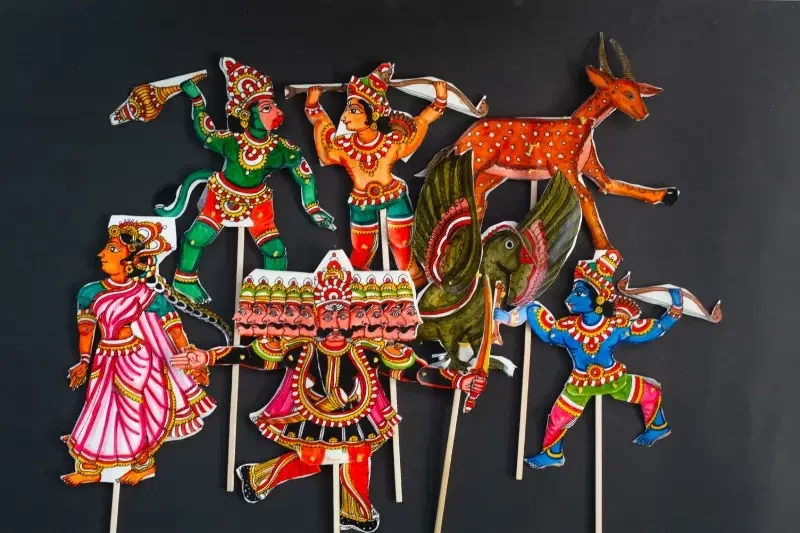
Hello folks! Let me tell you about an art form that’s flickering like a dying oil lamp. Tholu Bommalata—Andhra’s shadow puppetry. Not the fancy digital kind. Real. Raw. Made from goat and deer leather. Punching holes. Painting gods. Telling the Ramayana all night long.
Once, 300+ troops roamed Andhra villages. Today? Fewer than 15, maybe 10. Artists are over 60 years old. Young people don’t want to learn. Who can blame them? A puppeteer earns less than ₹2,000 per show. And a show takes 12 hours. Sunrise to sunrise.
I sat with an old puppeteer once. He showed me his grandfather’s puppet—100 years old. Holes patched. The paint faded. He whispered, “After me, who holds the lamp?”
That broke something in me. So here’s my small tribute. To be leathery. To light. To stories that refuse to die.
Let’s begin.
What Is Tholu Bommalata? – Andhra’s Ancient Shadow Theater
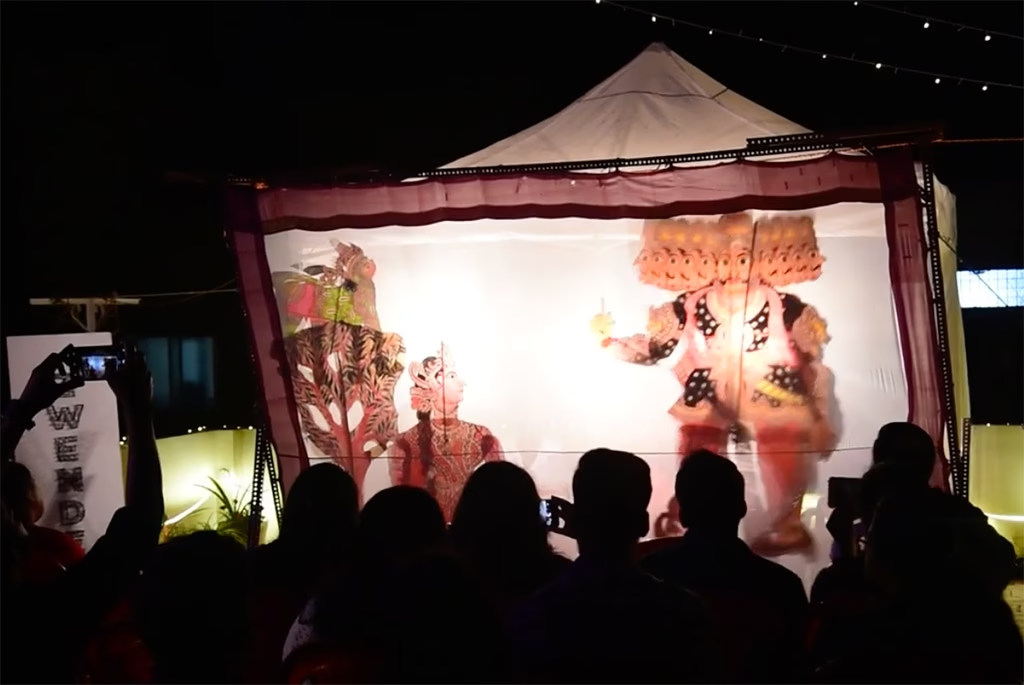
Tholu Bommalata translates to “the dance of leather dolls” in Telugu. It is a Andhra Pradesh Traditional Art that predates cinema by over 2,000 years. Imagine a white screen. A single oil lamp behind it. And flat leather puppets moving between the two. The audience sees only shadows—but those shadows sing, fight, laugh, and cry.
Here is what makes Tholu Bommalata unique:
- Material: Puppets made from goat or deer leather, not wood or cloth.
- Size: Each puppet ranges from 3 to 6 feet tall.
- Perforations: Thousands of tiny holes punched into the leather. These create halos, jewelry, and palace walls when light passes through.
- Colors: Only five natural colors are used—red, yellow, blue, green, and black.
- Performance: A single epic (Ramayana or Mahabharata) told over 10 to 30 nights. Each night runs 8 to 12 hours.
Unlike painted scrolls, these puppets move. The puppeteer controls limbs with bamboo sticks. A second person holds the lamp. A third sings. A fourth plays drums. Four people. One screen. An entire universe.
Tholu Bommalata is not children’s entertainment. It was a village cinema. Night school. Temple ritual. And for centuries, it was the most beloved Andhra Pradesh Traditional Art along the Godavari and Krishna river deltas.
Today, fewer than 50 master puppeteers remain. But the art itself? Still breathtaking.
A Timeline of Light & Leather – History of Tholu Bommalata
The history of Tholu Bommalata as an Andhra Pradesh Traditional Art spans more than two millennia. Below is a concise timeline.
200 BCE – 200 CE (Sangam Era)
Earliest references found in Tamil and Telugu literature. Travelers describe “leather figures moving behind oil lamps” in village festivals.
1000 CE – 1500 CE (Kakatiya & Vijayanagara Period – Golden Age)
Royal patronage exploded. Kings sponsored 50-night Ramayana performances. Puppeteers received land grants. Puppet sizes grew from 2 feet to 6 feet. Perforation techniques became highly detailed.
1500 CE – 1800 CE (Nayaka & Asaf Jahi Period – Regional Styles Emerge)
Two distinct styles developed. The Krishna district style (larger puppets, thicker leather) and the Anantapur style (smaller puppets, more perforations). Every village had at least one puppeteer family.
1880 CE – 1950 CE (British Era – Decline Begins)
Colonial officers dismissed puppetry as “primitive.” Electricity arrived. Cinema arrived. Village audiences shrank. Many puppeteers became farmers.
1950 CE – 1990 CE (Post-Independence – Near Extinction)
Television killed night-long performances. By 1980, fewer than 30 troupes remained. Government tried subsidies but failed to revive audience interest.
2008 CE (UNESCO Recognition)
Tholu Bommalata was listed as an endangered intangible heritage art form. International attention increased briefly.
Present Day (Critical Condition)
Approximately 12 to 15 active troupes remain. Most puppeteers are over 55 years old. A single performance pays ₹1,500 to ₹3,000 for a 12-hour night. No young generation is stepping forward.
Types of Tholu Bommalata Puppets – Heroes, Demons & Tricksters
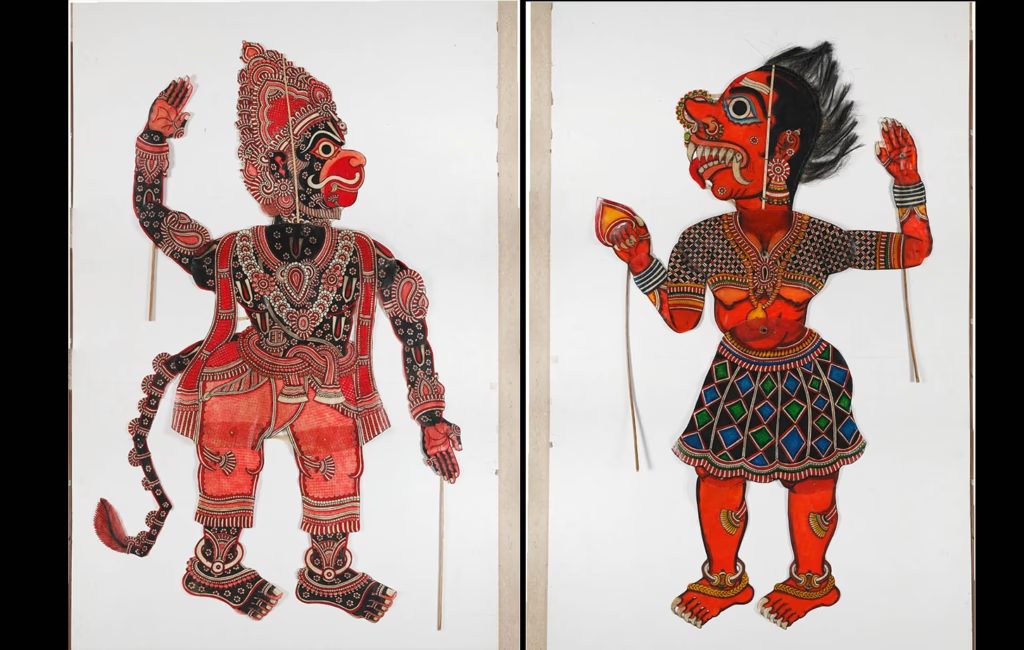
Tholu Bommalata, as a traditional Andhra Pradesh art, classifies its puppets into three distinct types. Every puppet falls into one category based on its role, size, and color scheme.
1. Hero Puppets (Satvik)
- Represent gods, kings, and virtuous warriors.
- Examples: Rama, Lakshmana, Arjuna, King Harishchandra.
- Size: 2.5 to 3.5 feet tall.
- Color palette: Fair skin (left unpainted or light yellow), bright orange or white garments.
- Facial expression: Calm eyes, gentle smile, straight posture.
- Arm joints: Fully articulated (shoulder, elbow, wrist).
2. Demon Puppets (Tamasik)
- Represent villains, demons, and arrogant kings.
- Examples: Ravana (10 heads shown stacked), Kamsa, Hiranyakashipu.
- Size: 3 to 4 feet tall (larger than heroes).
- Color palette: dark red, black, and dark green. Ravana’s heads are painted in alternating bright colors.
- Facial expression: Bulging eyes, sharp teeth, curled mustache.
- Special feature: Multiple arms and heads created as separate leather pieces stitched together.
3. Trickster & Side Character Puppets
- Represent comedians, servants, animals, and wise fools.
- Examples: Tenali Rama, the monkey-general Hanuman, and a village barber.
- Size: 1.5 to 2.5 feet tall (smallest category).
- Color palette: Mixed. Often humorous mismatched colors.
- Facial expression: One eye larger than the other, crooked smile, tilted head.
- Unique trait: These puppets break the rules. A trickster can face the audience directly (breaking the side-profile rule).
Raw Materials Used – From Goat Hide to Bamboo Sticks
Every authentic Tholu Bommalata puppet begins with forest and farm. Below is the complete material list for this Andhra Pradesh Traditional Art.
Primary Material: Leather
- Goat hide – Most common. Thin, flexible, takes dye well.
- Deer hide – Used for larger demon puppets (thicker, lasts longer).
- Preparation: Hair removed. Sun-dried. Smoked over castor oil flames.
Pigments (All Natural)
- Red – Crushed laterite stone + tamarind seed glue.
- Black – Lampblack from burnt castor oil wicks.
- Yellow – Turmeric + alum solution.
- Green – Indigo + turmeric mixed fresh.
- White – Crushed sea shells + gum arabic.
- Blue (rare) – Indigo paste imported from coastal Andhra.
Punching Tools
- Iron nails of different thicknesses – For creating holes that become light.
- Wooden mallet – To strike the nail through leather.
- Leather pad – Goatskin placed under the puppet to absorb blow.
Assembly Materials
- Bamboo sticks – One central spine stick (2–3 feet long). One hand stick per movable arm.
- Split palm leaf – For tying joints (not metal or plastic).
- Castor oil – For final polishing and waterproofing.
Performance Materials (Not in Puppets)
- White cotton screen—8×6 feet, stretched on bamboo frame.
- Oil lamp – Two wicks dipped in castor oil. The only light source is traditional.
Quantity note: One standard 3-foot hero puppet requires 1 full goat hide, 4 bamboo sticks, and approximately 2 hours of punching work (up to 1,500 holes).
Step-by-Step Making – How a Puppet Comes to Life
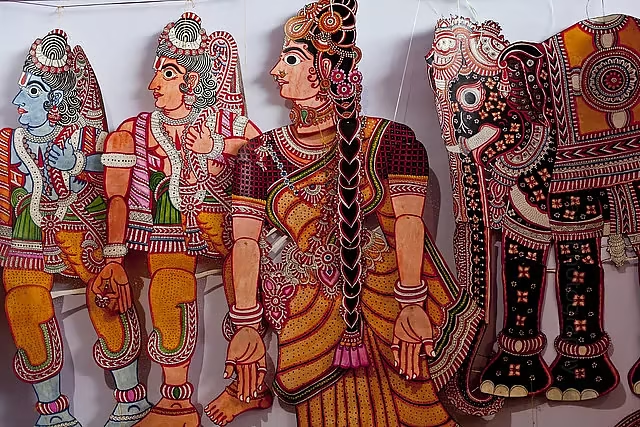
Making a single Tholu Bommalata puppet takes 5–7 days for an experienced artist. Below is the traditional process of this Andhra Pradesh traditional art.
Step 1: Hide Preparation (Day 1)
- Soak goat or deer hide in river water for 12 hours.
- Scrape off all hair with a curved iron blade.
- Stretch on bamboo frame. Dry in sun for 6 hours.
- Smoke over castor oil flames. The hide turns golden brown.
Step 2: Tracing the Design (Day 2)
- Place hide on a wooden board.
- No paper sketch. No pencil. The artist draws directly with a thin bamboo stick dipped in turmeric water.
- Each limb is drawn separately. Arms and legs are cut as individual pieces.
Step 3: Cutting (Day 2–3)
- Use a sharp curved knife. Cut along turmeric lines.
- Hero and demon puppets cut as separate pieces (head, torso, arms, legs).
- Trickster puppets are sometimes cut as a single piece.
Step 4: Punching Holes (Day 3–4)
- Most critical step. The puppet is placed on a soft leather pad.
- Artist uses iron nails and a wooden mallet.
- Holes are of three sizes: small (stars, dots), medium (flowers, borders), and large (eyes, ornaments).
- A 3-foot puppet has 800–1,500 holes.
Step 5: Coloring (Day 4–5)
- Apply natural pigments with a squirrel hair brush.
- Order: Yellow background first. Then red, green, and blue. Black last.
- Both sides painted (shadow screen shows both sides).
Step 6: Assembly (Day 5–6)
- Attach limbs with split palm leaf thread.
- Central bamboo spine stick glued to the back with tamarind paste.
- Hand sticks tied to each movable arm.
Step 7: Oil & Curing (Day 6–7)
- Rub castor oil on both sides. Makes leather translucent.
- Hang in shade for 24 hours.
- Puppet is now ready for performance.
Traditional rule: A puppeteer never throws away a damaged puppet. Holes are patched with fresh leather. Colors are reapplied. Some puppets in Andhra are over 100 years old, repaired dozens of times.
The Performance – Singers, Drummers & an All-Night Oil Lamp
Sunrise to Sunrise with Ramayana
A real Tholu Bommalata performance is not a 30-minute show. It is an all-night ritual. Below is how this Andhra Pradesh Traditional Art unfolds.
The Setup (6:00 PM – 7:00 PM)
- White cotton screen (8×6 feet) stretched between two bamboo poles.
- Single castor-oil lamp placed 2 feet behind the screen.
- Puppeteers sit behind the lamp. The audience sits in front.
- No electricity. No microphone.
The Performers (5–7 people)
- 1 master puppeteer (holds the main hero puppet).
- 2 assistant puppeteers (handle demons, side characters, and animals).
- 1 lead singer (tells the story in Telugu).
- 1 harmonium player.
- 1 dholak (drum) player.
- 1 cymbal player.
The Story (9:00 PM – 6:00 AM)
- The night begins with a ritual prayer. The oil lamp is lit.
- First hour: Bala Kanda (young Rama). The hero puppet enters from the right.
- Midnight: Peak action. Ravana appears (all 10 heads lit beautifully).
- 3:00 AM – 5:00 AM: Slow section. The audience sleeps. Drumming continues softly.
- 6:00 AM: Final battle. Ravana dies. The lamp begins to dim.
Unique Techniques
- Distance matters: Puppet held close to lamp = large blurry shadow. Held far = small, sharp shadow.
- Color on screen: Colored leather holes cast colored light. Red hole = blood. Green hole = forest.
- Earthquake effect: Puppeteer shakes the bamboo spine rapidly.
- Rain effect: Artist sprinkles water on the back of the lamp.
Harsh truth: A full-night performance earns the troupe ₹3,000–₹5,000 total. Split among 7 people. Each person earns less than ₹700 for 12 hours of work. No breakfast included.
Why Is Tholu Bommalata Dying? – Harsh Numbers & Hard Truths
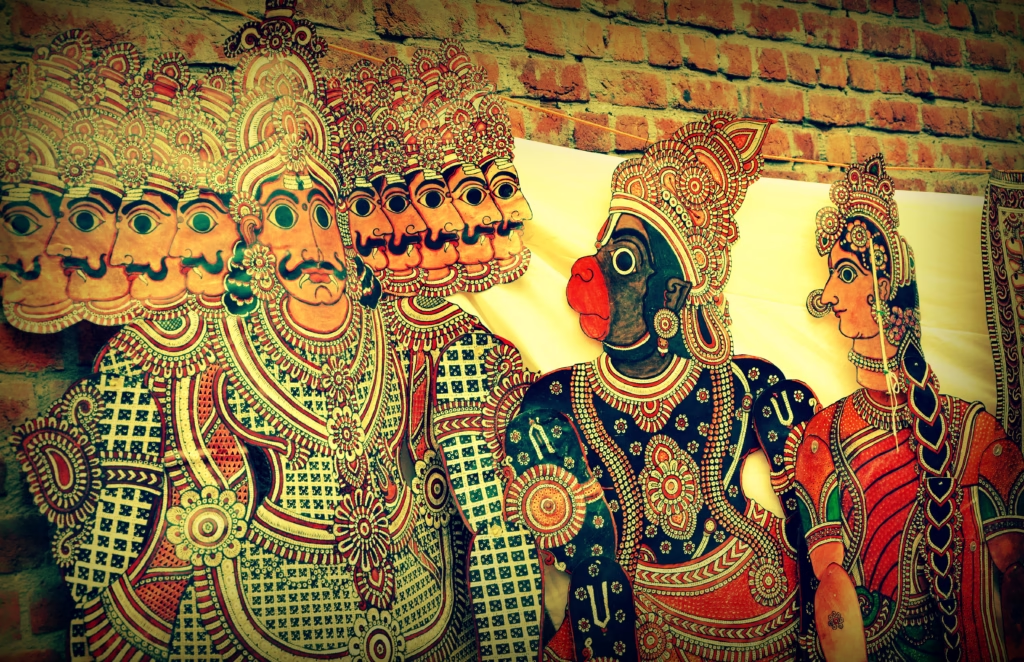
Tholu Bommalata is not sick. It is critical. Below are the raw statistics behind this Andhra Pradesh Traditional Art crisis.
The Numbers (Then vs. Now)
| Year | Active Troupes | Full-time Artists | Daily Performances |
| 1950 | 300+ | 3,000+ | 50+ |
| 1990 | 50–60 | 600–700 | 10–15 |
| 2024 | 8–12 | 80–100 | 2–3 (only festivals) |
Why Young People Leave
- ₹700 for 12 hours of work. A daily wage laborer earns ₹400 in 8 hours.
- No retirement. No health insurance. No social respect.
- Movies and TV tell the same Ramayana stories in 3 hours (not 12).
- Mobile phones. Children don’t gather around oil lamps anymore.
Why Villages Stopped Hosting
- 12-hour shows require food, water, and sleeping space for 7 artists.
- Cost to host: ₹6,000–₹10,000 (artists’ fee + meals + oil).
- Same money can hire a DJ for 4 hours. Louder. Faster. No sleeping audience.
The Silent Crisis
- Average puppeteer age: 58 years.
- Number of puppeteers under 30 years old: Less than 10.
- Female puppeteers: 0 (traditionally men only).
- Full authentic Ramayana scroll (100+ puppets): Only 3 families still own complete sets.
What happens when the last puppeteer dies? The puppets will go to museums. The songs will go to audio recordings. The lamp will go out. That is not preservation. That is a funeral.
FAQs
1. Is Tholu Bommalata the same as Wayang Kulit (Indonesia)?
No. Wayang uses flat rods. Tholu uses articulated limbs. Also, Tholu paints both sides. Wayang paints only one.
2. How old is this art form?
At least 2,000 years. Mentioned in Andhra’s 1st-century Buddhist texts as Charma Kridanakam (leather play).
3. Can I buy a real Tholu Bommalata puppet?
Yes. Prices range from ₹1,500 (small trickster) to ₹15,000 (large Ravana). Buy directly from Nimmalakunta Village, Kurnool District.
4. Why are holes punched into the leather?
The lamplight passes through holes. Different hole shapes create stars, flowers, jewelry, and tears.
5. Do all puppets face sideways?
Heroes face right. Demons face left. Tricksters can face the audience. No puppet ever faces backward.
6. How long does a puppet take to make?
5–7 days for one 3-foot hero puppet. A full Ramayana set (120 puppets) takes one year.
7. Why did the government not save it?
Andhra’s government gives small grants (₹50,000–₹100,000 per troupe). That covers one month’s expenses. Not enough.
8. Can women learn Tholu Bommalata?
Traditionally no. Today, a few women in Hyderabad are learning puppet-making. But performing is still male-only.
9. What language is used in performances?
Telugu. Sometimes mixed with Tamil and Kannada border dialects.
10. Is UNESCO protecting it?
No. Tholu Bommalata is on India’s “endangered” list but not on UNESCO’s. It needs urgent documentation.
Conclusion: Don’t Let the Light Go Out
Tholu Bommalata is not just puppetry. It is Andhra’s original cinema. Before projectors. Before multiplexes. Before you could pause a story.
The leather. The lamp. The all-night singing. These are not traditions. They are technologies of memory. A way to pass down the Ramayana from grandfather to grandson without a single printed page.
But technologies die. And this one is gasping.
You cannot save it alone. But you can do small things. Visit a performance if you find one. Buy a puppet directly from an artist. Share this blog. Tell one person the name Tholu Bommalata.
Because one day—maybe 10 years from now—someone will ask, “What was that shadow thing people used to do?”
And you can say, “I remember. Let me tell you about it.”
That is how art survives. Not in museums. In memory. Pass it on.
Also Read;
Bhil Art on Canvas Bags: From Village Walls to Designer Boutiques

Leave a Reply