
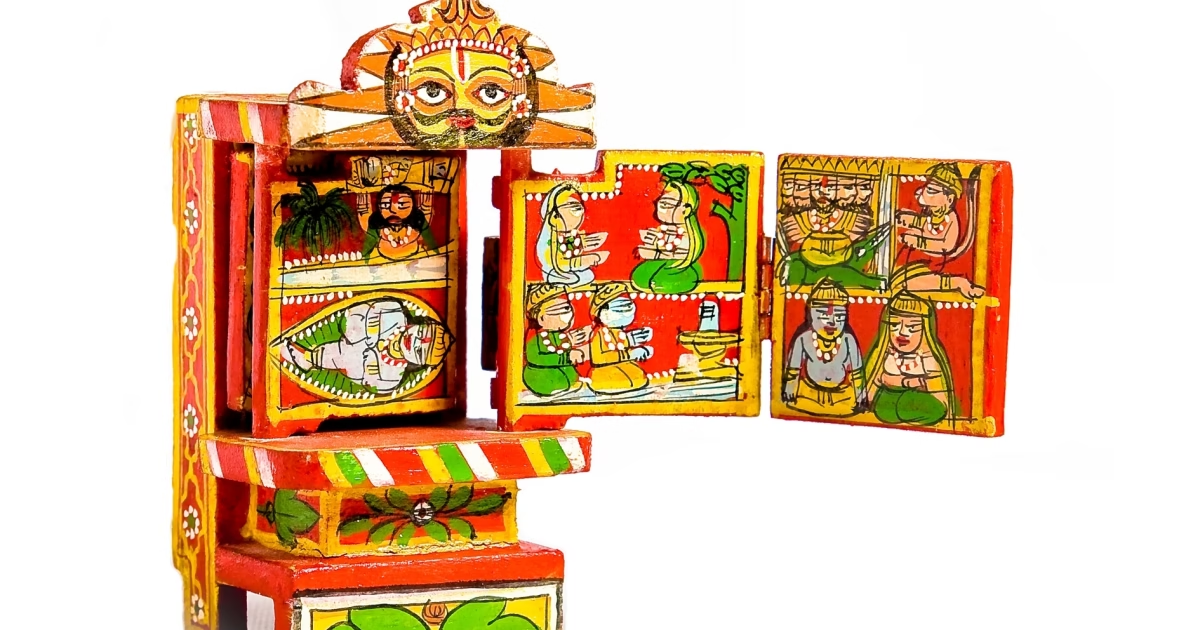
Hello folks! Have you ever seen a wooden box that unfolds into a temple? A shrine that travels with its keeper, telling stories through vibrant paintings? Welcome to the fascinating world of Kaavad – Rajasthan’s portable storytelling shrine.
The Kaavad is a unique Rajasthani art tradition. It is a wooden, collapsible shrine with painted panels. These panels depict stories from mythology, local legends, and the lives of the patron family. The Kaavad is a visual narrative, an oral performance, and a sacred object all in one.
While acrylic canvas Rajasthani paintings have gained popularity in modern times, the Kaavad represents a centuries-old tradition of storytelling through art. This ancient craft blends painting, oral narration, and mobile architecture. The Kaavad is truly one of India’s most ingenious artistic traditions.
Today, we’re exploring the art, history, and artists behind this unique tradition. Let’s dive into the world of Kaavad! 🎨✨
What is a Kaavad Art?
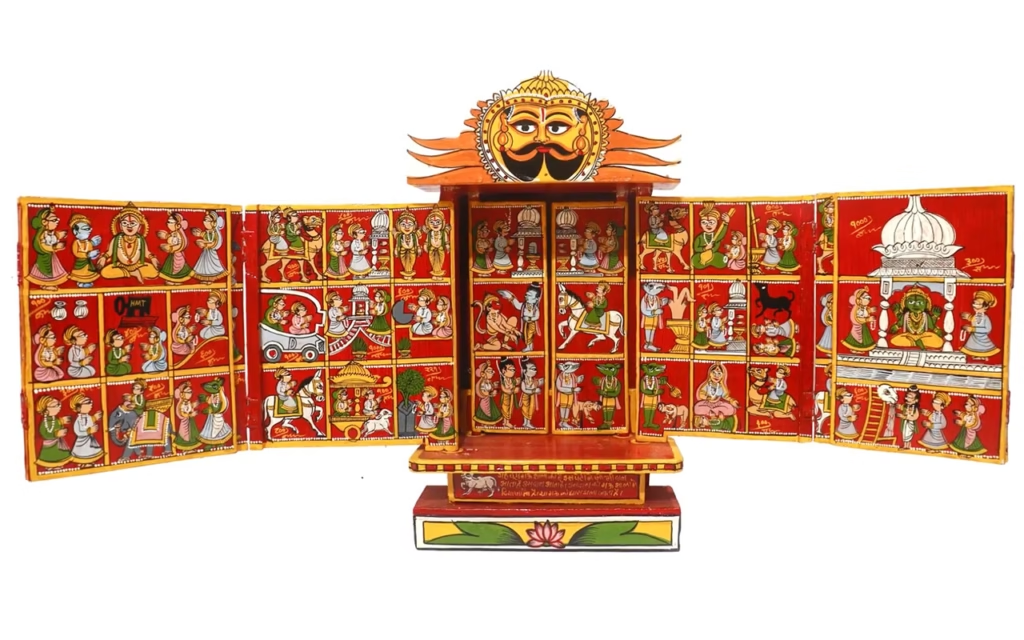
A Kaavad is a portable wooden shrine. It is made of wooden panels joined by hinges. The shrine can be folded and carried from place to place. When opened, it reveals a series of painted panels. These panels tell stories.
The Kaavad is used by professional storytellers called Kavadia Bhat. They travel from village to village. They carry the Kaavad with them. They perform stories using the paintings as visual aids. The stories are from Hindu mythology, local legends, and the history of the patron families.
The Kaavad as a Shrine
The Kaavad is not just a storytelling tool. It is also a shrine. The top panel of the Kaavad usually contains images of the main deities. This makes the Kaavad a mobile temple. The storyteller uses it to bless the families he visits.
Key Facts About the Kaavad:
| Aspect | Detail |
| Material | Wood (usually mango or sheesham) |
| Structure | Collapsible shrine with hinged panels |
| Painter | Suthar (woodworker/artist) community |
| Storyteller | Kavadia Bhat community |
| Purpose | Storytelling, blessing, genealogical records |
| Region | Rajasthan (primarily Udaipur, Jodhpur, and surrounding areas) |
The History of Kaavad Art
The Kaavad tradition dates back several centuries. It is believed to have originated in the Mewar region of Rajasthan. The Suthar community has been making Kaavads for generations. The Kavadia Bhat community has been performing with them.
Patronage and Royalty
The Kaavad tradition flourished under royal patronage. Rajput kings and nobles commissioned Kaavads. They wanted their family histories to be recorded and performed. The Kaavad became a genealogical record. It told the stories of the patron’s ancestors and their deeds.
Adaptation and Change
Over the centuries, the Kaavad tradition has evolved. The stories and styles have changed. The painters have adapted to new materials and techniques. Yet the core concept – a portable shrine with painted panels – has remained unchanged.
Materials and Techniques – The Art of Kaavad Painting
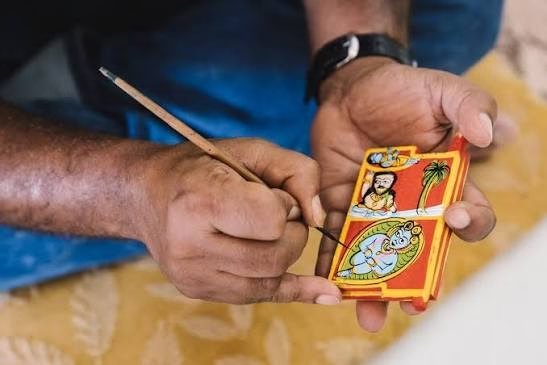
The Kaavad is a masterpiece of miniature painting. The painters use natural colors. They use fine brushes made of squirrel hair. The style is influenced by the Rajput miniature painting tradition. Every material and technique used in creating a Kaavad is chosen with great care and purpose.
Wood Selection and Preparation
The choice of wood is the first critical step. Mango wood (also known as aam ki lakdi) is most commonly used. This is because it is strong yet light enough to be carried easily. Sheesham (Indian rosewood) is also used. The wood must be aged and seasoned. This prevents it from cracking or warping over time.
Preparation Steps:
| Step | Process | Time Required |
| Selection | Mango or sheesham wood, aged for 2-3 years | 2-3 years of aging |
| Cutting | Panels cut to precise dimensions | 1-2 days |
| Smoothing | Sanding the surface with stone or fine sandpaper | 2-3 days |
| Treatment | Applying a protective coating to prevent termites | 1 day |
| Assembly | Hinges attached to allow folding | 1-2 days |
Historical Note: Traditionally, the wood was chosen by priests. The wood had to be from a tree that had not been struck by lightning. This was considered auspicious.
Natural Colors – The Secret of Longevity
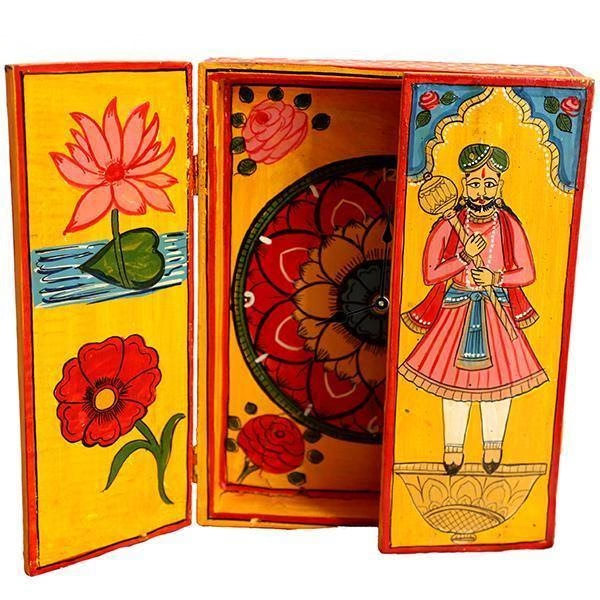
The colors used in Kaavad painting are completely natural. They are derived from minerals, plants, and stones. Each color has a specific source and preparation method. The painters usually prepare the colors themselves. This knowledge is passed down through generations.
Primary Colors and Their Sources:
| Color | Source | Preparation Method |
| Red | Red ochre (geru) or vermilion | Grinding stone to powder, mixing with gum arabic |
| Yellow | Yellow ochre or turmeric | Grinding, mixing with gum binder |
| Blue | Indigo (deep blue), Lapis Lazuli (royal blue) | Boiling indigo leaves, grinding stone |
| Green | Green earth or malachite | Grinding and mixing with binder |
| White | Lime or white clay (khadiya) | Powdering and mixing |
| Black | Lampblack or charcoal | Collecting soot, mixing with gum |
| Gold | Real gold leaf or gold powder | Available as readymade sheets or powder |
The Binding Agent – Gum Arabic: All colors are mixed with gum arabic. This acts as a binder and adhesive. It helps the colors stick to the wood surface. It also gives the painting a glossy finish.
Proportions: The traditional mixture uses 50% pigment, 40% water, and 10% gum arabic. The gum is soaked in water overnight before mixing. This ensures a smooth consistency.
Brushes – The Tool of Precision
The brushes used for Kaavad painting are incredibly fine. They allow the artist to create intricate details. The most prized brushes are made from squirrel hair.
Types of Brushes:
| Brush Type | Material | Purpose |
| Squirrel hair brush | Fine hair from squirrel’s tail | Fine lines, intricate details, facial features |
| Goat hair brush | Goat hair | Filling larger areas, background colors |
| Camel hair brush | Camel hair | Medium details, borders |
| Wooden stylus | Sharpened bamboo stick | Creating fine outlines and dots |
Squirrel Hair Brush Making:
- The hair from a squirrel’s tail is collected
- It is cleaned and sorted by size
- The hair is tied with a thin cotton thread
- The handle is made of bamboo or wood
- Only 3-5 hairs are used for the finest details
Time to make a squirrel hair brush: The process takes 2-3 days for a skilled brush maker. A single artist may use 10-15 different brushes for one painting.
The Gold Leaf Application
Gold leaf is an important decorative element in Kaavad painting. It adds a sense of royalty and divinity to the artwork.
Gold Leaf Process:
- Real gold is beaten into extremely thin sheets
- The gold leaf is placed over the area to be decorated
- A soft brush is used to press it onto the surface
- A binder (gum arabic) is applied underneath
- Excess gold is brushed away
Thickness of Gold Leaf: Traditional gold leaf is only 0.1 microns thick. This is so thin that it becomes transparent when held up to light. A single gram of gold can yield over 100 gold leaves.
The Painting Process – A Step-by-Step Guide
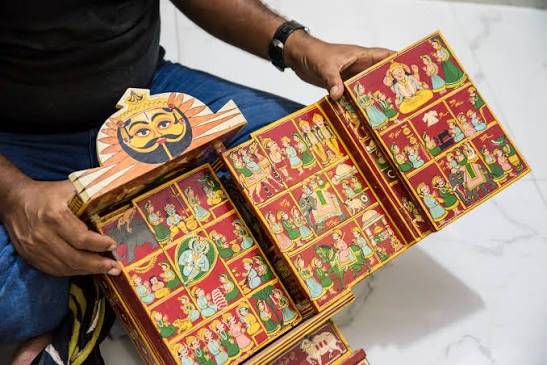
The process of painting a Kaavad is meticulous and time-consuming. It requires great skill and patience. The artist works in stages, with each stage being carefully planned and executed.
Step 1: The Design Planning (2-3 days)
Before any paint is applied, the artist plans the entire composition.
What is planned:
- The number of panels (typically 10-12)
- The deities to be depicted
- The stories to be told
- The genealogical record of the patron
- The decorative borders
Tools Used:
- Graph paper for sketches
- Traditional measurement units (angul, hasta)
- Reference from older Kaavads or miniature paintings
Step 2: The Base Coat (2 days)
The wood must be prepared before painting can begin.
Base Coat Steps:
- The wood surface is smoothed with fine sandpaper
- A mixture of white clay (khadiya) and gum arabic is prepared
- This mixture is applied as a thin layer (1-2 mm thick)
- The surface is allowed to dry for 12-24 hours
- The process is repeated 2-3 times for a smooth, even base
- The final layer is polished with a smooth stone
The Result: A smooth, white surface ready for painting.
Step 3: Tracing and Sketching (3-5 days)
The artist transfers the design onto the prepared surface.
Sketching Process:
- A rough sketch is made on paper
- The rough sketch is refined with measurements
- A final sketch is made on tracing paper
- The tracing paper is placed on the wood surface
- Carbon paper or red chalk is used to transfer the design
- The artist uses a wooden stylus to trace the outlines
- Final adjustments are made with charcoal
Time Investment: A large Kaavad with 12 panels may require 5-7 days for this stage alone.
Step 4: Outlining (3-4 days)
The sketch is now converted into a permanent outline.
Outlining Process:
- A very fine brush (1-3 squirrel hairs) is used
- Black ink or lampblack is applied
- The outlines are drawn with precision
- Facial features, hands, and complex patterns get extra attention
- The outline must be perfect – it is the foundation for everything
Technique: The artist holds the brush perpendicular to the surface. This gives the fine lines their characteristic precision.
Step 5: Applying Base Colors (7-10 days)
The colors are now applied in a specific sequence.
Color Application Order:
| Sequence | Color Applied | Purpose |
| 1 | Yellow or Gold | Backgrounds |
| 2 | Red | Clothing, borders |
| 3 | Blue | Skies, Krishna’s skin |
| 4 | Green | Trees, grass, nature |
| 5 | White | Highlights, jewels |
| 6 | Black | Details, outlines |
Drying Time: Each color layer must dry completely (1-2 days) before the next is applied. This is why the entire process takes so long.
Application Technique: The colors are applied in thin layers. The artist uses a circular motion to ensure even coverage. The color should be thick enough to be opaque but thin enough to show the outline.
Step 6: Shading and Detailing (5-8 days)
Now the painting comes to life with shading and details.
Shading Techniques:
- Cross-hatching: Fine lines applied at angles
- Stippling: Tiny dots to create shadow
- Wet-on-wet: Adding color while the base is still damp
- Dry-brush: Using a dry brush for texture
Detailed Areas:
- Facial features (eyes, nose, lips)
- Jewelry (necklaces, earrings, crown)
- Clothing patterns (fine lines, floral motifs)
- Architectural details (temple spires, pillars)
- Animals (elephants, horses, tigers)
Time Investment: A large Kaavad may require 5-8 days just for the detailing.
Step 7: Gold Leaf Application (2-3 days)
The gold leaf is now applied to the designated areas.
Gold Application Steps:
- The area is cleaned and prepared
- A thin layer of gum arabic is applied
- The gold leaf is placed on the area
- It is pressed down with a soft brush
- Excess gold is brushed away
- The gold is polished with an agate stone
Areas Gold is Applied:
- Deity ornaments
- Temple spires
- Borders
- Royal crowns
- Sacred items (tridents, chakras)
Step 8: Finishing and Varnishing (2-3 days)
The final step is to protect the painting.
Finishing Steps:
- The painting is inspected for any flaws
- Minor corrections are made
- A layer of natural varnish is applied
- The varnish is allowed to dry for 24-48 hours
- A second coat of varnish is applied
- The painting is polished gently
The Varnish: Traditional varnish is made from the resin of the dhak tree. It is mixed with a small amount of oil.
Total Time Required
| Stage | Time Required |
| Design Planning | 2-3 days |
| Base Coat | 2 days |
| Tracing and Sketching | 3-5 days |
| Outlining | 3-4 days |
| Applying Base Colors | 7-10 days |
| Shading and Detailing | 5-8 days |
| Gold Leaf Application | 2-3 days |
| Finishing and Varnishing | 2-3 days |
| Total | 26-38 days |
A complex Kaavad with intricate details can take up to 6-8 weeks to complete. Some larger Kaavads can take 3-6 months. This labor-intensive process is why authentic Kaavads are valuable.
Market for Kaavad – Economic Value and Pricing
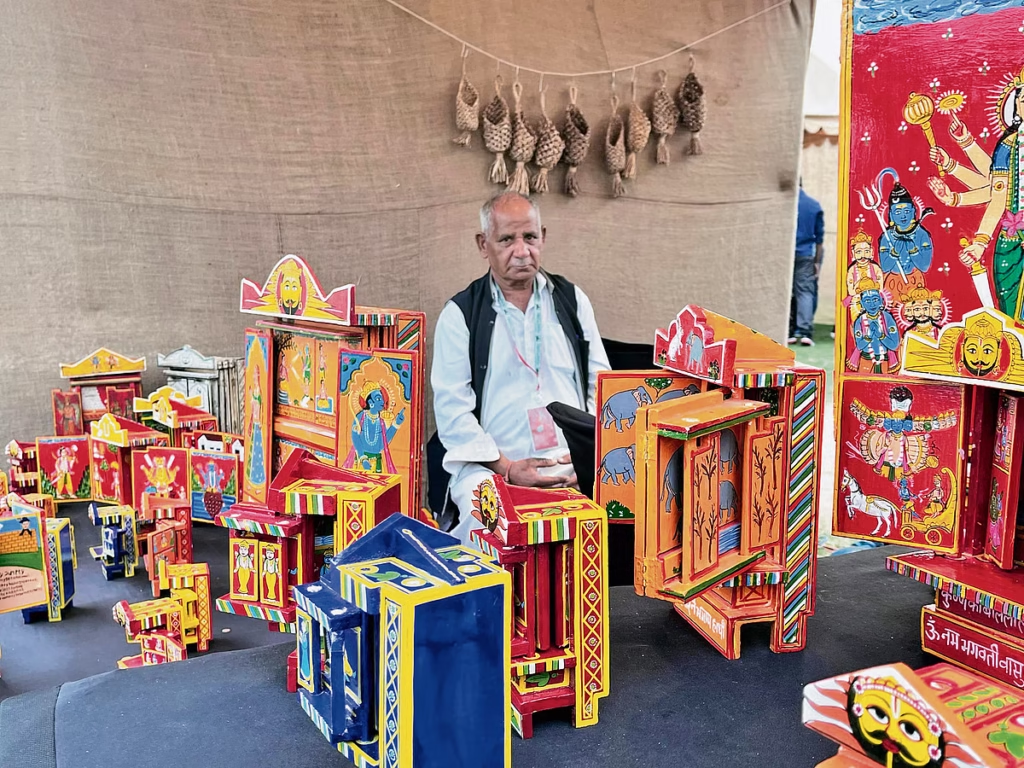
The market for Kaavads and acrylic canvas Rajasthani paintings has grown significantly. Let’s explore the economic value of this art form.
Factors Affecting Kaavad Prices
Several factors determine the price of a Kaavad:
- Size and Number of Panels: Larger Kaavads with more panels cost more
- Complexity of Design: Intricate designs with gold leaf are more expensive
- Age of the Piece: Antique Kaavads (over 50 years) command premium prices
- Condition: Well-preserved pieces are worth more
- Provenance: Kaavads with documented history are more valuable
- Artist Reputation: Pieces by renowned artists are priced higher
- Market Demand: Growing demand in international markets
Price Ranges
Contemporary Kaavads:
| Category | Price Range (₹) | Description |
| Simple Kaavad | 5,000 – 15,000 | Small size, basic designs, no gold leaf |
| Medium Kaavad | 20,000 – 35,000 | 10-12 panels, moderate details, some gold |
| Intricate Kaavad | 40,000 – 70,000 | Large size, complex designs, extensive gold |
| Masterpiece Kaavad | 80,000 – 1,50,000 | Large, highly detailed, exceptional artistry |
Antique Kaavads:
| Category | Price Range (₹) | Description |
| 50-100 years old | 50,000 – 1,00,000 | Well-preserved, some wear |
| 100-150 years old | 1,00,000 – 2,50,000 | Rare, historical significance |
| Over 150 years old | 2,50,000 – 5,00,000+ | Extremely rare, museum quality |
Market Demand and Growth
Global Market:
The global market for Rajasthani art is growing significantly. The art and handicraft sector in Rajasthan is valued at over ₹10,000 crore. Kaavads, being unique and niche, command premium prices.
Key Statistics:
- Kaavads contribute approximately 2-3% of Rajasthan’s handicraft exports
- The annual market value for Kaavads is estimated at ₹100 crore
- International demand has grown by 200% in the last decade
- Museum acquisitions account for 15-20% of Kaavad sales
- Private collectors make up 60-70% of buyers
- Online platforms are seeing a 250% growth in sales
Market Trends:
- Museum acquisitions increasing globally
- Growing interest from online art platforms
- Corporate collections buying high-value Kaavads
- International demand growing by 15-20% annually
- Reproductions and prints gaining popularity at lower price points
Where to Buy and Sell Kaavads
- Government Emporiums: Rajasthan State Handicrafts Corporation
- Art Galleries: Jaipur, Jodhpur, Udaipur
- Museums: City Palace Museum, Udaipur
- Online Platforms: Etsy, Amazon, specialized art websites
- Direct from Artisans: Suthar community in Udaipur
- Auction Houses: Sotheby’s, Christie’s for antiques
Authentication Tips:
- Natural colors are usually genuine
- Gold leaf is real gold
- A certificate from the artist or authority
- Provenance documentation (known history of ownership)
Quick Facts and Statistics
| Aspect | Detail |
| Kaavad Origin | Mewar region, Rajasthan |
| Primary Community | Suthar (painters), Kavadia Bhat (storytellers) |
| Material | Mango or sheesham wood, natural colors |
| Number of Panels | Varies (typically 10-12 panels) |
| Time to make | 3-8 weeks |
| Total colors used | 10-12 traditional colors |
| Brushes used | 10-15 per artist |
| Artisans involved in Rajasthani crafts | Over 2 lakh |
FAQs
Q1. What is a Kaavad?
A Kaavad is a portable wooden shrine from Rajasthan. It has painted panels that tell stories from mythology and local legends. It is used by storytellers called Kavadia Bhat for performances.
Q2. What is the difference between a Kaavad and acrylic canvas Rajasthani paintings?
A Kaavad is painted on wood panels using natural colors. Acrylic canvas Rajasthani paintings are painted on canvas using acrylic paints. Acrylic paintings are more durable, brighter, and faster to create, while Kaavads are traditional storytelling tools.
Q3. Who makes Kaavads?
Kaavads are made by the Suthar community of woodworkers and painters. The stories are performed by the Kavadia Bhat community of storytellers and bards.
Q4. What colors are used in Kaavad painting?
Kaavad painters use natural colors derived from minerals, plants, and stones. Red comes from ochre, yellow from turmeric, blue from indigo, green from malachite, and white from lime. Gold leaf is also used for royal elements.
Q5. How long does it take to make a Kaavad?
A simple Kaavad takes 3-4 weeks. A complex, intricately designed Kaavad can take 6-8 weeks or up to 3-6 months for very large pieces.
Q6. What is the price of a Kaavad?
A simple Kaavad costs ₹5,000-15,000. A more intricate piece can cost ₹20,000-70,000. An antique Kaavad can cost over ₹1,00,000-5,00,000 or more.
Q7. What stories are depicted on a Kaavad?
The Kaavad depicts stories from Hindu mythology (Ramayana, Mahabharata, Krishna Leela), local legends, and the histories of the patron families.
Q8. Where can I see Kaavads today?
You can see Kaavads at the City Palace Museum in Udaipur and other museums in Rajasthan. They are also showcased at art exhibitions and fairs.
Also Read:
Ganjifa Cards – India’s Lost Art of Hand-Painted Playing Cards

Leave a Reply