
Hello folks! Have you ever looked at a beautifully woven shawl and wondered about the stories behind its patterns? The Naga and Mizo tribal weaves of Northeast India are not just fabrics. They are living chronicles of communities, cultures, and centuries-old traditions. Each thread tells a story of identity, status, and heritage.
Tribal clothing in Nagaland and Mizoram is a visual language. The patterns on a shawl reveal the wearer’s social standing, achievements, and lineage. From the warrior shawls of Nagaland to the vibrant Puans of Mizoram, these weaves offer a fascinating glimpse into the region’s rich cultural tapestry.
Today, we’re exploring the weaving traditions, unique techniques, symbolic motifs, and the incredible artisans keeping these crafts alive. Let’s dive into the colorful world of Naga and Mizo textiles!
The Cultural Significance of Naga and Mizo Tribal Clothing
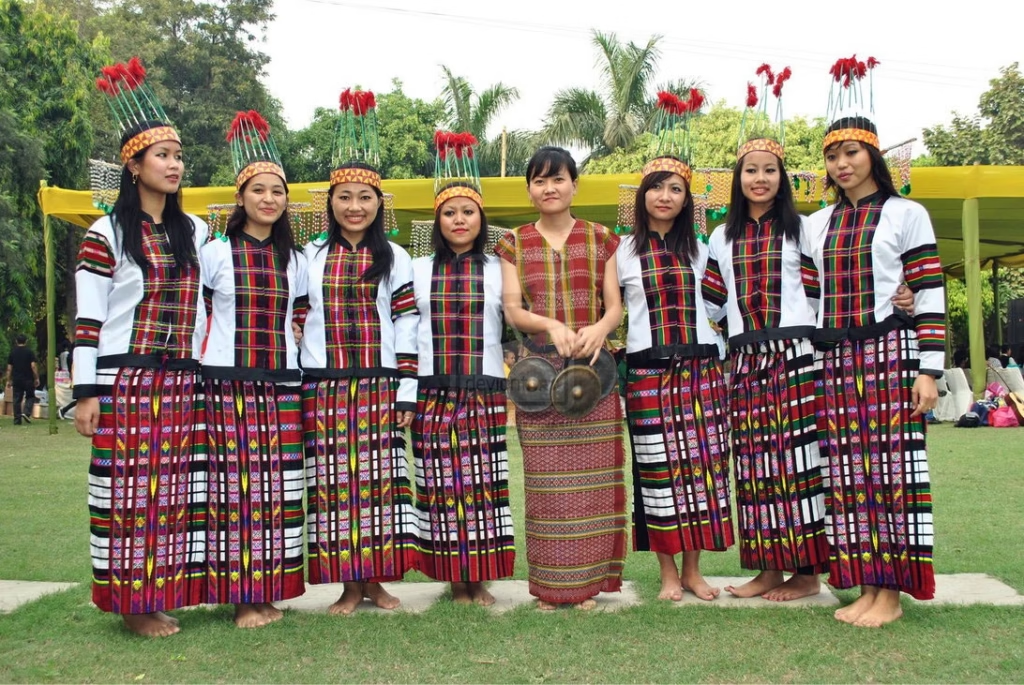
For the Naga and Mizo communities, tribal clothing is much more than mere adornment. It is a visual language. These textiles serve as markers of identity, social status, and achievement. The intricate patterns and colors are not chosen arbitrarily; they are a complex code that communicates volumes about the wearer.
A Visual Language of Status
Among the Naga tribes, the shawl a person wears reveals his or her standing in the tribal hierarchy. Men are allowed to wear certain patterns and colors only after establishing a record of feats and achievements. Within each tribe, there is a distinction between classes on the basis of the shawls they wear.
Elaborately designed shawls are used by the warrior classes or the rich segments within the tribe.
The motifs often depict the head of a mithun, a hornbill, an elephant, or a tiger. The form of the patterns, the color scheme, and the overall style of the cloth allow the viewer to identify the community of the person wearing it and trace his/her descent and social status.
The Weaver’s Art
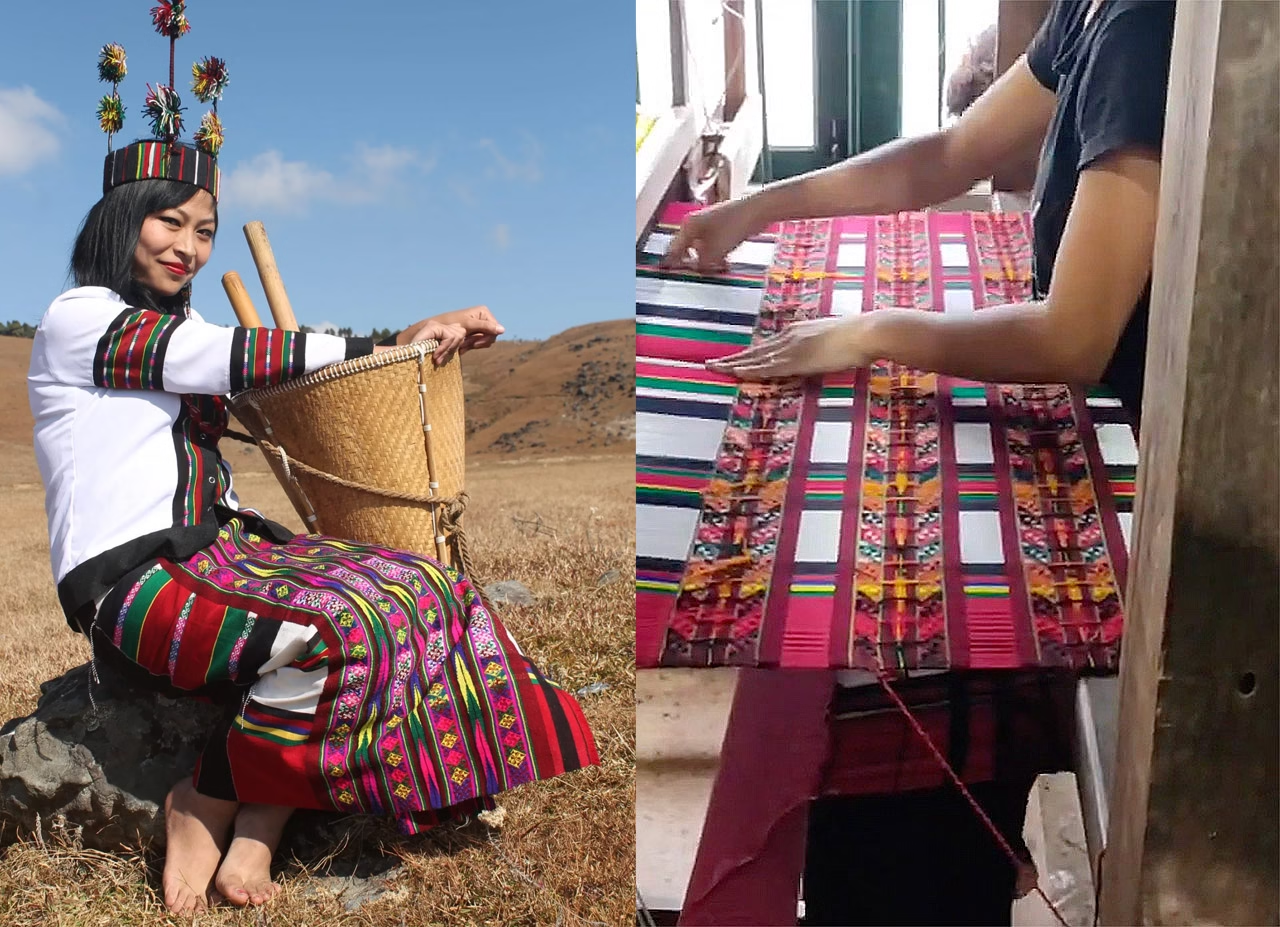
Weaving is traditionally done by women on narrow loin looms in Naga communities, while other fabrics are woven on the fly shuttle. In Mizoram, women weavers sustain livelihoods through cluster development initiatives.
Each piece takes 10 to 15 days to complete, and every design carries a unique significance, from patterns inspired by forest plants, animals, and birds to motifs reflecting traditions.
Key Facts About Naga and Mizo Tribal Clothing:
| Aspect | Naga Tradition | Mizo Tradition |
|---|---|---|
| Primary Garment | Shawls (men), wrap-arounds (women) | Puan (worn by both men and women) |
| Weaving Technique | Narrow loin-loom, three pieces stitched together | Traditional handloom weaving |
| Symbolism | Social status, warrior achievements, lineage | Cultural identity, community affiliation |
| Key Features | Bold geometric patterns, red and black motifs | Vibrant colors, intricate designs, Puanchei for festivals |
The Traditional Attire of the Naga and Mizo
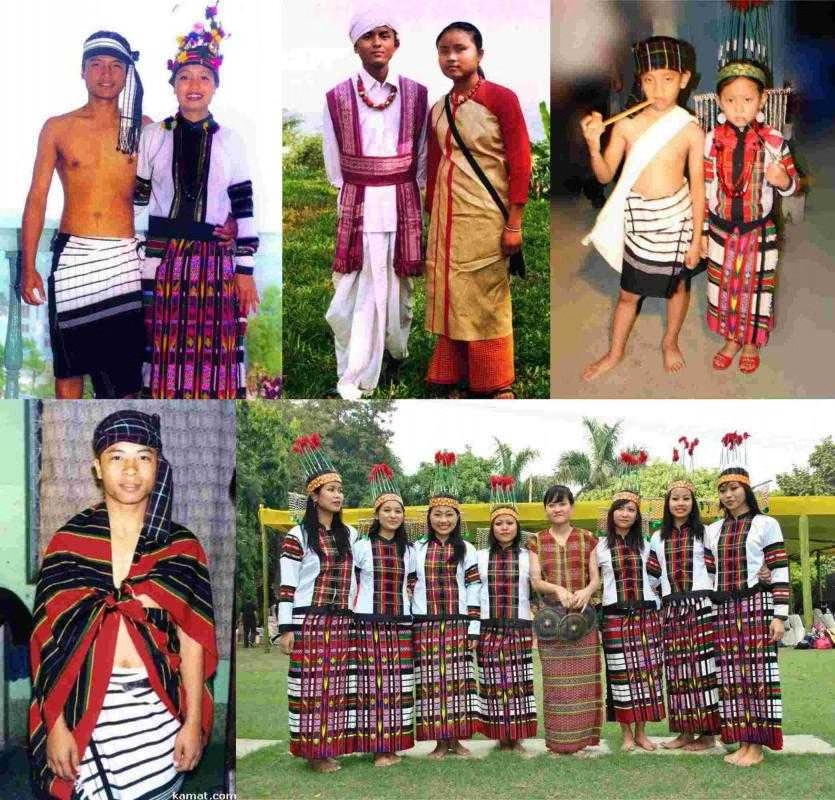
Let’s explore the specific garments that define Naga and Mizo tribal clothing.
Naga Attire: The Warrior Shawls
Nagaland is home to 16 major tribes, and each tribe has its own specific designs and motifs for shawls and sarongs. One of the common features of Naga shawls is that three pieces are woven separately and then stitched together.
Key Types of Naga Shawls:
| Shawl Type | Tribe | Significance |
| Tsung Kotepsu | Various | Features a white woven band with figures of elephants, tigers, mithuns, cocks, and circles representing human heads |
| Lotha Shawl | Lotha | Woven in nine parts and stitched together |
| Shatni | Konyak | Preserved and used only to wrap a woman’s dead body after marriage |
| Rongtu | Various | Worn only if a mithun sacrifice has been conducted over three generations |
| Kamphie | Rengma | Traditional dress used only in marriages and the Rengma festival of Nagada |
Design Features:
- Common colors are black or white with red and green motifs for introducing an extra weft
- Simple straight lines, striped squares and bands, varying in width, color, and arrangement
- The central stripe is more decorated than the other two, which have more or less the same pattern
Mizo Attire: The Puan
The ethnic garment of Mizoram is known as Puan. These traditional hand-woven garments are of different shades and intricate designs.
Key Types of Mizo Attire:
| Garment | Description |
| Puanchei | The most colourful costume used by every Mizo lady, especially during festivals |
| Ngotekherh | A puan worn around the waist. Originally a men’s pant, now worn by men and women alike |
Traditional Materials and Techniques
The creation of Naga and Mizo tribal clothing involves intricate techniques and natural materials.
Traditional Yarn Sources
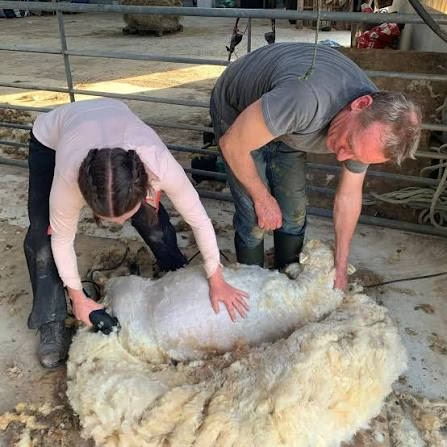
Before wool was imported into the Naga villages, the material for shawls was threads made from bark that comes up during the monsoon season. The threads are pried apart and then dried, boiled with ash, stretched, dyed, and rolled on spindles before the actual weaving begins.
Dyeing Traditions
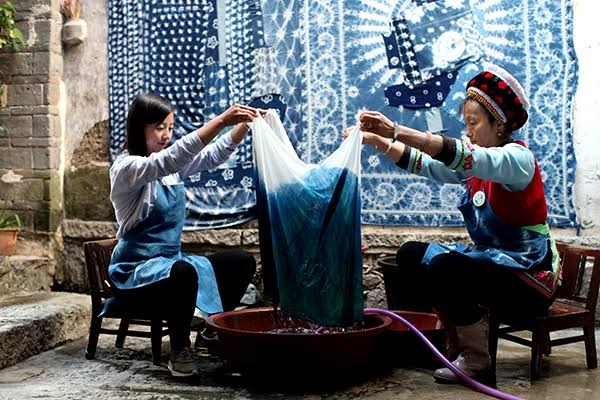
Textile dyeing is a significant art among the hill tribes of the region. Each tribe possesses one or two good dyes. Superstition and belief also back the selection of color.
Color Symbolism:
- Red: Symbolizes blood. Young women avoid dyeing cloth red, believing they will die a violent death. Only old women dye yarn red
- Blue: Made by boiling indigo in a huge pot in which the clothes or thread to be dyed are dipped and boiled for nearly an hour. The process is repeated until each cloth takes on the desired tinge
The Weaving Process
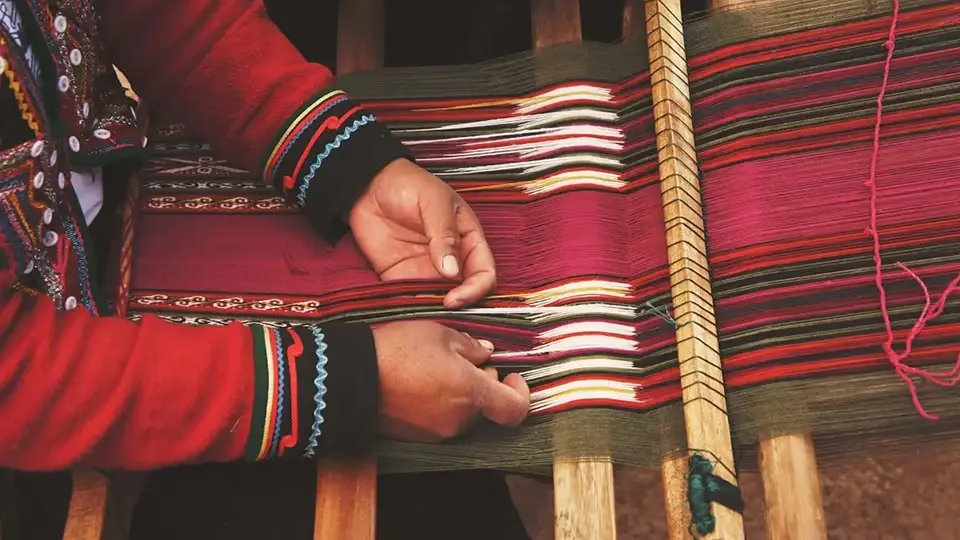
Traditional Naga shawl-weaving is done by the women on narrow loin looms. Designs are derived from graphs. The dress material, noted for its striking colors, is being accepted as fashionable wear in other parts of the country.
Key Steps:
- Collection of raw materials
- Dyeing of thread (often celebrated as a festival)
- Weaving on the loom
- Stitching pieces together (three or nine parts depending on the tribe)
The Kamphie, a traditional Rengma dress of Naga women, takes nearly one month to complete. The color combination is usually red, white, green, yellow, and black.
The Role of Naga and Mizo Women in Handloom Traditions
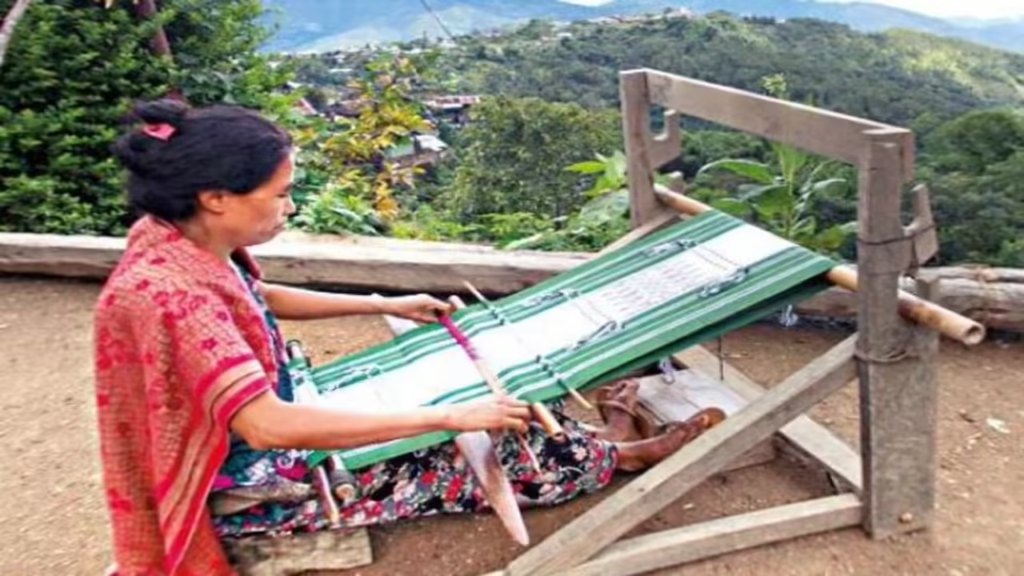
Women are the backbone of the handloom sector in Northeast India. In the c, weaving is primarily a woman’s domain. This section explores their crucial role in sustaining these traditions.
Women as Primary Artisans
In Nagaland, weaving is traditionally done by women on narrow loin looms. The same is true for Mizoram, where women weavers sustain their livelihoods through cluster development initiatives. The knowledge of weaving is passed down from mothers to daughters, ensuring the continuity of these traditions.
Key Statistics:
- Over 72% of the handloom workforce in India comprises women
- Women constitute nearly 90% of the weaver workforce in rural India, representing the largest segment of the handloom sector workforce
- In Naga society, weaving is an integral part of a woman’s identity
Challenges Faced by Women Weavers
Despite being the backbone of the sector, women weavers face numerous challenges:
- Low earnings: A significant number of women weavers have monthly incomes ranging from ₹2,500 to ₹5,000
- Lack of access to markets and raw materials
- Limited access to financial resources and credit
Empowering Women Through Enterprise
The handloom sector has provided women with economic independence, particularly in rural areas. Women weavers and society are shaping the landscape of the handloom sector. They are not just preserving traditions but also creating sustainable livelihoods.
Market Values and Economic Impact of Naga and Mizo Tribal Clothing
The handloom sector in the Naga and Mizo regions has significant economic potential. Let’s explore the market values and economic impact of these beautiful weaves.
Handloom Sector in Nagaland
The government of Nagaland launched a flagship program to promote organic farming and expand it to the handicrafts and handloom sector. The Nagaland Handloom and Handicrafts Development Corporation has been instrumental in promoting local weaves.
Key Statistics:
| Parameter | Value |
| Total handloom workers in Nagaland | Approximately 25,000 weavers |
| Annual handloom production value | Estimated at over ₹50 crore |
| Growth in handloom exports | Significant increase in recent years |
| Handloom units in Nagaland | Over 20,000 |
| Women in handloom sector | The majority of the workforce |
Handloom Sector in Mizoram
Mizoram has a rich tradition of handloom weaving, particularly the production of Puan. The government has been promoting the sector through various initiatives.
Key Statistics:
| Parameter | Value |
| Handloom workers in Mizoram | Approximately 15,000 |
| Annual Puan production | Over 1 million pieces |
| Average income per weaver | ₹5,000-8,000 per month |
| Growth in handloom exports | Steady growth over the past decade |
Market for Naga and Mizo Textiles
Tribal clothing from the Naga and Mizo regions has gained significant recognition in national and international markets.
Market Trends:
- Participation in trade fairs has expanded reach from domestic to international markets
- The global handloom market is expected to reach $20 billion by 2025
- Indian handloom exports have surged to over ₹21,000 crore, reaching 20+ countries
- Designers like Atsu Sekhose from Nagaland have used traditional shawls into contemporary designs
Price Ranges:
| Product | Price Range ( ₹) |
| Traditional Naga Shawl | 1,500 – 5,000 |
| Premium Naga Shawl (with intricate designs) | 10,000 – 25,000 |
| Mizo Puan | 500 – 2,000 |
| Puanchei (festival wear) | 2,000 – 5,000 |
| Contemporary Naga/Mizo textiles | 3,000 – 10,000 |
Economic Empowerment and Revival
Dedicated teams of handloom entrepreneurs collaborate with weavers from small villages, providing them opportunities to earn and sustain their craft. A women’s cooperative weaving society based in Kohima village set the trend with its avant-garde designs about a decade ago.
Contemporary Relevance and Revival
Today, tribal clothing from the Naga and Mizo regions is finding new audiences. Traditional Naga weaving is being preserved and promoted through handcrafted textiles such as cushions, shawls, and bedsheets. Enterprises aim to sustain Naga cultural heritage while producing high-quality, authentic handloom products.
Designers and Brands
- Atsu Sekhose: A Nagaland-based designer who has incorporated traditional Naga weaves into contemporary fashion
- Fashion Weeks: Naga and Mizo textiles are increasingly featured in Indian fashion weeks
The Role of Government and Institutions
The government and various institutions are taking steps to support these traditions. The 4th All India Handloom Census provides detailed data on the handloom sector, helping policymakers understand the scale and needs of the industry.
Key Initiatives:
- Participation in trade fairs has expanded their reach from domestic to international markets
- Designers like Atsu Sekhose from Nagaland have transformed traditional shawls into contemporary designs
- Dedicated teams of handloom entrepreneurs collaborate with weavers from small villages, providing them opportunities to earn and sustain their craft
Quick Facts and Statistics
| Aspect | Details |
| Major Naga tribes in Nagaland | 16 |
| Common shawl construction | Three pieces woven separately and stitched together |
| Primary material | Cotton (historically, tree bark threads were also used) |
| Traditional loom type | Narrow loin-loom (Naga women) |
| Mizo primary garment | Puan |
| Time to complete a Kamphie dress | Approximately one month |
| Key colours in Naga textiles | Black, white, red, green |
| Mizo colour symbolism | Red (blood), Blue (indigo) |
| Total handloom workers in Nagaland | ~25,000 |
| Total handloom workers in Mizoram | ~15,000 |
| Annual handloom production value (Nagaland) | ~₹50 crore |
| Annual Puan production (Mizoram) | ~1 million pieces |
FAQs
Q1. What is the significance of Naga shawls?
Naga shawls denote the social status of the wearer. The patterns and colors a person wears reveal his/her standing in the tribal hierarchy. Men are allowed to wear certain patterns only after establishing a record of feats and achievements.
Q2. What is the traditional attire of Mizoram called?
The traditional attire of Mizoram is called Puan. Puanchei is the most colorful costume used by Mizo women, while Ngotekherh is another type worn around the waist by both men and women.
Q3. How are Naga shawls made?
One common feature of Naga shawls is that three pieces are woven separately and then stitched together. The central stripe is more decorated than the other two. Traditional materials were originally threads made from tree bark, later replaced by imported wool.
Q4. What dyes were traditionally used in Naga textiles?
Indigo was used for blue dye, boiled in a huge pot. Red dye symbolized blood, and superstition dictated that only old women could dye yarn red. Goat’s hair or human hair dyed red or black or any other color was also used for decorating dress materials.
Q5. What are the common motifs in Naga textiles?
Common designs include simple straight lines, striped squares, and bands of varying width, color, and arrangement. The tsung kotepsu shawl features figures of elephants, tigers, mithuns, cocks, and circles representing human heads.
Q6. How long does it take to weave traditional Naga textiles?
Each piece takes 10 to 15 days to complete. A more elaborate garment like the Kamphie, a Rengma traditional dress, takes nearly one month to complete.
Q7. What is the economic value of Naga and Mizo textiles?
The handloom sector in Nagaland has an annual production value of over ₹50 crore, with approximately 25,000 weavers. Mizoram produces over 1 million Puan pieces annually. Prices range from ₹500 for simple pieces to over ₹25,000 for premium shawls.
Q8. What is the meaning of the Hekütha Qhumi shawl?
The Hekütha Qhumi is a shawl woven for Sumi women. It is said to have fulfilled the Sumi women’s desire to have a shawl similar to the men’s shawl and was woven for the first time by Khezheli Chisi of Naghutomi village in Nagaland.
Q9. What is the global market potential for Naga and Mizo textiles?
The global handloom market is expected to reach $20 billion by 2025. Indian handloom exports have surged to over ₹21,000 crore, reaching 20+ countries. Naga and Mizo textiles are increasingly featured in international fashion events.
Q10. How are Naga and Mizo textiles being preserved?
Traditional weaving is preserved through cooperatives, government initiatives, and collaborations with designers. Enterprises aim to sustain Naga cultural heritage while producing high-quality, authentic handloom products that appeal to modern consumers.
Also Read:
Bandhani Art and Its Rise from Gujrat

Leave a Reply