
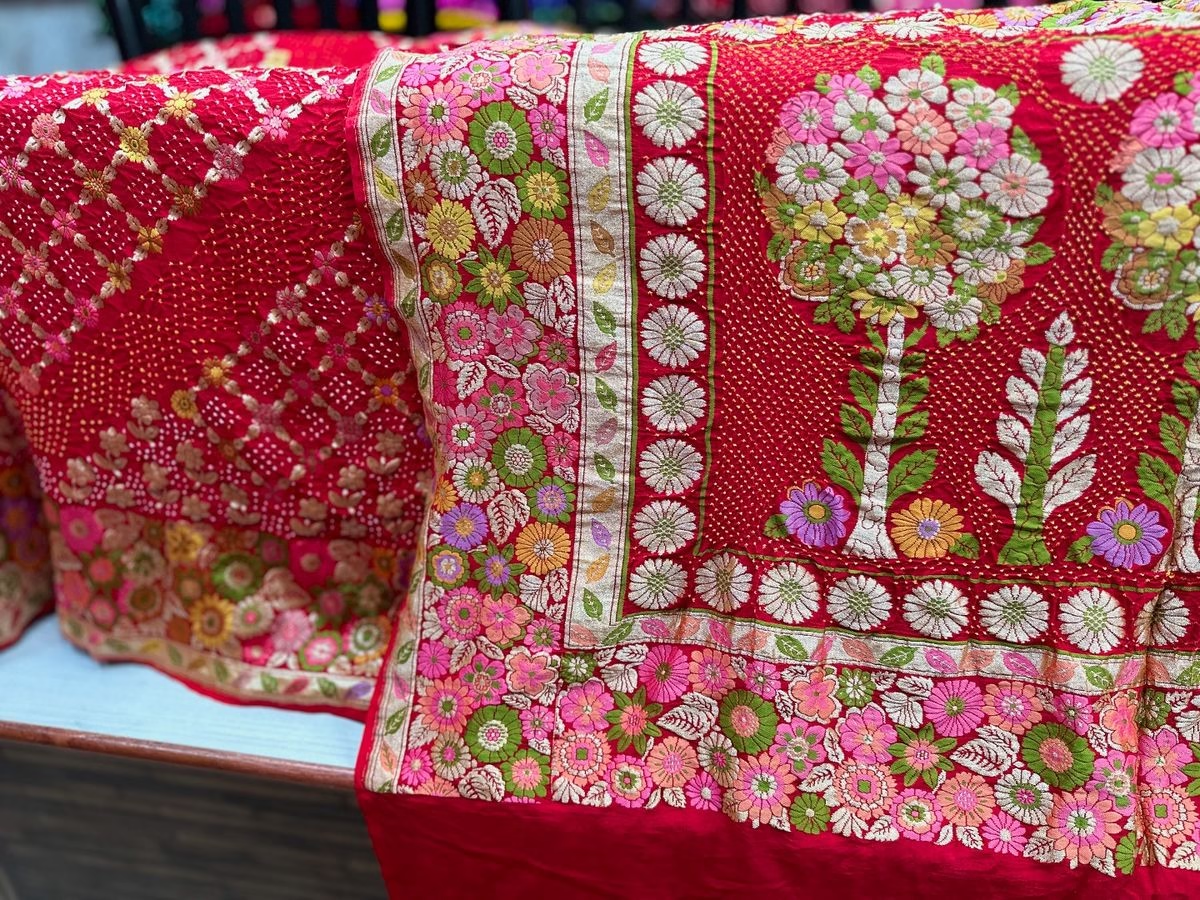
Hello, lovely readers! 🌸 Welcome to today’s colorful journey into the world of Bandhani Art, the age-old tie-and-dye art from the vibrant land of Gujarat. Imagine a plain white fabric turning into a burst of reds, yellows, and greens, each dot and swirl telling its own story.
That’s the charm of Bandhani! It’s not just a craft; it’s a celebration of patience, precision, and tradition passed down through generations. From royal attire to festive wear, Bandhani has woven its magic into every fold of Gujarati culture.
🧵 Historical Journey of Bandhani
The story of Bandhani Art stretches back over 5,000 years, making it one of India’s oldest textile art forms. Its earliest evidence is found in the ancient paintings of Ajanta caves and the relics of the Indus Valley Civilization, where small dotted patterns on cloth resembled the tie-and-dye technique.
Over centuries, Bandhani flourished under royal patronage in Gujarat and Rajasthan, where it became a mark of cultural pride and identity. Gujarati merchants and artisans carried this craft across trade routes, spreading its fame far beyond India’s borders. The term “Bandhani” comes from the Sanskrit word ‘Bandh’, meaning “to tie,” perfectly describing the technique that gives this art its life.
Traditionally worn during weddings and festivals, Bandhani cloth symbolized joy, prosperity, and good fortune. From the regal courts of Kutch to modern fashion ramps, Bandhani’s timeless beauty continues to weave stories of Gujarat’s rich heritage.
🌺 The Cultural Essence of Bandhani in Gujarat

🎉 A Celebration Woven in Fabric
- Bandhani Art is not just a textile art in Gujarat — it’s a part of life, emotion, and tradition.
- Every fold and tie carries a story of joy, faith, and festivity.
- From weddings to festivals like Navratri and Diwali, Bandhani outfits light up Gujarat’s cultural landscape with color and meaning.
💍 Symbol of Love and Good Fortune
- In Gujarati weddings, Bandhani sarees and dupattas are symbols of good luck and new beginnings.
- Brides often wear red or maroon Bandhani, believed to bring prosperity and happiness.
- The intricate dots and patterns are seen as blessings woven into the fabric — protecting and guiding the wearer.
👩🦱 Every Color Speaks a Feeling
- Each color in Bandhani Art has emotional significance:
- Red stands for love and strength.
- Yellow symbolizes happiness and spiritual purity.
- Green expresses growth and fertility.
- Black and maroon represent power and mystery.
- Red stands for love and strength.
- These colors are not chosen randomly — they connect to the life stages, moods, and occasions of Gujarati people.
🏡 Pride of Regional Identity
- Bandhani Art is deeply rooted in the regions of Kutch, Jamnagar, and Bhuj, where every family has its own style and pattern.
- The craft preserves the regional identity of Gujarat, linking generations through a shared artistic heritage
🧵 The Materials Used in Bandhani Art
Bandhani Art is not just about colors — it’s about connection, tradition, and patience. Every thread, every knot, and every dye drop tells a story. Let’s take a closer look at what goes into making this timeless craft so special.
🌸 1. Base Fabric: The Canvas of Color
- Cotton and Silk are the most commonly used materials for Bandhani.
- Cotton gives a soft, breathable texture ideal for daily wear, while silk brings out a shiny, festive elegance.
- Other fabrics like georgette, chiffon, and muslin are also popular choices today, especially in modern fashion.
- The fabric must be light and fine-textured, so it can easily absorb colors during dyeing.
🪡 2. Thread: The Tie that Binds
- Cotton or nylon threads are used to tie tiny portions of the fabric before dyeing.
- These threads are tied so tightly that the tied areas resist the dye, creating the famous dotted patterns once untied.
- The more knots tied, the finer and more detailed the design.
🎨 3. Natural and Synthetic Dyes
- Traditionally, Bandhani Art used natural dyes made from plants, flowers, and minerals.
- For example:
- Red from madder root,
- Yellow from turmeric,
- Blue from indigo,
- Green from a mix of turmeric and indigo.
- Red from madder root,
- For example:
- Today, artisans also use synthetic dyes for brighter, longer-lasting colors that meet modern fashion demands.
💧 4. Tools and Accessories
- Needles or wooden sticks help pick up small portions of cloth for tying.
- Bowls and large pots are used for preparing dye baths.
- Drying ropes and wooden frames are used for spreading out the dyed fabric under the sun.
🎀 The Steps of Making Bandhani Art
Creating Bandhani Art is a labor of love — every stage demands skill, patience, and imagination. Let’s unfold how a plain white fabric turns into a masterpiece of color and dots.

✋ 1. Designing and Marking the Pattern
- First, the artisan draws light pencil marks on the fabric to guide where knots will be tied.
- Traditional designs are inspired by nature — flowers, leaves, waves, and celestial shapes.
- The pattern layout decides the story the Bandhani will tell — simple dots for casual wear or intricate motifs for bridal sarees.
🔗 2. Tying the Knots (Bandhan)
- Small portions of the fabric are pinched and tightly tied with thread.
- Each knot is called a “bindi” or “boond”, and hundreds or even thousands of them can appear on one piece.
- This is where Bandhani gets its name — from the Sanskrit word “bandh,” meaning to tie.
- Skilled artisans often work without stencils, tying purely from experience and memory.
💦 3. Dyeing the Fabric
- The tied fabric is dipped in dye baths — usually starting from lighter shades to darker ones.
- After each dyeing round, the fabric is dried and re-tied if multiple colors are needed.
- The tied portions resist the dye, keeping those parts white or lightly shaded.
🌞 4. Drying and Untying
- Once dyed, the fabric is spread out under the sun to dry naturally.
- After drying, the threads are carefully removed, revealing the beautiful dotted designs underneath.
- The moment of untying is magical — artisans finally see the hidden pattern they imagined!
🧺 5. Washing and Finishing
- The fabric is gently washed to remove extra dye, then ironed or steamed for smoothness.
- Finally, it is folded and ready for use — as sarees, dupattas, stoles, or even modern garments like scarves and handbags.
✨ Symbols and Motifs in Bandhani Art

Bandhani Art is not just a tie-and-dye technique — it’s an ancient language of dots, folds, and colors that speak of faith, love, and nature. Every pattern created by the skilled hands of Gujarati artisans tells a story, often passed down through generations. Let’s unfold the beauty behind these timeless symbols and motifs that make Bandhani Art so enchanting.
🌼 1. The Soul of Bandhani: Meaning Behind the Dots
- “Bindi” — The Sacred Dot:
The word Bandhani comes from the Sanskrit word ‘Bandh’ meaning “to tie.” Each tiny knot tied on the fabric becomes a dot — called bindi — symbolizing life, creation, and eternity. - Circle of Life:
Circular patterns in Bandhani represent wholeness and balance. They echo the cycles of nature — birth, growth, and renewal — which are central to Indian philosophy. - Spiritual Connection:
The repeated dots are believed to bring good fortune and ward off evil, especially in festive garments and wedding attire.
💮 2. Nature’s Inspiration: Flowers, Leaves, and Waves
- Floral Motifs (Phool or Pushp):
Flowers are one of the oldest designs in Bandhani Art. They symbolize beauty, purity, and prosperity. A Bandhani sari covered in flower-like patterns mirrors the vibrant gardens of Gujarat. - Leaf and Vine Motifs:
Representing growth and fertility, leaf patterns (known as pankhri) often run along the borders of dupattas or odhnis, signifying nature’s endless energy. - Wave or Jaal Motifs:
The flowing, net-like designs in Bandhani reflect rivers, rainfall, and the flow of life — making them perfect for festive and celebratory wear.
🌸 3. Sacred and Symbolic Designs of Faith
- Mandala Patterns:
Inspired by sacred geometry, Bandhani mandalas symbolize the universe and spiritual harmony. These motifs often appear on garments worn during pujas or rituals. - Trishul and Kalash Motifs:
Drawn from Hindu symbolism, the trishul represents divine power and protection, while the kalash signifies abundance and well-being. - Dots in Sacred Numbers:
Artisans often tie knots in auspicious numbers like 3, 5, or 7, each representing divine balance and luck in traditional belief systems.
🕊️ 4. Symbols of Daily Life and Community Spirit
- Elephant (Haathi):
The elephant motif is a symbol of strength, wisdom, and good luck — often used in bridal Bandhani sarees to wish the wearer a prosperous life ahead. - Peacock (Mor):
The peacock, a symbol of beauty and grace, is woven into the fabric through clever dot arrangements. It represents joy and celebration, especially during festivals. - Mango (Keri):
The mango design, one of the most loved motifs in Gujarati Bandhani, stands for fertility, sweetness, and love — essential themes in Indian culture.
💫 5. Geometric Magic: Order in Art
- Square (Chowkadi or Leheriya Grid):
Squares represent stability and discipline in Bandhani Art. When repeated in a pattern, they bring a sense of structure — both in design and meaning. - Diamond (Chowka or Kankari):
Diamonds denote prosperity and clarity. They are commonly seen on Bandhani turbans and stoles, symbolizing pride and success. - Star (Tara):
Stars shine as a sign of guidance and hope. In Bandhani designs, the tara motif reflects aspirations, dreams, and a bright future.
🧵 6. Colors that Speak with the Motifs
In Bandhani Art, color combinations are as meaningful as the motifs themselves:
- Red: Symbolizes love, marriage, and fertility — most bridal Bandhani sarees use red as their base.
- Yellow: Represents purity, sunshine, and new beginnings.
- Green: Stands for harmony, growth, and peace.
- Black and Blue: Often used sparingly to create contrast, symbolizing protection and strength.
Each color enhances the motif’s meaning, turning a simple piece of cloth into a story of emotions and beliefs.
🌺 7. The Living Language of Tradition
Every symbol in Bandhani Art acts as a bridge between the artisan’s imagination and the wearer’s heart. These motifs are not printed or painted — they are tied and dyed with care, by hand, each knot holding both artistic precision and emotional depth.
When you hold a Bandhani dupatta or saree, you’re not just holding fabric — you’re holding centuries of culture, prayers, and dreams beautifully woven into art.
🧶 Bandhani in Today’s World: Trends and Statistics

Bandhani Art, once a humble craft from the heart of Gujarat, has now taken center stage in the global textile scene. Let’s explore how this centuries-old tie-and-dye tradition continues to evolve, inspire, and thrive in today’s modern world.
🌸 1. Bandhani Art in Contemporary Fashion
- Designer Revival: Indian designers like Anita Dongre, Ritu Kumar, and Abu Jani Sandeep Khosla have reinvented Bandhani Art for contemporary couture.
- Fusion Fashion: Bandhani patterns are now seen in scarves, handbags, jackets, and even sneakers — blending tradition with urban chic.
- Celebrity Endorsement: From Bollywood red carpets to global fashion events, Bandhani-inspired outfits symbolize a proud Indian aesthetic.
- Sustainable Appeal: With a growing global shift toward slow fashion, Bandhani Art stands out as a handwoven, eco-friendly alternative to mass-produced textiles.
🪷 2. Bandhani Art in Global Markets
- Export Growth: Gujarat remains the hub, exporting Bandhani fabrics and products to countries like the U.S., U.K., Japan, and UAE.
- Market Value: As per recent handicraft export reports, Bandhani-based textiles contribute significantly to India’s ₹32,000 crore handloom export sector.
- International Demand: Bandhani Art has gained recognition in high-end fashion markets, especially for its unique texture and intricate handwork.
- Online Expansion: E-commerce platforms like Etsy, FabIndia, and Jaypore have made Bandhani products accessible to a global audience.
🌍 3. Urban and Youth Appeal
- Modern Relevance: The younger generation now sees Bandhani as “cool heritage,” pairing Bandhani dupattas with denim or using Bandhani backpacks.
- Craft Workshops: Cities like Ahmedabad, Jaipur, and Delhi host Bandhani Art workshops where people learn to tie, dye, and create their own patterns.
- Social Media Buzz: Instagram reels, sustainable fashion blogs, and influencer collaborations have amplified Bandhani’s presence across digital spaces.
📊 4. Bandhani Art by the Numbers
- Over 25,000 artisans in Gujarat and Rajasthan are directly involved in Bandhani production.
- The Kutch and Jamnagar regions account for nearly 70% of India’s Bandhani output.
- The export rate of Bandhani textiles has risen by nearly 20% in the last five years.
- Bandhani products make up around 12% of India’s total handloom exports.
🌸 Conclusion
Bandhani Art is not just a craft, it is the rhythmic heartbeat of Gujarat’s culture, woven with threads of devotion, patience, and heritage. Each tiny knot and vibrant hue tells a story of faith, festivity, and timeless beauty.
From royal attires to modern fashion runways, Bandhani Art continues to shine, blending tradition with innovation. Its rise from the deserts of Gujarat to global admiration proves that true art never fades, it only evolves.
Preserving this legacy means celebrating the artisans who breathe life into every dot and dye. Bandhani Art, with its colorful soul and cultural depth, will forever remain India’s proud symbol of handmade excellence.
Also Read: The Role of Art in Indian Weddings: From Elegant Mandap Décor to Refined Invitation Cards

Leave a Reply