
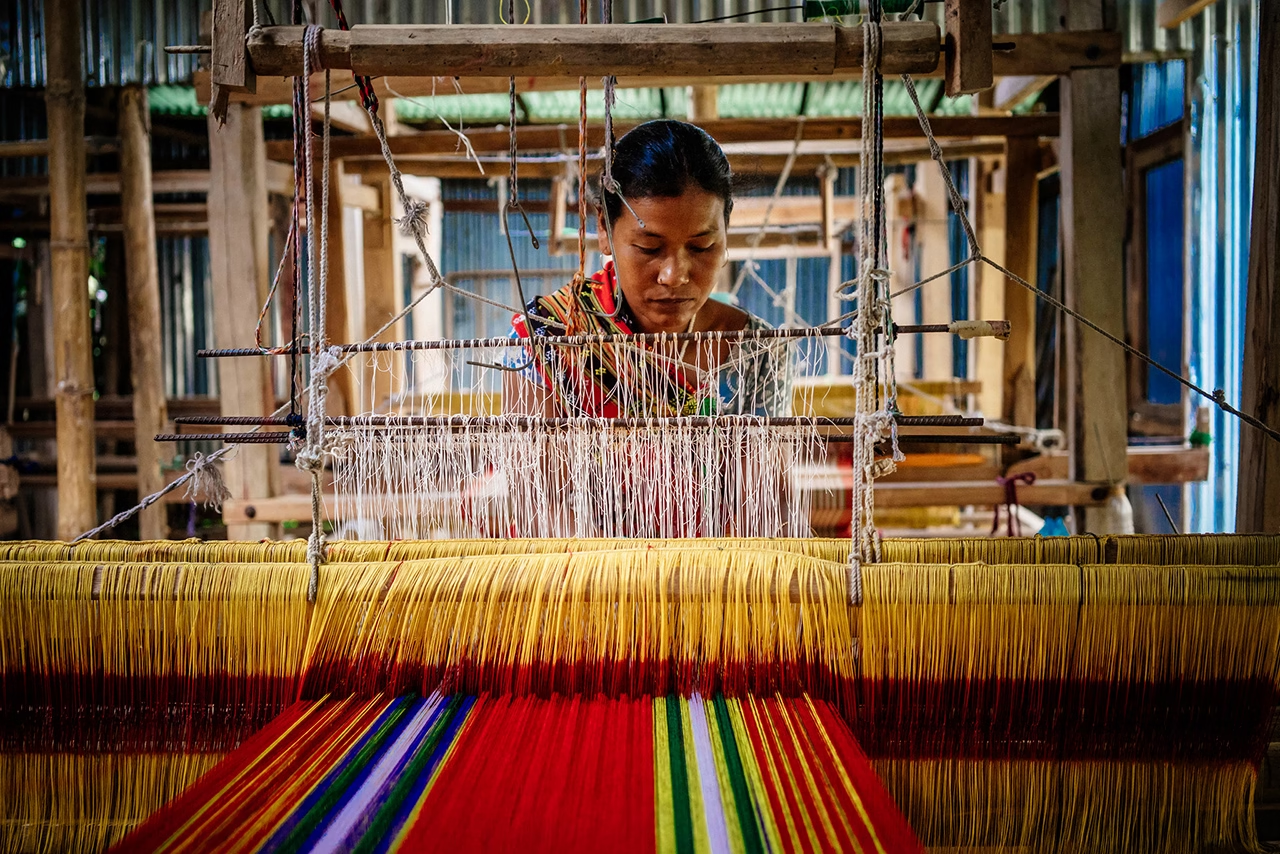
Hello folks! Have you ever looked at a beautifully woven saree and wondered about the hands that made it? Or thought about the centuries of knowledge behind those intricate patterns? Indian handloom is not just about cloth. It is a living story of communities, cultures, and incredible craftsmanship.
The national handloom sector in India is the second-largest employment provider in rural areas. Over 4.3 million handloom households depend on this craft. Each region has its own unique techniques, motifs, and materials. From the double-ikat silks of Gujarat to the gossamer muslins of Bengal, Indian handloom spans the full spectrum of textile art.
Today, we’re taking you on a journey across India. We’ll explore the most iconic handloom traditions, their history, techniques, and the artisans keeping them alive. Let’s dive into the colorful world of Indian handloom and discover why national handloom traditions are so vital to our cultural heritage!
The Heart of Indian Handloom Heritage
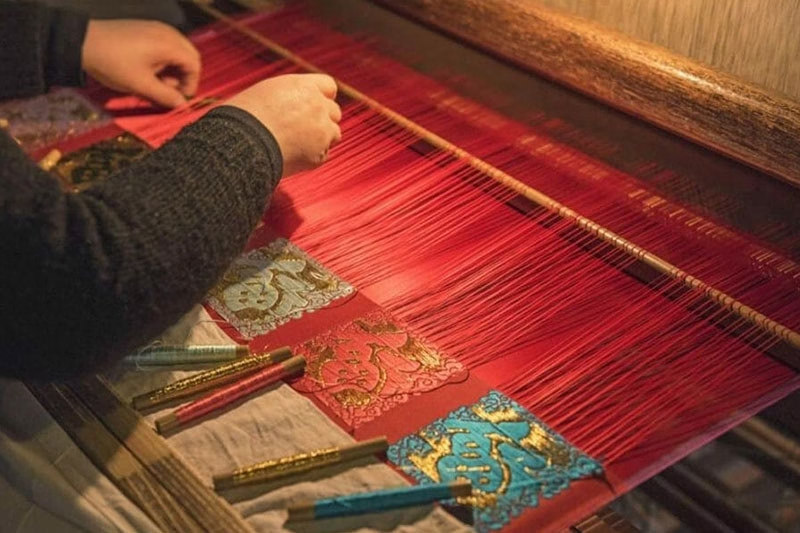
Indian handloom has always been more than just fabric. It is a form of language. Motifs act like symbols, colors carry emotion, and weaving techniques follow rules as precise as grammar. Together, they form a living archive of India’s cultural diversity. Each Indian handloom tradition tells a unique story of its people, geography, and history.
The national handloom industry plays a significant role in the Indian economy. It contributes to 11-15% of cloth production in the country. Research shows that “handloom,” “textile industry,” and “India” are the most commonly used keywords in studies on this sector. This reflects the enormous scale and importance of Indian handloom traditions.
A Brief History of Indian Handloom
The history of Indian handloom is as old as Indian civilization itself. Archaeological evidence from the Indus Valley Civilization (c. 2500 BCE) shows that cotton was cultivated and woven in India. Indian handloom traditions have evolved over millennia, absorbing influences from trade, migration, and cultural exchange.
Key Milestones in Indian Handloom History:
- Indus Valley Civilization (c. 2500 BCE): Cotton cultivation and weaving
- Mauryan Period (c. 300 BCE): References to fine muslin and silk
- Gupta Period (c. 400 CE): Export of Indian textiles to Rome and China
- Mughal Era (1526-1857): Patronage of textile arts, introduction of Persian motifs
- Colonial Era (1757-1947): British rule devastated Indian handloom traditions
- Post-Independence (1947 onwards): Revival efforts and government support
- 21st Century: Global recognition, GI tags, and sustainable fashion movement
National handloom traditions have been exported for centuries. Roman historians wrote about the fine muslins of Bengal. Chinese travelers marveled at the silks of South India. The ancient Silk Road connected Indian weavers to markets as far as Rome and China. This global reach of Indian handloom continues today.
Types of Handlooms in India
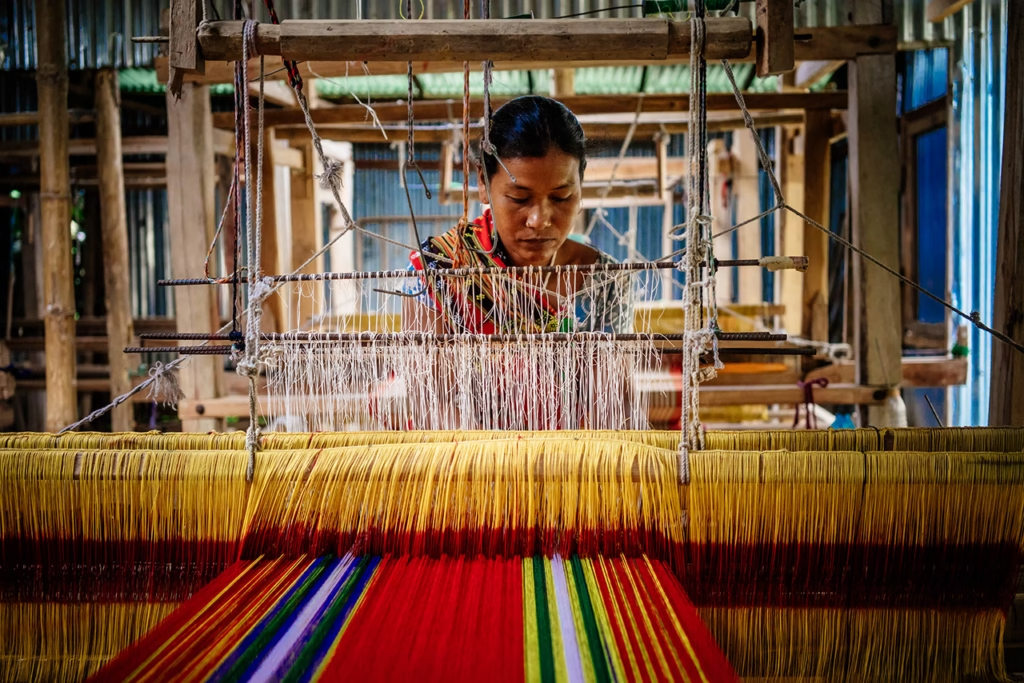
Indian handloom traditions use various types of looms, each with its own characteristics and regional significance. The 4th All India Handloom Census (2019-20) recorded 28.2 lakh handlooms across India, with 25.2 lakh in rural areas and 2.9 lakh in urban areas.
Pit Looms
Pit looms are the most common type of handloom in India. They are called pit looms because the weaver sits in a pit dug into the ground, with the loom positioned at ground level. This allows the weaver to use their legs to work the pedals that raise and lower the warp threads.
Key Statistics:
- 41.7% of rural looms are pit looms
- 53.1% of urban looms are pit looms
- 67.3% of all pit looms are fitted with Dobby or Jacquard mechanisms
- Weavers themselves own 42.2% of pit looms
How They Work:
The weaver sits in the pit, using foot pedals to control the shedding motion. The warp threads are stretched horizontally, and the weft is passed through using a shuttle. Pit looms can produce a wide range of fabrics, from simple cotton sarees to intricate silk brocades.
Regional Significance:
Pit looms are particularly common in Tamil Nadu, West Bengal, Andhra Pradesh, and Uttar Pradesh. In Uttar Pradesh, 94.7% of looms are used for fully commercial production.
Frame Looms
Frame looms are the second most common type of handloom. Unlike pit looms, frame looms are self-contained units that can be placed anywhere. They are particularly popular among master weavers because they are portable and easier to maintain.
Key Statistics:
- 31.8% of rural looms are frame looms
- 30.2% of urban looms are frame looms
- 32.6% of frame looms are fitted with Dobby or Jacquard mechanisms
- Master weavers prefer frame looms (55%) over other types
- Non-households have 32.5% frame looms
How They Work:
Frame looms have a wooden frame that holds the warp threads. The weaver operates the shedding mechanism using foot pedals or hand levers. Frame looms are often used for producing lighter fabrics and can be easily moved from one location to another.
Advantages:
- Portable and easy to set up
- Suitable for smaller spaces
- Easier to maintain and repair
Loin Looms
Loin looms, also known as backstrap or body tension looms, are one of the oldest types of handloom. They are particularly prevalent in the northeastern states of India.
Key Statistics:
- 15.3% of rural looms are loin looms
- Less than 6% of urban looms are loin looms
- 4.05 lakh power looms across India
How They Work:
The weaver sits on the floor with the loom strapped to their back or waist. The warp threads are stretched between the weaver’s body and a fixed point, such as a post or tree. The tension is controlled by the weaver’s body movements. This simple yet versatile loom allows for unlimited design possibilities.
Regional Significance:
Loin looms are most commonly found in the North-Eastern states, particularly in Assam, Meghalaya, and Nagaland. They are used to produce traditional fabrics like Mekhla Chador and other tribal textiles.
Advantages:
- Simple construction, mostly made from bamboo
- Easily portable
- Offers unlimited design possibilities
- Environmentally friendly
Other Looms
Approximately 11.2% of rural looms and other types of looms are used across India. These include specialized looms for specific fabrics and techniques.
Distribution of Looms by Purpose of Usage
The 4th All India Handloom Census provides detailed data on how looms are used across the country:
| Purpose | Number of Working Looms (Lakh) | Distribution (%) | Rural Share (%) |
|---|---|---|---|
| Commercial | 6.25 | 29.9 | 71.9 |
| Domestic | 8.94 | 42.7 | 97.2 |
| Both Domestic and Commercial | 5.72 | 27.4 | 90.2 |
| Total | 20.91 | 100.0 | 87.7 |
Key Insights:
- 42.7% of looms are used solely for domestic purposes, with 97.2% located in rural areas
- 29.9% of looms are used for commercial production
- 27.4% of looms serve both domestic and commercial purposes
- Outside the North-East, 81.5% of looms are used for commercial production
Distribution of Looms by Type of Yarn Used
The type of yarn used in Indian handloom varies significantly across the country:
| Type of Yarn | Number of Working Looms (Lakh) | Distribution (%) | Rural Share (%) |
| Mill Spun Yarn | 19.44 | 93.0 | 88.4 |
| Hand-spun Yarn | 1.47 | 7.0 | 79.6 |
| Total | 20.91 | 100.0 | 87.7 |
Key Insights:
- 93% of household looms operate with mill-spun yarn
- Only 7% of looms use hand-spun yarn, supporting the Khadi program.
- Two states emerge as special cases for hand-spun yarn usage:
- Tamil Nadu: 30.1% of looms use hand-spun yarn
- Karnataka: 24.4% of looms use hand-spun yarn
Major Fabrics Produced on Indian Handloom
The national handloom sector produces a diverse range of fabrics. Here are the major categories based on the 4th All India Handloom Census:
| Fabric Type | Weaver Households Producing (%) | Approximate Number of Households (Lakh) |
| Shawls, Mekhla Chadars, Stoles, Scarves, Mufflers | 26.7% | 7.97 |
| Gamcha (Thin Cotton Towel) and Mekhla-Chaddar | 22.9% | 6.83 |
| Angavastram, Dhoti, Sarong, Lungi | 19.5% | 5.80 |
| Sarees | 16.5% | 4.91 |
Key Insights:
- Shawls and traditional Assamese dress (Mekhla Chadder) are the most commonly produced fabrics
- Gamcha (thin cotton towel) is a major fabric produced on household looms
- Sarees continue to be a significant product, with 16.5% of weaver households producing them
The Great Handloom Traditions of India
Let’s explore the most iconic Indian handloom traditions in detail. Each represents a unique weaving heritage passed down through generations and is a proud part of our national handloom legacy.
Patola – The Double-Ikat Masterpiece of Gujarat
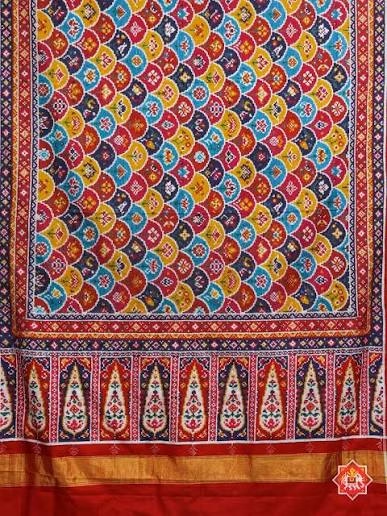
Patola weaving originated in Patan, Gujarat. This handloom tradition has a 700-year history and uses the complex double ikat technique. The design is dyed into both the warp and weft threads before weaving even begins. The result is vibrant geometric patterns that are perfectly aligned. As a national handloom treasure, Patola represents the pinnacle of ikat weaving.
Key Features of Patola:
- Double ikat technique – the most complex weaving method
- Vibrant geometric and floral patterns
- Takes six months to a year to weave one saree
- Made from pure silk with natural dyes
This Indian handloom tradition was traditionally worn by royalty. Patola sarees are considered auspicious and are often passed down as heirlooms. Even today, they remain highly preferred among fashion enthusiasts.
Jamdani – The Woven Air of Bengal
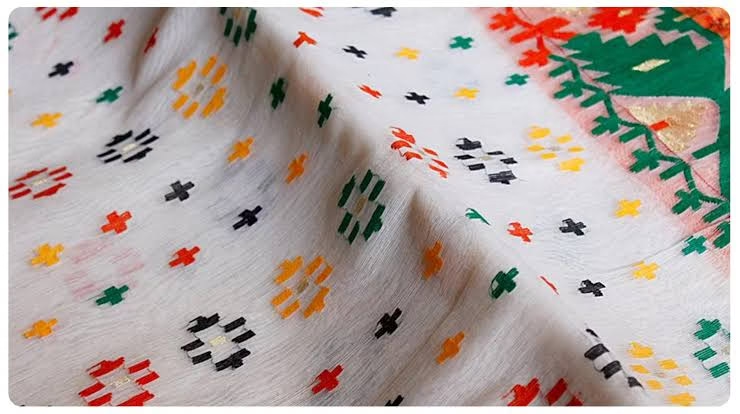
Jamdani is a heritage weaving tradition made of fine muslin adorned with double weft designs. It reached its peak under Mughal emperor Jahangir’s reign (1605-1627). This handloom tradition from Bengal is considered one of the finest Indian handloom creations ever made.
Key Features of Jamdani:
- Sheer muslin fabric with intricate floral motifs
- Motifs added separately by hand using bamboo sticks
- Takes three to six months to weave one saree
- Follows a graph paper pattern placed underneath the warp
In 2013, UNESCO inscribed Jamdani weaving on the Representative List of the Intangible Cultural Heritage of Humanity. This recognition highlights the global importance of this Indian handloom tradition.
Banarasi – The Language of Regal Eloquence
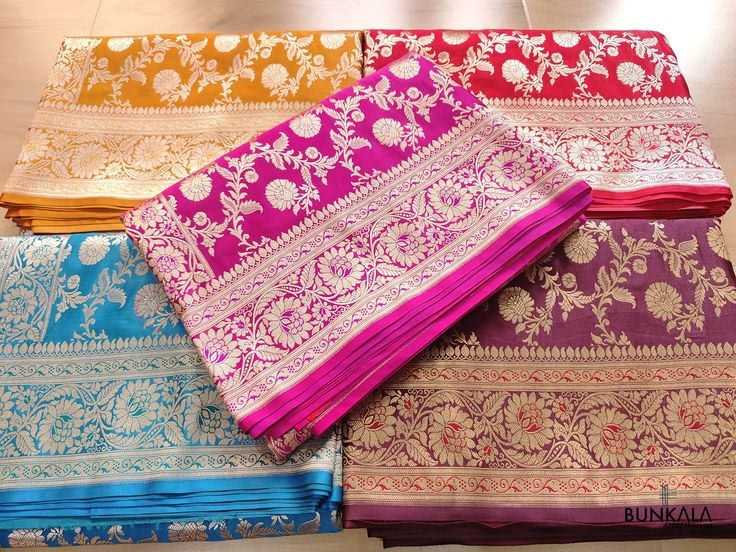
Banarasi sarees from Varanasi are synonymous with opulence. This handloom tradition is crafted in silk and adorned with gold and silver zari. They feature Mughal-inspired motifs such as florals and jaal patterns. They communicate tradition, devotion, and centuries of craftsmanship rooted along the Ganges.
Key Features of Banarasi:
- Pure mulberry silk with gold or silver zari
- Mughal-inspired motifs – florals, jaal patterns, meenakari work
- Most complex sarees take two weeks to six months to complete
- Body and border often woven separately and interlocked
Banarasi weaving dates back to the Mughal era. Skilled artisans were patronized by the Mughal emperors. This Indian handloom tradition continues to be the preferred choice for brides across India.
Chanderi – Whispered Verses in Silk
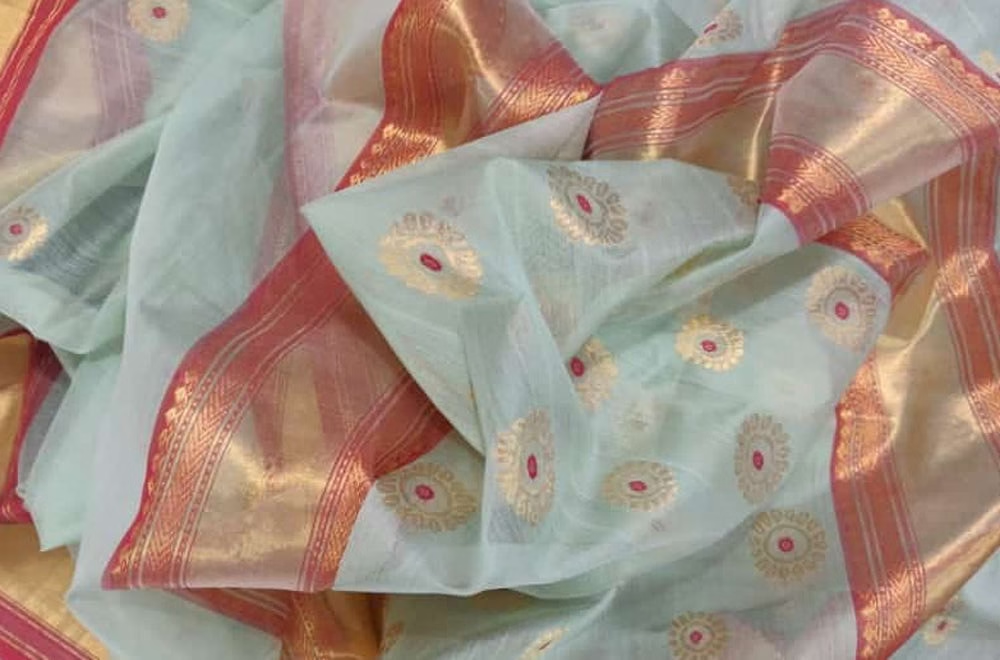
Chanderi sarees from Madhya Pradesh are known for their lightweight silk texture and subtle sheen. This handloom tradition was historically patronized by royalty. Motifs such as coins, florals, and peacocks reference regional stories and folklore.
Key Features of Chanderi:
- Sheer texture, lightweight drape, and subtle luminosity
- Traditional nalferma coin motifs and dandidar stripes
- Silk-cotton blend with a translucent quality
- Approximately 3,500 weaver families continue the tradition today
Chanderi sarees are believed to have been woven since the 2nd century. This Indian handloom tradition is a testament to the enduring appeal of handwoven fabrics.
Kanchipuram – The Grand Epic of the South
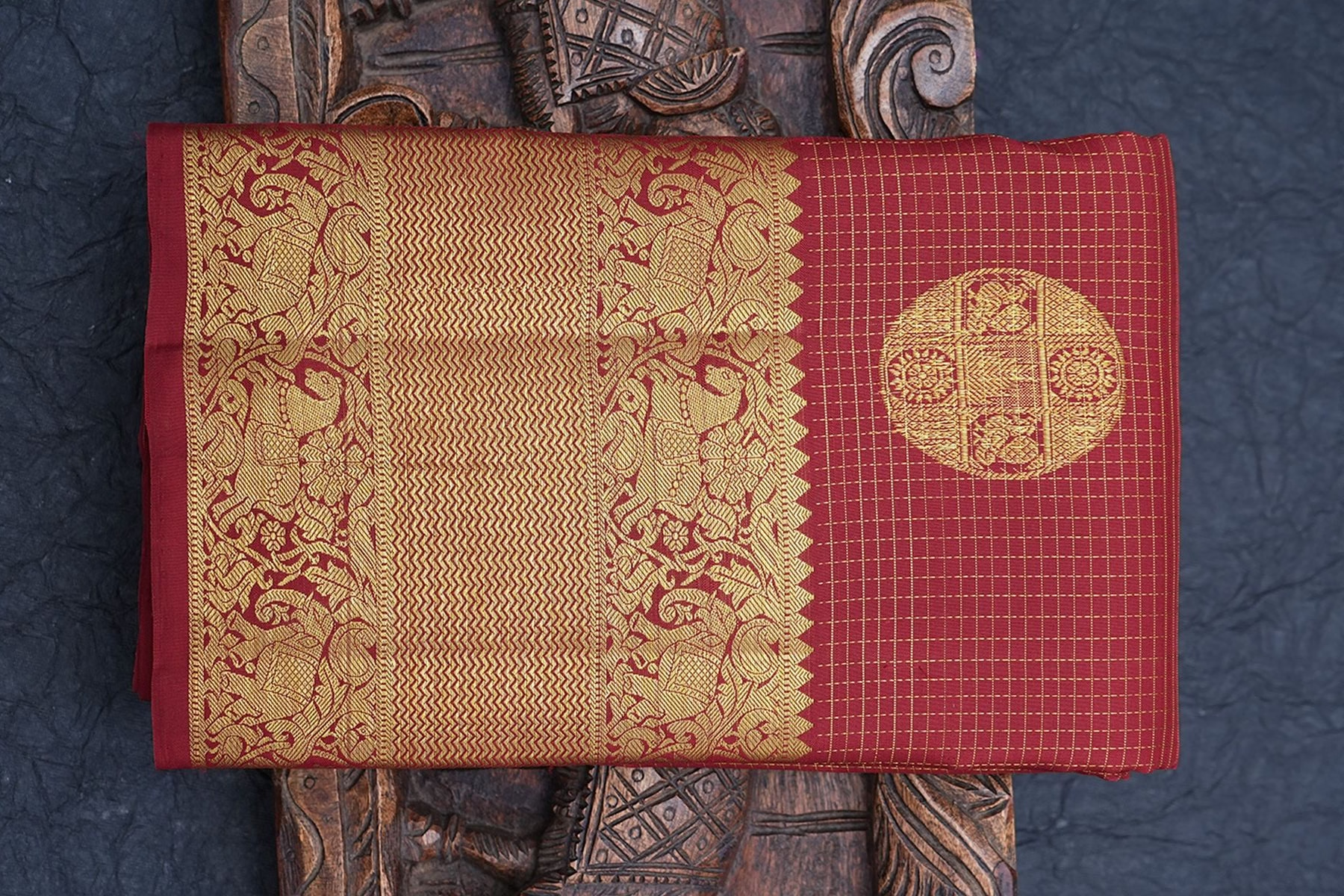
Kanjeevaram silk sarees from Tamil Nadu speak in bold, ceremonial tones. This handloom tradition is woven from pure mulberry silk and finished with rich gold zari. Motifs are inspired by temple architecture and mythology.
Key Features of Kanchipuram:
- Pure mulberry silk with gold or silver zari
- Motifs inspired by temple architecture and mythology
- Body and border often woven separately and interlocked
- Three days to several weeks per saree
This is as epic a textile as rich, expressive, and enduring. A bride’s trousseau is incomplete without a Kanchipuram saree. Among Indian handloom traditions, Kanchipuram represents the grandeur of South Indian weaving.
Ilkal – The 8th-Century Weave of Karnataka
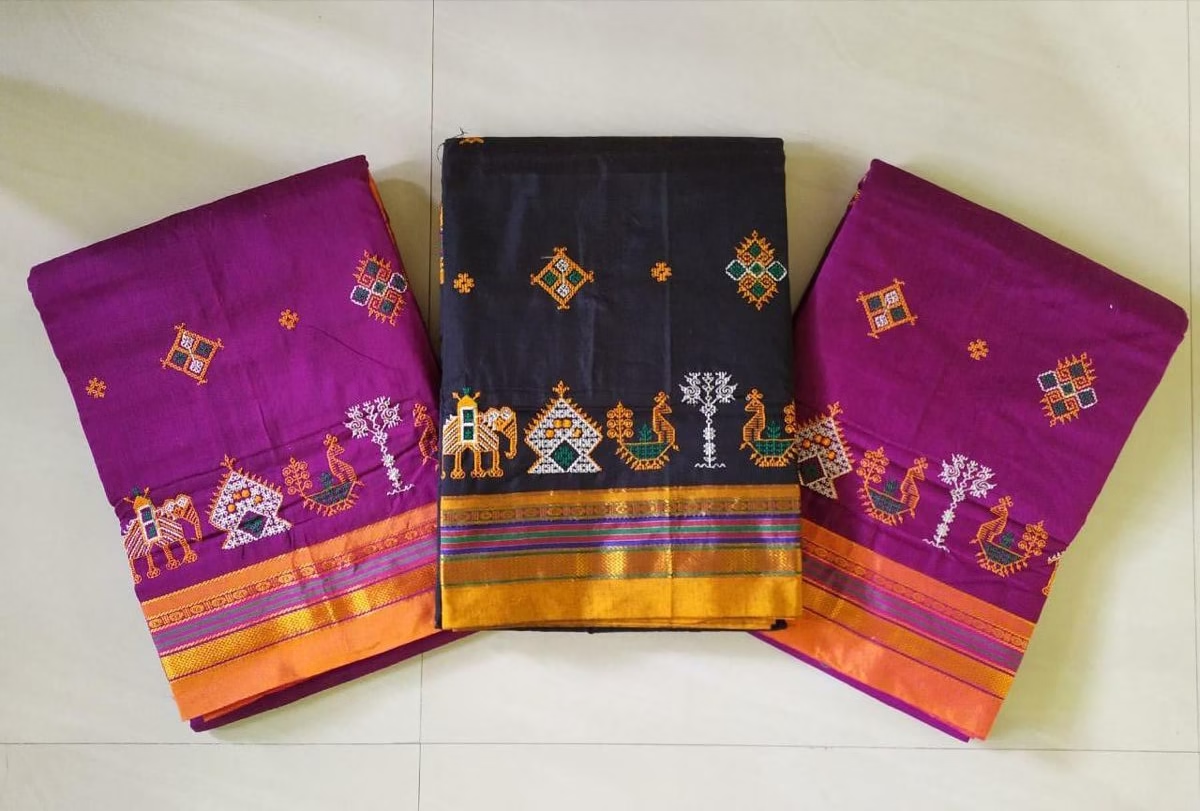
Ilkal originated in the Bagalkot region of Karnataka in the 8th century. This handloom tradition is known for its distinctive red borders and intricate motifs. It features the signature kondi technique, where two different sets of warp threads are joined seamlessly on the loom.
Key Features of Ilkal:
- Signature contrasting borders and bold silk pallu
- Uses the kondi technique—joining two warp sets seamlessly
- A red and white pallu creates an interesting offset to the fields
- Received its GI tag in 2007
This Indian handloom tradition faces challenges today. Younger generations wear traditional Ilkal saris only during festivals and on special occasions. Revival efforts are underway to contemporize Ilkal for young buyers.
Pochampally Ikat – The Rhythms of Telangana
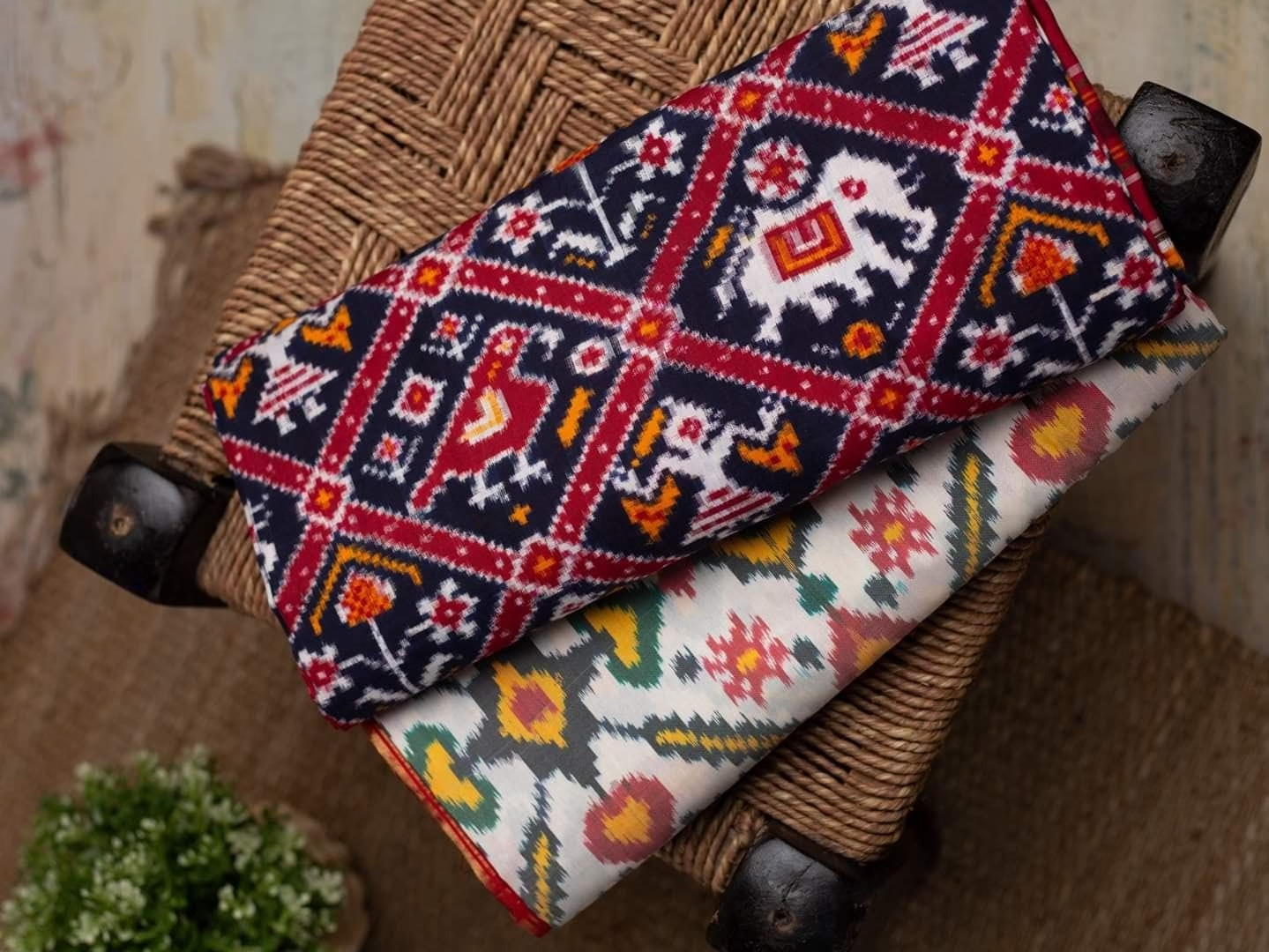
Pochampally Ikat from Telangana’s Nalgonda district is instantly recognizable for its sharp geometry and striking color contrasts. This handloom tradition reflects both precision and creativity. Patterns are inspired by local flora and folklore.
Key Features of Pochampally:
- Sharp geometry and striking color contrasts
- Ikat technique – pattern dyed before weaving
- Patterns inspired by local flora and folklore
- Pochampally was designated a UNESCO Creative City of Crafts
Sambalpuri – Odisha’s Tie-and-Dye Heritage
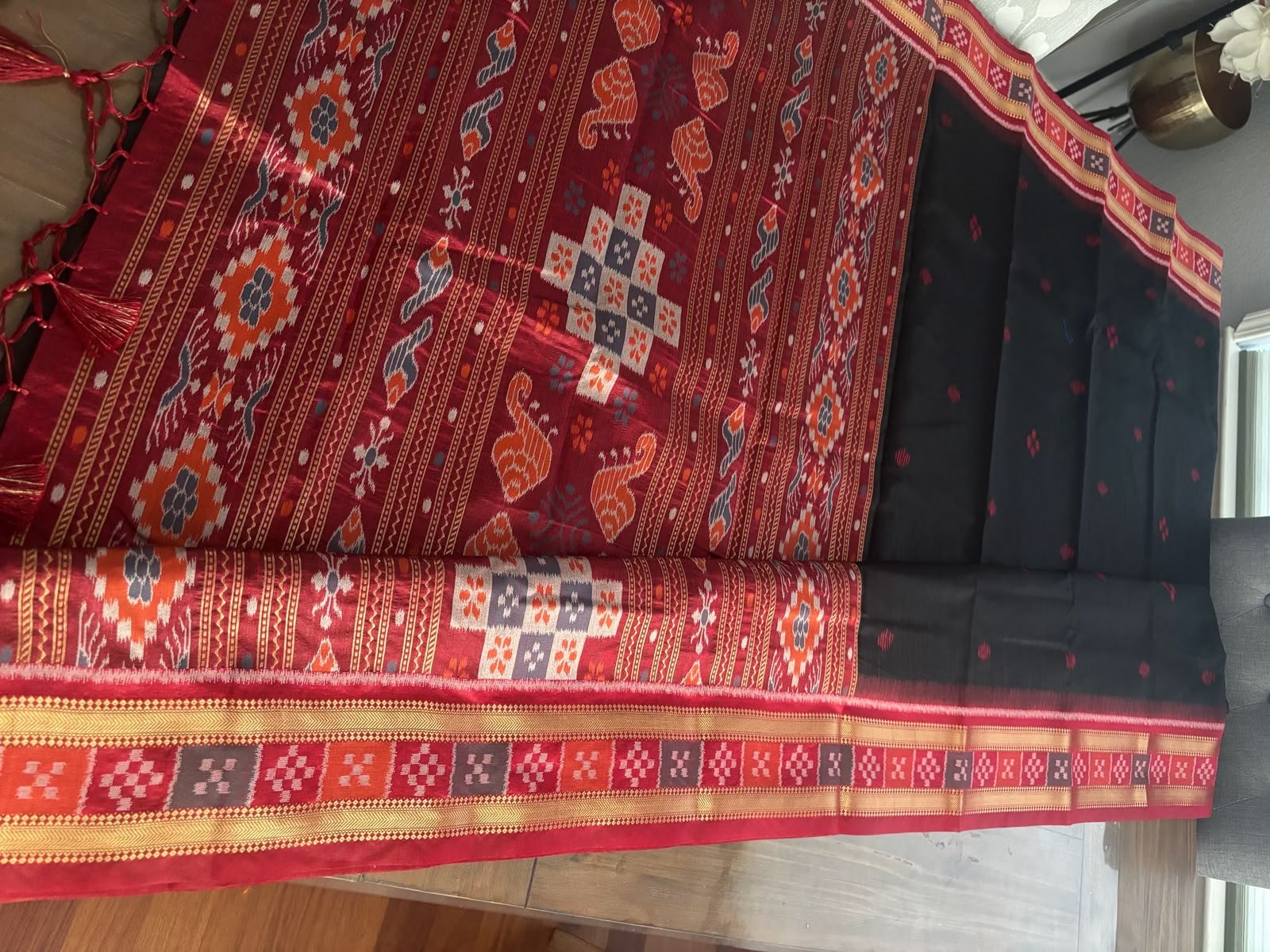
Barpali in Bargarh district has become synonymous with Odisha’s rich tie-and-dye handloom heritage. Known locally as Bandhakala, this detailed craft involves weaving intricate motifs on cotton and Tasar silk. Nearly 2,000 handlooms are active in the Barpali area alone.
Key Features of Sambalpuri:
- Tie-and-dye technique (Bandhakala)
- Intricate motifs on cotton and Tasar silk
- Nearly 2,000 handlooms active in Barpali area
- 23 weavers have received the National Handloom Award
Veteran artisan Khetramohan Meher, a recipient of both the National Handloom Award and Sant Kabir Award, has dedicated almost 70 years to advancing Sambalpuri weaving. This Indian handloom tradition is a proud part of our national handloom heritage.
Chikankari – Lucknow’s 400-Year-Old Embroidery
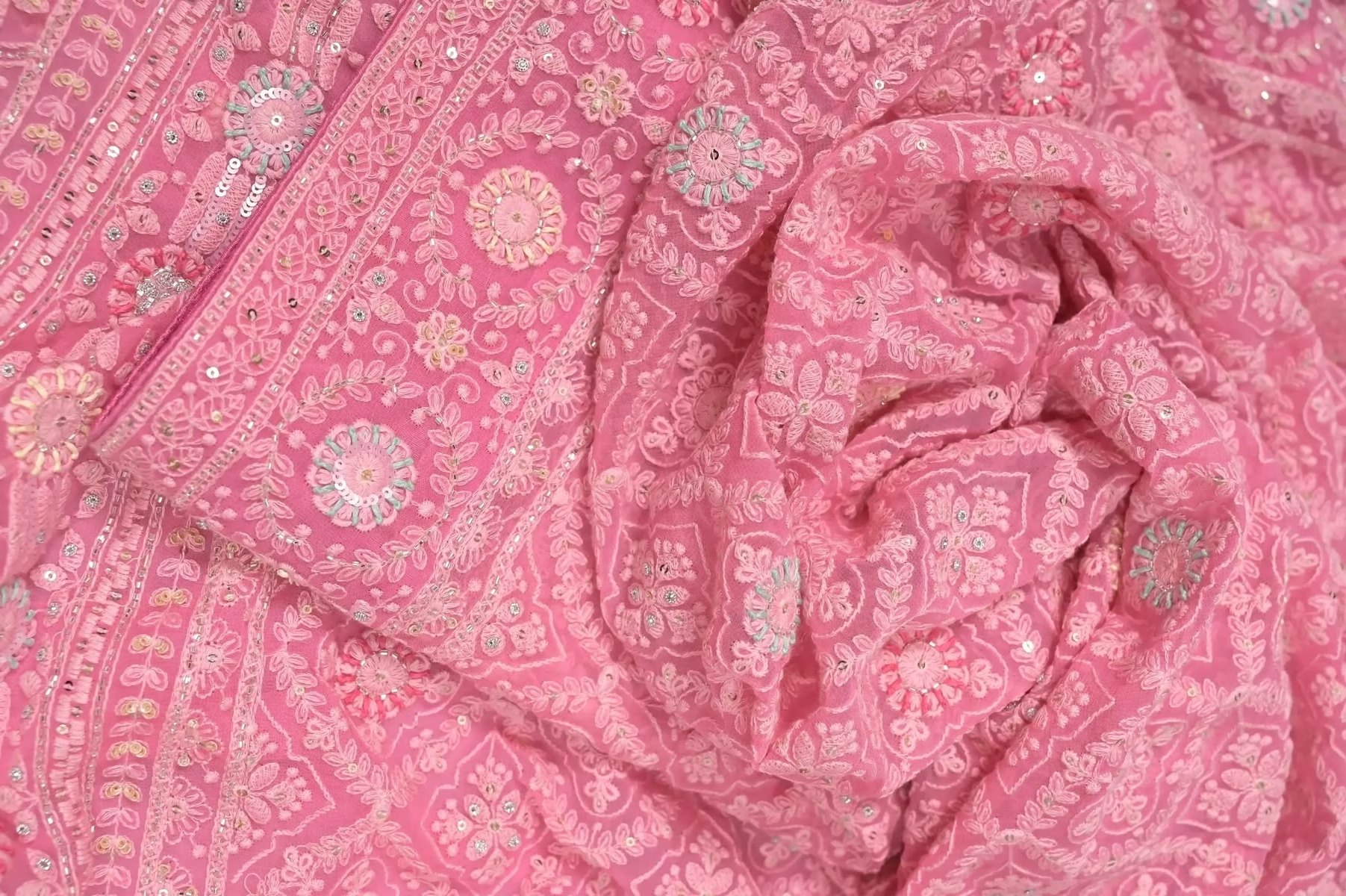
Chikankari is a 400-year-old hand-embroidery technique originating from Lucknow, India. It is characterized by intricate white thread work on lightweight fabrics like cotton, muslin, and silk. This handloom tradition uses 32 distinct stitch types. As a national handloom treasure, Chikankari represents the artistic heritage of Uttar Pradesh.
Key Features of Chikankari:
- 400-year-old hand-embroidery craft
- Uses 32 distinct stitch types
- Takes 3 to 7 days of handwork per garment
- Supports approximately 200,000 artisan families in Lucknow
Chikankari accounts for an estimated 65% of all hand-embroidered ethnic wear sold in India. Despite centuries-old origins, searches for “chikankari co-ord set” grew 142% year-over-year since 2023.
Summary Table – Indian Handloom Traditions
| Tradition | State | Technique | Time to Weave | GI Tag |
| Patola | Gujarat | Double ikat | 6-12 months | Yes |
| Jamdani | West Bengal | Double weft | 3-6 months | Yes |
| Banarasi | Uttar Pradesh | Zari brocade | 2 weeks – 6 months | Yes |
| Chanderi | Madhya Pradesh | Silk-cotton blend | 1-4 weeks | Yes |
| Kanchipuram | Tamil Nadu | Silk with zari | 3 days – 2 weeks | Yes |
| Ilkal | Karnataka | Kondi technique | 1-4 weeks | Yes (2007) |
| Pochampally | Telangana | Ikat | 1-4 weeks | Yes |
| Sambalpuri | Odisha | Bandhakala | 2-8 weeks | Yes |
| Chikankari | Uttar Pradesh | Hand embroidery | 3-7 days | Yes |
Quick Facts and Statistics
| Aspect | Details |
| Total handloom workers in India | 35.22 lakh |
| Women in handloom workforce | Over 72% |
| Rural handloom workers | Nearly 89% |
| Handloom contribution to cloth production | 11-15% |
| Handloom exports (FY 2024) | Over ₹21,000 crore |
| Handloom weaver households | Over 4.3 million |
| GI products in handloom sector | 104 products |
| Total working looms in India | 20.91 lakh |
| Looms using mill-spun yarn | 93% |
| Looms using hand-spun yarn | 7% |
| Rural looms using commercial production (outside NE) | 81.5% |
| Cash earnings per handloom worker per month | Approx. ₹9,500-₹20,000 |
FAQs
Q1. What is Indian handloom?
Indian handloom refers to the traditional craft of weaving cloth on hand-operated looms. It is one of India’s oldest industries, supporting over 35 lakh workers and contributing to 11-15% of cloth production.
Q2. What is the national handloom sector?
The national handloom sector encompasses all handloom weaving traditions across India. It is the second-largest employment provider in rural areas, with over 72% of its workforce being women.
Q3. What are the main types of handlooms in India?
The main types are pit looms (41.7% rural, 53.1% urban), frame looms (31.8% rural, 30.2% urban), and loin looms (15.3% rural). Pit looms are most common, especially in states like Tamil Nadu and Uttar Pradesh.
Q4. How much does the handloom sector contribute to Indian cloth production?
The handloom sector contributes to 11-15% of cloth production in India. India is the largest producer of handloom textiles in the world, with 95% of the world’s hand-woven fabric coming from India.
Q5. How many people are employed in the handloom sector?
The 4th All India Handloom Census (2019-20) recorded 35.22 lakh handloom workers, including 26.74 lakh weavers and 8.49 lakh allied workers. Women constitute over 72% of the total workforce.
Q6. Which Indian handloom traditions have UNESCO recognition?
Jamdani weaving was inscribed on UNESCO’s intangible cultural heritage list in 2013. Pochampally was designated a UNESCO Creative City of Crafts. Additionally, 104 handloom products have received GI tags.
Q7. What are the average earnings of a handloom weaver?
Artisan wages remain low, with an average of ₹270 per day across major handloom states. A Pochampally weaver reported earning approximately ₹9,500 per month for 10-12 hours of daily work. Over 50% of handloom units report financial constraints.
Q8. What is the Kondi technique in Ilkal weaving?
The Kondi technique is a unique weaving method used in Ilkal sarees from Karnataka. It involves joining two different sets of warp threads seamlessly on the loom, creating the signature contrasting borders of Ilkal sarees.
Q9. What is Bandhakala?
Bandhakala is the local name for the tie-and-dye technique used in Sambalpuri weaving in Odisha. It is a proud national handloom tradition known for its intricate motifs on cotton and Tasar silk.
Q10. How is the government supporting the handloom sector?
The government has provided direct market access to nearly 43 lakh weavers through 2,600+ exhibitions, generating over ₹1,700 crore in sales. Handloom exports have surged to over ₹21,000 crore, reaching 20+ countries. 104 handloom products have been secured under the GI Act.
Also Read:
Traditional Dresses of Gujarat

Leave a Reply