
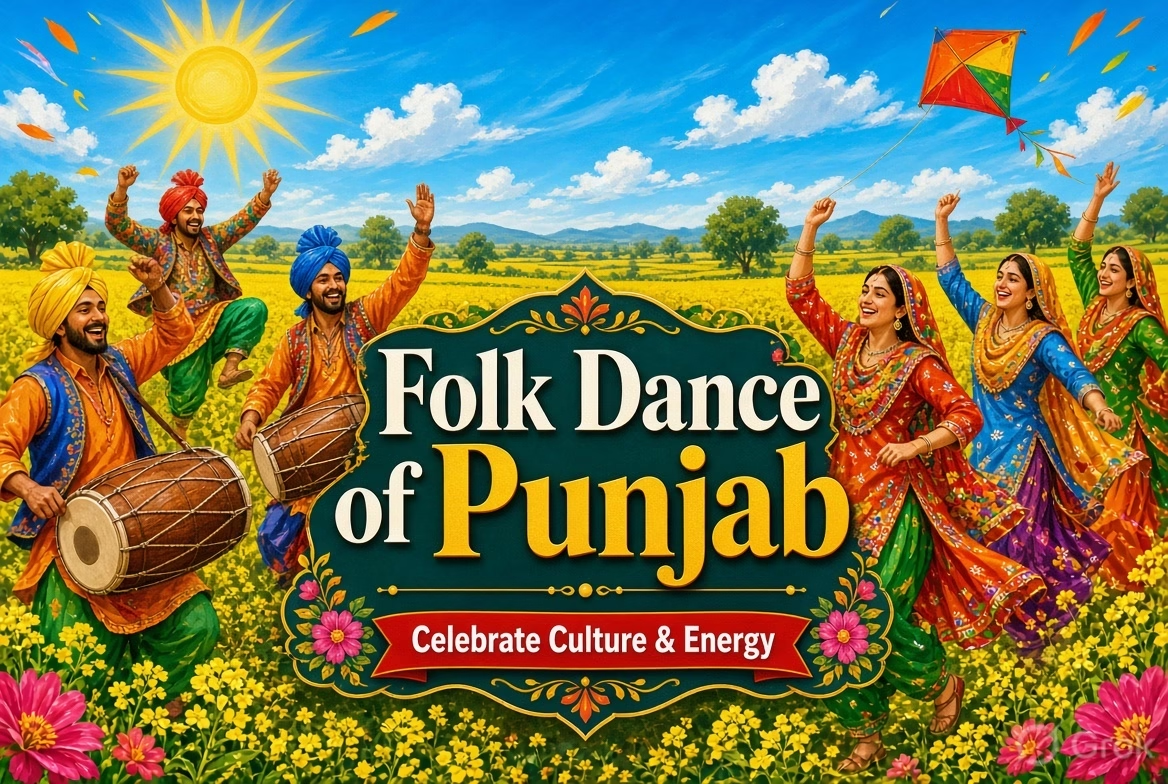
Hello folks! Imagine the beat of a dhol echoing across golden wheat fields. The air is filled with energetic shouts of “Balle Balle!” and colorful dancers spin with joy. Welcome to the vibrant world of the folk dance of Punjab.
Punjab is a land of celebrations. And its dances reflect that spirit perfectly. From the high-energy bhangra dance performed by men to the graceful giddha of women, every folk dance of Punjab tells a story. These dances are about harvest, love, and the sheer joy of living.
Today, we’re taking you on a journey through the most iconic folk dances of Punjab. We’ll explore their origins, how they are performed, what the dancers wear, and why these traditions continue to thrive. Let’s dive into the rhythm of Punjab!
The Heartbeat of Punjab
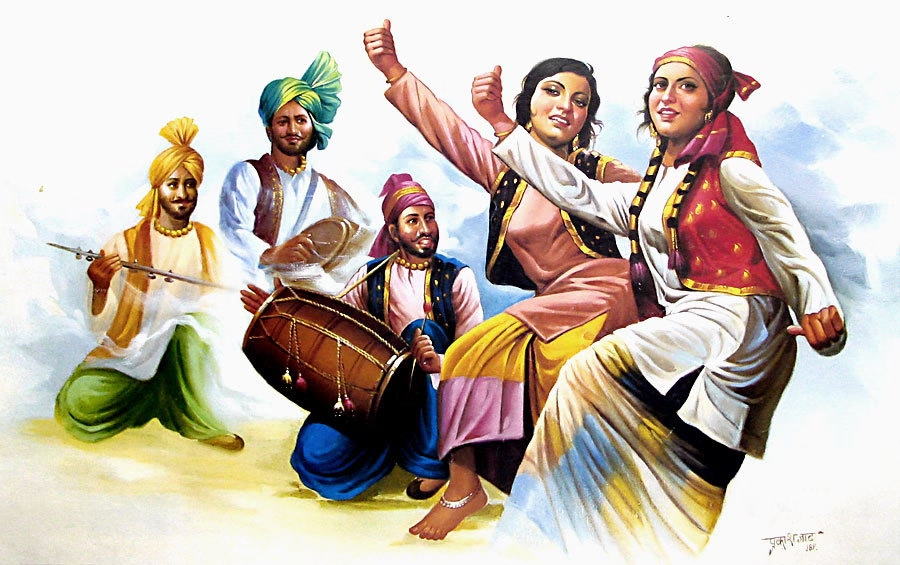
The folk dances of Punjab are not just performances. They are an expression of the Punjabi identity. The style ranges from very high energy to slow and graceful. There are specific dances for men and women, and some are performed together.
The music is just as important as the dance. The dhol is the most iconic instrument. Its powerful beats set the pace for the dancers. Other instruments like the tumbi, chimta, and algoza also provide the traditional sound.
Bhangra – The King of Punjabi Dances
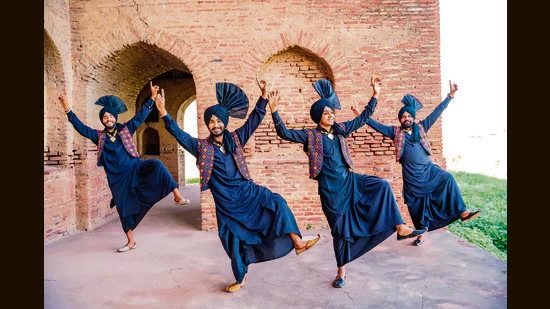
When people think of the Folk Dance of Punjab, the first thing that comes to mind is usually the bhangra dance. It is undoubtedly the most popular and recognized dance form from the region.
The History of Bhangra
Bhangra originated in the Majha area of the Punjab region and the Sialkot area, which is now in Pakistan. It was traditionally performed by farmers during the harvest season. They would perform the dance while doing agricultural chores to make the work more enjoyable.
After the wheat harvest during the Vaisakhi festival, people would attend cultural festivals and celebrate by dancing bhangra. It was a way to showcase a sense of accomplishment and welcome the new season. This is why it is so strongly associated with the Vaisakhi celebrations.
The Performance
Bhangra is a high-energy dance. Dancers perform vigorous movements. They spin, jump, and move their shoulders to the fast beat of the dhol. A typical bhangra dance involves a group of men forming a circle. A drummer stands in the center.
Key elements of the performance:
- Dancers begin with a slow movement of their feet
- As the beat quickens, their entire body springs to life
- They spin, bow, and straighten their bodies alternately
- They jump on one leg and lift their hands high
- They clap and shout “Balle! O Balle!” to motivate themselves and others
Modern Evolution:
In 1953, the Maharaja of Patiala requested an organized execution of Bhangra. The first significant developers of this style were a dance troupe led by the Deepak brothers from Sunam (Manohar, Avtar, and Gurbachan) and dhol player Bhana Ram Sunami. The modern staged version incorporates sequences from other Punjabi dances like Luddi, Jhummar, and Dhamaal.
The Dress and Getup
The traditional bhangra costume is very distinctive:
| Garment | Description |
| Pag | Turban worn on the head |
| Kurta | Silk shirt with four buttons |
| Tehmat/Lungi | Loincloth tied around the waist |
| Chagi | Waistcoat |
| Rumal | Scarves tied around the fingers |
Bhangra Goes Global
Bhangra is no longer just a rural folk dance of Punjab. It has become a global phenomenon. Punjabi immigrants took it to the UK, US, and Canada over 100 years ago.
Bhangra competitions have exploded in popularity:
- North America: Teams from all over the US and Canada compete for prizes. Many teams mix traditional bhangra music with hip-hop or rock to create a modern fusion.
- Global Influence: The commercialization of Punjabi folk music has traveled around the world, speaking to its versatility and longevity. American rappers like Jay-Z have sampled Punjabi folk music.
- Fitness: Bhangra has also expanded into the world of fitness, with instructors like Sarina Jain developing bhangra-based workout programs.
Giddha – The Graceful Dance of Women
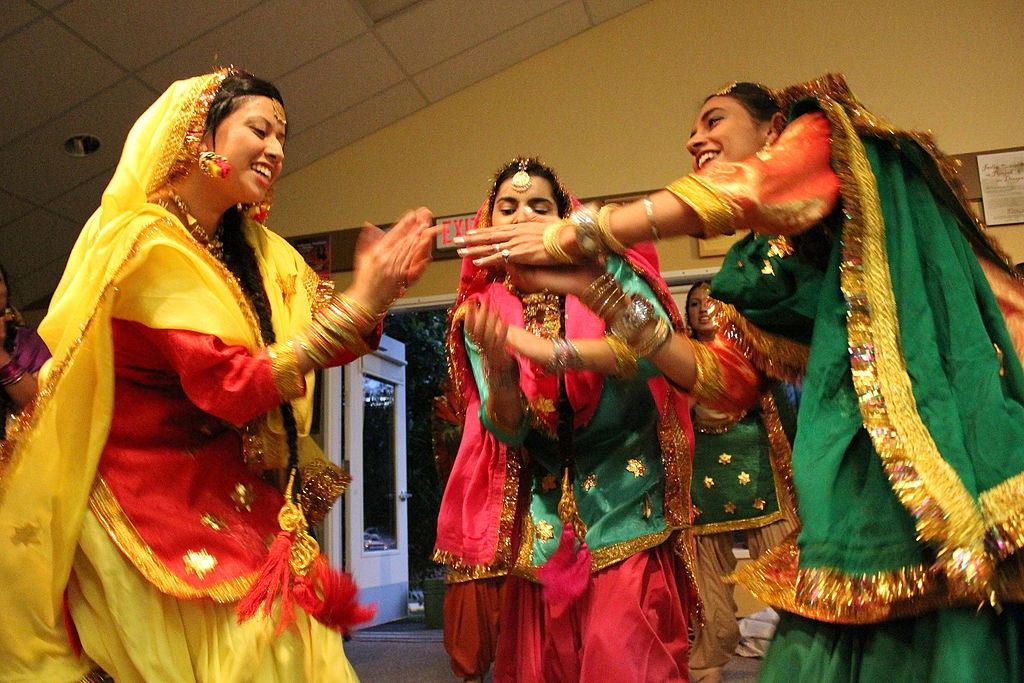
Giddha is the most popular women’s folk dance of Punjab. It is considered the female counterpart to bhangra. The dance is known for its energy, grace, and colorful display.
The History of Giddha
Giddha is said to have originated from the ancient ring dance that was dominant in Punjab in the olden days. Over time, it became the primary dance form for women to express their joy and creativity. While the form of giddha was not seriously affected by the Partition of India, it has been classified as the women’s dance counterpart to the male form, bhangra.
The Performance
Women perform Giddha in a circle formation. The dance is accompanied by rhythmic clapping. An elder woman or lead dancer will recite a boli (lyrics). The rest of the group then repeats the refrain in a call-and-response style.
Key features of the performance:
- Women stand in a circle and clap rhythms
- A lead woman recites a boli with a refrain
- The entire circle then repeats the refrain
- The dance details stories of women’s lives and love and even includes playful teasing
Giddha is performed at festive or social occasions. This includes weddings, the birth of a son, and festivals like Teeyan.
The Dress and Getup
The attire for Giddha is extremely vibrant and beautiful:
- Women traditionally wear a bright-colored salwar kameez or ghagra
- They dress their hair in two braids
- They adorn themselves with traditional jewelry and folk ornaments
- They wear a tikka on their forehead
Jhumar – The Swaying Dance of Joy
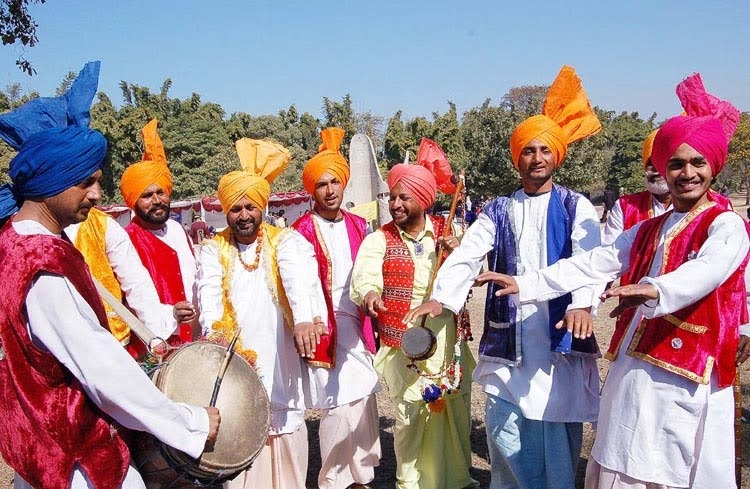
Jhumar is a slower, more graceful dance compared to bhangra. It is performed by men and is a dance of happiness. It is often seen at weddings, melas, and other major celebrations.
The Origin of Jhumar
The word “Jhumar” comes from “Jhoom,” which means to sway. The dance originated in the Balochistan and Multan regions of Pakistan. It was originally a Baluchi tribal dance that was brought to India by traders. It is now a part of Punjab’s folk heritage.
Different types of Jhumar include:
- Satluj Jhoomar
- Beas Jhoomar
- Chenab Jhoomar
- Multani Jhoomar
- Jhoomar Taari
How It Is Performed
Like bhangra, Jhumar is performed in a circle. The dancers move around a single drummer who stands in the center. The dance recreates the gait of animals and birds—the movements of ploughing the field, sowing seeds, and harvesting are shown in progression.
Key movements:
- The main step involves moving arms while feet move forward and backward in unison
- Dancers turn left and right to the beat of the singers and drummer
- Sometimes, dancers place their left hand below their ribs on their hip
- They gesticulate with their raised right hands while circling the drummer
- Dancers make a “chzi chzi” sound in tune with the beat
A unique feature is that three generations of father, son, and grandson can be seen dancing together at weddings.
The Costume
The costumes used in Jhumar are similar to those of bhangra. Dancers wear a colored patka on the head, a long tunic, a lungi, and a waistcoat.
Malwai Giddha—The Men’s Version of Giddha
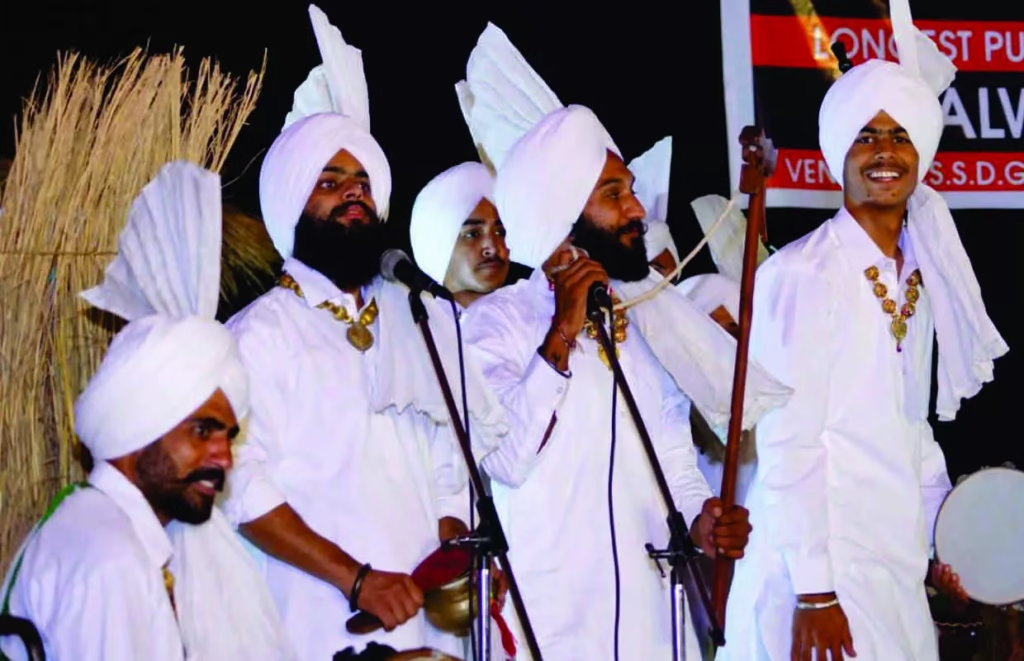
Malwai Giddha is a male folk dance of Punjab from the Malwa region. It is also known as “Babeyan da Giddha” because it was originally performed by elderly men.
Origin and Performance
The dance originated in the Malwa area and is associated with districts like Muktsar, Bathinda, Faridkot, Sangrur, Ferozpur, Mansa, and Patiala. It involves playful teasing of others through Boliaan, which is a form of folk poetry.
The Dress and Getup
The attire is traditional and colorful:
- Kurta (long shirt)
- Tehmat or lungi (cloth over the lower body)
- Pagg (turban)
- Kaintha (necklace)
- Handkerchiefs
- Jutti (handmade footwear)
The attire reflects the traditional rural style of the Malwa region and is designed for both aesthetic appeal and practicality, allowing performers to execute energetic movements.
Luddi – The Dance of Victory
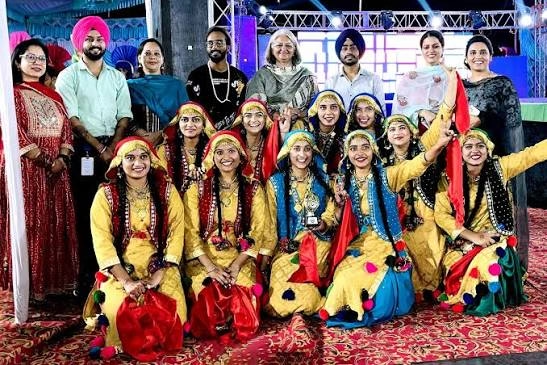
Luddi is a traditional Punjabi folk dance that symbolizes victory. It is performed by both men and women in circles.
The Performance
Key features of Luddi:
- Dancers click their fingers and clap their hands
- They perform jumps and half turns.
- Unique head movements are a signature of the dance
- Often performed with one hand covering the face and the other on the back
It is a dance of joy and triumph, often performed with handkerchiefs as a key prop. The dance is characterized by freedom of movement and complements the energetic choreography.
Where It Is Performed
Luddi is mainly performed at weddings and during sports to celebrate a victory. It can be performed in pairs or in groups to the tunes of dhol and shehnai.
The Dress and Getup
Men’s attire for Luddi:
- Kurta (long shirt)
- Tehmat or lungi
- Pagg (turban)
- Sadri (waistcoat)
- Handkerchief (key prop)
- Jutti (footwear)
Kikli – The Twirling Dance of Young Girls
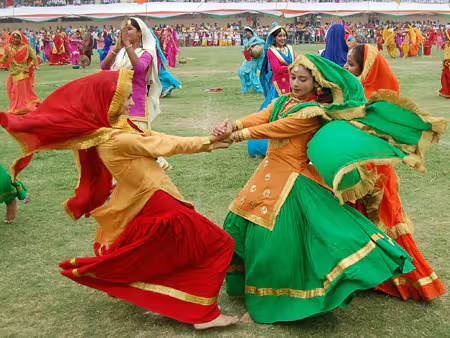
Kikli is a beautiful folk dance of Punjab performed by young girls. It is a graceful and energetic dance.
How It Is Performed
Kikli is performed in pairs. Two girls stand face to face, cross their arms, and hold each other’s hands firmly. They lean their bodies backward and spin around quickly in a circle. They do this to the beat of folk songs.
Performance highlights:
- Two females stand face-to-face close to each other
- They hold hands crossing arms with bodies inclined back
- Arms are stretched to the maximum and hands interlock firmly
- They wheel round fast continuously
- Their dupattas float in the air and anklets make a tinkling sound
The Dress and Getup
The attire for Kikli reflects the colorful, traditional clothing of Punjab:
- Salwar Kameez: Long tunic paired with loose trousers, often with Phulkari embroidery
- Dupatta: Colorful scarf
- Chooriyan: Bangles
- Ghungroo: Ankle bells
- Jutti: Footwear
Sammi – The Dance of the Tribal Belt
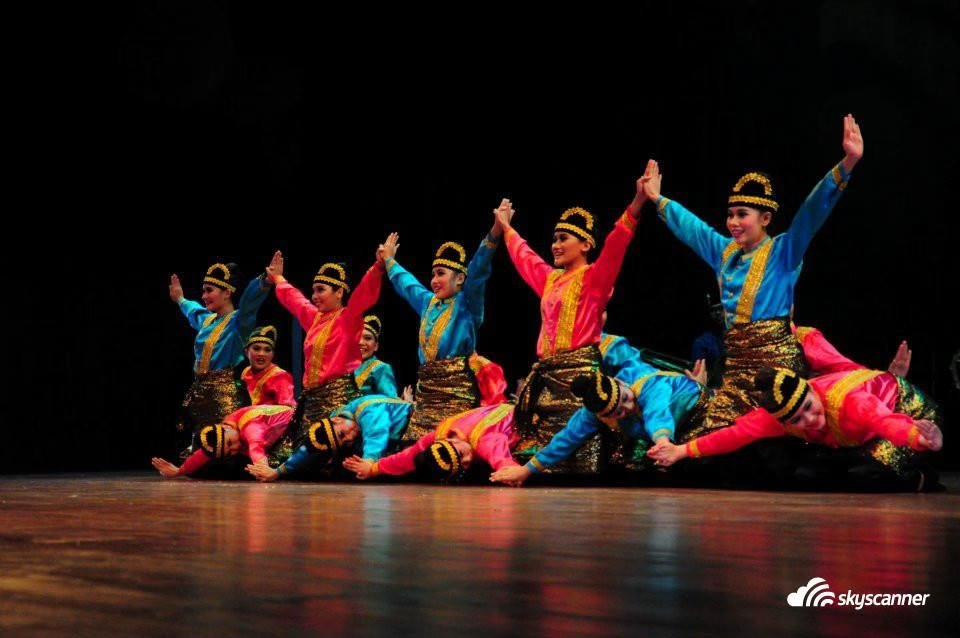
Sammi is a traditional dance that originated from the tribal communities of Punjab, particularly in the Sandalbar area and Pothohar region.
The History
The dance is associated with Princess Sammi of Marwar, who performed it to express her feelings of separation from her lover. Men usually perform Sammi, but it is also performed by women.
How It Is Performed
Key features:
- Slow, rhythmic flow
- Performers stand in a circle
- Dancers swing their hands from the sides to chest level and clap
- Often accompanied by a hopping sequence
- Some dancers use sticks in their hands
The Dress and Getup
Women who perform Sammi dress in bright, colorful kurtas and lehengas, often accompanied by a silver hair accessory.
Jaago – The Wedding Dance
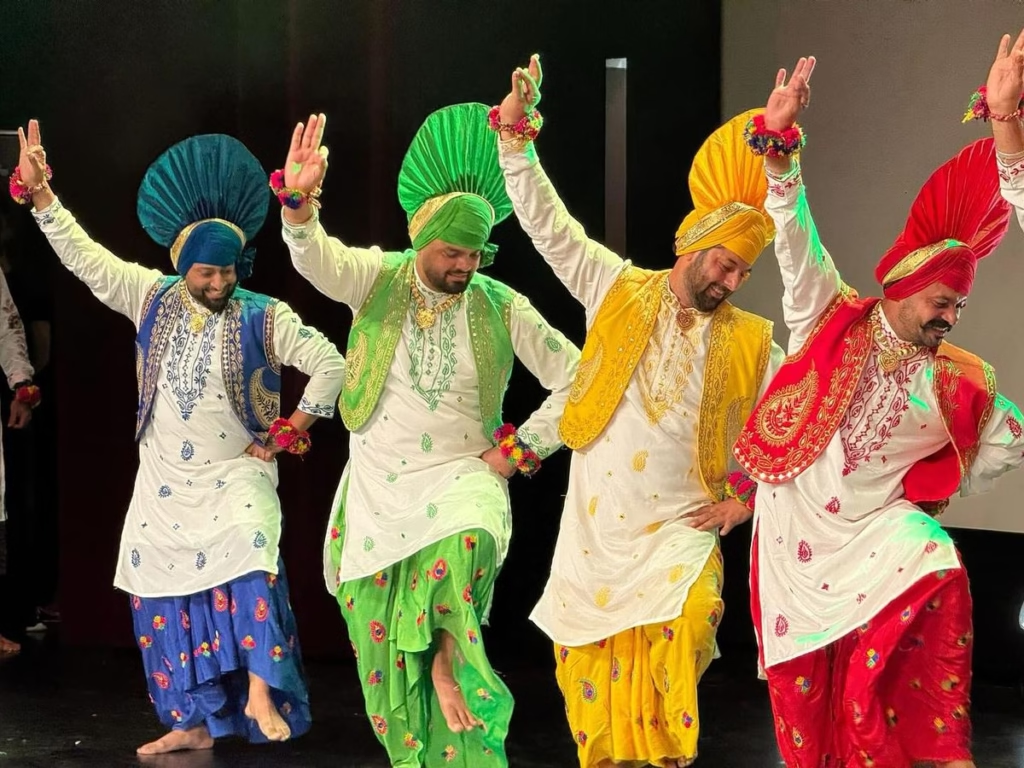
Jaago is a traditional dance form that is an essential part of Punjabi marriage ceremonies.
The Performance
Girls dance through the village streets carrying a pot (gaggar) adorned with lit candles while singing Jaago songs. The songs often have social and teasing themes aimed at the elders of the family. This dance is a celebration of life and new beginnings.
The Dress and Getup
Traditional wedding attire is worn for this dance. The focus is on celebration and community participation.
Summary Table – The Folk Dances of Punjab
| Dance | Gender | Energy Level | Key Occasion | Signature Element |
| Bhangra | Male | Very High | Vaisakhi, Harvest | Dhol beats, “Balle O Balle” shouts |
| Giddha | Female | High | Weddings, Teeyan | Call-and-response singing |
| Jhumar | Male | Slow/Graceful | Weddings, Melas | Swaying movements, three generations |
| Malwai Giddha | Male | High | Community events | Playful teasing through Boliaan |
| Luddi | Both | High | Weddings, Victory | Unique head movements |
| Kikli | Female | High | Social gatherings | Twirling in pairs |
| Sammi | Both | Slow | Tribal celebrations | Circular formation, hopping |
| Jaago | Female | High | Weddings | Dancing with lit pots |
FAQs
Q1. Which is the most famous folk dance of Punjab?
Bhangra is the most famous folk dance of Punjab. It is known worldwide for its high-energy movements, dhol beats, and celebratory spirit.
Q2. What is the difference between Bhangra and Giddha?
Bhangra is performed by men and is very energetic. Giddha is the women’s counterpart, performed in a circle with rhythmic clapping and call-and-response singing.
Q3. What instruments are used in Punjabi folk dances?
The dhol is the most iconic instrument. Other instruments include the tumbi, chimta, algoza, sarangi, and dholak.
Q4. When is Bhangra traditionally performed?
Bhangra is traditionally performed during the Vaisakhi harvest festival. Farmers performed it after harvesting their wheat crops to celebrate and welcome the new season.
Q5. What is the dress code for Bhangra?
Men wear a pag (turban), kurta (silk shirt), tehmat or lungi, chagi (waistcoat), and rumal (scarves tied around fingers).
Q6. What is the Jhumar dance?
Jhumar is a slower, more rhythmic dance performed by men. It originated in Balochistan and Multan and is known for its swaying movements.
Q7. How is Kikli performed?
Kikli is performed by two young girls. They stand face to face, cross arms, hold hands, and twirl around quickly. Their colorful dupattas float in the air.
Q8. What is the Jago ceremony?
Jago is a wedding dance where girls dance through village streets carrying a pot with lit candles. They sing traditional songs, often teasing the elders of the family.
Also Read:
Traditional Dresses of Gujarat

Leave a Reply