
Hello folks! Have you ever watched an Indian classical dance performance and felt like the dancer was telling you a story without speaking a single word? Those expressive hands are not just moving gracefully—they are speaking. They are communicating through a sophisticated sign language that has been refined over thousands of years. This is the language of mudras.
Indian classical dance is a holistic art form that combines rhythm, melody, expression, and storytelling. At its heart lies abhinaya—the art of expression. And the most powerful tool for abhinaya is the hand mudras, also known as hastas. These gestures are the alphabet of Indian classical dance.
Today, we’re exploring the fascinating world of mudras in Indian classical dance. We’ll look at their origins, their meanings, and how they continue to shape this beautiful art form. Let’s dive in!
The History of Hand Mudras: An Ancient Language
The history of hand mudras is as old as Indian civilization itself. The roots of these gestures can be traced back to the Indus Valley period. Even then, hand gestures were used as a form of non-verbal communication, a primal instinct that predates language itself.
The Divine Origin of Mudras
In Hindu mythology, Lord Shiva is considered the oldest known dancer. The dance tradition, along with its mudras, was originally practiced in Hindu temples and has been disseminated orally for thousands of years. Dancing and acting are intimately related, and both share the same name—Natya.
The Natyasastra: The First Encyclopedia of Dance
The codification of hand mudras can be traced to the Nātyasāstra, an ancient Indian text that can be described as a mini-encyclopedia of ancient India. This text contains invaluable information about the form, function, and technical details of dance and theater. It introduced us to the formalized system of hand mudras.
The Abhinayadarpana: The Dancer’s Guide
Another authoritative text on hand mudras is Nandikesvara’s Abhinayadarpana (literally “Mirror of Gestures”). This compact text is an abridged dancer’s guide based on the Natyasastra. It has been particularly influential in Bharatanatyam, where it is largely followed for the performance of hastamudras.
The Evolution Across Regions
Different regions and dance forms have developed their own approaches to hand mudras. For example:
- Kathak does not have a strictly codified set of mudras. Over the past few decades, however, it has gradually adopted some.
- In Odissi, hand mudras are rigorously placed to support the story being told or as embellishment.
- In Kerala, the Hasthalakshanadeepika is a classical text that outlines the basic mudras used in dance dramas like Kathakali and Mohiniyattam.
What Are Mudras?
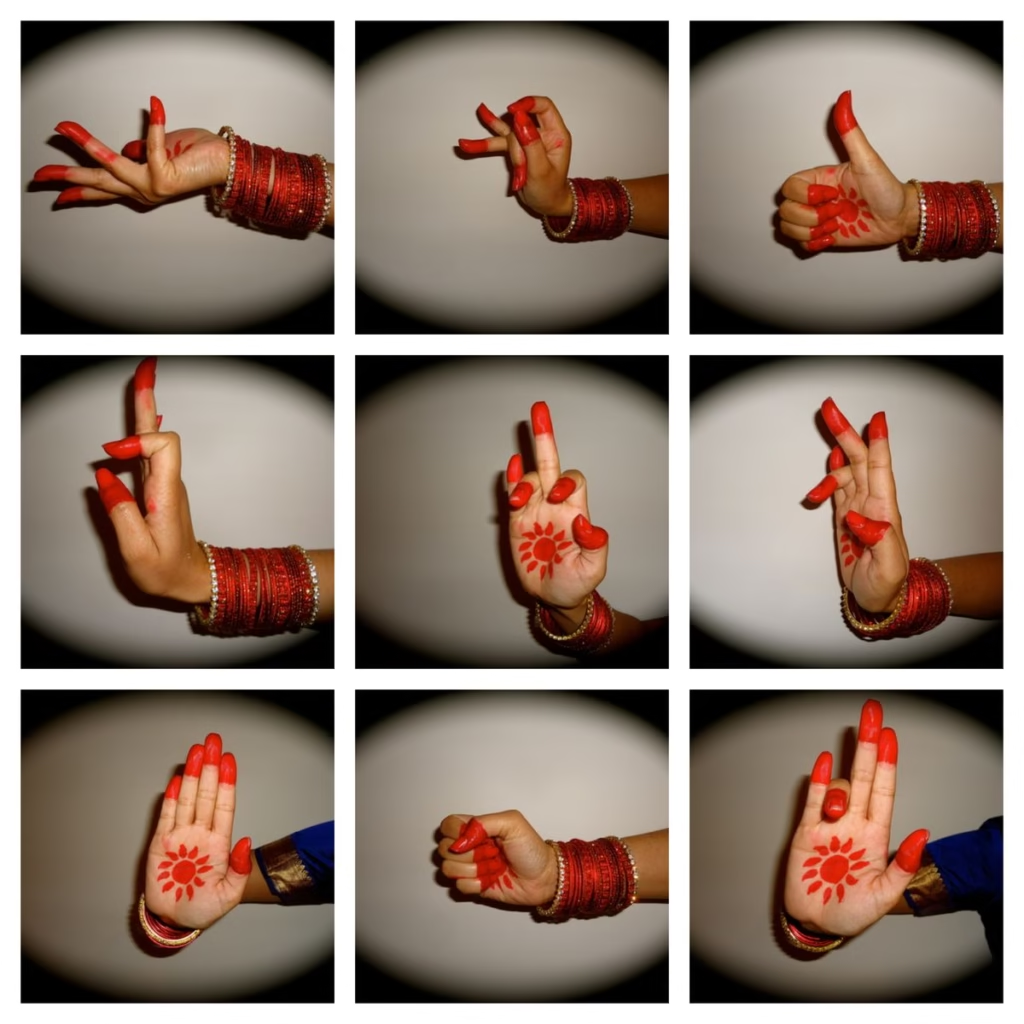
The word “mudra” is a Sanskrit word that means “sign,” “seal,” or “image.” It is a symbolic gesture performed with the hands and fingers.
They are “sealed” in that they are a closed system of communication, where a specific placement of fingers conveys a specific meaning. The term “hasta” is also used, which literally means “hand” or “arm.”
Mudras in Indian classical dance are essential for storytelling. They allow the dancer to depict characters, objects, actions, and emotions. They form the visual vocabulary of a dancer.
The Two Types of Hand Mudras
In Indian classical dance, hand mudras are broadly classified into two categories: Asamyuta Hastas (single-hand gestures) and Samyuta Hastas (double-hand gestures).
Asamyuta Hastas (Single-Hand Gestures)
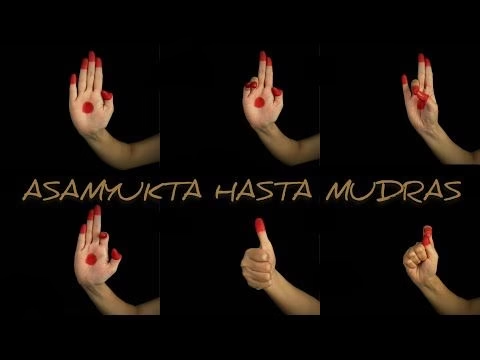
These are gestures performed using one hand. There are typically 28 of these in most classical dance traditions. They form the basic repertoire of a dancer.
Let’s look at some of them.
Pataka (Flag):
- How to do it: All fingers are stretched straight and held close together, with the thumb also extended.
- Meaning: This is one of the most common gestures, used to signify a flag, a blessing, the wind, or a “no.”
- Variations:
- Tripataka: Three parts of a flag, used to depict a crown or a tree.
- Ardha-Pataka: Half a flag, used to depict a leaf or a branch.
Shikhara (Spire):
- How to do it: All fingers are bent towards the palm except the thumb, which is raised and held erect.
- Meaning: This gesture represents the pinnacle or a top. It is used to depict Lord Shiva’s trident, a mountain peak, or even an arrow.
Kapittha (Wood Apple):
- How to do it: While doing the Shikhara Mudra, bend the index finger and place it over the thumb.
- Meaning: This gesture is used to depict a wood apple, but it can also represent a woman’s breast or a child.
Musti (Fist):
- How to do it: The four fingers are closed firmly against the palm, and the thumb is placed over them.
- Meaning: Used to represent a fist, a grip, or holding something.
Katakamukha (Opening in a Bracelet):
- How to do it: The palm is raised outward, and the fingers are extended. The second finger and thumb are curved forward to touch the tips.
- Meaning: Often used to depict a bracelet, but also used for holding a plait or showing a link.
Suchi (Needle):
- How to do it: The middle, ring, and little fingers are bent, and the forefinger is held straight.
- Meaning: Used to represent a needle but also to point at something.
Chandrakala (Digit of the Moon):
- How to do it: In the Suchi Mudra, release the thumb and hold it erect.
- Meaning: Represents the moon, or a digit of the moon.
Padmakosha (Lotus Bud):
- How to do it: All the fingers are stretched and held closer to form a bud-like shape.
- Meaning: Used to depict a lotus bud, a water lily, or a conch shell.
Sarpashirsha (Hood of Cobra):
- How to do it: The hand is held in Pataka Mudra, and the fingers are bent from the tip to form a hollowed palm.
- Meaning: Used to represent the hood of a cobra, a snake, or a garment.
Mrigashirsha (Deer Head):
- How to do it: Fingers are bent from the knuckles, except for the thumb and little finger, which are held straight.
- Meaning: Used to depict a deer’s head, but also used to represent calling someone.
Simhamukha (Lion Face):
- How to do it: The middle and ring fingers press against the thumb, while the pointer and little fingers are straight.
- Meaning: Represents a lion’s face but is also used to depict courage.
Alapadma (Full-Bloomed Lotus):
- How to do it: The fingers are held in a manner as if to ask “why,” with the pointer finger pointing up and the fingers spread open like a blooming flower.
- Meaning: Used to represent a full-bloomed lotus.
Samyuta Hastas (Double-Hand Gestures)
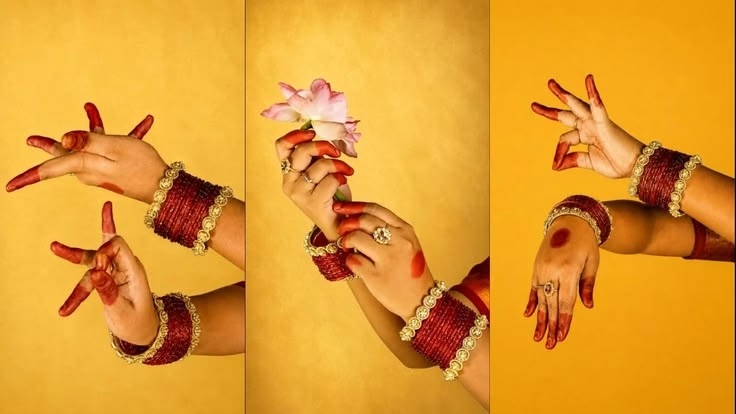
These are gestures performed using both hands. They are used to depict more complex objects and narratives.
Anjali (Salutation):
- How to do it: The palms are joined together with the fingers and thumbs extended and held close.
- Meaning: This is a gesture of respect, a salutation to God, a teacher, or another person. It can be performed in front of the head, face, or chest.
Kapota (Dove):
- How to do it: The Anjali Mudra is slightly bulging at the knuckles of the fingers, with palms touching only at the tips and bases.
- Meaning: This gesture is also used for Namaskar, showing respect and humbleness.
Karkata (Crab/Clasp):
- How to do it: The fingers of the two hands are clasped with each other, with the knuckles facing outwards.
- Meaning: Used to express the arrival of a group, stoutness, blowing a shell, and stretching limbs.
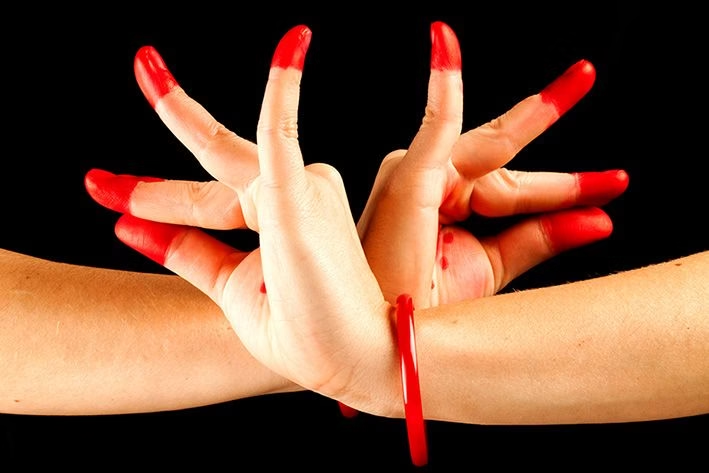
Swastika (Crossed Hands):
- How to do it: Two Pataka hands are crossed at the wrists, with the right hand placed above the left.
- Meaning: Used to represent a crocodile or alligator or to express fear or argument.
Dola (Swinging):
- How to do it: Two Pataka hands are placed with the back of the palms resting on the thighs.
- Meaning: This Mudra is used at the beginning of a dance performance.
Shakat (Cart/Chariot):
- How to do it: The palm is raised, the second, third, and little fingers are stretched straight, and the first finger and thumb are bent and curved to touch each other.
- Meaning: Used to represent a chariot.
How Mudras Are Used in Indian Classical Dance
Hand mudras are the foundation of storytelling in Indian classical dance. They are used in two primary ways.
Nritta Hasta (Decorative Gestures)
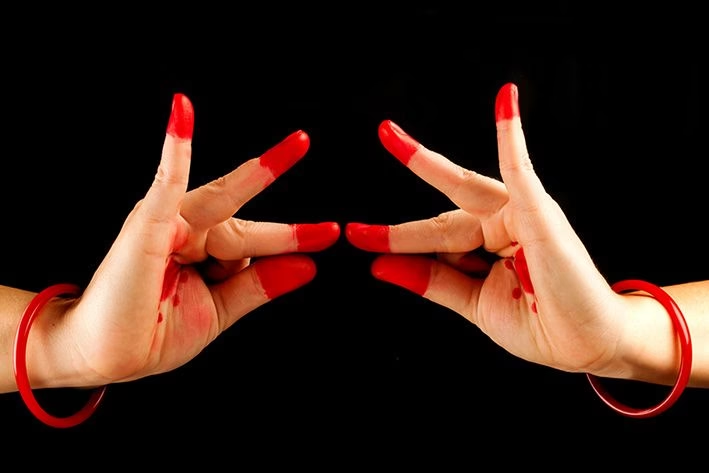
These are mudras used purely for their aesthetic beauty. They are used in the pure dance portions of a performance, known as nritta. They do not convey a specific narrative meaning but add grace and visual appeal to the movements.
Abhinaya Hasta (Expressive Gestures)
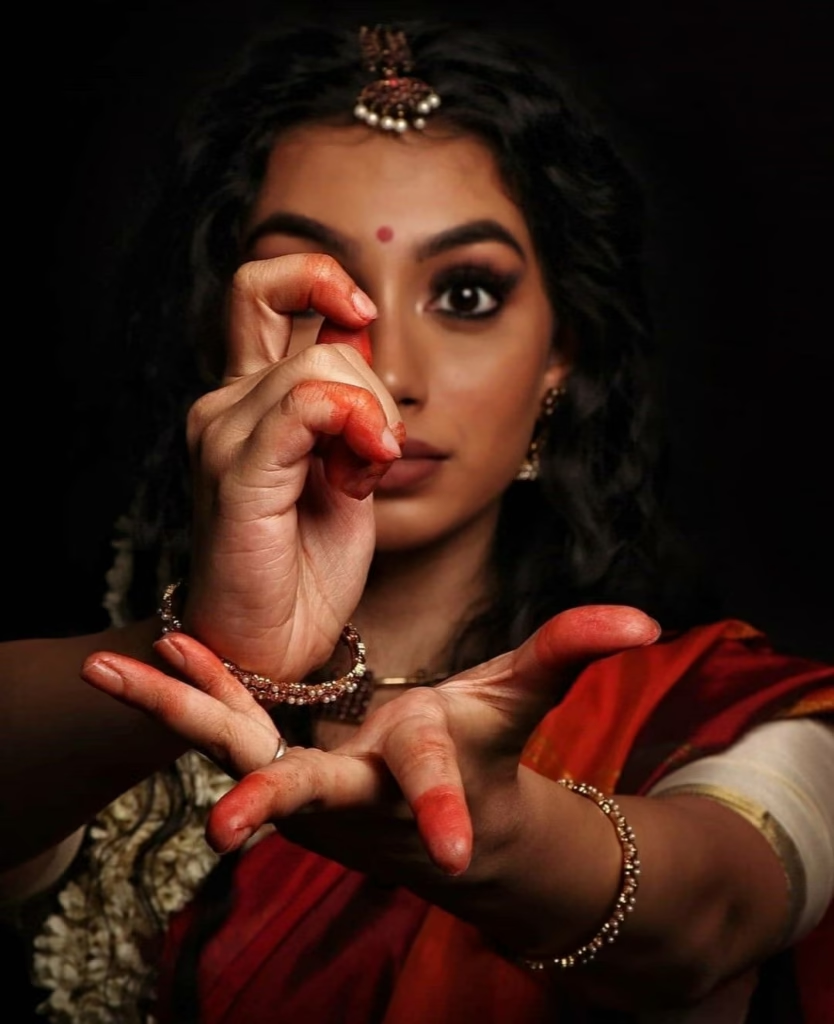
These mudras are used to convey meaning. They are the language of the dancer. Through these gestures, the dancer narrates a story, depicts characters, and evokes emotions. This is the heart of abhinaya (expression), which is considered the soul of Indian classical dance.
A dancer uses their hands to describe the following:
- Characters: Gods, goddesses, animals, and humans
- Objects: Flowers, weapons, jewelry, and vehicles
- Actions: Walking, running, praying, and fighting
- Emotions: Love, anger, sorrow, and joy
- Natural Elements: The sun, the moon, rain, and fire
The 108 Mudras
In total, there are said to be 108 mudras across Indian classical dance forms. A successful dancer should ideally know them all.
Kathak: A Unique Approach
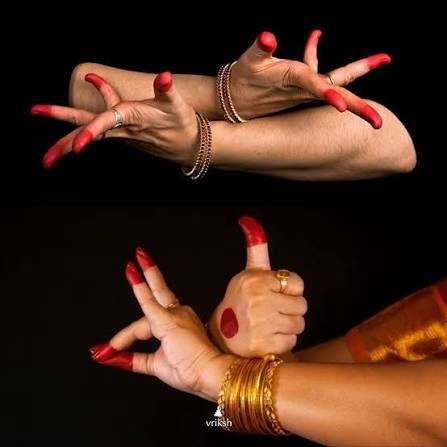
Kathak offers a unique perspective on hand mudras. It does not have a strictly codified set of mudras. Over the past few decades, however, it has gradually adopted some.
The unique aspect of abhinaya in Kathak is that the hand gestures and facial expressions resemble normal, everyday life expressions and are not strictly prescribed. This could be owing to its desi (folk) connections and the emphasis placed on improvisation and personal interpretation.
It was only with the gradual institutionalization of the dance form in the post-independence era that the mudras and textual codification found their way into Kathak teachings. Texts and rules that applied to other classical dance forms were applied to Kathak, sometimes ignoring its unique subjectivity in abhinaya exploration.
Masters of Mudra – Famous Personalities Who Shaped Indian Classical Dance Hand Gestures
| Personality | Contribution | Dance Form |
| T. Balasaraswati | Foremost exponent, known for masterful use of hastas in abhinaya | Bharatanatyam |
| Mayadhar Raut | Introduced Mudra Vinyoga in Odissi (1955) and enriched abhinaya vocabulary | Odissi |
| Radha Bhaskar Menon | Co-founded Mudra School, trained generations with exacting abhinaya and mudra discipline | Bharatanatyam, Kuchipudi, Mohiniyattam |
| Kala Vijayan | Extensive research on hastaprayogas and tantric mudras, authoring a 392-page book on Mohiniyattam | Mohiniyattam |
| Sreedevi Rajan | Author of “Mudrakhyam”—a visual dictionary on Mohiniyattam hand gestures | Mohiniyattam |
| G. Venu | Invented a notation system for mudras in Kerala’s dance theater and authored “Ramayana Samkshepam.” | Kutiyatta |
Quick Facts and Statistics
| Aspect | Detail |
| Origin of Hastamudras | Indus Valley period |
| Primary Source Text | Natyasastra |
| Dancer’s Guide Text | Abhinayadarpana by Nandikesvara |
| Single-Hand Mudras | 28 |
| Double-Hand Mudras | 23 |
| Total Mudras | 108 |
| Kathak Approach | Gradually adopted from other traditions |
| Primary Function | Storytelling, expression, embellishment |
FAQs
Q1. What are mudras in Indian classical dance?
Mudras are codified hand gestures used in Indian classical dance. They are a form of sign language that helps the dancer tell a story by depicting characters, objects, actions, and emotions.
Q2. What is the difference between Asamyuta and Samyuta Hastas?
Asamyuta Hastas are single-hand gestures, while Samyuta Hastas are double-hand gestures. There are 28 single-hand gestures and 23 combined gestures.
Q3. How many mudras are there in total?
There are said to be 108 mudras in total across the classical dance forms of India.
Q4. What is the Natyasastra?
The Natyasastra is an ancient Indian text that codifies mudras and the art of dance and theater.
Q5. What is the Abhinayadarpana?
The Abhinayadarpana, by Nandikesvara, is a dancer’s guide to hand mudras, largely followed in Bharatanatyam.
Q6. Are mudras used in all classical dance forms?
Yes, hand mudras are an integral part of all major Indian classical dance forms, including Bharatanatyam, Kathak, Odissi, and Mohiniyattam.
Q7. What is the difference between Nritta and Abhinaya hand gestures?
Nritta hastas are decorative gestures used for aesthetic beauty, while Abhinaya hastas are expressive gestures used for storytelling.
Conclusion
The language of mudras is a profound aspect of Indian classical dance. These gestures are not just movements; they are a highly refined system of communication.
They allow the dancer to transcend the limitations of language and connect with the audience on a deeper, more spiritual level.
The hand mudras are a testament to the depth, complexity, and beauty of Indian classical dance, a tradition that continues to captivate audiences worldwide. 🖐️✨
Also Read:

Leave a Reply