
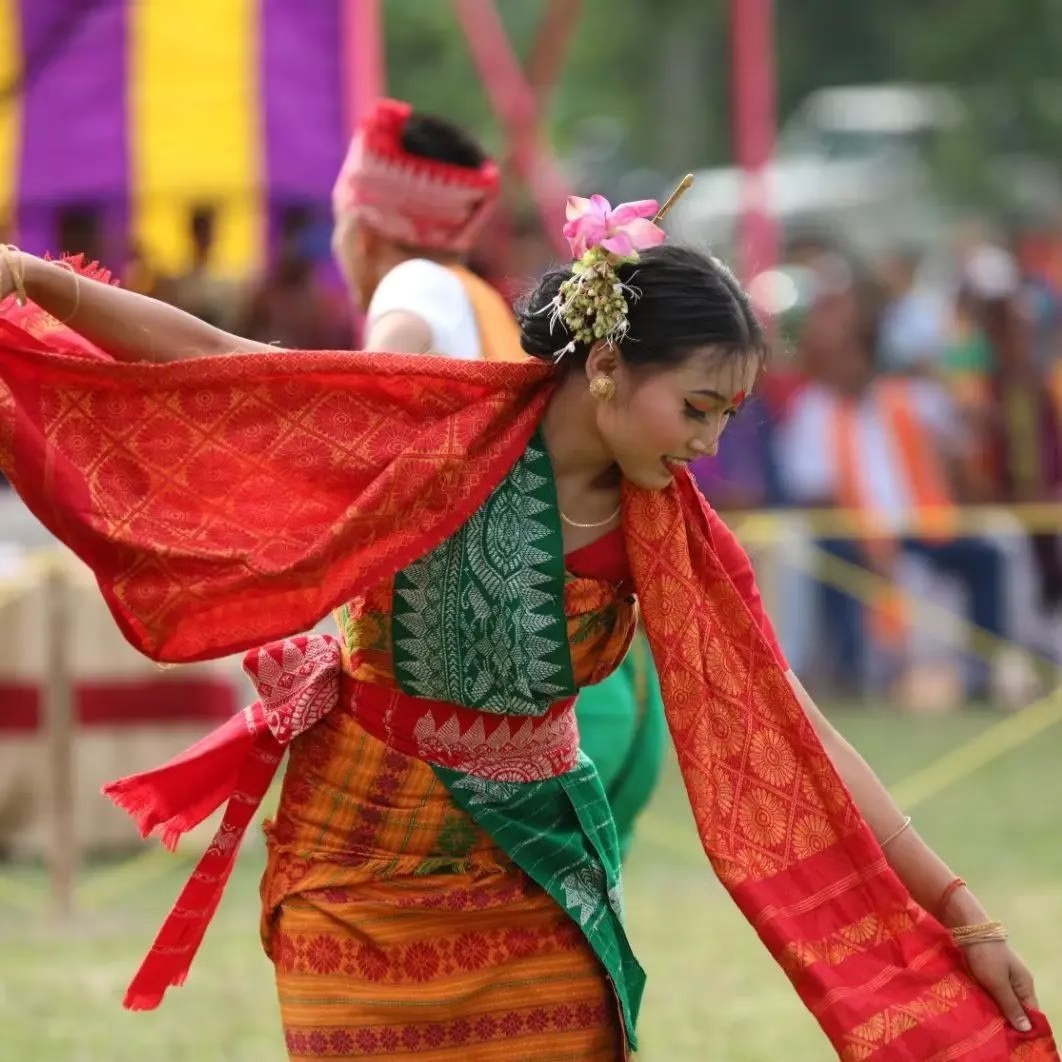
Hello folks! Have you ever seen dancers move with such infectious energy that you feel like joining them? Or watched a performance so deeply spiritual that it transports you to another world? Welcome to the vibrant world of the folk dances of Assam.
Assam is a land of diversity. Over 40 different ethnic communities call this northeastern state home. Each community has its own unique folk dance of Assamese traditions. These dances are an integral part of Assamese tradition, reflecting the state’s agricultural roots, religious beliefs, and joyful spirit.
The folk dances of Assam are not just performances. They are celebrations of life. From the energetic Bihu dance welcoming the Assamese New Year to the graceful Bagurumba of the Bodo community, each dance tells a story.
Let’s dive into this colorful world of rhythm and devotion!
Bihu Dance – The Heartbeat of Assamese Tradition
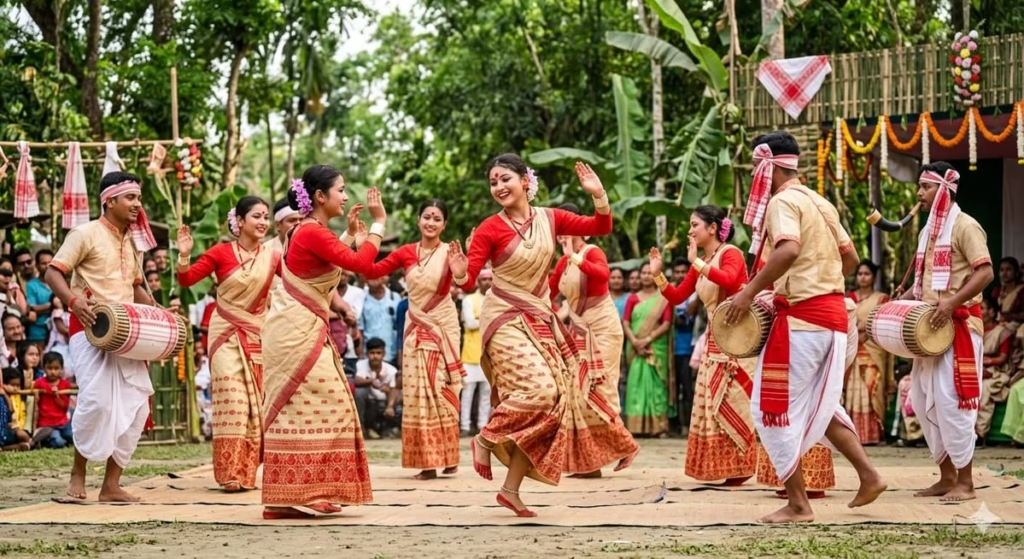
When people think of the folk dances of Assam, the first thing that comes to mind is the Bihu dance. It is undoubtedly the most popular and recognized folk dance of Assam and an essential part of Assamese tradition.
The History of Bihu Dance
The origins of the Bihu dance form are unclear; however, the folk dance tradition has always been very significant in the culture of Assam’s diverse ethnic groups. According to scholars, the Bihu dance has its origin in ancient fertility cults that were associated with increasing the fertility of the demographic as well as the land. Traditionally, local farming communities performed the dance outdoors, in fields, groves, forests, or on the banks of rivers, especially under the fig tree.
The earliest depiction of the Bihu dance is found in the 9th-century sculptures found in the Tezpur and Darrang districts of Assam. The first official record of the Bihu dance comes from the Ahom period. King Rudra Singha is said to have invited Bihu dancers to perform at the Rang Ghar fields around 1694 for the Rongali Bihu celebrations.
Key Historical Milestones:
| Period | Event |
| 9th Century | Earliest depiction of Bihu dance in sculptures |
| 14th Century | Mentioned in inscriptions of Chutia King Lakshminaryan |
| 1694 | King Rudra Singha invited Bihu dancers to Rang Ghar |
| 1962 | The first Bihu dance performed on a stage in Guwahati |
| 2023 | Over 11,300 dancers set Guinness World Record |
How It Is Performed
The Bihu dance is a group performance where young men and women dance together. The dance begins with performers slowly walking into the performance space. Men start playing musical instruments while women place their hands above their hips with palms facing outward, forming an inverted triangular shape.
Key Features of the Performance:
- The women sway gently, bending slightly forward from the waist
- The music gradually picks up tempo and intensity
- Women perform thrusting movements of the breast and pelvis in tune with the music
- Some variations include men and women forming lines facing each other
- The dance often imitates the movements of birds and animals, particularly the peacock, the dancing crane, and the pigeon
- In earlier times, Bihu served principally as a courtship dance
Performance Structure:
- The dance begins in a circle with a slow tempo
- Gradually, dancers build up a fast rhythm
- The circle breaks up into parallel lines
- Dancers execute beautiful figures of intertwined semi-circles
Cultural Significance
Historically, the Bihu dance was looked down upon in Assamese society, especially during colonial times, because of the sexually charged nature of the performance, which clashed with the Victorian views that were dominant among British colonists. Presently, the Bihu dance continues to play an important role and has become a symbol of Assamese cultural identity.
Record-Breaking Recognition:
In 2023, over 11,300 dancers and drummers came together to perform the traditional Bihu dance, breaking the Guinness World Record for the largest Bihu dance ever performed. The event was organized by the Assam government to showcase the unique cultural identity of the state and promote tourism.
Sattriya Dance – The Classical Jewel of Assam
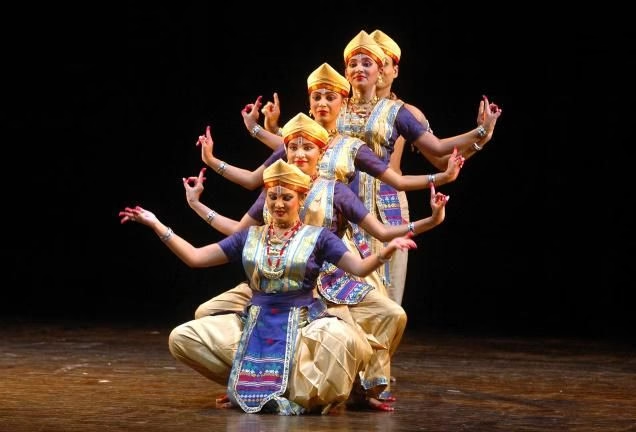
Sattriya Nritya is one of the eight classical dance forms of India, recognized by the Sangeet Natak Akademi on November 15, 2000. It is a unique blend of theater, music, dance, and bhakti (devotion), making it a cornerstone of Assamese tradition.
The History of Sattriya Dance
Sattriya was founded by the great saint-poet Srimanta Sankardeva (1449-1568) in the 15th-16th century. Along with his disciple Madhavadeva, Sankardeva led a cultural and spiritual renaissance in Assam through the neo-Vaishnavite Bhakti movement.
The dance form gets its name from the Sattras—the Vaishnavite monasteries of Assam where it was conceived, practiced, and preserved. Sattriya dances take inspiration from the indigenous folk dance tradition of Ojapali and Sankaradev’s Ankia Bhaona. In all of them, the lead vocalist performs while singing, so they are known as “abhinaya,” or the art of telling stories.
The Performance
The foundation of Sattriya dance is built on Mati Akharas—foundational exercises performed on the ground. There are 64 Mati Akharas, further subdivided into ora, jhalak, pak, satta, jaap, sitika, lon, and khor.
Two Distinct Styles:
| Style | Name | Characteristics |
| Masculine | Paurashik Bhangi / Purush Pak | Vigorous, energetic jumps, acrobatics |
| Feminine | Stri Bhangi / Prakriti Pak | Lasya (delicate movements of body and limbs) |
Performance Components:
- Geet (songs: Borgeet or Sloka)
- Badya (instruments: Khol, Taal, and other traditional Assamese instruments)
- Nritya (dance)
- Abhinaya (acting or drama)
The Dress and Getup
Sattriya costumes are of two kinds, related to the masculine and feminine aspects of the dancers.
| Style | Costume | Colors |
| Male | Dhoti, Chadar (wrap), Paguri (turban) with Sadar (upper body cloth) | White or raw silk |
| Female | Ghuri (skirt), Kanchi (waist cloth), Chadar (wrap) | Pat Silk, Muga (golden silk) |
Traditional Assamese Jewelry (Kesha Xoon – Raw Gold):
| Jewelry Type | Description |
| Muthi Kharu | Silver bracelets worn on the arms |
| Gam Kharu | Traditional bangles |
| Golpata | Necklace shaped like a drum (dhol) |
| Bena / Joonbiri | Crescent moon-shaped necklace |
| Dugdugi | Leaf-shaped necklace |
| Lukaparo | Pigeon-shaped necklace with earrings |
| Kopali | Forehead ornament |
The motifs on the garments are Assamese heritage designs such as kingkhap, kalka, miri, and gasa. Paguri (turban) has 16 different types for male performers. The dancers wear masks to depict demons and special characters in Ankiya Naats (dramas).
Bagurumba – The Butterfly Dance
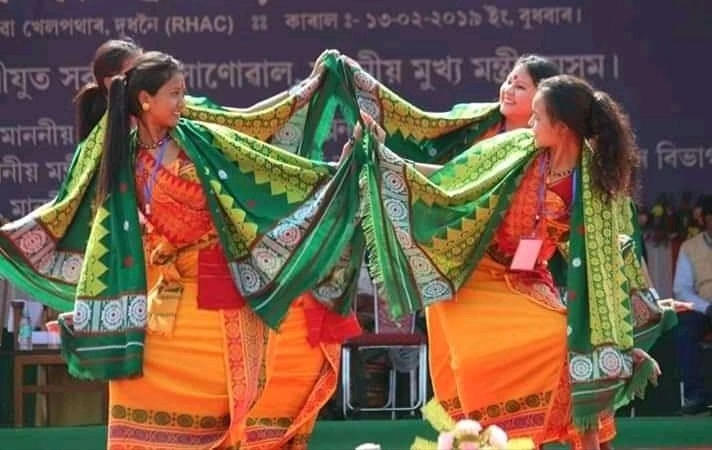
Bagurumba is one of the most attractive folk dances of Assam performed by the Bodo community. It is often called the “Butterfly Dance” because the dancers’ graceful movements resemble butterflies fluttering.
The History and Cultural Significance
Bagurumba is a traditional folk dance of the Bodo community, deeply inspired by nature. The dance symbolizes blooming flowers and reflects harmony between human life and the natural world. It represents peace, fertility, joy, and collective harmony and is closely associated with festivals such as Bwisagu, the Bodo New Year.
Record-Breaking Recognition:
On 17 January 2026, over 10,000 Bodo dancers performed Bagurumba together at Sarusajai Stadium in Guwahati. PM Modi addressed the Bagurumba Dhwou 2026, describing the event as a vibrant celebration of the rich traditions and cultural identity of the Bodo community.
He said, “Bagurumba Dwhou is not just a festival but a medium to honor the great traditions of the Bodo society and remember its eminent personalities.”
Global Popularity:
“Global search interest on Google for the Bagurumba dance is at its highest ever in the last two decades,” with 200 million views on PM Modi’s social media properties alone.
The Performance
The dance features gentle, flowing movements that imitate butterflies, birds, leaves, and flowers. Performances are usually organized in groups, forming circles or lines that enhance their visual elegance.
Key Features:
- Soft music coupled with rhythmic movements resembling the flutter of a butterfly
- Circular, spiral and line formations
- Dancers mimic flowers swaying, birds flying, and butterflies fluttering
- The dance is passed from one generation to the next, each adding its own touch to the form
The Dress and Getup
Performers wear colorful, handwoven attire such as the Dokhona (traditional Bodo women’s garment), Jwmgra (shoulder scarf), and Aronai (traditional muffler). The colors chosen are inspired by nature—green, yellow, and red.
Bagroomba – The Dance of Merrymaking
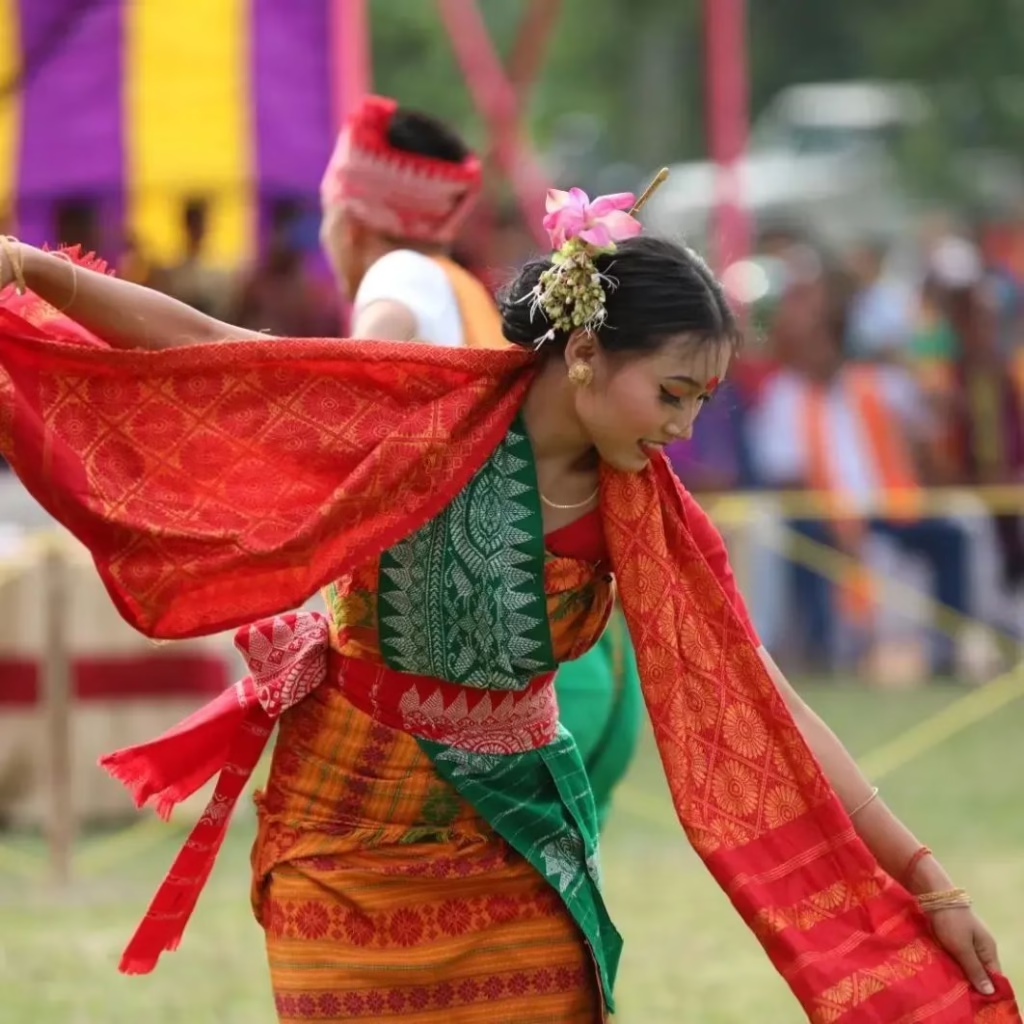
Another beautiful dance of the Bodo community is Bagroomba. This folk dance of Assam is performed by young girls as a means to relieve themselves of their wearisome day’s work through singing, dancing, and merrymaking.
How It Is Performed
- Young girls assemble in a particular area of the village
- They dance holding the ends of colorful scarves strung around their necks
- The dancer moves forwards and backwards in a swinging motion
- It begins in a straight line but eventually falls into a circular pattern
- Dancing with gay abandon, they perform to the accompaniment of the Kham (drum) and Siphung (flute)
Musical Instruments
Accompanied by:
- Kham (drum)
- Siphung (flute)
Ranachandi – The War Dance
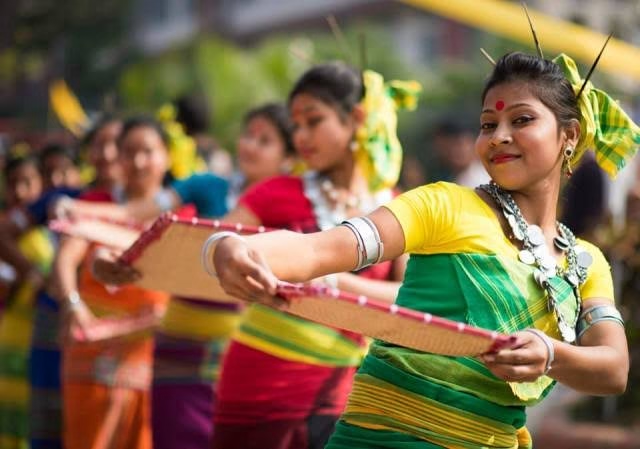
Ranachandi is a spectacular war dance of the Bodo community.
The Purpose
The Ranachandi Dance is performed to seek the blessings of the Almighty before the men set out for war. Through a simple Puja, the women seek the protection of their men. They also vow to take up arms and fight shoulder to shoulder with the men should the need arise.
How It Is Performed
- Women wear colourful traditional costumes known as “Dokna.”
- The dance begins with slow, graceful movements
- It ends with highly rhythmic martial movements
Bordoishikla – The Dance of Storm and Water
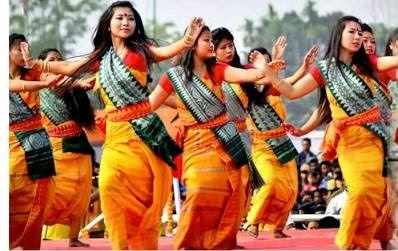
Bordoishikhla, a very special folk art form of the Bodo community, is dedicated to the Goddesses of Storm (Bordo) and Water (Shikla). It is also closely associated with harvesting and is performed to welcome a good monsoon.
The Performance
- Dancers perform with khanjaris, or bamboo clappers, in their hands
- The clappers provide the rhythm for their movements
- Colorful costumes and graceful body movements make the dance fascinating
- Performed to the accompaniment of Kham (drum), Siphung (flute), Jotha, Charinda and cymbals
Muchaglangnai Dance
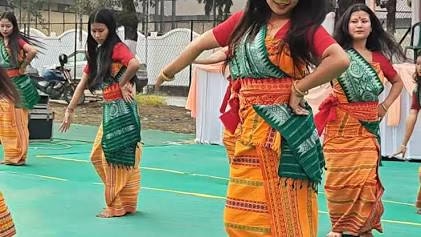
The Bodo community is known for its rich cultural heritage. The lively tunes and the colorful attire of the dancers (consisting of the dekhona and aarnia) make this dance particularly interesting and attractive.
The Performance
- Young girls dance to the lively beat of the traditional musical instrument, Kham
- Colorful costumes and graceful movements make the dance fascinating
Deori Tribe Dances
Bisuyo Jama Dance
One of the most attractive dance forms of the Deori tribe of Northeast Assam. In the Deori dialect, ‘Bi’ means extreme or excess, and ‘Su’ means rejoicing. The dance is performed during the ‘Bohagiyo Bisu’ festival, which lasts from a week to a fortnight.
Deuri Bihu
A special dance of the Deuri community performed during their festivals. It is one of the distinct variations of Bihu dance.
Tiwa Tribe Dances
Langkhon Fuja Mishawa
A traditional dance of the Tiwa tribe of Assam. The dance is performed during festivals observed in the months of November, December, and January. The theme of the dances is man’s relationship with and dependence on nature. Dancers wear colorful traditional costumes and carry decorated bamboo sticks.
Borot
A Tiwa folk dance form that is part of the rich cultural heritage of the Tiwa community.
Kahin Ghuruwa Nach – The Thali Dance
This is a part of the traditional Rongali Bihu Festival of Assam. Young boys and girls attired in traditional costumes perform this dance to the rhythm of the dhol.
The Performance
- Dancers very artistically place thaalis or plates on their bodies
- They strike different poses during the performance
- The lead dancer places as many as twelve to fifteen thaalis on his body while dancing
Mukholi Bihu
Mukholi Bihu is a variation of Bihu dance that is similar to the Rongali Bihu.
The Performance
- Young boys invite the girls with Bihu songs, the beating of drums and the tunes of the Pepa to join them in the open fields
- They exchange feelings of love and affection in the season of love, Spring
- The buffalo horn pipes and bamboo clappers paint a portrait of Spring that is not seen anywhere else
- It is a time when youngsters meet in the fields to dance
Thiya-Nam
Thiya-Nam is an attractive dance form prevalent in the Dakshin Kamrup area of Kamrup district.
The Performance
- There are 20 or 25 persons in one Thiyá-nâm party
- Every person of the party takes his position in rows and performs their own duties
- The movements of their hands and legs are very attractive
- The pāthak (lead singer) does not enter the arena of the pālis (dancers); rather, he remains amidst the instrumentalists behind the dancing party
- At the ending time of the dance, the pāthak joins the pālis when the pālis move in a circle, keeping the pāthaka in the middle
Types of Thiya-Nam Dance:
- Rangcalā
- Ek-khojiā
- Dui-khojiā
- Tini-khojiā
- Cāri-khojiā
- Au-bāgarā
- Bheherā-jujā
- Chālani-sarakā
- Penti-nāc
- Kuji-nāc
- Ughā-ghurā
- Bāti-kārā
- Māllā-dīya
Ojapali – The Storytelling Dance
Ojapali is the most attractive and distinctive form of folk drama in Assam. It is a unique combination of song, dance, and storytelling.
Types of Ojapali
| Type | Association |
| Biyahar-Ojapali | Marriage ceremonies recite verses from Mahabharata or Ramayana |
| Suknanni Ojapali | Worship of Snake Goddess Manasa |
| Mare-gowā Ojapali (Mare-gān) | Prevalent among Pati-Rabhas |
| Mare-gān gowā-Ojapali | Recites Vandanā in context of Mare-pujā |
The Performance
- The Ojā performs motions to explain the verses through dialogue with the help of the Dāinā-Pāli
- The activity and function of the Ojā and the Dāinā-Pāli create a semi-dramatic art form
- The Ojā wears a special type of dress at the time of singing, dancing and acting
Rabha Community Dances
Farkanti Dance
The Rabhas believe that the souls of the dead are reborn in this world not only as human beings but also as animals and birds. According to ancient belief, the three birds, Manchelanka, Tandalanka, and Batiktika, represent the souls of the departed. During the performance of the Farkanti Dance, these birds are used as symbols of friendship and trust.
The Purpose:
- Performed after the death of a person, in the presence of the kith and kin of the deceased
- The purpose of the dance is to enliven the sorrowful atmosphere in the deceased person’s family
- Through the dance, prayers are offered to show reverence and respect to the departed soul
Hamzar Dance
Hamzar refers to an age-old agricultural tradition of cultivating paddy on land cleared of forests in the hills and plains. This form of agricultural practice is known as ‘Jhum,’ or slash-and-burn cultivation.
Quick Summary Table
| Dance | Community | Occasion | Key Feature |
| Bihu | All Assamese | Bihu Festival | Energetic, fertility celebration |
| Sattriya | Vaishnavite | Religious rituals | Classical, devotional |
| Bagurumba | Bodo | Bwisagu festival | Butterfly-like graceful movements |
| Bagroomba | Bodo | Village gatherings | Merrymaking, circular dance |
| Ranachandi | Bodo | Before war | Martial, seek blessings |
| Bordoishikla | Bodo | Harvest festival | Dedicated to storm and water goddesses |
| Muchaglangnai | Bodo | Festivals | Lively tunes, colorful costumes |
| Bisuyo Jama | Deori | Bisu festival | Extreme rejoicing |
| Langkhon Fuja | Tiwa | Nov-Jan festivals | Nature relationship theme |
| Ojapali | Various | Storytelling | Folk drama, narrative |
| Kahin Ghuruwa | Various | Rongali Bihu | Thaali balancing |
| Mukholi Bihu | Various | Spring season | Courtship dance |
| Thiya-Nam | Various | Religious rituals | Rows and formations |
| Farkanti | Rabha | Post-funeral | Soul reverence |
Musical Instruments
| Instrument | Description | Used In |
| Dhol | Twin-faced drum | Bihu, various |
| Pepa | Horn-pipe from buffalo horn | Bihu |
| Taal | Cymbals | Bihu, Sattriya |
| Kham | Traditional Bodo drum | Bagurumba, Bagroomba |
| Siphung | Bamboo flute | Bagurumba, Bagroomba |
| Serja | Bowed string instrument | Bagurumba |
| Gogona | Reed-and-bamboo instrument | Bihu |
| Toka | Bamboo clapper | Bihu |
| Jotha | Cymbal | Bagurumba, Bordoishikla |
| Bhor Tal | Large cymbals | Thiya-Nam |
| Nagara | Large drum | Thiya-Nam |
FAQs
Q1. Which is the most famous folk dance of Assam?
Bihu dance is the most famous folk dance of Assam. It is performed during the Bihu festival, celebrating the Assamese New Year and spring season.
Q2. What is the significance of Bihu dance in Assamese tradition?
Bihu dance is a vital part of Assamese tradition. It celebrates fertility, spring, and the new year. It is a symbol of Assamese cultural identity and brings together people from all communities.
Q3. Who founded Sattriya dance?
Sattriya dance was founded by the great saint-poet Srimanta Sankardeva in the 15th-16th century and developed further by his disciple Madhavadeva.
Q4. When was Sattriya recognized as a classical dance?
Sattriya Nritya was recognized as one of the eight classical dances of India by the Sangeet Natak Akademi on November 15, 2000.
Q5. What is the Bagurumba dance?
Bagurumba is a graceful folk dance of Assam performed by the Bodo community. It is also known as the “Butterfly Dance” because of its gentle, fluttering movements.
Q6. What is the history of Bagurumba’s global recognition?
On 17 January 2026, over 10,000 Bodo dancers performed Bagurumba together at Sarusajai Stadium in Guwahati. Global search interest on Google for Bagurumba is at its highest ever in the last two decades, with 200 million views on PM Modi’s social media properties alone.
Q7. What is the Bohuwa dance?
The Bohuwa dance is a significant folk tradition of the Sonowal Kachari community, performed during the Bohag period as part of the Xaat Bihu celebrations. Performers dress in costumes made of banana leaves and wear masks representing mythological figures, enacting narratives depicting the triumph of good over evil.
Q8. What are the two styles of Sattriya dance?
The two styles are Paurashik Bhangi (masculine style – vigorous, acrobatic) and Stri Bhangi (feminine style – delicate, graceful).
The folk dances of Assam are a living testament to the state’s rich cultural diversity. From the high-energy Bihu dance to the devotional Sattriya, each dance reflects the vibrant spirit of Assamese tradition. These dances are not just entertainment. They are a celebration of life, community, and heritage.
Whether you’re watching a Bihu performance during the spring festival or witnessing the graceful Bagurumba of the Bodo community, you’re experiencing a tradition that has been passed down through generations.
Also Read:
Naga and Mizo Tribal Clothing – A Guide to Northeast India’s Weaving Heritage

Leave a Reply