
Hello folks! Have you ever seen dancers move with such intensity that they seem to channel divine energy? Or watched a masked performer transform into a demon right before your eyes? Welcome to the vibrant world of Nepali dance – a tradition as diverse as the country’s towering peaks and lush valleys.
Nepal is a cultural mosaic. Over 125 ethnic communities call this Himalayan nation home. Each community has its own unique dance traditions.
These dances are an integral part of Nepali culture, reflecting the country’s agricultural roots, religious beliefs, and joyful spirit. The Nepal traditional dress is not just clothing – it is a statement of identity and pride.
Today, we’re exploring the fascinating world of folk dances of Nepal. Let’s dive into this colorful world of rhythm and devotion!
The Origins of Nepali Dance Traditions
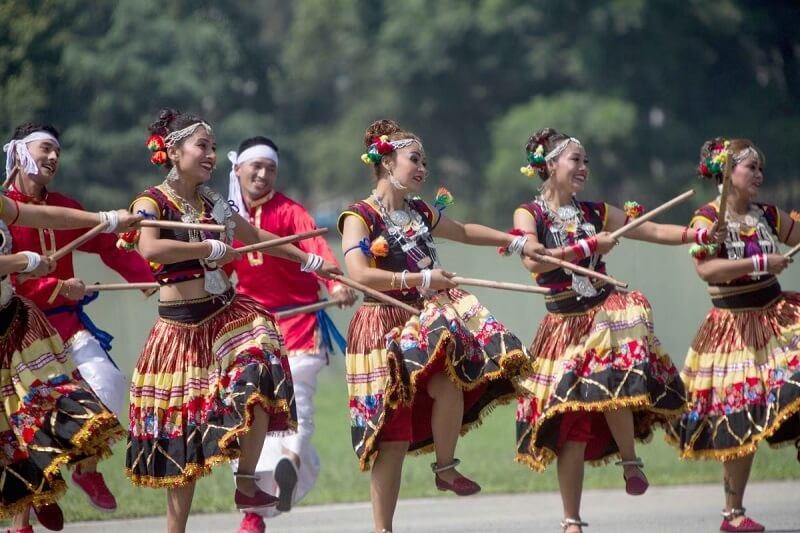
Legends state that dances in Nepal originated in the abode of Lord Shiva — the Himalayas, where he performed the tandava dance. This indicates that dance traditions of Nepal are very ancient and unique.
With altitudes and ethnicity, the dances of Nepal slightly change in style as well as in the costumes. This diversity is what makes Nepali Dance so fascinating.
Nepalese communities express their emotions through the rhythms of various folk dances. These dances are a part of their daily life. The country’s diverse geography, from the Terai plains to the high Himalayas, has given rise to a rich variety of dance forms.
Each region and ethnic group has developed its own unique style, contributing to the richness of Nepali culture. The nepal traditional dress worn in these dances reflects the region’s climate, resources, and cultural values.
Newar Community Dances – The Ritual Traditions of the Kathmandu Valley
The Newar community of the Kathmandu Valley has some of the most elaborate and sacred Nepali Dance traditions. These dance forms are deeply rooted in religious rituals and are an essential part of Nepali culture. The dancers wear exquisite nepal traditional dress with intricate jewelry and ornaments.
Lakhey Dance
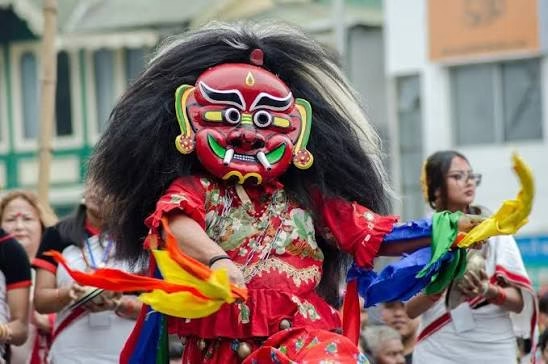
The Lakhe dance is a prominent masked dance of the Newar community. The word Lakhe means “demon” in the Newari language. The brightly coloured wooden mask with distorted facial features is the centrepiece of the dancer’s costume.
In the months prior to the performance, the Lakhe mask is worshipped by designated members of the community. The dancer wears a vibrant nepal traditional dress with elaborate ornaments, showcasing the richness of Nepali culture.
Key Features of Lakhey Dance:
- Violent, vigorous movements that showcase masculine demonic energies
- Loud music accompanying the dance, creating an intense atmosphere
- Dancer and attendants wander about the streets during the performance
- Sets the tone of festivities, especially during Indra Jatra
- The nepal traditional dress includes traditional Newari attire with elaborate jewelry
- The mask is regarded as a prized object, and it is a matter of great honour for the custodians to take care of it
Performance Occasions:
- Yanya Punhi (Indra Jatra): September, performed by Ranjitkars of Kathmandu
- Gunla Lakhey: August, tours various parts of the city
This sacred performance is a highlight of Nepali culture and a must-watch Nepali Dance for visitors.
Navadurga Dance
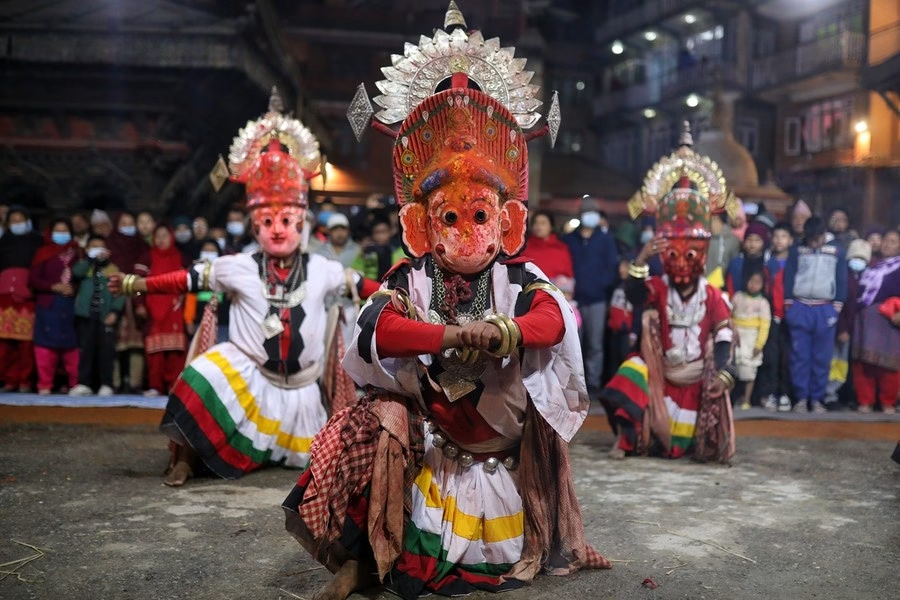
The Navadurga masked dance presents an ensemble of fifteen characters that embody both masculine and feminine energies.
As in the case of the Lakhe masks, the preparation of masks for Navdurga demands ritualistic rigour. The dancers wear stunning nepal traditional dress with intricate details, reflecting the deep-rooted Nepali culture.
Key Features of Navadurga Dance:
- Fifteen characters in total, each with a distinct mask and role
- Embodies both masculine and feminine energies, representing the divine feminine
- Masks made from special dark clay (dyo cha) found in Sakja, Bhaktapur
- Created under the guidance of the Prajapatis (potter community)
- Dancers wear elaborate nepal traditional dress with traditional Newari ornaments
- Whether representing the devil or the divine, the masks are sacred to the Newari community
Performance Occasions:
- Performed during religious festivals in the Kathmandu Valley
- Specific performances are held in Bhaktapur and surrounding areas
This unique aspect of Nepali Dance is what draws visitors from around the world to experience Nepali culture firsthand.
Jogi Pyakhan – The Hermit Dance
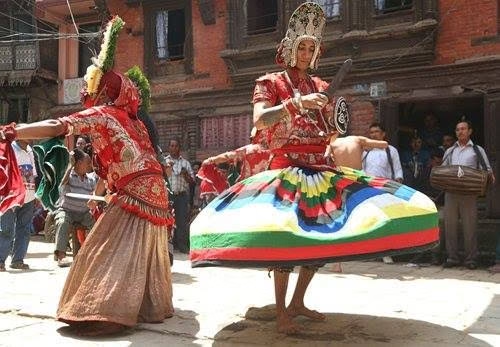
The Jogi Pyakhan, or ‘Hermit Dance,’ accompanies the Gai Jatra procession in Thecho, a Newah settlement of the Kathmandu Valley. This Nepali Dance is a beautiful expression of Nepali culture and a unique form of Nepali Dance.
Key Features of Jogi Pyakhan:
- A group of 11 barefoot males performs this dance
- One dancer is dressed in a yellow wrap and carries a Kalash (sacred water vessel)
- Fake matted and braided dreadlocks on his head depict Lord Shiva
- A fake cobra curled around the neck adds to the divine depiction
- Remaining dancers wear caps and shirts in yellow or maroon colours
- Each dancer holds a Rudraksha Mala (blueberry prayer beads) around the neck
- Each dancer carries a yellow sheet of paper with lyrical verses printed on them
What the Lyrics Communicate:
- Name of the deceased person
- Day, month, and year of the passing
- Names of the entire family members left behind
Performance Occasion: Performed during the Gai Jatra procession in Thecho.
The Jogi Pyakhan is believed to have started by a group of Newah enthusiasts called Dapha Khala in Thecho. Involvement of young members shows eagerness to carry the cultural heritage forward, preserving Nepali culture through this sacred Nepali Dance.
Other Newar Dances
Bhairab Pyakhan:
- Popular among Newar community in Kathmandu Valley
- Dedicated to Lord Bhairab, a fierce form of Shiva
- Features powerful, aggressive movements
- Dancers wear traditional nepal traditional dress with dark masks
Kumha Pyakhan:
- Sacred dance of Tuladhar and Kansakar caste groups
- Performed in temple and market squares
- Features ritualistic movements and offerings
- Dancers wear traditional Newari nepal traditional dress
Gathu Pyakhan:
- Sacred masked dance of the Newar people
- Performed during the Gathu month (August-September)
- Features colorful masks and elaborate costumes
- Dancers wear vibrant nepal traditional dress
Kartik Naach:
- Hindu dance performed by Newar people of Lalitpur
- Performed in the month of Kartik (October-November)
- Features devotional themes and graceful movements
- Dancers wear traditional nepal traditional dress with religious symbols
Dhime Dance:
- Newari dance performed with traditional instruments
- Features rhythmic drumming and synchronized movements
- Performed during festivals and celebrations
- Dancers wear colorful nepal traditional dress
Gurung Community Dances – The Grace of the Hills
Ghatu Dance
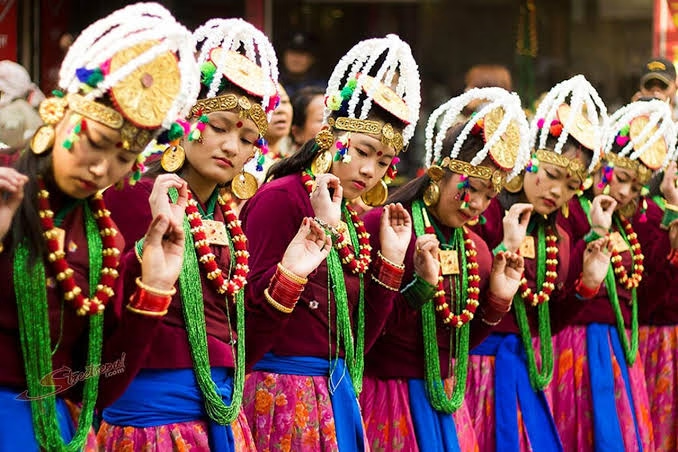
Ghatu Nritya is performed among the Gurung community in western Nepal. The dance is also a worshipping of Goddess Chandi, one of the forms of Goddess Durga.
The male priest, known as the ghatuguru, first worships the goddess and starts songs. Then ghatusari (young girls) start dancing with their eyes closed and reach an unconscious level. They wear beautiful nepal traditional dress with floral crowns, showcasing the rich Nepali culture.
Key Features of Ghatu Dance:
- Performed by young girls known as ghatusari
- Takes place during the Chandi Purnima festival (full moon of May)
- Involves re-enacting scenes from local mythology
- Dancers wear Gurung cultural dress and jewellery
- A crown made with flowers and roasted paddy is worn by the dancers
- The nepal traditional dress includes vibrant colors and intricate patterns
- Dancers reach a trance-like unconscious state
Performance Structure:
- Male priest (ghatuguru) worships the goddess
- Priest starts singing songs
- Ghatusari begin dancing with eyes closed
- Dancers reach an unconscious/trance-like state
This trance-like Nepali Dance is a unique aspect of Nepali culture that fascinates anthropologists and tourists alike. The nepal traditional dress worn by the ghatusari is a beautiful representation of Gurung heritage.
Sorathi Dance
The Himalayan Times
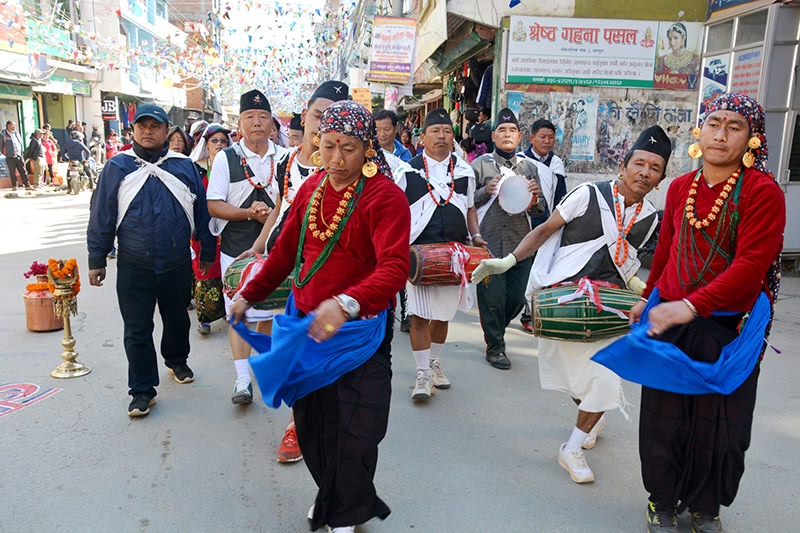
Sorathi Nritya is a traditional dance of the Magar community, which has become popular among other ethnic groups such as the Gurungs, Tharus, Darais, and Kumals. The dancers wear colorful nepal traditional dress with elaborate ornaments, reflecting the vibrant Nepali culture.
The Story Behind the Dance:
The dance follows the narrative of Queen Sorathi. A kind king named Jayasinge had no children after marrying fourteen queens. He married a fifteenth queen, who gave birth to a baby girl. A bribed soothsayer declared the baby would bring misfortune, so the king ordered the baby to be abandoned.
Two villagers found the baby in a golden trunk and raised her. Sixteen years later, the king met the grown-up girl and was struck by her beauty. When he tried to marry her, she revealed the truth. The king joyfully welcomed his long-lost daughter, now known as Queen Sorathi. This story is beautifully told through Nepali Dance.
Key Features of Sorathi Dance:
- Performed for about two weeks, beginning from Laxmi Puja during Tihar until Thuli Ekadashi (November)
- Dancers wear colorful Magar costumes and ornaments
- Accompanied by traditional musical instruments
- Includes rhythmic drumbeats and songs that set the tone for each scene
- The nepal traditional dress varies by region and community
- Known by various regional names: Nachanya, Karang Dance, Maruni, Nachari, and Pangdure
Performance Occasion: Tihar festival, from Laxmi Puja to Thuli Ekadashi.
Limbu Community Dances – The Eastern Himalayan Traditions
Chyabrung Naach
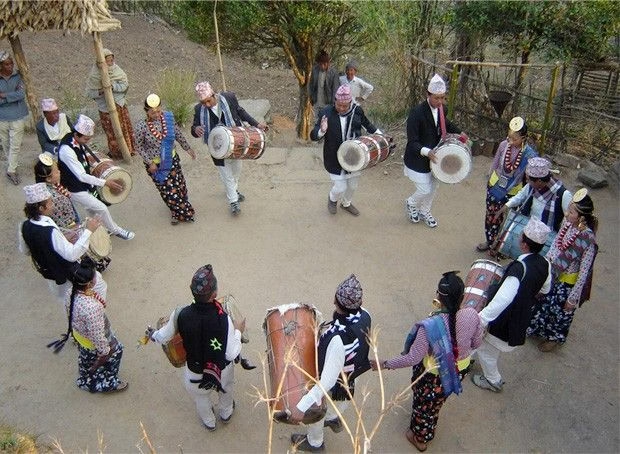
Chyabrung Naach is the traditional Nepali Dance of the Limbu people, living mainly in the Eastern part of Nepal. The dancers wear traditional nepal traditional dress with colorful accessories, representing the unique Nepali culture of the Limbu community.
Key Features of Chyabrung Naach:
- Performed by the Limbu community in eastern Nepal
- Features energetic movements and rhythmic footwork
- Accompanied by traditional Limbu musical instruments
- Dancers wear traditional nepal traditional dress with colorful accessories
- Performed during festivals and community celebrations
Kelang
Kelang is another Limbu folk dance that is part of the rich Nepali culture. This Nepali Dance is performed during festivals and celebrations.
Key Features of Kelang:
- Traditional dance of the Limbu community
- Features graceful and rhythmic movements
- Accompanied by traditional Limbu music
- Dancers wear colorful nepal traditional dress
- Performed during community gatherings and festivals
Rai Community Dances – The Kirat Traditions
Sakela Naach
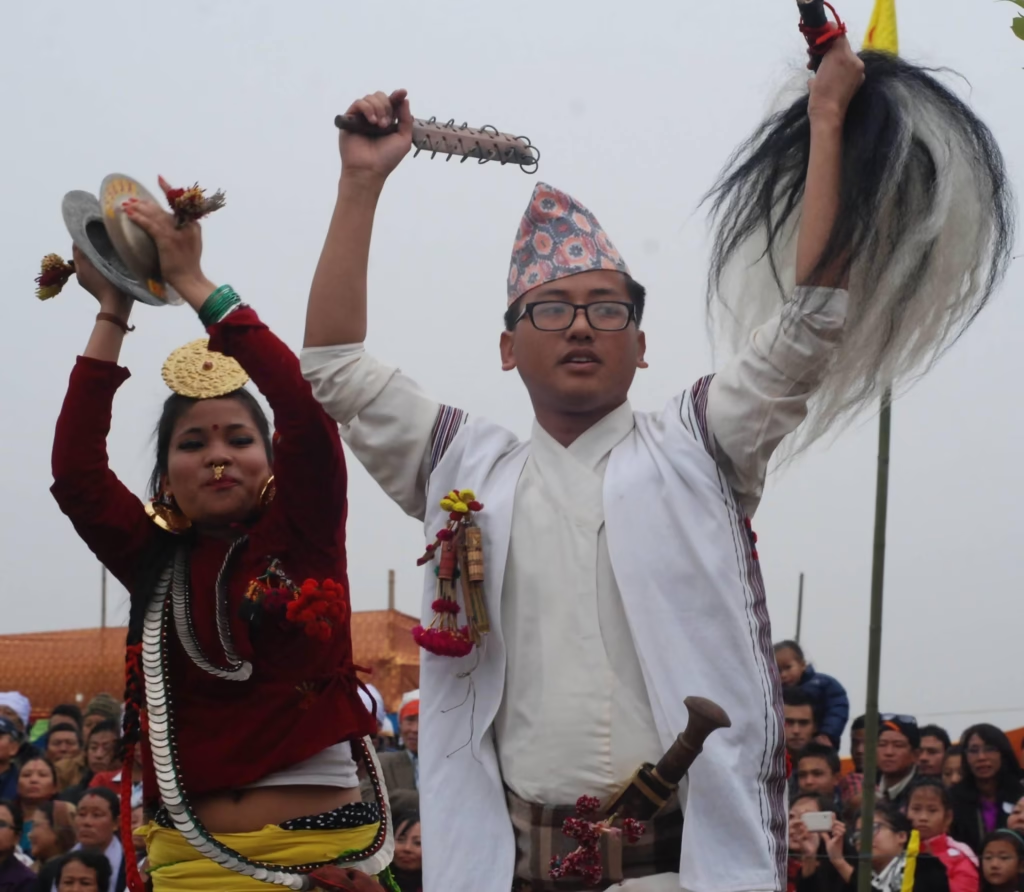
Sakela Naach is the traditional dance of the Khambu (Rai) community worshipping Lord Paruhang and Goddess Sumnima. This Nepali Dance celebrates the bond between nature and humanity and is an essential part of Nepali culture.
Key Features of Sakela Naach:
- Performed on important festival occasions
- Celebrates the bond between nature and humanity
- Dancers wear traditional ornaments and nepal traditional dress
- Features choreographed movements representing agricultural activities
- Accompanied by traditional Rai musical instruments
Udhauli and Ubhauli Celebrations
The Udhauli festival is associated with seasonal change, the worship of nature, and the joy of harvesting crops. The word ‘Udhauli’ signifies the seasonal migration downwards or towards the lowlands. With the arrival of winter, the process of humans migrating from the cool highlands to the warmer lowlands is called Udhauli.
Sakela/Sili Dance:
- The most significant aspect of the Udhauli festival is the collective Sakela dance
- Participants adorned in traditional nepal traditional dress and ornaments gather in a circle
- Perform the dance to the rhythm of drums and cymbals
- The dance involves acting out agricultural activities (sowing seeds, weeding)
- Includes gestures of animals, a process known as ‘Sili Tipnu’
- This beautiful Nepali Dance is a celebration of Nepali culture
Regional Names:
- Limbus: Chasok Tangnam
- Sunuwars: Folsyandar
- Yakhas: Chasuwa
Tharu Community Dances – The Terai Vibrance
The Tharu community of the Terai region has several unique dance forms. Their nepal traditional dress is distinct and colorful, adding to the diversity of Nepali culture.
Lathi Nach (Stick Dance)
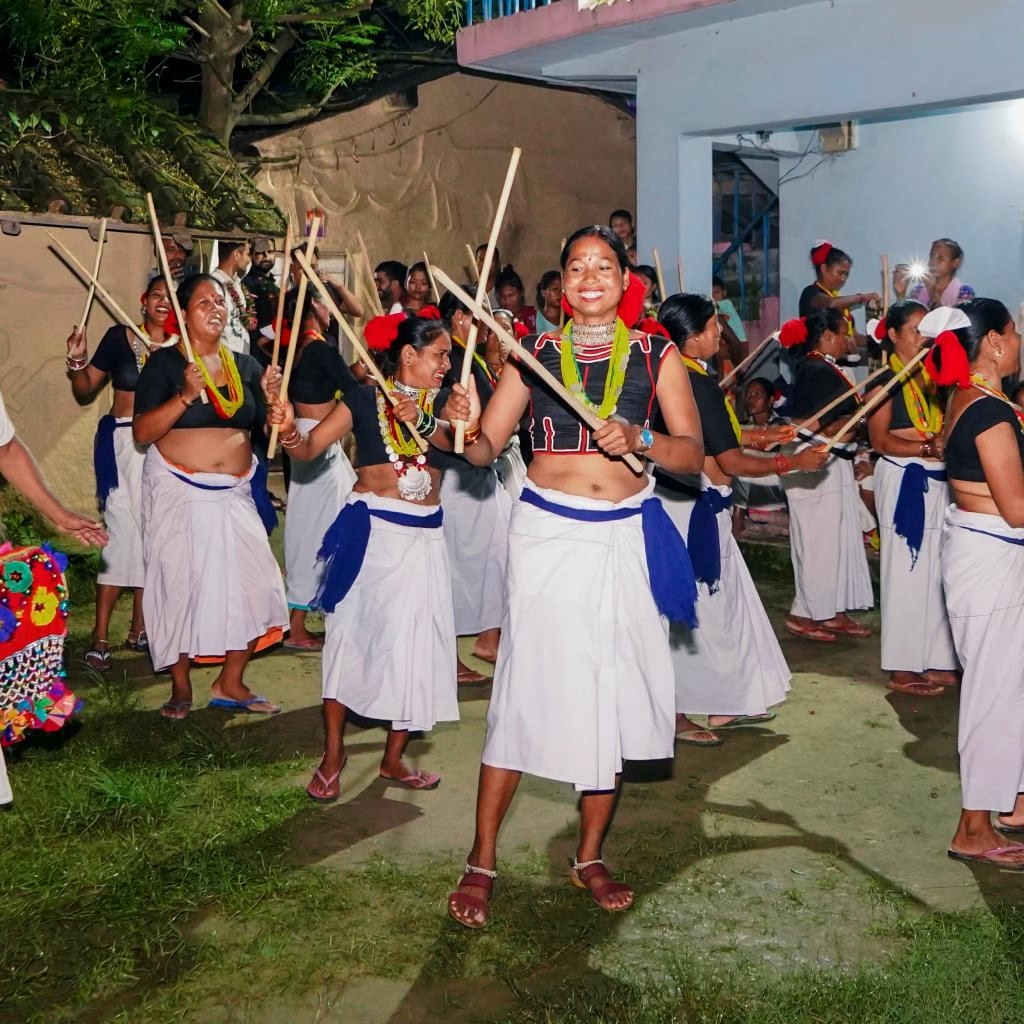
Lathi Nach is a traditional Tharu Nepali Dance performed during the Dashain festival. Dancers use sticks and perform synchronized movements. The dancers wear traditional nepal traditional dress with mirrors and colorful patterns.
Key Features of Lathi Nach:
- Performed by the Tharu community during Dashain
- Dancers use sticks and perform synchronized movements
- Features energetic and rhythmic choreography
- Dancers wear traditional nepal traditional dress with mirrors
- Accompanied by traditional Tharu musical instruments
Sakhiya Dance
Sakhiya is a traditional dance of the Tharu community performed during Dashain and Tihar festivals by unmarried young girls and boys. They wear vibrant nepal traditional dress and perform this joyful Nepali Dance.
Key Features of Sakhiya Dance:
- Performed by unmarried young girls and boys
- Takes place during Dashain and Tihar festivals
- Features joyful and energetic movements
- Dancers wear vibrant nepal traditional dress
- Accompanied by traditional Tharu music
Magar Community Dances – The Warrior Rhythms
Hurra Dance
Hurra is performed by the Eastern Magar community, featuring unique movements and rhythms.
Key Features of Hurra Dance:
- Performed by Eastern Magar community
- Features unique, energetic movements
- Accompanied by traditional Magar musical instruments
- Dancers wear colorful nepal traditional dress
- Performed during community celebrations
Mayur Naach (Peacock Dance)
Mayur Naach is performed by western Magar, especially Kham Magar, popular in the Mid-Western part of Nepal, particularly Rolpa and Rukum.
Key Features of Mayur Naach:
- Performed by western Magar, especially Kham Magar
- Popular in the Mid-Western part of Nepal (Rolpa, Rukum)
- Dancers imitate the movements of peacocks
- Features elegant and graceful choreography
- Dancers wear colorful nepal traditional dress with peacock-inspired ornaments
Karnali and Far-West Region Dances
Deuda Naach
Deuda Naach is popular in the Karnali and far-west provinces of Nepal. This folk Nepali Dance is usually performed in a group of either a single gender or both. This dance is performed on special occasions, such as rice transplanting, rice harvesting, at festivals, and wedding ceremonies. Dancers wear traditional nepal traditional dress from their respective communities, showcasing the diversity of Nepali culture.
Key Features of Deuda Naach:
- Popular in the Karnali and far-west provinces
- Performed in a group of either a single gender or both
- The leader starts songs, others repeat and dance in a circle
- Performed on special occasions: rice transplanting, rice harvesting, festivals, wedding ceremonies
- Dancers wear traditional nepal traditional dress from their respective communities
- Features call-and-response singing style
Kami Nach (Sword and Shield Dance)
The Kami Nach is a traditional sword and shield Nepali Dance from Jumla. It is performed in memory of Purichandra Tiruwa Kami, a famous Kami who was the military chief of King Bali (crowned in 1461) of Jumla. This powerful Nepali Dance is a reflection of the warrior spirit in Nepali culture.
Key Features of Kami Nach:
- Performed in Jumla, Karnali region
- Performed for various important life event ceremonies
- Not performed at death ceremonies
- In ancient times, performed by warriors as a rehearsal for war
- Performers exhibit various positions of a soldier fighting in battle
- Dancers wear warrior-style nepal traditional dress
- Uses swords and shields as props
The Kami Community: Kami people, also known as Vishwokarma, make weapons and tools for a living.
Terai Region Dances – The Plains of Madhesh
Jhijhiya Dance
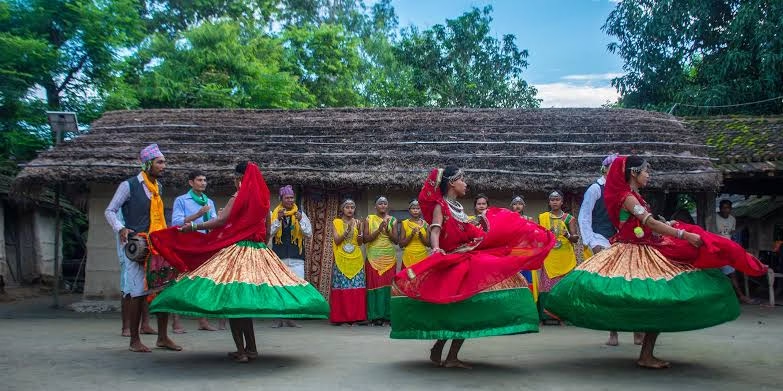
Jhijhiya is popular in the western and central Terai among Maithili and some Bhojpuri communities of Madhesh province. Women put a holey earthen pot with fire inside on their head and dance in a group during Dashain.
This unique Nepali Dance showcases the creativity of Nepali culture. The women wear colorful nepal traditional dress for this performance.
Key Features of Jhijhiya Dance:
- Popular in western and central Terai (Madhesh province)
- Performed by Maithili and some Bhojpuri communities
- Women put a holey earthen pot with fire inside on their head
- Dancers perform in a group formation
- Takes place during Dashain festival
- Dancers wear colorful nepal traditional dress
Jatjatin Dance
Jatjatin is based on folk songs of Maithili and Tharu communities. They perform from Shrawan Purnima to Bhadra Purnima. It is based on the love story of hero Jat and heroine Jatin and their lives. This romantic Nepali Dance is a beautiful expression of Nepali culture.
Key Features of Jatjatin Dance:
- Based on folk songs of Maithili and Tharu communities
- Performed from Shrawan Purnima to Bhadra Purnima
- Based on the love story of hero Jat and heroine Jatin
- Features romantic and expressive storytelling
- Dancers wear colorful nepal traditional dress
- Accompanied by traditional Maithili music
Mushar Naach
The Mushar community resides in various districts of the Terai region. This Nepali Dance is performed during special festivals, at birth ceremonies, wedding ceremonies, and on the ninth day of Dashain. The dancers wear traditional nepal traditional dress.
Key Features of Mushar Naach:
- Performed by the Mushar community in Terai districts
- Takes place during special festivals, birth ceremonies, wedding ceremonies
- Performed on the ninth day of Dashain
- Five male artists take part in the performance
- Rhythms are initiated by the guru (the master)
- Epics, stories about gods, the origin of earth, and life and family issues are the main topics
- Dancers wear traditional nepal traditional dress
Status: This dance is in a vulnerable condition and needs preservation.
Festivals and Dance Traditions
Tihar Festivals
Bhailo Dance:
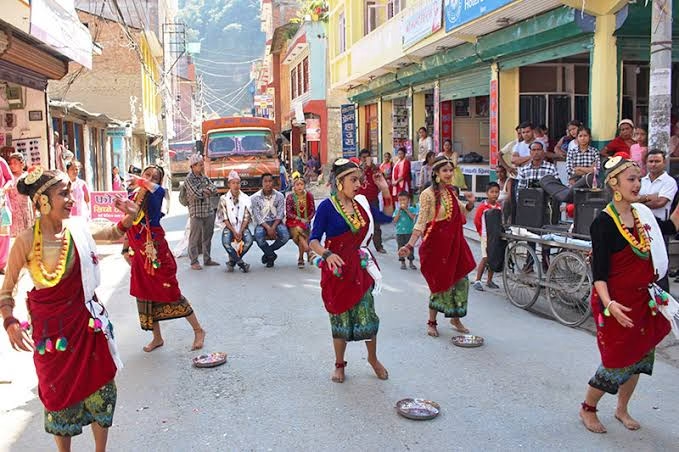
On the third day of Tihar (Gai Tihar and Laxmi Puja), a traditional song and Nepali Dance called Bhailo is performed by groups of young girls in the evening. This integral part of the celebration consists of a dance and ritual in which the girls bless the household with prosperity and happiness. The family within the household offers them fruits, sweets, and money in return for their blessings. The girls wear colorful nepal traditional dress for this beautiful Nepali Dance.
Key Features of Bhailo Dance:
- Performed by groups of young girls
- Takes place on the third day of Tihar (Gai Tihar and Laxmi Puja)
- Consists of dance and ritualistic blessing
- Girls bless the household with prosperity and happiness
- Family offers fruits, sweets, and money in return
- Girls wear colorful nepal traditional dress
- Features traditional songs and rhythmic clapping
Deusi Dance:
On the fourth night (Govardhan Puja and Mha Puja), a performance called Deusi ensues. It is generally performed by boys or a mixed-gender group. The performance includes a range of verses from blessings intertwined with playful banter. The group consists of a leader, often playing a drum-like instrument called Madal, who sings the main verses while the rest of the group chant “Deusi re!” between the lines. This Nepali Dance is a beloved part of Nepali culture.
Key Features of Deusi Dance:
- Performed by boys or a mixed-gender group
- Takes place on the fourth night of Tihar (Govardhan Puja and Mha Puja)
- Includes blessings intertwined with playful banter
- Leader sings main verses, group chants “Deusi re!”
- Leader often plays a Madal drum
- Dancers wear traditional nepal traditional dress
Santhal Dance during Dashain
The Santhal dance is known as the most ancient and original Nepali Dance. It is a part of the ancestral tradition of the Santhal people, a marginalized community living in Jhapa, Morang, and Sunsari districts of Koshi Province. The dancers wear unique nepal traditional dress with peacock feathers and mirrored turbans.
Key Features of Santhal Dance:
- Known as the most ancient and original Nepali Dance
- Performed by the Santhal community in Jhapa, Morang, and Sunsari districts
- Dancers wear peacock feathers on the head
- Turbans decorated with mirrors and earrings
- They dance collectively in the same rhythm and tune
- Musical instruments include Madal and Dhol
- The nepal traditional dress includes traditional Santhal attire
- The Dashain fair and Santhal dance have been taking place continuously since 1980
Nepal Traditional Dress in Dance – A Cultural Showcase
The nepal traditional dress worn during dance performances varies by community, reflecting the rich diversity of Nepali culture:
| Community | Traditional Attire | Key Features |
| Gurung | Gurung cultural dress, flower crown, roasted paddy decoration | Vibrant colors, floral ornaments |
| Magar | Colorful Magar costumes and ornaments | Elaborate jewelry, bold colors |
| Rai/Kirat | Traditional ornaments and attire | Nature-inspired designs |
| Tharu | Traditional Tharu attire with mirrors and earrings | Mirrored work, earthy tones |
| Newar | Traditional Newari dress, silk baku blouses, woollen blanket cloaks | Silk fabrics, intricate jewelry |
| Limbu | Traditional Limbu attire with colorful accessories | Handwoven fabrics, nature motifs |
| Santhal | Peacock feathers, mirrored turbans | Feathers, mirrors, tribal designs |
This variety of nepal traditional dress is what makes Nepali culture so visually rich and diverse. Each Nepali Dance is accompanied by its own unique costume, making every performance a visual treat.
Quick Summary Table
| Dance | Community | Occasion | Key Feature | Nepal Traditional Dress |
| Lakhey | Newar | Indra Jatra | Masked demon dance | Traditional Newari attire |
| Navadurga | Newar | Religious festivals | Fifteen characters | Traditional Newari dress |
| Jogi Pyakhan | Newar | Gai Jatra | Hermit dance | Yellow/maroon traditional dress |
| Ghatu | Gurung | Chandi Purnima | Trance-like state | Gurung cultural dress |
| Sorathi | Magar | Tihar | Queen Sorathi narrative | Colorful Magar costumes |
| Sakela | Rai | Udhauli/Ubhauli | Agricultural movements | Traditional Rai attire |
| Chyabrung | Limbu | Festivals | Energetic movements | Traditional Limbu dress |
| Lathi Nach | Tharu | Dashain | Stick dance | Mirrored traditional dress |
| Deuda | Various | Harvest, weddings | Circle formation | Regional traditional dress |
| Kami Nach | Kami | Life events | Sword and shield | Warrior-style dress |
| Bhailo | Various | Tihar | Girls’ blessing dance | Colorful traditional dress |
| Deusi | Various | Tihar | Boys’ blessing dance | Traditional attire |
| Santhal | Santhal | Dashain | Ancient tribal dance | Santhal traditional dress |
FAQs
Q1. What is the most famous Nepali Dance?
The most famous Nepali Dance is the Lakhey dance, performed by the Newar community during Indra Jatra. It features a vibrant demon mask and vigorous movements, showcasing the rich Nepali culture.
Q2. What is the traditional dress of Nepal worn in dances?
Nepal traditional dress varies by community. Newar dancers wear silk blouses and jewellery, Gurung dancers wear floral crowns, and Tharu dancers wear mirrored attire. Each community has its unique traditional costume that reflects Nepali culture.
Q3. What are the main dances of Nepali culture?
The main dances of Nepali culture include Lakhey, Ghatu, Sorathi, Deuda, Sakela, Bhailo, Deusi, and Santhal. Each Nepali Dance is unique to specific ethnic communities and festivals.
Q4. What is Ghatu dance?
Ghatu is a Nepali Dance performed by the Gurung community during Chandi Purnima. Young girls called ghatusari dance with their eyes closed, often reaching a trance-like state, wearing beautiful nepal traditional dress.
Q5. What is Bhailo and Deusi dance?
Bhailo and Deusi are traditional Nepali Dance performances during Tihar. Bhailo is performed by girls, while Deusi is performed by boys. They bless households and receive gifts in return, reflecting the warmth of Nepali culture.
Q6. What is the Santhal dance?
The Santhal dance is considered the most ancient Nepali Dance. It is performed by the Santhal community during Dashain with peacock feathers, mirrored turbans, and traditional nepal traditional dress.
Q7. What is the significance of the Udhauli festival dance?
Udhauli is celebrated during harvest season. The Sakela Nepali Dance involves acting out agricultural activities, symbolizing the bond between humans and nature in Nepali culture.
Q8. What is the Sorathi dance?
Sorathi is a traditional Nepali dance of the Magar community based on the story of Queen Sorathi. It is performed for about two weeks during Tihar with colorful traditional Nepalese dress and expressive storytelling.

Leave a Reply