

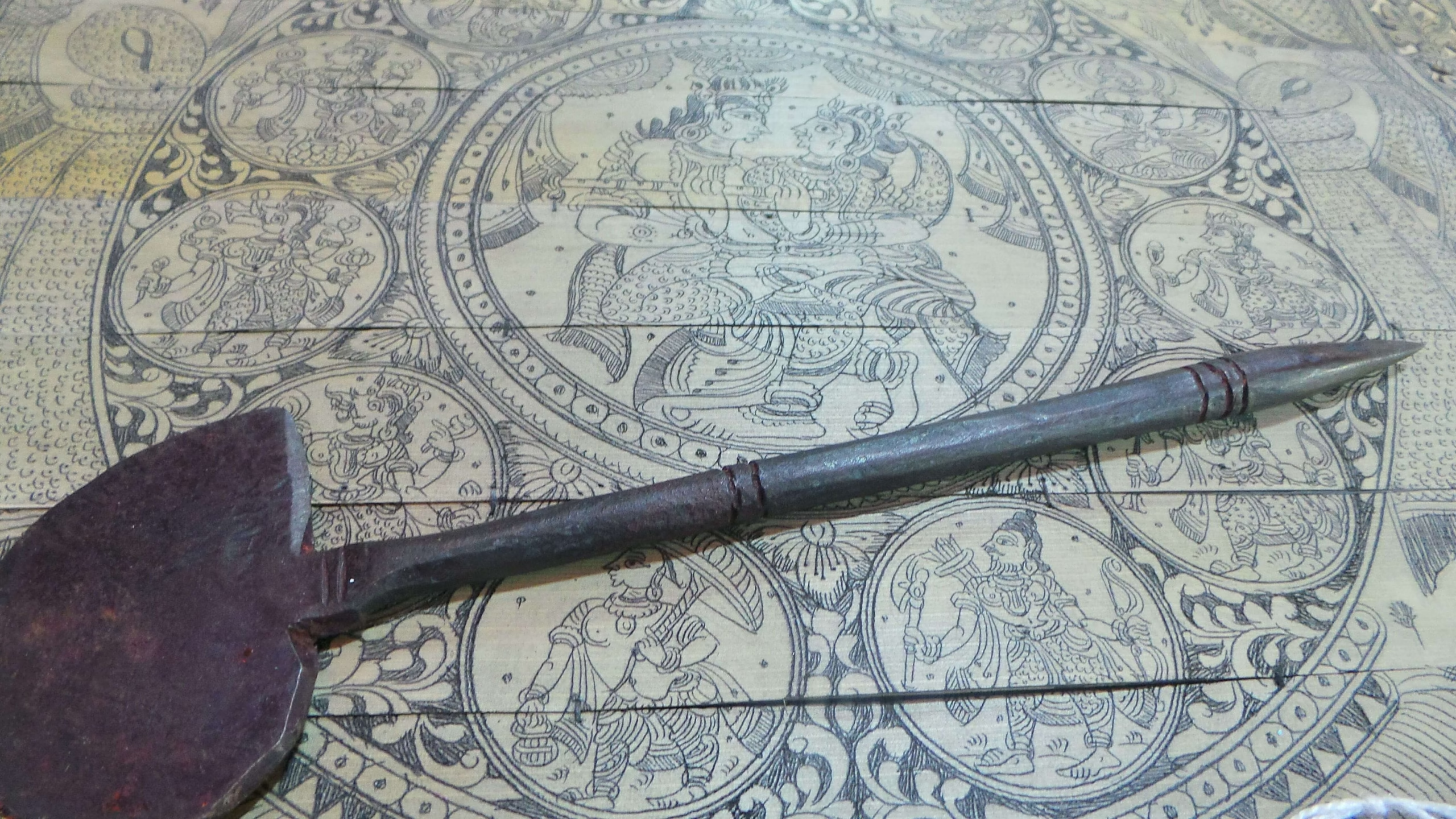
Hello folks, have you ever held a piece of art that feels older than time itself? Palm Leaf Engraving from Odisha is one such treasure. Known for its delicate lines and deeply spiritual storytelling, this centuries-old craft carries the heartbeat of Indian heritage in every stroke.
Artists carefully engrave tales from mythology, nature, and daily life onto dried palm leaves using handmade tools, and honestly, the patience behind it feels unreal.
Today, fewer than 2,000 artisans are actively preserving this traditional art form, making Palm Leaf Engraving even more precious in the modern world. It is not just craftwork. It is memory, devotion, and history carved by hand.
The beauty lies in its rawness, where every imperfect line tells a human story. If you truly love Indian folk art and hidden cultural gems, this tradition deserves your attention.
So, let’s begin this beautiful journey into Palm Leaf Engraving.
What Is Palm Leaf Engraving? – Writing Without Ink
Palm Leaf Engraving from Odisha is one of India’s oldest writing traditions. It is exactly what the name suggests. A dried palm leaf. A metal stylus. And a human hand that scratches letters into the surface. No ink. No printing press. No electricity. Just pressure and patience.
The process creates a physical indentation. Soot or turmeric is sometimes rubbed into the grooves to make the text visible. But the engraving itself does not need ink to exist. That is why these manuscripts have survived for centuries. Some palm leaf books from the 12th century are still readable today.
What makes Palm Leaf Engraving unique?
- No ink required: The text is physically cut into the leaf. It does not wash away.
- Eco-friendly material: Palm leaves are renewable and biodegradable.
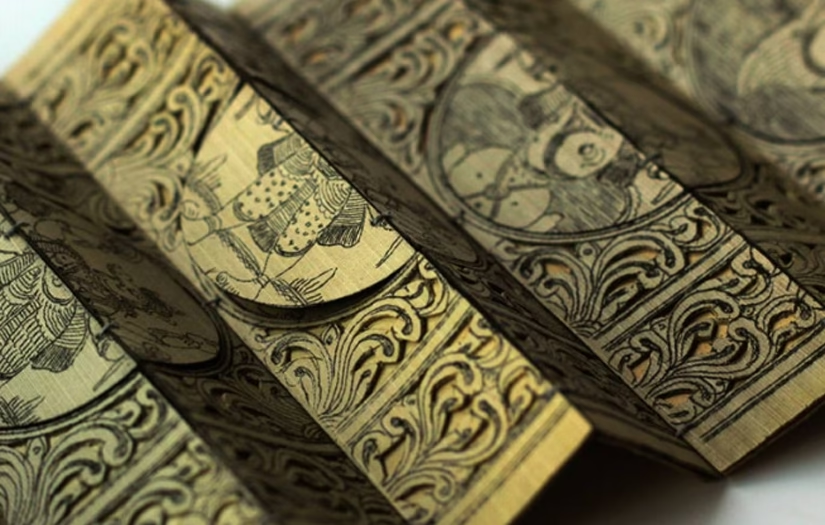
- Stackable format: Leaves are stacked, numbered, and tied with a cord through a central hole.
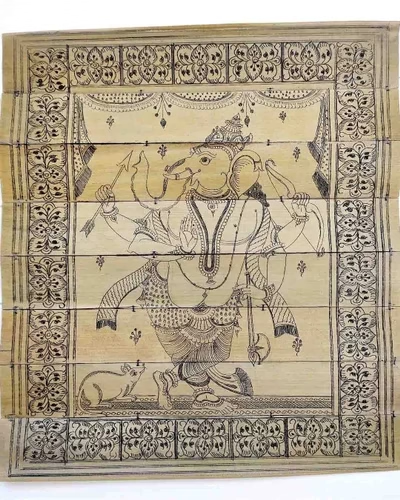
- Illustrated tradition: Many manuscripts include engraved drawings of gods, animals, and floral patterns.
The art is also called Talapatra Chitra (tal = palm, patra = leaf, chitra = picture). It is not just writing. It is an illustration. The same stylus that carves a Sanskrit verse also carves the face of a goddess.
In a world before paper was cheap, Palm Leaf Engraving was how Odisha preserved its knowledge. Scriptures. Astrology. Medicine. Poetry. Love stories. All of it lived on dried leaves.
A Timeline of Palm Leaf Engraving – 2,000 Years of Knowledge on Leaves
The history of Palm Leaf Engraving in Odisha stretches back nearly two millennia. Below is a timeline of its journey.
1st–5th Century CE (Early Beginnings)
- Buddhist monasteries in Odisha used palm leaves for scriptures.
- The oldest surviving palm-leaf manuscripts date from this period.
- Writing was done with iron styluses.
6th–12th Century CE (The Golden Age)
- Hindu temples became major patrons.
- The Gita Govinda (12th century) by Jayadeva was widely copied on palm leaves.
- Odisha developed its own script (Kalinga script) for engraving.
- Illustrated manuscripts became common.
13th–16th Century CE (Regional Expansion)
- Palm leaf manuscripts spread to every village temple.
- Subjects expanded: astrology, law, medicine, erotic poetry, and folk tales.
- Scribes formed hereditary communities.
17th–19th Century CE (British Era Disruption)
- Paper became cheaper and easier to produce.
- British schools taught paper-based education.
- Palm leaves gradually lost their practical value.
1950–1990 (Near Extinction)
- Printing presses replaced handwritten manuscripts entirely.
- Many palm leaf collections were destroyed or eaten by insects.
- Only a handful of traditional scribes remained.
2000–Present (Fragile Revival)
- UNESCO recognized palm leaf manuscripts as heritage.
- Digital preservation projects began.
- Today, fewer than 50 active Palm Leaf Engraving artists remain in Odisha.
What the timeline hides: Every palm leaf manuscript in a museum today represents a story that is no longer being told live. The leaves survive. The living art barely does.
Types of Palm Leaf Manuscripts—Sacred, Scientific & Sensual
Palm Leaf Engraving in Odisha produced many genres of manuscripts. Below are the main types.
1. Religious & Sacred Texts (Most Common)
- Hindu scriptures: Bhagavata Purana, Mahabharata, and Ramayana.
- Buddhist texts: Prajnaparamita manuscripts.
- Vaishnava poetry: Jayadeva’s Gita Govinda (most copied text).
- Format: Long rectangular leaves. Stacked. Wooden covers.
2. Astrological & Divination Manuscripts
- Jyotisha texts (Vedic astrology).
- Horoscope scrolls for wealthy families.
- Each manuscript includes planetary charts engraved as circular diagrams.
- These were consulted before weddings, harvests, and temple rituals.
3. Medical & Ayurvedic Texts
- Herbal remedies and surgical techniques.
- Descriptions of diseases and treatments.
- Often illustrated with plants and anatomical figures.
- Used by Odisha’s traditional healers until the 1950s.
4. Erotic & Love Poetry (The Hidden Genre)
- Known as Kama Sutra-style texts but in verse form.
- Never displayed publicly. Hidden in temple vaults or private collections.
- Often illustrated with explicit engravings.
- Very few survive today. Most were destroyed during the British era.
5. Administrative & Legal Records
- Land deeds and property records.
- Royal court proceedings.
- Tax collection registers.
- Some are still legally valid in Odisha’s villages.
6. Illustrated Scrolls (The Rarest)
- Not stacked leaves but long continuous strips.
- Used by storytellers like Patua painters.
- Combine engraving with natural color fills.
- Fewer than 20 complete illustrated scrolls exist today.
Quick takeaway: If it could be written, Odisha put it on a palm leaf. Sacred or scandalous. Medical or musical. The leaf did not judge.
Raw Materials Used – From Palm Tree to Finished Leaf
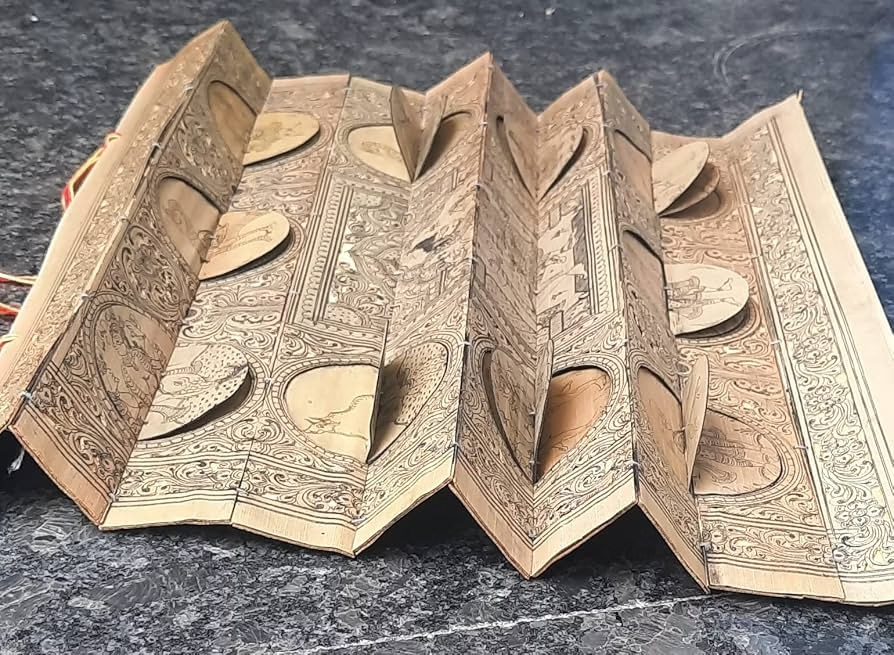
Every piece of Palm Leaf Engraving begins with materials collected from forests and villages. Below is the complete list.
1. The Palm Leaf (The Canvas)
- Tree species: Tal palm (Borassus flabellifer) or palmyra palm.
- Age of leaf: Mature but not old. About 2–3 years old.
- Season: Collected during summer when leaves are driest.
- Size per leaf: 2–3 feet long. Cut into 6–12 inch rectangles.
2. Leaf Preparation Materials
- River water: For soaking and softening.
- Tamarind: Mixed in water to clean the leaf.
- Cow dung: Used in the whitening process (traditional method).
- Lime powder: For final bleaching.
- Cotton cloth: For drying and pressing.
3. The Stylus (The Pen)
- Material: Iron or brass. Never steel (too hard).
- Tip shape: Sharp but not needle-sharp. Blunt enough not to tear.
- Handle: Wooden or wrapped in cloth for grip.
- Homemade: Most engravers forge their own stylus.
4. Natural Pigments (For Visibility)
- Lampblack (soot): Mixed with oil. Applied and wiped off. Stays in grooves.
- Turmeric powder: Yellow alternative. Used for sacred texts.
- Sindoor (vermilion): Red. Used for important initials or deity names.
- Oil: Castor oil or mustard oil. Helps pigment stick.
5. Binding & Preservation Materials
- Cotton cord: Passed through the central hole to stack leaves.
- Wooden covers: Two flat pieces of wood. Slightly larger than the leaves.
- Neem oil: Rubbed on finished manuscripts to repel insects.
- Cloth wrap: For storing the bundled manuscript.
Quantity note: One medium-sized manuscript (100 leaves) requires leaves from 8–10 palm trees. Each leaf must be harvested, dried, and treated for 2–3 weeks before engraving begins.
Step-by-Step Making – How a Dead Leaf Becomes a Book
Creating a single palm-leaf manuscript takes 20–30 days. Below is the traditional process of Palm Leaf Engraving.
Step 1: Leaf Collection (Day 1)
- Harvest mature tal-palm leaves during summer.
- Cut leaves into 12–18 inch rectangular pieces.
- Remove the central rib (thick vein) from each leaf.
Step 2: Boiling & Softening (Day 2)
- Boil leaves in large pots of water.
- Add tamarind to the water (helps remove natural oils).
- Boil for 2–3 hours until leaves become flexible.
Step 3: Drying & Flattening (Day 3–5)
- Lay leaves flat on bamboo mats.
- Place heavy stones on top to prevent curling.
- Dry in shade for 2–3 days.
- Never direct sunlight (makes leaves brittle).
Step 4: Whitening (Day 6)
- Apply a paste of cow dung and lime powder.
- Rub gently with cotton cloth.
- Rinse with clean water. Dry again.
- The leaf turns from brown to pale cream.
Step 5: Cutting to Size (Day 6)
- Trim edges with a sharp knife.
- Punch a hole exactly in the center of the left side.
- All leaves in a manuscript must have the hole in the same spot.
Step 6: Ruling Lines (Day 7)
- Use a bamboo stick and lampblack to draw faint horizontal lines.
- Lines guide the engraving. Usually 4–6 lines per leaf.
- No erasing allowed. Mistakes mean a new life.
Step 7: Engraving (Day 8–20 – The Longest Step)
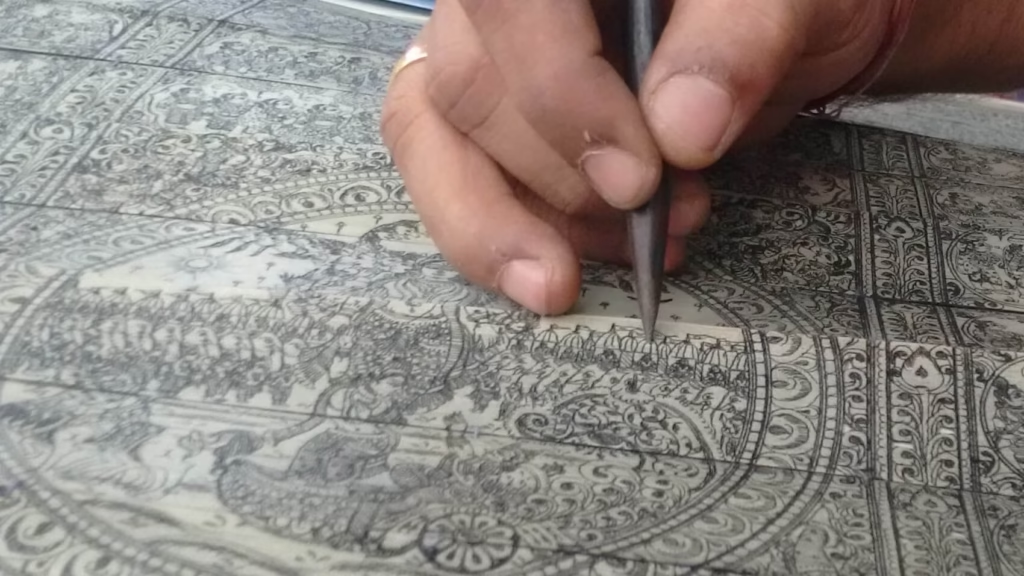
- Hold the stylus like a pen. But do not drag. Press and scrape.
- Letters are not written. They are cut into the leaf fiber.
- A single page (6 lines, 30 letters per line) takes 2–3 hours.
- An entire manuscript (100 leaves) takes 12–20 days of pure engraving.
Step 8: Illustrating (Day 15–25 – For Illustrated Manuscripts)
- The same stylus is used to carve images.
- Figures are geometric and stylized. No realistic shading.
- Common illustrations: deities, dancers, elephants, floral borders.
Step 9: Inking (Day 21 or 26)
- Lampblack mixed with castor oil is applied to the entire leaf.
- Wiped off immediately. Pigment remains only in the engraved grooves.
- The text becomes dark and readable.
Step 10: Binding & Finishing (Day 22–30)
- Stack leaves in correct order (numbered on the back).
- Thread a cotton cord through the center hole.
- Add wooden covers on top and bottom.
- Rub neem oil on the outer leaves to repel insects.
- Wrap in cloth. The manuscript is complete.
Total time for a 50-leaf manuscript: 20 days.
Total time for a 200-leaf illustrated manuscript: 45–60 days.
Major Hubs of Palm Leaf Engraving – Where the Art Still Lives
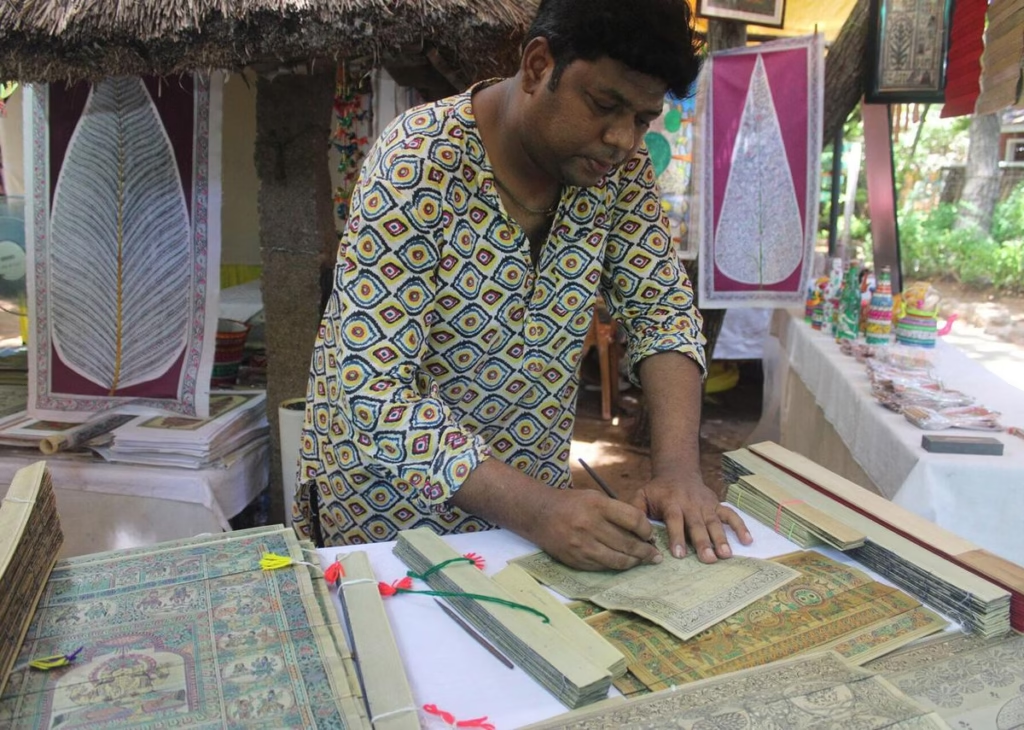
Palm Leaf Engraving in Odisha is not everywhere. Below are the remaining hubs.
1. Puri (The Biggest Hub)
- Location: Near the Jagannath Temple.
- Specialty: Religious manuscripts and temple records.
- Number of active engravers: 15–20.
- Unique feature: Some scribes still work for the temple treasury.
2. Bhubaneswar (The Museum Hub)
- Location: Around the Odisha State Museum.
- Specialty: Conservation and reproduction of old manuscripts.
- Number of active engravers: 5–8.
- Unique feature: The museum has a dedicated palm leaf manuscript conservation lab.
3. Cuttack (The Commercial Hub)
- Location: Old city area near the river.
- Specialty: Small souvenir manuscripts for tourists.
- Number of active engravers: 8–10.
- Unique feature: Some engravers here also work on paper and cloth.
4. Raghurajpur (The Artist Village)
- Location: About 50 km from Bhubaneswar.
- Specialty: Illustrated palm leaf manuscripts (Talapatra Chitra).
- Number of active engravers: 10–12.
- Unique feature: This village is also famous for Pattachitra painting. Some artists practice both.
5. Kendrapada (The Rural Hub)
- Location: Coastal Odisha.
- Specialty: Astrological and medical manuscripts.
- Number of active engravers: 3–5 (very small).
- Unique feature: The oldest family-owned palm leaf collection in Odisha (over 500 years old).
What these hubs share: Every single one is shrinking. The engravers are over 50 years old. Young people are not learning. The government has started training programs, but fewer than 10 students graduate each year.
Why Is Palm Leaf Engraving Dying? – Old Leaves, Older Hands
Palm Leaf Engraving is not dying because people stopped respecting it. It is dying because the math does not work. Below are the raw numbers.
The Economics of a Dying Art
| Item | Cost/Income |
| Raw leaves (100 leaves prepared) | ₹1,000–₹1,500 |
| Stylus (handmade, lasts years) | ₹500 (one-time) |
| Lampblack and oil | ₹200 |
| Cotton cord and cloth | ₹100 |
| Time for 50-leaf manuscript | 15–20 days |
| Selling price (to middleman) | ₹2,000–₹3,000 |
| Artisan’s daily wage | ₹100–₹150 |
Compare that to a daily wage laborer in Odisha: ₹400–₹500 per day. A construction worker earns more in one day than a palm leaf engraver earns in four.
Why Young People Refuse to Learn
- A smartphone costs ₹10,000. A palm leaf engraver saves that in 100 days.
- There is no career path. No college degree. No government job.
- The work hurts. Fingers cramp. Eyes strain. Back aches.
- Young people see their parents struggling. They choose anything else.
The Numbers That Should Scare You
- 1980s: Approximately 500 active engravers in Odisha.
- 2024: Fewer than 50. Some estimates say 30.
- Average age of engraver: 58 years.
- Engravers under 30 years old: Less than 5.
- Government training program graduates (last 10 years): 42. Number still practicing: 12.
What Happens Next
In 10–15 years, the last of the old engravers will be gone. The manuscripts will remain in museums. Digital copies will exist on hard drives. But the knowledge of how to hold the stylus, how much pressure to apply, and how to carve a curve without tearing the leaf—that will die. Because that knowledge never lived in books. It lived in hands.
How to Identify Authentic Palm Leaf Manuscripts
The market for Palm Leaf Engraving is small, but fakes exist. Below is how to tell authentic manuscripts from reproductions or tourist souvenirs.
Authentic Palm Leaf Manuscript (Traditional)
| Feature | What to Look For |
| Leaf surface | Uneven, slightly rough, natural variations in color |
| Engraving depth | Visible grooves. You can feel them with your fingernail. |
| Pigment | Lampblack or turmeric. May be faded or uneven. |
| Edges | Irregular. Hand-cut, not machine-trimmed. |
| Binding | Cotton cord through a single hole. Wooden covers. |
| Leaf count | Odd numbers (e.g., 101 leaves). Even numbers are suspicious. |
Fake / Souvenir Replicas
| Feature | What to Look For |
| Leaf surface | Uniform color. Often artificially smoked to look old. |
| Engraving depth | Shallow scratches. Sometimes printed, not engraved. |
| Pigment | Chemical ink. Uniform and unnaturally dark. |
| Edges | Perfectly straight. Machine-cut. |
| Binding | Metal rings or plastic string. No wooden covers. |
| Price | Under ₹500 for a “manuscript.” Too cheap to be real. |
The Smell Test
Authentic palm leaf manuscripts have a distinct smell. Neem oil. Aged leaf. Soot. Fakes smell like chemicals or nothing at all.
Where to Buy Authentic Palm Leaf Manuscripts
- Odisha State Museum, Bhubaneswar (museum shop sells certified reproductions).
- Raghurajpur artist village (buy directly from engravers).
- Government handloom and handicraft emporiums.
- Reputable heritage auctions (for antique manuscripts).
Where to Avoid
- Street vendors in Puri or Bhubaneswar (99% are tourist souvenirs).
- Online marketplaces under ₹1,000 (almost certainly fakes).
- Anyone claiming a “1,000-year-old manuscript” for ₹5,000. Real antiques cost ₹50,000+.
FAQs
Q1. How old is the oldest surviving palm leaf manuscript from Odisha?
Approximately 1,200 years old. It is housed in the Odisha State Museum, Bhubaneswar.
Q2. Is Palm Leaf Engraving the same as Talapatra Chitra?
Yes. Talapatra Chitra is the Odia name. It translates to “palm leaf picture.”
Q3. Can palm leaves really last 1,000 years?
Yes, if stored properly. Dry conditions, neem oil treatment, and insect-free storage are essential.
Q4. Why did people stop using palm leaves?
Paper became cheaper. Printing presses made handwritten copies obsolete. British-era schools taught paper-based education.
Q5. How many palm leaf manuscripts still exist in Odisha?
Estimates range from 50,000 to 200,000 individual leaves in museums and private collections. Most are not cataloged.
Q6. Is the art completely dead?
No. Approximately 30–50 active engravers remain. But the art is critically endangered.
Q7. Can I learn Palm Leaf Engraving?
Yes. The Odisha State Museum and Raghurajpur village offer short workshops (2–5 days). Fees range from ₹2,000 to ₹5,000.
Q8. What language is used on Odisha’s palm leaf manuscripts?
Odia script. The language is usually Sanskrit, Odia, or a mix of both.
Q9. Are palm leaf manuscripts still legally valid?
Yes. Some land deeds and legal records written on palm leaves are still accepted in Odisha’s village courts.
Q10. What is the most famous palm leaf manuscript from Odisha?
The 12th-century Gita Govinda manuscript illustrated by the artist Shilpi. It is now in the British Library, London.
Also Read:
Cheriyal Scrolls of Telangana: Ancient Tales Now Told on Mobile Covers

Leave a Reply