

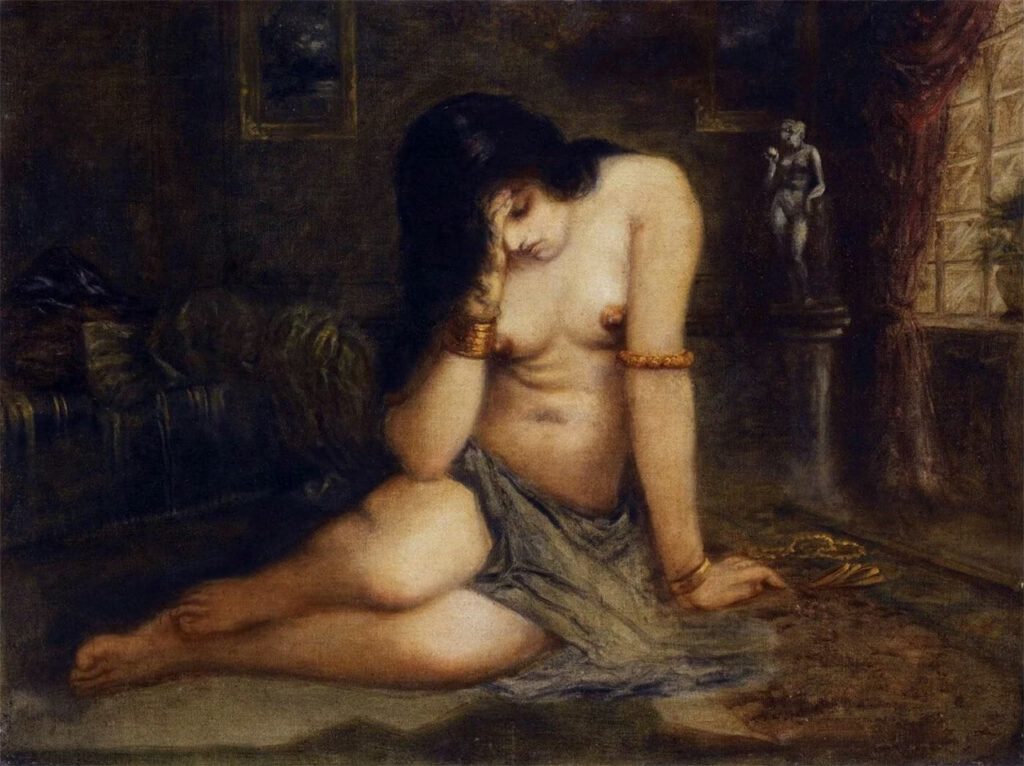
Look, let’s just say it straight. Nude art in India makes people uncomfortable. You show someone a centuries-old temple carving; they call it culture. You show a modern painting of the same thing; they call it obscene. That tension is exactly what we’re talking about today.
Nude Indian paintings aren’t new. They’re not some Western import. Go to Khajuraho and visit Ajanta; our ancestors carved and painted the naked human body without flinching. It meant something then. Fertility. Devotion. Raw power. Pure beauty.
So why does the same art spark court cases and angry headlines now? Why do some see spiritual symbolism while others see sin?
This blog unpacks all of it. The forgotten history. The hidden meanings in every curve and posture. And yes, the messy, heated fights over what belongs on a gallery wall versus what gets dragged to court.
Let’s talk. No filters. No lectures. Just honestly looking at an art form India can’t quite decide what to do with.
What Are Nude Indian Paintings? Understanding Nude Art in India
Let’s clear the air right away. Nude Indian paintings are not what you think. They are not about cheap thrills or hiding in dark corners. They are about honesty. Raw, unfiltered honesty. Artists have painted the human body here for centuries. Not for shock value. For truth.
Think of ancient temple walls. Khajuraho. Ellora. You see bodies. Curves. Skin. But it never feels dirty. That is the fine line.
So here is the basic difference between nudity and eroticism:
- Nudity is about being. It shows the human form as is. Without clothes. Without pretense. It can feel peaceful, sad, strong, or fragile. Just raw existence.
- Eroticism is about wanting. It teases. It suggests. It aims to stir desire. The gaze shifts from observing to craving.
Indian nude art mostly stays in the first lane. It celebrates life, fertility, and devotion. The body becomes a temple. Not a toy. That understanding changes everything you see.
Historical Roots of Nude Art in Indian Culture
Let’s rewind time. Long before anyone got awkward about the human body, Indian art celebrated it like a festival. You see this clearly in our oldest surviving masterpieces.
The Ajanta murals from around the 2nd century BCE are a perfect example. Walk into those caves, and you’ll find figures painted with stunning honesty. Their bodies are rounded, graceful, and often partially draped or fully bare. There’s no shame here. Just pure artistic wonder at how the human form moves and lives.
- Ajanta murals (200 BCE – 480 CE) – These paintings show royal processions, daily life, and divine beings. Bodies are relaxed, curved, and beautifully drawn. Clothes are thin or missing. It feels natural, not forced.
- Ancient temple carvings – Think Khajuraho, but also older sites like Sanchi and Bharhut. Sculptors carved yakshis (nature spirits) with full hips and bare chests. These weren’t secret pieces hidden away. They stood proudly on temple walls for everyone to see.
- Early symbolism of body and beauty – In old texts and art, a beautiful body meant a blessed life. Full curves meant health, wealth, and fertility. Showing the body was a way to honor nature, the gods, and life itself. You worshipped creation by celebrating its most beautiful form.
Nude Art Beyond Eroticism: Symbolism and Spiritual Meaning
Here’s what most people get wrong. Nude art in India rarely started as just “sexy.” It had a job to do. It carried meaning. It whispered something deeper about existence.
Look closely, and you’ll find layers of symbolism hiding in plain sight.
- Fertility, abundance, divinity – The lush, full-bodied yakshi figures aren’t just pretty to look at. She represents the tree, the earth, the fruit. Her bare body says, “Life grows here.” Touching her foot or breast was believed to bring pregnancy. That’s not cheap titillation. That’s prayer.
- The body as a vessel for the divine – In Tantric and yogic traditions, the nude body becomes holy. You strip away clothes and ego together. What remains is pure soul. Many temple carvings show gods and goddesses fully bare not to arouse, but to remind you that the divine lives inside skin and bone.
- Emotional and philosophical expression – A nude figure in pain, in dance, in meditation, or in love expresses raw human truth. You cannot fake it. Clothes hide. The nude is revealed. Ancient Indian artists used bare bodies to show joy, grief, devotion, and ecstasy because those feelings live under the skin, not on top of it.
7 Famous Nude Indian Paintings and Artists
Let’s get one thing straight. Indian art has never shied away from the human body. You just have to know where to look. From ancient temple carvings to modern canvases, the nude figure carries deep meaning. It’s about mythology, identity, and raw emotion.
These seven artists pushed boundaries. They faced praise and sometimes heat. But they never stopped.
Each painting tells a different story. But all of them refuse to look away.
Hemen Majumdar – Untitled
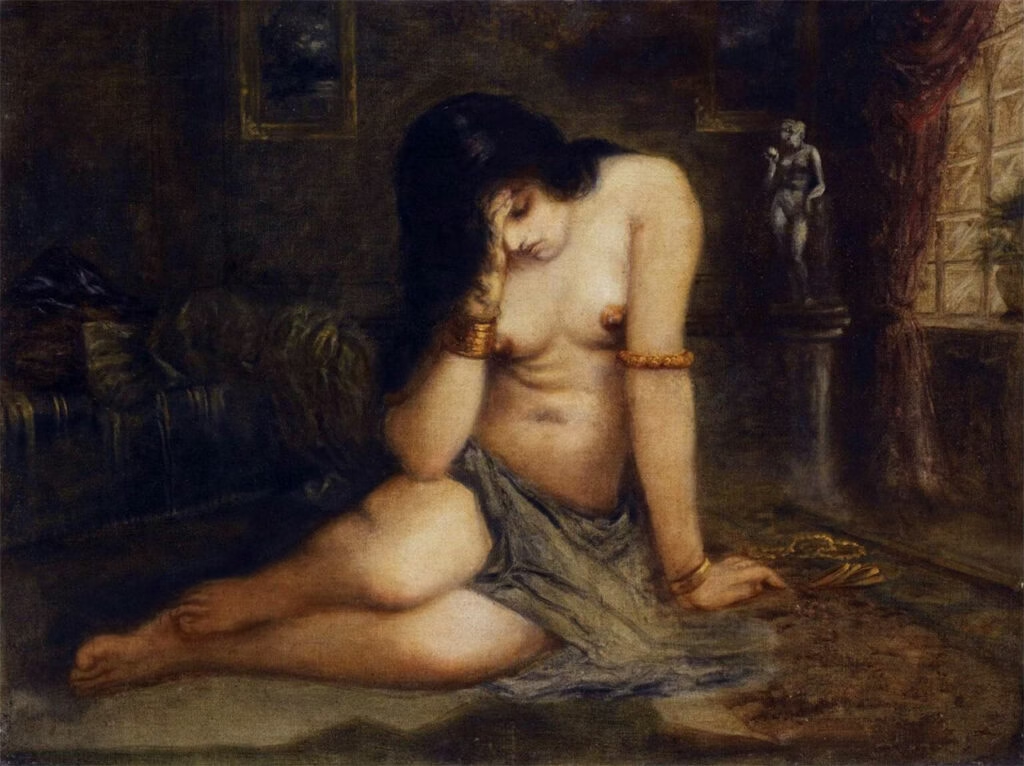
Hemen Majumdar painted feminine beauty with soft hands and a sharp eye.
His untitled nude shows a woman with long flowing hair and warm, glowing skin. She looks real. Not posed. Just caught in a quiet, honest moment.
He studied in Paris. But his heart stayed in Bengal. He blended European realism with Indian grace.
What makes him stand out:
- Soft skin tones. No harsh lines. Everything blends like a whisper.
- Emotion over drama. His women feel calm. Comfortable in their own bodies.
- Long hair as art. He used flowing hair to frame the face and add movement.
Majumdar didn’t shock you. He stopped you. His nudes feel like stolen moments. A woman drying her hair. A quiet afternoon. Nothing loud. Everything beautiful.
That’s his power. He makes small things feel unforgettable.
2. Raja Ravi Varma – Tilottama
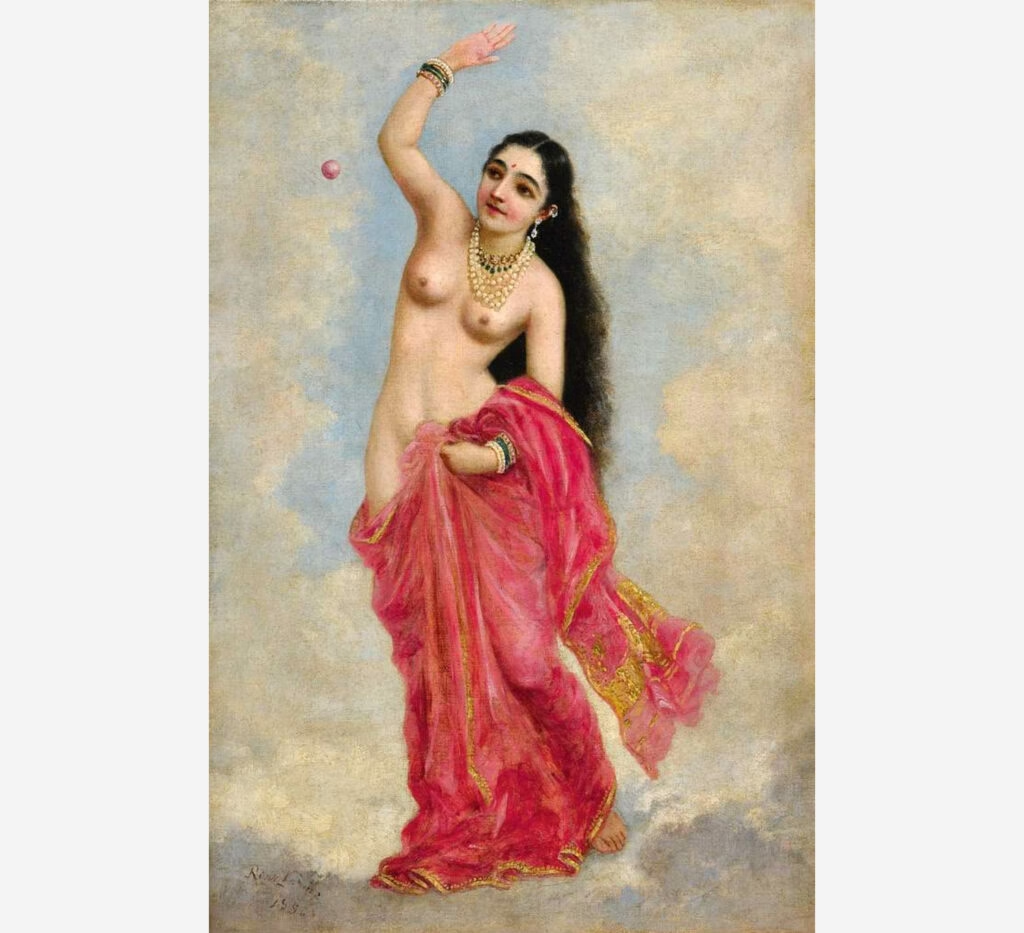
You cannot talk about royal art without this man. Raja Ravi Varma didn’t just paint. He redefined how India saw its own gods and goddesses.
He took European realism. He mixed it with Indian mythology. The result? Divine women who looked like they could walk out of the frame. His nudes never felt cheap. They felt sacred.
Take Tilottama. She’s a celestial apsara. Varma painted her with glowing skin, long dark hair, and a quiet, knowing smile. You see her beauty. But you also feel her power.
Here is what makes Varma special:
- He used real Indian women as models. Not Greek statues. Real faces, real bodies.
- His lighting feels dramatic. Deep shadows. Soft highlights. Very theatrical.
- The drapes tell a story. Fabrics cling and fall in ways that feel alive.
Some critics called his work too sensual. But Varma didn’t care. He was busy giving India a new visual language. One where nudity and divinity could share the same canvas without shame.
3. Amrita Sher-Gil – Self-Portrait as a Tahitian
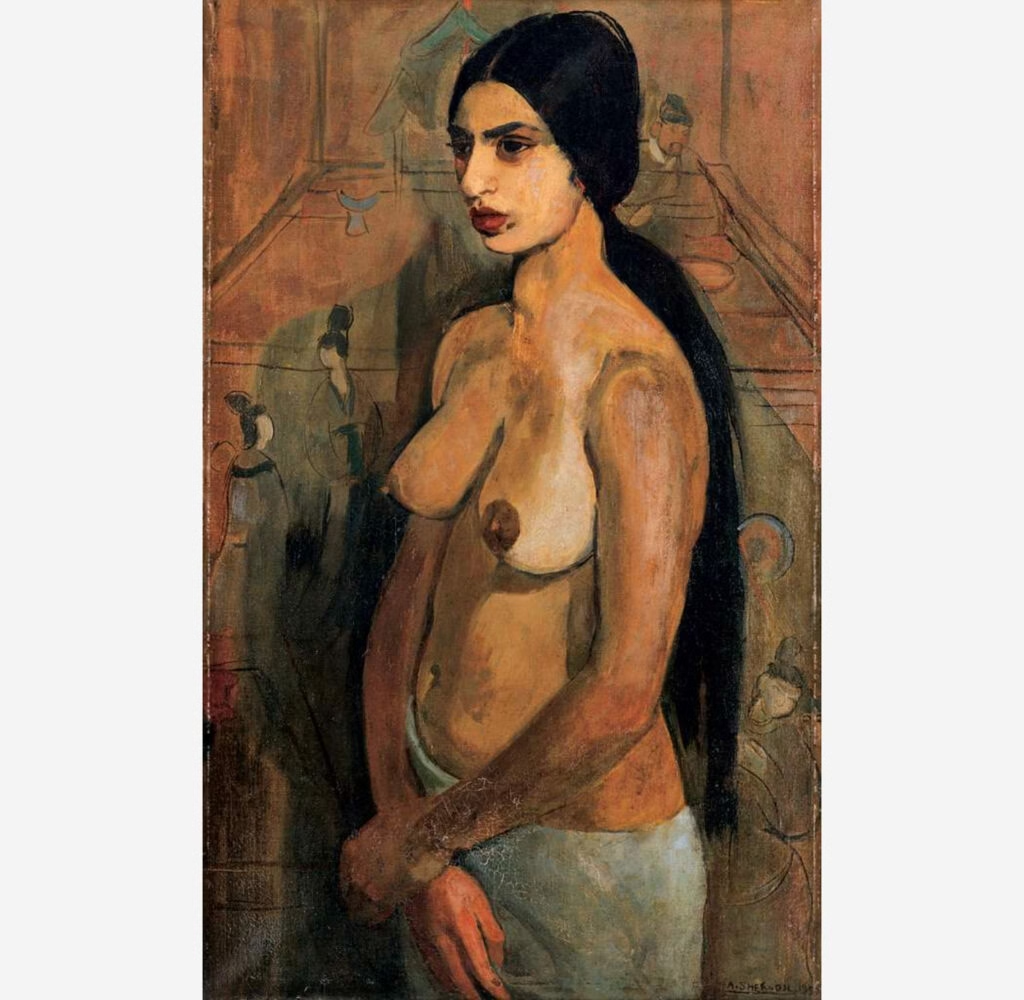
Amrita Sher-Gil was fearless. She painted what she felt. And she never apologized for it.
Her Self-Portrait as a Tahitian is a punch in the gut. She painted herself bare, but not for your gaze. She painted for herself. You see dark skin, bold eyes, and a face that says, “I know exactly who I am.”
She borrowed from Gauguin’s Tahitian women. But she made it her own. This wasn’t a man’s fantasy. This was a woman looking in the mirror and telling the truth.
Things to notice in her work:
- Expressive colors. Deep greens, ochres, and browns. No shy pastels.
- Raw honesty. She painted her own body with all its realness.
- Identity on display. She was Indian, Hungarian, and a woman. All of it shows.
Sher-Gil died young. But her nudes still feel fresh. Still feel rebellious. She didn’t paint for applause. She painted because she had to. And that’s why we still talk about her.
4. M.F. Husain – Bharat Mata
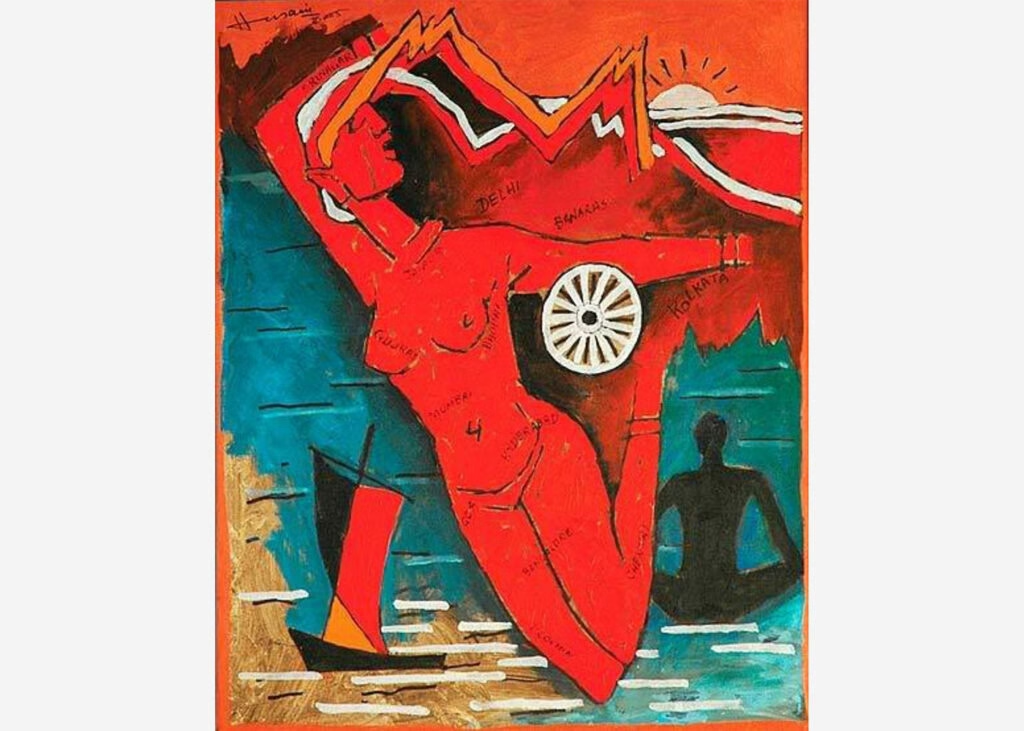
Love him or hate him. You cannot ignore M.F. Husain. His Bharat Mata stirred more trouble than almost any Indian painting in recent memory.
He painted India as a nude woman. A map drawn in flesh. Curves became rivers. The skin turned into a landscape. It was bold. It was symbolic. And yes, it made people furious.
Why did he do it?
- He wanted to show a nation’s pain. Her nudity meant vulnerability. Not vulgarity.
- The colors scream. Bright reds, deep blues, earthy browns. Very Husain.
- Horses run in the background. His signature touch. Movement. Energy. Life.
Critics called it blasphemy. Supporters called it genius. Husain eventually left India. But his painting stayed behind. Love it or not, it makes you think. And that’s what real art does. It doesn’t sit quietly. It grabs you by the collar and asks, “What do you see?”
5. F.N. Souza – Nude with Mirror
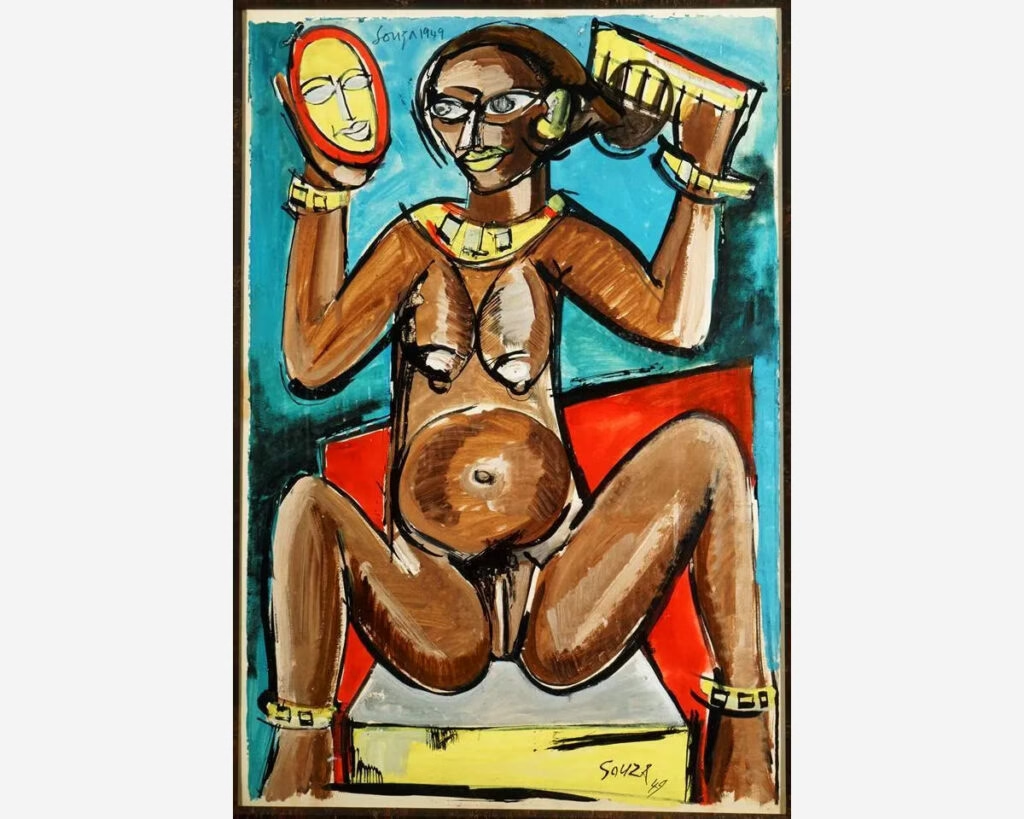
Francis Newton Souza was angry. And you can see it in every line he drew.
His Nude with Mirror shows a woman holding a reflection. But don’t expect soft curves and sweet smiles. Souza’s figures look twisted. Rough. Almost painful. Bold black outlines. Eyes that stare right through you.
He grew up poor in Goa. He saw hypocrisy in the church and society. So he painted against all of it.
Here’s what makes Souza stand out:
- No flattery. His nudes don’t try to be beautiful. They try to be true.
- Expressive distortions. Arms too long. Faces too sharp. All intentional.
- Rebellion in every stroke. He hated polished, perfect art. So he made the opposite.
Souza co-founded the Progressive Artists’ Group in Mumbai. They wanted modern Indian art, free from colonial hangovers. His nudes still feel dangerous today. Because honesty? That never goes out of style.
6. Mahadev Vishwanath Dhurandhar – Female (Nude)
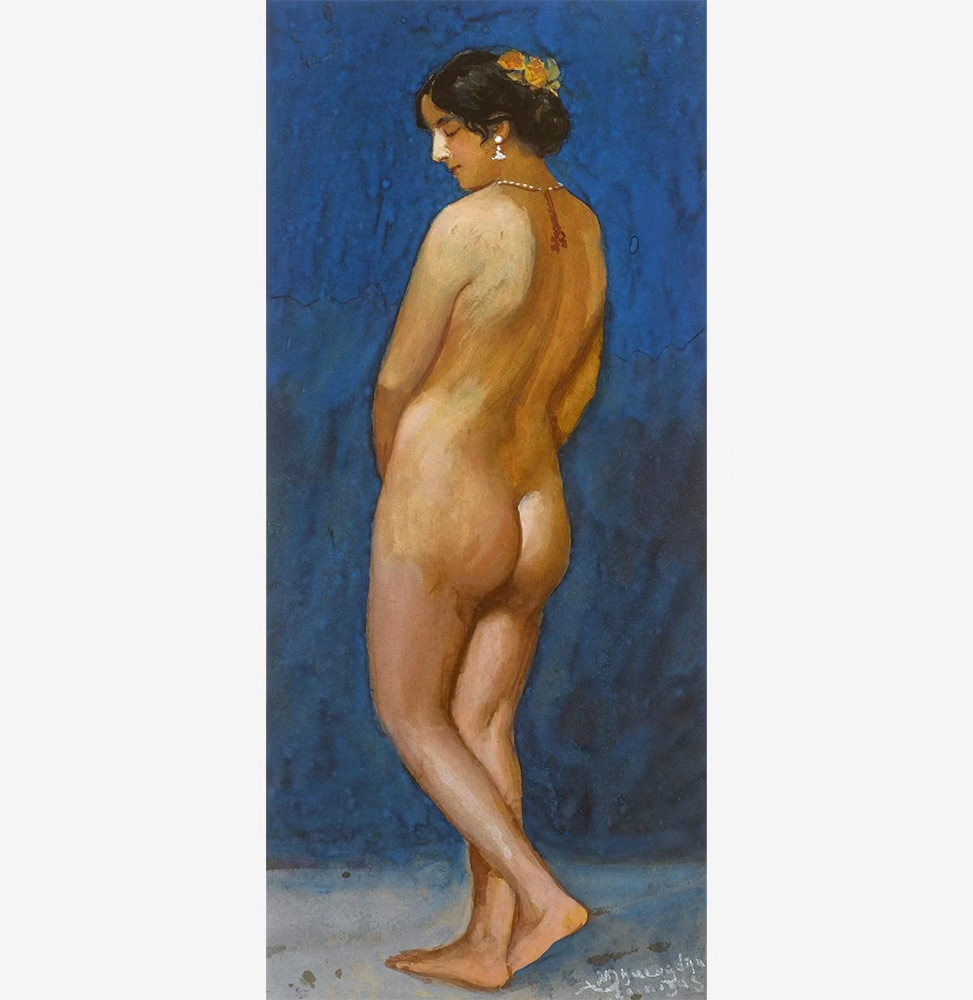
Dhurandhar played by different rules. While others shocked, he simply mastered.
His painting Female (Nude) shows a woman from behind. Deep blue background. Soft light falling on her shoulders. You don’t see her face. And that’s the whole point.
He studied at the Sir J.J. School of Art in Mumbai. Became its first Indian director. His strength? Anatomy and classical technique.
Look closely:
- Perfect proportions. Every muscle sits where it should.
- Light behaves. It slides down her back. Creates shadows that feel real.
- No drama. Just a quiet, beautiful moment.
Dhurandhar didn’t chase controversy. He chased excellence. His nudes feel calm. Peaceful. Like you walked in on someone who doesn’t mind being seen. That takes real skill. Not loud tricks. Just pure, solid craft.
7. Badri Narayan – Untitled
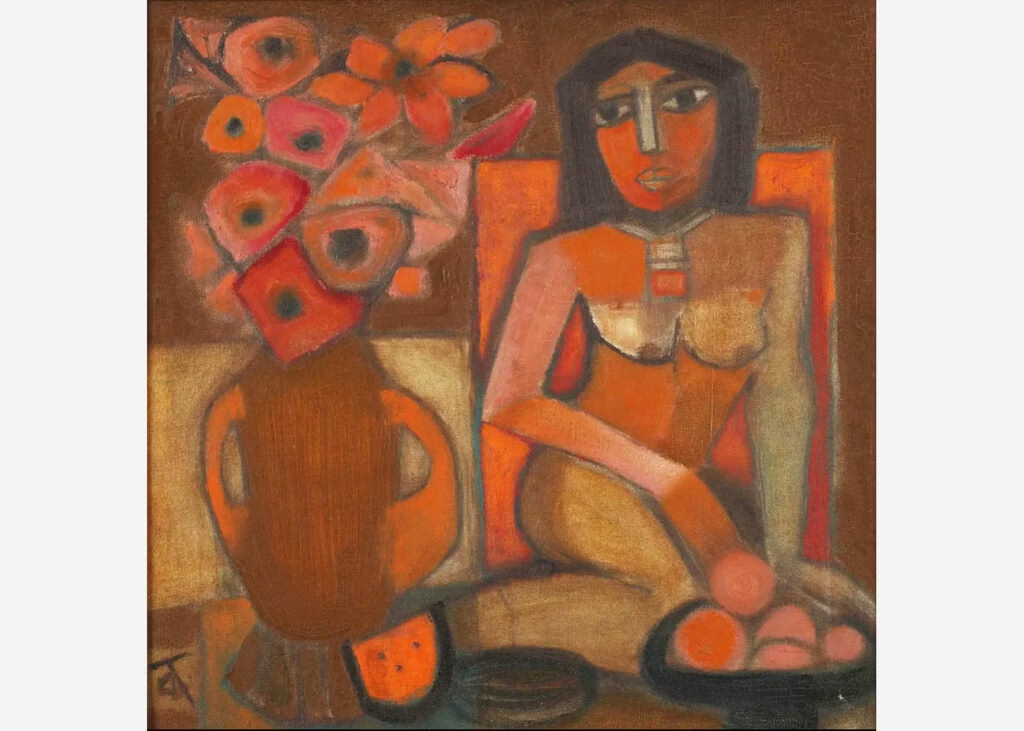
Badri Narayan plays a different game. His nudes don’t shout. They whisper.
Take Untitled, Nude with Still Life. A woman sits bare. Beside her? A table with fruit, maybe a vase. Nothing dramatic. But everything feels heavy with meaning.
Narayan loved stories. Folktales. Myths. Everyday life. He painted like a poet writes. Every object holds a symbol. Every pose means something.
What to watch for:
- Dream-like stillness. Nothing rushes in his world.
- Quiet loneliness. His figures often feel lost inside their own thoughts.
- Objects talk. A fruit might mean desire. A window might mean escape.
He doesn’t show you everything. He shows you just enough. Then your mind fills in the rest. That’s why his nudes stay with you. Not because they shock. But because they invite you to sit down and wonder.
FAQs:
1. Why did M.F. Husain paint India as a nude woman?
He wanted to show the nation’s vulnerability, suffering, and strength. Nudity symbolized rawness, not vulgarity.
2. Which Indian painter painted herself nude first?
Amrita Sher-Gil. Her self-portrait as a Tahitian showed her own bare body with bold honesty.
3. Is Raja Ravi Varma’s Tilottama considered a nude painting?
Yes, but in a mythological and divine sense. She’s a celestial apsara, painted with elegance, not vulgarity.
4. What makes F.N. Souza’s nudes different from other Indian artists?
His nudes look distorted and rough. He painted rebellion, not beauty. Bold outlines. Raw emotion.
5. Did any nude Indian painting face legal trouble?
Yes. M.F. Husain’s Bharat Mata sparked massive controversy. Critics filed cases. He later left India.
6. Which Indian nude painting shows a woman only from behind?
Mahadev Vishwanath Dhurandhar’s Female (Nude). Deep blue background. Soft light. Face hidden.
7. What is the main theme of Badri Narayan’s nude paintings?
Loneliness and poetry. His nudes sit still with everyday objects. Dream-like. Quiet. Introspective.
8. How did Hemen Majumdar make nude paintings feel soft?
He used warm skin tones and flowing hair. No harsh lines. Just calm, natural feminine beauty.
9. Which Indian art movement normalized nude figures first?
The Progressive Artists’ Group in Mumbai. F.N. Souza led it. They broke colonial rules on nudity.
10. Are there nude paintings in Indian temple art too?
Yes. Long before canvas. Khajuraho and Konark temples have nude sculptures. Art and spirituality mixed freely.
Also Read:
Free Sky Breath Meditation: Unveiling the Spiritual Connection to Traditional Indian Art

Leave a Reply