
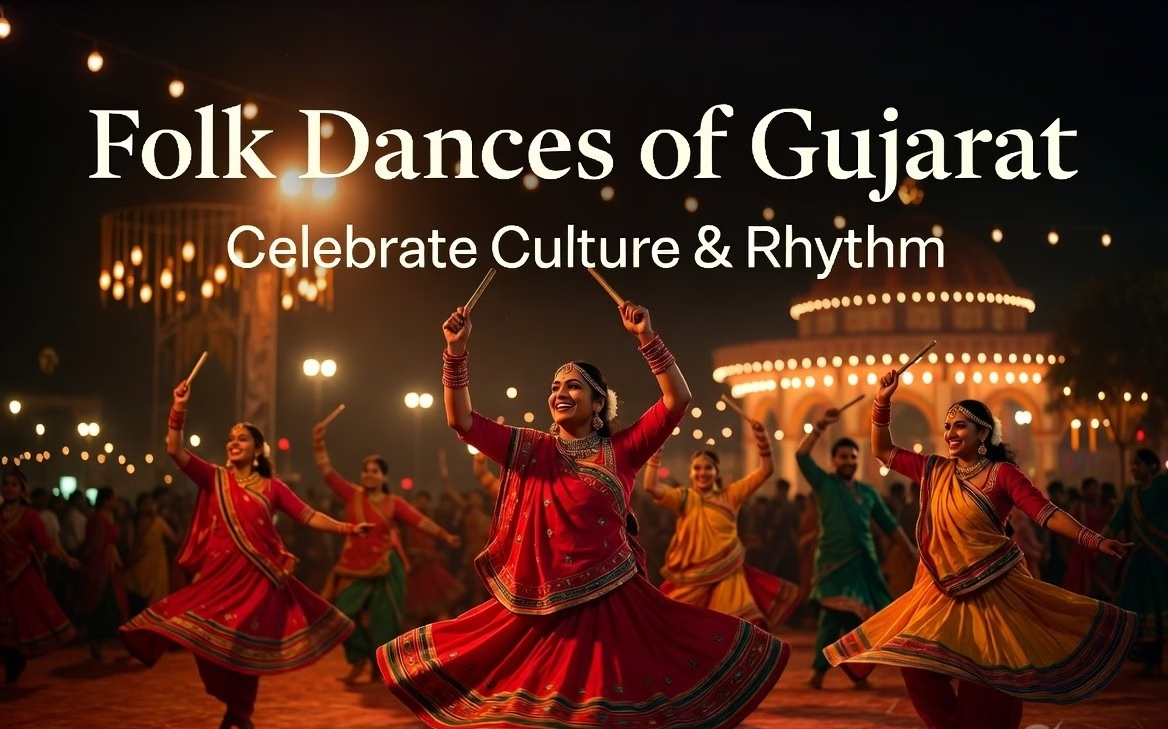
Hello folks! Have you ever seen thousands of people swirling in colorful circles under the night sky, their hands clapping in perfect rhythm? Or watched dancers strike wooden sticks together so fast that they become a blur of motion? Welcome to the vibrant world of the folk dances of Gujarat.
The dance of Gujarat is as diverse as the state itself. From the graceful devotion of Garba to the energetic stick-play of Dandiya Raas, these dances are not just performances.
They’re living traditions that have been passed down through generations. The folk dance traditions of Gujarat reflect the state’s rich agricultural heritage, warrior culture, and deep spiritual devotion.
Today, we’re taking you on a journey through Gujarat’s most vibrant cultural treasures. Let’s dive in!
The History of Folk Dances of Gujarat – A Timeline
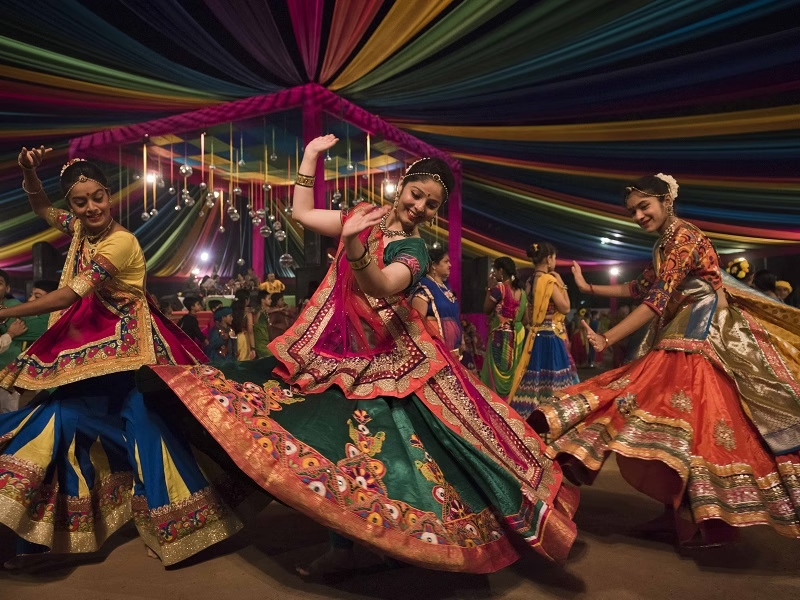
The history of folk dances of Gujarat is ancient and fascinating. These dances have evolved over thousands of years, shaped by the state’s diverse communities, agricultural cycles, and religious traditions.
Harappan and Vedic Origins (3000-1500 BCE)
References to dance and worship of the Mother Goddess appear in the Rig Veda and trace back to the Harappan civilization. The worship of Usha Devi, the goddess of fertility and agriculture, began as formless devotion and gradually transformed into worship of a tangible deity.
Yadava Influence (1500 BCE onwards)
The Puranas tell us that the Yadavas arrived in Gujarat around 1500 BC and left their imprint in mythologies and several traditions of performance, including the precursor to Raas. The Harivamsa Purana refers to raas (group dance) as Hallisaka and mentions specific styles like Tal Raaska and Dand Raaska.
Medieval Period – Rise of Community Traditions
Various communities developed their own unique styles of folk dance. Based on occupational backgrounds, raas traditions evolved into Kanabi raas (agrarian), Maher raas (warrior), Padhar raas (seafaring), Hudo raas (pastoral), and Jat raas (cattle herders).
Post-Independence and Global Spread
After the merger of Saurashtra with Gujarat in 1960, Raas became popular across the state. Gujarati migrants took these dances worldwide, making them a global phenomenon.
UNESCO Recognition (2023)
In December 2023, UNESCO declared Garba as an Intangible Cultural Heritage of Humanity. It became the 15th cultural element from India to receive this honor.
Garba – The Devotional Circle Dance
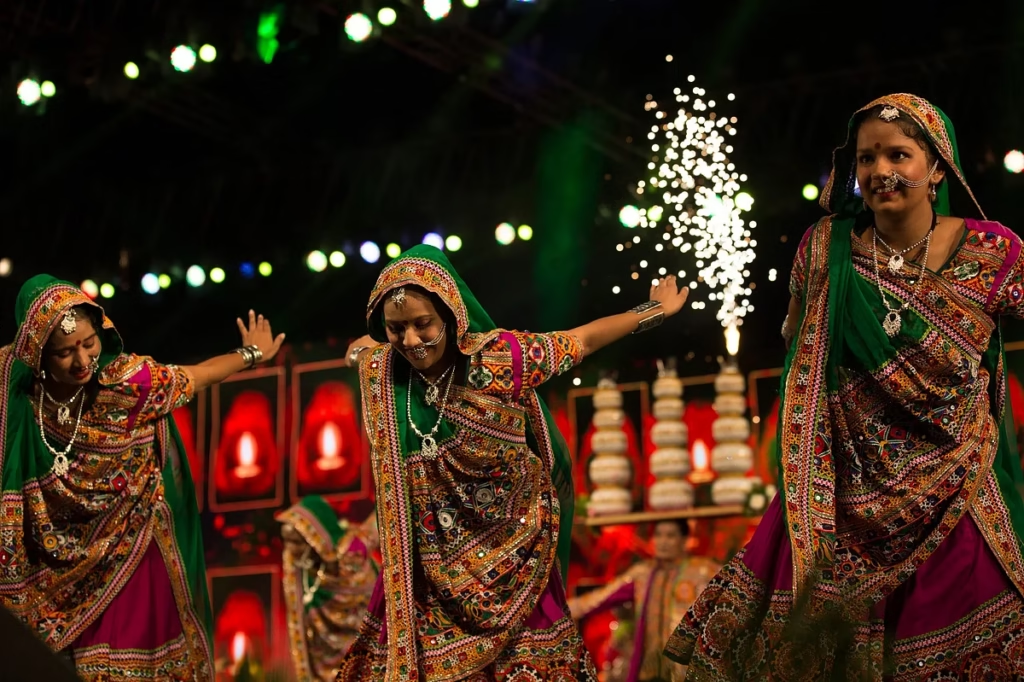
Garba is perhaps the most recognized folk dance of India and definitely the most famous dance of Gujarat. The word “garba” comes from the Sanskrit word garbha meaning “womb,” implying gestation, pregnancy, or life.
Who Performs It
- Traditionally performed by women
- Celebrates fertility, honors womanhood, and pays respect to mother goddesses
- In Gujarat, the dances customarily mark a girl’s first menstrual cycle and her imminent marriage
- Today, people of all ages and genders participate
How They Perform
- The dance is a counterclockwise circle dance
- Participants form a circle around a perforated earthenware pot lit with an oil lamp, or an image of the mother goddess Amba
- If space permits, dancers form concentric circles that move in opposite directions
- The dance starts with slow, simple movements and gradually builds speed, leading to a frenzied whirling
- Dancers use simple hand gestures, clap in unison, and move with a sweeping action from side to side
The Dress and Getup
- Women wear traditional chaniya choli—a colorful, embroidered skirt paired with a blouse, with an odhni (veil) draped elegantly
- Men wear kediyu, a frilled frock-like garment that covers the torso, paired with choyani (lower garment) and a paghadi (turban)
Musical Instruments
- Traditionally accompanied by dhol (double-headed drum), dholak (smaller version)
- Hand clapping and metallic idiophones like cymbals
- Historically, the shehnai guided the singers
- Today, the harmonium or synthesizer is often used
Occasions
- Most famously performed during the nine-day Navratri festival (September–October)
- Also performed at weddings, Holi, and other celebrations
UNESCO Recognition (2023)
- UNESCO declared Garba as an Intangible Cultural Heritage of Humanity in December 2023
- It became the 15th Indian cultural element to receive this honor
Where to See
- Best experienced during Navratri at community grounds across Gujarat
- Major celebrations occur in Ahmedabad, Vadodara, Surat, and Rajkot
Dandiya Raas – The Stick Dance
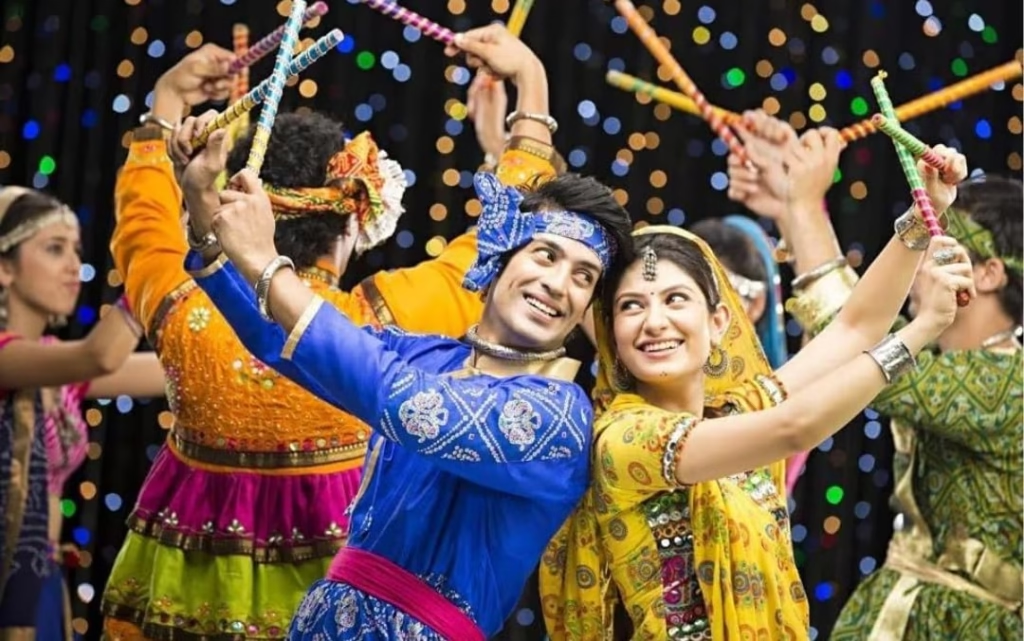
Dandiya Raas, also simply called Raas, is one of the most popular folk dances of Gujarat. It takes its name from dandiya, a pair of wooden sticks used to mark time.
Who Performs It
- Originally a dance performed by men
- Now performed by both men and women
- Has roots in agricultural activities and can be termed as the occupational dancing of farmers
How They Perform
- A typical Raas troupe comprises 16-20 dancers and musicians
- Men, holding dandiya (wooden sticks), weave complex choreographic formations in a circle
- The dance begins at a slow pace and gradually develops into a fast rhythm
- Dancers create intricate patterns with their movements
- When a dancer performs solo, he simultaneously dances with both partners on either side
Performance Structure
- Begins with a meterless doha
- Followed by chhand sung in chalati (double speed)
- Dancers enter with the chhand, striking their dandiya
- Followed by raas geet (song) where dancers weave different patterns
- Leads to a fast finale with swift movements
The Dress and Getup
- Dancers wear the traditional kediyu (frilled frock-like garment)
- A choyani (lower garment) and a paghadi (turban) or embroidered cap
- They also tie a bhet, a two-meter piece of cloth, around their waists, which flows up to the knees
- In the dhal-talwar raas, they wear black turbans and cover half their face with black cloth
Musical Instruments
- An orchestra typically includes harmonium, dhol, naragha (tabla), zanz, pavo (a variety of flute), and shehnai
- Some troupes also include manjira, ravan-hattha, and ghughara (metal bells)
Occasions
- Performed during Navratri
- Satam-atham (Janm Ashtami) fairs
- Weddings in the Kathiawar and Saurashtra region
Where to See
- Common during Navratri at community grounds across Gujarat
- Especially in Ahmedabad, Vadodara, and Saurashtra regions
Kanabi Raas – The Farmer’s Dance
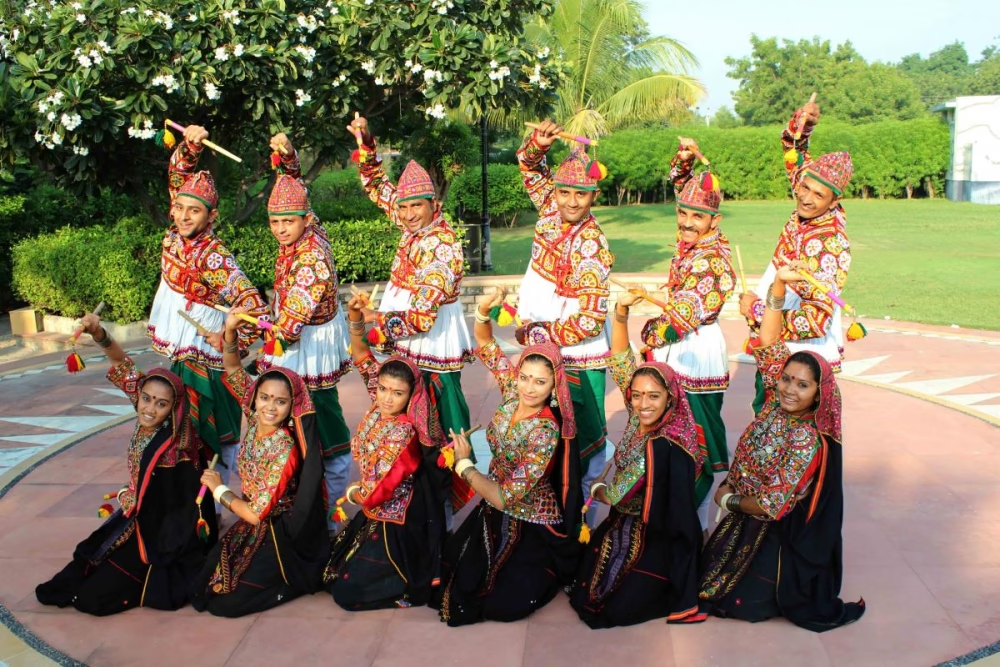
Kanabi Raas takes its name from the community that performs it—the farming community (Kanbis) of Jamnagar and Rajkot districts. This folk dance is a mimetic representation of various agricultural activities.
Who Performs It
- Men from the Kanabi farming community
- Most Kanabis are Vaishnavites, and their raas geet are in praise of Lord Krishna
How They Perform
- Portrays body movements and postures of farmers—raising feet, sitting on toes, jumping, and lifting knees
- Maintains a consistently fast pace, reflecting the farmer’s high energy levels
Key movements include the following:
- Dodhi—one and half times speed
- Chirav – zigzag movement
- Bhensa dadiyo – buffalo jump
- Anti–crisscross pattern
- Besani – sitting on toes
- Chabakhi – whip-like movement
Choreographic patterns:
- Circle
- Zigzag
- Swastika
- Square
- Trishul
The Dress and Getup
- Embroidered kediya, choyani
- Colorful belt on waist
- Matching paghadi
- Dancers wear ghaghara to enhance their tempo
Musical Instruments
- Accompanied by dhol, shehnai, harmonium, and zanz (cymbals)
Origin
- It is believed that the princely states of Saurashtra invited Kanabis from Gujarat and gave them land for farming
- After imbibing local culture, they created their unique style of dancing with a clear imprint of farming life
Occasions
- Performed during festivals and community celebrations in Jamnagar and Rajkot districts
Where to See
- You can witness Kanabi Raas in the farming communities of Jamnagar and Rajkot districts during local festivals
Maher Raas (Maniaro Raas) – The Warrior’s Dance
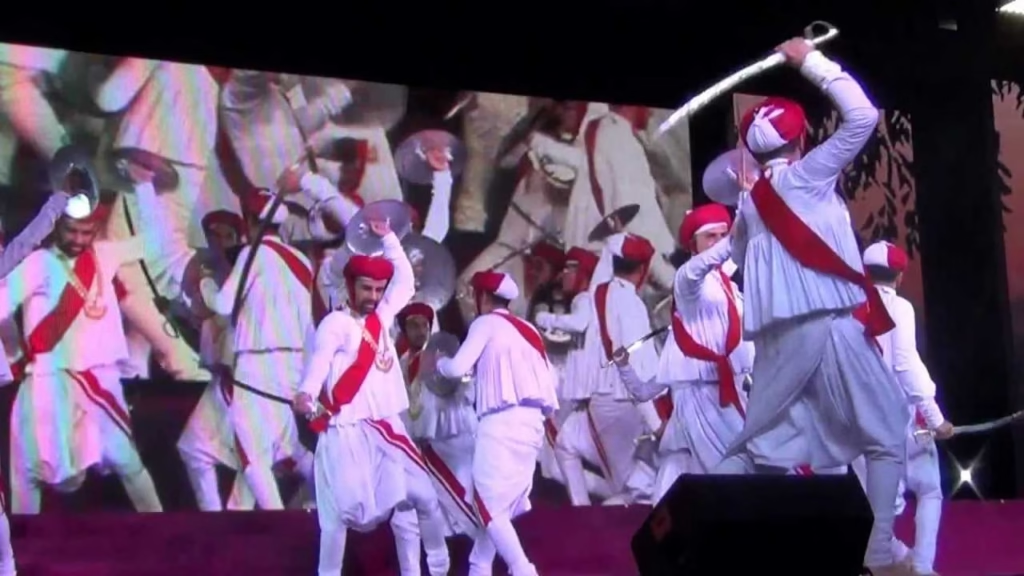
Maher Raas, also known as Maniaro Raas, is performed by the Maher community of Saurashtra. It takes its name from the unique tale of 11 matras (meters) known as maniaro. It can be classified as a martial dance of Rajputs.
Who Performs It
- An all-male performing tradition of the Maher community
- Classified as Shaurya raas or martial dance, of Rajputs of Ghed and Barda region (Porbandar and Junagadh districts)
How They Perform
- Features virile stances and masculine movements
- Celebrates victory over enemies or expresses joy during festivals
- Tall Maher men dressed in pure white attire dance to unique maniaro beats
- Accompanied by sharp shehnai and high notes, presenting a very arresting picture
The Dress and Getup
- Pure white kediya and choyani
- White paghadi (turban)
- A red belt across the shoulder
Musical Instruments
- Accompanied by shehnai, dhol, nagada, and manjeeras (cymbals)
Occasions
- Performed during weddings, festivals, and celebrations of victory in Porbandar and Junagadh regions
Where to See
- You can witness Maher Raas in the Ghed and Barda regions of Saurashtra during community celebrations
Padhar Raas – The Fishermen’s Dance
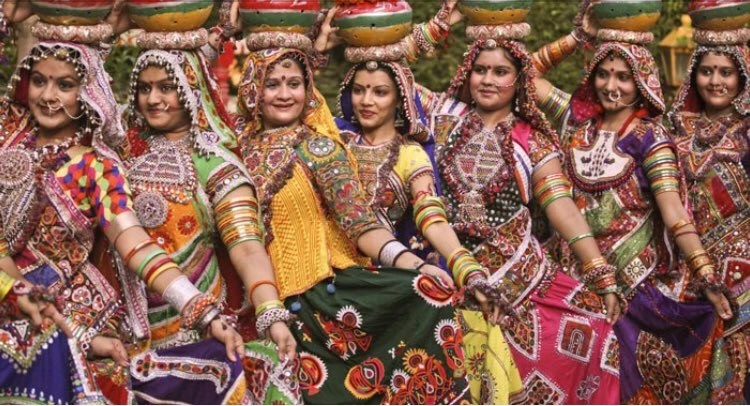
Padhar Raas is performed by the seafaring communities or fishermen of Gujarat. Like other Raas forms, it uses dandiya but has its own distinct style, reflecting the life of fishing communities.
Who Performs It
- Men from the Padhar community
- Traditionally fishermen and seafarers of Saurashtra
How They Perform
- Mimics the movements of fishermen—rowing boats, casting nets, and battling the waves
- The rhythmic clashing of dandiya represents the striking of oars against water
- Dancers create patterns that resemble the ebb and flow of tides
- Movements are both graceful and powerful
The Dress and Getup
- Traditional fishing community attire – dhoti-kurta with a turban
- Costumes are often in shades of blue and white, reflecting the sea
Musical Instruments
- Accompanied by dhol, shehnai, harmonium, and manjeeras
Occasions
- Performed during community festivals and celebrations in coastal regions
Where to See
- You can witness Padhar Raas in coastal areas of Saurashtra, especially in Porbandar and Jamnagar regions
Gof Gunthan Solanga Raas – The Rope Weave Dance
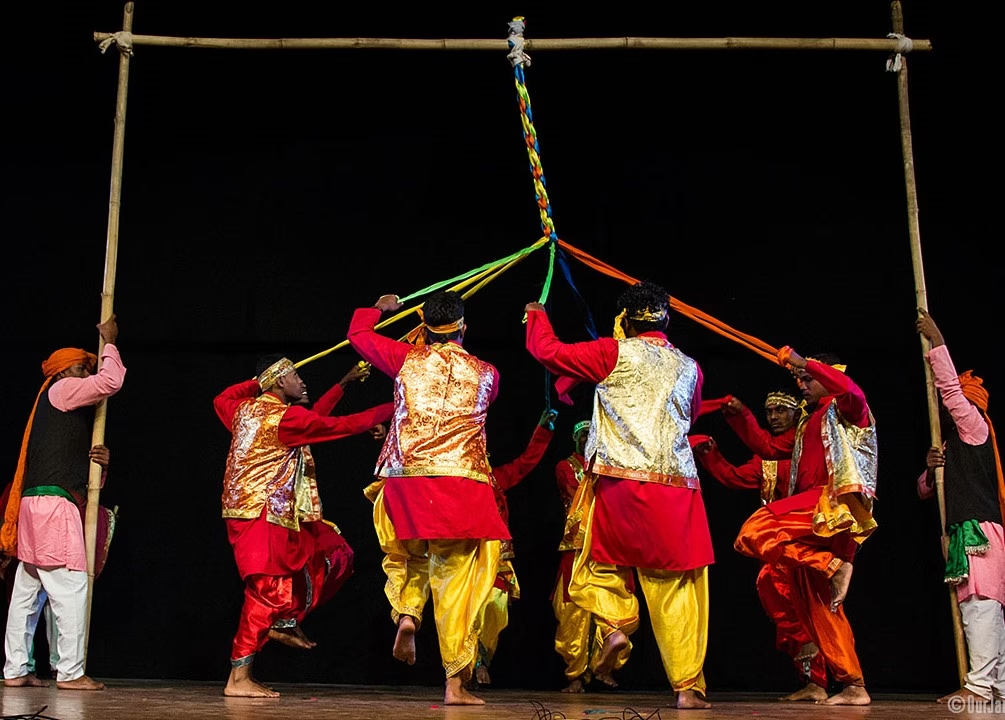
This remarkable folk dance is performed by Koli and Kanbi men. Dancers weave ropes into intricate braids and then seamlessly unwind them. The crisscrossing patterns are interpreted as metaphors for cosmic order and human interdependence.
The traditional set of sixteen dancers reflects the agrarian calendar and lunar cycles, with sixteen seen as an auspicious number representing fullness and seasonal completeness.
Who Performs It
- Men from the Koli (fishing) and Kanbi (farming) communities
How They Perform
- Dancers hold ropes and weave them into intricate braided patterns while dancing in synchronized movements
- Involves complex choreography where dancers move in and out of the rope formations
- Creates geometric patterns through the movements
- The braiding and unbraiding of ropes symbolizes the interconnectivity of life
Performance highlights:
- Dancers start with loose ropes
- They gradually weave them into complex braids
- Then seamlessly unwind them
- The cycle repeats with increasing speed
The Dress and Getup
- Dancers wear traditional attire—kediyu and choyani with turbans
- Costumes are often in bright colors reflecting their community traditions
Musical Instruments
- Accompanied by dhol, shehnai, and manjeeras
Occasions
- Performed during community festivals and celebrations in Koli and Kanbi communities
Where to See
- You can witness Gof Gunthan Solanga Raas in Koli and Kanbi community celebrations across Gujarat
Betha Garba – The Seated Dance
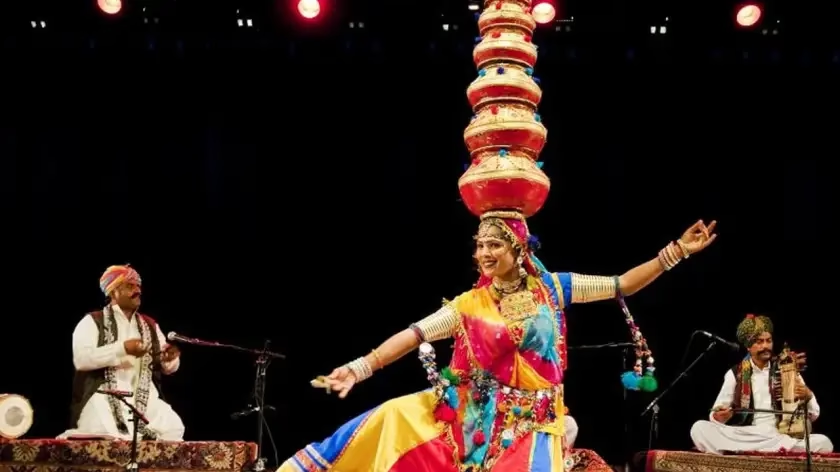
Betha Garba is a unique variation of Garba performed seated, mostly by women in the Vadnagra Nagar community. Women in this community were considered delicate and did not participate in vigorous physical activity.
Sitting Garba allowed them to engage in devotional performance while respecting social and bodily limitations. Competitions for seated Garba are still held annually in Gandhinagar.
Who Performs It
- Women from the Vadnagra Nagar community of Gujarat
How They Perform
- Women sit in a circle and perform graceful hand and upper-body movements
- They sing devotional songs while performing
- Feet remain stationary while they sway, clap, and gesture with their arms
- The dance is slow, elegant, and deeply devotional
Key features:
- Seated posture throughout the performance
- Focus on hand gestures and upper-body movements
- Slow, graceful rhythm
- Group coordination and synchronization
The Dress and Getup
- Women wear traditional chaniya choli with odhni (veil)
- Accessorized with traditional jewelry
Musical Instruments
- Accompanied by hand clapping and singing
- No large instruments are used
Occasions
- Performed during Navratri, weddings, and other celebrations in Vadnagra Nagar communities
Where to See
- You can witness Betha Garba in Gandhinagar during Navratri
- Also at community celebrations of the Vadnagra Nagar community
Musical Instruments of Gujarat’s Folk Dances
The dances of Gujarat are accompanied by a rich variety of traditional instruments:
| Instrument | Type | Associated Dance |
| Dhol | Drum (large) | Garba, Dandiya Raas, Kanabi Raas |
| Dholak | Drum (hand) | Garba, Dandiya Raas |
| Nagara | Drum (kettle) | Dandiya Raas, Maher Raas |
| Shehnai | Wind instrument | Garba, Dandiya Raas, Kanabi Raas, Maher Raas |
| Harmonium | Keyboard | Dandiya Raas, Kanabi Raas |
| Pavo | Flute | Kanabi Raas |
| Manjeera/Zanz | Cymbals | Dandiya Raas, Kanabi Raas, Maher Raas |
| Ghughara | Metal bells | Dandiya Raas |
| Ravan-hattha | String instrument | Dandiya Raas |
Garba’s Diversity – A Cultural Crossroads
Garba’s diversity is the result of Gujarat’s long history as a crossroads of trade, migration, and regional identities. What began as a devotional dance around an earthen lamp or garbo to honor the feminine divine gradually absorbed the customs of local castes, occupational groups, and rural traditions. Communities such as the Mers, Kolis, Kanbis, Adivasis, and Vadnagra Nagars shaped the music, steps, and storytelling to reflect their own livelihoods and social rhythms.
Community-specific variations:
| Community | Variation | Distinguishing Feature |
| Adivasis | Divasa Garba | Drumming patterns mimic forest sounds; movements narrate agricultural cycles |
| Vadnagra Nagar | Betha Garba | Seated performance by women |
| Koli and Kanbi | Gof Gunthan Solanga Raas | Rope weaving and unweaving patterns |
Great People of Gujarat’s Folk Dances
Traditional Raas Mandalis
- Organized troupes of Saurashtra
- Continue to follow traditional choreography
- Wear costumes representing their caste, profession, or region
- Have preserved many traditional raas forms for generations
Himanshuray Raval
- A Gujarati poet and writer
- Has extensively documented the diversity of Garba
- Explained how it can be classified into 36 broad styles of performance
- Each community has its own subculture, dialects, and saints
Community Elders
- The Maher community’s tradition of Maniaro Raas has been preserved by community elders
- They organize workshops and document oral histories to teach younger dancers
Awards and Recognition for Gujarat’s Folk Dances
UNESCO Recognition (2023)
- Garba was declared as an Intangible Cultural Heritage of Humanity in December 2023
- Announced during the 18th session of the Intergovernmental Committee in Kasane, Botswana
- The UNESCO citation states that Garba is a “ritualistic and devotional dance” that “fosters social equality by diluting socio-economic, gender and religious structures.”
Global Recognition
- Garba has spread beyond Gujarat to enjoy popularity in many other parts of India
- Also popular in Hindu communities worldwide
- Garba competitions and university dance troupes have proliferated since the late 20th century
Where to See Folk Dances of Gujarat
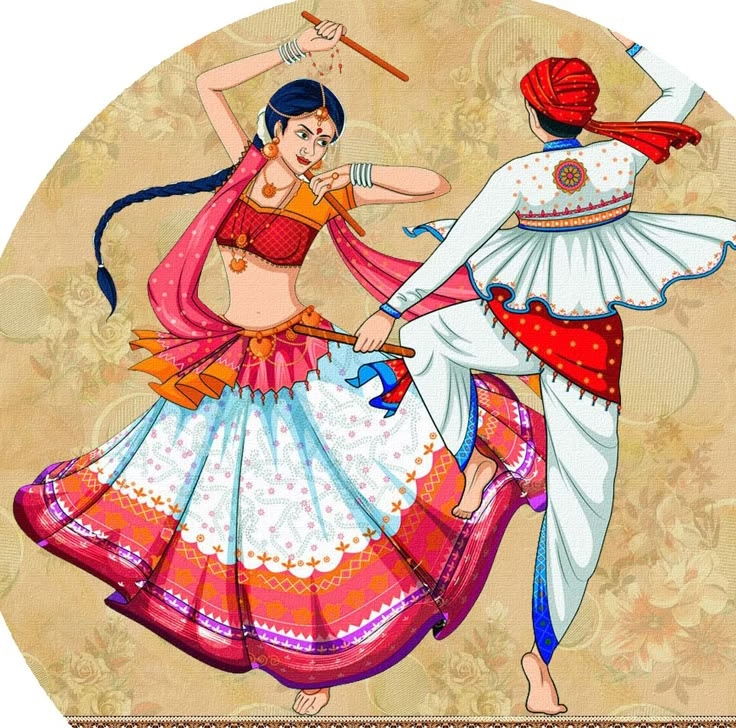
Major Festivals
| Festival | Time Period | Dances Performed |
| Navratri | September-October | Garba, Dandiya Raas |
| Satam-atham (Janm Ashtami) | August-September | Raas in Saurashtra |
| Holi | March | Garba, community celebrations |
Cultural Venues
- Community grounds across Ahmedabad, Vadodara, Surat, and Rajkot during Navratri
- Heritage festivals and competitions organized by municipalities and universities
- Cultural trusts that organize workshops and document oral histories to keep traditional forms alive
Quick Facts and Statistics
| Aspect | Details |
| UNESCO Recognition | Garba (2023) – 15th Indian cultural element |
| Styles of Garba | 36 broad styles identified by Himanshuray Raval |
| Typical Raas Troupe Size | 16-20 dancers and musicians |
| Navratri Duration | 9 days (September-October) |
| Key Instruments | Dhol, dholak, shehnai, harmonium, manjeera |
| Unique Forms | Betha Garba (seated), Gof Gunthan Solanga (rope weave) |
FAQs
Q1. Which is the most famous folk dance of Gujarat?
Garba is the most recognized folk dance of India and the most famous dance of Gujarat. UNESCO declared it as an Intangible Cultural Heritage of Humanity in December 2023.
Q2. What is the difference between Garba and Dandiya Raas?
Garba is a devotional circle dance performed around a lamp or goddess image, using hand claps and simple movements. Dandiya Raas is a stick dance where performers strike wooden sticks together in complex choreographic patterns.
Q3. What is the dress code for Garba dance?
Women wear a chaniya choli—a colorful, embroidered skirt and blouse with an odhni (veil). Men wear kediyu (a frilled frock-like garment), choyani, and a paghadi (turban).
Q4. When was Garba declared UNESCO Intangible Cultural Heritage?
Garba was inscribed on UNESCO’s Intangible Cultural Heritage list in December 2023 during the 18th session in Kasane, Botswana.
Q5. How many styles of Garba are there?
According to Gujarati poet and writer Himanshuray Raval, Garba can be classified into 36 broad styles of performance.
Q6. What instruments accompany Gujarati folk dances?
Common instruments include dhol, dholak, shehnai, harmonium, zanz (cymbals), pavo (flute), and nagara. Each dance form has its signature instrument combination.
Q7. What is Kanabi Raas?
Kanabi Raas is a folk dance performed by the farming community of Gujarat. It mimics agricultural activities like plowing, sowing, and harvesting.
Q8. What are some community-specific Garba variations?
Variations include Betha Garba (seated Garba), Divasa Garba (Adivasi Garba), and Gof Gunthan Solanga Raas (rope-weave dance).
Also Read:
Folk Dances of Rajasthan – A Complete Guide to the Rhythms of the Desert

Leave a Reply