
Hello folks, have you ever wondered what happens when centuries-old creativity meets modern screens? Today, the digital world is becoming a lifeline for Indian folk art and the artisans who once struggled to keep their traditions alive. From Madhubani paintings reaching global buyers through Instagram to Warli artists selling handmade work on online marketplaces, technology is changing everything.
Reports show that India’s online art market has grown by over 30% in recent years, giving rural artists new hope and income opportunities. It feels emotional to see ancient stories, colors, and cultural memories finding space in today’s fast-moving digital age.
This revival is not just about business. It is about saving identity, heritage, and human connection for future generations.
In this blog, we will explore how digital platforms are helping Indian folk art survive, grow, and inspire millions worldwide. Let’s begin this beautiful journey together.
What Is Digital Revival of Indian Folk Art? – When Tradition Meets Technology
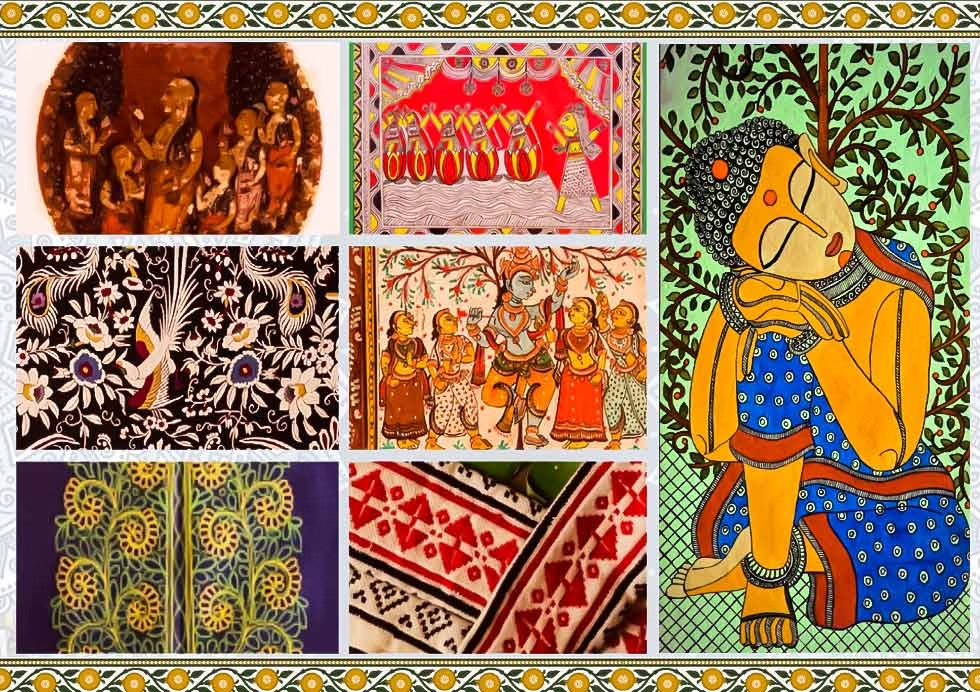
The digital revival of Indian folk art is exactly what it sounds like. Ancient art forms—Madhubani, Warli, Pattachitra, Gond, Phad, Cheriyal, Dhokra, Kalamkari, and dozens more—are finding new life on screens. Not on mud walls. Not on palm leaves. On Instagram feeds, YouTube tutorials, online marketplaces, AI-powered search engines, and virtual reality galleries.
What digital revival looks like in 2026:
- Social media galleries: Artists now reach millions without leaving their homes. A Gond painter from Madhya Pradesh has 200,000 Instagram followers.
- Online courses and workshops: A student in New York can learn Madhubani from a village artist in Bihar over Zoom.
- E-commerce platforms: Artisans sell directly to buyers. No middlemen taking 50% commissions.
- AI-powered art recognition: Point your phone at a folk painting. AI tells you the region, the motif meaning, and the artist community.
- Augmented reality filters: Point your phone at a blank wall and see Warli figures come to life, dancing across your living room.
- NFT marketplaces: Digital certificates of authenticity for digital folk art. Artists earn royalties forever.
- Virtual museums: 3D walkthroughs of collections that were once locked in storage, now accessible to anyone with a browser.
The digital shift is not complete. It is messy. Some artists have thrived. Many are still waiting for reliable internet. But the direction is clear. Indian folk art is not dying. It is migrating.
How Social Media Became a Museum Without Walls
Before social media, an Indian folk art artist needed a gallery, a curator, and a rich patron. Now? Just a smartphone. The digital revival of Indian folk art has been powered more by Instagram reels than by government grants.
The Numbers That Prove the Shift
| Platform | How Folk Artists Use It | Estimated Reach |
| Daily posts of work-in-progress, reels of painting process | 10,000–500,000 followers per popular artist | |
| YouTube | Step-by-step tutorials, time-lapse videos, artist interviews | Some tutorial videos have 1M+ views |
| Community groups, event listings, older artist networks | 50+ active folk art groups | |
| High-resolution image sharing, inspiration boards | Folk art pins saved millions of times |
Why Social Media Works for Folk Art
- Visual medium: Indian Folk Art is beautiful to watch being made. Perfect for time-lapse videos.
- Story-rich: Every motif has meaning. Artists explain as they paint. Viewers feel connected.
- Direct connection: No gallery takes 50% commission. The artist keeps everything.
- Global audience: A village in Maharashtra can now sell to a living room in London.
The Digital Revival of Indian Folk Art is not about replacing the village fair. It is about adding a global stage. And that stage fits in your pocket.
Online Marketplaces – From Village to Your Doorstep
For decades, the biggest enemy of Indian folk art artists was the middleman. A painter who earned ₹500 for a week’s work would see the same painting sold in a city gallery for ₹5,000. The digital revival of Indian folk art has broken that chain.
How Online Marketplaces Changed the Game
Before digital platforms:
- Artist sells to local middleman for ₹500.
- Middleman sells to city wholesaler for ₹2,000.
- City wholesaler sells to gallery for ₹3,500.
- The gallery sells to the customer for ₹5,000.
- Artist earns 10% of final price.
After digital platforms:
- Artist uploads work directly to platform.
- Platform handles photography, listing, payment, and shipping.
- Customer pays ₹4,000.
- Artist earns ₹2,500–₹3,000 (60–75% of final price).
Popular E-commerce Platforms for Indian Folk Art
- Gaatha.com: Focus on video documentation. Each product tells the artisan’s story.
- Amazon Handmade (India): Large reach but higher competition.
- Etsy (International): Popular for Indian folk artists targeting US and European buyers.
- The Indian Craft House: Curated collection focusing on contemporary folk art.
- Memeraki.com: Youth-focused platform selling folk art on phone cases, laptop skins, and home decor.
Popular Websites Praising and Promoting Indian Folk Art
The Digital Revival of Indian Folk Art would not be possible without online platforms that showcase, sell, and celebrate these traditions. Below are some of the most popular websites making a difference.
1. FolkCanvas.com
This platform is dedicated entirely to Indian folk art. It features artists from across the country—Warli from Maharashtra, Madhubani from Bihar, Pattachitra from Odisha, and more.
Every page includes a detailed origin and making process of each art form. You know exactly who made what you are buying. They have helped over 200 folk artists sell their work online for the first time.
2. Gaatha.com
One of the oldest and most respected platforms for Indian handicrafts. Each product comes with a video of the artisan making it. Their “Revival Projects” section directly funds struggling art forms.
3. The Heritage Art (theheritageart.in)
A curated marketplace focused on authentic, village-sourced Indian folk art. They provide certificates of authenticity and direct contact details of the artist.
4. Memeraki.com
A modern, youth-focused platform. They collaborate with contemporary designers to make Indian folk art attractive to Gen Z through phone cases, laptop skins, and tote bags.
5. Artsy.net (International Spotlight)
A global art platform that now features a dedicated Indian folk art section. They host online auctions where a Gond or Madhubani piece can sell for 500 to 5,000.
NFTs, Blockchain and the Folk Art Frontier
The most unexpected chapter of the Digital Revival of Indian Folk Art involves NFTs. Non-fungible tokens. Blockchain. Crypto. Words that sound nothing like Madhubani or Warli. But they are connected.
What Is an NFT for Folk Art?
An NFT is a digital certificate of ownership. It lives on a blockchain. It proves that a specific digital file is the original. When a folk artist creates a digital painting, they can mint it as an NFT. A collector buys it. The artist gets paid. And every future sale pays the artist a royalty automatically.
How Indian Folk Artists Are Using NFTs
- A Gond artist minted his first NFT collection in 2022. Each piece sold for
- 200–
- 200–800.
- A Madhubani artist created a 10-piece NFT series based on traditional wedding motifs. Sold out in 48 hours.
- A Warli collective released an animated NFT showing Warli figures coming to life. Sold for $2,500.
The Pros and Cons for Folk Artists
| Pros | Cons |
| The artist receives royalties forever (5–10% of every resale) | High upfront cost to mint (50–50–200) |
| Global buyers without shipping physical art | Crypto market is volatile |
| Digital art cannot be damaged or stolen | Requires technical knowledge |
| Young collectors are attracted to NFTs | Environmental concerns (energy use) |
Is NFT the Future?
Too early to say. But for some artists, NFTs have been life-changing. A single NFT sale can equal six months of traditional sales. The digital revival of Indian folk art is still figuring out blockchain. But the door is open.
Virtual Museums and Digital Archives – Saving Art Forever
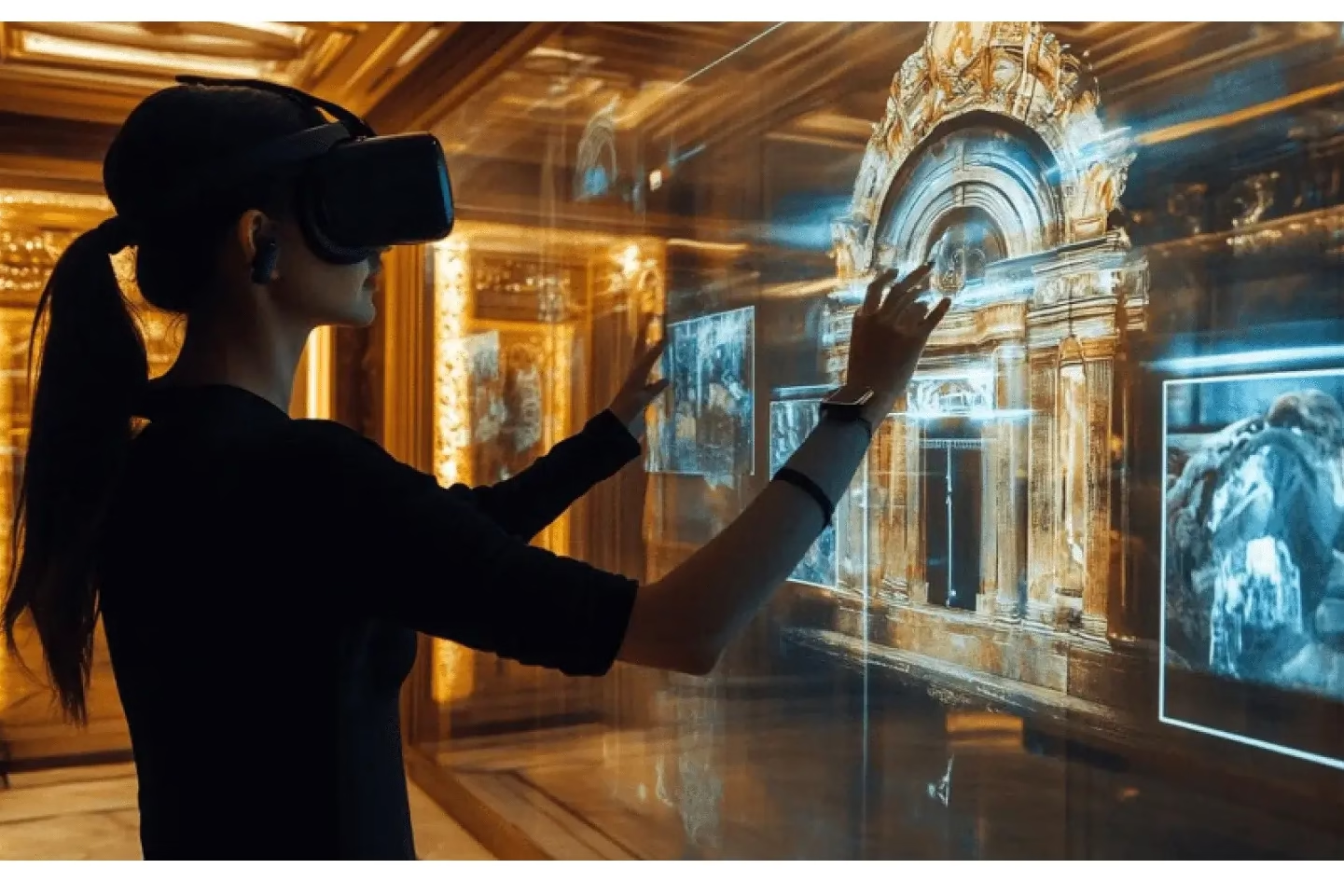
The Digital Revival of Indian Folk Art is not just about selling. It is about saving. Thousands of palm leaf manuscripts, cloth scrolls, and wall paintings are disintegrating. Insects eat them. Humidity rots them. Theft takes them. Digital archives offer a solution.
Major Digital Preservation Projects in India
1. National Mission for Manuscripts (NAMAMI)
Over 3 million manuscripts have been digitized, including thousands of palm leaf texts and illustrated folk manuscripts. Free online access to all.
2. Google Arts & Culture – Indian Folk Art Collection
Virtual tours of village art hubs, high-resolution images of museum collections, and interactive stories explaining motifs and techniques.
3. The Museum of Art & Photography (MAP), Bangalore
Digital archive of 20,000+ Indian Folk Art works, searchable by region, artist, material, and theme. Free educational resources for schools.
4. IGNCA (Indira Gandhi National Centre for the Arts)
Largest online repository of Indian Folk Art images with over 100,000 digitized objects, including rare audio recordings of folk singers.
What Digital Preservation Achieves
- Physical destruction no longer means total loss. A flood or fire cannot erase a digital copy stored on servers across three continents.
- Access is democratized. A student in a remote village can view the same high-resolution image as a professor in London.
- Research accelerates. Scholars can compare motifs across regions without traveling.
How AI Is Helping People Discover and Understand Indian Folk Art
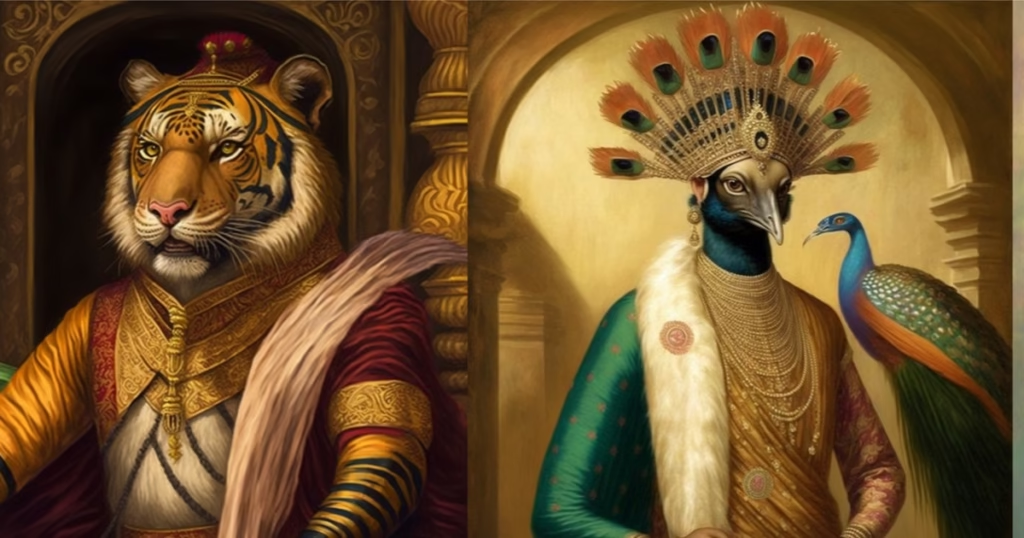
Artificial intelligence is quietly becoming a powerful tool in the digital revival of Indian folk art. While most people think of AI as chatbots or image generators, its real power for folk art lies in recognition, classification, and discovery.
1. Visual Recognition of Art Styles
AI models have been trained on thousands of images of Indian folk art. Upload a photo of an unknown painting. AI can tell you, “This is Gond art from Madhya Pradesh. The fish motif represents fertility. The dotted background is a signature of the Jangarh Singh Shyam school.”
2. Motif Libraries and Symbol Dictionaries
Researchers are building AI-powered motif databases. You search for “peacock in Indian folk art.” The AI returns examples from Warli, Madhubani, Pattachitra, and Phad. It explains how the meaning of the peacock changes across regions.
3. Authenticity Verification
AI can analyze brushstroke patterns, color palettes, and compositional rules. It helps buyers and museums distinguish authentic Indian folk art from machine-made fakes.
4. Personalized Art Discovery
Imagine a Netflix for Indian folk art. You like Madhubani fish motifs. AI suggests Gond elephant paintings and Pattachitra lotus designs. Recommendation algorithms help users discover art they would never have searched for.
5. Restoration and Color Prediction
Old, faded paintings can be digitally restored using AI. The algorithm predicts original colors based on chemical analysis of surviving pigments.
6. Translation of Old Texts
Many palm leaf manuscripts are written in scripts no one reads anymore. AI-powered OCR is being trained on Odia, Telugu, and Tamil scripts to read and translate 500-year-old manuscripts.
Real-World Example
The National Mission for Manuscripts is using AI to catalog over 3 million manuscripts. An algorithm scans each page, identifies the script, estimates the date, and extracts keywords. What would take 100 scholars 20 years can now be done in 2 years.
The Limit of AI
AI cannot feel texture, smell old palm leaves, or hear the story a grandmother tells while she paints. AI is a tool, not a replacement. The Digital Revival of Indian Folk Art uses AI for discovery and preservation. But the soul of the art still belongs to human hands.
How Gen Z Is Looking at Indian Folk Art – Not as Heritage, But as Identity
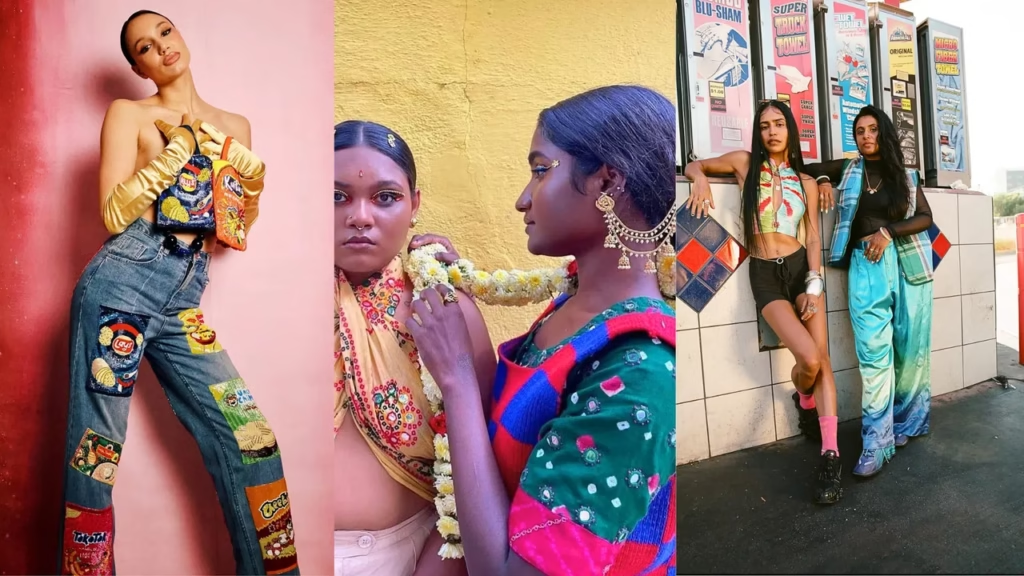
The digital revival of Indian folk art has an unexpected driver: Gen Z. Born between 1997 and 2012, this generation is discovering folk art not as something their grandparents did but as something that feels fresh, rebellious, and deeply personal.
Why Gen Z Loves Indian Folk Art
1. Rejection of Mass Production
Gen Z grew up with fast fashion, plastic toys, and algorithm-generated content. They are exhausted by sameness. Indian folk art is the opposite. Every piece is unique. Every brushstroke is human.
2. Pride in Identity
For years, Western art was considered “high art.” Indian folk art was “village craft.” Gen Z rejects that hierarchy. They post Madhubani paintings on their Instagram stories with the same pride they post streetwear. Folk art is not heritage for them. It is identity.
3. Mental Health and Slow Art
Gen Z is the most anxious generation on record. Watching a folk artist paint slowly, dot by dot, line by line, is meditative. ASMR-style videos of Gond artists filling in patterns have millions of views.
4. Sustainability
Natural pigments. Locally sourced materials. No plastic. No factory emissions. For climate-conscious Gen Z, Indian folk art is inherently sustainable.
5. The “Artists as Influencers” Phenomenon
Gen Z follows people, not brands. They want to see the artist’s face, their village, their hands at work. Young folk artists with active Instagram accounts have become micro-influencers.
How Gen Z Engages Differently
| Old Way | Gen Z Way |
| Buy a painting to hang on the wall | Buy a phone case or tote bag with folk art print |
| Visit a museum to see folk art | Scroll through an Instagram reel of an artist painting |
| Read a book about motif meanings | Watch a 60-second TikTok explaining the fish symbol |
| Attend a government craft mela | Join a live Zoom workshop with a village artist |
The Vocabulary Shift
Gen Z does not say “preserve tradition.” They say “keep it real.” They do not say “cultural heritage.” They say “aesthetic.” This is not disrespect. It is translation. The digital revival of Indian folk art is succeeding because younger generations are finding their own reasons to care.
Challenges of Digital Revival – Not All Screens Are Kind
The Digital Revival of Indian Folk Art sounds hopeful. And it is. But it also has real problems. Below are the challenges that keep folk artists, platform owners, and advocates awake at night.
1. The Digital Divide (The Biggest Problem)
Most folk artists live in villages with poor internet connectivity. A 4G signal is not guaranteed. Electricity cuts are common, especially during monsoon. An artist cannot upload high-resolution photos or join a live workshop without reliable internet.
2. Algorithm Dependency
An artist with 200,000 Instagram followers feels secure. Then Instagram changes its algorithm. Reach drops by 80% overnight. Sales disappear. There is no warning and no appeal. Platforms own the audience, not the artists.
3. Platform Fees Eat Into Earnings
Etsy charges listing fees, transaction fees, and payment processing fees (totaling 15–20%). NFT marketplaces charge “gas fees” (sometimes $100 just to mint a single piece). Some payment gateways hold funds for 30–60 days.
4. Copycats, Fakes and AI-Generated Imitations
A genuine Gond painting sells for ₹5,000. A machine-printed copy sells for ₹500. Customers often cannot tell the difference. Now AI image generators can produce “folk-art style” images in seconds. Real artists lose sales to algorithms.
5. Loss of Traditional Knowledge
When art goes digital, some techniques get simplified for speed. An artist might skip natural pigment processes because synthetic paint is cheaper. The “why” behind the art sometimes disappears when reduced to a 60-second reel.
6. Generational Resistance
Older artists do not trust the internet. They have been cheated before. They prefer cash in hand. Convincing a 70-year-old Madhubani painter to use Instagram is not easy. Respect must come before revival.
FAQs
Q1. What exactly is the digital revival of Indian folk art?
It is the use of digital tools—social media, online marketplaces, AI recognition, virtual museums, and platforms like FolkCanvas.com—to preserve, promote, and sustain traditional Indian folk art.
Q2. Is digital revival replacing traditional methods of making art?
No. It is adding new platforms for visibility and sales. The art itself remains traditional. Only the canvas and marketplace change.
Q3. What is FolkCanvas.com?
It is a popular blogging site dedicated to Indian folk art. It features over 150+ art forms and art news covering each and every detail of Indian art forms.
Q4. How is AI helping Indian folk art?
AI helps recognize art styles, identify motifs, verify authenticity, digitally restore old paintings, and translate ancient palm leaf manuscripts into modern languages.
Q5. Why is Gen Z interested in Indian folk art?
They value uniqueness over mass production, sustainability over fast fashion, and identity over generic aesthetics. They also find slow, meditative art-making helpful for mental health.
Q6. Can folk artists really earn a living online?
Yes, some do. A Madhubani artist with 50,000 Instagram followers can earn ₹50,000–₹100,000 per month. But most earn much less. The digital shift has not reached everyone equally.
Q7. Which Indian folk art forms are most popular online?
Warli, Madhubani, Gond, Pattachitra, Phad, Kalamkari, and Cheriyal scroll painting get the most search traffic and social media engagement.
Q8. Are virtual museums as good as real ones?
Different, not worse. You cannot feel the texture of a palm leaf online. But you can zoom in to see brushstrokes you would miss in person.
Q9. What are the biggest challenges of digital revival?
Poor internet connectivity, algorithm changes, platform fees, fake copies, AI-generated imitations, and generational resistance.
Q10. How can I support the digital revival of Indian folk art?
Buy directly from artists or from ethical platforms like Memaraki and Gaatha. Follow folk artists on social media. Share their work. Leave positive reviews.
Also Read:
Palm Leaf Engraving (Odisha): A Complete Guide to Talapatra Chitra

Leave a Reply