

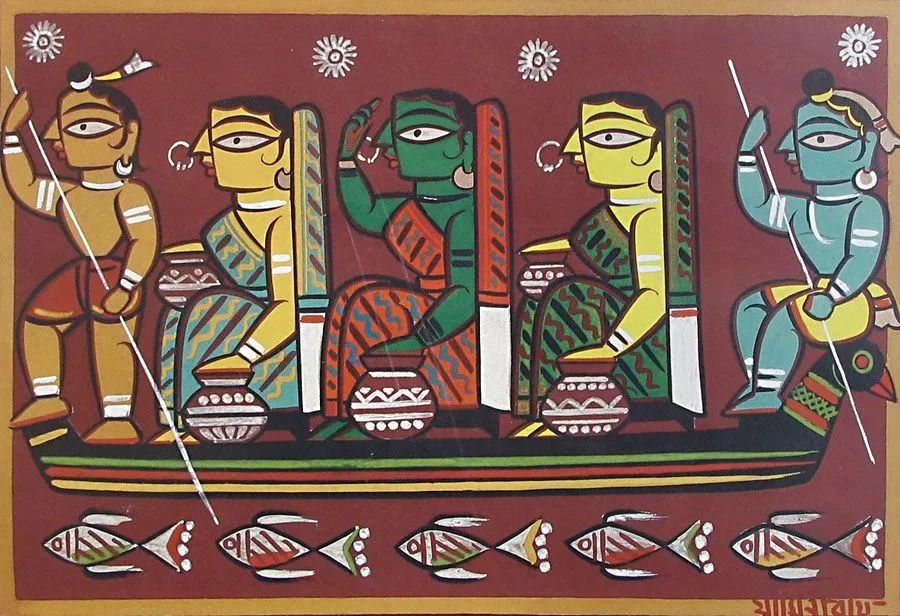
Hello folks! Have you ever looked at a simple pattern and felt something stir inside you? That is exactly how Santhal tribal art feels the first time you see it.
These paintings look playful at first glance. You will see dots, dashes, and little stick figures dancing. But every single mark carries a deep meaning. These are not just decorations. They are stories, songs turned into shapes, and old prayers turned into patterns.
I remember standing in front of a Santhal painting on a small village wall. I felt a strange ache in my chest. The art reminded me of something I had forgotten. Something simple but deeply human.
That is the real magic of Santhal tribal art. It never screams for attention. It only whispers to those who stop and look. And if you learn to listen to those whispers, they will change how you see every line, every dot, and every empty space on a page. Let me show you how to begin.
Who Are the Santhal People? (A Very Quick Backstory)
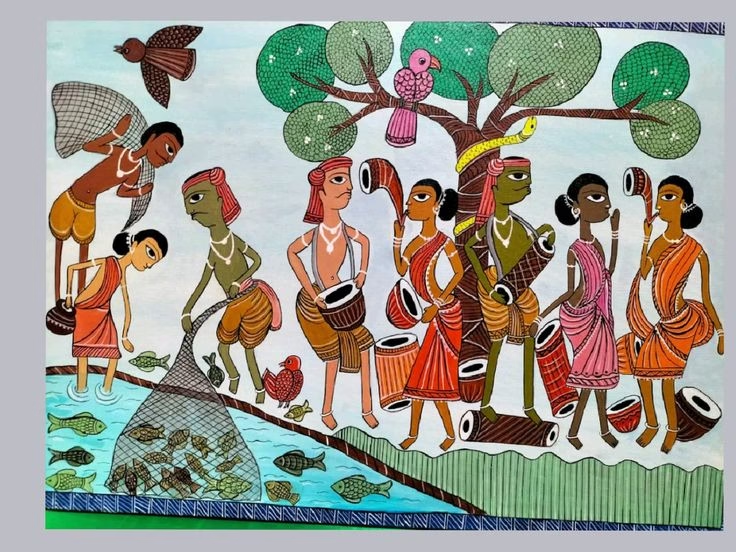
Let me introduce you to the Santhals. They are one of India’s largest and oldest tribal communities. You will find them mostly in Jharkhand, West Bengal, Odisha, and Bihar. They have lived close to the land for thousands of years. Forests, rivers, and hills are not just nature to them. They are home. They are family.
The Santhals have a rich oral tradition. They do not write long histories in books. Instead, they sing them. They dance them. They paint them on walls. Their art comes from their daily life. Harvesting paddy. Going to the market. Falling in love. Celebrating a wedding.
Here is what makes them special:
- They believe in peace. Violence is not their way. Their gods are kind, not angry.
- Their village runs on togetherness. Everyone helps everyone. No questions asked.
- Music and dance are their heartbeat. Every festival, every season, every harvest has its own song.
- They have their own gods. Marang Buru is the great mountain deity. Jaher Era is the forest goddess.
Now you know the people behind the art. It changes how you see every dot, does it not?
The History of Santhal Tribal Art in Timeline
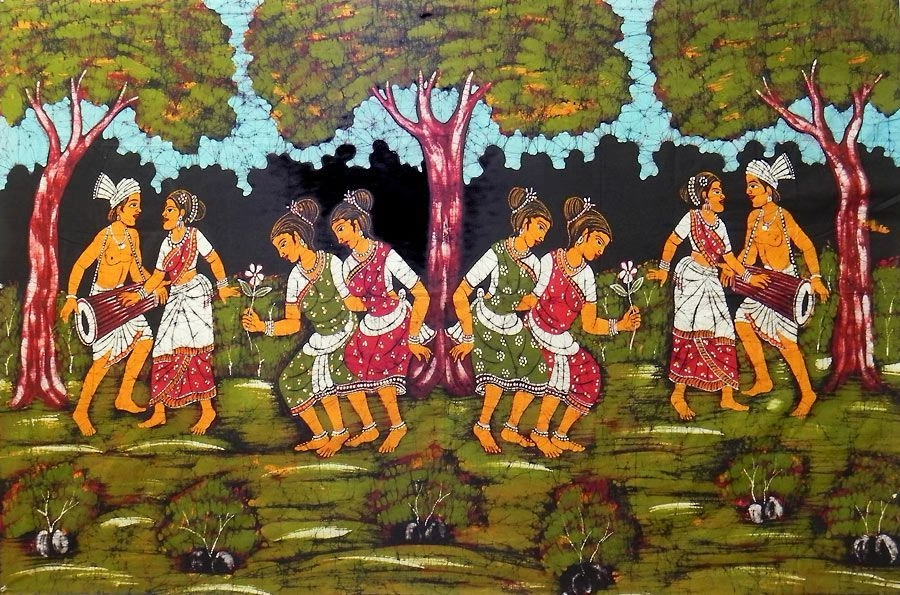
Let me take you back in time. This art did not start in a studio or a gallery. It started on the mud walls of village homes in eastern India.
- Pre-19th Century (The Silent Beginning). Santhal women painted their homes during harvest seasons and weddings. They used natural colors from leaves, flowers, and charcoal. No one called it “art” back then. It was just life poured onto walls.
- Mid-19th Century (The First Outside Eyes). British colonial officers noticed these patterns during the Santhal rebellion of 1855. They wrote about the paintings in their journals but treated them as primitive curiosities.
- Early 20th Century (The Shift Begins). Indian scholars and artists started paying real attention. They saw meaning where others saw only dots and lines. The art slowly moved from village walls to paper and canvas.
- 1970s–1980s (The Recognition Era). Government agencies and art institutions began documenting Santhal art seriously. More artists from the community started getting formal recognition.
- Today (The Global Stage). You can now find Santhal art in international exhibitions and modern homes. The soul remains the same, but the audience has grown enormously.
How Santhal Tribal Art Comes to Life: Methods, Materials, and Making
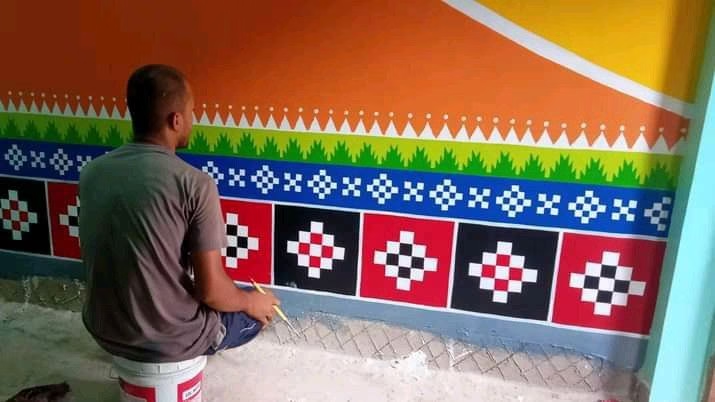
Let me walk you through how a Santhal painting actually happens. It is not like grabbing a canvas and some fancy acrylics from a store. It is slower. More deliberate. And deeply connected to the earth.
The women of the community traditionally make these paintings. They do it on special occasions. Weddings. Harvest festivals. Religious ceremonies. The art is not separate from life. It is life itself.
Raw Materials They Use
Forget expensive art supplies. Santhal artists use whatever the village gives them. Here is what goes into a real, authentic piece:
- The Surface: They paint on fresh mud walls, floor surfaces, or simple paper made from old rags. The wall gets a base coat of cow dung mixed with clay. Sounds strange? That layer creates a smooth, dark brown or black background. The colors pop beautifully against it.
- The Brushes: No store-bought brushes here. Artists use thin twigs, bamboo sticks chewed at one end to make a soft tip, or even just their own fingers. The twigs give those signature dotted lines you cannot get from a synthetic brush.
- The Colors: This is my favorite part. They grind natural stones, leaves, flowers, and soil to make every shade. No chemicals. No factories. Just pure earth.
- Black: Burnt rice husks or charcoal mixed with water.
- White: Ground rice powder or crushed limestone.
- Red: Red clay or crushed brick powder.
- Yellow: Turmeric or yellow flower petals.
- Green: Crushed leaves.
The Making Process Step by Step
The process is not rushed. It follows a rhythm. Here is how it unfolds:
- Preparing the ground: If it is a mud wall, women smooth fresh clay and cow dung over it. They let it dry completely. The result is a warm, dark surface that feels alive.
- No sketching allowed: Artists never use pencils or outlines first. They go straight in with their twig brushes. That takes serious confidence. One wrong dot and the whole rhythm breaks.
- Building the patterns: They start with the main figures. Dancing people. Animals. Trees. Then they fill the empty spaces with those famous dotted lines, small dashes, and tiny geometric shapes. Every mark has intention.
- Layering colors: They apply one color at a time and let it sit. The red comes first. Then white. Then black details on top. Each layer dries naturally under the sun.
- The final touch: They never seal or varnish the painting. The art stays raw. Over time, it peels and cracks. That is not damage. That is the painting living with the house.
A single small painting can take two to three days. A full wall might take a week. No shortcuts. No rush. Just hands moving with memory and meaning.
That is the real beauty of Santhal tribal art. It does not try to be perfect. It tries to be honest. And you can feel that honesty in every single dot.
Symbols and Motifs in Santhal Tribal Art
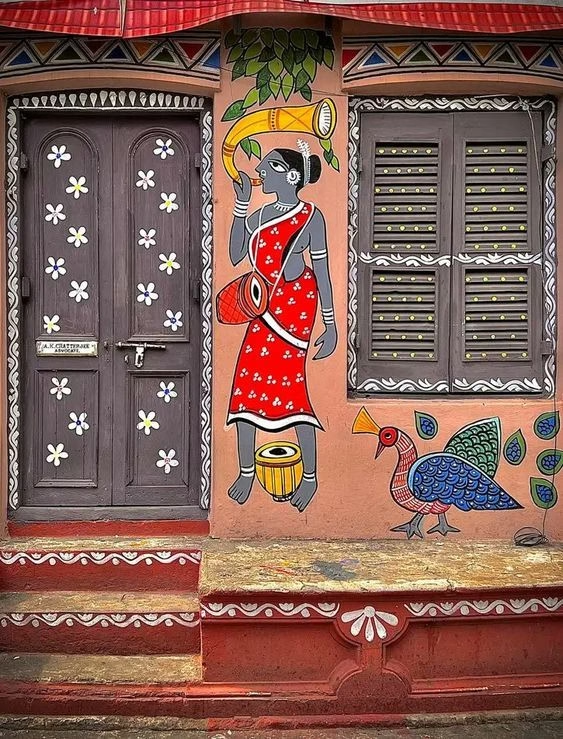
Let me tell you something honest. Santhal art does not try to impress you with complicated designs. It wins you over with honest little marks. Every dot, every line, and every tiny shape carries a piece of someone’s world.
The artists mostly use natural things around them. You will not see mythical monsters or fancy gods here. You will see the everyday turned into something magical.
Here are the most common symbols you will spot and what they actually mean:
- The circle or dotted sun. This represents the sun god, who is called Sing Chando. The Santhal people believe the sun sees everything and blesses the land. You will find this motif in almost every serious painting.
- The peepal leaf shape. This is a symbol of fertility and new life. Young couples receive paintings with this motif during weddings. It is a quiet wish for children and a full home.
- The dancing human chain. You will see rows of stick figures holding hands. This is not just a happy scene. It represents community, harvest celebrations, and the idea that no one dances alone in Santhal culture.
- The fish motif. Fish appear in many forms. A simple curved line with a tail means prosperity. The Santhal people rely on rivers for food, so the fish becomes a symbol of daily survival turned into art.
- The tree of life. This is a central motif with branches spreading in all directions. It connects the earth to the sky. Each branch holds a different bird or leaf, and together they tell the story of how all living things belong to one another.
- The dotted borders. Those repetitive dots along the edges are not just fillers. They mark boundaries between the human world and the spirit world. The dots keep bad energy out and good energy in.
You do not need a degree to read these symbols. You just need to pause and look. Each mark is a word, and together they become a sentence about life, love, and the land.
How to Tell a Real Santhal Artwork from a Cheap Copy
Not every painting with dots is true Santhal tribal art. The market is full of fakes. But once you know what to look for, the difference jumps right out at you.
A real Santhal artwork feels alive. A cheap copy feels empty. Here is how to spot the real thing:
- Real pieces use natural colors. Think mud, charcoal, leaf juice, and rice paste. Fakes use bright plastic paints that hurt your eyes.
- Real art has small mistakes. Look closely. The dots are never perfectly uniform. The lines wander a little. That is a human hand at work. Cheap copies look machine-stamped and lifeless.
- Real art tells a story. You will see harvest scenes, animals, weddings, or dancing. Fakes just throw random symbols together with no meaning.
- Real art comes on natural surfaces. Handmade paper, mud walls, or cloth. Cheap copies use shiny poster paper.
Trust your gut. If it looks too perfect or too polished, walk away. Real Santhal art breathes. Fakes just sit there.
FAQs:
Where do Santhal tribal paintings originally come from?
Santhal paintings come from the tribal communities in Jharkhand, West Bengal, Odisha, and Bihar in eastern India.
What materials are used to make authentic Santhal tribal art?
Artists use natural materials like mud, charcoal, leaves, flowers, rice paste, and twigs.
Are Santhal paintings religious or cultural?
They are mostly cultural and celebrate daily life, harvests, weddings, dances, and nature rather than gods.
How old is the Santhal art tradition?
This art form is hundreds of years old and has been passed down through generations of Santhal storytellers and painters.
What do the dots and dashes mean in Santhal paintings?
Dots and dashes represent sounds, beats, rhythms, and musical notes from Santhal folk songs and dances.
Can I buy real Santhal tribal art online?
Yes, but buy only from verified tribal art platforms, government emporiums, or fair-trade organizations to avoid fakes.
Do Santhal artists sign their paintings?
Not usually. Traditional Santhal art focuses on community stories rather than individual fame, so signatures are rare and modern.
Is it okay to hang Santhal art in a modern home?
Absolutely. Santhal art looks beautiful in any home and adds warmth, color, and a raw human touch.
How should I care for an original Santhal painting on paper?
Keep it away from direct sunlight, moisture, and dust. Frame it behind glass to protect the natural pigments.
Can children learn to draw Santhal art patterns?
Yes, children love Santhal art because the patterns are simple, joyful, and easy to pick up with practice.
Also Read:
Blue Pottery of Jaipur: The Ancient Ceramic Style That’s Trending in Luxe Decor

Leave a Reply