

Hello folks! What comes to mind when you think of traditional Indian paintings? Maybe Madhubani’s vibrant colors or Gond’s intricate patterns?
Well, here’s the thing—these beautiful art forms aren’t just cultural treasures anymore. They’re serious money-making opportunities.
Today, Madhubani art alone has grown into a ₹100-crore industry with global demand. And with online art sales crossing $11.8 billion, there’s never been a better time to start your own art business.
Let’s explore exactly how to start a small business selling traditional paintings online.
Why Traditional Paintings Are a Smart Business Idea
Before we dive into the how, let’s talk about why this business idea actually works in 2026 and beyond.
The numbers don’t lie:
- Online art sales have reached $11.8 billion globally
- The global painting services market is expected to hit $232 billion by 2030
- More than 37% of buyers prefer purchasing art online
- Madhubani art exports have grown from ₹55-60 crores to ₹100 crores in just a few years
Why traditional paintings sell:
- Growing global interest in authentic, handmade products
- Rising demand for sustainable and cultural decor
- The “Made in India” tag carries premium value internationally
- Corporate gifting is a massive and growing market
Real success story:
Take Folkstroke, a Raipur-based brand. They started working with 200 artisans across seven states and saw artisan incomes rise by 30% over six years.
Their cumulative revenue exceeds ₹1.5 crore, with 37% going directly to artisans. That’s what a solid business idea can achieve.
Choose Your Niche – What Kind of Paintings to Sell
One of the first steps in how to start a small business with art is deciding exactly what you’ll sell. Traditional paintings offer several paths.
Option 1: Original Paintings
Selling original artwork offers the highest value and premium pricing. You’re selling a one-of-a-kind piece that no one else will ever own.
Pros:
- Highest profit margins
- Unique, irreplaceable value
- Strong emotional connection with buyers
Cons:
- Limited inventory (each piece is unique)
- Higher price points mean fewer buyers
- More time and effort per sale
Option 2: Art Prints and Reproductions
This is where scalability comes in. You create once and sell infinitely.
Pros:
- No inventory issues
- Multiple revenue streams from one piece
- Affordable price points attract more buyers
Cons:
- Lower per-unit profit
- More competition
- Need quality printing and shipping
Option 3: Art on Functional Products
This is the fastest-growing segment. Think paintings on wooden trays, coasters, home decor items, and corporate gifts.
Why this works:
- Traditional art becomes usable, not just decorative
- Appeals to people who don’t buy “just paintings”
- Corporate gifting is a massive market
Option 4: Custom Commissions
Special orders based on customer requests. Pet portraits, wedding gifts, personalized decor.
Why this works:
- Pre-sold before you create
- Higher customer satisfaction
- Builds loyal repeat buyers
How to Start a Small Business – Your Step-by-Step Plan

Let’s break down exactly how to start a small business selling traditional paintings online in detailed, actionable steps.
Step 1: Build Your Portfolio
Before you can sell, you need something to show. Create your first collection of 10-15 paintings.
What to include:
- 10 ready paintings for display and sale
- 5 sample custom artworks
- Digital sample prints (if applicable)
Where to get inspiration:
- Learn from platforms like Rooftop that offer courses from master artisans
- Study traditional art forms like Warli, Gond, Madhubani, Pattachitra, and Pithora
- Visit local craft fairs and museums to understand different styles
How to build quality:
- Practice consistently—skill improves with repetition
- Experiment with different media and surfaces
- Get feedback from fellow artists or online communities
- Document your progress to show potential buyers
Pro tip: Your portfolio should tell a story. Group your paintings by theme, style, or collection. This makes it easier for buyers to see your artistic vision.
Step 2: Register Your Business
To sell paintings for sale online professionally, you need proper business registration.
Registration options:
- Sole Proprietorship: Simplest for individuals. No separate legal entity.
- Partnership Firm: If you’re starting with partners.
- Private Limited Company: Best for scaling, but more compliance.
- LLP (Limited Liability Partnership): Combines the benefits of partnership and company.
Required registrations:
- GST registration (if turnover exceeds ₹20 lakhs annually)
- Udyam registration (MSME) for government benefits
- Shop and Establishment Act license (depending on your state)
- Trademark registration for your brand name and logo
Cost estimate:
- GST registration: Free (through government portal)
- Udyam registration: Free
- Trademark registration: ₹4,500 – ₹10,000 (through IP India)
- Company registration: ₹5,000 – ₹15,000
Pro tip: Start with GST and Udyam registration. These are essential for selling online and qualify you for government schemes.
Step 3: Source Your Artwork
You have two options—create your own art or partner with traditional artisans.
Option A: Create Your Own Art
- Complete control over quality and style
- Higher profit margins
- Requires artistic skill and time
Option B: Partner with Artisans
- Access to authentic traditional art
- Supports local communities
- Scalable without being limited by your own time
How to find artisans:
- Visit craft clusters in states like Bihar (Madhubani), Odisha (Pattachitra), Gujarat (Warli), and Madhya Pradesh (Gond)
- Connect through organizations like the Handicrafts Export Promotion Council
- Use platforms like TribeX (formerly Adi Sanskriti) that connect artisans with buyers
- Attend craft fairs and government exhibitions
Working with artisans:
- Offer fair prices (research market rates)
- Sign simple agreements
- Build long-term relationships
- Provide feedback and guidance on quality
Pro tip: If you partner with artisans, visit them in person. Build trust and understand their process. This also helps you tell authentic stories to your buyers.
Step 4: Price Your Paintings Correctly
Pricing is one of the hardest parts of how to start a small business with art. Here’s a detailed breakdown.
For the original art pricing formula:
Materials Cost + (Time Spent × Hourly Rate) + Overhead + Profit Margin = Retail Price
Example for a Madhubani painting:
- Materials: ₹300 (canvas, paints, brushes)
- Time: 4 hours × ₹250/hour = ₹1,000
- Overhead (10%): ₹100
- Profit margin (25%): ₹325
- Final price: ₹1,725 (round to ₹1,800)
For prints, the pricing formula is
Cost of printing + Marketing costs + Packaging + Profit = Retail Price
Example for a print:
- Printing cost (5 prints): ₹500 (₹100 each)
- Marketing per print: ₹50
- Packaging: ₹50
- Profit: ₹200
- Final price per print: ₹400
Market research for pricing:
- Check prices of similar art on Etsy and Amazon Handmade
- Attend art fairs to see what galleries charge
- Ask fellow artists (professionally) about their pricing
- Consider your target audience’s spending capacity
Pricing strategies:
- Penetration pricing: Start low to attract initial buyers
- Premium pricing: Position yourself as luxury/high-end
- Tiered pricing: Different price points for different products (prints, originals, commissions)
Pro tip: Don’t undervalue your work. Art buyers often judge quality by price. Too low suggests low quality. Too high scares off buyers. Find the sweet spot.
Step 5: Create High-Quality Images
When you sell paintings for sale online, buyers can’t see the artwork in person. Your photos are everything.
What you need:
- Good lighting (natural sunlight works best)
- Clean, neutral backgrounds
- Multiple angles (front, detail shots, side)
- Lifestyle photos showing scale and placement
Equipment options:
- Basic: Smartphone with a good camera + natural light
- Intermediate: DSLR/mirrorless camera + tripod
- Advanced: Professional photography setup
Photo tips:
- Shoot during “golden hour” (early morning or late evening) for natural warmth
- Use a plain white or neutral background
- Include a common object (like a coin) to show scale
- Take close-ups of textures and details
- Edit lightly—don’t oversaturate colors
Videos for marketing:
- Time-lapse of you creating the art
- 360-degree rotation of the painting
- Short reels showing details
- Behind-the-scenes process
Pro tip: For 2D works, scanning is often more affordable and accurate than photography.
Step 6: Set Up Your Online Store
Now it’s time to actually start selling paintings for sale online.
Option 1: Your Own Website
- Full control, no commission fees
- Better branding and customer trust
- Recommended for professional growth
Tools for building:
- Shopify: ₹1,500/month + transaction fees
- WooCommerce (WordPress): Free + hosting costs
- Wix: ₹500-2,000/month
- Squarespace: ₹1,200/month
Option 2: Online Marketplaces
- Immediate access to buyers
- Built-in traffic and trust
- Pay commissions (5-15%)
Options:
- Etsy: 96 million active buyers
- Amazon Handmade: Global reach
- eBay: 132 million active buyers
- Craftsvilla: India-specific
- Meesho: Indian marketplace
Option 3: Social Media Commerce
- Instagram Shop: Visual, built for artists
- Facebook Marketplace: Wide reach
- WhatsApp Business: Direct sales
Option 4: Print-on-Demand
- Create designs and platform handles production
- No inventory or shipping
- Lower profit margins
Platforms:
- Printful
- Redbubble
- Society6
Pro tip: Start with one platform. Master it. Then expand to others.
Step 7: Set Up Payment and Shipping
Payment options:
- PayPal (international)
- Stripe (global payments)
- Razorpay (India)
- Bank transfers (direct)
- Cash on delivery (for Indian orders)
Website payment setup:
- If using Shopify: Shopify Payments integrated
- If using WooCommerce: Stripe or PayPal plugins
- If using Wix: Wix Payments
Shipping tips:
- Larger works: Cardboard mailing tubes
- Smaller paintings: Rigid cardboard envelopes
- Use cellophane sleeves or protective paper
- Feature your branding on packaging
- Include a personalized thank-you note
Shipping services in India:
- India Post (affordable for small items)
- DTDC (reliable)
- Delhivery (good for bulk)
- FedEx/DHL (for international)
International shipping tips:
- Use international courier services
- Mark as “Handmade Art” for customs
- Include commercial invoices
- Insure high-value shipments
Pro tip: Offer free shipping above a certain order value. It increases average order size.
Step 8: Market Your Art Business
This is how you find buyers for your paintings for sale online.
Instagram marketing:
- Post process videos, behind-the-scenes, completed artworks
- Use relevant hashtags (#paintingbusiness #customportraits #indianart)
- Consistency builds trust
- Stories and reels get maximum reach
Pinterest marketing:
- Pins can bring traffic for years
- Best for wall decor and abstract art
- Create boards for different styles and themes
Facebook marketing:
- Join art and decor groups
- Run targeted ads
- Create a business page
Content marketing:
- Start a blog (you’re already reading one!)
- Write about art techniques, your process, buyer guides
- Build authority and organic traffic
Corporate gifting:
This is a huge opportunity. Companies like TCS, SAP Labs, and Thermax have purchased handcrafted art products as corporate gifts.
How to tap into corporate gifting:
- Create a portfolio of products suitable for gifting
- Reach out to HR and procurement departments
- Offer customization options
- Provide beautiful packaging
Success story: Folkstroke recently fulfilled a 2,500-piece corporate gifting order through a partnership with BharathCloud. That’s the scale you can achieve.
Email marketing:
- Build an email list
- Send updates on new paintings, offers, and behind-the-scenes
- Offer a free download (wallpaper, guide) in exchange for email
Pro tip: Don’t try all marketing channels at once. Start with 1-2. Master them. Then expand.
Step 9: Build Your Brand
Your brand is what makes you memorable. It includes your business name, logo, colors, style, and story.
Branding questions to answer:
- Do you sell under your own name or a brand name?
- What are your mission and values?
- What’s your visual direction?
- What’s your brand story?
Brand elements:
- Business name
- Logo
- Color palette
- Typography
- Tone of voice
- Packaging
Brand story example:
Folkstroke’s brand is built around “contemporizing traditional Indian folk art so it suits modern tastes while regaining its lost luster.”
Pro tip: Your brand story should answer the following: Why you? why this art? why now?
Step 10: Manage Operations and Scale
Once sales start coming in, you need systems to manage everything.
Inventory management:
- Track your paintings, prints, and supplies
- Use spreadsheets or inventory software
- Reorder materials before they run out
Order management:
- Process orders daily
- Provide tracking numbers to customers
- Handle returns and complaints professionally
Financial management:
- Separate business and personal accounts
- Track income and expenses
- Set aside money for taxes
Customer service:
- Respond to queries within 24 hours
- Address complaints promptly
- Build relationships with repeat buyers
Scaling strategies:
- Hire help (assistant, photographer, social media manager)
- Partner with more artisans
- Expand product range
- Enter new markets (international)
Pro tip: Start small and grow slow. Don’t scale before you have systems in place.
Mistakes to Avoid When Starting Your Art Business

Mistake 1: Not Building an Audience First
Many artists create products without any audience. They set up a store, list paintings, and wonder why no one buys. That’s a recipe for disappointment.
How to fix it: Start building followers on Instagram, Pinterest, or Facebook before you launch. Share your journey, your process, your behind-the-scenes stories. People buy from people they know, like, and trust.
Examples:
- Post process videos regularly
- Share your daily routine
- Ask followers for opinions on your work
- Build a community, not just a customer base
Mistake 2: Underpricing Your Work
This is the most common mistake. Many beginners undervalue their time. They think no one will buy at higher prices. But low prices actually attract difficult buyers.
How to fix it: Use a pricing formula. Calculate your materials, time, and overhead. Don’t forget to pay yourself. Remember – cheap prices suggest cheap quality.
Pricing psychology:
- Too low = “This must be low quality”
- Just right = “This is fairly priced.”
- Premium = “This is high-end art.”
Mistake 3: Poor Quality Images
Bad photos kill online sales. If your painting looks dull, blurry, or poorly lit, no one will buy it. Buyers want to see exactly what they’re getting.
How to fix it: Invest time in photography. Use natural light. Shoot from multiple angles. Edit lightly. Show the painting in a room so buyers can visualize it in their space.
Mistake 4: Ignoring Shipping and Packaging
Paintings are fragile. If they arrive damaged, you’re looking at refunds, replacements, and bad reviews. Bad packaging can destroy your reputation.
How to fix it: Use sturdy packaging. Reinforce corners. Use cellophane sleeves and protective paper. Add “Fragile” stickers. Insure expensive shipments. Your packaging is also a branding opportunity.
Mistake 5: Not Having Multiple Revenue Streams
Relying only on original paintings is risky. One slow month can hurt your income.
How to fix it: Diversify. Sell prints, digital downloads, and merchandise, and take commissions. Each stream adds stability.
Multiple streams for artists:
- Original paintings
- Art prints
- Digital downloads (wallpapers, templates)
- Custom commissions
- Merchandise (tote bags, mugs, coasters)
- Corporate gifting
- Workshops and classes
Mistake 6: Giving Up Too Soon
This is the biggest mistake of all. Many artists expect overnight success. When it doesn’t come, they quit.
How to fix it: Understand that building a business takes time. Expect slow growth initially. Celebrate small wins. Stay consistent. Success is a marathon, not a sprint.
Mistake 7: Ignoring SEO and Keywords
If your paintings aren’t discoverable online, they won’t sell. Many artists ignore search engine optimization (SEO) for their listings.
How to fix it: Use relevant keywords in your product titles, descriptions, and tags. Include words like paintings for sale online,” “traditional Indian art,” “handmade paintings,” and the specific art form name (Warli, Madhubani, etc.)
Platforms to Sell Paintings for Sale Online – Detailed Comparison
Here’s a detailed breakdown of the best platforms to sell paintings for sale online.
1. Etsy
Etsy is the largest global marketplace for handmade goods, with 96 million active buyers.
Pros:
- Massive built-in audience
- Trusted brand for handmade items
- Simple setup
- In-built payment processing
- Mobile app for managing store
Cons:
- Listing fees ($0.20 per item)
- Transaction fees (5% of sale)
- High competition
- Limited SEO customization
Best for: Artists who want immediate access to buyers without building their own website.
Fees:
- Listing fee: $0.20 per item
- Transaction fee: 5% of sale
- Payment processing: 3% + $0.25 per transaction
Getting started:
- Sign up for an Etsy account
- Set up your shop
- List your paintings with high-quality images
- Use relevant tags and keywords
Pro tip: Optimize your titles with keywords like paintings for sale online, “handmade Warli art,” and “traditional Indian painting.”
2. Amazon Handmade
Amazon Handmade is Amazon’s dedicated platform for handcrafted goods.
Pros:
- Huge global reach
- Trusted brand
- Fulfillment by Amazon (FBA) optional
- Lower barriers to entry than Amazon proper
Cons:
- Commission fees
- Less flexible than own website
- Strict quality standards
- Competition with mass-produced items
Fees:
- Professional selling plan: $39.99/month
- Referral fee: 6-20% (varies by category)
Best for: Artists who want Amazon’s massive reach and can handle competitive pricing.
3. eBay
eBay has 132 million active buyers and is a well-established platform.
Pros:
- Huge audience
- Auction or fixed-price options
- 250 free listings per month
- International shipping options
Cons:
- Up to 15% commission on sales
- Lower perceived quality than Etsy
- The auction model isn’t best for art
Best for: Artists who want flexibility in pricing and large global reach.
4. Your Own Shopify Store
A Shopify store gives you complete control over your brand and sales.
Pros:
- No commission fees
- Full branding control
- Unlimited customization
- Professional appearance
- Email marketing integrations
Cons:
- Monthly subscription costs
- No built-in traffic – you need to market
- More technical setup
- Payment processing fees
Costs:
- Shopify: ₹1,500/month
- Additional apps: ₹500-2,000/month
- Payment processing: 2-3% per transaction
Best for: Serious artists who plan to scale and want a professional brand presence.
5. Instagram Shop
Instagram Shop turns your Instagram profile into an online store.
Pros:
- Free to set up
- Built-in audience engagement
- Visual platform perfect for art
- Shoppable posts and stories
- Direct customer communication
Cons:
- No dedicated marketplace (people need to find you)
- Limited customization
- Advertising requires budget
Fees: No platform fees (only payment processing fees)
Best for: Artists who already have a following on Instagram.
6. Indian Platforms – Craftsvilla and Meesho
Craftsvilla:
- India-specific marketplace for handmade products
- 5 million+ active users
- Commission fees (varies by product category)
- Good for targeting Indian customers
Meesho:
- Indian social commerce platform
- Zero listing fees
- Targeted at Indian consumers
- Good for regional art
Best for: Artists targeting primarily Indian buyers.
7. Print-on-Demand Platforms
Printful, Redbubble, Society6:
- Create designs and platform handles production and shipping
- No inventory risk
- Lower profit margins
- Good for testing demand
Best for: Artists who want to sell merchandise without managing inventory.
8. The Rooftop App
The Rooftop App:
- India-specific platform for traditional art
- Direct connection with master artisans
- “Buy original Indian paintings online, hand-painted and signed artworks directly sourced from traditional artists.”
Best for: Traditional artists and those who want to source authentic traditional Indian art.
Unique Business Model – Fusing Multiple Art Forms
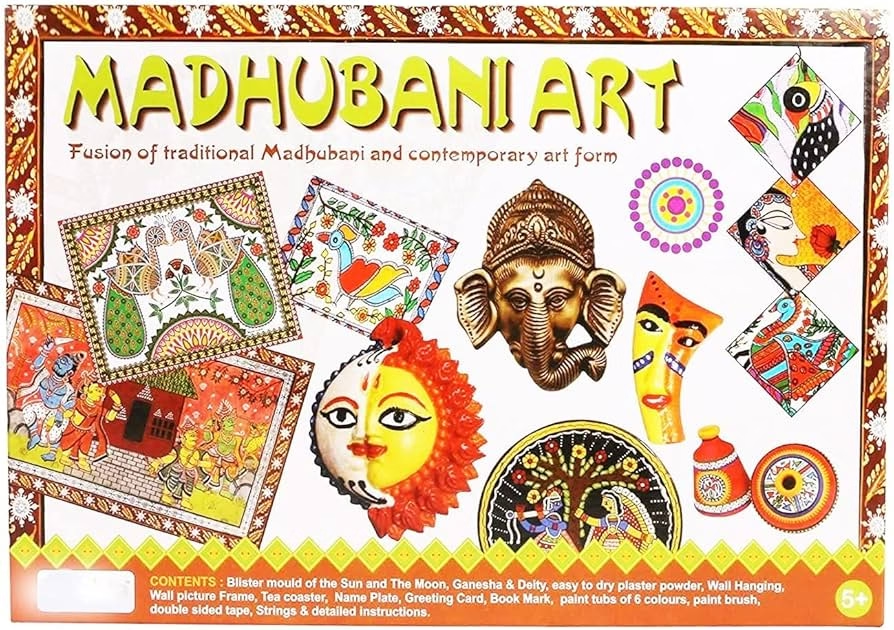
This is one of the most innovative business idea approaches I’ve seen. Instead of relying on one art form or artisan, fuse multiple styles and techniques.
How it works:
- Different artisans work on different components
- Parts are made across clusters in different states
- Everything is brought together for assembly and finishing
The advantages:
- Production time reduced by 60%
- Not dependent on one artisan or cluster
- Fusion products are traditional yet unique
- A single purchase generates income for multiple artisans
Government Support and Digital Platforms
The government is actively supporting traditional art businesses. Here’s what’s available:
TribeX (formerly Adi Sanskriti):
- A digital platform for tribal art forms
- Includes a digital e-learning academy, socio-cultural repository, and online marketplace
- Enables tribal artisans to showcase and sell directly to consumers
GI Tag Protection:
- Pithora art received its GI tag in 2021, helping artisans earn recognition and better prices
Government Initiatives:
- The Gujarat State Handloom and Handicrafts Development Corporation has purchased over ₹6.2 lakh worth of Pithora art directly from artisans, leading to 15-30% income growth
FAQs – Frequently Asked Questions
Q1. Do I need to be an artist to start this business?
Not at all. You can partner with traditional artisans and sell their work. Many successful art businesses are run by entrepreneurs, not artists themselves.
Q2. How much money do I need to start an art business?
You can start with as little as ₹10,000-15,000 for materials, photography, and platform fees. Costs increase as you scale.
Q3. Which platform is best for beginners selling paintings for sale online?
Etsy is ideal for beginners. It has a built-in audience, a simple setup, and is trusted by buyers worldwide.
Q4. How do I price my traditional paintings?
Use the formula: (Materials + Time × Hourly Rate) + Overhead + Profit = Retail Price. Research competitors for market benchmarks.
Q5. Can I sell traditional paintings internationally?
Yes. Use international shipping services and platforms like Etsy and eBay that connect global buyers.
Q6. What’s the best way to find traditional artisans to work with?
Visit craft clusters in states like Bihar (Madhubani), Odisha (Pattachitra), and Gujarat (Warli). Attend craft markets and use platforms like TribeX.
Q7. Is GST registration required to sell paintings online?
Yes, if your annual turnover exceeds ₹20 lakhs. For lower turnover, GST registration is optional but recommended for credibility.
Q8. How long does it take to make the first sale online?
It varies. Some artists sell within days. Others take 2-3 months. Consistency in marketing and quality listings speeds up the process.
Also Read:
Best Ways To Make Money Online with Your Homemade Artwork

Leave a Reply