

Hello folks! Ever tried to sell your art, only to hear crickets? You are not alone. Turning your hobby into actual cash can feel impossible, but trust me, it’s not. The internet has completely changed the game, and there are now more ways to sell art online than ever before.
I’m not just talking about opening an Etsy shop and hoping for the best. We’re diving into practical, simple strategies that actually work. Think limited-edition prints, digital downloads, and even using social media to find buyers who love your specific style.
Whether you paint, sketch, or sculpt, the goal is to find the best ways to make money online doing what you love. It’s about working smarter, not harder. Ready to turn your passion into a paycheck? Let’s get started!
Why Your Art Is Already Worth Money
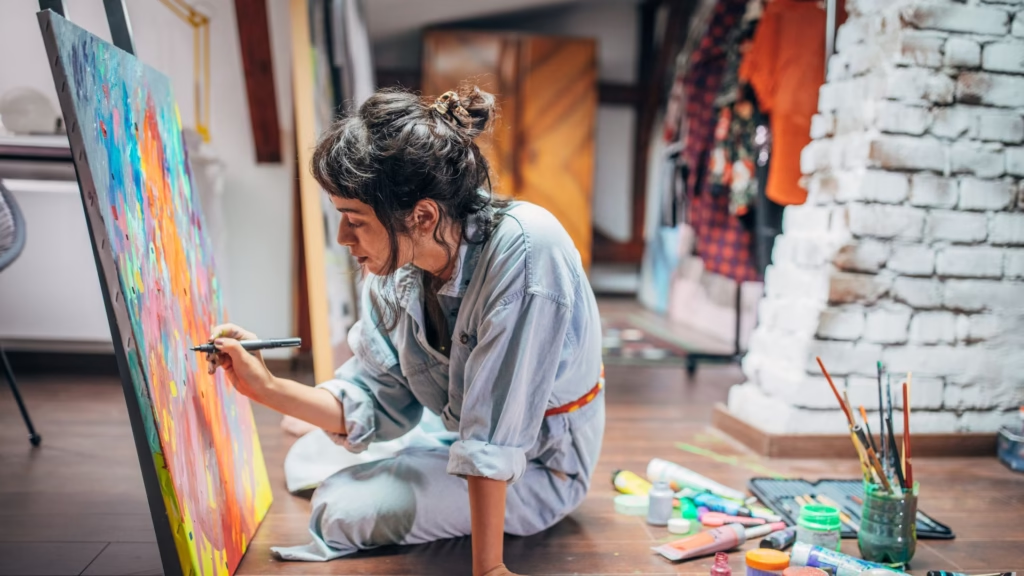
Let me stop you right there. If you’re thinking, “But I’m not a real artist,” or “Who would even buy my stuff?”—just breathe. Here’s the truth: your art is already worth money. Not because you have a fancy degree or a million followers, but because you made something that didn’t exist before. That alone has value.
People buy art for all kinds of reasons—because it makes them feel something, because it matches their living room, or simply because it reminds them of a memory. And guess what? That buyer is out there right now, scrolling and looking for exactly what you create.
You don’t need to be famous to sell art online. In fact, most successful artists started right where you are: unsure, underconfident, and waiting for permission. Stop waiting. There are tons of real, best ways to make money online with your creativity, and it starts with believing that what you make matters.
Your style, your colors, your perspective—nobody else has that. And yes, people will pay for it. So own it. Your art has always been worth something. Now it’s just time to put a price tag on it.
Pricing Your Work Without Feeling Awkward
Let’s be real—pricing your own art is probably the most uncomfortable part of this entire journey. You pour your heart into a piece, and suddenly you have to slap a number on it?
It feels weird, almost arrogant. But here’s the truth: if you don’t value your work, nobody else will either. So let’s fix that awkwardness once and for all.
Stop Underselling Yourself
Most artists start way too low because they’re scared of rejection. They think, “If I price it cheap, at least someone will buy it.” Big mistake. Cheap prices attract cheap buyers who don’t appreciate your effort. Worse, they make your art look low-quality.
Remember, online earning starts with believing your art has real value. Price it like you mean it.
A Simple Formula That Takes the Guilt Away
Forget guessing. Use this basic math to sell art online with confidence:
- Materials Cost – Canvas, paint, brushes, and shipping supplies. Add it all up.
- Hourly Rate – Decide what your time is worth per hour. ₹500 – ₹1200, Be fair to yourself.
- Time Spent – Multiply your hourly rate by the hours you actually worked.
- Add a Markup – Toss on an extra 20–30% for your creativity and skill.
Example: Materials (₹1500) + (5 hours × ₹500/hour = ₹2500) + Markup (40%) = ₹3500 total.
See? No guilt. Just cold, hard math.
Compare Yourself to Others (Without the Jealousy)
Look at artists with similar experience and style. What are they charging? This isn’t about copying—it’s about understanding the market.
If everyone with your skill level is selling at ₹5000 – ₹10,000, don’t list yours at ₹500. You’re not doing anyone a favor by being the “cheap option.”
Test the Waters
Still feeling nervous? Start with a small collection. Price them at what feels slightly too high and see what happens. You’ll be surprised—people often trust higher-priced art more. If nobody bites, adjust slightly. It’s called learning, not failing.
The Golden Rule of Pricing
Never lower your price just because someone asks. If they love it, they’ll pay for it. Offer a small discount or free shipping instead. That way, you keep your dignity and make the sale.
The Easiest Places to Sell Art Online
Honestly, getting started is the hardest part, right? The good news is that you don’t need to be a tech wizard to sell art online. There are two main paths you can take, and both are pretty straightforward.
Option 1: Jump on a Marketplace
Think of this like setting up a booth in a busy mall. The biggest advantage? The crowd is already there. Platforms like Etsy, Amazon Handmade, and Society6 have millions of people browsing every day, looking for unique art.
You don’t have to worry about bringing in your own traffic right away; just list your work and start selling. It’s the fastest way to test the waters and see if people love your style.
The global online art market is expected to hit a massive $15.5 billion by 2032, so people are definitely buying!
Why sell there?
- Built-in Audience: No need to build a website from scratch. Customers are already there.
- Easy Setup: Create an account, upload your art, set a price, and you’re in business.
But keep in mind:
- Fees: They take a cut of your sale (Amazon Handmade takes about 15%, for example).
- Competition: You’ll be showing your work alongside thousands of other artists.
Option 2: Build Your Own Art Store
This is like opening your own gallery. It takes a bit more work, but you own the whole show. Platforms like Shopify and Squarespace let you create a beautiful, custom website to sell your art.
You control your brand, your customer list, and the checkout experience. What’s the biggest perk? Zero transaction fees from the platform, meaning you keep more of your hard-earned money.
This is the best long-term strategy if you want to build a serious business and not rely on someone else’s rules.
Why sell there?
- Full Control: Your store looks exactly how you want it to.
- Higher Profits: No marketplace fees eat into your earnings.
What to consider:
- No Built-in Traffic: You need to do the marketing to get people to your site—perfect for once you have built an audience.
- More Setup Time: You’ll be spending time on design and setup, not just uploading.
How to Make Money Online – Unusual Ways to Get Paid for Your Handmade Art
Most artists think selling art means setting up a shop and waiting. Boring. Let’s skip the obvious stuff and talk about the weird, creative, and surprisingly profitable ways to sell art online that most people never even consider.
Get Paid to Create Art on Demand (Without Inventory)
This is the ultimate stress-killer for artists. Instead of painting first and praying someone buys it, you flip the entire process. You let customers come to you with their ideas, you quote a price, they pay half upfront, and then you create.
No wasted materials, no unsold pieces gathering dust in your closet, no desperate price drops just to make rent.
Here’s exactly how to start:
- Post a “commission call” on your social media every Sunday. Say something like “I’m taking 3 custom orders this week – DM me if you want something made just for you.” This creates urgency and scarcity.
- Have a simple pricing formula so you don’t freeze up when someone asks “how much?” Try this: (materials cost + your hourly rate × hours spent) × 1.5 = final price. The 1.5 is your profit margin. So if materials cost ₹1,500, you value your time at ₹2,000/hour, and it takes 4 hours—that’s (1500 + 8000) × 1.5 = ₹14,250.
- Ask the right questions before starting. What size? What colors? What mood? What’s the deadline? Get everything in writing (even a simple WhatsApp message works). This avoids “I thought you’d use blue” disasters later.
Best platforms for this:
- Fiverr – Create a gig with a catchy title like “I’ll paint your pet in my signature watercolor style.” Start at ₹1000 and increase as reviews come in.
- Reddit – Subreddits like r/artcommissions, r/hungryartists, and r/forhire are full of people actively looking to pay artists. Post your portfolio once a week with clear pricing.
- Instagram – This is your free storefront. Post your best work, add a “Commission Me” highlight on your profile, and every few stories, remind people you’re available.
Pro tip: Offer a “rush fee.” Someone wants their portrait in 2 days instead of your usual 7? Add 25–30% extra. People pay for speed, especially for gifts. I’ve seen artists charge ₹5,000 extra just to move a painting to the front of their queue. Do it.
License Your Art to Small Businesses
This is the hidden goldmine that most artists completely ignore. You’re not selling the physical painting – you’re selling the right for someone else to use your design on their products. One good licensing deal can pay you for years without you lifting a brush.
Who exactly needs your art:
- Local coffee shops – They need designs for their branded mugs, tote bags, and coffee bean packaging. Walk into any indie café and look at their merch. Someone designed that. It could be you.
- Boutique clothing brands – Small t-shirt companies, hoodie brands, and accessory makers are always hunting for fresh, original designs. They can’t afford big agencies, but they can afford you.
- Indie game developers – Mobile games, board games, and card games all need character art, backgrounds, and cover illustrations. Check out indie game forums – developers are constantly looking for artists.
- Podcasters and YouTubers – Every show needs cover art, thumbnails, and merch designs. There are thousands of new podcasts launching every month. Each one needs visuals.
Step-by-step plan to land your first licensing deal:
- Create 10 “commercial-ready” designs. These should be clean, versatile, and not too personal. Think patterns, botanical illustrations, geometric shapes, or cute characters. No watermarks, no signatures that distract.
- Build a simple portfolio page. Use Canva or a free Card site. Just show your best 10 designs with a clear headline: “Licensing Available – Contact for Rates.”
- Make a cold email template. Keep it short and friendly. (Comment on this blog to get the exact email template)
- Send 5 emails a day. It’s a numbers game. Out of 100 emails, expect maybe 5–10 replies and 1–2 deals. That’s normal. Don’t get discouraged.
The smart contract trick: Add a renewal clause. After one year, the license automatically renews at the same price unless they cancel.
This means if they’re still using your design after 12 months, you get paid again without doing anything. Passive income, baby.
Sell “Art Kits” Instead of Finished Pieces
This sounds counterintuitive, right? Why sell the ingredients when you could sell the cake? But here’s the thing – not everyone can afford your ₹15,000 original painting. But they can afford a ₹500 kit that lets them feel like an artist for an afternoon.
What you can package and sell:
- Pre-sketched canvases—You do the hard part (the drawing); they do the fun part (the painting). Outline the design in light pencil, add numbered sections like a paint-by-number, and ship it with a small set of paints and brushes. It’s almost zero extra work for you but sells for 3–4x your material cost.
- Step-by-step video guides – Film yourself painting one of your signature pieces. Break it into 5–10 minute chapters. Sell the video as a digital download. Once it’s filmed, you can sell it hundreds of times. Zero inventory, all profit.
- “Paint with me” bundles – Combine a small canvas, a reference photo, a color palette guide, and a QR code to your tutorial video. Package it in a cute box with tissue paper. Unboxing videos sell themselves.
Why this works so well:
- You reach a completely different audience – people who’d never spend big money on art but love creative hobbies.
- You get paid once for the guide and sell it forever. That’s leverage.
- Your customers become your fans. They paint, they post, they tag you, and their friends discover you.
Where to sell these kits:
- Etsy – Search “paint kit” or “paint by number custom.” The demand is huge. Price your kit at ₹500 – 2000 depending on size and complexity.
- Your own website – Use Shopify or even just a Payhip store. No monthly fees if you keep it simple.
- Local craft fairs and markets – Set up a table with your finished art on one side and your kits on the other. People who can’t afford the originals will grab the kits. I’ve seen artists make more from kits in one weekend than from originals all month.
Packaging tip: Keep it lightweight to save shipping costs. Flat canvases, small paint pots, and a printed guide fit in a large envelope. Shipping stays under $5.
Turn Your Art into a Subscription Box

Imagine waking up on the 1st of every month knowing that 50 people just sent you ₹2,500 each. That’s ₹125,000 before you’ve even had your coffee. That’s what a subscription box does. Recurring revenue. Predictable income. No more feast-or-famine cycles.
The simple idea:
Subscribers pay a monthly fee, and every month they receive a small, original piece of art from you. It could be a mini canvas, a set of 5 art prints, a hand-drawn postcard, or even a doodle on a bookmark. The key is consistency and surprise.
How to launch your art subscription box:
Create 3 months of art in advance. This is non-negotiable. Life happens. You’ll get sick; you’ll travel; you’ll have creative blocks. Having 3 months ready means you never miss a shipment.
- Set your price. Calculate the cost of materials + shipping + your time + profit. A good starting point is ₹2,000–₹3,500 per month. At ₹2,500/month with 30 subscribers, you’re making ₹75,000 monthly. With 100 subscribers, that’s ₹250,000.
- Create a launch offer. Post on social media: “First 20 subscribers get a bonus mini print with their first box.” This creates urgency. People love freebies and limited slots.
Choose your platform:
- Patreon – Built for creators. Handles payments and subscriptions automatically. Your subscribers can even get early access to your work as a bonus perk.
- Shopify with a subscription app – More control, but requires setup.
- Manual system – Use PayPal or Razorpay invoices and a simple Google Sheet. Not fancy, but it works for starting out.
Make unboxing special. Include a handwritten thank-you note. Add a small sticker. Wrap the art in tissue paper. People share beautiful packaging on Instagram—that’s free marketing for you.
What to send each month (ideas):
| Month | Type of Art | Size |
| Month 1 | Mini canvas painting | 4×4 inches |
| Month 2 | Set of 3 art prints | A5 size |
| Month 3 | Hand-painted bookmark + postcard | Various |
| Month 4 | Small framed piece | 5×5 inches |
| Month 5 | Digital download + physical sketch | Combo |
| Month 6 | Original A4 painting | A4 size |
Shipping hack: Use flat-rate boxes from your local post office or India Post. One price for any weight up to 5kg. It saves you from calculating shipping every single time.
Sell “Art Secrets” – Teach Your Process
Here’s a truth that took me years to learn—people don’t just want your art. They want your brain.
They want to know how you mixed that perfect shade of teal, how you got those eyes so expressive, how you made that background look so effortless. And they’ll pay good money for that knowledge.
What you can create and sell:
PDF guides—Write a 20-page guide called “How I Paint Realistic Eyes in 10 Minutes” or “My Secret Color Mixing Formula.” ” Include photos, step-by-step instructions, and your personal hacks. Price: ₹1,200–₹2,000.
Video tutorials – Record yourself painting from start to finish. Add voiceover explaining every decision you make. Break it into 15-minute chapters. Sell as a bundle of 5 videos for ₹4,000–₹6,000.
Private 1-on-1 coaching – This is the premium tier. Hop on Zoom with a student for 1 hour. Watch them paint, give feedback, and answer their burning questions. Charge ₹6,000–₹12,000 per hour. Yes, people pay for this.
Live workshops – Host a 2-hour group session on Zoom. Teach 20 people at once. Charge ₹3,000 each. That’s ₹60,000 for 2 hours of work.
How to start selling your art secrets:
Pick one topic you are genuinely good at. Don’t try to teach everything. Be specific. “Watercolor landscapes” is better than “painting.” “Acrylic portraits” is better than “art.”
Create a small freebie. A 5-minute tip video or a 5-page PDF. Give it away for free in exchange for email addresses. This builds your list.
Email your list weekly with one useful tip. After 2–3 weeks, announce your paid guide or course. Your subscribers already trust you because you’ve given them value.
Host your products:
- Gumroad – Super simple. Upload it, set a price, and they will send you the link. No monthly fees.
- Teachable – Better for full courses. More features, but it costs monthly.
- Just send invoices – Use PayPal or Razorpay. Email the guide as a PDF attachment. No platform needed.
- The mindset shift: You are not just an artist anymore. You’re a teacher. And teachers get paid even when they’re not painting. Your knowledge is as valuable as your art. Maybe more.
Partner with Local Cafés for “Art of the Month”
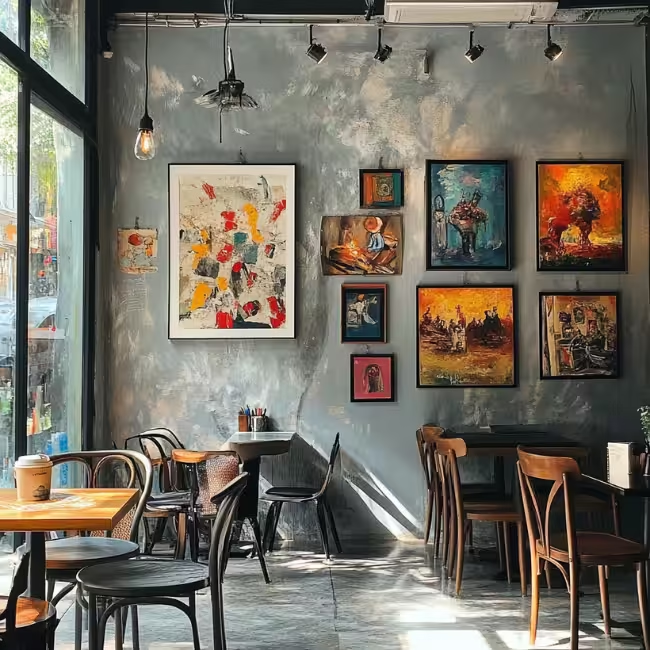
This strategy is so obvious that it’s shocking how few artists do it. It costs almost nothing, builds your local reputation, and puts your art in front of hundreds of new eyes every single day. And the best part? The café does all the work of hosting your work for free.
The deal in plain English:
You approach local cafés, restaurants, or co-working spaces. You offer to display your art on their walls for one month. You put a QR code next to each piece that leads directly to your online store. When someone scans and buys, you ship it to them later.
The café gets a 10–15% commission for every sale made through their wall. They get free rotating art. You get sales and exposure. Everyone wins.
Step-by-step to make this happen:
- Pick 5–7 cafés or restaurants in your area. Go for independent places, not chains. The owner is usually easier to reach.
- Visit during a quiet time – Tuesday or Wednesday morning is perfect. Ask to speak to the manager or owner. Don’t just leave your card. Have a conversation.
- Prepare a simple pitch:
“Hi, I’m [name], a local artist. I’m looking for places to display my art for a month at no cost to you. I’ll put QR codes next to each piece, and if anyone buys, you get 15% commission. Your walls get fresh art every month, and it costs you nothing. Would you be open to trying it for one month?” - Bring 3–5 of your best pieces that are appropriate for a café setting (no nudity, nothing too dark or intense). Make sure they’re framed and ready to hang.
- Create QR codes using a free generator like QR Code Monkey. Link each code directly to the product page for that specific painting on your website or Etsy shop.
- Track sales. Ask the café to note if anyone mentions the art. For online sales, you’ll see the traffic come in. After 30 days, pay the commission.
Rotate. Move your art to a new café next month. Keep the momentum going.
Extra tip: Offer the café owner a free small piece as a thank-you. A 5×5 painting for their office or home goes a long way. They’ll remember you and recommend you to other business owners.
Create AR (Augmented Reality) Previews for Buyers
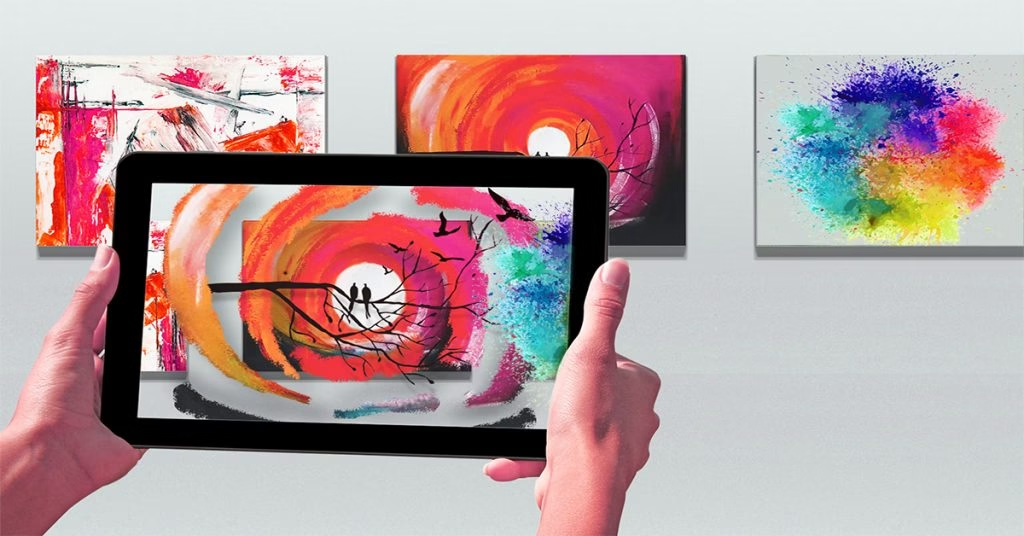
Okay, this one sounds super techy and intimidating. But hear me out – it’s actually incredibly simple now, and it makes you look like a wizard to your buyers.
Augmented Reality lets people point their phones at your painting and see it come alive with animation, video, or music. And yes, you can charge extra for this.
Here’s what AR art looks like:
Imagine someone buys your painting of a forest. They hold their phone over it, and suddenly birds start flying across the canvas. Or you paint a portrait, and the person blinks and smiles when scanned.
Or you create a cityscape, and cars start moving through the streets. It’s magic. And people pay premium prices for magic.
How to do it (it’s free and simple):
Download a free AR app like Artivive or HP Reveal. Both have free versions that let you create AR experiences.
Upload your artwork to the app. Then upload a short video or animation that you want to overlay on top.
The app does the rest. It attaches the video to your physical artwork. When someone scans the painting with their phone, the video plays on top.
Sell your AR-enabled art at a higher price – add 20–30% to your normal rate. The novelty factor alone justifies the increase.
Sell the digital animation separately as an NFT or digital download for collectors who want the complete experience.
Share videos of your AR art on social media. Trust me – these go viral. People are mesmerized by this stuff. One viral Reel or TikTok can bring hundreds of new buyers to your page.
Rare because: Most artists don’t know this exists. They think AR is for tech bros in Silicon Valley. But it’s literally a free app and 10 minutes of your time. You’ll be ahead of 99% of creators.
Bonus idea: Create AR “easter eggs” in your art. Hide a secret message, a fun fact, or a behind-the-scenes video of you painting it. Buyers will feel like they own something truly special. And they’ll tell their friends.
Quick Summary – Your Action Plan
| Idea | Time to Set Up | Potential Monthly Income (INR) |
| Art on demand | 1 day | ₹25,000 – ₹85,000 |
| Licensing | 1 week | ₹15,000 – ₹40,000 (passive) |
| Art kits | 2 days | ₹35,000 – ₹70,000 |
| Subscription box | 1 week | ₹40,000 – ₹125,000 |
| Teaching | 3 days | ₹25,000 – ₹160,000 |
| Café partnerships | 2 days | ₹15,000 – ₹50,000 |
| AR art | 1 day | ₹15,000+ extra |
Final thought
Stop thinking like a traditional artist. You’re not just selling paint on canvas. You’re selling experiences, knowledge, access, and creativity itself.
Pick ONE idea from this list, start this week, and watch how you will find the best ways to make money. Your art deserves to pay your bills. Now go make it happen.
FAQs
Q1. Do I need to be a professional artist to try these ideas?
Not at all; despite being a beginner, you can find the best ways to make money. If people love your style and are willing to pay for it, you’re already professional enough.
Q2. Which platform is best for selling art online in India?
For beginners, Instagram + WhatsApp works great – zero fees. For storefronts, Etsy India and Shopify are the best ways to make money. If you want digital products, Gumroad is fantastic. Pick one platform, master it, then expand. Don’t spread yourself thin across 5 platforms at once.
Q3. How do I handle shipping and delivery safely?
Use India Post Speedpost for affordable tracking. Wrap canvas in bubble wrap, use sturdy cardboard boxes, and add “Fragile” stickers. For smaller pieces, use padded envelopes. Always insure expensive items. And never ship without tracking – it protects both you and the buyer.
Q4. What if someone copies my art idea?
Sadly, copying happens. But here’s the truth – no one can copy your unique style, story, and connection with buyers. Focus on building relationships, not just selling products. Watermark your online images, keep high-res files private, and register your copyright if you’re seriously concerned.
Q5. Can I do this part-time while working a full-time job?
Absolutely. Start with just 1–2 hours daily, and you’ll definitely find the best ways to make money online with your art. Pick one idea from this list – like art kits or licensing – and test it on weekends.
Q6. How much should I charge as a beginner artist?
Start with this formula: (materials + hourly rate × hours) × 1.5. If you’re unsure, check what similar artists charge and price slightly lower initially. Raise your prices every 5–10 sales. Remember – cheap prices attract difficult buyers. Confident prices attract serious collectors.
Q7. Do I need a GST registration to sell art in India?
If your annual turnover exceeds ₹20 lakhs (₹10 lakhs in special category states), yes, you need GST registration. Below that, you can sell without it. However, many platforms like Etsy and Shopify handle tax collection for you.
Q8. How long does it take to start making real money?
Honestly? Some artists found their best ways to make money within a week. Others take 2–3 months. The key is consistency—post daily, email weekly, and keep creating. Don’t expect ₹50,000 in month one. Aim for ₹5,000 first, then double it next month. Small wins compound into big income over time.
Also Read:


Leave a Reply