

Hello folks. When we think of art, our minds often jump to Van Gogh or Picasso. But let’s be honest, India has its own giants. Masters who painted our gods, our women, our struggles, and our dreams. Famous Indian artists who didn’t just create art, but also created identity.
From Raja Ravi Varma’s lifelike goddesses to M.F. Husain’s chaotic horses. From Tyeb Mehta’s broken figures to Amrita Sher-Gil’s melancholic women. Every indian artist painting tells a story. A story of colonialism, independence, longing, and joy.
But here’s a stat. According to a 2023 Art Market report, Indian modern art grew by 28% in global auction value. Works by famous Indian artists like Souza and Raza now sell for crores. Yet most of us can barely name five.
This blog fixes that. We’re counting down the Top 10 Famous Indian Artists and Their Specialities. No jargon. No lectures. Just art, stories, and a little bit of soul.
Let’s dive in.
Why These Famous Indian Artists Matter Today
Famous Indian artists matter because their work still speaks to us—right now, in this moment. Take a look around. That calendar of Lakshmi on your grandmother’s wall? Raja Ravi Varma. That bold horse in a café poster? M.F. Husain. That melancholic woman in a museum catalogue? Amrita Sher-Gil.
Their indian artist painting isn’t just history. It’s our visual memory. It’s how we see our gods, our women, our struggles, and our joys. These artists broke colonial rules, challenged traditions, and made Indian art global.
Today, their works sell for ₹50 crore+ at auctions. But their real value? They remind us that Indian art belongs on the world stage—and in our everyday lives. That’s why they still matter.
The Evolution of Indian Art: A Timeline of Masters
Indian painting has an ancient lineage, with evidence of narrative art found in cave temples like Ajanta from as early as the 5th century.
Mughal miniature painting flourished between the 16th and 18th centuries, while Rajput and Pahari schools emerged around the 17th century.
However, the modern masters we celebrate today emerged when India was navigating colonial rule and a search for national identity. They redefined Indian art by blending Western techniques with Indian subjects.
Timeline of Indian Art Evolution
| Period | Era | Key Developments |
| 5th Century | Ancient | Ajanta cave paintings, early Buddhist and Hindu art |
| 16th-18th Century | Mughal Era | Miniature paintings, court scenes, Persian influence |
| 17th-18th Century | Rajput & Pahari Schools | Regional styles, devotional themes, Krishna legends |
| 19th Century | Colonial Era | Bengal School, Raja Ravi Varma’s realism, and Western techniques merge |
| Early 20th Century | Nationalist Movement | Revivalism, rejection of Western academic style |
| 1940s-1950s | Progressive Artists’ Group | Modernism, individualism, global recognition |
| 1960s-1980s | Contemporary Era | Abstraction, socio-political themes, international acclaim |
| 1990s-Present | Global Indian Art | Recognition in global auctions, NFTs, and digital art |
The 10 Masters Who Shaped India’s Art Identity
Let’s meet the legends. Each one of these famous Indian artists brought something unique to the canvas.
From mythological realism to abstract expressionism, from folk-inspired simplicity to provocative modernism, these indian artist painting masters defined an era.
1. Raja Ravi Varma – The Father of Modern Indian Art
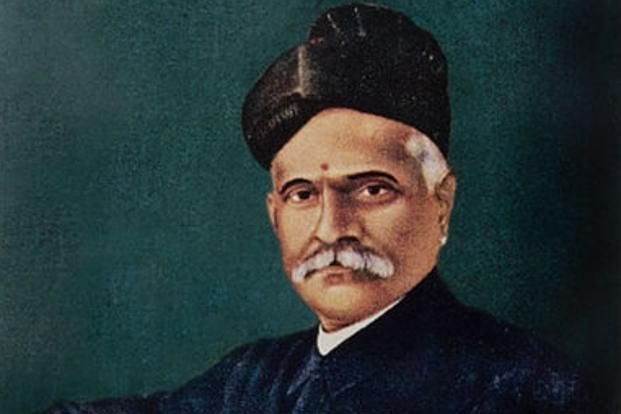
Bio: Born April 29, 1848, into aristocracy at Kilimanoor, Travancore (present-day Kerala). Closely related to the royal family, he received patronage from Ayilyam Thirunal, the then ruler of Travancore. Trained in watercolours by Ramaswamy Naidu and later in oil painting by British painter Theodore Jensen.
Major Works: Damayanti Talking to a Swan, Shakuntala Looking for Dushyanta, Nair Lady Adorning Her Hair, Shantanu and Matsyagandha. Also painted portraits of Europeans and landscape paintings.
Recognition:
- Governor’s Gold Medal at Madras Presidency (1873)
- Certificate of Merit at Vienna Art Exhibition (1873)
- Kaiser-i-Hind Gold Medal by the British colonial government (1904)
- A crater on Mercury was named after him (2013)
Speciality: First Indian artist to successfully fuse European academic realism with Indian mythological subjects. His women—goddesses and mortals alike—were modelled on South Indian women, giving divine figures a relatable, human quality. His realistic drapes, jewellery, and expressions set a benchmark that shaped Indian visual culture for generations.
2. Amrita Sher-Gil – The Frida Kahlo of India
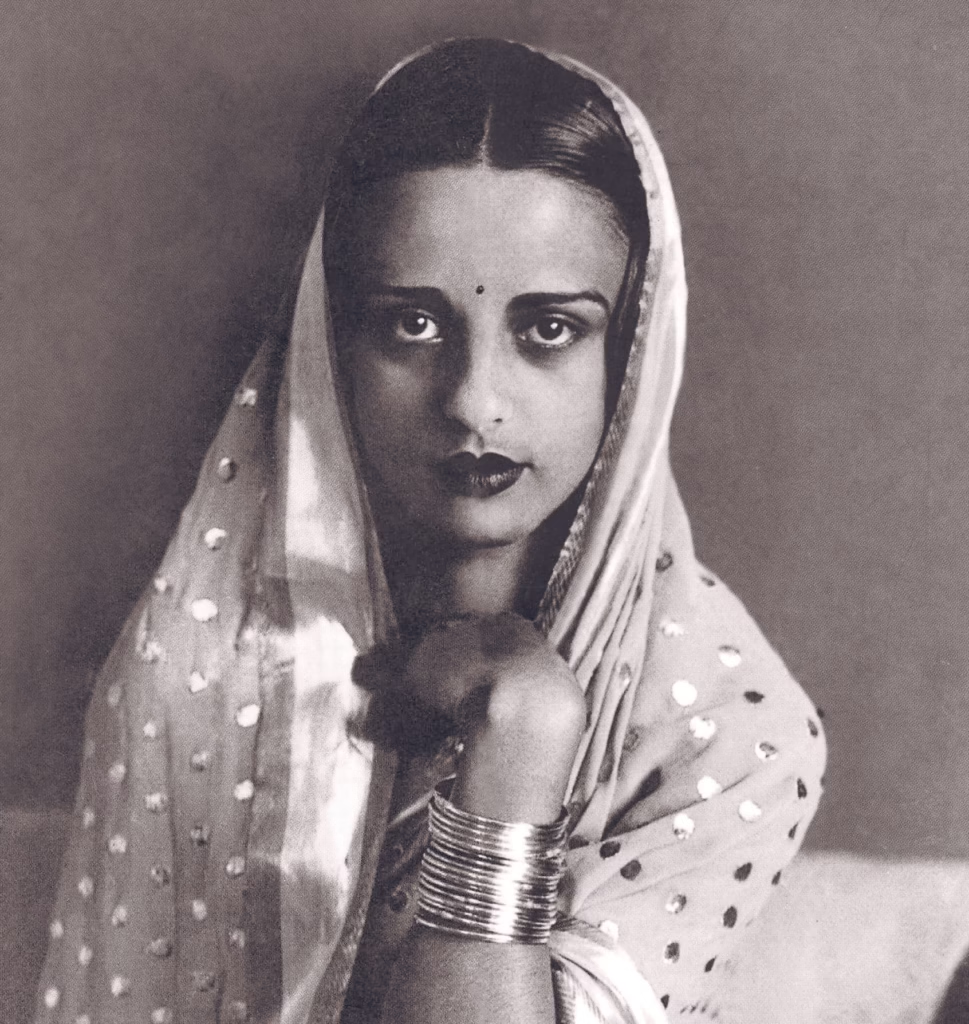
Bio: Born in 1913 to a Hungarian mother and an Indian father. Studied at École des Beaux-Arts, Paris. She declared, “Towards the end of 1933, I began to be haunted by an intense longing to return to India, feeling in some strange, inexplicable way that there lay my destiny as a painter.”
Major Works: Violins, Nude Self-Portrait with Palette, Young Girls, Mother India, The Little Girl in Blue, Elephants Bathing in a Green Pool, The Ancient Storyteller, Bride’s Toilet. She created over 60 paintings between 1930 and 1932, including 19 self-portraits.
Recognition:
- Won awards at École des Beaux-Arts competitions for three consecutive years
- Her works, declared “national treasures” under India’s Antiquities Act, cannot leave the country.
- Indian government acquired 98 of her paintings by 1948
Speciality: She painted the lives of Indian women and the poor with remarkable honesty. Her style evolved from Western academic realism to a distinct Indian modernist voice. She brought a raw, emotional depth to everyday Indian life. She died tragically young at 28 in 1941.
3. M.F. Husain – The Picasso of India
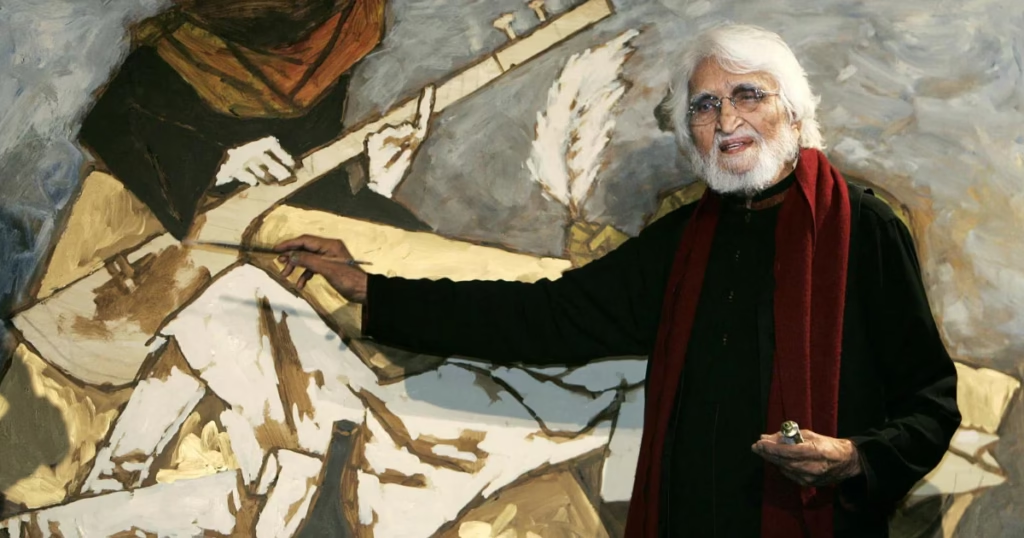
Bio: Born September 17, 1915, in Pandharpur, Maharashtra. Attended Sir J.J. School of Art but couldn’t complete his schooling. His early career saw him painting cinema billboards in Mumbai. Co-founded the Progressive Artists’ Group in 1947.
Major Works: Passage of Time (1954), Zameen (1955), Between the Spider and the Lamp (1956), Ramayana series (1968), Mahabharata series (1971), Mother Teresa series (1980-2009). Produced an estimated 30,000-40,000 paintings in his career.
Recognition:
- Padma Shri (1966), Padma Bhushan (1973), Padma Vibhushan (1991)
- Showed at Venice Biennale (1954), São Paulo Biennale (1971)
- Untitled (Gram Yatra) sold for $13.75 million in March 2025—the highest price for modern Indian art at the time
- Nominated to the Rajya Sabha (1986-1992)
Speciality: Bold, vibrantly coloured narrative paintings fusing Cubism and Expressionism with Indian themes. His iconic horses, faceless women, and mythological reinterpretations defined Indian modernism. Lived in self-imposed exile after controversies over nude depictions of Hindu deities. Passed away in London in 2011.
4. S.H. Raza – The Master of the Bindu
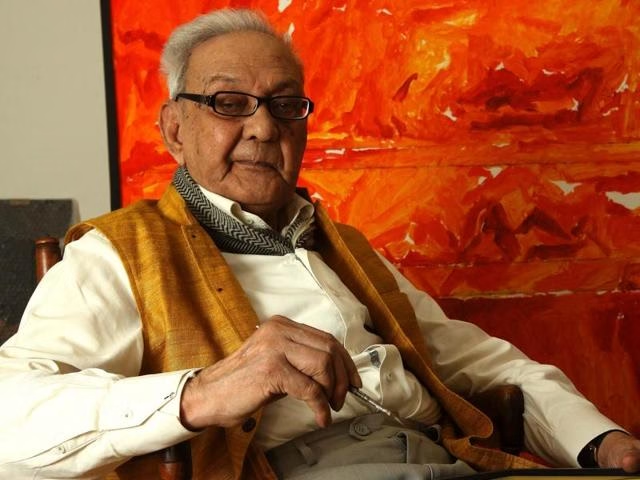
Bio: Born February 22, 1922, in Mandla, Madhya Pradesh. Studied at Sir J.J. School of Art, Mumbai (1943-47). Co-founded the Progressive Artists’ Group in 1947. Went to Paris in 1950 on a French government scholarship to study at École Nationale des Beaux-Arts.
Major Works: Known for his landscape paintings evolving into pure abstraction. His iconic “Bindu” series (starting in 1980) symbolizes the origin of the universe and all creatures. The black dot (bindu) was inspired by his schoolteacher’s attempt to help him focus and meditate.
Recognition:
- Prix de la Critique, Paris (1956)—first non-French artist to win this award
- Kalidas Samman, Lalit Kala Ratna
- Padma Shri (1981), Padma Bhushan (2007), Padma Vibhushan (2013)
- Legion d’honneur by the French government (2015)
Speciality: Raza almost exclusively excluded the human figure, choosing landscapes instead. His work evolved from realistic landscapes to “gestural expressionism” to pure geometric abstraction inspired by tantra and Indian philosophy. Lived in France for six decades before returning to New Delhi in 2010. Passed away on July 23, 2016.
5. Tyeb Mehta – The Painter of Anguish
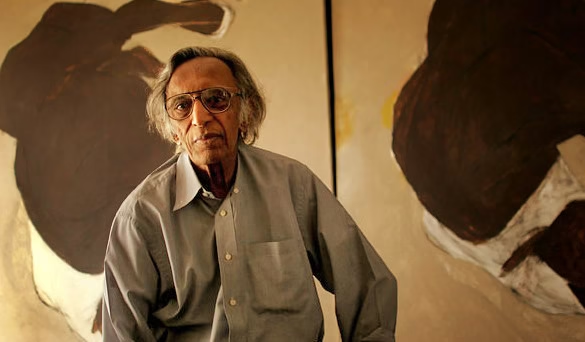
Bio: Born July 26, 1925, in Kapadvanj, Gujarat. Witnessed a man being stoned to death during the 1947 Partition riots—an experience that deeply impacted his work. Received his diploma from Sir J.J. School of Art in 1952. Part of the Bombay Progressive Artists’ Group.
Major Works: Celebration (triptych), Kali, Mahishasura (1996), ‘Diagonal Series’, Falling Figures (1991), Gesture. His film Koodal won the Filmfare Critics Award (1970).
Recognition:
- John D. Rockefeller 3rd Fund fellowship (1968)
- Gold medal at the first Triennial in New Delhi (1968)
- Prix Nationale at International Festival of Painting, Cagnes-sur-Mer (1974)
- Kalidas Samman (1988)
- Padma Bhushan (2007)
Speciality: Stark, disturbing depictions of human suffering—trussed bulls, rickshaw pullers, falling figures. His diagonal series emerged from a moment of creative frustration when he flung a black streak across his canvas.
His triptych Celebration sold for $317,500 at Christie’s in 2002, triggering the great Indian art boom. Later works like Mahishasura sold for $1.584 million.
6. F.N. Souza – The Rebel with a Brush
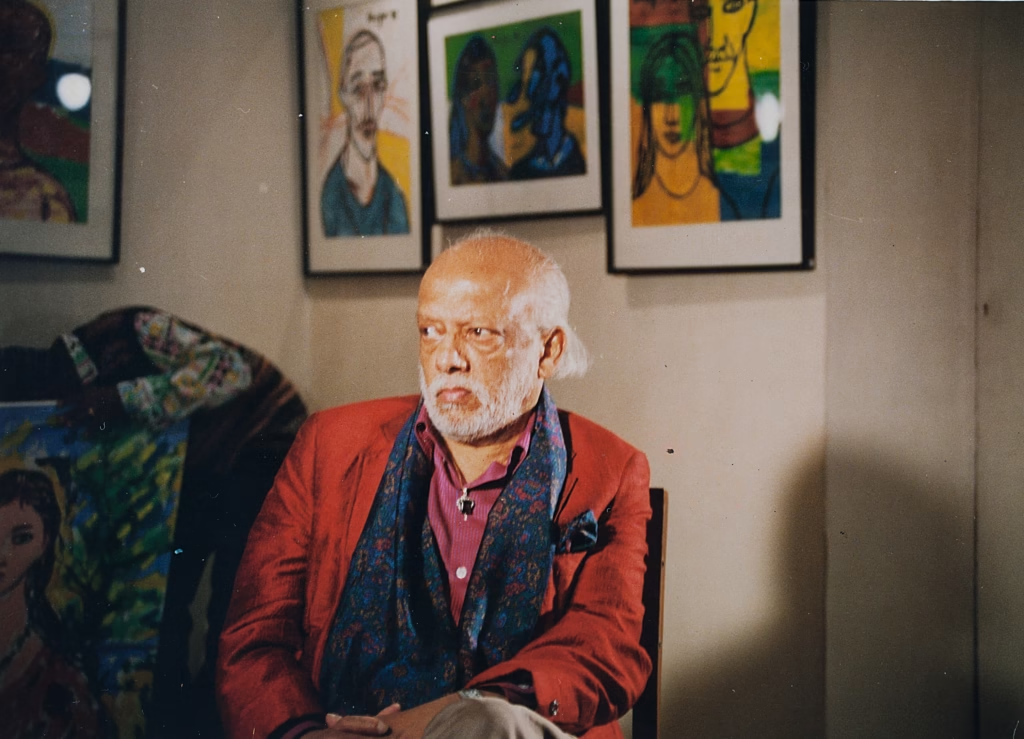
Bio: Born Francis Newton Souza in 1924 in Saligao, Goa (then a Portuguese colony). Studied at J.J. School of Art but was expelled in 1945 for participating in the Quit India Movement. Co-founded the Progressive Artists’ Group in 1947. Moved to London in 1949 for creative freedom and international recognition.
Major Works: Head portraits, landscapes, and works with themes of Catholicism, female nudes, and violent or sexual motifs. Pioneered chemical alteration technique—drawing with chemicals on printed pages.
Recognition:
- John Moore Prize, Liverpool (1957)
- Italian Government Scholarship (1960)
- Guggenheim International Award, New York (1967)
Speciality: Called the “enfant terrible” of Indian art for his ferocious paintings peopled by “savage saints” and “brutish capitalists”. His work reflected a sense of life as “cruel, violent, and unjust”—influenced by his father’s early death, Portuguese colonial experience, and an attack of smallpox.
7. Jamini Roy – The Folk Art Pioneer
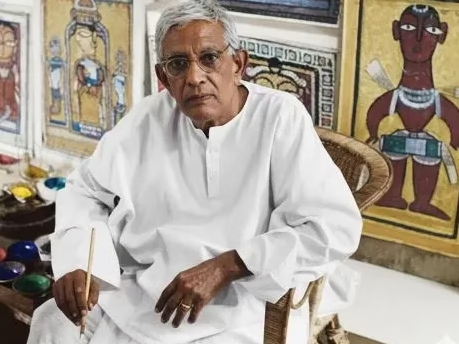
Bio: Born April 11, 1887, in Beliatore village, Bankura district, West Bengal. One of the most famous pupils of Abanindranath Tagore. His new style was a reaction against both the Bengal School and Western tradition. Preferred to call himself a patua (folk artist).
Major Works: Standing Woman, Mother and Child, Kalighat-inspired paintings, folk-style depictions of rural Bengal life. His works are characterized by bold lines, simple forms, and vibrant colours inspired by Bengali folk traditions.
Recognition:
- First solo exhibition at British India Street, Calcutta (1938)
- Exhibition in London (1946)
- Exhibition in New York (1953)
- Padma Bhushan (1955)
Speciality: His underlying quest was threefold: capture the essence of simplicity embodied in folk life; make art accessible to wider sections of people; and give Indian art its own distinct identity. He rejected the Bengal School’s nostalgic nationalism and Western academic realism for a truly indigenous folk vocabulary.
8. Ganesh Pyne – The Poet of Darkness
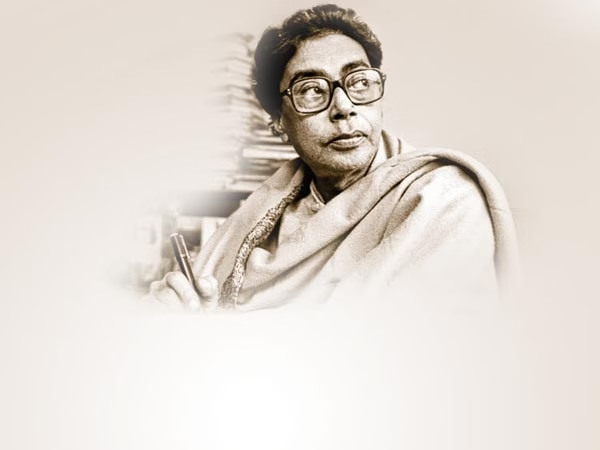
Bio: Born and brought up in Bengal. At age nine, he witnessed the communal riots of 1946—a haunting impression that resurfaced in his work as dark, alienated, and solitary visual images. Studied at Government College of Art and Craft, Kolkata.
Major Works: Known for “Poetic Surrealism”—abstract and surrealist images infused with fantasy and imagination, rendered mostly in dark colours. Worked in pen and ink, watercolour, gouache, and tempera. Blue and black became his favorite colors.
Recognition:
- Raja Ravi Varma Award by the Government of Kerala (2011)
- Lifetime achievement award by the Indian Chamber of Commerce
- Exhibited both in India and abroad
Speciality: His encounter with violence, poverty, and death influenced him deeply throughout his life. His signature style of “Poetic Surrealism” combined fantasy with dark, brooding backgrounds. His works feel like visual poetry—haunting, introspective, and deeply personal.
9. Bhupen Khakhar – The Voice of the Common Man
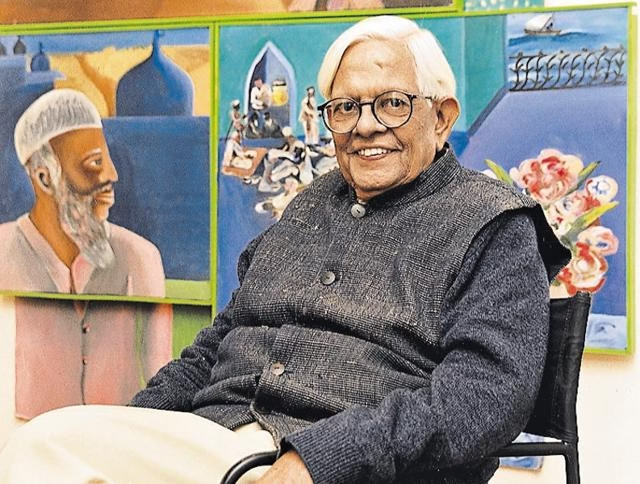
Bio: Born March 10, 1934, in Bombay. Initially trained as a chartered accountant and worked as an accountant for many years. Began painting relatively late in life. Encouraged by Gujarati poet and painter Ghulam Mohammed Sheikh. A self-trained artist, he joined the Baroda Group.
Major Works: You Can’t Please All (1981), depictions of barbers, watch repairmen, shopkeepers, and the common man. His works often contained references to Indian mythology and mythological themes. He also painted openly homosexual themes from a distinctly Indian perspective.
Recognition:
- Padma Shri (1984)
- Asian Council’s Starr Foundation Fellowship (1986)
- Prince Claus Award at the Royal Palace of Amsterdam (2000)
- Works in the British Museum, Tate Gallery, and the Museum of Modern Art, New York
Speciality: India’s first “Pop” artist, he celebrated the everyday struggles of India’s common man. He took special care to reproduce the environments of small Indian shops, revealing a talent for seeing the intriguing within the mundane. As an openly gay artist, he explored gender identity and sexuality when it was rarely addressed in India.
10. Anish Kapoor – The Global Indian Sculptor
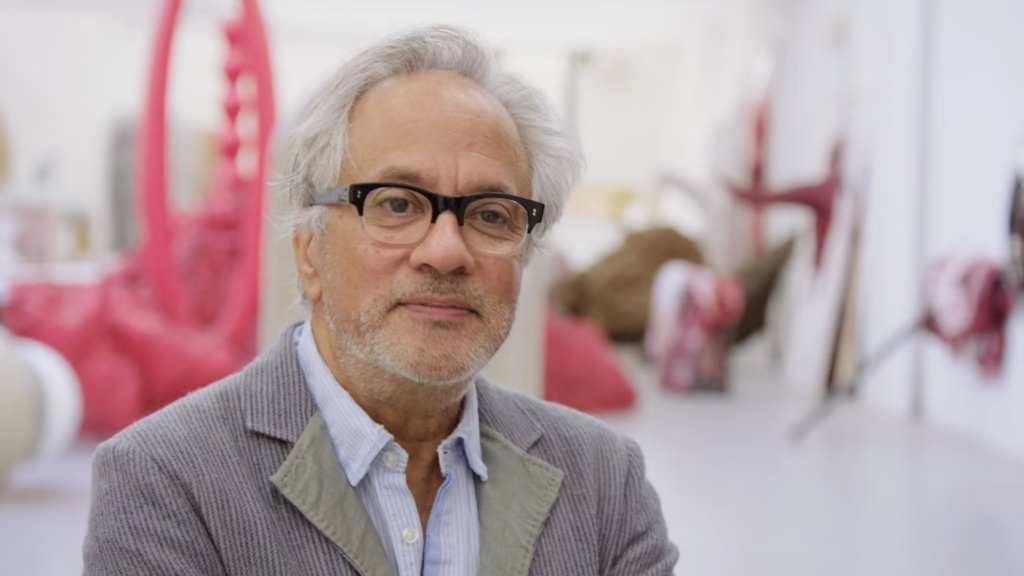
Bio: Born March 12, 1954, in Mumbai, India. Attended The Doon School, Dehradun. Moved to Israel in 1971, then to the UK in 1973 to study at Hornsey College of Art and Chelsea School of Art and Design.
Major Works: Cloud Gate (The Bean) in Chicago’s Millennium Park, Sky Mirror (New York, London), Temenos (Middlesbrough), Leviathan (Grand Palais, Paris, 2011), ArcelorMittal Orbit (London Olympic Park, 2012). Also known for using red wax, pigment, and highly reflective stainless steel.
Recognition:
- Premio Duemila Prize, Venice Biennale (1990)
- Turner Prize (1991)
- Padma Bhushan by the Indian government (2012)
- Knighthood for services to visual arts (2013)
- Genesis Prize (2017)
Speciality: Kapoor’s sculptures explore matter and non-matter, the void, and spatial perception. His early pigment works sat on the floor, appearing “partially submerged, like icebergs”.
His reflective stainless steel works distort and transform the surrounding space. He blurs boundaries between sculpture, architecture, and installation art, creating some of the most recognizable public artworks in the world today.
Highest Sold Artworks by Famous Indian Artists
| Artist | Highest Sold Artwork | Price (₹) | Price ($) | Year |
| Raja Ravi Varma | Yashoda and Krishna | ₹167 crore | $17.9 million | 2026 |
| M.F. Husain | Untitled (Gram Yatra) | ₹118 crore | $13.75 million | 2025 |
| Tyeb Mehta | Trussed Bull | ₹61.8 crore | $7.2 million | 2025 |
| Amrita Sher-Gil | The Story Teller | ₹61.8 crore | $7.4 million | 2023 |
| S.H. Raza | Gestation | ₹51.75 crore | $6.27 million | 2023 |
| F.N. Souza | Hunger | ₹34.5 crore | ~$4.1 million | 2023 |
| Jamini Roy | Data not available | — | — | — |
| Ganesh Pyne | Data not available | — | — | — |
| Bhupen Khakhar | Data not available | — | — | — |
| Anish Kapoor | Data not available | — | — | — |
Conclusion
Ten famous Indian artists. Ten unique visions. From Ravi Varma’s gods to Kapoor’s voids, each shaped how India sees itself. Their Indian artist painting works now sell for crores, but their real value lies in identity, memory, and emotion.
They survived colonialism, broke rules, and created art that still speaks. Next time you see an Indian artist painting, remember the story behind the stroke. These masters deserve to be remembered not just in auctions, but in our everyday conversations.
FAQs
Q1. Who is the most famous Indian artist?
M.F. Husain and Raja Ravi Varma are the most recognized. Husain is globally known for his bold narratives. Ravi Varma is a household name who shaped how Indians visualize their gods.
Q2. Which Indian artist’s painting sold for the highest price?
M.F. Husain’sUntitled (Gram Yatra) sold for$13.75 million (approx ₹115 crore) in March 2025—the highest for modern Indian art.
Q3. What is the Progressive Artists’ Group?
A collective formed in Mumbai in 1947 by Husain, Raza, Souza, and others. They rejected traditional academic art and embraced modernism, shaping India’s post-independence art movement.
Q4. Why are Amrita Sher-Gil’s works “national treasures”?
Her paintings are legally protected under India’s Antiquities Act and cannot leave the country. This preserves her legacy as one of India’s most important modernist painters.
Q5. What makes Raja Ravi Varma special?
He fused European realism with Indian mythology, used live models for gods, and made art accessible through oleographs. He defined India’s visual imagination for generations.
Q6. Which contemporary Indian artist is globally famous?
Anish Kapoor. His ‘Cloud Gate’ in Chicago and ‘Arcelor Mittal Orbit’ in London are iconic. He won the Turner Prize in 1991 and received a British knighthood in 2013.
Q7. Where can I see works by famous Indian artists?
Major collections at NGMA (Delhi/Mumbai), CSMVS (Mumbai), DAG galleries (Delhi/Mumbai), and international museums like Tate, V&A, and MoMA. Some works are also in private collections and auction houses.
Also Read:

Leave a Reply