
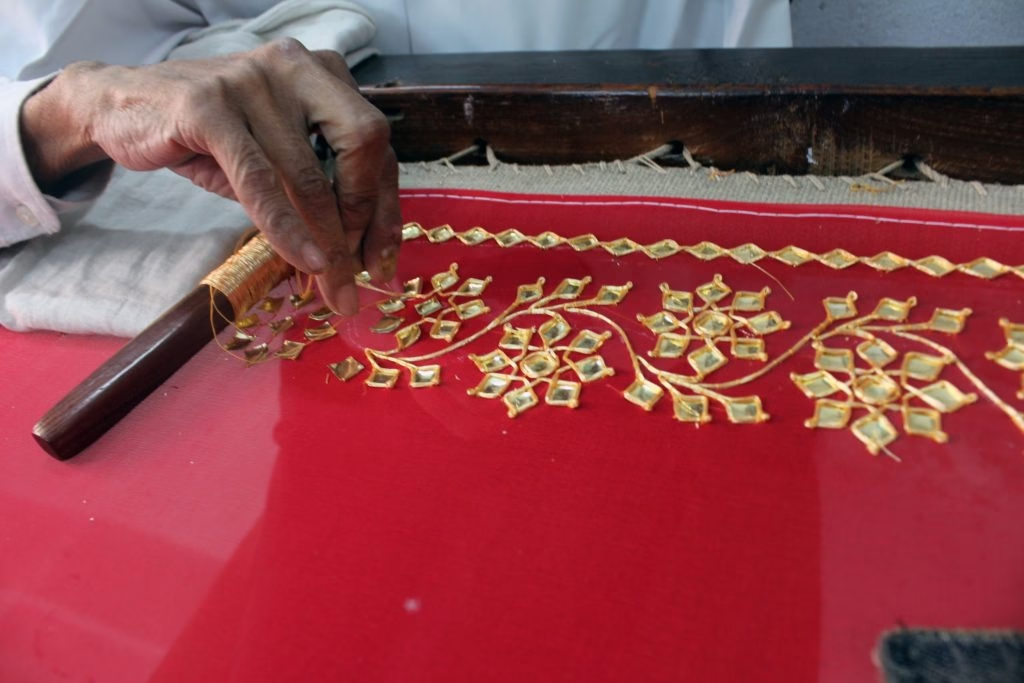
Hello folks. Let me tell you about something that sparkles like stars but whispers like a secret. Danke-ka-Kaam. Ever heard of it? Probably not. That’s exactly why we’re here.
This embroidery adorned only royalty. Tiny faceted metal discs catch light like diamonds. Every stitch spoke of wealth, power, and unmatched skill. That’s Danka embroidery. Udaipur’s forgotten jewel.
Here’s a stat that hurts. According to UNESCO, fewer than 20 master artisans in India still practice traditional Danka embroidery. Less than 50 families across Rajasthan continue this craft. Over 10,000 artisans practice Zardozi. You see the gap.
A 2022 Rajasthan government report shows Zardozi contributes over ₹500 crore annually. Danka embroidery? Barely ₹2 crore. The craft is vanishing.
This is Mewar’s royal identity stitched in metal. Let’s unravel its story.
What Is Danke-ka-Kaam? The Royal Embroidery You’ve Never Heard Of
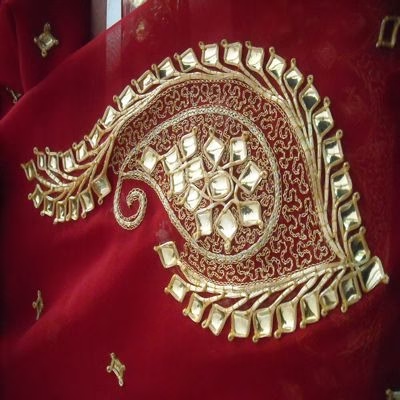
Let’s start with the basics. Danke-ka-Kaam (also spelled Danka Ka Kaam) literally translates to “work of coins” or “work of metal discs” in Hindi. But that translation does zero justice to its magnificence.
Danka embroidery is a traditional metal embroidery from Rajasthan, particularly associated with the royal courts of Mewar (Udaipur). It uses small, faceted metal discs—called dankas—that are hammered, shaped, and stitched onto luxurious fabrics.
The result? A surface that sparkles like a starry night, catching light from every angle.
Key characteristics of Danka embroidery:
- Uses faceted metal discs that reflect light like gemstones
- Traditionally done on rich silk, velvet, and brocade
- Adorned royal garments, canopies, and ceremonial textiles
- Completely handcrafted—no machines involved
- Each disc is individually stitched onto the fabric
- Creates a heavy, substantial feel—a status symbol
- The sparkle is multi-directional due to the faceting
The royal connection:
Danka embroidery was not for the common man. Never. It was reserved for the Maharana of Udaipur and his immediate family. Royal weddings, coronations, state ceremonies—that’s where you’d see it. It was a visual symbol of power, wealth, and prestige.
Think about it. In a time when most people wore simple cotton, the Maharana walked into court literally glowing. Every step he took sent ripples of light across the durbar hall. That was the magic of Danke-ka-Kaam.
Danka embroidery vs. Other Indian metal embroideries:
| Feature | Danka Embroidery | Zardozi | Karchob |
| Metal type | Flat, faceted discs | Coiled wire, twisted thread | Gold/silver wire |
| Light reflection | Multiple angles, diamond-like | Even, consistent shine | Metallic sheen |
| Weight | Heavier, more substantial | Lighter | Medium |
| Cost | Extremely expensive | Comparatively affordable | Expensive |
| Origin | Mewar (Udaipur) | Lucknow, Delhi, Hyderabad | Rajasthan, Gujarat |
| Rarity | Very rare, almost extinct | Still widely practiced | Still practiced |
The Sparkle Behind the Stitch: How Faceted Metal Made It Royal
Let’s talk about what makes Danka embroidery truly special. It’s not just metal. It’s faceted metal. And that changes everything.
Why faceted metal?
The dankas are made by hammering thin sheets of gold, silver, or gilded copper into tiny circular discs. Each disc is then faceted—meaning its surface is cut into multiple tiny planes. Think of a diamond’s cut. The more facets, the more light it catches.
The faceting process:
- A thin metal sheet is cut into small circles (about 3-7mm in diameter)
- Each disc is placed on a metal block
- Using specialized tools, the artisan creates multiple facets (usually 4-8 per disc)
- Each facet is painstakingly hammered to precision
- A tiny hole is punched in the center for stitching
The result? A single danka that sparkles like a tiny jewel. And when thousands of these are stitched together? Pure magic.
The metal used in Danka embroidery:
| Metal Type | Quality Grade | Who Used It | Cost Factor |
| Pure gold | Highest | Maharana and the direct royal family | Extremely expensive |
| Pure silver | High | Nobility and senior courtiers | Very expensive |
| Gilded copper | Medium | Junior nobility and officers | Expensive |
| Gold-plated brass | Lower | Modern commercial versions | Affordable |
| Silver-plated copper | Lower | Modern commercial versions | Affordable |
Numerical value of Danka embroidery:
According to the Craft Council of Rajasthan, a single Danka embroidery garment can be used:
- 5,000 to 15,000 individual dankas per square foot of fabric
- 20-30 grams of gold or silver per garment
- 40-60 hours of work per square foot
- A royal angrakha could take 6-8 months to complete
A Historical Journey: Danke-ka-Kaam Through the Ages
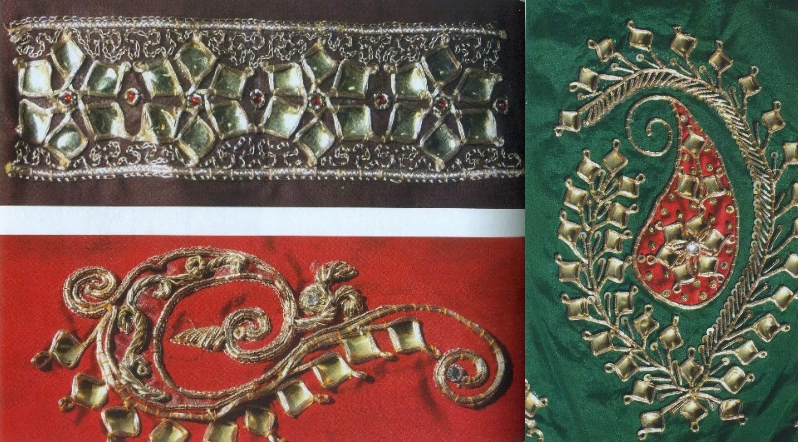
Let me walk you through the timeline of Danka embroidery—from its birth to its near-extinction.
- 16th Century: Danka embroidery emerges under Maharana Pratap (1572-1597). The craft showcases Mewar’s wealth and independence. 200-300 master artisans are employed exclusively for royal work.
- 17th Century: Flourishes under Maharana Jagat Singh I (1628-1652). Mughal floral motifs blend with traditional Rajput designs. Royal workshops (karakhanas) are established.
- 18th Century: Reaches its artistic zenith under Maharana Ari Singh II (1762-1772). Complex designs with multiple motifs have become popular. 3,000-4,000 artisans are involved in the trade.
- 19th Century: Maharana Sajjan Singh (1874-1884) is the last great patron. The British Raj reduced royal patronage. Industrialisation brings cheaper alternatives.
- 20th Century: 1947 – India’s independence ends princely states. Royal patronage disappears completely. Only 30-40 master artisans remained by 1950.
- 21st Century: Today, fewer than 20 master artisans remain. The craft is officially listed as “Endangered” by the Ministry of Textiles. Revival efforts are underway, but the future hangs in the balance.
The Meticulous Craft: How Master Artisans Created This Magic
Now let’s get into the nitty-gritty. How exactly is Danka embroidery made? Spoiler: It’s not for the impatient.
Step 1: Selecting the Fabric
Only the finest fabrics were used for Danka embroidery:
- Pure silk – The most common, ideal for royal garments
- Velvet – For royal winter garments and ceremonial capes
- Brocade – For heavily embellished ceremonial pieces
- Satin – For lighter, summer garments
- Muslin – For extremely fine, lightweight pieces
Step 2: Designing the Pattern
Master designers would first sketch the pattern on butcher paper. These patterns were often inspired by:
- Mughal floral motifs (rose, lily, jasmine)
- Royal emblems (the Mewar crest of the sun)
- Geometric patterns (diamonds, triangles, hexagons)
- Floral vines and creepers
- Hunting scenes (for royal hunting costumes)
- Paisley and mango motifs (common in Rajasthan)
- Elephant and horse figures (for ceremonial pieces)
Design techniques:
- Tracing: Design copied onto tracing paper
- Pouncing: Charcoal powder rubbed through holes to transfer design
- Freehand: Master craftsmen drawing directly on fabric
Step 3: Preparing the Metal Discs (Dankas)
This is where the real craft begins:
- Metal selection: Thin sheets of gold, silver, or copper are chosen
- Cutting: Circular discs are cut using specialized chappa (cutting tools)
- Doming: Each disc is hammered into a dome shape
- Faceting: The facet pattern is created using fine chisels and hammers
- Punching: A central hole is punched for stitching
- Polishing: Discs are polished to maximum shine using tamarind paste or ash
Tools used in Danka embroidery:
| Tool Name | Purpose |
| Chappa | Cutting metal sheets into discs |
| Gandasa | Large scissors for cutting fabric |
| Sui | Fine needles for stitching |
| Batta | Small iron block for shaping dankas |
| Hammer | For faceting and shaping metal |
| Ari | Fine awl for making holes |
| Chisels | For creating facets on discs |
Step 4: Transferring the Design
The design is transferred to the fabric using:
- Chalk powder – Dusted through pricked paper
- Needle-pricking method – Pattern pricked and rubbed with chalk
- Carbon paper – Used in later periods for quicker transfer
- Hand drawing – Directly by master artisans
Step 5: The Embroidery Process
Here’s where the magic of Danka embroidery truly happens:
- Fabric stretching: Fabric is stretched on a wooden frame (karchob)
- Thread selection: Traditionally, silk or cotton thread is used
- Stitching: Each danka is stitched individually to the fabric
- Hole alignment: Thread passes through the central hole of each disc
- Layering: Multiple layers of discs may be used for density
- Spacing: Spacing between discs is carefully calculated (usually 2-5mm)
- Back support: The back is reinforced with extra layers for heavy pieces
Stitching techniques used:
| Technique | Description | When Used |
| Single layering | One layer of dankas directly on fabric | Light garments, summer wear |
| Double layering | Two overlapping layers of dankas | Heavy royal garments |
| Cluster stitching | Discs placed in clusters | Flowers and motifs |
| Border stitching | Continuous lines of dankas | Edges and borders |
| Scatter stitching | Randomly placed dankas | Background fill |
| Ladder stitching | Discs are placed like a ladder | Geometric patterns |
| Concentric stitching | Discs placed in circles | Sun motifs, rosettes |
Time required:
- Basic border: 15-20 hours per meter
- Full garment: 600-800 hours (3-4 months)
- Royal garment: 1,200-1,500 hours (6-8 months)
Step 6: Finishing and Quality Control
- Excess thread is trimmed meticulously
- The back of the fabric is lined to protect the stitches
- The final piece is pressed (carefully, with cloth to protect the metal)
- Each garment is inspected by the master craftsman
- Any loose dankas are re-stitched
Motifs and Designs in Danka Embroidery
The motifs used in Danka embroidery are not just decorative—they’re symbolic. Each motif tells a story, represents a power, or invokes a blessing.
Floral Motifs
| Motif | Name | Symbolism |
| Rose | Gul | Love, beauty, royalty |
| Lily | Sosun | Purity, elegance |
| Jasmine | Chameli | Grace, modesty |
| Lotus | Kamal | Divine purity, enlightenment |
| Mango | Aam | Fertility, abundance |
| Marigold | Genda | Festivity, celebration |
| Creeper | Bel | Continuity, eternity |
Geometric Motifs
| Motif | Name | Symbolism |
| Diamond | Hira | Wealth, invincibility |
| Triangle | Trikon | Power, divine trinity |
| Star | Tara | Guidance, divine light |
| Circle | Chakra | Sun, cosmic energy |
| Hexagon | Chaturkon | Balance, harmony |
| Zigzag | Lahriya | Movement, rivers |
Royal and Warrior Motifs
| Motif | Name | Symbolism |
| Sun | Surya | Mewar’s royal emblem, power |
| Sword | Kripan | Warrior spirit, protection |
| Shield | Dhal | Defence, bravery |
| Elephant | Hathi | Strength, royalty |
| Horse | Ghoda | Speed, nobility |
| Lion | Sher | Courage, kingship |
| Eagle | Garud | Divine protection |
Religious and Auspicious Motifs
| Motif | Name | Symbolism |
| Swastika | Swastik | Auspiciousness, good fortune |
| Om | Om | Divine presence |
| Conch | Shankh | Purity, victory |
| Kalash | Kalash | Prosperity, abundance |
| Mango leaves | Aam ke patte | Fertility, blessings |
Motif Placement in Danka Embroidery
- Borders (Kinari) – Geometric patterns, floral vines
- Center (Gulband) – Large floral or sun motifs
- Shoulders (Kandha) – Royal emblems or warrior motifs
- Cuffs (Kafas) – Small geometric or floral patterns
- Hem (Paar) – Continuous border patterns
- Back (Pith) – Large central motif, often religious
Types of Danka Embroidery
Not all Danka embroidery is the same. Over centuries, different types emerged based on usage, metal, and design complexity.
1. Based on Metal Used
| Type | Metal | Royalty Level | Rarity |
| Sone ka Danka | Pure gold | Maharana only | Extremely rare |
| Chandi ka Danka | Pure silver | Nobility | Very rare |
| Pital ka Danka | Brass/gilded copper | Junior nobility | Rare |
| Tamba ka Danka | Copper/copper-gilt | Officers, temple textiles | Rare |
2. Based on the Density of Work
| Type | Description | Density | Time Required |
| Bhara hua kaam | Heavy, full coverage | High density (80-90%) | 8-10 months |
| Adha kaam | Half-filled | Medium density (50-60%) | 4-6 months |
| Halka kaam | Light work | Low density (30-40%) | 2-3 months |
| Kinari kaam | Border only | Very low (10-20%) | 1-2 months |
3. Based on Design Complexity
| Type | Description | Complexity |
| Mughlai | Mughal-inspired floral motifs | High |
| Rajputana | Traditional Rajput geometric motifs | Medium-High |
| Paisley | Paisley-based designs | Medium |
| Phool-patti | Simple flower and leaf patterns | Low-Medium |
4. Based on Application
| Type | Used For | Features |
| Poshak Danka | Royal garments | Heavy, full coverage |
| Shamiana Danka | Canopies and ceremonial tents | Very large motifs |
| Palki Danka | Palanquin covers | Dense, geometric patterns |
| Pooja Danka | Temple textiles | Religious motifs |
| Sehra Danka | Groom’s wedding headdress | Small, delicate discs |
Examples of Danka Embroidery: Where Royal Sparkle Lives On
Let’s make this real. You don’t just want to read about Danka embroidery—you want to see it, feel it, imagine it on actual objects. Here are 5-6 stunning examples of Danke-ka-Kaam that bring this forgotten art to life.
Example 1: The Maharana’s Angrakha – A Royal Treasure
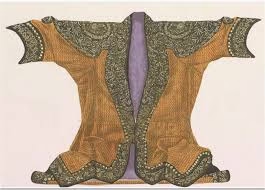
What it is: A traditional angrakha (royal coat) worn by Maharana Sajjan Singh (reigned 1874–1884).
Where it is: City Palace Museum, Udaipur.
Details:
- Made of deep maroon velvet
- Covered in gold dankas from shoulder to hem
- Over 10,000 individual discs used
- Weighed approximately 6 kilograms
- Took 8 months to complete
- Motifs included the Mewar sun crest on the chest
Historical note: British dignitaries who visited the court described it as “a garment of solid gold stitched onto silk.” It reportedly cost ₹15,000—a sum that could feed an entire village for a year.
Example 2: The Royal Shamiana (Ceremonial Canopy)
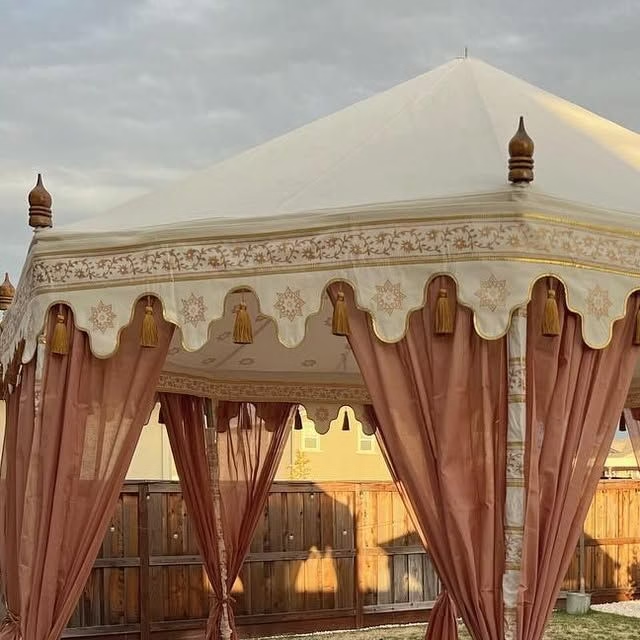
What it is: A large ceremonial canopy used during royal weddings and state functions.
Where it is: Bagore Ki Haveli Museum, Udaipur.
Details:
- 12 feet by 8 feet in size
- Embroidered with over 50,000 silver dankas
- Features large floral motifs (gul and bel) across the entire surface
- Took 14 master artisans over 1 year to complete
- Used for Maharana’s wedding procession in 1882
Example 3: The Palki (Palanquin) Cover
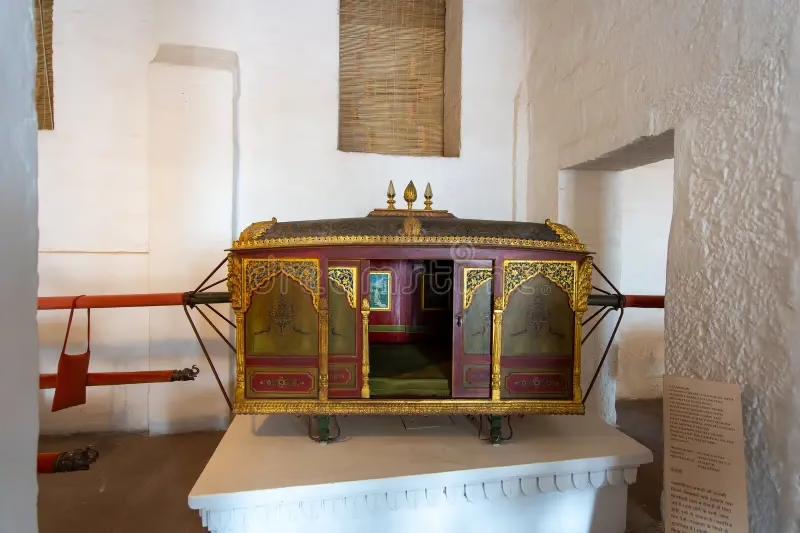
What it is: The embroidered covering of a royal palanquin used to carry Maharanis.
Where it is: Private collection (Rajasthan), sometimes exhibited at the NGMA, New Delhi.
Details:
- Made of golden silk brocade
- Embroidered with concentric circles of dankas
- Each circle features alternating gold and silver discs
- Motifs include lotus flowers and geometric diamonds
- Approximately 8,000 dankas used
- Took 6 months to complete
Historical note: Maharanis were carried in this palanquin during their gauna (farewell) ceremony after marriage. The sparkle of the dankas was believed to ward off evil spirits and bring good fortune.
Example 4: The Sehra (Groom’s Headdress)
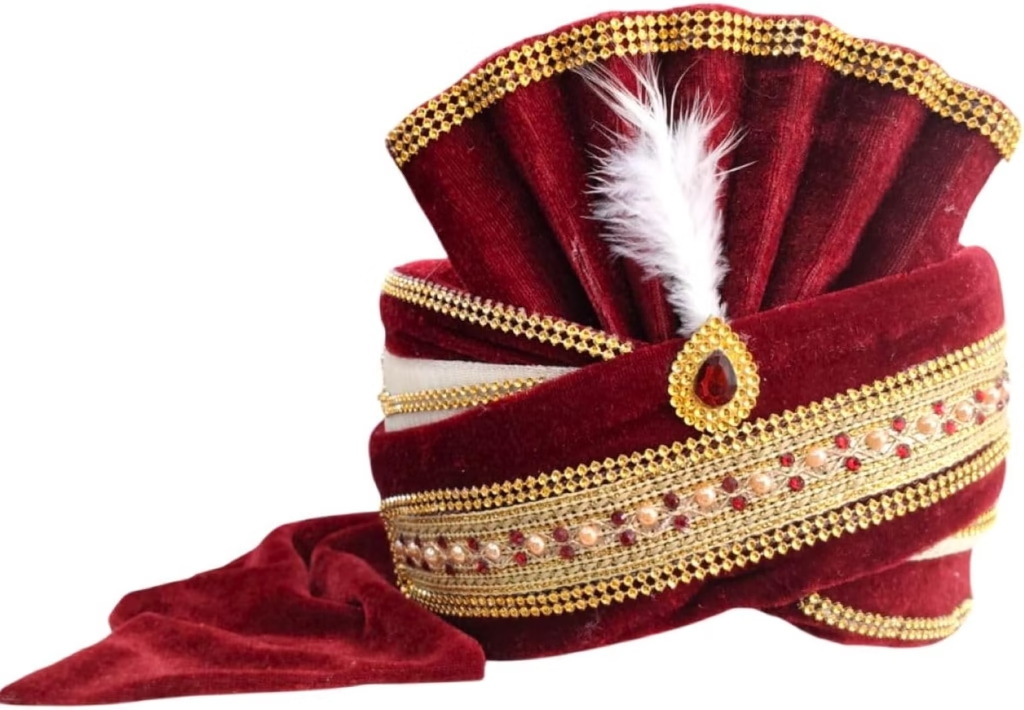
What it is: A traditional headdress worn by the royal groom during his wedding.
Where it is: Maharana Pratap Museum, Udaipur.
Details:
- Small, delicate dankas (only 2-3mm in diameter)
- Over 500 discs on a single headdress
- Pattern alternates between gold and silver discs
- Features tiny floral and paisley motifs
- Took 3 months to complete
Why it’s special: The sehra hangs down over the groom’s face. Each time he moves, the dankas catch the light—creating a shimmering veil of metal that makes him look almost divine. The bride would see her groom through this glittering curtain of Danka embroidery.
Example 5: Temple Textile for Eklingji Temple
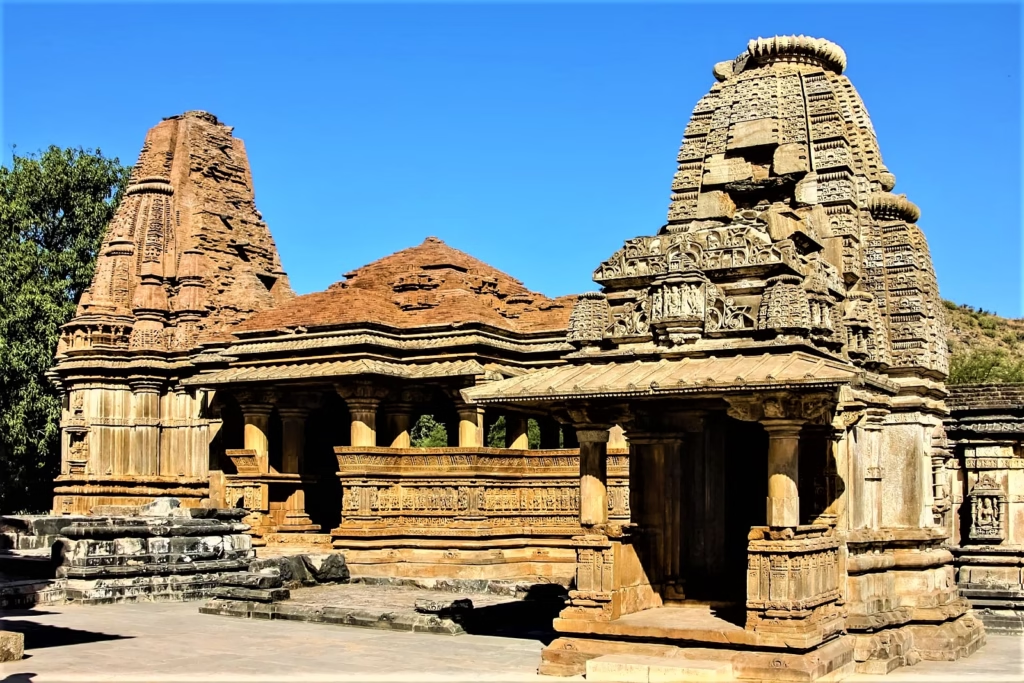
What it is: A religious textile (chadar) offered to Eklingji Temple, the royal temple of Mewar.
Where it is: Eklingji Temple (still used during festivals), Udaipur.
Details:
- Made of white silk
- Embroidered with copper-gilt dankas
- Features auspicious symbols – swastika, om, kalash
- Used during the Mahashivratri and Navratri festivals
- Contains approximately 15,000 dankas
- Took 10 months to complete
Religious significance: This textile is still used today during special pujas. The Danka embroidery doesn’t just sparkle—it blesses. Each disc is believed to carry divine energy, and the act of offering it is considered highly auspicious.
Example 6: The Hunting Costume of Maharana Pratap
What it is: A hunting costume (shikar poshak) worn by Maharana Pratap.
Where it is: City Palace Museum, Udaipur (special exhibition).
Details:
- Made of dark green velvet—perfect for forest camouflage
- Embroidered with silver and copper dankas
- Features hunting motifs – elephants, horses, and swords
- The dankas are arranged in scattered patterns rather than dense coverage
- Approximately 3,000 dankas used
- Took 4 months to complete
Why it’s unique: This piece is special because it’s not heavily covered. The scattered pattern allowed the Maharana to be visible to his hunting party but still blend into the forest shadows. The dankas would catch the sun only when he moved—making him appear to “appear out of nowhere.” A brilliant combination of craftsmanship and strategy.
Summary Table of Danka Embroidery Examples
| Example | Era | Metal Used | Location | Time Taken | Unique Feature |
| Maharana’s Angrakha | 1874-1884 | Gold | City Palace Museum | 8 months | Weighs 6 kg |
| Royal Shamiana | 1882 | Silver | Bagore Ki Haveli | 1 year | 14 artisans |
| Palki Cover | 19th Century | Gold & Silver | NGMA, Delhi (exhibited) | 6 months | Alternating patterns |
| Sehra Headdress | 19th Century | Gold & Silver | Maharana Pratap Museum | 3 months | Tiny 2-3mm discs |
| Temple Textile | 18th-19th Century | Copper-gilt | Eklingji Temple | 10 months | Still used today |
| Hunting Costume | 16th Century | Silver & Copper | City Palace Museum | 4 months | Scattered pattern |
These six examples show the breathtaking range of Danka embroidery—from the heaviest royal garment to the most delicate wedding headdress.
Why Did Danke-ka-Kaam Fade Away? The Decline of a Royal Tradition
The decline of Danka embroidery is a story of political change, economic shifts, and cultural neglect. Let’s break it down.
1. End of Royal Patronage
- 1947: India gained independence
- Princely states, including Mewar, were abolished
- Royal budgets were slashed
- No more royal garments to be made
- The primary buyer of Danka embroidery vanished overnight
2. Competition from Cheaper Alternatives
- Zardozi became more affordable
- Machine-made embroidery flooded the market
- Imported metallic threads were cheaper than hand-made dankas
- Consumers chose price over authenticity
3. Lack of Commercial Viability
- A single Danka embroidery garment takes 6-8 months to complete
- Modern customers want fast, cheap fashion
- The cost of raw materials (gold, silver) kept rising
- Artisans couldn’t charge high enough prices to sustain themselves
4. Loss of Knowledge
- Younger generations didn’t want to learn
- Artisans found better-paying jobs in cities
- No formal institutions to teach the craft
- The master-apprentice system collapsed
5. Modernization and Changing Tastes
- Younger Indians preferred Western fashion
- Traditional embroidery was seen as “old-fashioned”
- No marketing or branding of Danka embroidery
- The craft simply became invisible
6. Lack of Government Support
- While Zardozi received government subsidies and support
- Danka embroidery was overlooked
- No dedicated schemes for revival until very recently
The numbers today:
- 2024: Less than 50 families practice Danka embroidery
- 2024: Fewer than 20 master artisans remain
- Average age of artisans: Over 55 years
- Annual Danka embroidery production: Less than 100 garments
Danke-ka-Kaam vs. Zardozi: What’s the Real Difference?
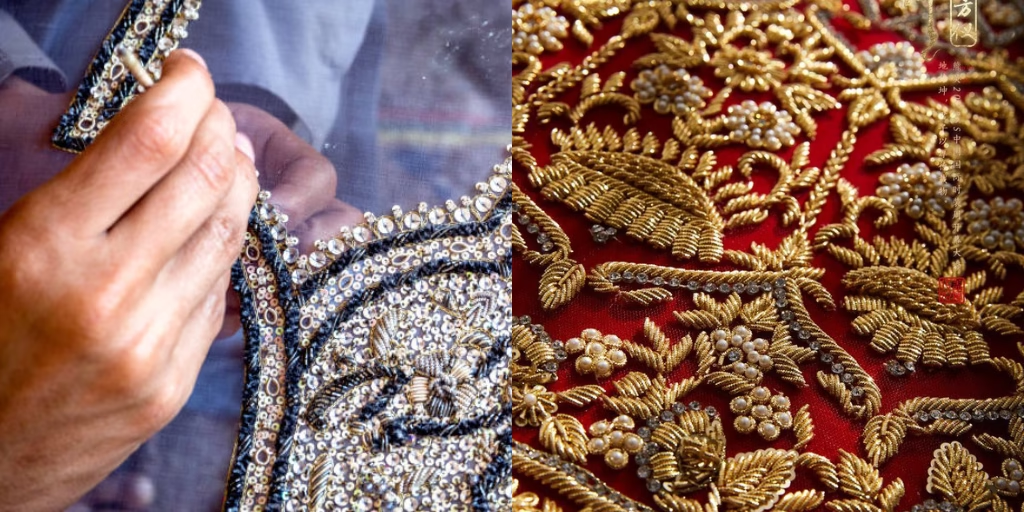
Let’s clear this up once and for all.
| Aspect | Danka Embroidery | Zardozi Embroidery |
| Metal type | Faceted discs (flat) | Wire, coiled, twisted |
| Light effect | Multi-directional sparkle | Consistent metallic sheen |
| Weight | Heavy, substantial | Lighter |
| Texture | Raised, bumpy surface | Smooth, thread-like |
| Cost | Extremely expensive | Affordable (comparatively) |
| Origin | Udaipur (Mewar) | Lucknow, Delhi, Hyderabad |
| Royalty | Only Maharana & immediate family | Nobility, aristocracy |
| Time required | 6-8 months per garment | 2-3 months per garment |
| Rarity today | Almost extinct | Still widely practiced |
| Artisan count | < 20 master artisans | > 10,000 artisans |
| Market value | ₹2 crore annually | ₹500 crore+ annually |
Where to Spot Danke-ka-Kaam Today in Udaipur’s Palaces and Museums
If you want to see authentic Danka embroidery, here’s where to go.
1. City Palace Museum, Udaipur
- Location: Inside City Palace, Udaipur
- Collection: Royal costumes, canopies, and ceremonial textiles
- Highlights: Maharana Sajjan Singh’s jama with gold Danka embroidery
- Entry fee: ₹300 (Indians: ₹100)
2. Bagore Ki Haveli, Udaipur
- Location: Near Gangaur Ghat, Udaipur
- Collection: Royal textiles from Mewar
- Highlights: Turban pieces and women’s garments
- Tip: Ask for the textile exhibition on the upper floors
3. Maharana Pratap Museum, Udaipur
- Location: Near City Palace
- Collection: Warrior-era textiles
- Highlights: Hunting costumes with Danka embroidery
4. Victoria & Albert Museum, London
- Location: London, UK
- Collection: Several 19th-century Danka embroidery pieces
- Highlights: Collected during the British Raj
5. National Gallery of Modern Art (NGMA), New Delhi
- Location: New Delhi
- Collection: Rotating exhibitions of Indian crafts
- Highlights: Occasionally features Danka embroidery pieces
6. Private Collections and Auctions
- Sotheby’s and Christie’s have auctioned Danka pieces
- Prices range from ₹5 lakh to ₹30 lakh
- Several private collectors in Rajasthan, Gujarat, and Mumbai
- Some pieces in Europe’s royal collections
Can Danke-ka-Kaam Be Revived? The Future of This Forgotten Art
Here’s the hopeful part. Despite everything, there’s still a chance for Danka embroidery.
Current Revival Efforts
1. Government Initiatives:
- Ministry of Textiles has included Danka in its “Endangered Crafts” list
- The Rajasthan Government has launched a ₹5 crore craft revival scheme
- Skill development programs are being designed
- A Geographical Indication (GI) tag is being sought for Danka embroidery
2. NGO and Private Efforts:
- Dastkari Haat Samiti conducts workshops
- Craft Revival Trust documents and promotes the craft
- Design collaborations with contemporary designers
- Social media campaigns to create awareness
3. Designer Collaborations:
- Fashion designers like Ritu Kumar and Sabyasachi have used Danka elements
- Raw Mango and Anita Dongre have experimented with the craft
- Bridal couture is a potential market
- The sustainable fashion movement could drive demand
4. International Interest:
- UNESCO has recognized the craft’s importance
- Museums are acquiring and exhibiting Danka pieces
- Digital documentation is creating global awareness
5. The NFT Opportunity:
- Danka embroidery NFTs could attract global collectors
- Digital preservation of the craft’s imagery
- Smart contracts could provide royalties to artisans
Challenges to Revival
| Challenge | Impact | Solution Needed |
| Few master artisans | Knowledge transfer is urgent | Apprentice programs |
| High cost of materials | Unaffordable for most | Subsidies for gold/silver |
| Time-consuming process | Not scalable | Combine with modern techniques |
| No regular demand | Inconsistent income | Design collaborations |
| Younger generation | Lack of interest | Make it fashionable |
What You Can Do to Help
- Buy authentic Danka embroidery pieces from verified sources
- Spread awareness on social media
- Visit museums where Danka’s pieces are displayed
- Support NGOs working on craft revival
- Choose Danka for special occasions like weddings
- Share this blog with others
The Optimistic Outlook
If enough awareness is created, Danka embroidery can still be saved. Just look at Bandhani, Block Printing, or Kalamkari—all of which have been revived through conscious consumerism.
The future depends on us. On whether we value the story and the sparkle enough to keep it alive.
FAQs
1. What is Danka embroidery?
It is a traditional metal embroidery from Udaipur using faceted metal discs called dankas. It originated in the royal courts of Mewar and was worn only by the Maharana and his family.
2. How is Danka embroidery different from Zardozi?
Danka uses faceted flat discs that sparkle from multiple angles. Zardozi uses twisted metallic wires and threads. Danka is heavier, more expensive, and much rarer than Zardozi.
3. Where can I see original Danka embroidery?
You can see it at the City Palace Museum in Udaipur, Bagore Ki Haveli, and the Victoria & Albert Museum in London. Some private collectors also hold pieces.
4. Is Danka embroidery still practiced today?
Yes, but by fewer than 20 master artisans. The craft is critically endangered due to a lack of patronage, high costs, and competition from cheaper alternatives.
5. Can I buy authentic Danka embroidery?
Yes, but it’s rare and expensive. Prices start from ₹50,000 for small pieces and can go up to several lakhs for royal-quality garments. Verify authenticity before buying.
Also Read:

Leave a Reply