

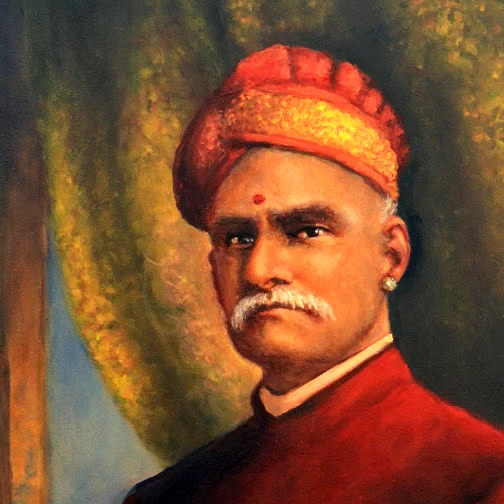
Hello folks. Let’s be honest. When we look at a Raja Ravi Varma artwork, we just say, “Wow, so real.” Then we move on. But there’s a reason we stop. It’s the fabric folds. The glinting jewelry. The way his women stare right back at us.
Every Raja Ravi Varma painting tells a story. Gods are walking on the earth. Royal women in quiet moments. Emotions we all feel.
His “Radha in the Moonlight” sold for nearly $2.5 million at auction. That’s not just art. That’s legacy.
But you don’t need an art degree to get it. You just need to look and feel.
This beginner’s guide breaks down his technique, his subjects, and why he’s the father of modern Indian art. Soon, you won’t just see a Raja Ravi Varma artwork—you’ll read it.
So grab some chai. Let’s dive in. It’s going to be beautiful.
Who Was Raja Ravi Varma? The Man Behind the Magic
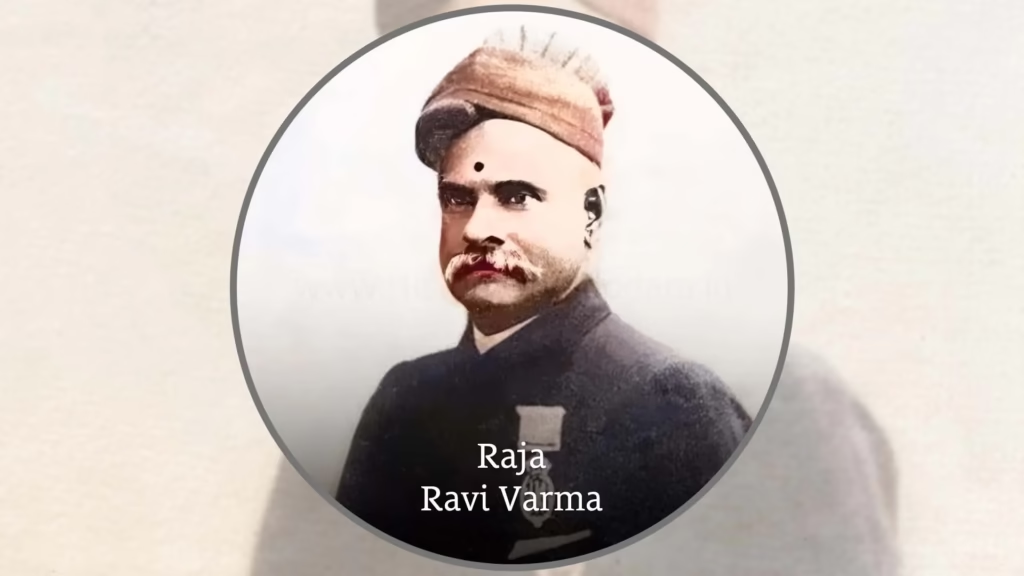
Raja Ravi Varma wasn’t just a painter. He was a phenomenon. Born on April 29, 1848, into an aristocratic family in Kilimanoor, Travancore (present-day Kerala), he was destined for greatness. His mother was a poet and his father a scholar. Creativity ran in his blood.
But here’s the thing. He didn’t just inherit talent. He built his craft. He learned watercolor painting from Rama Swami Naidu and oil painting from a Dutch portraitist named Theodor Jenson.
Jenson was apparently reluctant to teach him. But Ravi Varma was such a genius that he picked up techniques just by watching. Imagine that. No formal classroom. Just observation and sheer determination.
Key facts about his life:
- He was largely self-taught in European techniques, yet became a master at handling the oil medium
- He was a Sanskrit scholar who wrote Malayalam poetry and spoke fluent English
- He married Bhageerathi Bayi of the royal house of Mavelikkara at age 18, forging closer ties with royalty
- He was a progressive man who travelled extensively across India, in an age when travel was frowned upon, as it was said to make you “impure.”
At age 22, he was already an established artist. His work, Nair Lady Adorning her Hair, won the Governor’s gold medal at the Madras Fine Art Exhibition in 1877. The same year, he won first prize at the Vienna Art Exhibition. His career was on fire.
Raja Ravi Varma wasn’t just a painter of pretty pictures. He was a cultural revolutionary who changed how Indians saw their own gods, their own stories, and their own beauty.
Why His Style Changed Indian Art Forever
Let’s talk about why his style mattered so much. Before Raja Ravi Varma, Indian art was largely traditional. Miniature paintings. Tanjore works with gold leaf. Stylized, flat compositions. Beautiful, yes. But limited in perspective.
Ravi Varma did something radical. He combined Indian iconography and subjects with Western techniques and styles. He was the first Indian artist to successfully pull this off. He brought in:
- Oil painting techniques from European academic art
- Chiaroscuro (light and shadow effects) to create depth
- Realistic perspective that made figures look three-dimensional
- Human models for depicting Hindu gods and goddesses—not just imagination
This wasn’t just a style change. It was a revolution. He took Indian mythology and history and gave them flesh and blood, clothes, jewelry, and architecture. He created heroic stories where women took center stage.
Why this mattered:
| Aspect | Before Ravi Varma | After Ravi Varma |
| Gods | Stylised, symbolic | Human-like, relatable |
| Perspective | Flat | Three-dimensional |
| Medium | Tempera, watercolour | Oil on canvas |
| Subjects | Court scenes, miniatures | Mythology, everyday life |
As art critic Kishore Singh put it, “Most Indians recognize mythological characters and deities from his work and pray to prints of his paintings of gods and goddesses. This kind of Indian art had no precedent”.
The Stories He Painted: Mythology Meets Real Life
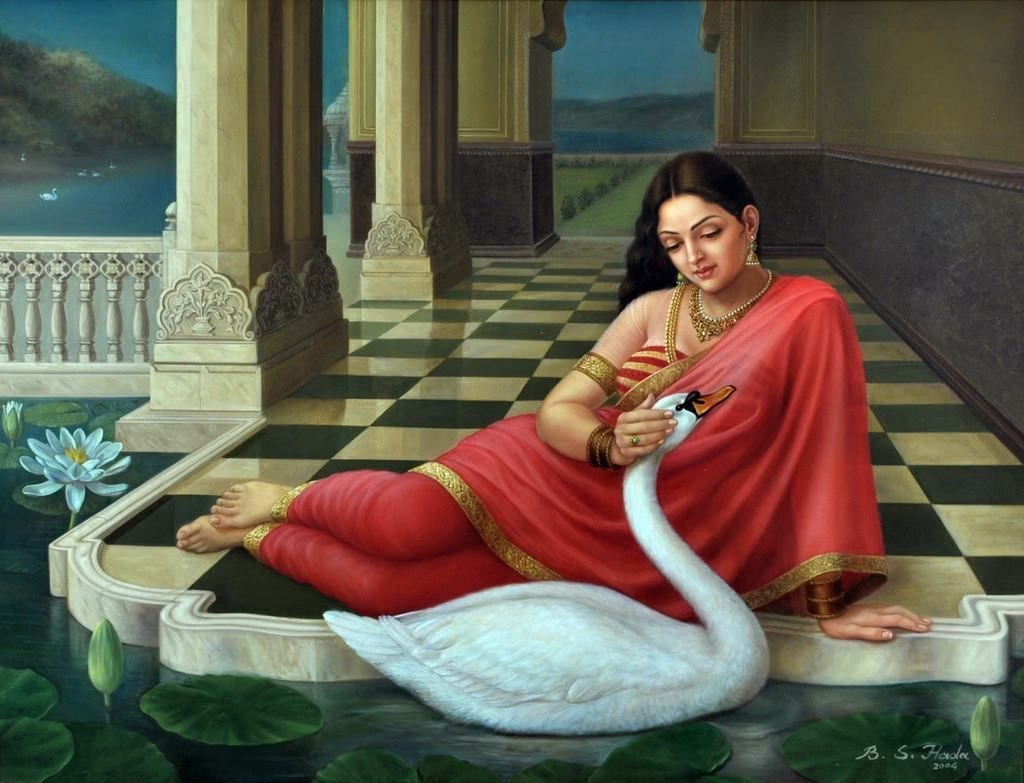
Raja Ravi Varma didn’t paint random subjects. He painted the stories Indians grew up hearing. The Ramayana. The Mahabharata. The Puranas. He took these ancient tales and made them visual in a way no one had before.
What he painted:
- Epic scenes from the Mahabharata and Ramayana
- Hindu deities like Lakshmi, Saraswati, Vishnu, and Krishna
- Studio-style portraits of aristocrats and maharajahs
- Genre paintings of everyday Indian life
His favorite subjects were women in traditional attire. Reclining. Lost in thought. Gazing directly at the viewer. His specialty was realism at its peak; every costume and piece of jewelry looked exactly like the original. The pearls, diamonds, temple jewelry, and all of that era. The furniture, building interiors, and utensils—all historically accurate.
The emotional depth he captured:
- Longing and love (Shakuntala looking back at Dushyanta)
- Tragedy and sacrifice (Jatayu Vadh showing the bird wounded while saving Sita)
- Divine grace (The Disrobing of Draupadi)
- Tender maternal love (Krishna with Yashoda)
He didn’t just paint scenes. He painted emotions. You can almost hear the rustle of silk sarees in his works, as the famous saying goes. It’s famously said in India that in his paintings, you can almost hear the rustle of silk sarees.
Raja Ravi Varma Top 10 Paintings You Must Know
Alright, let’s get to the good stuff. Here are Raja Ravi Varma’s top 10 paintings that every beginner needs to know:
1. Shakuntala
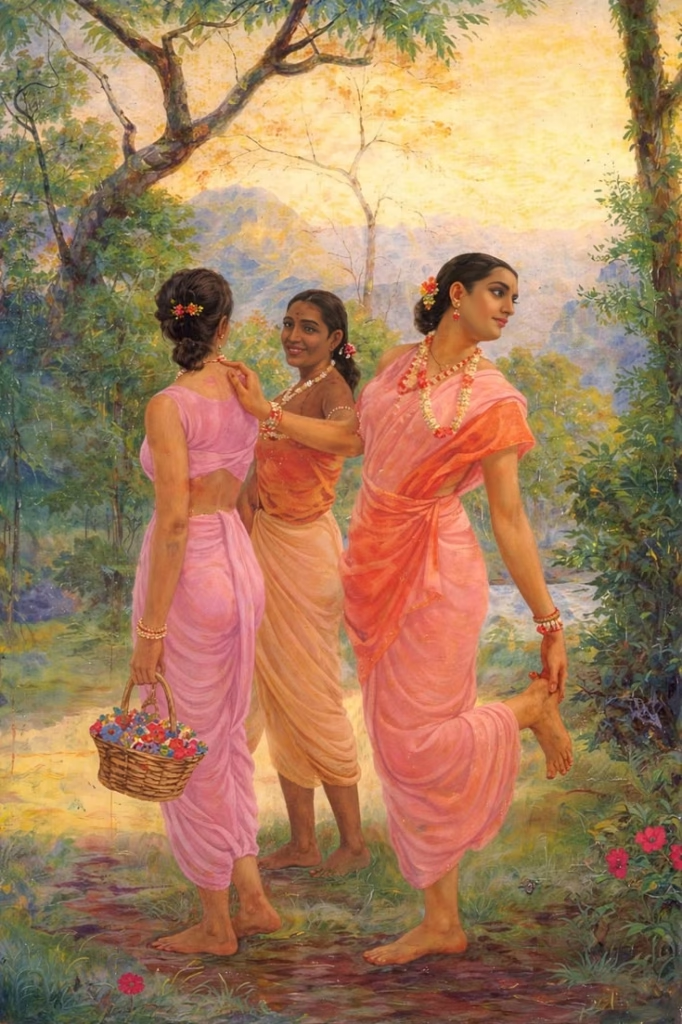
Perhaps his most famous work. Shakuntala, from the Mahabharata, pretends to remove a thorn from her foot while stealing a glance at King Dushyanta. Pure longing. Pure romance.
2. The Galaxy of Musicians
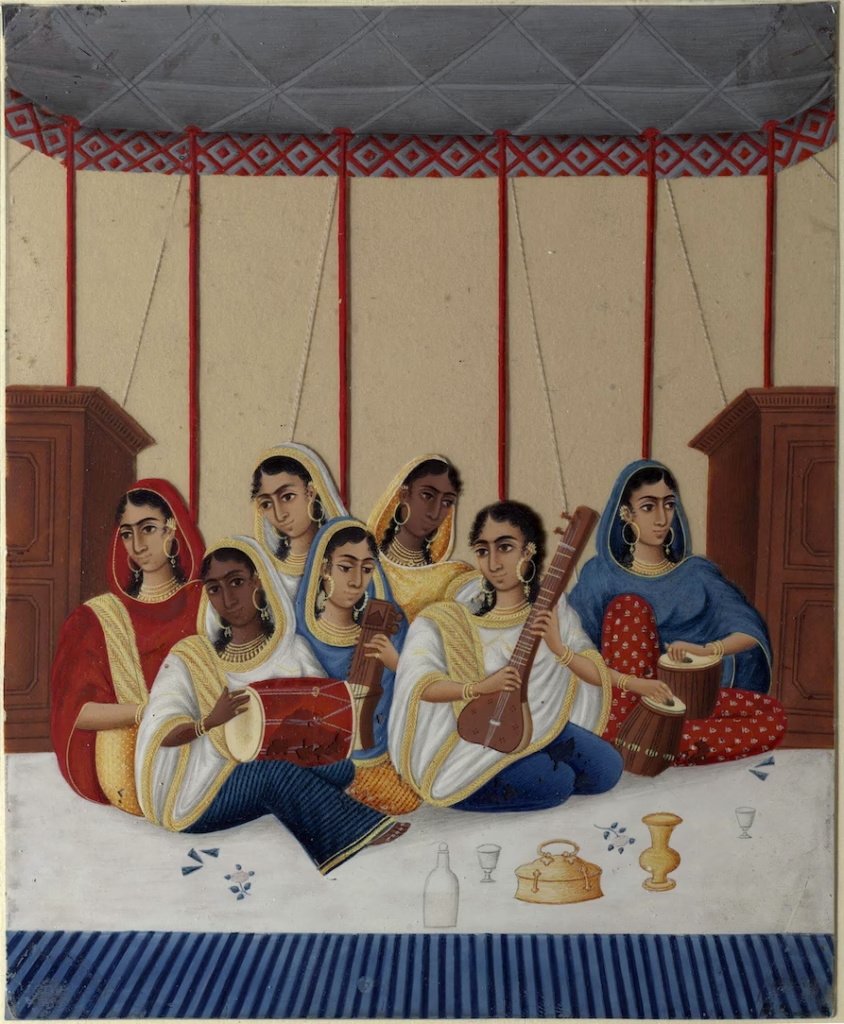
A group of women from different Indian regions, each playing instruments. A celebration of India’s musical diversity.
3. Damayanti and the Swan
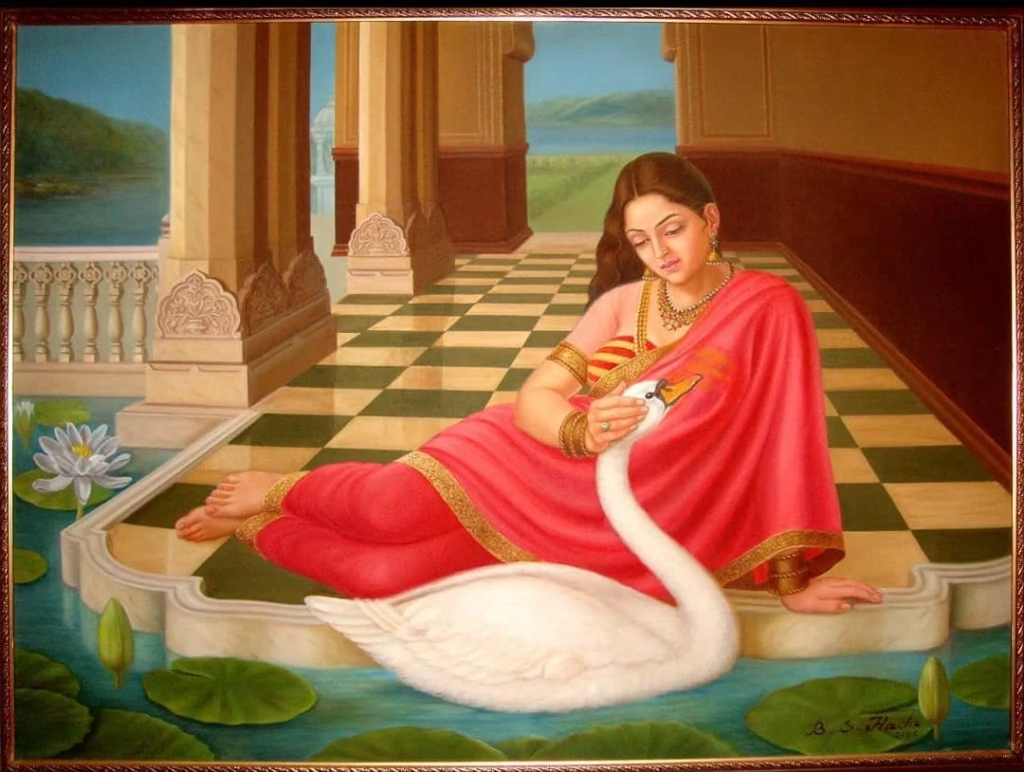
Damayanti speaks with a swan sent by King Nala. Love. Purity. Elegance.
4. Radha in the Moonlight
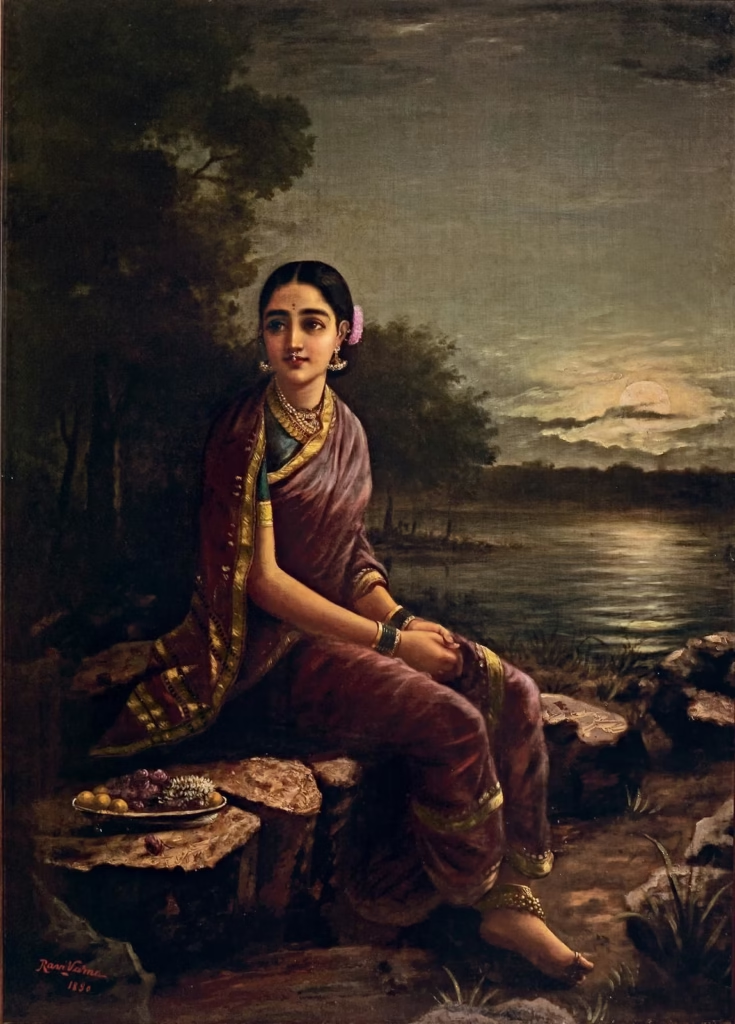
Radha sits in moonlight, a pooja thali beside her. Dreamy, romantic, utterly divine. This one sold for Rs 200 million (about £2 million).
5. The Victory of Indrajit
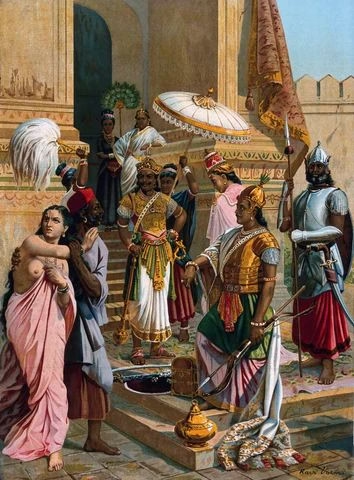
A dynamic, action-packed scene from the Ramayana. Indrajit in battle with a weapon of serpents.
6. Goddess Saraswati
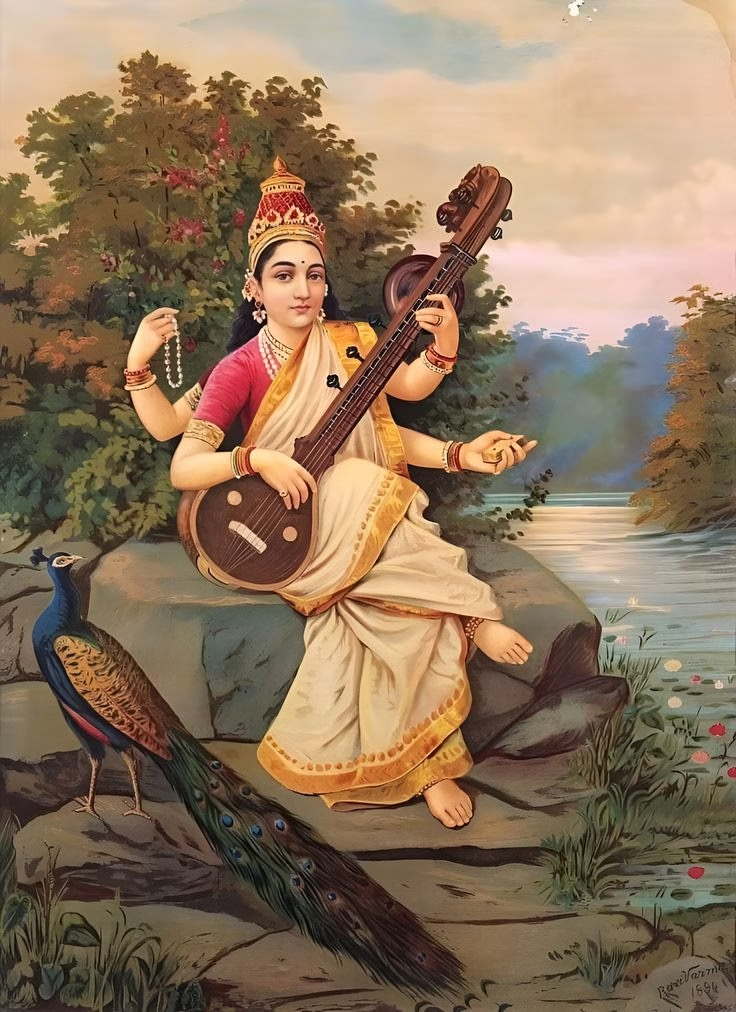
The goddess of knowledge and arts, sitting on a lotus with a veena. Serene. Graceful. Iconic.
7. Jatayu Vadh
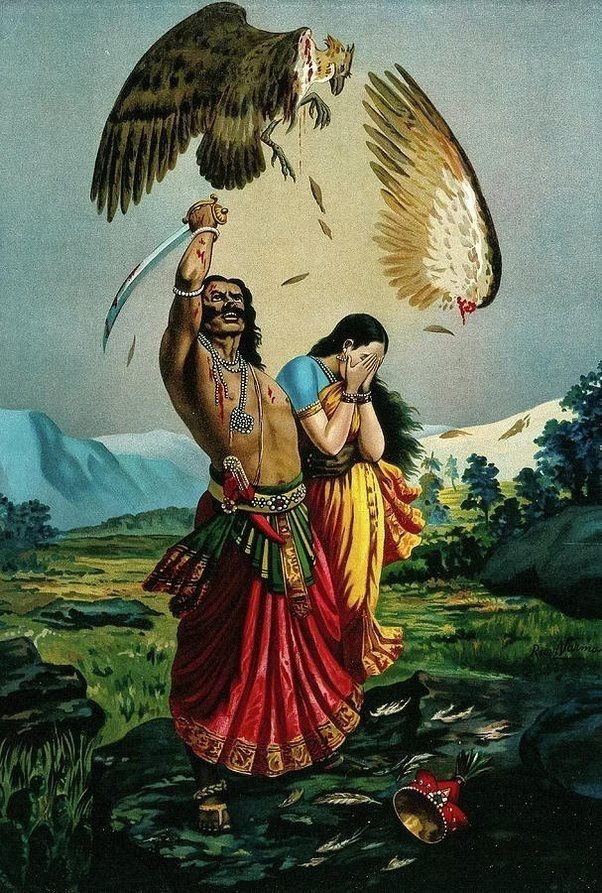
The tragic moment Jatayu is mortally wounded trying to save Sita. Emotion. Drama. Heartbreak.
8. Here Comes Papa
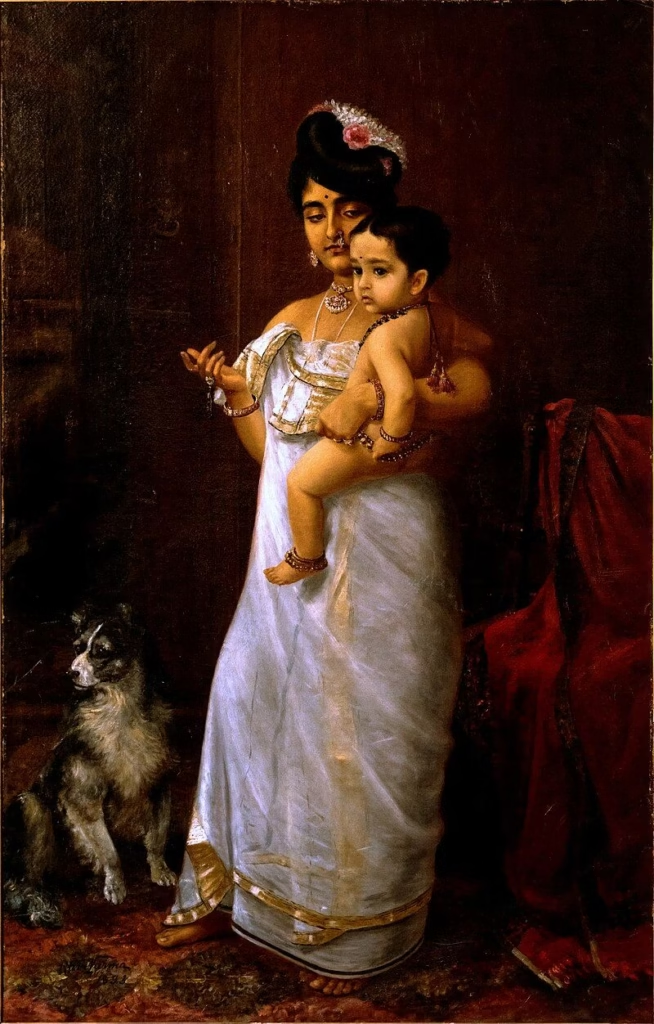
A departure from mythology. A woman holds her baby, looking towards the entrance, waiting for her husband. Intimate. Warm. Relatable.
9. Mohini on a Swing
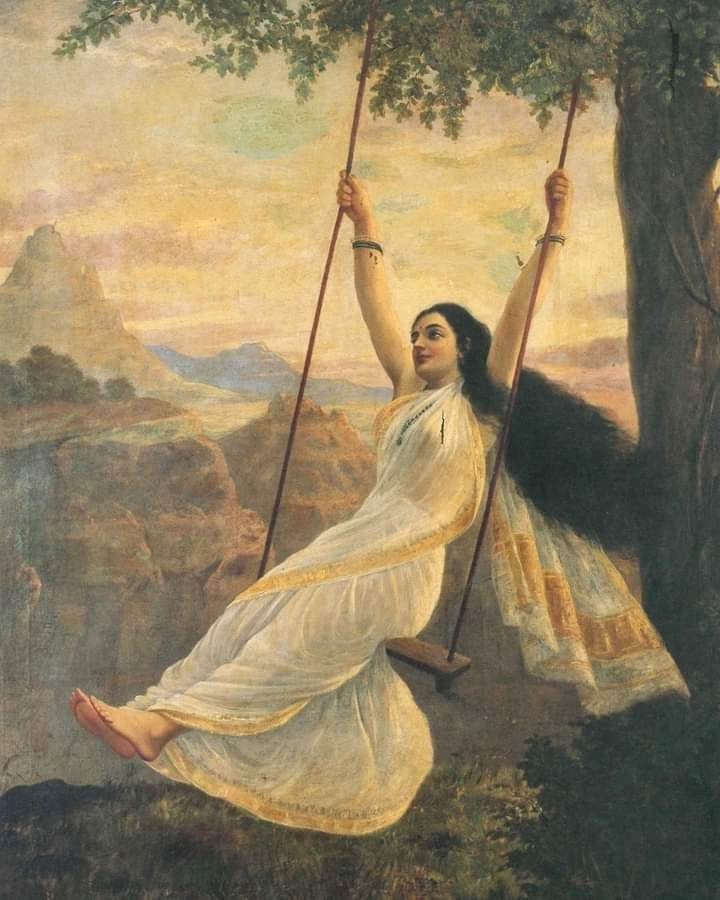
The female avatar of Vishnu, swinging under a tree. Windswept hair. Carefree joy. Divinity meets sensuality.
10. Krishna with Yashoda
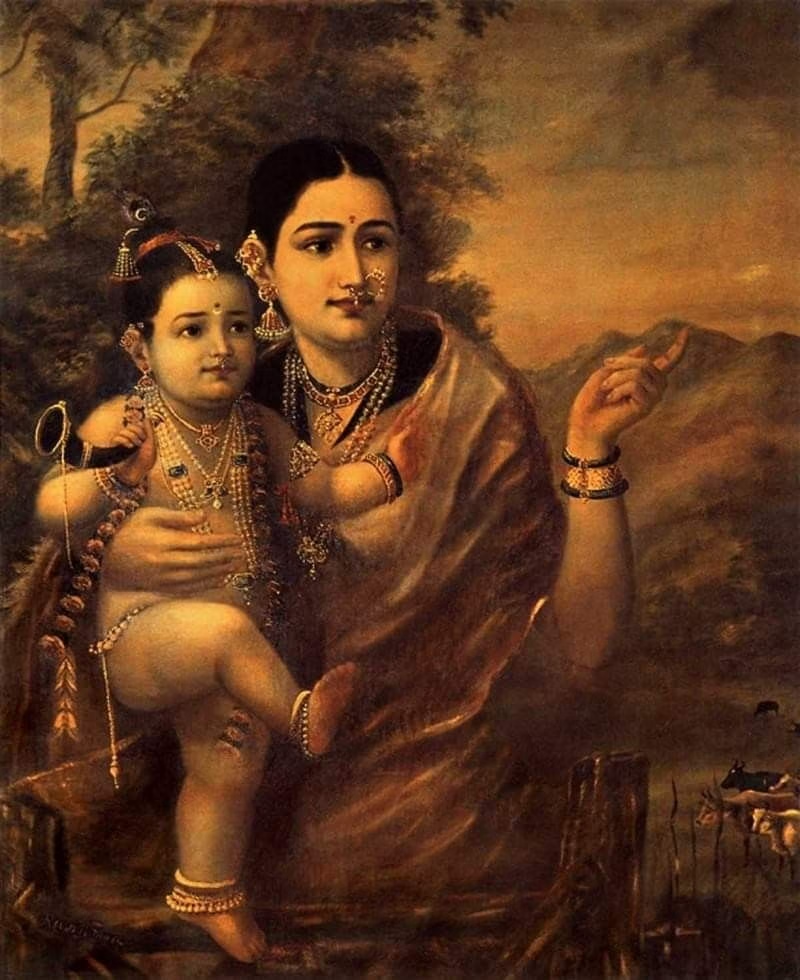
The mischievous Krishna was held by his foster mother. Tender. Loving. Heavenly.
These paintings are timeless. They hang in museums, palaces, and homes across India. Many are classified as “national treasures” and cannot be taken out of the country.
The Secret Behind His Lifelike Women and Drapery
Let’s talk about the magic. How did he make fabric look so real? How did he make women glow?
His secrets:
- Texture and shading: He used light and shadow to create the illusion of folded fabric
- Extensive travel: He travelled across India, observing women from different regions—their drapes, their jewellery, their postures
- Human models: He often modelled Hindu Goddesses on South Indian women, whom he considered beautiful
- Oil medium: Oil paints are able to stimulate reality by giving a sense of weight and volume of substance
His women aren’t just figures. They’re characters. Each one has a story. Each one has a mood. Whether it’s the shy glance of Shakuntala or the serene grace of Lakshmi, his women feel alive.
What makes his women special:
| Element | Why It Works |
| Eyes | Large, expressive, often looking directly at the viewer |
| Drapery | So realistic, you can almost feel the texture |
| Jewelry | Meticulously detailed—each piece is historically accurate |
| Posture | Graceful yet natural, never stiff |
| Expression | Conveys emotion—longing, contemplation, joy |
“The reason we decided on NFTs of his work being auctioned was that we need to be relevant to modern times and the younger generation and make them aware of this great Indian artist,” says Jay Varma, a descendant. Even in the digital age, his women continue to captivate.
Oleographs: How He Made Art Affordable for Everyone
This is where Raja Ravi Varma truly changed the game. He didn’t just paint for royalty. He wanted everyone to have his art. Here’s the story. In the 1880s, Sir T. Madhava Rao, former Dewan of Travancore, wrote to Ravi Varma.
He said, “There are many friends who are desirous of possessing your works. It would be hardly possible for you, with only a pair of hands, to meet such a great demand. Send, therefore, a few of your select works to Europe and have them oleographed.”
It took a decade, but he did it. In 1894, he set up the Ravi Varma Fine Art Lithographic Press in Bombay. He imported German machinery and hired a German technician named Fritz Schleicher.
What were oleographs?
- Lithographic prints designed to resemble oil paintings
- Varnished to give the appearance of original oil works
- Required as many litho-stones as there were colours and tones in a painting
The first chromolithograph was The Birth of Shakuntala, launched on July 12, 1894. It was an instant success.
Why it was revolutionary:
- Made art affordable for the common man
- Challenged caste hierarchies: everyone could buy prints of gods and goddesses, not just high-caste Brahmins.
- Spread Hindu imagery at a time when temples were restricted based on caste and gender
- Created a unified visual culture across India—something desperately needed in a country where the dialect changed every 5 kilometres
As his Malayalam biography recorded: “There are few cultured well-to-do houses in Hindustan, from Cape Comorin to the Himalayas, in which his pictures are not found, and his name is known all over the land, from the highest to the lowest.”
His oleographs even influenced India’s largest-selling comic book series—Amar Chitra.
Katha comics. That’s how deep his impact goes.
Controversies and Criticism: Was He Too Western?
Let’s be real. Not everyone loved Raja Ravi Varma. He faced criticism from two sides.
From traditionalists:
- Too Western: He was accused of “vulgarising” Indian art by using European techniques
- Too sensual: His depictions of goddesses in diaphanous clothes were considered inappropriate
- Too realistic: Some felt divine figures should be stylised, not humanized.
From art critics:
- Sentimental: His work was called “showy and sentimental in style.”
- Kitsch: Many labelled his calendar art as cheap and commercial
- Not “pure” art: Art historian Ratan Parimoo argued Ravi Varma was responsible for the “vulgarity” of popular art
But here’s the counter-argument:
He lived in the colonial era. Indian art was being dismissed by the West. Ravi Varma found a way to make Indian subjects palatable—even celebrated—in Western art circles. He won gold medals at Vienna and Chicago. He proved Indian art could stand on the global stage.
His work also had a political impact. Sister Nivedita, a disciple of Swami Vivekananda, praised him for “the urge to feel and act patriotically and bring painting to the service of Swadeshi and Nationalism.”
Was he a sellout or a savior?
I’d argue the latter. He didn’t copy the West. He used Western techniques to tell Indian stories. There’s a difference.
He stood at a transitional stage between the Indian painting tradition and the emergence of Salon artists versed in European academic naturalism. He reconciled the aesthetic principles of both in his style
How to Read Raja Ravi Varma’s Artwork Like a Pro
This is where we put it all together. How do you actually “read” a Raja Ravi Varma artwork? Here’s your pro guide:
Step 1: Look at the Eyes
Ravi Varma’s figures speak through their eyes. Is she looking at you? Looking away? Lost in thought? The eyes tell the story. In Shakuntala, she’s looking back—longing. In Lakshmi, she’s gazing down, blessing.
Step 2: Study the Fabric
He was a master of drapery. Look at how the sari folds. How the fabric clings. Does it feel heavy? Light? Flowing? You can almost hear the rustle of silk. That’s his genius.
Step 3: Notice the Jewelry
Every piece of jewelry is meticulously detailed. Pearls, diamonds, temple jewelry—all historically accurate. He wasn’t just painting jewelry; he was painting status, culture, and identity.
Step 4: Read the Background
The background isn’t random. Architecture, furniture, nature—all chosen deliberately. In his mythological works, he often used South Indian women as models and South Indian landscapes as settings. He made the divine local.
Step 5: Feel the Emotion
What’s the mood? Longing? Joy? Tragedy? Peace? Raja Ravi Varma painted emotions, not just scenes. The fourteen Baroda paintings were structured to evoke specific emotions—love, lust, infatuation, divine grace, steadfastness, and the beauty of chastity.
Step 6: Connect to the Myth
If you know the story behind the painting, you’ll see it differently. Jatayu Vadh isn’t just a bird dying. It’s a sacrifice. Loyalty. Good versus evil. Shakuntala isn’t just a woman with a thorn. It’s love. Longing. Destiny.
Quick cheat sheet:
| Painting | Emotional Theme |
| Shakuntala | Longing, love |
| Radha in the Moonlight | Romance, devotion |
| Jatayu Vadh | Sacrifice, tragedy |
| Lakshmi | Divine grace, prosperity |
| Here Comes Papa | Domestic warmth, anticipation |
Why Raja Ravi Varma Artwork Still Matters Today
So why should you care about an artist who died in 1906?
Because Raja Ravi Varma’s artwork is everywhere. In puja rooms. In museums. In advertisements. In films. In comic books. He shaped how India sees its own gods, its own women, its own stories.
His modern relevance:
- NFTs: His lithographs were recently auctioned as NFTs, attracting bidding wars. The Lakshmi lithograph sold for $2,150—more than twice its starting bid
- Academic research: A 2024 study used eye-tracking and AI to analyse emotional responses to 40 Ravi Varma paintings
- Pop culture: His images appear in films, music videos, textiles, and advertising
- Conservation: Museums are conserving his works, some with hand-applied fabric and sequins, as devotional objects
He was ahead of his time. He believed art should not be bound by geography. He wanted the common people to view his art, to get educated and inspired. And he succeeded. Spectacularly.
What he left behind:
- Over 2,000 paintings before he died at age 58
- A lithographic press that produced millions of prints
- An entire visual language for Hindu mythology
- A legacy that influences Indian art to this day
Contemporary Indian art was never the same after he appeared. And neither was the Indian imagination. Every time you see a calendar of Lakshmi, a greeting card of Radha, or a poster of Shakuntala, you’re seeing Raja Ravi Varma.
Final Thoughts
Raja Ravi Varma’s artwork isn’t just art. It’s memory. Its identity. It’s the face of Indian gods. The drape of Indian saris. The gaze of Indian women. He gave us a visual language that we still speak today.
So the next time you look at a Raja Ravi Varma painting, don’t just say “Wow.” Ask yourself: Who is she? What is she feeling? What story is being told? And why does it still move me, a century later?
That’s the magic. That’s the master. That’s Raja Ravi Varma. And now, you know how to read him.
FAQs
1. Did Raja Ravi Varma ever travel abroad?
No, he never traveled abroad.
- Learned European oil painting from Dutch artist Theodor Jenson, who visited his palace
- Mastered Western realism purely through observation and practice
- Never left India but became a global icon
2. Why are Raja Ravi Varma’s paintings so expensive?
His originals are rare and legally protected.
- Radha in the Moonlight sold for $2.5 million
- Damayanti sold for $1.6 million
- Only 35–40 untraceable originals remain in private collections
- Many are declared “national treasures” and cannot be exported
3. Did Raja Ravi Varma only paint Hindu gods?
No, his subjects were diverse.
- Painted royalty, everyday women, and domestic scenes
- Here Comes Papa shows an intimate family life
- Also created studio portraits of maharajas and village women in traditional attire
4. Was Raja Ravi Varma criticized during his lifetime?
Yes, he faced strong criticism.
- Traditionalists called him “too Western.”
- Some deemed his goddesses too sensual and inappropriate
- Critics accused him of “vulgarising” Indian art
- Despite this, he won global awards and remained influential
5. How many paintings did Raja Ravi Varma create?
He created over 2,000 paintings before his death at 58.
- Only 100–120 originals survive today
- Most are housed at the Sri Chitra Art Gallery in Thiruvananthapuram
- Many were lost, destroyed, or remain untraceable
6. What is an oleograph in Raja Ravi Varma’s work?
An oleograph is a varnished lithographic print that mimics oil painting.
- Set up a printing press in 1894 to mass-produce his art
- Made art affordable for common Indians
- Spread Hindu imagery to households across the country
- First oleograph: The Birth of Shakuntala (1894)
7. Did Raja Ravi Varma teach any students?
No, he had no formal students.
- His printing press employed many craftsmen.
- His style influenced later artists like M.F. Husain
- His visual language shaped Indian calendars, cinema, and Amar Chitra Katha comics
8. Why are Raja Ravi Varma’s women so realistic?
He used live models—mostly South Indian women.
- Studied their drapes, jewellery, and postures during travels
- Mastered light, shadow, and oil texture
- Made silk shimmer and jewellery gleam with lifelike precision
9. What is Raja Ravi Varma’s most controversial painting?
Mohini on a Swing is his most controversial work.
- Features windswept hair, revealing drapery, and a playful gaze
- Considered too bold and sensual for its time
- Remains one of his most celebrated and discussed paintings today
10. Where can I see Raja Ravi Varma’s original paintings?
You can see them at several major museums.
- Sri Chitra Art Gallery – Thiruvananthapuram, Kerala
- Mysore Palace – Mysore, Karnataka
- Baroda Museum – Vadodara, Gujarat
- Victoria & Albert Museum – London, UK
- Some are “national treasures” and cannot be taken out of India
Also Read:

Leave a Reply