

Hello folks! Grab your chai and settle in, because we need to talk about what just happened at fashion’s biggest night. The Met Gala 2026 red carpet wasn’t just about celebrities and designer labels—something way bigger went down.
Under the theme “Costume Art” and dress code “Fashion Is Art,” India showed up differently this year. And when I say differently, I mean India walked in and quietly stole the entire show.
For years, we’ve seen Indian-inspired fashion on global runways. But usually, it feels like a nod—a tiny acknowledgement that Indian textiles exist. Not this time. This time, Indian celebrities didn’t just wear beautiful clothes—they wore living history.
Let’s decode what really happened at fashion’s biggest night. Because honestly? India didn’t just participate. India dominated. And I’m here to break it all down for you, piece by piece.
So, What Exactly Is the Met Gala 2026 All About?
Okay, let’s start with the basics for anyone who’s wondering. The Met Gala 2026 isn’t just some fancy red carpet event. It’s literally the biggest night in fashion—think of it as the Oscars, Grammys, and Super Bowl of style all rolled into one massively over-the-top evening. It happens every year at the Metropolitan Museum of Art in New York City, and honestly? It’s where fashion goes to get seriously theatrical.
This year’s theme was “Costume Art” with the dress code “Fashion Is Art.” Sounds fancy and a bit confusing, right? But here’s what it really meant: every single celebrity had to show up wearing something that could genuinely be considered art. Not just a pretty dress or a sharp suit. Something with meaning, story, and real intention behind it. Something that made you stop and think.
The event is co-chaired by absolute legends—Beyoncé, Venus Williams, Nicole Kidman, and Anna Wintour (the queen of Vogue herself). It’s an invitation-only fundraising gala for the museum’s Costume Institute. And get this – tickets reportedly cost around USD 100,000 each. That’s roughly ₹80 lakhs. For one ticket. To stand on a carpet and pose for photos. So yeah, the stakes are incredibly high.
Why Indian Traditional Art Became the Actual Star of the Night
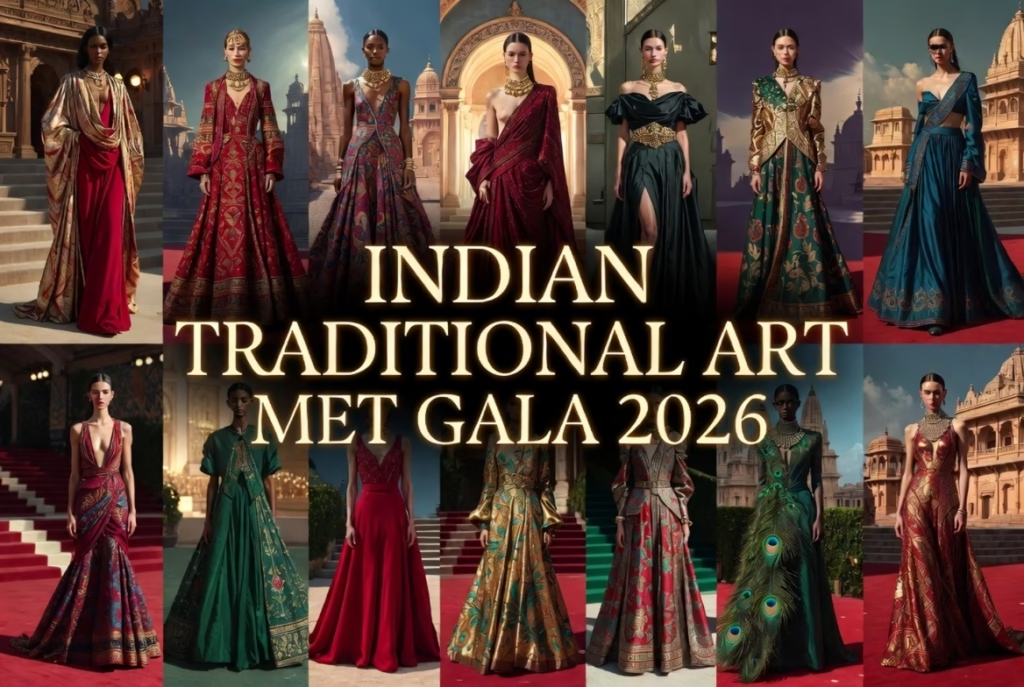
Let me tell you why Indian Traditional Art was the real hero of the Met Gala 2026. It’s not just about looking beautiful – anyone can do that with enough money and a good stylist. Indian art is about layers.
Every single motif, every stitch, every material carries deep meaning. And at this year’s Met Gala, that meaning was finally recognized on a global stage in ways we’ve never seen before.
What made India’s presence so incredibly powerful?
- Craft as storytelling – Every outfit told a story from India’s vast cultural landscape. Not vague “ethnic vibes.” Specific stories from specific regions.
- Thousands of hours of labor – Some looks took over 5,600 hours to create. That’s not a dress. That’s a dedication.
- Ancient techniques meet modern fashion—Zardozi, kalamkari, shola craft, and aari embroidery—these aren’t museum pieces. They walked the red carpet alive and breathing.
- Personal history—Celebrities wore heirlooms from their grandmothers. Actual family collections. Not replicas. Not inspired by. The real thing.
For decades, Indian craftsmanship has influenced global fashion, often without credit or recognition. Designers would “take inspiration” from Indian textiles and techniques, but rarely acknowledge where they came from. At the Met Gala 2026, that dynamic finally shifted. Designers and cultural figures presented Indian craft not as decoration, but as art in its own right.
This wasn’t appropriation. This was authorship. India is finally owning its narrative on the world’s biggest stage.
The Types of Dresses Witnessed at Met Gala 2026
Okay, let’s get to the juicy part—the outfits. Honestly, the looks at the Met Gala 2026 were pure magic. And I’m not exaggerating when I say these weren’t just clothes. They were walking masterpieces. Here’s a detailed breakdown of every major look that put Indian Traditional Art on the global map.
Isha Ambani’s Gold Tissue Saree
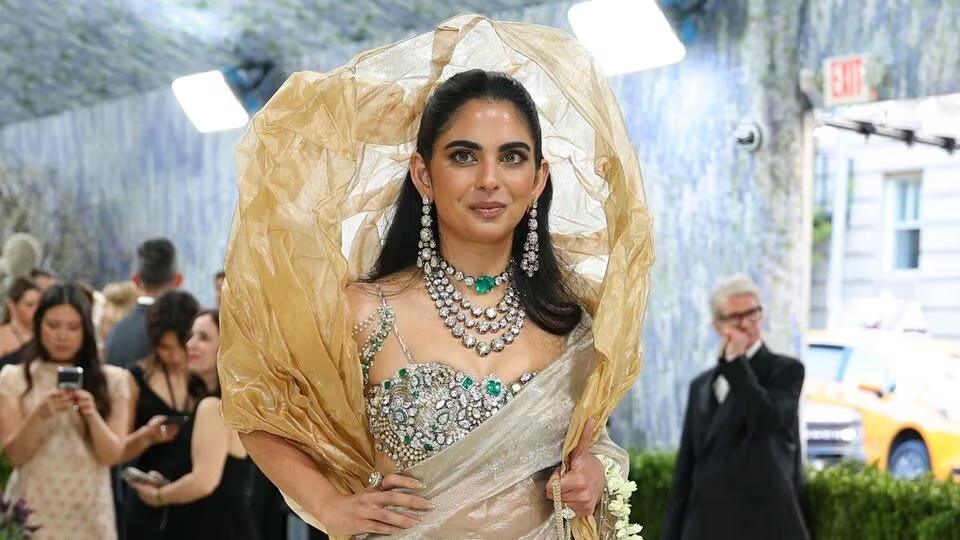
Isha Ambani wore a custom Gaurav Gupta creation that was honestly breathtaking – part sari, part sculpture, part dream. The gold tissue sari was woven with real gold threads by artisans from the Swadesh collective, a group dedicated to preserving traditional Indian crafts.
But here’s where it gets really interesting. The border featured hand-painted pichwai motifs—a 400-year-old art form from Rajasthan. Pichwai paintings typically depict Krishna and are used as temple backdrops. Taking those sacred motifs and putting them on a global red carpet? That’s a statement.
And the blouse? Absolutely jaw-dropping. It had over 1,000 diamonds, including old mine solitaires, emeralds, polki, and kundan elements from her mother Nita Ambani’s personal collection. Not rented. Not borrowed from a brand. Her mother’s actual jewels.
- Hours spent: 1,200+ hours by 25+ artisans
- Key techniques used: Zardozi, aari, relief embroidery, hand painting
- Cultural references: Ajanta cave paintings, Pichwai tradition
But wait, there’s more. She also carried a bronze mango sculpture by Subodh Gupta inside a custom crochet bag. A bronze mango. In a bag. On the Met Gala red carpet. That’s not just an accessory – that’s a statement about Indian contemporary art itself.
Karan Johar’s Painterly Cape
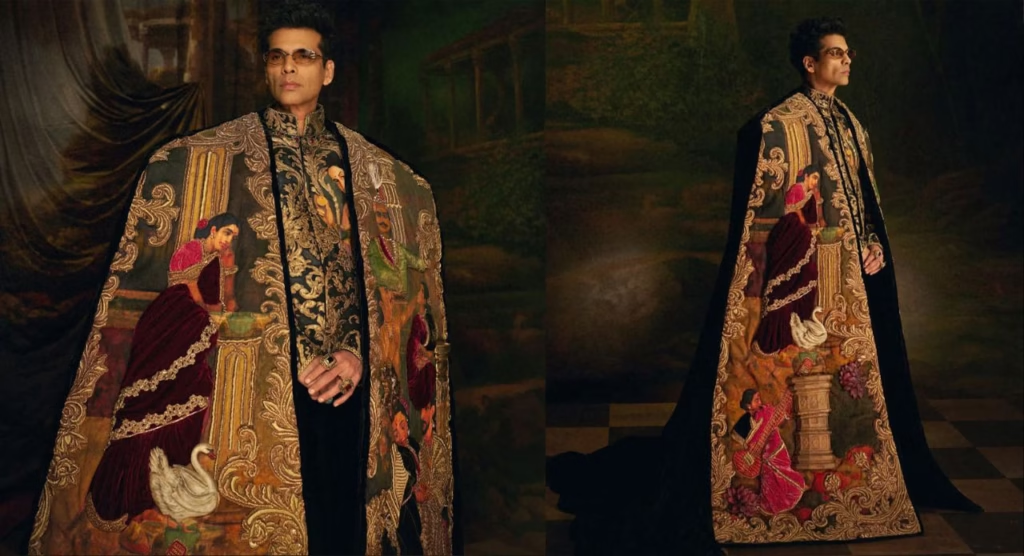
Karan Johar made his Met Gala 2026 debut in a look that basically screamed Indian Traditional Art from every angle. Designed by Manish Malhotra, the outfit was inspired by the 19th-century artist Raja Ravi Varma—often called the “father of modern Indian art.”
His cape featured hand-painted motifs from iconic Varma works like “Hamsa Damayanti” and “Lady with a Lemon.” These aren’t random patterns – these are some of the most famous paintings in Indian art history. The kind you study in school. The kind that defined how India saw itself in the 19th century.
- Hours spent: 5,600+ hours by 50+ artisans
- Key techniques used: Hand painting, 3D sculpting, zardozi borders, oil and acrylic finishes
- Cultural references: Classical Indian painting and Hindu mythology
Johar described it as “Framed in Eternity.” And honestly? That’s exactly what it felt like. Every motif was painted by hand. The embroidery was treated like actual paint on canvas. This wasn’t fashion—it was a walking gallery exhibition. And the fact that it took 5,600 hours? That’s 233 full days. Worked by 50 people. Just for one outfit.
Ananya Birla’s Subodh Gupta Sculptural Mask
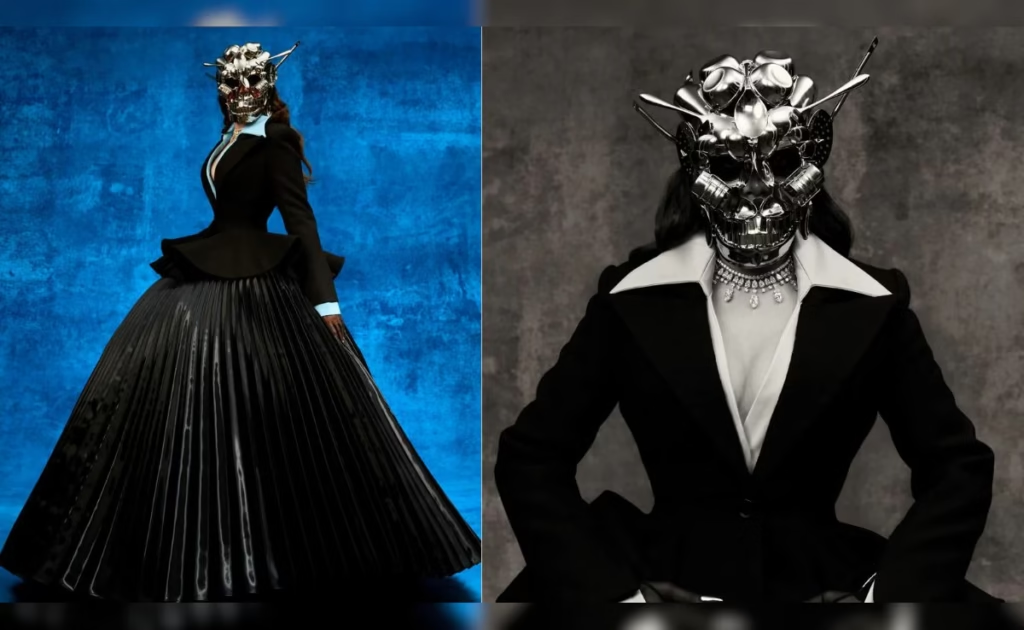
Ananya Birla went in a completely different direction, and honestly? It might have been the most unexpected and brilliant look of the night. Her Met Gala 2026 look featured a custom mask by celebrated Indian artist Subodh Gupta.
The dress wasn’t made of diamonds or crystals or expensive materials. It was made of stainless steel. Using traditional Indian kitchen utensils—spoons, dabbas, karchis, and pressure cooker parts—Gupta transformed ordinary objects into something extraordinary. Something that looked like armor. Something that looked like a warrior’s helmet. Something that looked like the future.
Styled by Rhea Kapoor, her Robert Wun couture featured a silk-wool blazer with a plunging neckline and a pleated ballroom skirt in gunmetal glass organza. But the mask was the undisputed star. It symbolized strength and anonymity—a “helmet and disguise at once,” as Gupta described it.
This was a completely different kind of Indian Traditional Art. Not historical. Not royal. Contemporary. Conceptual. And absolutely unforgettable. It proved that Indian art isn’t stuck in the past—it’s alive, evolving, and speaking to today’s world.
Sudha Reddy’s Kalamkari-Inspired Tree of Life
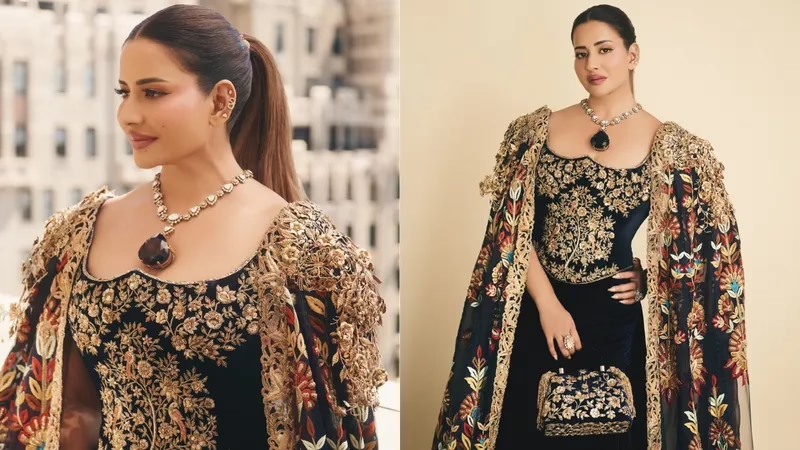
Sudha Reddy’s outfit was a literal love letter to South India. Designed by Manish Malhotra, the ensemble was rooted in the Machilipatnam style of Kalamkari—an ancient art form from Andhra Pradesh and Telangana that dates back over 2,000 years.
The central motif was the Tree of Life, or Kalpavriksha, a mythical wish-fulfilling tree in Hindu mythology. Around it were depictions of the Palapitta bird (the state bird of Telangana), Jammi Chettu (a sacred tree associated with victory), and celestial figures, including the Sun and Moon gods.
- Hours spent: 3,459 hours by 90+ artisans
- Key techniques used: Zardozi, marodi, resham, metalwork, natural dyes
- Cultural references: Palapitta bird, Jammi Chettu, Sun and Moon gods, Kalpavriksha
Her jewelry was equally spectacular. A 550-carat tanzanite pendant called the “Queen of Merelani” was valued at USD 15 million—roughly ₹125 crores. Just let that sink in. One piece of jewelry is worth more than most people’s entire life savings.
But beyond the price tag, the look was about something deeper—bringing South Indian textile heritage to the global forefront. For too long, Indian fashion on global stages has been North Indian-centric. Sudha Reddy changed that.
Sawai Padmanabh Singh’s Royal Phulghar Coat
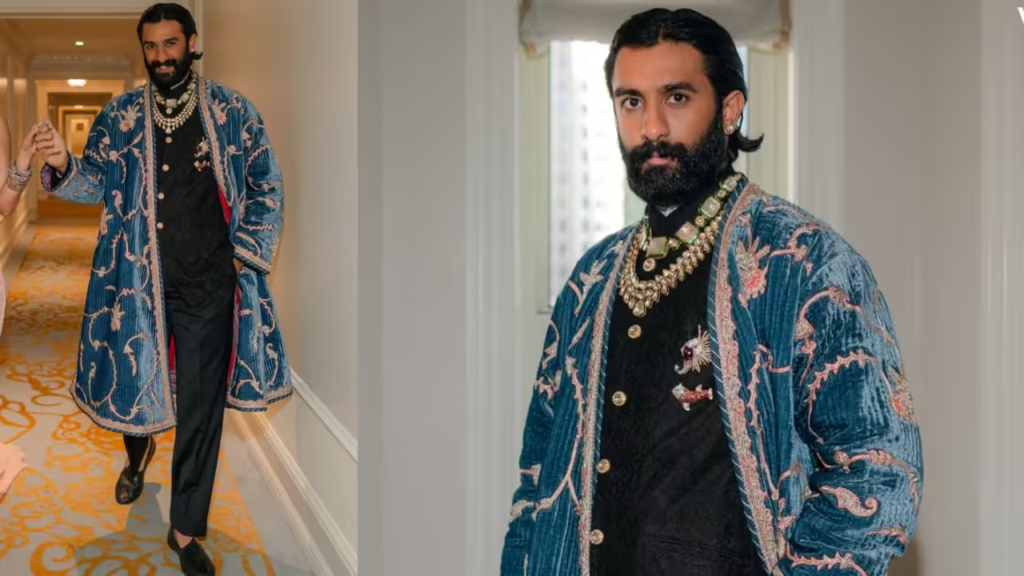
Sawai Padmanabh Singh, the Maharaja of Jaipur, wore a custom Prabal Gurung creation that brought royal Rajasthani heritage to the Met Gala 2026. The Phulghar coat—traditionally worn by Jaipur royalty—was constructed in deep velvet and quilted with cotton for structure and comfort.
- Hours spent: 600+ hours by artisans in Jaipur
- Key techniques used: Aari and zardozi embroidery, dabka and resham work
- Cultural reference: Jaipur’s royal lineage and Suryavanshi heritage
But his sister, Princess Gauravi Kumari, wore something even more personal. A chiffon sari that originally belonged to her grandmother, Maharani Gayatri Devi. Not a replica. Not inspired by. The actual sari worn by one of India’s most iconic women. Reimagined into a gown by Prabal Gurung while preserving its original drape and spirit.
That’s not fashion. That’s family history. That’s legacy. And wearing it on the biggest fashion night in the world? That’s a power move.
Manish Malhotra’s Artisan-Honouring Cape
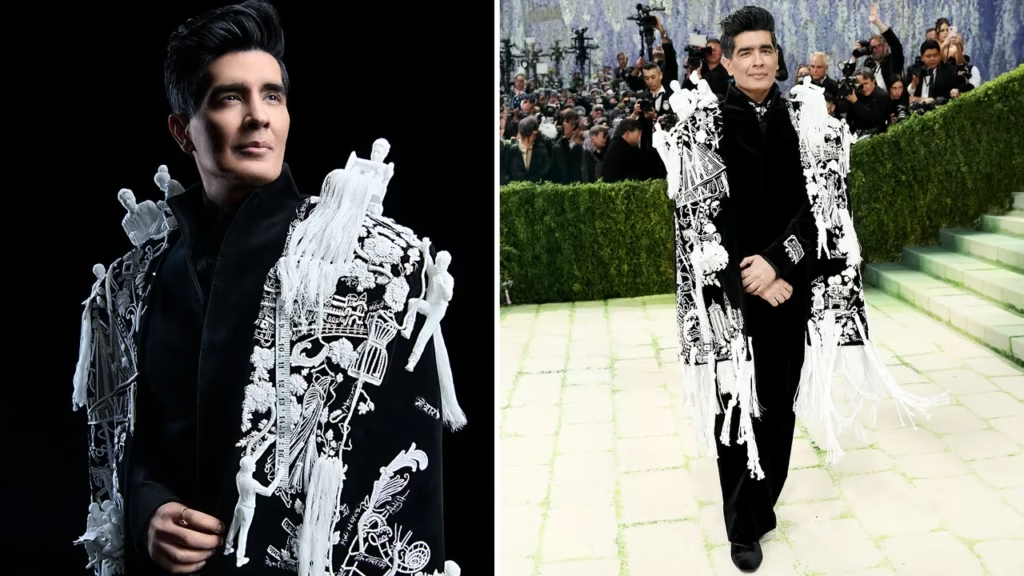
Designer Manish Malhotra himself wore a bandhgala layered with an architectural cape that placed his artisans front and center—literally. The cape was embroidered with the names and signatures of the 50 craftspeople who made it. Not hidden in a label. Not tucked away in an inner lining. Right there on the surface for the whole world to see.
- Hours spent: 960 hours by 50 artisans
- Key techniques used: Dori work, zardozi, chikankari, kasab
- Cultural reference: Mumbai landmarks, artisan tributes, everyday city life
It was a radical choice. Using fashion’s biggest stage not to show off his own design skills but to honor the hands behind the garment. The people who spend their lives perfecting crafts that have existed for centuries. The people who rarely get credit. The people who make Indian fashion what it is.
Diya Mehta Jatia’s Shola and Kanjeevaram Fusion
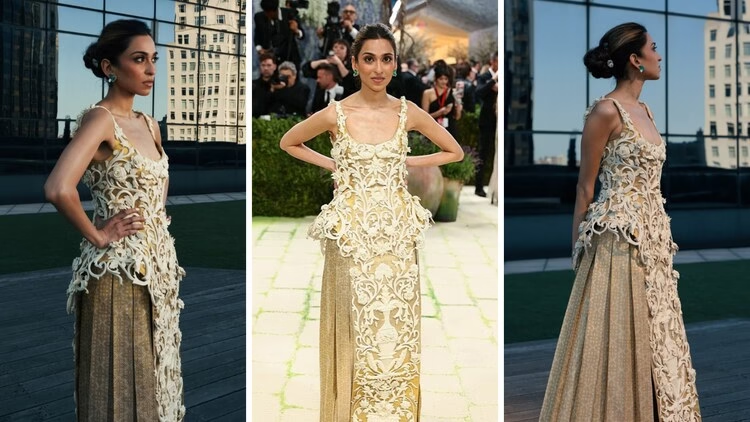
Diya Mehta Jatia brought a rare and little-known craft to the Met Gala 2026 – Bengal’s delicate Shola work. Traditionally called “vegetable ivory,” Shola is an aquatic herb that grows in marshy areas and is used to create intricate decorative objects, often for Bengali weddings and religious ceremonies.
Jatia’s outfit by Mayyur Girotra layered Shola-inspired forms over a rich Kanjeevaram base woven with gold and silver threads. The result was something entirely new – a dialogue between Bengal’s lightweight, delicate craft and Tamil Nadu’s heavy, regal weaving tradition.
- Cultural references: Bengal’s Shola craft, Tamil Nadu’s Kanjeevaram weaving, Baroque architectural influences
This was cross-regional Indian craft at its best. Bringing together two distinct traditions into a single, contemporary silhouette. And showing the world that Indian diversity isn’t a weakness—it’s our greatest strength.
Breaking Down the Crafts and Techniques Behind These Looks
Now let’s talk about the real heroes of this story—not the celebrities, not the designers, but the artisans. Indian Traditional Art isn’t just about the final product you see on the red carpet. It’s about everything that goes into making it. The skills. The patience. The generations of knowledge are passed down through families.
The Key Techniques Used Across All Looks:
- Zardozi – Persian embroidery using fine metal wires for a heavy, opulent look. It’s been practiced in India for over 2,500 years, and some say it came to India from Persia during the Mughal period. The word literally means “gold embroidery.”
- Aari – A sharp chain stitch using a crochet needle. It creates intricate, delicate patterns that look almost like machine embroidery—but it’s all done by hand.
- Kalamkari—Ancient hand-painting or block-printing on textiles using natural dyes and a bamboo pen. The word comes from “kalam” (pen) and “kari” (work). It can take months to create a single piece.
- Shola craft – Delicate work using the soft core of the Shola stem, also known as Indian cork. It’s incredibly lightweight and often used in Bengali wedding decorations and Durga Puja idols.
- Dori, chikankari, kasab—Various intricate embroidery techniques from different Indian regions. Dori uses thick thread to create raised patterns. Chikankari is Lucknow’s famous white-on-white embroidery. Kasab involves fine metal wires.
The numbers are absolutely staggering. Over 5,600 hours for Karan Johar’s cape. Over 3,400 hours for Sudha Reddy’s gown. Over 1,200 hours for Isha Ambani’s saree. And hundreds more for every single look. Combined, these artisans worked for thousands of hours. All for one night.
This isn’t fast fashion. This isn’t mass production. This is a slow, patient, loving craft. The kind that can’t be rushed. The kind that exists because people still care enough to keep it alive.
What This Means for Indian Art on the Global Stage
The Met Gala 2026 wasn’t just a fashion show. It was a declaration. Indian Traditional Art isn’t something to be preserved in museums—it’s alive, evolving, and ready for the world. And this year, the world finally paid attention.
Why This Matters for Indian Art:
- Global recognition – Indian craftsmanship is finally being seen as high art, not just “ethnic wear” or “exotic fashion.” This is a massive shift in how the global fashion industry perceives India.
- Artisan livelihoods – Spotlight on craft means more visibility. More visibility means more work. More work means better livelihoods for the thousands of artisans who keep these traditions alive.
- Cultural pride – Seeing our heritage on a global platform matters. It changes how we see ourselves. It reminds us that our traditions are valuable, beautiful, and world-class.
- Contemporary interpretations – Artists like Subodh Gupta show that Indian art can be modern, conceptual, and globally relevant without losing its Indianness. Stainless steel utensils aren’t just kitchen items—they’re art materials.
- Breaking stereotypes – Indian art isn’t just about “spirituality” and “exoticism.” It’s about craft, skill, labor, and creativity. It belongs in the same conversation as European art, American pop culture, and Japanese design.
As Sudha Reddy beautifully put it, “Indian craftsmanship isn’t a legacy confined to history but a living, breathing art form.” And at the Met Gala 2026, the world finally saw that.
The Role of Artisans – The Unsung Heroes
Let’s take a moment to talk about the people who made all of this possible. The designers got the credit. The celebrities got the photos. The magazines got the headlines. But without the artisans, none of this would have existed.
These are people who’ve spent decades perfecting their craft. Who learned from their parents. Who’ll teach their children? Who work in small workshops with minimal equipment but maximum skill. Who creates things that can’t be replicated by machines?
Who are these artisans?
- Zardozi workers – mostly in Lucknow, Delhi, and Hyderabad. They work with gold and silver threads, often for 12-14 hours a day.
- Kalamkari artists—primarily in Andhra Pradesh and Telangana. They use natural dyes and hand-paint fabrics with bamboo pens.
- Shola craftspeople – Mostly in Bengal. They create incredibly delicate, lightweight objects from aquatic plant stems.
- Aari embroiderers – Found across India but especially in Rajasthan, Gujarat, and Uttar Pradesh. Their needlework looks like chain stitching but is entirely hand-done.
These are the people who worked 5,600 hours for Karan Johar’s cape. Who spent 3,459 hours on Sudha Reddy’s gown? Who stayed up late and woke up early and poured their hearts into every stitch.
And what did they get? In some cases, their names are on a cape. A rare and beautiful gesture from Manish Malhotra. But for the most part? They remain invisible. Uncredited. Unknown.
Frequently Asked Questions
Q1. Who represented India at the Met Gala 2026?
Isha Ambani, Karan Johar, Ananya Birla, Sudha Reddy, Sawai Padmanabh Singh, Princess Gauravi Kumari, Diya Mehta Jatia, and designer Manish Malhotra himself were among the key Indian attendees. Each brought a unique perspective and craft tradition to the red carpet.
Q2. Which designer created Karan Johar’s iconic look?
Manish Malhotra created Karan Johar’s stunning painterly cape, which was inspired by the 19th-century artist Raja Ravi Varma’s works. It took over 5,600 hours and 50 artisans to complete.
Q3. What is Subodh Gupta’s connection to the Met Gala 2026?
Subodh Gupta, one of India’s most celebrated contemporary artists, created a stainless steel mask for Ananya Birla. The mask was made using traditional Indian kitchen utensils like spoons and dabbas—transforming everyday objects into high art.
Q4. How long did it take to create these outfits?
The hours are staggering—5,600+ hours for Karan Johar’s cape, 3,459 hours for Sudha Reddy’s gown, and 1,200+ hours for Isha Ambani’s saree. Some outfits took months of dedicated work by dozens of artisans.
Q5. What was special about Sudha Reddy’s look?
Sudha Reddy’s outfit featured Kalamkari hand-painting inspired by the Tree of Life motif from Andhra Pradesh and Telangana. Her jewelry included a 550-carat tanzanite pendant valued at approximately ₹125 crores.
Q6. What crafts were showcased at the Met Gala 2026?
Zardozi, kalamkari, shola craft, aari, marodi, chikankari, kasab, dabka, and resham—basically every major Indian embroidery and textile technique was represented in some way.
Q7. Why was the Met Gala 2026 significant for Indian art?
It was the first time Indian traditional art was presented as high art rather than exotic decoration. The depth of craft, hours of labor, and cultural storytelling were recognized on the world’s biggest fashion stage.
Q8. What was the theme of the Met Gala 2026?
The theme was “Costume Art” with the dress code “Fashion Is Art.” This meant celebrities had to wear outfits that could genuinely be considered art—not just fashion.
Q9. What was the Met Gala 2026 dress code?
The official dress code was “Fashion Is Art,” encouraging guests to interpret the theme through creative, conceptual, and artistic outfits that pushed boundaries.
Q10. What is the Met Gala’s dress code?
The Met Gala has a different theme and dress code every year. In 2026, it was “Fashion Is Art” under the broader theme “Costume Art.” In past years, themes have included “Camp,” “Heavenly Bodies,” and “China: Through the Looking Glass.”
Final Thoughts – What the Met Gala 2026 Taught Us
So after all of this, what did the Met Gala 2026 actually teach us? Honestly? It taught us that Indian Traditional Art is not just beautiful—it’s powerful. It carries stories of centuries. Techniques passed through generations. A way of seeing the world that’s uniquely Indian.
From the ancient frescoes of Ajanta to the everyday kitchen utensils of Subodh Gupta. From the royal heirlooms of Jaipur to the contemporary couture of Manish Malhotra. India showed up. Not as a novelty. Not as a trend. As a masterclass.
The next time someone asks what Indian art looks like, you don’t have to go to a museum. You don’t have to read a textbook. Just look at that red carpet from May 2026. Every sari, every cape, every mask was telling a story. And honestly? The world was listening.
Also Read:

Leave a Reply