

Hello folks! Have you ever bitten into a Darjeeling tea and felt something special? Or worn a Banarasi silk saree and known it’s the real deal? That’s not just your imagination – that’s the magic of a GI tag.
Today, we’re diving deep into what this little label actually means, why it matters, and how it’s changing lives across India. Whether you’re a curious consumer, an aspiring entrepreneur, or just someone who loves knowing the story behind their favorite products, this blog is for you.
Let’s break down this fascinating concept in the simplest way possible.
What Exactly Is a GI Tag? (The Simple Explanation)
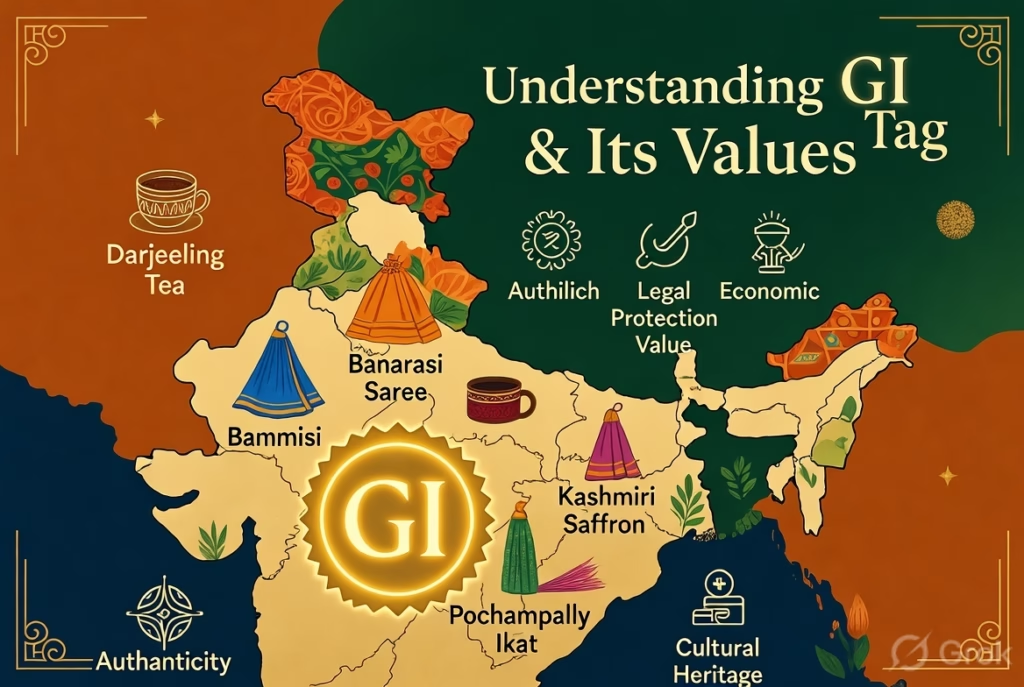
Let’s start with the basics. The GI tag’s full form is “Geographical Indication.” Sounds fancy, right? But here’s the GI tag meaning in plain English—it’s a label that tells you where a product comes from and why that matters. Think of it like a birth certificate for products.
What a GI tag does:
- Protects the product’s name from being misused
- Ensures only authorized producers can use that name
- Guarantees the product’s quality and origin
- Preserves traditional knowledge and skills
- Helps consumers make informed choices
What it DOES NOT do:
- It doesn’t mean the product is better than others (it just means it’s unique)
- It doesn’t give any producer a monopoly (anyone from that region can apply)
- It doesn’t last forever (it needs renewal every 10 years)
The GI Tag Full Form – Breaking Down Every Word
Let’s really understand the GI tag’s full form by looking at each word separately. This will help you grasp why this concept is so powerful.
Geographical – This refers to a specific place. A region, a town, a district, or even a whole state. The product must come from this exact location. For example, Kanchipuram silk comes from Kanchipuram, Tamil Nadu. Period. If it’s made in Mumbai, it’s not Kanchipuram silk – simple as that.
Indication – This is like a signal or a sign. It tells you something important. In this case, it’s indicating that the product has special qualities because of where it came from. It’s like a wink from the product saying, “Hey, I’m special, and here’s why.”
Together—When you put these words together, GI tag meaning becomes crystal clear. It’s a system that says, “This product is from this place, and that place gives it qualities you won’t find anywhere else.” It’s protection, recognition, and identity all rolled into one.
Here’s a simple way to remember:
- Geographical = Place
- Indication = Signal/Sign
- Together = Place-based identity for products
A Brief History of the GI Tag in India
We can’t talk about GI tag in India without understanding how it all started. The concept of protecting regional products isn’t new—farmers and artisans have been doing it for centuries through word of mouth and community reputation. But the legal framework came much later.
The timeline:
- 1999 – India passed the Geographical Indications of Goods (Registration and Protection) Act
- 2003 – The first GI tag was officially registered
- 2004 – Darjeeling Tea became the first product to receive a GI tag in India
- 2015 – India crossed 200 registered products
- 2024 – India now has over 600+ products with GI tag protection
The international connection:
India is a member of the World Trade Organization (WTO), and the GI tag system is recognized globally. This means if a product has a GI tag in India, it’s protected in other countries too. Pretty cool, right?
Why Does a GI Tag Actually Matter? (The Real Value)
Now that we know the GI tag meaning, let’s talk about why anyone should care. Trust me, this goes way beyond just a fancy label.
Value 1: Protection Against Imitation
This is the most obvious but also the most important. Without a GI tag, anyone could copy your product’s name and sell cheap knockoffs. With a GI tag, you have legal power to stop them.
Example: Before the GI tag, anyone could sell “Darjeeling Tea.” Now, only tea grown in specific Darjeeling gardens can use that name. This protects both the producers and the consumers.
Value 2: Premium Pricing
Products with a GI tag can command higher prices. Why? Because consumers know they’re getting the real deal. They’re willing to pay more for authenticity.
Real numbers:
- Darjeeling Tea with GI tag – sells at 2-3x the price of regular tea
- Mysore Silk with GI tag – priced significantly higher than imitation silk
- Alphonso Mango with GI tag – literally sells out every season
Value 3: Boosts Rural Economy
This is where the GI tag in India becomes truly powerful. Most GI products come from rural areas. When these products get recognition and protection, the money stays in the community.
How it helps:
- Artisans get fair wages
- Traditional skills stay alive
- Young people stay in their villages instead of moving to cities
- Tourism increases (people visit to see where their favorite products come from)
Value 4: Preserves Cultural Heritage
Every GI product has a story. It’s not just about the product itself—it’s about centuries of knowledge, skills, and traditions passed down through generations.
Think about it:
- A Pashmina shawl isn’t just wool—it’s the skill of weavers in Kashmir
- A Channapatna toy isn’t just wood—it’s the craftsmanship of artisans in Karnataka
- A Kolhapuri chappal isn’t just leather—it’s the legacy of cobblers in Maharashtra
Value 5: Consumer Trust
As a buyer, when you see a GI tag, you know exactly what you’re getting. No guesswork, no fake claims, no disappointment.
What you get:
- Guaranteed origin
- Assured quality
- Authentic experience
- No middleman deception
Value 6: Export Opportunities
Products with a GI tag have a huge advantage in international markets. They’re seen as premium, authentic, and culturally significant.
Export benefits:
- Easier to enter foreign markets
- Higher profit margins
- International recognition
- Brand value
The GI Tag in India – A Complete List by Category
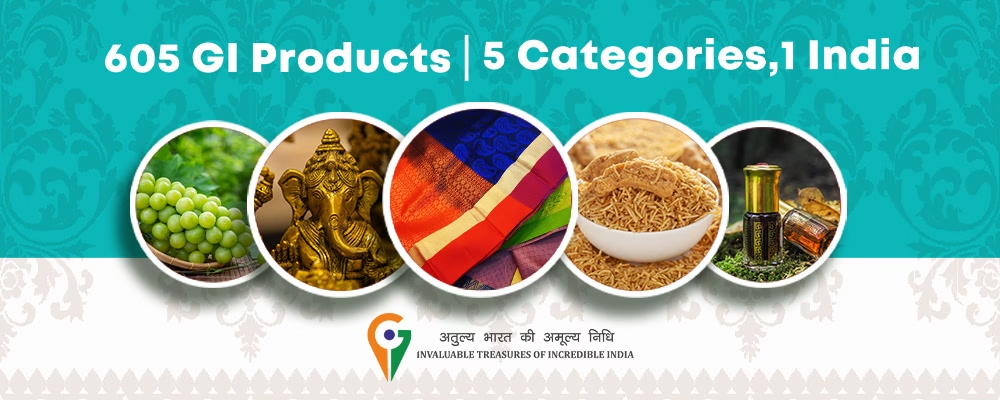
India is incredibly diverse, and that shows in our GI tag products. Let me break down some of the most famous ones so you can see the variety.
Food and Beverages
These are the most popular GI tag products in India because, let’s be honest, everyone loves good food.
| Product | State | Known For |
| Darjeeling Tea | West Bengal | Muscatel flavor, first GI tag |
| Alphonso Mango | Maharashtra | Sweetness, creamy texture |
| Mysore Sandalwood Soap | Karnataka | Aromatic, traditional |
| Nagpur Orange | Maharashtra | Tangy, juicy |
| Kashmir Saffron | Kashmir | Deep red color, strong aroma |
Handicrafts (The Artistic Ones)
These products showcase India’s incredible artistic tradition.
| Product | State | Known For |
|---|---|---|
| Banarasi Silk Saree | Uttar Pradesh | Gold and silver brocade work |
| Kanchipuram Silk Saree | Tamil Nadu | Heavy silk, contrasting borders |
| Pashmina Shawl | Jammu & Kashmir | Superfine wool, hand-weaving |
| Channapatna Toys | Karnataka | Wooden toys, natural colors |
| Madhubani Paintings | Bihar | Earthy colors, mythological themes |
Textiles (The Woven Ones)
India’s textile tradition is legendary, and the GI tag protects many of them.
| Product | State | Known For |
| Mysore Silk | Karnataka | Pure silk, traditional weaving |
| Pochampally Ikat | Telangana | Geometric patterns, dyeing technique |
| Chanderi Saree | Madhya Pradesh | Lightweight, sheer texture |
| Kalamkari Fabric | Andhra Pradesh | Hand-painted or block-printed |
Agricultural Products (The Natural Ones)
These are raw products that come straight from the earth.
| Product | State | Known For |
| Nilgiri Tea | Tamil Nadu | Aromatic, dark color |
| Mysore Rose Onion | Karnataka | Small size, strong flavor |
| Mahanandi Panchagiri | Andhra Pradesh | Medicinal, aromatic |
| Himalayan Pink Salt | Himachal Pradesh | Mineral-rich, pink color |
Handicrafts (More Jewels)
There are so many that I had to create another section.
| Product | State | Known For |
| Kondapalli Toys | Andhra Pradesh | Wooden toys, bright colors |
| Nirmal Furniture | Telangana | Carved wood, traditional designs |
| Thanjavur Paintings | Tamil Nadu | Gold foil work, temple themes |
How Does a Product Get a GI Tag in India?
Getting a GI tag isn’t easy – and that’s the whole point. The system is designed to ensure only genuinely unique products get recognized. Let me walk you through the entire process step by step.
Step 1: Filing the Application
The application must be filed by a group of producers, not an individual. This is a crucial point—the GI tag is a community right, not a personal one.
Who can apply:
- A cooperative society representing producers
- A group of producers or manufacturers
- A trade association or organization
- A government agency or authority
Required documents:
- Description of the product (what it is, how it’s made)
- Geographical map showing the specific production area
- Details about the product’s unique qualities
- Proof of historical production in that area
- A specimen of the label or packaging
Step 2: The Examination Process
Once the application is submitted, the GI Registry examines it carefully. This is where they verify everything.
What they check:
- Whether the product genuinely originates from the claimed region
- Whether the product has unique qualities linked to that region
- Whether there’s sufficient historical evidence of production
- Whether the application meets all legal requirements
The examination timeline:
- Applications are examined within 30 days of receipt
- If anything is missing, the applicant gets a chance to correct it
- The whole examination process usually takes 3-6 months
Step 3: Publication in the GI Journal
If the examination is successful, the proposed GI tag is published in the Geographical Indications Journal. This is where the public gets a chance to object.
The publication includes:
- The product name
- The geographical area
- The unique qualities claimed
- The class of goods (tea, silk, handicrafts, etc.)
Who can object:
- Any person who claims the registration is wrong
- Any producer who thinks they’ll be affected
- Any government agency with relevant information
Step 4: The Opposition Period
After publication, there’s a window of 3 months where anyone can raise an objection. This is a safeguard to prevent incorrect registrations.
What happens if someone objects:
- The objection is examined by the GI Registry
- Both sides present their evidence
- The Registry makes a final decision
- This process can take several months
If no one objects:
- The application moves forward smoothly
- Registration is typically quicker
- The product gets its GI tag faster
Step 5: The Registration Certificate
Once all objections are cleared (or none are raised), the GI tag is officially registered. The product gets its certificate of registration.
What the certificate contains:
- The product name
- The registration number
- The date of registration
- The geographical area
- The authorized users
The final step:
- The product is now officially a GI tag product
- The registration is valid for 10 years
- The product is published in the GI Registry
- Producers can now use the GI tag label
Step 6: Renewal Every 10 Years
A GI tag doesn’t last forever. Every 10 years, the registration must be renewed.
The renewal process:
- Apply for renewal within the specified time
- Show that the product still meets all requirements
- Pay the renewal fees
- Get the registration extended for another 10 years
What happens if you don’t renew:
- The GI tag expires
- The product loses protection
- Anyone can start using the name again
- All the hard work goes to waste
The Complete Timeline
| Stage | Duration |
| Application filing | 1-2 months (preparation time) |
| Examination | 3-6 months |
| Publication | 1-2 months |
| Opposition period | 3 months (if no objections) |
| Registration | 1-2 months |
| Total | Approximately 1-2 years |
Fees involved:
- Application fee: ₹5,000 – ₹20,000 (depending on the applicant type)
- Renewal fee: Similar to the application fee
- Legal fees: Additional if you hire a lawyer
- Documentation costs: Varies by product
Key points to remember:
- The process is rigorous for a reason—it protects authenticity
- Having a lawyer or consultant helps tremendously
- Government schemes can subsidize costs for small producers
- The GI tag is worth the effort—the benefits are enormous
GI Tag vs. Other Labels—What’s the Difference?
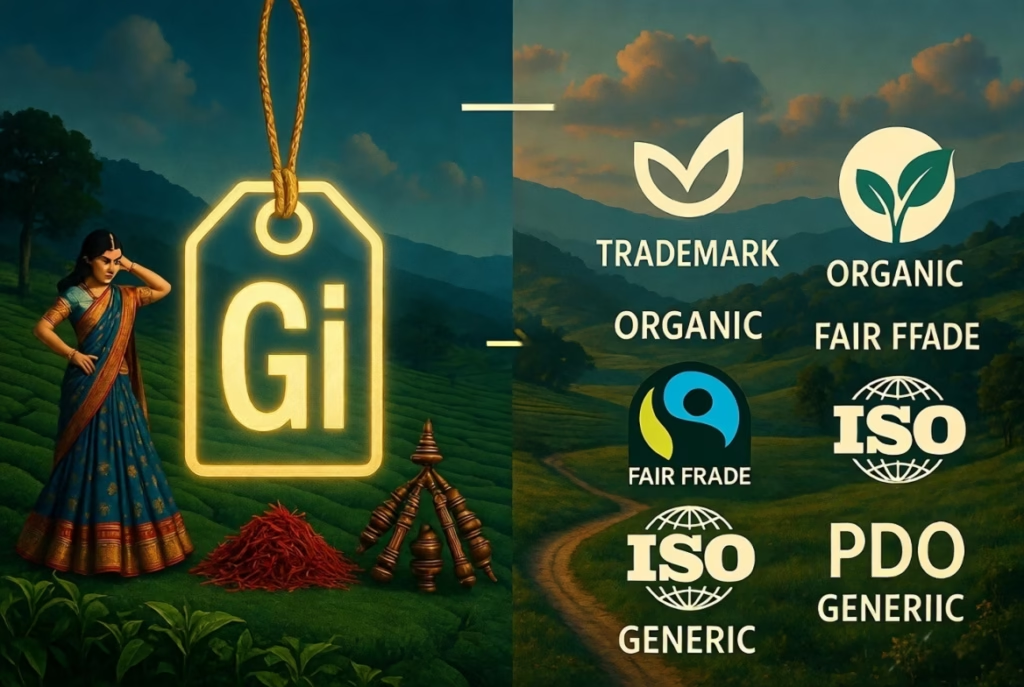
Many people confuse GI tags with other labels. Let’s clear that up once and for all with detailed explanations and a comprehensive table.
1. GI Tag vs Trademark—The Detailed Comparison
This is the most common confusion. People often think a GI tag and a trademark are the same thing. They’re not, and here’s why.
| Aspect | GI Tag | Trademark |
| Who owns it | Everyone in the region | One company or individual |
| Can it be sold/assigned | No, permanently tied to the region | Yes, it can be sold or licensed |
| Who can use it | Any authorized producer from that region | Only the owner or licensees |
| What it protects | Heritage, tradition, geographical origin | Brand identity and reputation |
| Validity | 10 years (renewable) | 10 years (renewable indefinitely) |
| Applicant | Group of producers | Individual or company |
| Example | Darjeeling Tea | Tata Tea |
| Protection against | Misuse of geographical name | Imitation of brand name |
2. GI Tag vs Patent—The Detailed Comparison
This is another area where people get confused. A patent and a GI tag seem similar because both protect intellectual property, but they’re fundamentally different.
| Aspect | GI Tag | Patent |
| What it protects | Traditional knowledge and products | New inventions and processes |
| Who can apply | Group of producers | Individual or company |
| Novelty required | No, it must have been historically used | Yes, it must be new and non-obvious |
| Validity | 10 years (renewable) | 20 years (non-renewable) |
| What’s protected | The name and origin | The invention or process itself |
| Example | Kanchipuram silk | A new silk-weaving machine |
| Purpose | Preserve heritage and tradition | Encourage innovation |
| Cost | Lower fees, group applicants | Higher fees, complex applications |
3. GI Tag vs Copyright—The Detailed Comparison
Copyright is another label that people sometimes confuse with a GI tag. Here’s how they differ.
What they protect:
Copyright protects original creative works—books, music, paintings, and movies. A GI tag protects products that are tied to a geographical location. You can copyright a painting about Darjeeling Tea, but you can’t copyright the tea itself.
| Aspect | GI Tag | Copyright |
| What it protects | Geographical origin and traditional products | Original creative works |
| Who owns it | The community/region | The creator or their estate |
| Duration | 10 years (renewable) | Lifetime + 60-70 years |
| What’s protected | The product name and origin | The specific expression of an idea |
| Example | Mysore silk | A book about Mysore silk |
| Registration required | Yes | No, automatic upon creation |
| Transferable | No | Yes, can be sold or licensed |
4. GI Tag vs Design Registration – The Detailed Comparison
Design registration is another protection mechanism that people sometimes confuse with a GI tag.
What they protect:
Design registration protects the visual appearance of a product – its shape, pattern, or ornamentation. A GI tag protects the product’s identity and origin. You can register the design of a Mysore silk saree border, but only the GI tag protects the name “Mysore Silk.”
| Aspect | GI Tag | Design Registration |
| What it protects | Geographical origin and name | Visual appearance and shape |
| Who can apply | Group of producers | Individual or company |
| Duration | 10 years (renewable) | 15 years (non-renewable) |
| Protection | Product name and origin | Aesthetic design features |
| Example | Pashmina shawl | A specific pattern on a shawl |
| Renewal | Yes, every 10 years | No renewal available |
The bottom line:
- GI tag = This product comes from this place and is special because of it
- Trademark = This brand makes this product
- Patent = This new invention is unique
- Copyright = This creative work is original
- Design Registration = This product looks this way
The Economic Value of GI Tags – Real Numbers
Let’s look at some real numbers because this is where the GI tag becomes truly powerful.
Darjeeling Tea:
- Before GI: struggling with fake products
- After GI, exports increased by 40%
- Annual revenue: over ₹500 crores
- Employment: supports over 50,000 workers
Banarasi Silk Saree:
- Before GI: cheap imitations flooded the market
- After GI: genuine sales increased by 35%
- Annual revenue: over ₹2,000 crores
- Employment: supports over 100,000 weavers
Kashmir Pashmina:
- Before GI: machine-made copies hurt artisans
- After GI: exports grew significantly
- Annual revenue: over ₹1,000 crores
- Employment: supports over 100,000 artisans
The bigger picture:
- India’s GI tag products collectively contribute over ₹15,000 crores to the economy
- Over 50 lakh (5 million) people depend on GI products for their livelihood
- GI tag in India has increased by 500% in the last 10 years
Challenges with GI Tags – The Real Problems
Let’s be honest – it’s not all sunshine and roses. The GI tag system has its problems, and pretending they don’t exist doesn’t help anyone.
Challenge 1: Limited Awareness
Many artisans and producers don’t even know what a GI tag is. They don’t know they can apply for it, and they don’t understand how it can help them.
Solution: More awareness campaigns at the village level. Simple workshops in local languages.
Challenge 2: Cost of Registration
Getting a GI tag isn’t cheap. The legal fees, documentation costs, and application fees can be too high for small producer groups.
Solution: Government subsidies and lower fees for small producers. Many states now offer free registration support.
Challenge 3: Quality Control
Once a product has a GI tag, maintaining quality is a challenge. Some producers cut corners, and that hurts the whole product’s reputation.
Solution: Regular inspections and strict penalties for quality violations.
Challenge 4: Fake Products Still Exist
Despite the legal protection, fake products still flood the market. Cheap copies of GI products are everywhere.
Solution: Better enforcement, more raids on fake sellers, and consumer education.
Challenge 5: Limited International Protection
While the GI tag is recognized globally, enforcement in other countries is still weak. Fake “Darjeeling Tea” still appears in many countries.
Solution: International cooperation and bilateral agreements for GI protection.
Challenge 6: Renewal Issues
Many products lose their GI tag because producers forget to renew on time. Every 10 years, they have to apply again.
Solution: Automated reminders and simplified renewal processes.
The Future of GI Tags in India
The future looks bright for GI tags in India. More products are being registered, awareness is growing, and the government is providing more support.
What’s happening now:
- More than 600 products have GI tag protection
- New products are being added every month
- Technology is helping with tracking and authentication
- QR codes are being added to products for easy verification
What’s coming next:
- Better international cooperation for GI protection
- More digital tools for consumers
- Improved awareness campaigns
- Simplified registration process
- More exports of GI products
The vision:
Every authentic Indian product should have a GI tag. Every artisan should know their rights. Every consumer should feel confident in their purchase. That’s the future we’re working toward.
Final Thoughts – Why This Matters to You
So, here’s the thing. The GI tag isn’t some complicated legal concept meant for lawyers and policymakers. It’s for you, me, and everyone who loves authentic products.
It’s about knowing where your favorite tea comes from, recognizing the hard work of weavers in Banaras, and respecting centuries of tradition.
FAQs
Q1. What is the full form of GI tag?
The GI tag’s full form is “Geographical Indication.” It’s a label given to products that come from a specific geographical region and have unique qualities or a reputation linked to that place. Examples include Darjeeling Tea and Banarasi Silk.
Q2. What does “GI tag” mean in simple words?
GI tag meaning in simple words—it’s a stamp of authenticity that tells you where a product comes from and why it’s special. It protects the product’s name from being misused and guarantees that you’re buying the real, traditional item from its original region.
Q3. How many GI tags are there in India?
As of 2024, there are over 600 products with a GI tag in India. These include food items like Darjeeling Tea and Alphonso Mango, textiles like Banarasi Silk and Pashmina, and handicrafts like Channapatna Toys and Madhubani Paintings.
Q4. Who can apply for a GI tag in India?
Only a group of producers can apply for a GI tag in India, not an individual. This includes cooperative societies, associations of artisans, trade organizations, or government agencies representing producers from a specific region who make a traditional product.
Q5. How long does a GI tag last?
A GI tag lasts for 10 years from the date of registration. After that, it must be renewed to continue the protection. As long as the product still meets the quality standards and comes from the same region, the GI tag can be renewed indefinitely.
Also Read:


Leave a Reply