

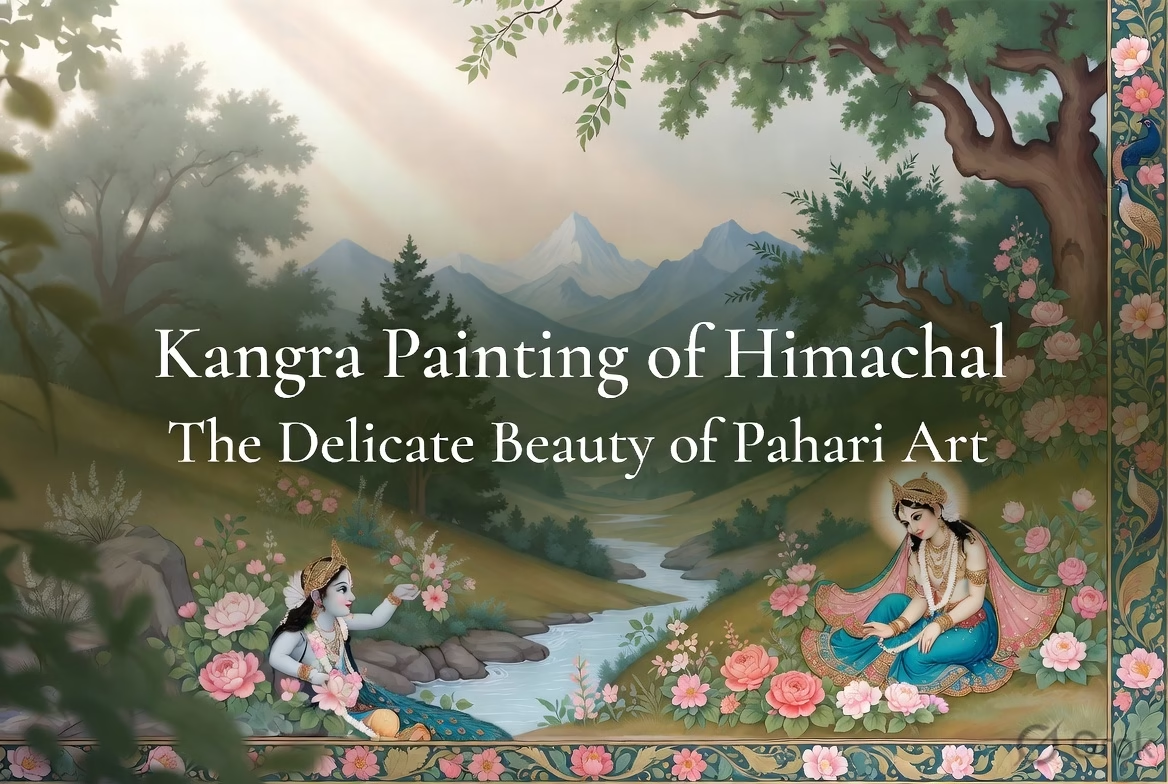
Hello folks! Have you ever seen a painting so delicate that it feels like poetry on paper? So vibrant that the colors seem to glow after centuries?
That’s the magic of Kangra painting. Nestled in the lush green hills of Himachal Pradesh, this art form is one of India’s most treasured cultural gems.
Today, we’re diving deep into its rich history, intricate techniques, and the living tradition that makes Himachal art truly unique.
What Is Kangra Painting?
Kangra painting is a style of Indian miniature painting that flourished in the Himalayan foothills from the 18th century onwards. It’s known for its lyrical beauty, naturalistic landscapes, and exquisite depictions of romance and devotion.
The art reached its zenith under Maharaja Sansar Chand (reigned 1775-1823), who turned Kangra into the most important center of Pahari painting.
The term “Kangra painting” was first coined by John Lockwood Kipling, an art connoisseur and the first principal of the Mayo School of Art in Lahore.
Today, the Kangra Art Museum in Dharamshala preserves this heritage, housing over 1,500 artifacts, including Kangra miniatures, sculptures, and textiles.
History of Kangra Painting – A Timeline
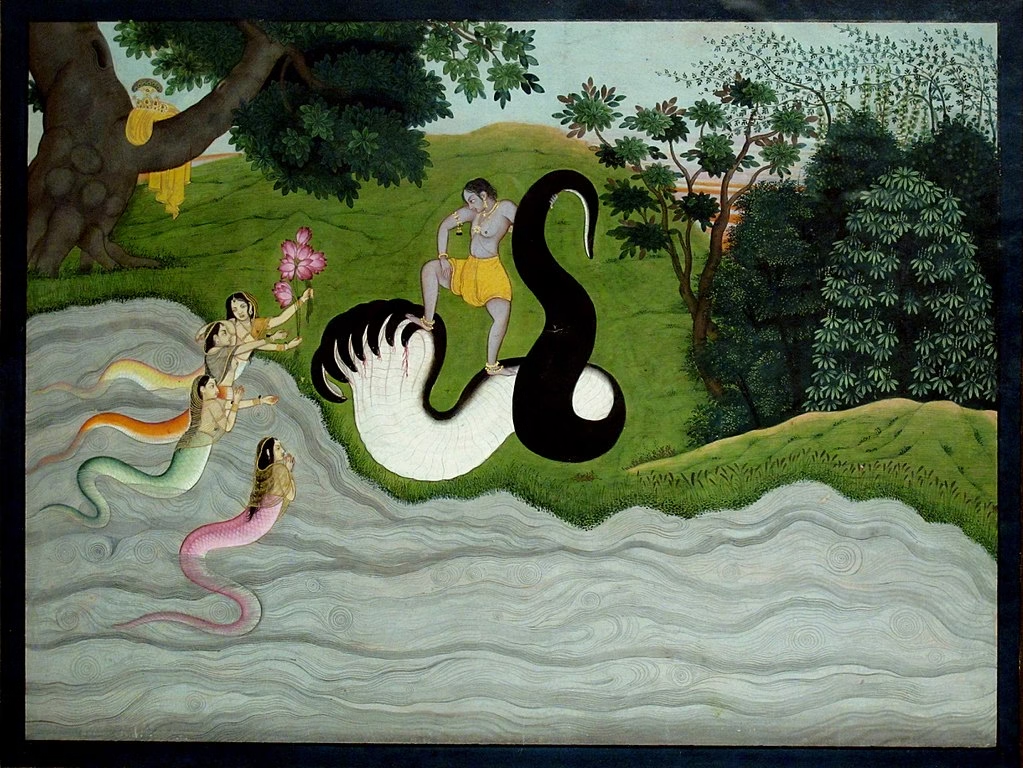
The story of Kangra painting is a fascinating journey of migration, innovation, and royal patronage.
Early 18th Century – The Guler Beginnings
The Kangra art style originated in Guler State, a small hill princely state in the Lower Himalayas. A family of Kashmiri painters trained in the Mughal painting style sought shelter at the court of Raja Dalip Singh (r. 1695–1741) of Guler.
1710-1778 – The Nainsukh Era
Nainsukh, one of the most celebrated artists of the Pahari school, introduced a distinctive style that combined Mughal elements with personal innovations. His brother Manaku was also a master painter who contributed significantly to the style.
1744-1773 – Raja Govardhan Chand’s Patronage
Raja Govardhan Chand of Guler gave asylum to refugee artists trained in the Mughal style. In the inspiring environment of the Punjab Himalayas, the Mughal style with its sensitive naturalism blossomed into the Kangra style.
1776-1823 – The Golden Age Under Sansar Chand
This was the zenith of Kangra painting. Maharaja Sansar Chand Katoch, a generous patron and ardent devotee of Krishna, commissioned artists to paint subjects based on the loves and life of Krishna.
Masterpieces created during this period:
- Illustrations of Jayadeva’s Gita Govinda
- Bihari’s Sat Sai
- Bhagavata Purana
- The romantic tale of Nala and Damayanti
- Keshav Das’s Raskapriya and Kavipriya
1780 – The Term “Kangra Qalam” Is Born
It was in 1780, when the young Guler school entered Kangra that it came to be known as the Kangra Qalam. The idiom “Kangra ki qalam” was first used in 1887 by Lockwood Kipling.
1905 – The Earthquake and Decline
In 1905, an earthquake killed most of the artists practicing this art form. This cataclysmic event led to a severe decline in the tradition.
2012 – GI Tag Recognition
The Kangra painting style was registered under the Geographical Indication of Goods (Registration and Protection) Act, 1999 on 2 April 2012.
The Key Figures of Kangra Painting
Several master artists played important roles in the development and proliferation of Kangra painting between the 18th and 19th centuries.
Pandit Seu
The patriarch of a family of painters from Guler state. He was a carpenter by training but became a master painter. His sons Nainsukh and Manaku carried forward his legacy.
Nainsukh (1710–1778)
One of the most celebrated artists of the Pahari school. He introduced a distinctive style that combined Mughal elements with personal innovations. His work is known for its naturalism, delicate lines, and psychological depth. In 2024, a Nainsukh masterpiece dating back to 1750 was sold for ₹15 crore at a Mumbai auction.
Manaku
Nainsukh’s brother and another master painter. Together, they significantly advanced the artistry of Kangra paintings. Their father, Pandit Seu, was also a renowned painter.
Khushala, Kishan Lal, Basia, Purkhoo, and Fatoo
These artists were in the employ of Maharaja Sansar Chand and his son Ramdyal. They are mentioned as artists who contributed to the golden age of Kangra art. A painting by Purkhu from the ‘Kedara Kalpa’ series was at the center of a recent controversy regarding authenticity.
Mola Ram
A painter who represented the Garhwal region and is considered part of the Pahari painting tradition.
What Makes Kangra Painting Unique?
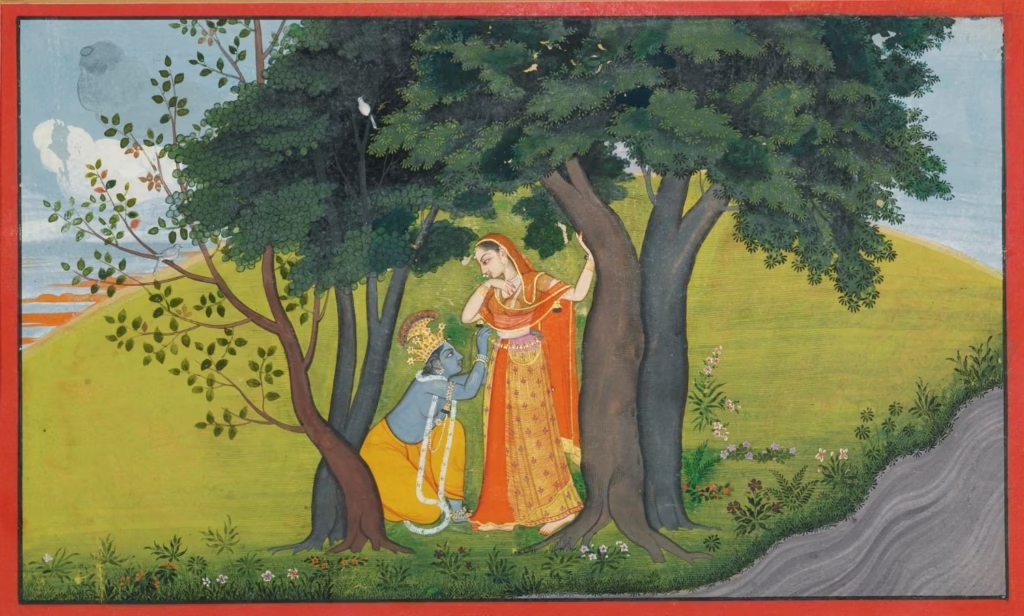
Kangra painting is distinct from other miniature styles for several reasons:
1. Naturalistic Landscapes
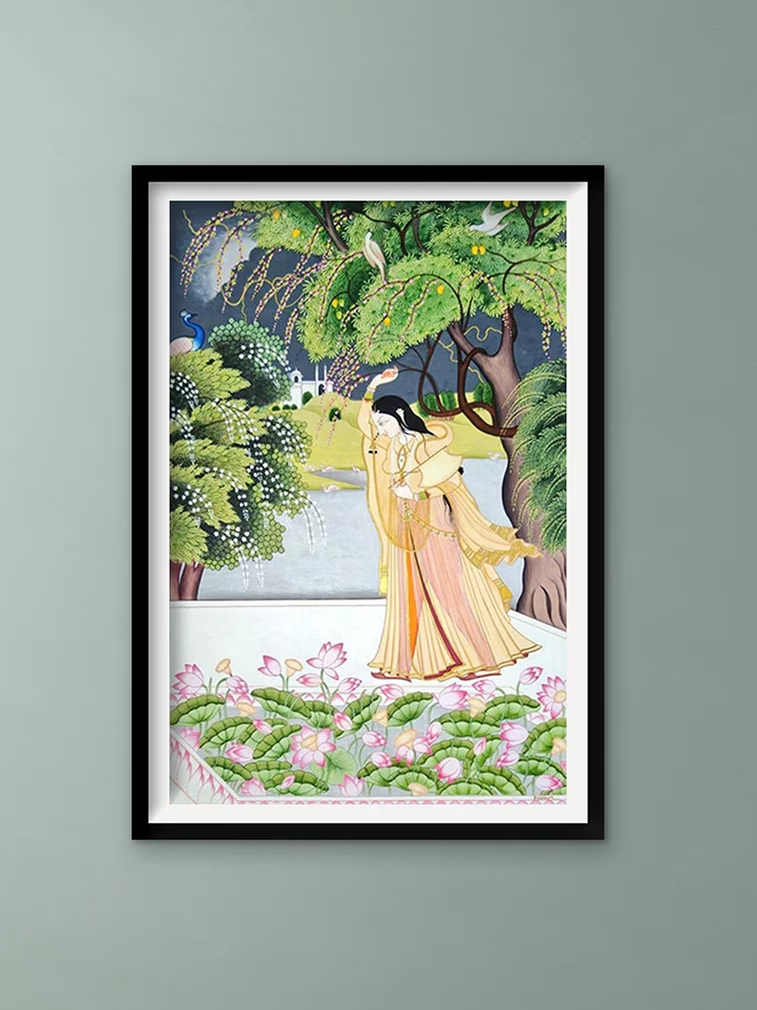
One striking feature of Kangra paintings is the verdant greenery depicted. Foliage is vast and varied, using multiple shades of green. Flowering plants, creepers, leafless trees, rivulets, and brooks are recurrent images.
2. Delicate and Lyrical Lines
The Guler-Kangra art is the art of drawing. The drawing is precise and fluid, lyrical and naturalistic. Faces are well modeled and shaded so judiciously that they possess almost porcelain-like delicacy.
3. Feminine Beauty
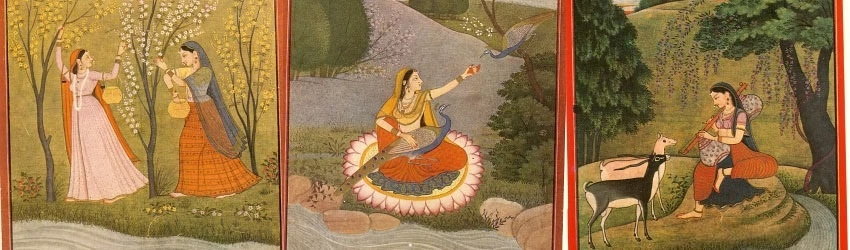
Kangra paintings depict feminine charm in a very graceful manner. The female figures are depicted as graceful and beautiful idealizations, handled by the painters with utmost delicacy and tenderness.
4. Subdued and Fresh Colors
Unlike the bold, intense colors of Basohli paintings, Kangra paintings use subdued and fresh colors. The colors possess an enamel-like luster that remains brilliant even after centuries.
5. Natural Themes and Folk Motifs
The artists developed a penchant for painting folk motifs. Women going to the village well carrying pitchers are a regular feature of Kangra paintings – familiar scenes from the village life of Kangra in the 18th century.
Types of Kangra Paintings
Kangra painting encompasses several distinct types based on subject matter and style.
1. Krishna-Lila Paintings
The most common subject matter, depicting scenes of Krishna dancing in lush woodlands with Radha and the gopis. These are often based on the Gita Govinda and Bhagavata Purana.
2. Ragamala Series
Paintings depicting the six seasons and modes of music, where the theme of love is expressed in a lyrical style full of rhythm, grace, and beauty.
3. Portraits
Portraits of hill Rajas and their families offer a glimpse into their character, likes, and attributes. These are rare and highly valued.
4. Nayak-Nayika Depictions
Illustrations inspired by Hindi poets of the riti genre, depicting various kinds of nayikas (heroines) and their romantic encounters.
5. Bhagavata Purana Illustrations
Scenes from the life of young Krishna, often set against the Brindavan forest or river Yamuna. These paintings show everyday life in the villages of Kangra as artists saw it.
The Making Process – From Raw Materials to Masterpiece
Creating a genuine Kangra painting is a painstaking process that requires immense skill and patience. Here’s a detailed breakdown:
Step 1: The Canvas (Wasli)
The base for Kangra paintings was wasli—handcrafted paper specially prepared for miniature painting. The paper is made from:
- Pine needles (bio-waste of pine trees)
- Cotton or silk fibers
- The paper is coated with gum arabic and white clay to create a smooth, non-porous surface.
Time investment: Preparing the wasli takes several days to weeks.
Step 2: The Outline
Artists sketch outlines using:
- Charcoal or pencil for initial rough drawings
- Black ink for refining the outline
- The drawing is precise and fluid, forming the foundation of the final work.
Step 3: Preparing the Colors
This is perhaps the most time-consuming part. Kangra painters use 19 natural colors, typically associated with this art form.
Where colors come from:
- Yellow, red, and blue – made from minerals, vegetables, and stones
- Gold – used to add shine and metallic effects
- Natural poison – prepared from smoke that gathers at the roof of religious places where holy fire burns continuously. This protects the painting from decay.
Time investment: It takes about a year to create the required colors as they can only be generated from natural sources existing at particular times of the year.
Step 4: The Brushes
The delicate lines of Kangra paintings are achieved using:
- Squirrel hair brushes – the finest and most commonly used
- Turtle dove feathers – used for the most intricate details
The brushes are made with extreme care. The hair from the wings of local birds is specially prepared.
Step 5: Filling the Colors
Colors are applied in layers. The painters use pure colors like yellow, red, and blue, and these have retained their brilliance even after two hundred years.
The layering process:
- Colors are mixed with gum arabic (adhesive) to convert them into liquid form
- Each layer is allowed to dry before the next is applied
- This creates depth and richness in the final work
Step 6: Shading and Detailing
Once the base colors are filled, artists add shading and details:
- Faces are modeled and shaded so judiciously that they possess almost porcelain-like delicacy
- Jewelry, clothing patterns, and other details are added with fine brushes
Step 7: Face Decoration
The final step is face decoration. This is the most delicate part of the process, giving the figures their characteristic grace and expression.
Step 8: Burnishing (Optional)
Some paintings are burnished on glass or stone to give them a polished finish.
Time Investment and Costs
Creating a genuine Kangra painting requires substantial time :
| Size/Difficulty | Time Required |
| Small piece | Several weeks |
| Medium piece | 1-3 months |
| Large piece | 6 months to 1 year |
Each painting has tremendous detail – distinct leaves on trees, individual grass fronds, and intricate jewelry patterns.
How to Identify Genuine Kangra Paintings vs. Fakes
The market has many fake imprints sold at throwaway prices. Here’s how to spot the real thing:
Genuine Kangra Painting
| Aspect | Genuine | Fake/Commercial |
| Materials | Natural colors from stones and plants | Common paints and watercolors |
| Paper | Handmade acid-free wasli | Machine-made paper |
| Brushes | Squirrel hair or turtle dove feathers | Synthetic brushes |
| Time taken | Weeks to months | Hours to days |
| Detail | Tremendous detail – individual leaves, grass fronds | Minimal detail, mass-produced look |
| Colors | Enamel-like luster, natural | Flat, synthetic |
| Gold/silver | Real gold used for metallic effects | Imitation gold or none |
Red Flags to Watch For
- Very low prices – If it looks too cheap, it’s probably fake
- Mass-produced copies – Multiple identical pieces available
- Lack of detail – No individual grass blades or leaf veins
- Wrong paper – Not made from pine needles or wasli
Where to Buy Genuine Kangra Paintings
Here’s where you can find authentic Kangra painting pieces:
Government and Museum Sources
- Maharaja Sansar Chand Museum, Kangra Fort – founded by the former Royal Family of Kangra
- Kangra Art Museum, Dharamshala – houses over 1,500 artefacts
- DC Handicrafts (Development Commissioner Handicrafts) – government emporiums
NGOs and Training Centers
- Kangra Arts Promotion Society (KAPS) – runs a school to train young artists and a workshop where genuine Kangra paintings are made on traditional handmade paper using only mineral and vegetable colors
- Training centre at Rait village – started by the Himachal Pradesh government in 1973
Direct from Artists
- Contact established artists mentioned in the community
- Padma Shri awardee Vijay Sharma is a renowned Pahari miniature artist
- Look for artists who are descendants of the original master painters
What to Look For When Buying
- GI tag certification (Geographical Indication registered in 2012)
- Documentation of authenticity from the artist
- Natural materials – colors, paper, and brushes
- Real gold used for metallic effects
- Proper provenance (history of ownership)
Market Prices and Statistics
Auction Prices
The market for Kangra painting has seen record-breaking prices :
| Painting | Year Created | Sale Year | Price (INR) | Price (USD) | Auction House |
| Nainsukh’s masterpiece | c. 1750 | 2024 | ₹15 crore | ~$1.8M | Pundole’s, Mumbai |
| Unknown artist (Gita Govinda series) | c. 1775 | 2024 | ₹16 crore | ~$2M | Pundole’s, Mumbai |
Total for two paintings: ₹31 crore
These record prices surprised the art world and attracted the attention of collectors and art lovers alike.
International Auction Prices
| Painting | Auction House | Year | Price (USD) |
| Gita Govinda illustration (Lambargaon series) | Christie’s | 2019 | $40,250 |
| Kangra School scene (Radha-Krishna) | Helios Auctions | 2025 | Estimated $400-$600 |
Factors Affecting Market Price
According to Vijay Sharma, evaluating paintings depends on :
- Rarity of the artwork
- Fame of the artist (Nainsukh’s works command premium prices)
- Condition and preservation of the piece
- Subject matter and historical significance
- Provenance (ownership history)
The Living Tradition and Preservation Efforts
GI Protection
The GI tag registered in 2012 protects Kangra paintings under the Intellectual Property Act of 1999. This reserves the rights for artists from the designated region, making it illegal for outsiders to produce replicas.
Project Srijan
The Himachal Pradesh government has launched Project Srijan, an initiative to preserve and promote traditional Kangra art by digitizing and making it accessible online, thereby broadening its reach.
Training Centers
- Training centre at Rait village (established 1973) – run by Chandu Lal Raina, a descendant of Pandit Seu and Nainsukh, training a total of 35 artists
- Kangra Arts Promotion Society – runs a school to train young boys and girls
Challenges
Despite these efforts, Kangra painting is described as being on the verge of extinction. Challenges include:
- High costs of authentic paintings
- Digital paintings gaining popularity over hand-painted art
- Lack of government support from both Himachal Pradesh and central governments
- Only few artists practicing Kangra art in its true form
The Living Folk Art: Bangdwari
Before we end, here’s something fascinating. There’s a living folk art tradition called Bangdwari in Kangra.
Rural women continue to paint their homes with natural colors during auspicious occasions like weddings and housewarming ceremonies.
This tradition is closely connected to the Kangra painting tradition and keeps the spirit of Himachal art alive in everyday life.
FAQs
Q1. What is Kangra painting?
Kangra painting is a style of Indian miniature painting that originated in the Himalayan foothills. It’s known for its delicate lines, naturalistic landscapes, and romantic themes from the love story of Radha and Krishna.
Q2. When did Kangra painting flourish?
The style flourished from about 1770 to almost the end of the 19th century, with the finest work painted around 1775-1820. It reached its zenith under Maharaja Sansar Chand (reigned 1775-1823).
Q3. Where is the Kangra Art Museum located?
The Kangra Art Museum is located in Dharamshala, Himachal Pradesh, adjoining the Kangra Fort. It was founded by the former Royal Family of Kangra.
Q4. What themes are common in Kangra paintings?
The main theme is Shringara rasa (the sentiment of love). Common subjects include the love story of Radha and Krishna, illustrations of the Gita Govinda, Bhagavata Purana, Nayak-Nayika depictions, and Baramasa (seasons).
Q5. What makes Kangra painting unique?
Kangra paintings are known for their lyrical naturalism, delicate and curvilinear lines, subdued and fresh colors, lush greenery, and graceful depiction of feminine beauty. They are painted using natural colors and fine brushes made of squirrel hair.
Q6. What is the GI tag for Kangra painting?
The Kangra painting style was registered under the Geographical Indication of Goods (Registration and Protection) Act, 1999 on 2 April 2012.
Q7. Who were the main artists of Kangra painting?
Key artists include Pandit Seu, Nainsukh, Manaku, Khushala, Kishan Lal, Basia, Purkhoo, Fatoo, and Mola Ram. Nainsukh is the most celebrated, with his works fetching record prices at auction.
Q8. How much does a genuine Kangra painting cost?
Prices range from $400-$600 for smaller pieces at international auctions to over ₹15 crore for masterpieces by celebrated artists like Nainsukh.
Q9. Where can I buy authentic Kangra paintings?
You can buy from the Maharaja Sansar Chand Museum, Kangra Art Museum, DC Handicrafts emporiums, or directly from the Kangra Arts Promotion Society. Always check for GI certification.
Q10. What materials are used in Kangra paintings?
Artists use natural materials including wasli (handmade paper), 19 natural colors made from minerals and plants, real gold for metallic effects, squirrel hair brushes, and natural poison for preservation
Also Read
Beadwork Boho Bags from Himachal

Leave a Reply