

Hello folks! What if your handmade art could reach customers far beyond your local market? That’s exactly what Etsy makes possible.
A hand-block printer from Rajasthan. A Madhubani artist from Bihar. Or a Warli painter from Maharashtra. Today, they can all sell on Etsy and connect with buyers across the world.
Etsy has opened global doors for Indian artisans. It brings traditional crafts to people who truly value handmade work. More than 650,000 products are listed by Indian sellers on Etsy, and buyers worldwide have purchased over 40 lakh personalized products through the platform.
The best part? You don’t need a big shop or a large investment. You need quality products, a strong story, and the right online presence.
If you create folk art, handmade paintings, or traditional crafts, this could be your opportunity to turn your passion into a growing business.
Let’s see how you can sell on Etsy and take your art from your workshop to customers around the world.
Why Etsy India Is the Right Platform for Folk Art
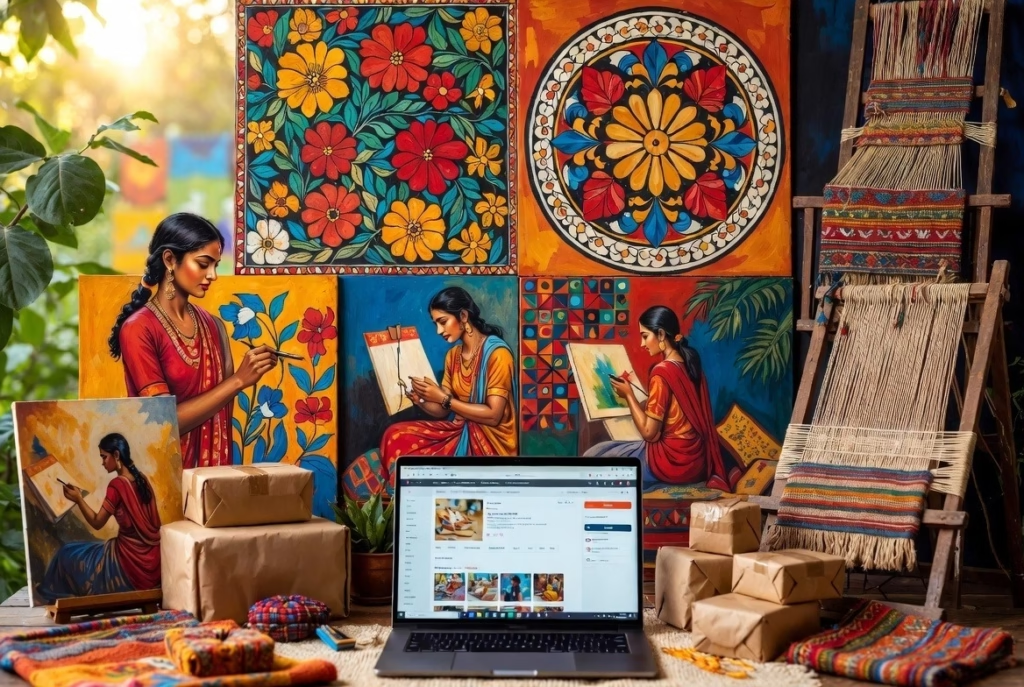
Etsy India has emerged as a game-changer for artisans who want to take their craft global. The platform offers something unique – a community of buyers who actively seek handmade, vintage, and unique items.
Unlike other marketplaces where you compete on price alone, Etsy buyers value authenticity, story, and craftsmanship.
Key reasons why Etsy works for folk art sellers:
- Ready-made global audience – Millions of buyers worldwide actively search for handmade products. Etsy brings them to your shop.
- Low entry barrier – No big upfront investment or technical expertise needed. Setting up a shop takes less than 10 minutes.
- Niche focus – Etsy is built for creative goods. Your folk art won’t get lost among mass-produced items like on Amazon.
- Personalized engagement – You can connect directly with buyers, tell your story, and build lasting relationships.
- Mobile-friendly shopping – Buyers can browse and purchase seamlessly on their phones, making it easier for you to get sales anytime.
India is now one of Etsy’s fastest-growing seller bases. And with the recent resumption of new seller onboarding (which was paused for over a year until June 2025), this is the perfect time to start your journey.
How to Sell on Etsy from India – Step by Step
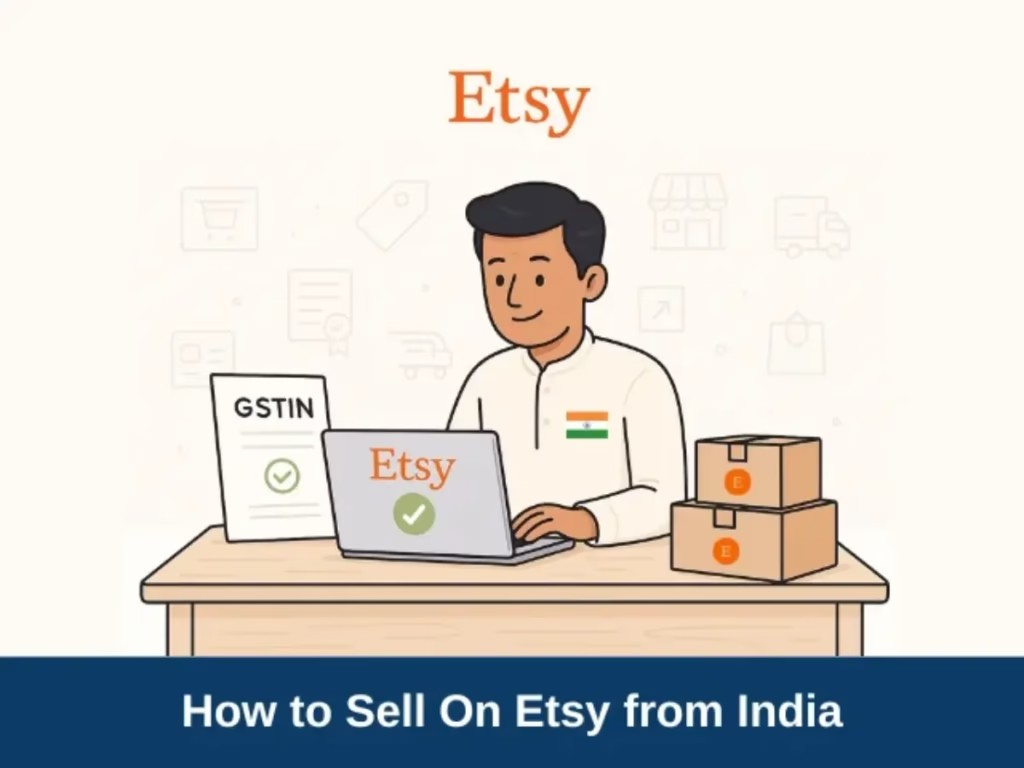
So, you’re ready to sell on Etsy. But where do you start? The process is simpler than you think. Here’s a complete step-by-step guide to get your shop up and running.
Step 1: Create Your Etsy Account
Go to etsy.com and click “Get Started.” Enter your name, email, and password. That’s it – your account is ready. Signing up is completely free.
Step 2: Open Your Etsy Shop
Once your account is set, click “Open Your Etsy Shop.” You’ll need to choose your shop language, country (India), and your preferred currency. Then pick a shop name that reflects your brand and folk art style.
Important: There’s a one-time setup fee of $10 USD for new Indian sellers.
Step 3: Set Up Etsy Payments with Payoneer
This is crucial for Indian sellers. Etsy Payments is the only way you can get paid. For Indian sellers, payouts are handled exclusively through Payoneer.
What you need to do:
- Sign in to an existing Payoneer account or create a new one
- Enter your personal and banking details
- Link your bank account with Payoneer
Your payments will be automatically transferred every Monday at 9 PM IST. Payoneer handles the currency conversion from USD to INR and deducts any applicable fees.
Payment processing fee in India: 5% + ₹25 per transaction through Etsy Payments.
Step 4: Add Your Tax Details
Etsy requires Indian sellers to provide the following:
- A valid GSTIN (Goods and Services Tax Identification Number)
- Your personal PAN (Permanent Account Number)
Etsy has partnered with ClearTax to help you apply for a GSTIN if you don’t have one. This is mandatory for compliance and tax reporting.
Step 5: Choose Individual or Business Seller Type
Etsy asks whether you’re signing up as an Individual or a Business. This matters because it affects how your account is verified and how payouts are made.
| Aspect | Individual Account | Business Account |
| Who can choose this | Solo creators, freelancers, hobby sellers | Registered companies, partnerships, LLPs |
| Verification Name | Your full legal name must match bank details | The legal business name must match GST & bank |
| Tax Info | PAN (individual) and GSTIN if applicable | PAN (business), GSTIN, and business registration |
| Bank Account | Personal bank account | Business bank account |
Important: Etsy cross-checks your legal name, bank account name, and registration details. If these don’t match, your account verification can fail.
Step 6: Add Your Products
This is where the magic happens. Each product you list needs attention to detail:
- Clear photos—Use natural light, clean backgrounds, and show multiple angles. Include close-up shots to highlight the craftsmanship.
- Short video – A 15-second video showing your product in action can boost sales.
- Detailed description – Write about the materials, the inspiration, and the cultural significance. Tell the story behind your folk art.
- Price, quantity, and variations – Include size or color options if you offer them.
- Relevant tags – Add keywords that buyers might search for.
Step 7: Set Shipping Details
Add shipping times, delivery options, and return details. Buyers want to know how and when they’ll get their items. If you plan to sell worldwide (and you should), mention that clearly.
Shipping options from India:
- India Post – Most affordable (15–25 days)
- DHL/FedEx – Fastest (5–7 days)
- Partner with shipping services like ShiprocketX that integrate with Etsy
Step 8: Personalize Your Storefront
Add a good banner, your logo, and a profile picture. Write a short “About” section. This is where you tell your story—why you started, what you sell, and what makes your folk art special.
Step 9: Publish and Start Selling
Check everything once before going live—photo quality, pricing, and descriptions. Once done, click “Open Your Shop.” Your products are now visible to buyers all over the world.
Etsy Fees – What You Need to Know

Understanding the costs helps you price your products correctly. Here’s what you’ll pay as an Indian seller:
| Fee Type | Amount |
| One-time setup fee | ₹965 – 1000 INR |
| Listing fee | ₹17 to ₹19 INR per item |
| Transaction fee | 5% of sale price |
| Payment processing fee | 5% + ₹25 per transaction |
| Offsite ad fee | 6.5% (if applicable – when Etsy promotes your items offsite) |
| Currency conversion fee | Charged by Payoneer |
Note: If your sales don’t cover your fees, Etsy sends a billing statement on the 1st of each month, and you’ll need to clear dues by the 15th. Payments can be made using a debit or credit card.
How to Grow Your Etsy Store Globally
Setting up your shop is just the beginning. To build a successful brand and truly sell on Etsy at scale, you need to work consistently. Here are proven strategies that will help you grow your folk art business globally.
Optimize Your Product Listings
- Use the right keywords – Add simple and clear keywords in your product titles and descriptions. Think about what a buyer might type while searching. This helps your listings appear in more searches. For example, instead of just “painting,” use “handmade Madhubani painting, folk art, India.”
- Write compelling titles—Your title should include the product name, key features, material, and style. For instance: “Handmade Warli Art Painting – Tribal Folk Art from India – Wall Decor – Natural Colors.”
- Craft detailed descriptions – Don’t just list features. Tell the story behind each piece. Explain the technique, the cultural significance, and the time it took to create. Buyers on Etsy love knowing the human element behind their purchase.
- Use all 13 tags – Etsy allows 13 tags per listing. Use every single one. Think of variations of what buyers might search for – “folk art,” “Indian wall decor,” “tribal painting,” “handmade gift,” “ethnic art,” and so on.
Master Your Product Photography
- Post clear and bright photos – Good photos attract attention. Show your product from different angles so buyers know exactly what they’re getting.
- Use natural light – Morning or late afternoon light works best. Avoid harsh shadows.
- Show scale – Include a common object like a coin or ruler in one photo so buyers understand the size.
- Show the product in use – If you’re selling wall art, show it hanging on a wall. If you’re selling bags, show someone carrying them.
- Include process photos – Buyers love seeing the making process. It builds trust and adds value to your product.
- Add a short video – A 15-second video showing your product from all angles or demonstrating its use can boost conversion rates significantly.
Master Your Shipping Strategy
- Offer worldwide shipping – Enable international shipping on your listings. Mention delivery times and costs clearly. This helps buyers from other countries trust your shop.
- Offer free shipping – Etsy’s algorithm favors shops that offer free shipping. You can build the shipping cost into your product price.
- Set realistic delivery times – Underpromise and overdeliver. If you say 15-20 days and it arrives in 12, the buyer is happy.
- Use tracking – Always ship with tracking. It protects you and gives buyers peace of mind.
- Partner with reliable logistics—Companies like Shiprocket, DHL, and FedEx offer Etsy integrations that simplify shipping.
Build Your Brand Story
- Tell your story – This is your biggest advantage. Share behind-the-scenes content. Post videos of your crafting process. Let buyers into your world.
- Create an About section – Etsy gives you space to share your journey. Use it. Talk about your village, your family, your inspiration, and your craft.
- Add a profile picture and banner – Make your shop look professional and welcoming.
- Share your process on social media—Post photos and videos of your work on Instagram, Facebook, and Pinterest. Direct followers to your Etsy shop.
- Create collections – Group your products into collections like “Gift Ideas,” “Home Decor,” or “Festive Collections.” This makes browsing easier for buyers.
Engage with Your Customers
- Reply fast to messages – Be polite and helpful. A happy customer leaves good reviews, and good reviews bring more buyers.
- Send thank-you notes – Include a handwritten note with each order. It costs almost nothing but creates a lasting impression.
- Ask for reviews – After delivery, kindly ask buyers to leave a review. Good reviews build social proof and trust.
- Handle issues gracefully – If something goes wrong, apologize and fix it quickly. A resolved complaint often leads to a repeat buyer.
- Build a mailing list – Collect email addresses and send occasional updates about new products or special offers.
Use Etsy’s Marketing Tools
- Run Etsy Ads – Etsy Ads promote your listings within search results. You only pay when someone clicks. Start with a small budget and scale up what works.
- Use Offsite Ads – Etsy promotes your items on and off the platform (Google, Facebook, Instagram). You pay a 6.5% fee only when a customer clicks and makes a purchase within 30 days.
- Create discount codes – Offer first-time buyer discounts or seasonal promotions. This encourages purchases and builds loyalty.
- Run sales events – Etsy highlights shops that are running sales. A 10-15% discount during festive seasons can boost visibility.
- Participate in Etsy’s seasonal campaigns – Etsy runs special campaigns during holidays. Optimize your listings to participate.
Price Your Folk Art Correctly
- Calculate your costs – Include materials, time, packaging, shipping, and Etsy fees. Don’t forget your profit margin.
- Research competitors – Look at similar products on Etsy to understand the price range. Don’t underprice yourself.
- Offer tiered pricing – Offer smaller, more affordable items alongside premium pieces. This gives buyers options.
- Raise prices gradually—As you get more reviews and build your brand, gradually increase your prices. Loyal buyers will understand.
Challenges and How to Overcome Them

Building an Etsy brand isn’t without challenges. Here’s what you might face and how to handle each one effectively.
Challenge 1: Competition from Machine-Made Products
This is perhaps the biggest challenge for folk art sellers. Cheap, mass-produced imitations flood the market, and many buyers don’t know the difference.
How to overcome it:
- Emphasize what makes your product special—the human touch, the story, the cultural heritage. Etsy buyers value authenticity and are willing to pay for it.
- Show your process – Share photos and videos of your craft. Let buyers see the skill and effort involved.
- Get certified – Consider getting a GI tag or other certifications that prove authenticity and origin.
- Build a brand, don’t just sell products—people buy from people they trust. Build a narrative around your craft and your community.
- Educate your buyers—Explain why handmade is better—the quality, the tradition, and the sustainability.
Challenge 2: Shipping Logistics and Costs
Shipping from India to international destinations can be expensive and complicated. Buyers expect fast delivery, but international shipping often takes 15-25 days.
How to overcome it:
- Partner with shipping services – Companies like ShiprocketX, DHL, and FedEx offer Etsy integrations with discounted rates.
- Offer multiple shipping options – Give buyers a choice between standard and expedited shipping.
- Build shipping costs into your price—Offer “free shipping” by including the cost in the product price. Etsy’s algorithm favors free shipping listings.
- Use India Post for affordability – For smaller items, India Post International is the most cost-effective option.
- Be transparent – Clearly mention delivery times and any potential customs delays.
- Use tracking – Always ship with tracking numbers. It protects you from disputes and gives buyers peace of mind.
Challenge 3: Product Photography
Many artisans struggle with photography. Good photos are essential for online sales, but professional photography equipment can be expensive.
How to overcome it:
- Use natural light – Shoot near a window on a sunny day. Avoid harsh shadows.
- Use your smartphone – Modern smartphones take excellent photos. No need for expensive cameras.
- Keep backgrounds clean – White or neutral backgrounds work best. You can use a simple bedsheet or paper.
- Show multiple angles – Include front, back, side, and close-up shots.
- Show scale – Include a common object in one photo so buyers understand size.
- Add lifestyle photos – Show the product in use or in a home setting.
- Watch free tutorials – YouTube has thousands of free photography tutorials for beginners.
Challenge 4: Maintaining Quality at Scale
As your business grows, maintaining consistent quality becomes harder. You might need to hire helpers or scale up production.
How to overcome it:
- Set clear quality standards – Document your process and share it with anyone helping you.
- Train your helpers thoroughly—don’t assume they know your methods. Show them step by step.
- Start small – Don’t scale too fast. Take on more orders gradually.
- Quality check every item – Before shipping, inspect each piece personally.
- Be honest with buyers – If you’re overwhelmed, pause your shop or extend processing times.
- Don’t compromise on what makes your folk art special—your uniqueness is your biggest selling point.
Challenge 5: Pricing Handmade Products
Pricing is often a struggle. Artisans either underprice their work (leaving money on the table) or overprice it (scaring buyers away).
How to overcome it:
- Use a pricing formula – Materials + (Hourly Rate × Hours) + Overheads + Profit Margin = Final Price.
- Research your competition—look at similar products on Etsy. Price yourself within the range but don’t undervalue yourself.
- Educate buyers about value – Explain the time, skill, and tradition behind each piece. Buyers pay more when they understand.
- Offer tiered pricing—small, affordable items alongside premium, high-priced pieces.
- Start with competitive prices – As you get reviews and build your brand, gradually increase your prices.
- Remember: low prices attract difficult buyers—confident prices attract serious collectors.
Challenge 6: Building Trust with International Buyers
International buyers are often cautious about buying from India. They worry about quality, authenticity, and delivery.
How to overcome it:
- Build a professional storefront – Good photos, detailed descriptions, and an engaging About section build trust.
- Collect and showcase reviews – Good reviews are your best marketing tool.
- Be responsive – Reply to messages quickly and professionally.
- Be transparent – Clearly state shipping times, return policy, and any customs details.
- Use tracking – Always ship with tracking. It shows you’re a serious seller.
- Tell your story – Let buyers see the person behind the product. People trust people.
Challenge 7: Managing Time and Workflow
Running an Etsy shop involves much more than just making products. There’s photography, listing, shipping, customer service, and marketing.
How to overcome it:
- Create a routine – Set aside specific hours for each task. For example, Monday is for photography, Tuesday for listing, and Wednesday for shipping.
- Batch your work – Make multiple products at once. Shoot multiple products in one session. This saves time.
- Use tools – Etsy’s Shop Manager app helps you manage orders on the go. Use automation tools for repetitive tasks.
- Learn to say no—If you’re overwhelmed, pause your shop or extend processing times. Quality over quantity.
- Consider hiring help – As you grow, hire a helper for packing, shipping, or social media.
Challenge 8: Staying Visible in Etsy’s Search
Etsy’s algorithm changes frequently. What worked yesterday might not work today. Getting your listings found is a constant challenge.
How to overcome it:
- Use all 13 tags – Etsy allows 13 tags per listing. Use every single one.
- Update your listings regularly – Etsy favors active sellers. Refresh your listings or add new ones weekly.
- Get good reviews – Etsy’s algorithm favors shops with high ratings and positive reviews.
- Offer free shipping – Etsy’s algorithm favors shops with free shipping.
- Use Etsy Ads – A small ad budget can boost visibility significantly.
- Keep learning – Join Etsy seller communities. Follow Etsy’s official blog. Stay updated on changes.
FAQ
Q1. How to sell on Etsy from India in 2026?
Create an Etsy account, open your shop with a $10 setup fee, set up Etsy Payments with Payoneer, provide your GSTIN and PAN, add your products, and publish. Domestic sales are not allowed – only international.
Q2. What documents do I need to sell on Etsy India?
You need a valid GSTIN, your personal PAN, government-issued photo ID, bank account details (with IFSC code), and a live selfie for verification.
Q3. Can I sell to Indian customers on Etsy?
No. Currently, Indian sellers can only sell internationally. Domestic sales within India are not supported yet.
Q4. What is the fee to start selling on Etsy from India?
There’s a one-time setup fee of $10 USD. Plus, you’ll pay $0.20 per listing, a 5% transaction fee, and a 5% + ₹25 payment processing fee per transaction.
Q5. What products can I sell on Etsy India?
You can sell handmade items, vintage products (at least 20 years old), and craft supplies. No mass-produced or resold goods are allowed.
Q6. What products from India sell best on Etsy?
Handmade jewelry (70–85% margins), block-print clothing, macramé & boho décor, brass home décor, handwoven rugs, personalized leather goods, scented candles, and Ayurvedic skincare.
Q7. Can I sell on Etsy India without GST?
No. A valid GSTIN is mandatory for all Indian sellers on Etsy. Etsy partners with ClearTax to help you get one.
Q8. Why should I sell on Etsy rather than Amazon?
Etsy’s audience actively seeks handmade and unique items. You’re not competing on price alone. Plus, fees are lower—Amazon Handmade takes 15% while Etsy charges just $0.20 per listing plus a 5% transaction fee.
Also Read:
Top 10 Famous Indian Artists and Their Specialities


Leave a Reply