

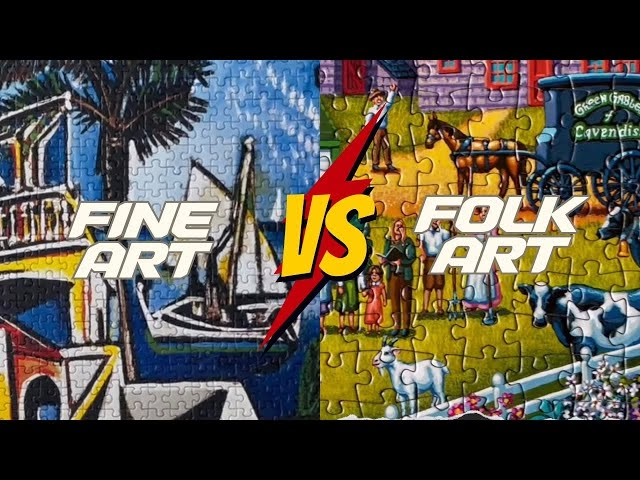
Hello folks. Art comes in many forms, but the distinction between Folk Art and fine art is often debated. While fine art is typically associated with formal training, galleries, and individual expression, Folk Art is rooted in community traditions, cultural heritage, and skills passed down through generations.
According to UNESCO, traditional crafts and cultural practices remain an important part of preserving the identity of millions of people worldwide. Yet the question remains: where do we draw the line between these two artistic worlds?
Understanding their differences, similarities, and evolving roles can help us appreciate the value each brings to society.
In this article, we explore what sets Folk Art apart from fine art and why the boundary between them is not always clear.
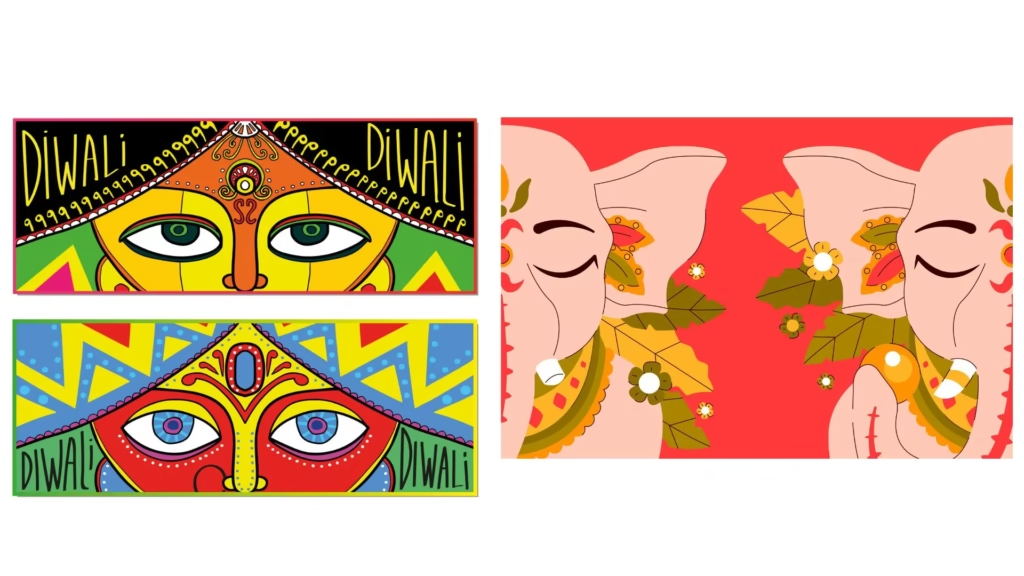
Where the Term “Folk Art” Actually Comes From
The term “folk art” first appeared in academic circles during the late 19th century. European scholars used it to describe art made by peasants, rural communities, and indigenous groups. It was never meant as a compliment. The word “folk” carried a quiet assumption of simplicity, lack of training, and lower cultural status.
By the mid-20th century, museums began collecting folk art, but always in separate wings. It was displayed alongside anthropological objects rather than paintings or sculptures. In 2026, this separation is being questioned more aggressively than ever.
Key historical shifts:
- 1870s: First academic papers use “folk art” to describe rural European crafts
- 1930s: American museums start collecting American folk art separately
- 1970s: Postmodern critics challenge the fine art vs. folk art divide
- 2020s: Digital platforms give folk artists direct access to global buyers
- 2026: Major auction houses now include folk art in main sales, not separate categories
The term itself is problematic. A Madhubani painter in Bihar never calls her work “folk.” She calls it painting. The label comes from outside, not from within.
Fine Art and Its Long History of Gatekeeping
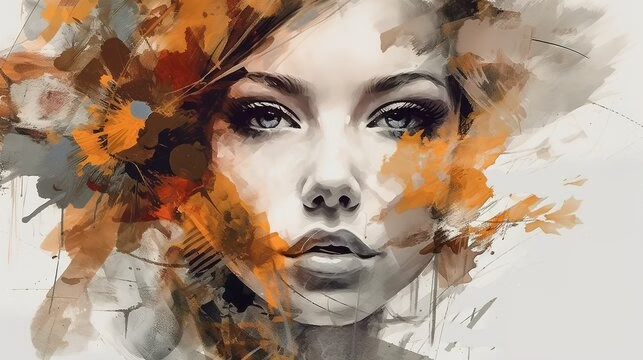
Fine Art has always been tied to institutions. Academies, galleries, critics, and collectors decide what counts. If you study at the Royal Academy or J.J. School of Art, your work enters conversations that village artists never get to join.
This gatekeeping is not just about quality. It is about access, money, and social networks.
Who decides what fine art is?
- Art school professors and their established reputations
- Gallery owners who choose whose work to show
- Museum curators who decide what enters permanent collections
- Art critics writing for major publications
- Auction houses like Sotheby’s and Christie’s set price benchmarks
In 2026, a single painting by a contemporary fine artist can sell for $30 million. A comparable “Folk Art” piece by a master artisan might sell for $3,000.
The skill level is often similar. The difference is branding, exposure, and the invisible stamp of institutional approval.
Who Decides What Belongs in a Museum
Museums hold enormous power. When a museum acquires a piece, it declares that object worthy of preservation and study. For most of the 20th century, Folk Art was collected by anthropology or history museums.
Fine Art went to art museums. The message was clear: folk art belongs to culture, fine art belongs to art.
Table: Museum Representation in India (2026 Data)
| Type of Art | Number of Museums Collecting | Separate Wing or Fully Integrated |
| Fine Art (modern/contemporary) | 45+ major museums | Main galleries |
| Folk Art (traditional) | 28+ museums | Mostly separate wings |
| Tribal Art (Adivasi) | 12+ museums | Anthropological sections |
| Contemporary Folk Art | 18+ museums | Often placed in education halls |
In 2026, the Kiran Nadar Museum of Art in Delhi and the CSMVS in Mumbai are leading efforts to integrate Folk Art into the main galleries. But progress remains slow.
A 2025 survey of 62 Indian museums found that only 23% displayed folk and fine art in the same physical spaces without hierarchical labels.
Comparison Table: Folk Art vs. Fine Art
| Basis | Folk Art | Fine Art |
| Origin | Rural communities, villages, and indigenous groups | Academies, studios, urban centers |
| Training | Informal, family or community-based, no degrees | Formal education from recognized art institutions |
| Purpose | Rituals, daily use, storytelling, community identity | Aesthetic contemplation, intellectual discourse, investment |
| Materials | Local clay, natural dyes, recycled fabric, wood | Professional canvas, oil paints, marble, bronze |
| Audience | Local community, later tourists, and collectors | Galleries, museums, critics, wealthy collectors |
| Price Range (2026) | ₹3,000 to ₹8 lakhs typically | ₹5 lakhs to ₹78 crores |
| Museum Placement | Anthropology wings, separate folk art galleries | Main galleries, dedicated modern wings |
| Signature | Often anonymous or collective | Always attributed to the individual artist |
| Market Growth (2020-2026) | 280% increase | 45% increase |
Materials Matter: Clay, Canvas, and Everything in Between
One practical difference between Folk Art and Fine Art has always been materials. Fine artists typically use stretched canvas, oil paints, marble, bronze, and industrial-grade paper.
Folk artists use whatever is available locally: clay from riverbanks, natural dyes from leaves and flowers, handmade paper, discarded cloth, and wood from nearby forests.
Does material determine artistic value? Not logically. But historically, expensive materials signaled serious art. Cheap materials signaled craft.
Common fine art materials:
- Stretched linen or cotton canvas
- Professional-grade oil and acrylic paints
- Carrara marble or kiln-cast bronze
- Archival paper from specialty suppliers
Common folk art materials:
- Locally sourced clay and terracotta
- Natural pigments from turmeric, indigo, and charcoal
- Recycled fabric and old saris (Kantha work)
- Wood from fallen trees or household objects
In 2026, many contemporary fine artists are deliberately using found and recycled materials. And many folk artists are now working on premium canvases for urban buyers. The material gap is closing fast.
Training vs. Tradition: The Unspoken Class Divide
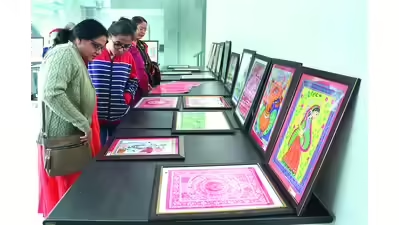
This is the most uncomfortable difference. Fine Art requires formal education. You need to get into art school, pay tuition fees, learn art history, and build a portfolio. Folk Art is learned at home. A father teaches his daughter how to paint Warli. A grandmother shows her grandson how to weave.
Neither path is easier. But one costs money and grants institutional legitimacy. The other is free but carries no certificate.
Ground reality in India (2026):
- Over 7 million artisans work in India’s folk and tribal art sectors
- Less than 2% have any formal art education
- Average annual income for a folk artist: ₹1.2 to ₹2.5 lakhs
- Average annual income for a contemporary fine artist (emerging): ₹8 to 15 lakhs
- Top fine artists earn ₹5 crores or more per work
The class divide is visible in numbers. A fine artist from an affluent family can afford to struggle for years. A folk artist from a rural background cannot. Their art is often their only income, not a passion project funded by family wealth.
Pricing the Priceless: Why One Sells for Crores, and the Other Does Not
Let us look at real numbers from 2026.
Recent auction results (India and global):
| Artist | Category | Work | Price (2025-2026) |
| M.F. Husain | Fine Art | “Battle of Ganga and Jamuna” | ₹78 crores |
| Tyeb Mehta | Fine Art | “Kali” | ₹45 crores |
| Bhuri Bai | Folk Art (Bhil) | Traditional painted panel | ₹4.8 lakhs |
| Jivya Soma Mashe | Folk Art (Warli) | Large narrative scroll | ₹7.2 lakhs |
| Baua Devi | Folk Art (Madhubani) | Mythological painting | ₹6.5 lakhs |
The difference is not skill. Bhuri Bai’s work hangs in the Musée du Quai Branly in Paris. Baua Devi has exhibited in Japan and the United States. Yet their market prices remain a fraction of fine art equivalents.
Why does this happen?
- Fine Art has a proven resale market with decades of data
- Rich collectors prefer assets that appreciate predictably
- Auction houses invest marketing budgets only in fine art sales
- Folk Art lacks art world endorsements and critical writing
In 2026, platforms like Artsy and NFT marketplaces are slowly changing this. Some folk artists now sell digital editions of their work for ₹1-5 lakhs, bypassing traditional galleries entirely.
Artists Who Crossed the Line Without Even Trying
Several artists in history refused to accept the Folk Art vs. Fine Art divide. They worked in whatever style they wanted, using whatever materials were available, and let critics argue later.
3 examples from India:
1. Jamini Roy (1887-1972)
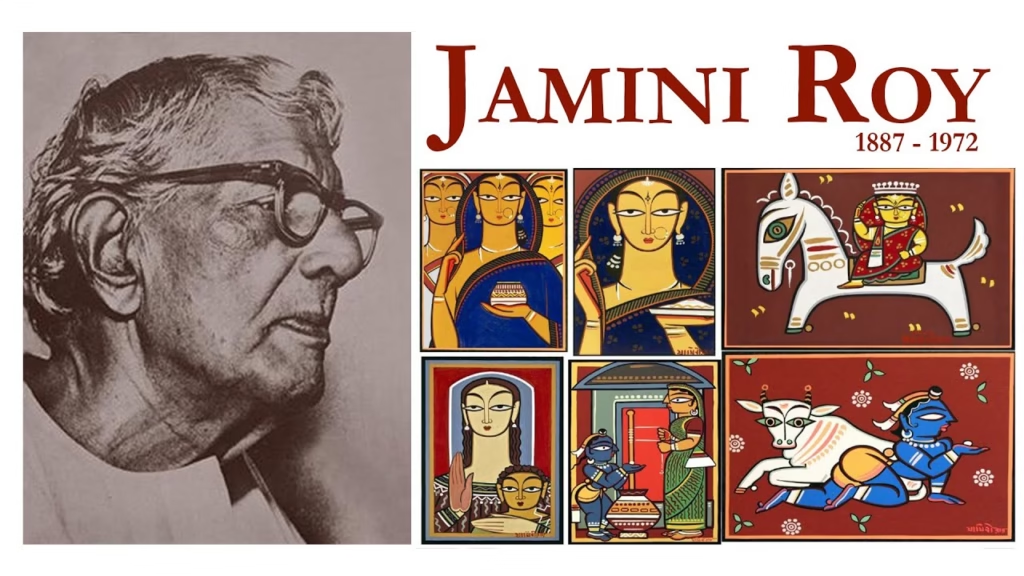
He trained at the Government College of Art in Kolkata. Then he abandoned Western techniques to paint like Kalighat patua artists. Critics called his work “folk-inspired.” He called it honest painting. Today, his works sell for ₹15-20 crores as fine art.
2. Nek Chand (1924-2015)
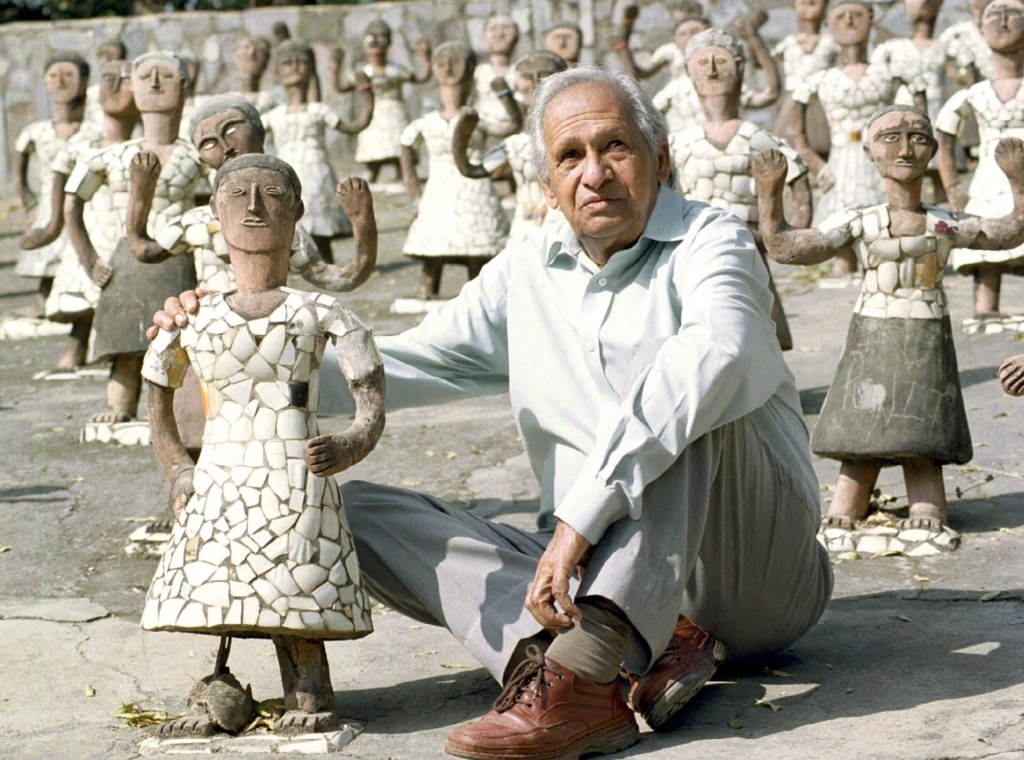
A road inspector who built the Rock Garden in Chandigarh using industrial waste and broken ceramics. He had no formal training. The government declared his garden a public art space. Is it folk art, outsider art, or environmental sculpture? No one agrees. Everyone visits.
3. Bhuri Bai (1960s – present)
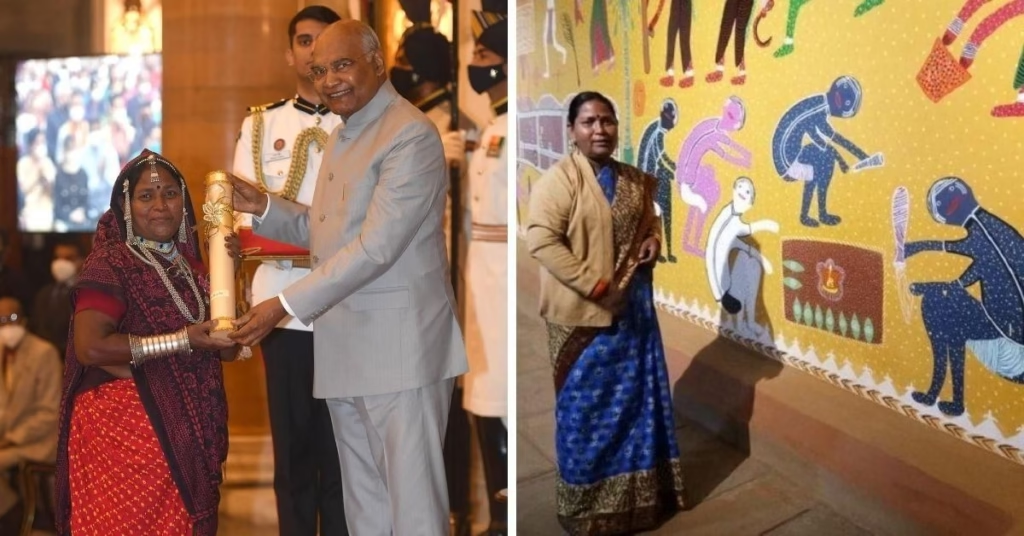
A Bhil artist from Jhabua district who started painting on her house walls. Later, she moved to canvas and paper. Her work appears in international museums. She still calls herself a folk artist. Galleries call her a contemporary Indian artist.
These artists prove that the line moves when talent demands it.
8. Is the Distinction Finally Disappearing in 2026
3 major shifts are happening right now.
First shift: Digital marketplaces
Online platforms like Gaatha, The Woven Tree, and Memeraki sell Folk Art directly to urban buyers without gallery filters. A Gond painting bought online for ₹15,000 looks identical to one hanging in a gallery. The context is what changes, not the art.
Second shift: Museum integration
In 2026, the Museum of Art and Photography (MAP) in Bengaluru opened a permanent gallery titled “No Hierarchy: Art from Everywhere.” It displays Madhubani paintings next to modernist abstracts. No labels distinguish folk from fine. Attendance has increased by 40% since opening.
Third shift: NFT and digital folk art
Young folk artists are digitizing traditional patterns and selling them as NFTs. A Warli NFT collection minted in February 2026 sold 2,300 pieces at an average price of 0.2 ETH (approximately ₹35,000 each). These are not labeled as “folk NFTs.” They are just NFTs by Indian artists.
Table: Changing Perceptions (Survey of 1,200 Indian Art Buyers, 2026)
| Question | Agree (2023) | Agree (2026) |
| “Folk art is as valuable as fine art.” | 34% | 52% |
| “I would pay over ₹1 lakh for folk art.” | 18% | 31% |
| “Museums should display them together.” | 47% | 68% |
| “Training matters less than final work.” | 62% | 74% |
The Real Question: Do We Even Need the Line
Here is a simple thought. Labels help museums organize collections. Labels help auction houses price objects. But labels do not help you enjoy a painting.
When you stand in front of a Folk Art piece from Sanjhi or a Fine Art canvas from a celebrated modernist, ask yourself one question. Does it move you? Do you want to look longer? Do you feel something?
If yes, the label does not matter.
What artists themselves say in 2026:
- “I don’t care what you call my work. Just call it mine.” – Gond artist, Madhya Pradesh
- “Fine art is just folk art with a rich uncle.” – Contemporary painter, Mumbai
- “The line was drawn by people who never picked up a brush.” – Textile artist, Gujarat
The global art market is worth approximately $67 billion in 2026. Folk Art represents roughly 7% of that, up from 2.5% in 2016. The share is small but growing. More importantly, the conversation has shifted. Young collectors do not ask, “Is this fine art?” They ask, “Do I love this?”
FAQs
Q1. Can a folk artist become a fine artist without going to art school?
Yes. If museums and galleries start exhibiting their work seriously, the label can shift. Jamini Roy is a prime Indian example.
Q2. Is folk art always traditional and unchanging?
No. Folk art evolves constantly. Artists add new themes, materials, and techniques while keeping core cultural roots intact.
Q3. Why do fine art auctions not sell folk art regularly?
Auction houses focus on assets with proven resale value. Folk art lacks decades of transaction data that wealthy collectors trust.
Q4. Does signing a folk art piece increase its market price?
Yes. Anonymous works sell for less. A known folk artist’s signature can raise prices by 200-300% in 2026.
Q5. Are digital copies of folk art still considered folk art?
Most curators say yes. The form matters less than the cultural knowledge and technique passed through generations.
Q6. Which country has the highest respect for folk art?
Japan. The government designates Living National Treasures for traditional crafts, giving folk artists the same status as fine artists.
Q7. Can artificial intelligence create folk art?
Technically, yes, but purists argue that folk art requires a human community. AI lacks cultural memory and lived experience.
Q8. Why do some folk artists refuse gallery representation?
Many prefer selling directly to known buyers. Galleries take 40-60% commission, which rural artists cannot easily afford.
Q9. Is there a folk art museum in India that shows only folk art?
Yes. The Shilp Gram in Udaipur and the Crafts Museum in Delhi are entirely dedicated to folk and tribal art forms.
Q10. Can folk art be taught in a formal classroom setting?
Yes, slowly. Some Indian universities now offer diploma courses in Madhubani, Warli, and Gond painting as elective subjects.
Also Read:

Leave a Reply